
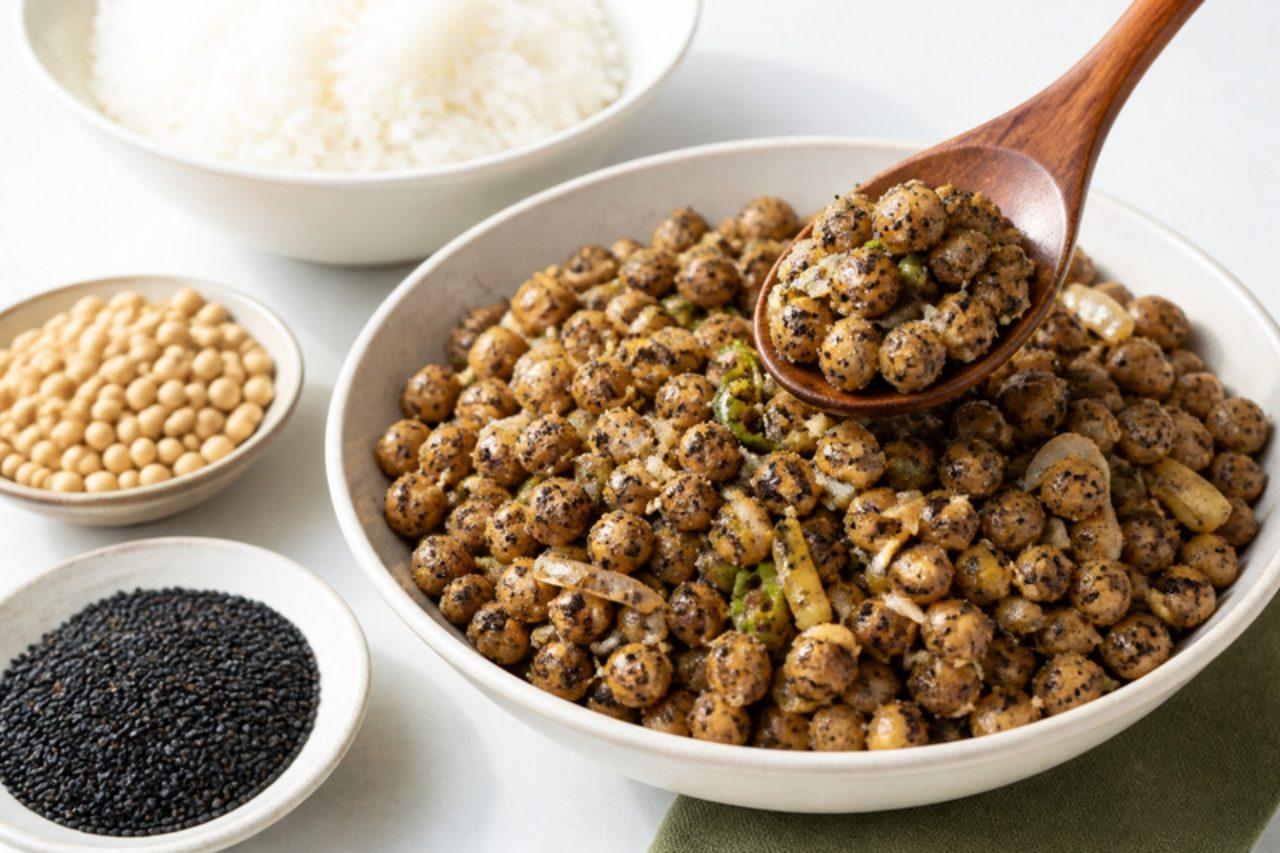
AI-generated image
Tungrymbai
Khasi fermented soybean cooked with black sesame, ginger and onion


Tungrymbai is the Khasi Hills' great fermented food: soybeans boiled, wrapped in leaves and left by the hearth until sticky and pungent, then cooked with onion, ginger, garlic, turmeric and a generous paste of roasted black sesame. In Shillong's markets and local eateries (jadoh stalls), it is often cooked with pork, but many Khasi homes make it with soybeans alone, which is the version here. It is dark, nutty and savoury, eaten in small spoonfuls with rice. Chef's tip: roast the black sesame until it just begins to pop; underroasted it tastes grassy, overroasted it turns bitter. Natto works if you can't get tungrymbai.
- Total time
- 35 min
- Difficulty
- easy
- Serves
- 4
Ingredients
Method
0/5 doneStep 1: Dry-roast 1 ¾ oz black sesame seeds in a pan over a medium heat for 3 minutes, shaking, until it starts to pop and smell toasty. Grind with 5 tbsp water to a dark, smooth paste.
3 minStep 2: Heat 2 tbsp mustard oil in a pan over a medium heat. Fry 2 medium onions for 6 minutes until soft and golden.
6 minStep 3: Add 1 ⅛ in ginger, 4 garlic cloves and 2 green chillies and fry 1 minute, then add 7 oz tungrymbai (fermented soybeans) or natto, ½ tsp ground turmeric and ¾ tsp salt and stir-fry for 4 minutes until the beans start to separate and smell less sharp.
5 minStep 4: Stir in the sesame paste and ¾ cup water and simmer over a low heat for 8–10 minutes, stirring now and then, until thick and dark and the oil glistens. Common mistake: high heat after the sesame goes in; it catches on the bottom and burns quickly.
10 minStep 5: Serve warm, a spoonful with rice.
Nutrition per serving
- Calories
- 280 kcal
- Protein
- 16 g
- Carbs
- 14 g
- Fat
- 19 g
- Fibre
- 7 g
Nutrition values are estimates.
KrazyBadal
Good to know
- How long does tungrymbai take?
- About 35 minutes in total: 10 minutes to prepare and 25 minutes to cook.
- How many people does it serve?
- 4 as written. Change the servings above the ingredients and every amount scales to match.
- Is it vegan?
- Yes. It has no meat, fish, dairy or eggs.
- Is it gluten free?
- Yes, as written. Check the labels on stock, sauces and spice mixes, which sometimes contain gluten.
- What can I use instead of black sesame seeds?
- Poppy seeds or finely chopped pumpkin seeds, same amount.
- What can I use instead of onions?
- 2 shallots per onion.
Reviews
No reviews yet. Be the first to cook it.
Rate this recipe
Sign in to rate and review this recipe.
You might also like

Sayur lodeh
Sayur lodeh is everyday cooking in Central Java, made in big pots in Solo and Semarang kitchens and ladled over rice, with lontong rice cakes at Lebaran, or alongside opor and sambal goreng on festive tables. It's soupy rather than thick: a fragrant broth of coconut milk, galangal, lemongrass and lime leaf that carries chunks of aubergine, long beans, chayote and sweetcorn, plus tempeh and tofu to make it a meal. The flavour is mellow and slightly sweet, so the heat comes from sambal on the side. Chef's tip: keep the pot at a gentle simmer once the coconut milk goes in and stir now and then — a rolling boil splits the coconut milk into oily curds.



Masala khakhra
Khakhra are thin chapaties roasted slowly on a griddle until they turn crisp, like a cracker. This masala version adds gram flour, fresh fenugreek, turmeric and chilli to the wheat dough. They are a light Gujarati breakfast or tea-time snack, and lovely with pickle, chutney or a smear of butter. You can also make them in a roti maker.
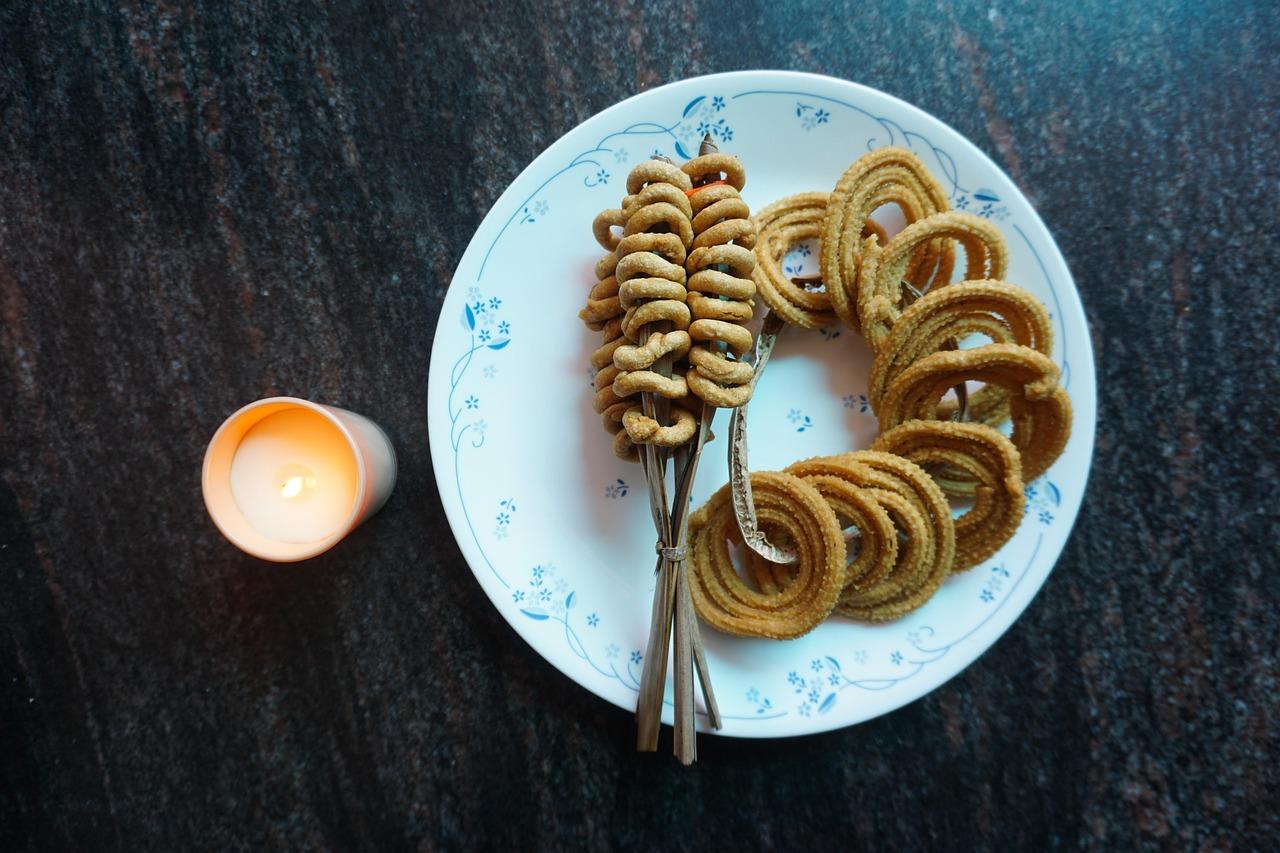
Potato chakri
Potato chakri are crisp, light spirals made with rice flour and boiled potato, flavoured with ginger, chilli, lemon, sesame and coriander. The potato makes them extra tender-crisp. They keep for about 3 weeks in an air-tight container, so make them ahead for Diwali or guests.