
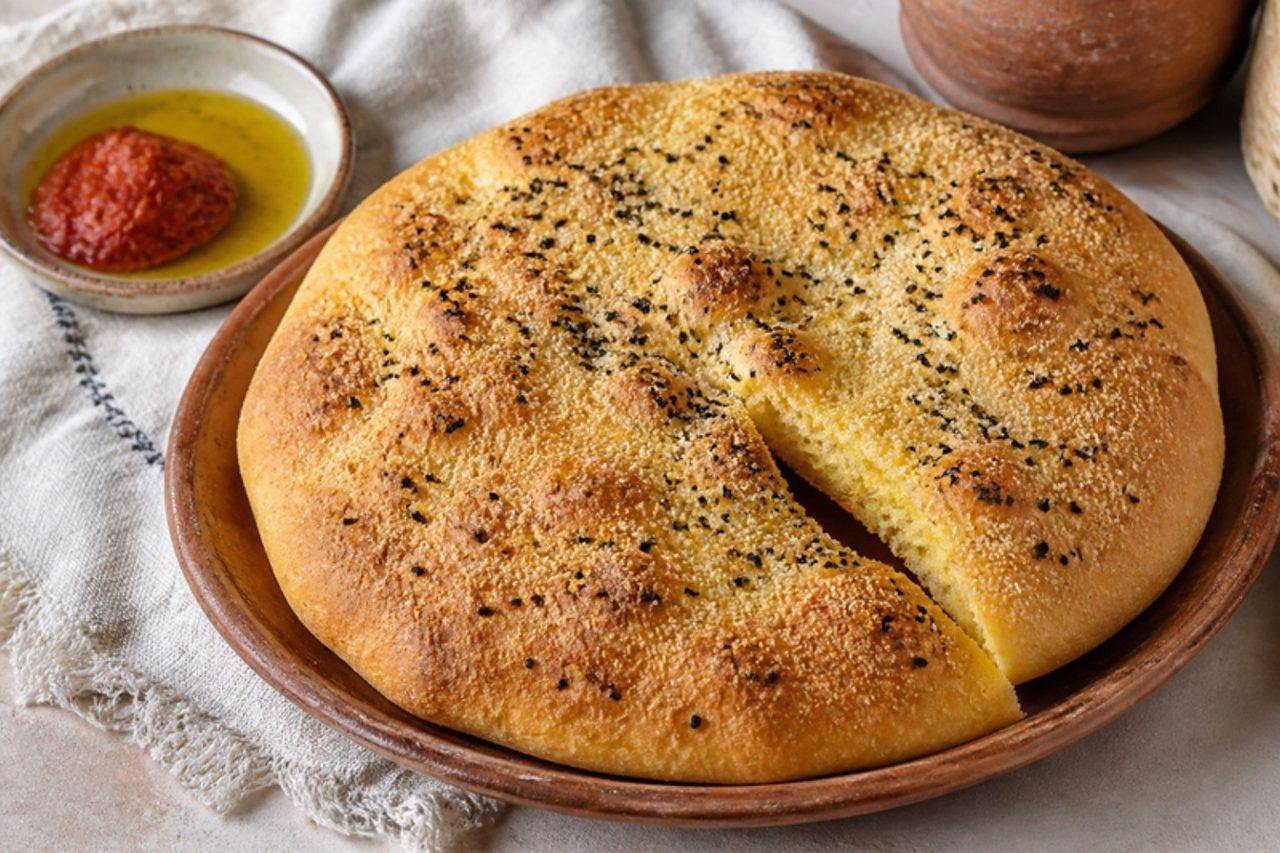
AI-generated image
Tabouna bread
Semolina clay-oven flatbread
Tunisia's semolina flatbread from the clay oven


Named after the clay oven it is baked in, tabouna bread is slapped by Tunisian village women against the oven's hot inner wall, where it puffs and blisters in minutes. It is a round semolina bread, golden and slightly gritty outside, tender and yellowish within, with the sweet, nutty taste of durum wheat and a hint of olive oil. Roadside stalls from Kairouan to the Cap Bon sell it warm to wrap around harissa, olive oil and mechouia, the smoky grilled-pepper salad, or to tear into a bowl of lablabi, the garlicky chickpea soup. A hot baking tray does the oven's job at home. Semolina drinks water slowly, and adding extra flour because the dough feels wet at first is the mistake that makes a dry, heavy bread. Chef's tip: shape the rounds with wet hands rather than floury ones; it keeps the dough soft and gives the crust its blistered finish.
- Total time
- 149 min
- Difficulty
- medium
- Serves
- 6
Ingredients
For the dough
- 10 ½ oz fine semolina
- 5 ½ oz plain flour
- 1 tsp sugar
- ¼ oz salt
- 1 ¼ cups lukewarm water
- 2 tbsp olive oil
To finish
- 2 tbsp coarse semolinafor the tray
- 1 tsp nigella seeds (optional)
Shop this recipe on Amazon
What you'll need
Spices & pantry
Links open Amazon in a new tab. As an Amazon Associate, WhatToEat.Today earns from qualifying purchases.
Method
0/8 doneStep 1: Mix 10 ½ oz fine semolina, 5 ½ oz plain flour, ⅛ oz fast-action dried yeast, 1 tsp sugar and ¼ oz salt. Add 1 ¼ cups lukewarm water and 2 tbsp olive oil and mix into a soft, sticky dough.
Step 2: Leave for 10 minutes so the semolina absorbs the water, then knead for 8 minutes until smooth and slightly elastic.
18 minStep 3: Cover and leave to rise for 1 hour, until doubled.
60 minStep 4: Divide into 3 and shape into balls. Rest for 10 minutes.
10 minStep 5: Put a heavy baking tray in the oven and heat it to 475°F (450°F fan) for 20 minutes.
20 minStep 6: With wet hands, flatten each ball on baking paper scattered with 2 tbsp coarse semolina into a 20 cm round about 1.5 cm thick. Dimple the top with your fingertips and sprinkle with 1 tsp nigella seeds if using.
Step 7: Slide the rounds, on their paper, onto the hot tray and bake for 10–12 minutes, until puffed, blistered and golden with darker patches. Bake in two rounds if they don't fit.
24 minStep 8: Tap the base; it should sound hollow. Cool for 10 minutes on a rack and serve warm, torn into wedges.
Nutrition per serving
- Calories
- 300 kcal
- Protein
- 9 g
- Carbs
- 56 g
- Fat
- 5 g
- Fibre
- 3 g
Nutrition values are estimates.
KrazyBadal
Good to know
- How long does tabouna bread take?
- About 149 minutes in total: 125 minutes to prepare and 24 minutes to cook.
- How many people does it serve?
- 6 as written. Change the servings above the ingredients and every amount scales to match.
- Is it vegan?
- Yes. It has no meat, fish, dairy or eggs.
- What can I use instead of plain flour?
- Self-raising flour, same amount (then leave out the baking powder).
- What can I use instead of fast-action dried yeast?
- Fresh yeast, three times the weight.
Reviews
No reviews yet. Be the first to cook it.
Rate this recipe
Sign in to rate and review this recipe.
You might also like

BsissaRoasted barley flour with olive oil
A tin of bsissa sits in many Tunisian kitchen cupboards, from Tunis flats to farmhouses in the south: a finely ground flour of roasted barley, roasted chickpeas and spices such as coriander, fennel and aniseed. In the morning a few spoonfuls are worked with olive oil and something sweet into a nutty, crumbly paste, or stirred with water into a thick drink, and it keeps you going until lunch. Travellers and pilgrims once carried it for the road. Roasting your own flour takes 15 minutes and makes a jar that lasts weeks. Sugar and dates keep it vegan; some families use honey. Chef's tip: roast the flours separately over a low heat and stir constantly; the moment they smell like toasted biscuits and turn light tan, tip them out of the pan.


ChipaCheese bread rings
In Paraguay you hear 'chipa, chipa!' called by vendors with big baskets on buses and street corners, and every family bakes it for Holy Week, when chipa is the food of Good Friday. Cassava starch, a little cornmeal, butter, eggs and a lot of hard cheese are kneaded into a dough scented with aniseed, shaped into rings or small rolls and baked in a hot oven, traditionally a domed clay tatakua. It's chewy, crisp outside and best warm with cocido (toasted yerba tea). Chef's tip: the dough should feel soft and slightly greasy; add milk a spoon at a time, as too much makes the chipa spread flat.
 Paraguayan

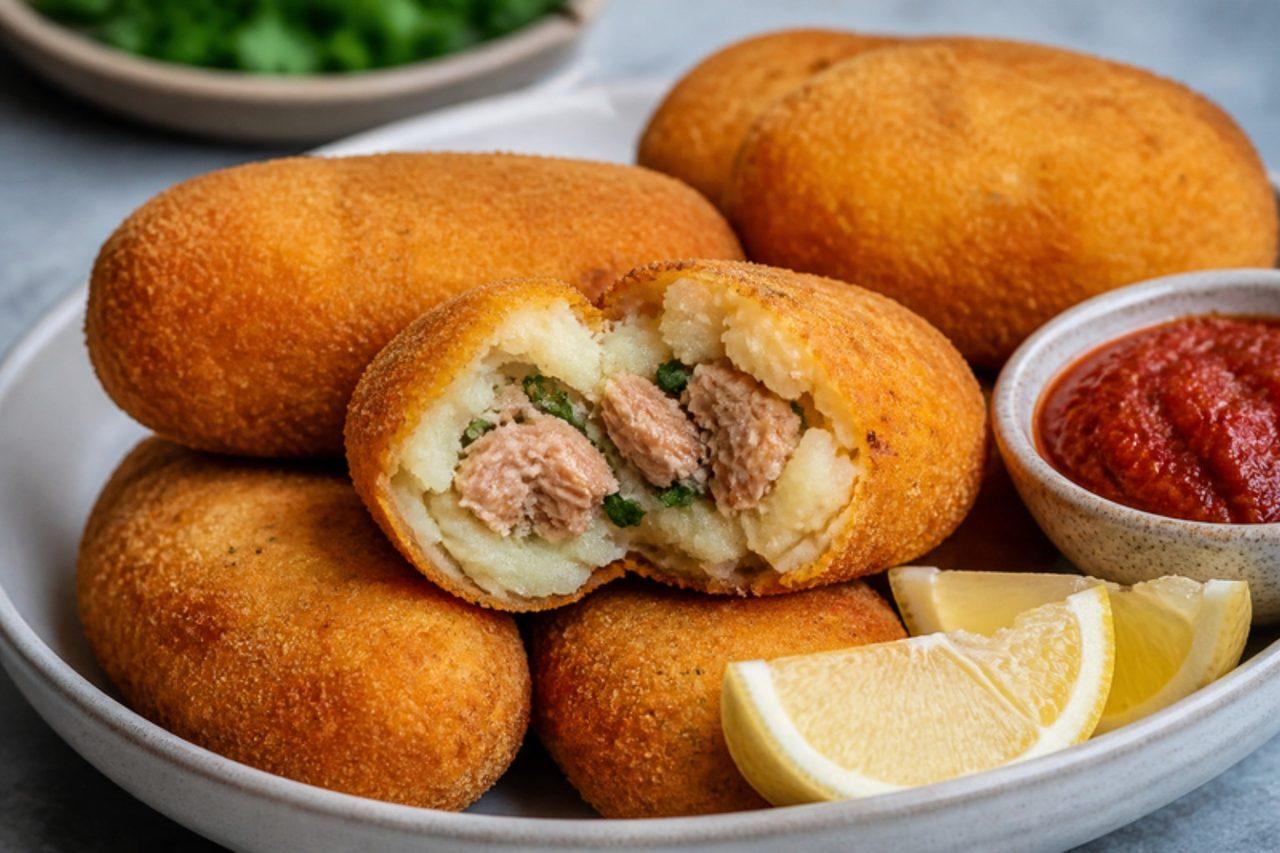
Banatage (tuna potato croquettes)
Golden, crunchy outside and soft inside, banatage are mashed-potato croquettes hiding a spoon of tuna, parsley and harissa, rolled in breadcrumbs and fried. They come out during Ramadan beside the brik and chorba, are tucked into lunchboxes and are a favourite with children all over Tunisia. Leftover mash works well, as long as it is firm. Serve them hot with lemon wedges, a salad or a dab of harissa. Chef's tip: dry the boiled potatoes in the hot pan for a minute before mashing; wet, watery mash is the usual mistake and makes croquettes that split open in the oil.