
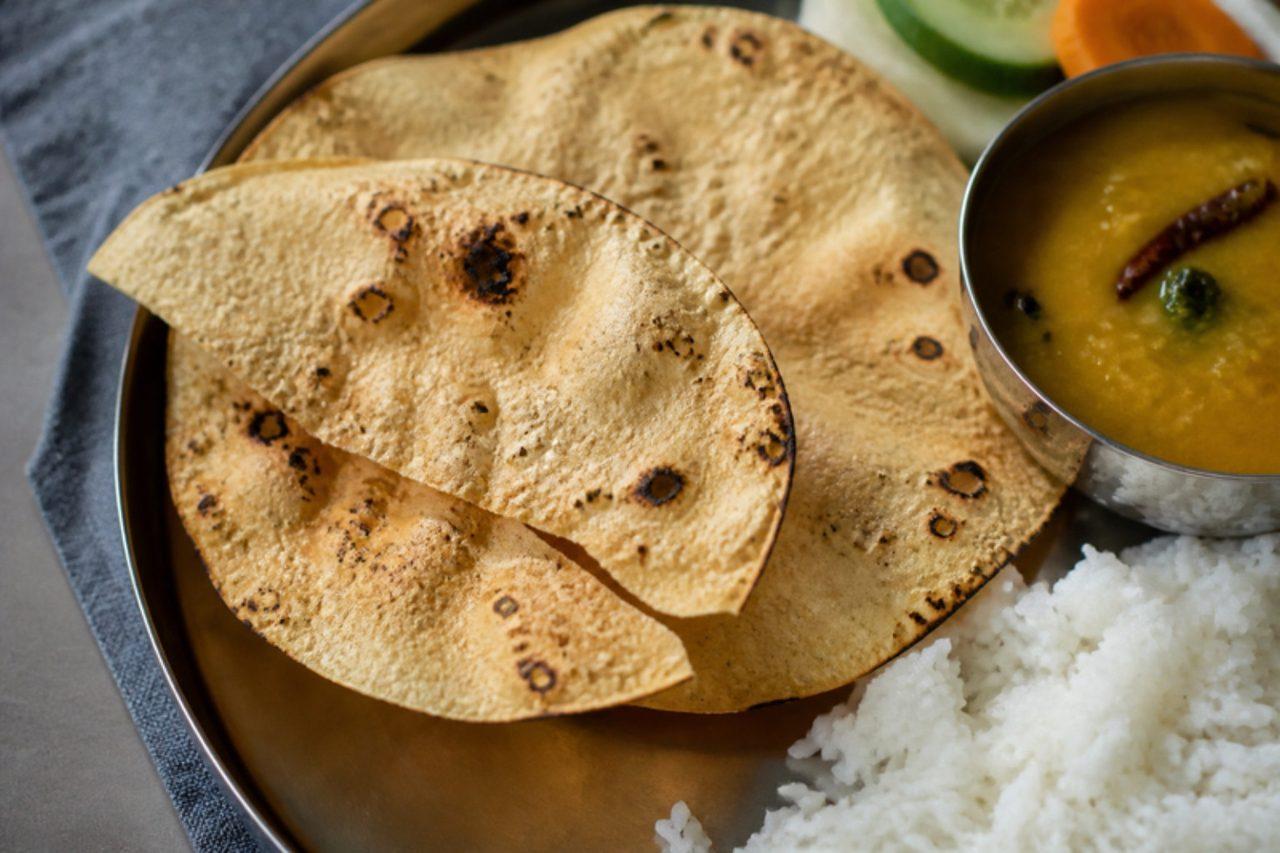
AI-generated image
Urad dal papad
Peppery lentil crisps
उड़द दाल पापड़: peppery Bikaner-style urad papads, pounded, rolled paper-thin and roasted over the flame (plus 1–2 days in the sun)



Bikaner and the old Punjabi bazaars of Amritsar have made black-pepper urad papads for generations, and summer is when home kitchens still roll them: the dry heat crisps a whole tray on the terrace in a day or two. The dough is unlike any bread dough. It is stiff, grey-cream, seasoned hard with crushed pepper, cumin and asafoetida, and given its snap by papad khar (an alkaline salt sold at Indian grocers), then pounded until it turns smooth and stretchy. Rolled thinner than a chapati and sun-dried, the discs keep for months. Roast one over a gas flame and it blisters and curls in seconds, ready to eat beside dal-chawal, kadhi or a Rajasthani thali, or to crush into papad churi and papad ki sabzi. These are large, spicy and meant to be roasted; for the small, plain, coconut-oil-fried kind from Kerala, see pappadam. Chef's tip: dry the papads in light shade for the first hour before moving them into full sun; straight into harsh sun, the edges dry before the middle and they crack and curl.
- Total time
- 135 min
- Difficulty
- hard
- Serves
- 12
Ingredients
For the dough
- 9 oz gluten-free urad dal flourfrom skinned split urad
- 1 ½ tsp papad khar (papad salt)
- 1 tsp salt
- ½ cup waterwarm; you may not need all of it
- 1 ½ tsp black peppercornscoarsely crushed
- 1 tsp cumin seedslightly crushed
- ¼ tsp gluten-free asafoetida
For rolling
- 2 tbsp sunflower or groundnut oil
Shop this recipe on Amazon
What you'll need
Spices & pantry
Links open Amazon in a new tab. As an Amazon Associate, WhatToEat.Today earns from qualifying purchases.
Method
0/10 doneStep 1: Stir 1 ½ tsp papad khar (papad salt) and 1 tsp salt into the warm ½ cup water until dissolved; the water will look slightly cloudy.
2 minStep 2: Mix 9 oz gluten-free urad dal flour, 1 ½ tsp black peppercorns, 1 tsp cumin seeds and ¼ tsp gluten-free asafoetida in a wide bowl, then add the khar water a little at a time and press it into a very stiff, crumbly-looking dough. It should be much firmer than chapati dough.
5 minStep 3: Rub your hands with a little of the ½ tbsp sunflower or groundnut oil and pound the dough with a pestle or the flat end of a rolling pin for 10–12 minutes, folding it over itself every minute. It is ready when it turns smooth, stretchy and a shade paler, and a pinched piece pulls without tearing.
12 minStep 4: Common mistake: softening the dough with extra water to save effort. A soft dough sticks to the pin, tears when lifted and takes days to dry. Keep it stiff and let the pounding do the work.
Step 5: Roll the dough into a log about 3 cm thick, wrap it in a damp cloth and rest it for 15 minutes.
15 minStep 6: Cut the log into 24 pieces of about 15 g and keep them under the damp cloth so they don't skin over.
5 minStep 7: Smear a drop of the remaining 1 ½ tbsp sunflower or groundnut oil on the board and pin, and roll each piece into a 15–17 cm disc so thin you can almost see the board through it. Turn the disc often as you roll to keep it round.
60 minStep 8: Lay the papads in a single layer on a clean cotton sheet or steel plates, in light shade for the first hour, then in direct sun. Turn them over after 3–4 hours.
10 minStep 9: Dry for 1–2 sunny days, bringing them indoors at night. They are done when they are stiff and brittle and snap cleanly, with no soft or bendy centre.
Step 10: Stack the papads flat in a dry, airtight tin; they keep for 6 months. To serve, hold one with tongs over a medium gas flame for 20–30 seconds, turning constantly, until it blisters and turns pale gold all over with no grey patches.
2 min
Nutrition per serving
- Calories
- 70 kcal
- Protein
- 5 g
- Carbs
- 11 g
- Fat
- 1 g
- Fibre
- 3 g
Nutrition values are estimates.
KrazyBadal
Good to know
- How long does urad dal papad take?
- About 135 minutes in total: 120 minutes to prepare and 15 minutes to cook.
- How many people does it serve?
- 12 as written. Change the servings above the ingredients and every amount scales to match.
- Is it vegan?
- Yes. It has no meat, fish, dairy or eggs.
- Is it gluten free?
- Yes, as written. Check the labels on stock, sauces and spice mixes, which sometimes contain gluten.
- Can I make it ahead?
- Yes. It keeps well, so you can cook it earlier in the day or the day before and reheat it.
- What can I use instead of black peppercorns?
- Ground black pepper, a little less than the amount.
- What can I use instead of cumin seeds?
- Ground cumin, three quarters of the amount (add it with the other ground spices, not to hot oil first).
Reviews
No reviews yet. Be the first to cook it.
Rate this recipe
Sign in to rate and review this recipe.
You might also like

SakarpadaSweet fried dough diamonds
Sakarpada (shakarpara) are little sweet diamonds of a rich dough made with ghee, milk and sugar, fried until golden and crunchy. They are a Diwali favourite with tea, and the cubes go into bhusu too. They keep for weeks in an air-tight tin.

Yaki onigiriGrilled rice balls
Yaki onigiri (焼きおにぎり) are rice balls grilled until they form a crisp, toasty crust, then brushed with soy sauce glaze. They are eaten all over Japan, at izakaya, at barbecues and from the freezer section, as a snack or with miso soup. The inside stays soft and steamy while the outside crackles. Best eaten hot, straight from the pan. Chef's tip: let the shaped rice balls dry for 10 minutes before they go in the pan. A drier surface forms a better crust and won't stick, and the glaze goes on only at the end so it doesn't burn.
 Japanese

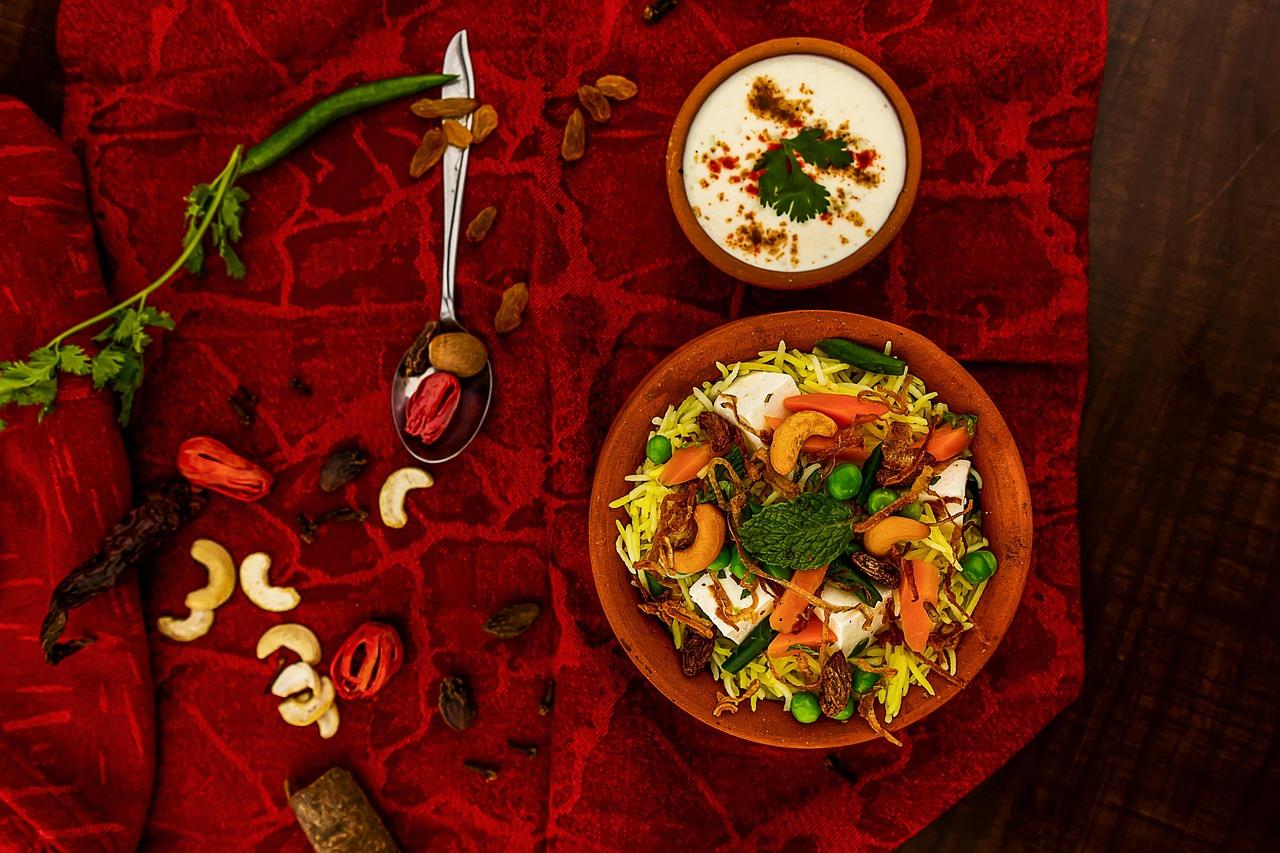
Paneer biryaniRice and moong dal in coconut milk
A mild, creamy biryani: rice and husked green gram roasted in ghee, then cooked in coconut milk with peas, carrots, potatoes, peanuts and cashews, and finished with soft fried paneer and a fresh coriander yogurt. Serve hot, garnished with more fried cashews and paneer.
