
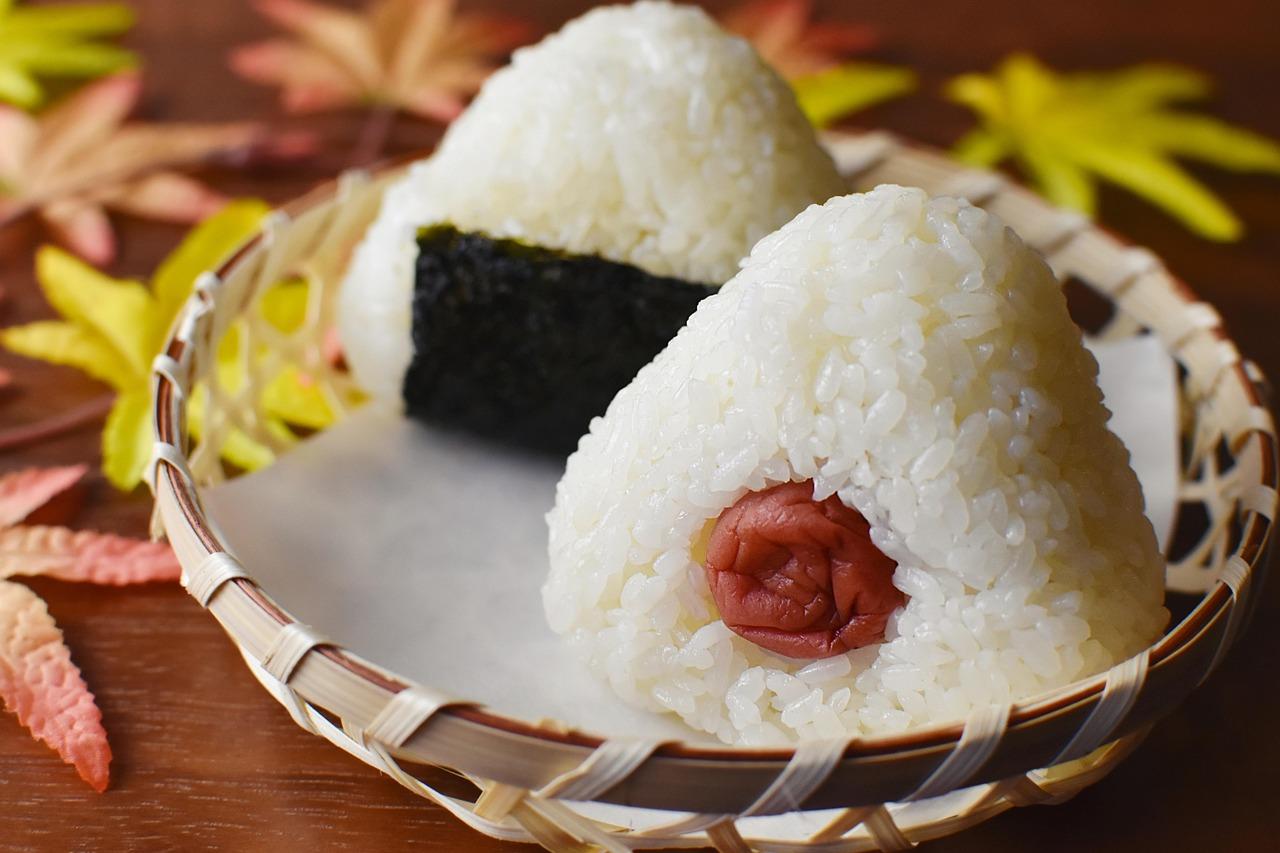
Vegetable onigiri
おにぎり: hand-pressed rice balls with umeboshi, seasoned kombu and miso-mushroom fillings

Onigiri (おにぎり) are Japan's everyday lunchbox and picnic food, sold in every convenience store from Tokyo to Kyushu. Warm rice is pressed around a salty or savoury filling and wrapped in a strip of crisp nori. This recipe gives three vegetarian fillings: sour umeboshi (pickled plum), sweet-salty simmered kombu, and a soy-glazed mushroom and carrot mix. Children love helping to shape them, and they keep well for a packed lunch. Chef's tip: use freshly cooked, still-warm rice and salt your hands, not the rice. The grains stick together only while warm, and the salt on the outside seasons every bite the way a Japanese mother would.
- Total time
- 30 min
- Difficulty
- easy
- Serves
- 4
Ingredients
For the rice
For the kombu filling
For the mushroom filling
For the umeboshi filling and wrapping
Method
0/6 doneStep 1: Soak ⅓ oz kombu (dried kelp) in ½ cup water for 10 minutes (skip if it's already soft from dashi), then cut it into thin strips with scissors.
Step 2: Put the kombu and its water in a small pan with 1 tbsp soy sauce, 1 tbsp mirin and 1 tsp sugar. Simmer over a low heat for 8–10 minutes, stirring, until the liquid has almost gone and the kombu is glossy and tender. Cool.
10 minStep 3: Heat 1 tsp vegetable oil in a frying pan over a medium heat and fry 2 ⅞ oz shiitake or chestnut mushrooms and ½ carrot for 4 minutes until soft and dry. Add 1 tbsp soy sauce and 1 tsp mirin and cook for 1 minute until absorbed. Stir in 1 tsp toasted sesame seeds and cool.
5 minStep 4: Have a bowl of water and 1 tsp salt ready. Wet your hands, then rub a pinch of salt over your palms. Take a twelfth of the 1 ⅔ lb freshly cooked Japanese short-grain rice (about 60 g) in one hand and make a dip in the middle with your thumb.
Step 5: Put a teaspoon of one filling in the dip (the kombu, the mushroom mix or a piece of 3 umeboshi (pickled plums)), then cover it with a little more rice. Cup your hands and press firmly into a triangle, turning it 3 or 4 times, until it holds its shape. Make 12, 4 of each filling.
Step 6: Wrap a strip of 3 sheets nori around the base of each onigiri just before eating, so it stays crisp. For lunchboxes, wrap each one in cling film and pack the nori separately. They keep at cool room temperature for a day; don't refrigerate or the rice hardens.
Nutrition per serving
- Calories
- 330 kcal
- Protein
- 7 g
- Carbs
- 70 g
- Fat
- 2 g
- Fibre
- 2 g
Nutrition values are estimates.
KrazyBadal
Good to know
- How long does vegetable onigiri take?
- About 30 minutes in total: 20 minutes to prepare and 10 minutes to cook.
- How many people does it serve?
- 4 as written. Change the servings above the ingredients and every amount scales to match.
- Is it vegan?
- Yes. It has no meat, fish, dairy or eggs.
- Can I make it ahead?
- Yes. It keeps well, so you can cook it earlier in the day or the day before and reheat it.
- What can I use instead of freshly cooked japanese short-grain rice?
- Any long-grain rice, same amount.
- What can I use instead of soy sauce?
- Tamari, same amount (gluten free).
Reviews
No reviews yet. Be the first to cook it.
Rate this recipe
Sign in to rate and review this recipe.
You might also like

Masala khakhra
Khakhra are thin chapaties roasted slowly on a griddle until they turn crisp, like a cracker. This masala version adds gram flour, fresh fenugreek, turmeric and chilli to the wheat dough. They are a light Gujarati breakfast or tea-time snack, and lovely with pickle, chutney or a smear of butter. You can also make them in a roti maker.


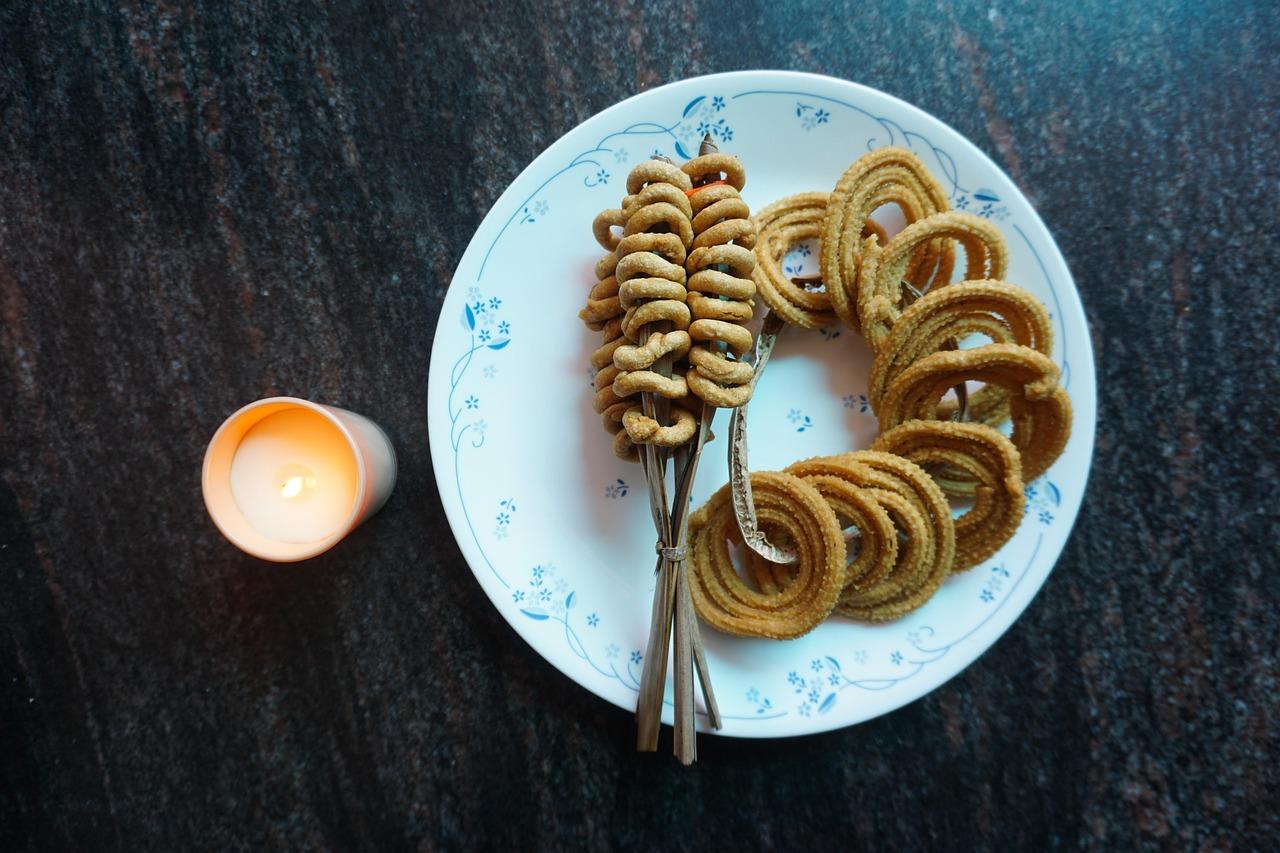
Potato chakri
Potato chakri are crisp, light spirals made with rice flour and boiled potato, flavoured with ginger, chilli, lemon, sesame and coriander. The potato makes them extra tender-crisp. They keep for about 3 weeks in an air-tight container, so make them ahead for Diwali or guests.

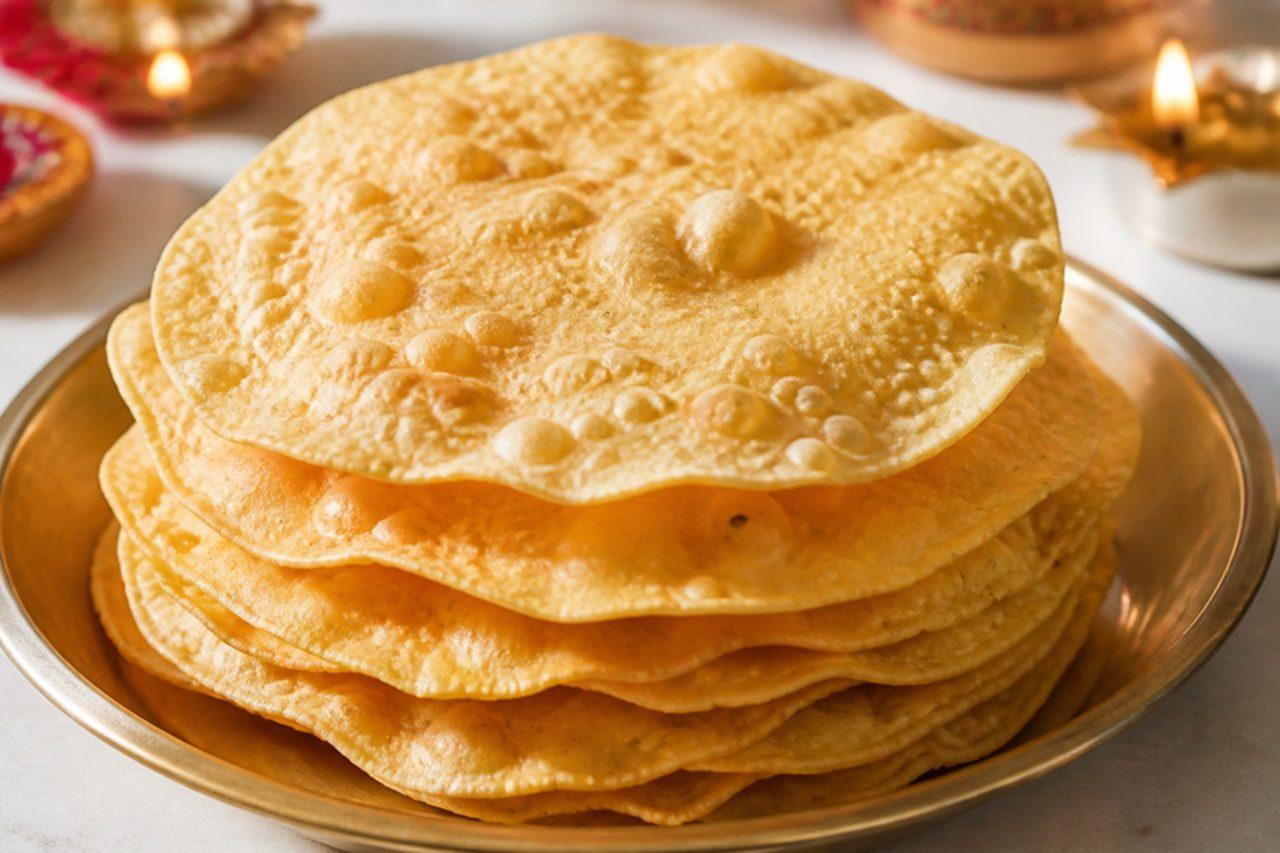
Mathia
Mathia are thin, crisp, slightly sweet and peppery wafers made from mathia flour, a mix of ground husked moong and urad dal. They are a classic Gujarati Diwali snack. The dough is pounded until pale, rolled very thin between plastic sheets and fried one at a time. They are fragile, so store them gently. To make mathia flour, finely grind 4 parts husked green gram lentils with 1 part husked black gram lentils.