
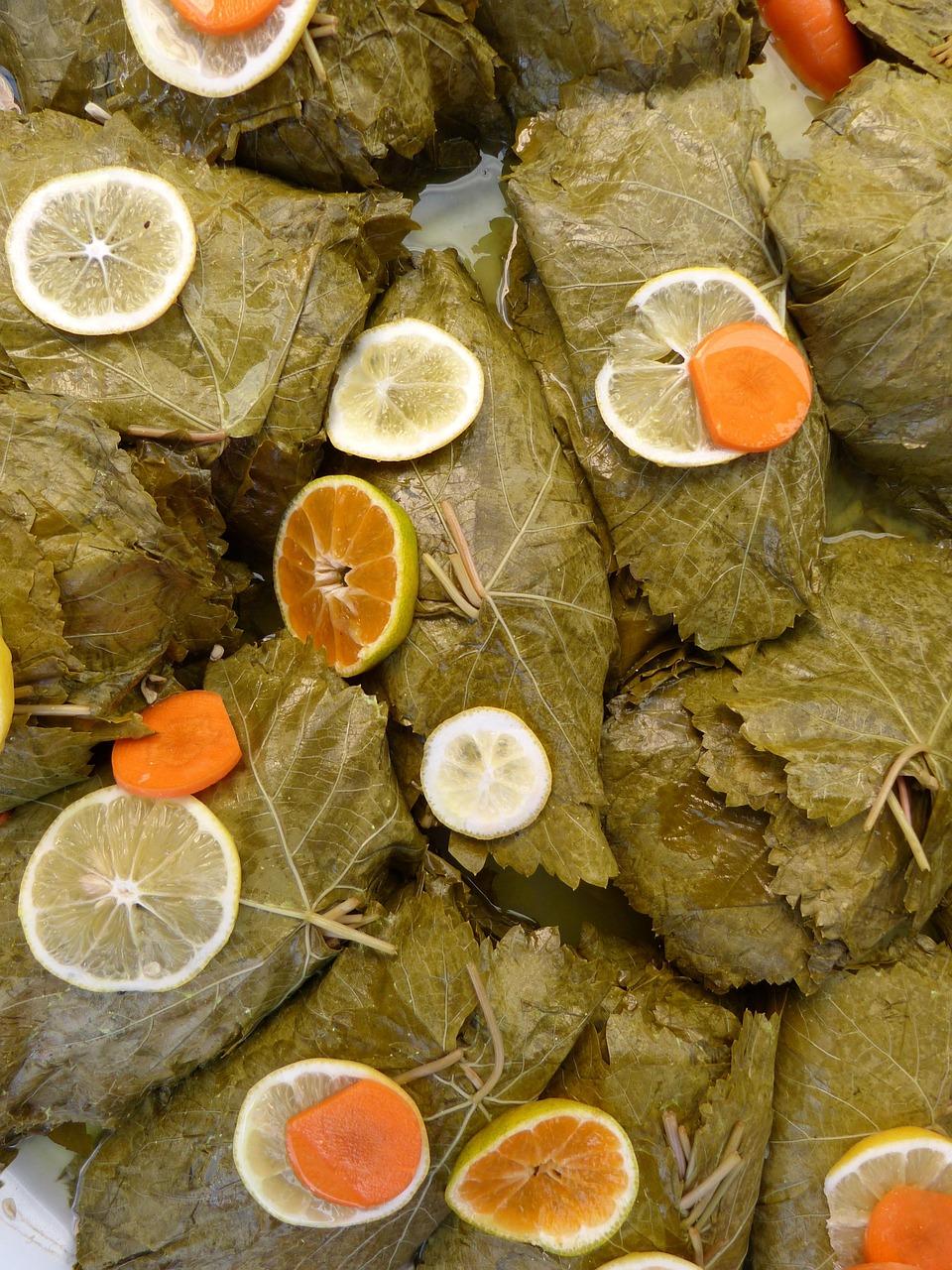
Warak enab
Rice-stuffed vine leaves
Warak enab bi zeit: Lebanese vine leaves rolled with rice, tomato, parsley and mint



Warak enab bi zeit, vine leaves cooked in oil, is what Lebanese aunts make in big batches in early summer when the young grape leaves are tender, and it fills the cold mezze table at every wedding and family lunch. The meatless version, eaten on Lenten fast days, is packed with short-grain rice, tomato, parsley, mint and spring onion, seasoned with dried mint and seven spices, and simmered slowly in lemon juice until the leaves are silky and the filling sharp and fresh. It is served cold with a wedge of lemon and a spoonful of yogurt for those who are not keeping it vegan. Rolling too tightly is the mistake most people make: the rice swells and splits the leaves, so roll them snug but not stretched. Chef's tip: line the pan with sliced potato and tomato; they stop the rolls catching and are a cook's treat to eat straight from the pot.
- Total time
- 150 min
- Difficulty
- hard
- Serves
- 8
Ingredients
For the leaves
- 50 vine leaves in brineabout 250 g drained, plus extra for lining
For the filling
- 7 oz short-grain ricesuch as Egyptian or pudding rice
- 3 ripe tomatoesabout 350 g, finely diced
- 2 ⅛ oz flat-leaf parsleyfinely chopped
- ½ oz fresh mintfinely chopped
- 4 spring onionsfinely chopped
- 1 tsp dried mint
- 1 tsp Lebanese seven-spice
- 1 ½ tsp salt
- ½ cup olive oil
- ½ cup lemon juiceabout 3–4 lemons
For the pan
- 1 potatolarge, peeled and sliced 5 mm thick
- 1 tomatosliced
- 6 garlic clovespeeled, whole
- 1 ¾ cups hot water
- 4 lemon wedges (optional)to serve
Shop this recipe on Amazon
Spices & pantry
Fresh ingredients (8)
Links open Amazon in a new tab. As an Amazon Associate, WhatToEat.Today earns from qualifying purchases.
Method
0/9 doneStep 1: Soak 50 vine leaves in brine in a big bowl of warm water for 10 minutes, then rinse and drain. Snip off any stalks and set aside torn leaves for lining the pan.
10 minStep 2: Rinse 7 oz short-grain rice in cold water until it runs nearly clear, then soak it for 10 minutes and drain well.
10 minStep 3: In a bowl mix the rice with 3 ripe tomatoes and their juice, 2 ⅛ oz flat-leaf parsley, ½ oz fresh mint, 4 spring onions, 1 tsp dried mint, 1 tsp Lebanese seven-spice, 1 tsp salt, 3 ½ tbsp olive oil and ¼ cup lemon juice. It should look wet and red-flecked; the uncooked rice drinks up that liquid as it cooks.
Step 4: Lay a leaf shiny side down, stem end towards you. Put a heaped teaspoon of filling in a short line near the stem, fold the bottom over it, fold in the sides and roll up into a finger about 7 cm long. Keep it snug but not stretched, because the rice will swell.
Step 5: Line the base of a wide heavy pan with the torn leaves, then a layer of 1 potato and 1 tomato. Pack the rolls on top, seam side down, in tight rows, tucking 6 garlic cloves in between. Make a second layer crossways if needed.
Step 6: Pour over the rest of 3 ½ tbsp olive oil and ¼ cup lemon juice, sprinkle with ½ tsp salt and add 1 ¾ cups hot water until the rolls are just covered. Press a heatproof plate on top to keep them from unrolling.
Step 7: Bring to a gentle boil over a medium heat, then cover, turn the heat to low and simmer for 60–70 minutes, until a roll you test is soft right through and almost all the liquid has been absorbed. Top up with a little hot water if the pan looks dry before then.
70 minStep 8: Turn off the heat and leave the pan covered until it cools to room temperature, at least 1 hour; the rolls firm up and soak up the lemony oil.
60 minStep 9: Turn out or lift the rolls onto a platter with the potato and garlic. Serve at room temperature or cold, with 4 lemon wedges. They keep 4 days in the fridge.
Nutrition per serving
- Calories
- 230 kcal
- Protein
- 4 g
- Carbs
- 30 g
- Fat
- 11 g
- Fibre
- 4 g
Nutrition values are estimates.
KrazyBadal
Good to know
- How long does warak enab take?
- About 150 minutes in total: 75 minutes to prepare and 75 minutes to cook.
- How many people does it serve?
- 8 as written. Change the servings above the ingredients and every amount scales to match.
- Is it vegan?
- Yes. It has no meat, fish, dairy or eggs.
- Is it gluten free?
- Yes, as written. Check the labels on stock, sauces and spice mixes, which sometimes contain gluten.
- Can I make it ahead?
- Yes. It keeps well, so you can cook it earlier in the day or the day before and reheat it.
- What can I use instead of short-grain rice?
- Any long-grain rice, same amount.
- What can I use instead of ripe tomatoes?
- Tinned chopped tomatoes: a 400g tin for about 6 tomatoes (in cooked dishes, not salads).
Reviews
No reviews yet. Be the first to cook it.
Rate this recipe
Sign in to rate and review this recipe.
You might also like

Taiwanese grilled corn
At Raohe and Shilin night markets the grilled-corn stalls are easy to find: look for the queue and the smoky, sweet smell. Cobs are par-cooked, then turned slowly over charcoal while the cook brushes them with a dark glaze of sacha sauce, thick soy paste, garlic and chilli, layer after layer, until the kernels are sticky, slightly charred and deeply savoury. It is eaten hot from a paper sleeve while walking the market. Sacha (shacha) sauce, a Taiwanese barbecue paste, usually contains dried fish and shrimp; vegetarian sacha is sold in Asian shops. Contains soy, wheat and fish. Chef's tip: brush thin coats and turn often; one thick coat burns before the corn chars.
 Taiwanese

Masala khakhraCrisp roasted wheat crackers
Khakhra are thin chapaties roasted slowly on a griddle until they turn crisp, like a cracker. This masala version adds gram flour, fresh fenugreek, turmeric and chilli to the wheat dough. They are a light Gujarati breakfast or tea-time snack, and lovely with pickle, chutney or a smear of butter. You can also make them in a roti maker.
 Indian

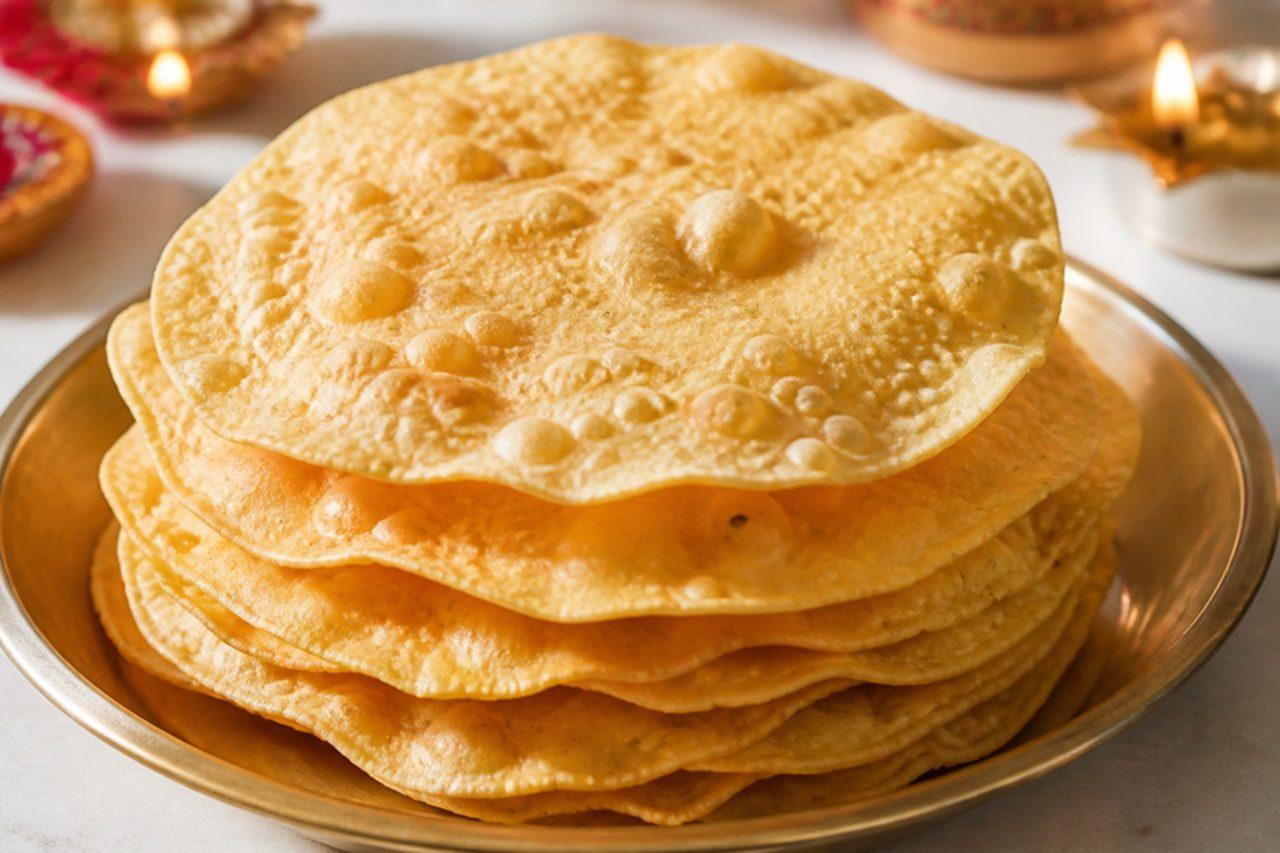
MathiaMoong and urad dal wafers
Mathia are thin, crisp, slightly sweet and peppery wafers made from mathia flour, a mix of ground husked moong and urad dal. They are a classic Gujarati Diwali snack. The dough is pounded until pale, rolled very thin between plastic sheets and fried one at a time. They are fragile, so store them gently. To make mathia flour, finely grind 4 parts husked green gram lentils with 1 part husked black gram lentils.