
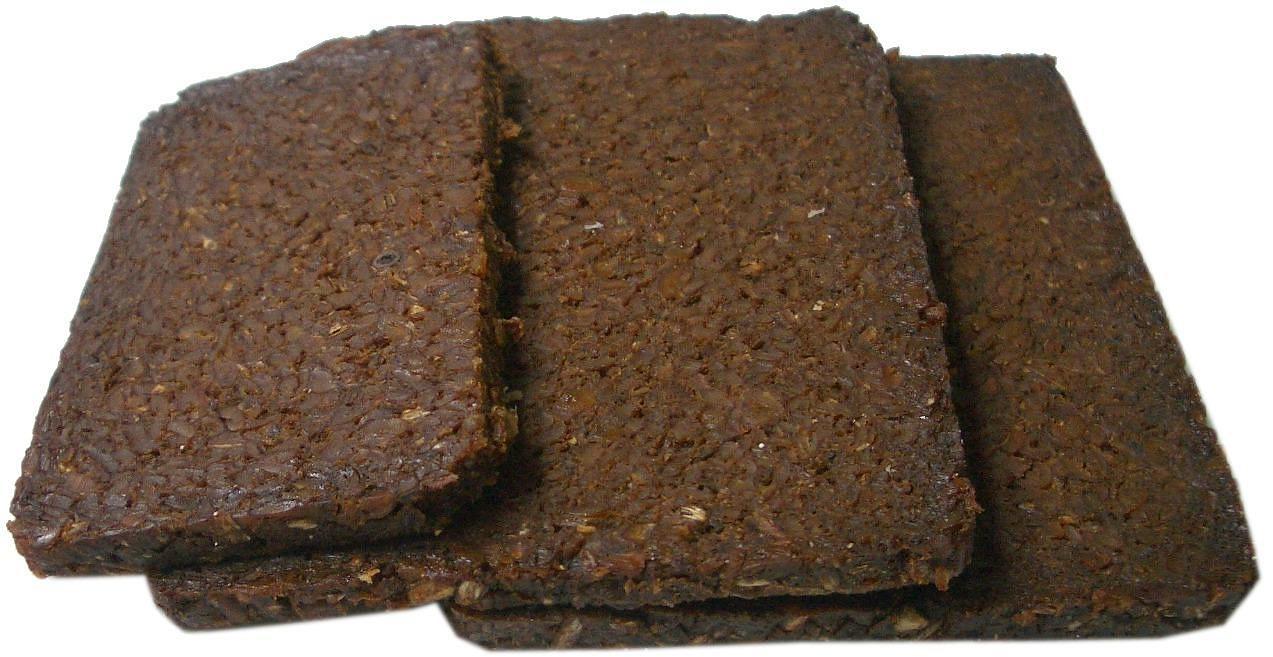
Westphalian pumpernickel
Pumpernickel: dark whole-rye bread steam-baked overnight in a lidded tin


Real pumpernickel comes from Westphalia, where bakers in towns like Soest once left loaves in the cooling bread oven overnight, and it is still sliced paper-thin for breakfast with butter, quark and radishes or with a sharp cheese. There is no colouring and no molasses here: the near-black colour and the malty sweetness come only from cracked rye cooked for many hours in steam at a low heat. The crumb is moist, dense and slightly sticky, and the loaf keeps for over a week wrapped in cloth. A common mistake is slicing it on the day it comes out of the tin; it needs a full day to settle or it tears into gummy crumbs. Chef's tip: wrap the tin tightly in two layers of foil and stand it in a roasting tray of hot water, because a dry loaf turns hard instead of dark and sweet.
- Total time
- 1440 min
- Difficulty
- hard
- Serves
- 16
Ingredients
For the soaker
- 3 ½ oz stale rye bread, crusts onbroken into pieces
- 2 cups boiling water
For the leaven
- 5 ½ oz dark rye flour
- ¾ cup warm water
For the dough
- 9 oz coarse rye meal
- ⅝ oz salt
- ½ cup warm water
- 1 tsp sunflower oilfor the tin
Shop this recipe on Amazon
What you'll need
Spices & pantry
Links open Amazon in a new tab. As an Amazon Associate, WhatToEat.Today earns from qualifying purchases.
Method
0/6 doneStep 1: The evening before, pour the 2 cups boiling water over the 1 ⅛ lb coarse rye meal (cracked rye, Roggenschrot) and 3 ½ oz stale rye bread, crusts on in a bowl, stir, cover and leave overnight. In another bowl mix the 1 oz active rye sourdough starter, 5 ½ oz dark rye flour and ¾ cup warm water into a thick paste, cover and leave at room temperature for 12 hours, until bubbly and smelling sour.
20 minStep 2: Next morning, mash the soaked bread into the rye meal with a spoon. Add the leaven, 9 oz coarse rye meal, ⅝ oz salt, 2 tbsp sugar beet syrup or dark golden syrup and ½ cup warm water and mix with a wet hand or a stiff spatula for 5 minutes into a heavy, sticky mass. Rye dough is not kneaded; just make sure there are no dry pockets.
10 minStep 3: Brush a 1 kg (30 × 11 cm) loaf tin with the 1 tsp sunflower oil. Press the dough in with a wet spatula and smooth the top. Cover and leave in a warm place for 2–3 hours, until the surface shows small cracks and the dough has risen by about a quarter.
150 minStep 4: Heat the oven to 300°F (275°F fan). Wrap the tin very tightly in two layers of foil and set it in a deep roasting tray. Pour boiling water into the tray to come halfway up the tin.
10 minStep 5: Bake for 1 hour, then turn the oven down to 225°F (194°F fan) and leave for 12–13 hours more, topping up the water tray once or twice. The loaf is ready when the crumb is dark brown-black and a thin skewer comes out moist but clean.
780 minStep 6: Unwrap, turn the loaf out onto a rack and cool completely. Wrap in a clean cloth and rest for 24 hours before slicing very thinly with a sharp serrated knife. It keeps 10 days wrapped, or freezes in slices.
30 min
Nutrition per serving
- Calories
- 150 kcal
- Protein
- 4 g
- Carbs
- 30 g
- Fat
- 1 g
- Fibre
- 6 g
Nutrition values are estimates.
KrazyBadal
Good to know
- How long does westphalian pumpernickel take?
- About 1440 minutes in total: 600 minutes to prepare and 840 minutes to cook.
- How many people does it serve?
- 16 as written. Change the servings above the ingredients and every amount scales to match.
- Is it vegan?
- Yes. It has no meat, fish, dairy or eggs.
- Can I make it ahead?
- Yes. It keeps well, so you can cook it earlier in the day or the day before and reheat it.
Reviews
No reviews yet. Be the first to cook it.
Rate this recipe
Sign in to rate and review this recipe.
You might also like

ChipaCheese bread rings
In Paraguay you hear 'chipa, chipa!' called by vendors with big baskets on buses and street corners, and every family bakes it for Holy Week, when chipa is the food of Good Friday. Cassava starch, a little cornmeal, butter, eggs and a lot of hard cheese are kneaded into a dough scented with aniseed, shaped into rings or small rolls and baked in a hot oven, traditionally a domed clay tatakua. It's chewy, crisp outside and best warm with cocido (toasted yerba tea). Chef's tip: the dough should feel soft and slightly greasy; add milk a spoon at a time, as too much makes the chipa spread flat.
 Paraguayan

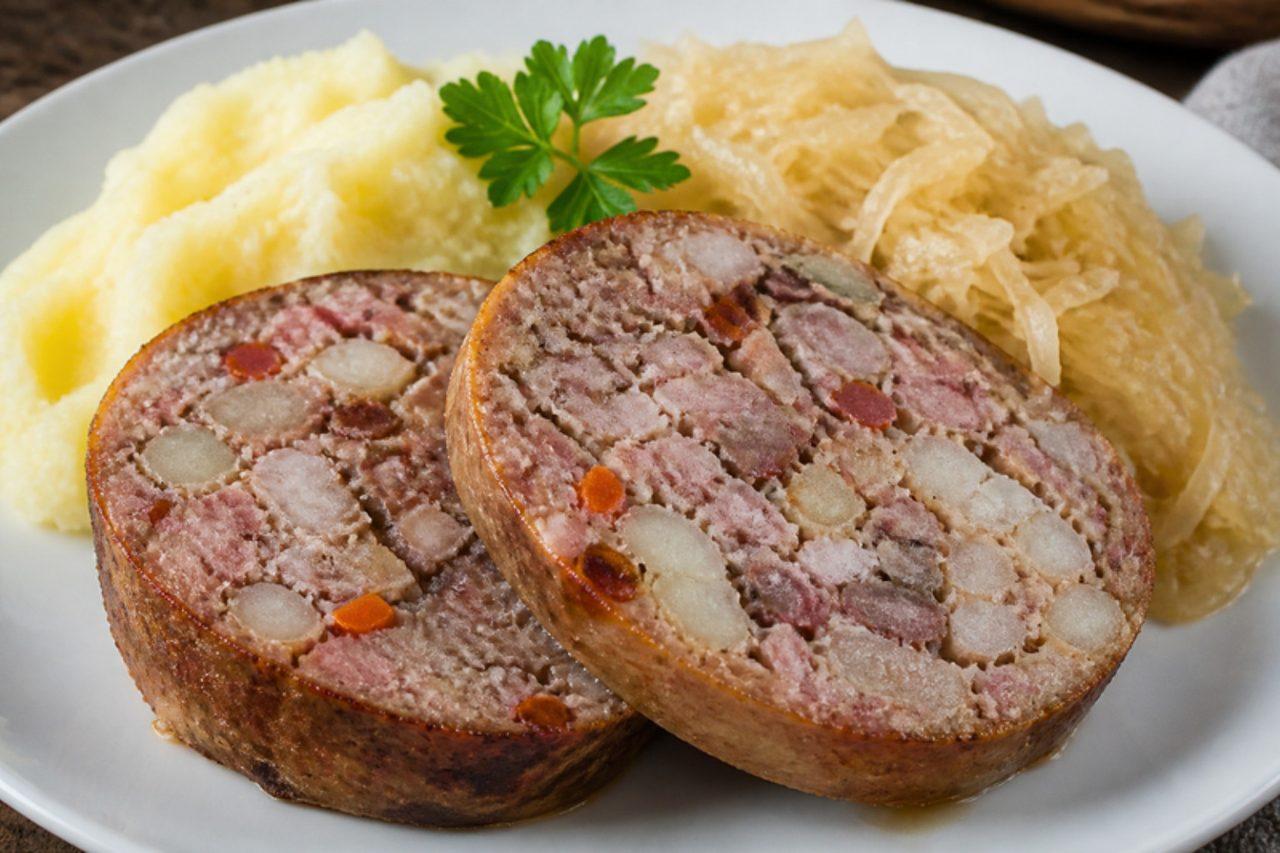
Pfälzer SaumagenStuffed pig's stomach
Saumagen is the pride of the Palatinate, served at wine-village festivals and family dinners from the Haardt hills to Ludwigshafen. A cleaned pig's stomach is stuffed with diced pork shoulder, pork sausage meat, potato and carrot seasoned with marjoram and nutmeg, poached slowly, then sliced thick and fried until crusty. The stomach works only as a casing and is ordered from a butcher; if you can't get one, bake the same filling in a covered terrine in a water bath. Serve with sauerkraut and mashed potato. Chef's tip: fill the stomach only three-quarters full, or it bursts as the potatoes swell.
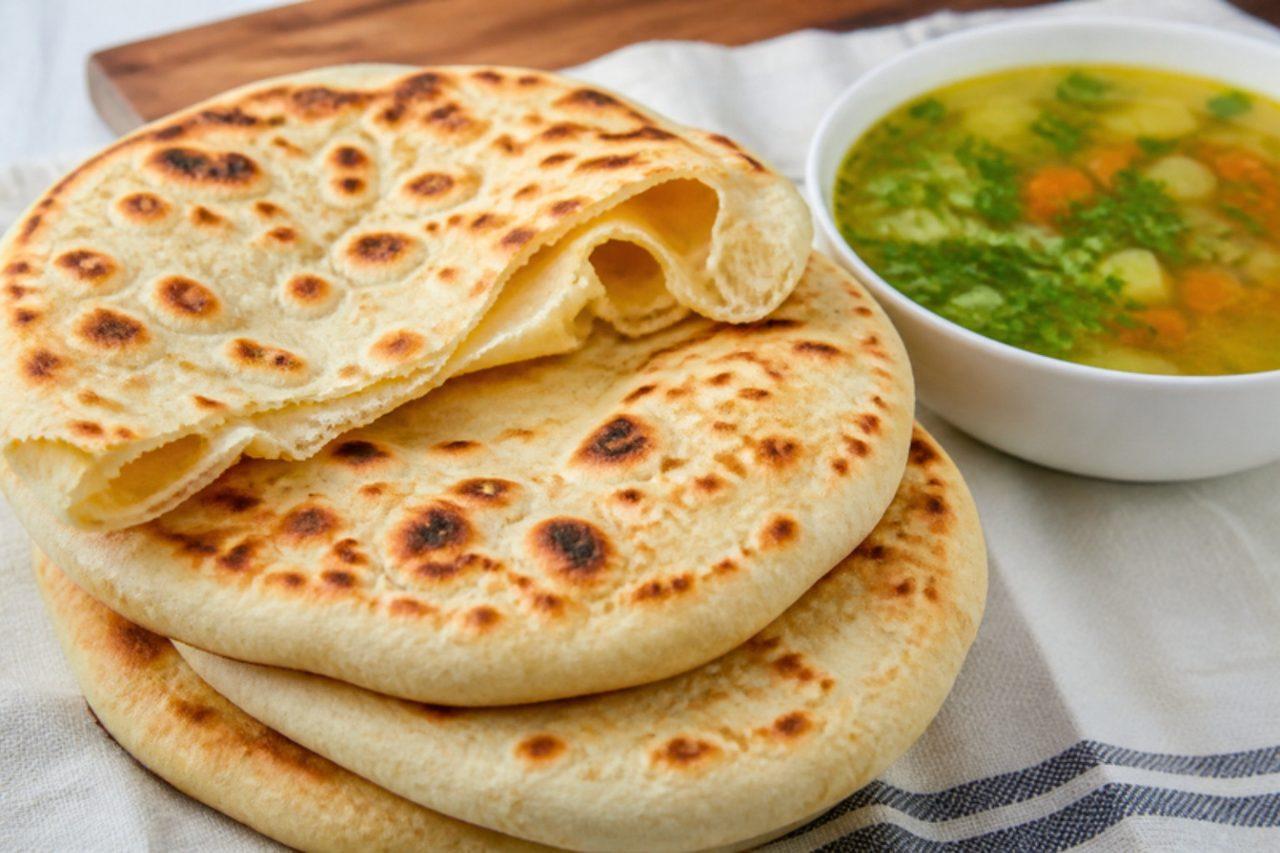
SalufPuffy flatbread
Saluf is the everyday bread of Yemenite Israelis, slapped onto a hot pan or taboon in Rosh HaAyin and Sha'arayim in Rehovot and eaten with marak temani, hilbe and zhug. It is soft and blistered, thicker than pita and with no pocket, made to tear and dunk. Home cooks often roll it too thin, which gives a cracker; it should be about 1 cm thick so it stays pillowy. Chef's tip: cook it under a lid on a very hot dry pan for the first minute, which traps steam and puffs it the way a taboon does.
 Israeli
