
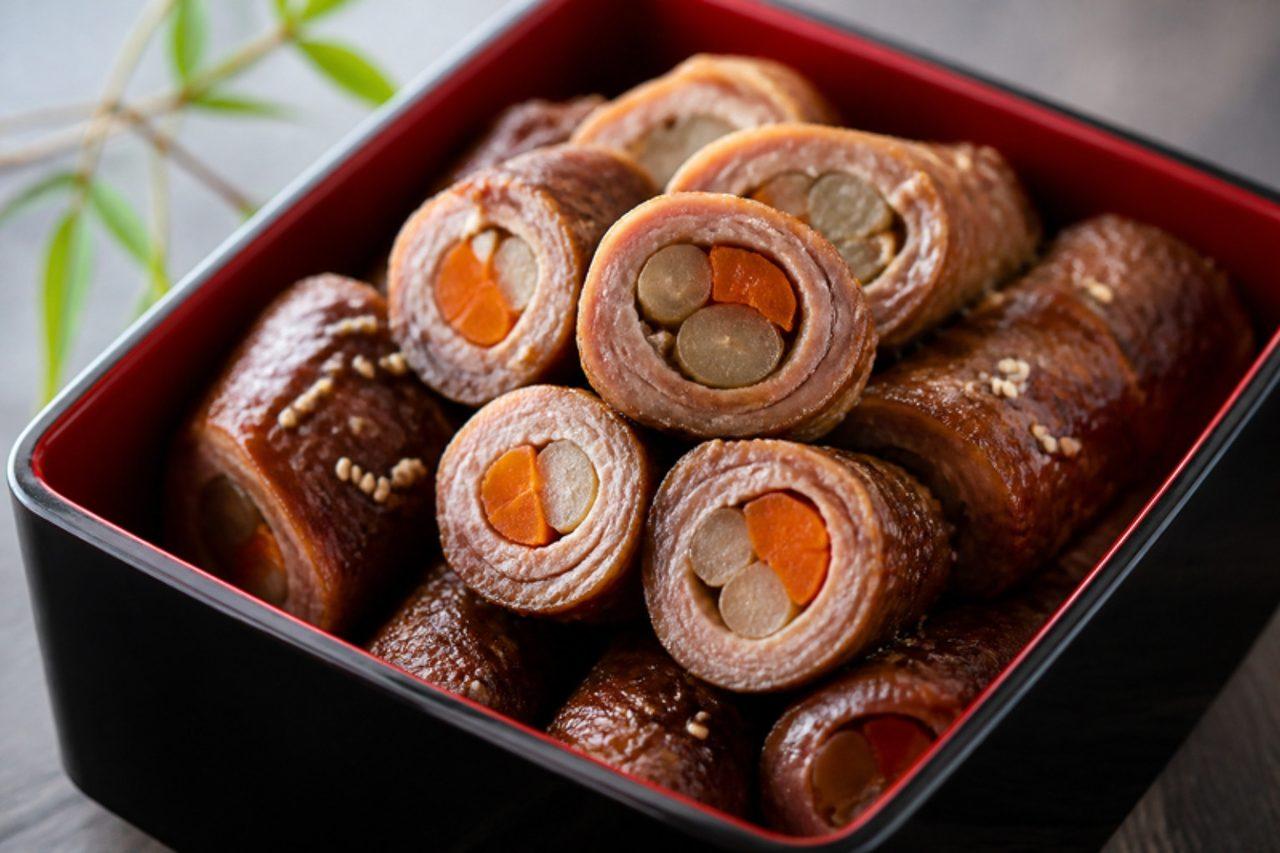
AI-generated image
Yawata-maki (beef-wrapped burdock)
Tender simmered burdock rolled in thin beef and glazed in sweet soy

Yawata-maki is named after Yawata, south of Kyoto, once famous for its burdock, and it graces the Shōgatsu osechi box because burdock roots grow long and deep: a wish for a family rooted firmly and prosperous for many years. Pre-simmered burdock stays earthy and tender with a little bite, wrapped in thin slices of beef that brown and then glisten under a sweet soy glaze; cut, each piece shows a neat spiral. The glaze uses sake and mirin, both rice wines; for no alcohol, use water instead of the sake and 2 tbsp water plus 2 tsp sugar instead of the mirin. Serve at room temperature in the osechi box, or warm with rice and pickles. Chef's tip: roll the beef tightly and start cooking seam-side down; the seam seals and the rolls hold without string.
- Total time
- 60 min
- Difficulty
- medium
- Serves
- 4
Ingredients
For the burdock
- 7 oz burdock root (gobō)1 long root, skin scraped, cut into 15 cm lengths and quartered into sticks
- 1 carrot (optional)cut into sticks like the burdock
- 1 ¼ cups dashi
- 4 tbsp soy saucedivided
- 2 tbsp sugardivided
For the rolls
- 1 tbsp plain flour or potato starch
- 1 tbsp neutral oil
- 2 tbsp sakeor water for no alcohol
- 2 tbsp mirinor 2 tbsp water + 2 tsp sugar for no alcohol
- 1 tsp toasted white sesame seeds (optional)to serve
Shop this recipe on Amazon
What you'll need
Spices & pantry
Fresh ingredients (2)
Links open Amazon in a new tab. As an Amazon Associate, WhatToEat.Today earns from qualifying purchases.
Method
0/6 doneStep 1: Soak 7 oz burdock root (gobō) in cold water for 5 minutes until the water turns brown, then drain.
5 minStep 3: Lay 2–3 slices of 10 ½ oz thinly sliced beef (sukiyaki or shabu-shabu cut) on a board, slightly overlapping, to make a sheet about 15 cm wide. Dust lightly with 1 tbsp plain flour or potato starch, put a bundle of 4–5 vegetable sticks at one end and roll up tightly. Make 4 rolls and dust the outsides with the rest of the flour.
8 minStep 4: Heat 1 tbsp neutral oil in a frying pan over medium heat and add the rolls seam-side down. Cook for 6–8 minutes, turning, until browned all over and the seams are sealed. Common mistake: turning them before the seam has set, so they unroll.
8 minStep 6: Let the rolls rest for 5 minutes, then cut into 3 cm pieces to show the spiral, scatter with 1 tsp toasted white sesame seeds and spoon over any glaze. They keep 3 days in the fridge.
6 min
Nutrition per serving
- Calories
- 340 kcal
- Protein
- 18 g
- Carbs
- 18 g
- Fat
- 21 g
- Fibre
- 3 g
Nutrition values are estimates.
KrazyBadal
Good to know
- How long does yawata-maki (beef-wrapped burdock) take?
- About 60 minutes in total: 20 minutes to prepare and 40 minutes to cook.
- How many people does it serve?
- 4 as written. Change the servings above the ingredients and every amount scales to match.
- Can I make it ahead?
- Yes. It keeps well, so you can cook it earlier in the day or the day before and reheat it.
- What can I use instead of soy sauce?
- Tamari, same amount (gluten free).
- What can I use instead of sugar?
- Caster sugar, same amount.
Reviews
No reviews yet. Be the first to cook it.
Rate this recipe
Sign in to rate and review this recipe.
You might also like

Yaki onigiriGrilled rice balls
Yaki onigiri (焼きおにぎり) are rice balls grilled until they form a crisp, toasty crust, then brushed with soy sauce glaze. They are eaten all over Japan, at izakaya, at barbecues and from the freezer section, as a snack or with miso soup. The inside stays soft and steamy while the outside crackles. Best eaten hot, straight from the pan. Chef's tip: let the shaped rice balls dry for 10 minutes before they go in the pan. A drier surface forms a better crust and won't stick, and the glaze goes on only at the end so it doesn't burn.


Miso soup
Miso soup (味噌汁) is drunk every day in homes all over Japan, at breakfast as well as dinner, beside a bowl of rice. The base is dashi; this vegan version uses kombu and dried shiitake instead of bonito, which gives it a deep, rounded flavour. Silken tofu and wakame seaweed are the classic fillings. It takes ten minutes; just remember not to boil the miso. Chef's tip: add the miso at the very end and never let it boil. Boiling kills the miso's fresh, fermented aroma; Japanese cooks say the soup should only 'smile', with the surface barely trembling.
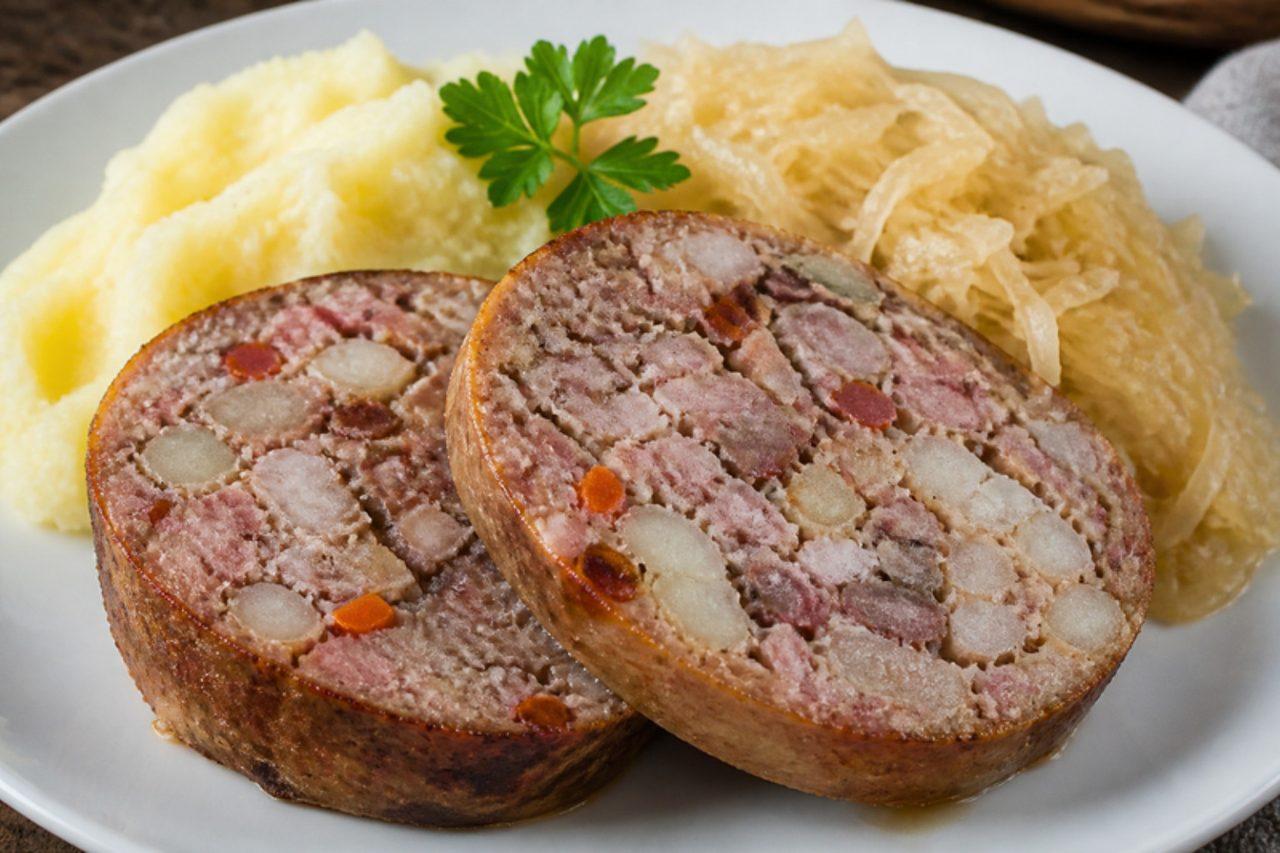
Pfälzer SaumagenStuffed pig's stomach
Saumagen is the pride of the Palatinate, served at wine-village festivals and family dinners from the Haardt hills to Ludwigshafen. A cleaned pig's stomach is stuffed with diced pork shoulder, pork sausage meat, potato and carrot seasoned with marjoram and nutmeg, poached slowly, then sliced thick and fried until crusty. The stomach works only as a casing and is ordered from a butcher; if you can't get one, bake the same filling in a covered terrine in a water bath. Serve with sauerkraut and mashed potato. Chef's tip: fill the stomach only three-quarters full, or it bursts as the potatoes swell.
 German
