
AI-generated image
Yukari shiso salt
Red shiso rice seasoning
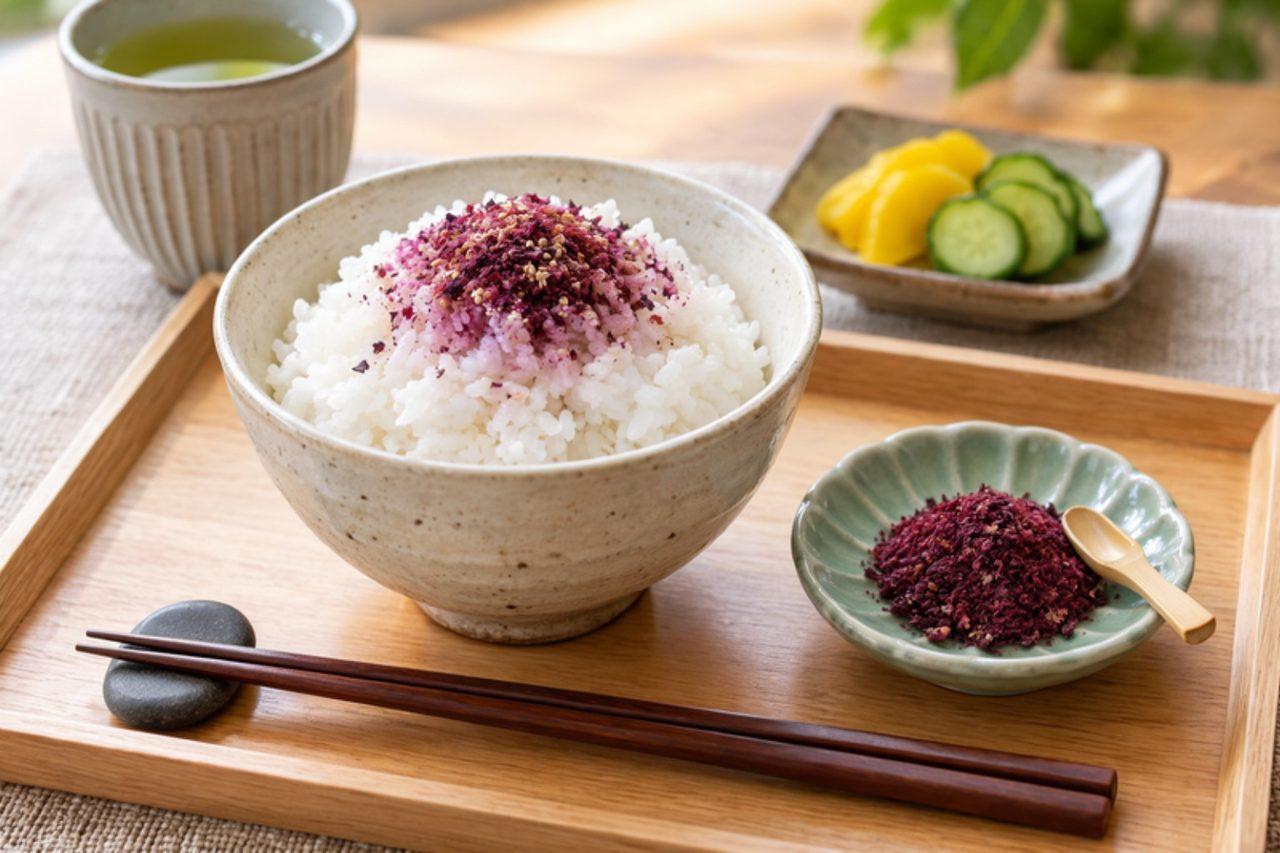
Yukari (ゆかり): tangy purple sprinkle of salted, dried red shiso for bento rice



Yukari is the bright purple, salty-sour shaker that Japanese parents sprinkle over plain rice so that a bento looks cheerful and tastes of something even when it has gone cold. Traditionally it is made from the red shiso leaves left after pickling umeboshi plums; this home version gets the same flavour by salting and souring fresh red shiso in early summer. The common mistake is drying the leaves too hot, which turns them brown and bitter. Chef's tip: keep the oven no hotter than 80 °C and leave the door ajar, and the colour stays a jewel-like magenta.
- Total time
- 120 min
- Difficulty
- easy
- Serves
- 20
Ingredients
- 3 ½ oz red shiso leavesstalks removed
- 2 tbsp saltdivided
Shop this recipe on Amazon
What you'll need
Spices & pantry
Links open Amazon in a new tab. As an Amazon Associate, WhatToEat.Today earns from qualifying purchases.
Method
0/5 doneStep 1: Wash 3 ½ oz red shiso leaves and dry it well. Rub with 1 tbsp salt in a bowl until the leaves wilt and release dark, frothy juice. Squeeze hard and discard the juice.
Step 2: Rub again with the remaining 1 tbsp salt, squeeze, and discard the juice again.
Step 3: Pour 3 tbsp ume plum vinegar or rice vinegar over the leaves and toss; they will turn a vivid magenta. Leave for 10 minutes, then squeeze out lightly.
10 minStep 4: Spread the leaves on a lined tray and dry in the oven at 70–176°F with the door slightly open for 1½ hours, until crisp and crumbly.
90 minStep 5: Cool, then grind to a coarse powder in a mortar or spice grinder. Keep in an airtight jar for up to 6 months and sprinkle over rice or onigiri.
Nutrition per serving
- Calories
- 2 kcal
- Protein
- 0 g
- Carbs
- 0 g
- Fat
- 0 g
- Fibre
- 0 g
Nutrition values are estimates.
KrazyBadal
Good to know
- How long does yukari shiso salt take?
- About 120 minutes in total: 20 minutes to prepare and 100 minutes to cook.
- How many people does it serve?
- 20 as written. Change the servings above the ingredients and every amount scales to match.
- Is it vegan?
- Yes. It has no meat, fish, dairy or eggs.
- Is it gluten free?
- Yes, as written. Check the labels on stock, sauces and spice mixes, which sometimes contain gluten.
- Can I make it ahead?
- Yes. It keeps well, so you can cook it earlier in the day or the day before and reheat it.
- What can I use instead of ume plum vinegar or rice vinegar?
- Cider vinegar with a pinch of sugar, same amount.
Reviews
No reviews yet. Be the first to cook it.
Rate this recipe
Sign in to rate and review this recipe.
You might also like

Vegetable brown stock
A hearty stock that's simmered for 2 hours, then blended and strained, so the potato gives it body. Its deeper flavour suits thick soups, gravies and stews. Freeze it in portions so it's ready when you need it.



Yaki onigiriGrilled rice balls
Yaki onigiri (焼きおにぎり) are rice balls grilled until they form a crisp, toasty crust, then brushed with soy sauce glaze. They are eaten all over Japan, at izakaya, at barbecues and from the freezer section, as a snack or with miso soup. The inside stays soft and steamy while the outside crackles. Best eaten hot, straight from the pan. Chef's tip: let the shaped rice balls dry for 10 minutes before they go in the pan. A drier surface forms a better crust and won't stick, and the glaze goes on only at the end so it doesn't burn.

Miso soup
Miso soup (味噌汁) is drunk every day in homes all over Japan, at breakfast as well as dinner, beside a bowl of rice. The base is dashi; this vegan version uses kombu and dried shiitake instead of bonito, which gives it a deep, rounded flavour. Silken tofu and wakame seaweed are the classic fillings. It takes ten minutes; just remember not to boil the miso. Chef's tip: add the miso at the very end and never let it boil. Boiling kills the miso's fresh, fermented aroma; Japanese cooks say the soup should only 'smile', with the surface barely trembling.