Skip to content

Recipes with pumpkin

28 recipes that use pumpkin, with photos, step-by-step instructions and cook times. The quickest, Chhum han, takes 25 minutes. It is most often cooked with garlic, onion and ginger.

Got a few things in the fridge? Search by everything you have

Ital stew

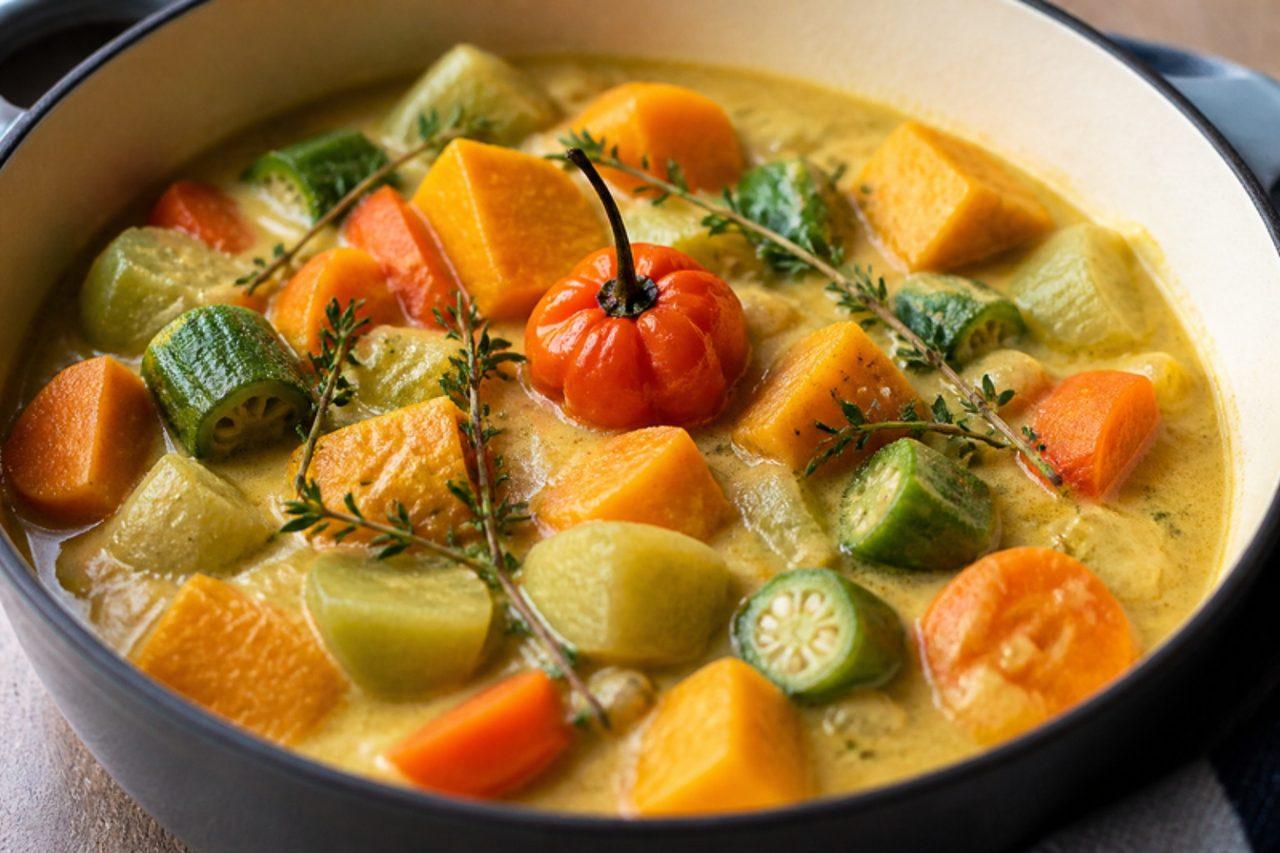
Ital food is the cooking of the Rastafari, found from the hills of St Andrew to roadside Ital shops in Westmoreland and St Thomas. It is plant-based, close to the earth and traditionally made without added salt, built on fresh 'food' (ground provisions) and greens. This stew is golden and gently sweet, thickened by melting pumpkin and silky okra, with coconut milk, thyme and pimento giving warmth and a whole scotch bonnet giving fruity heat. Serve with rice and peas or boiled green bananas. Chef's tip: cut half the pumpkin very small and the other half in big chunks. The small pieces collapse into the coconut milk and thicken it naturally, while the big ones hold their shape.

45 minCurriesVeganGluten free
by KrazyBadal 0 views

Vegetable pelau

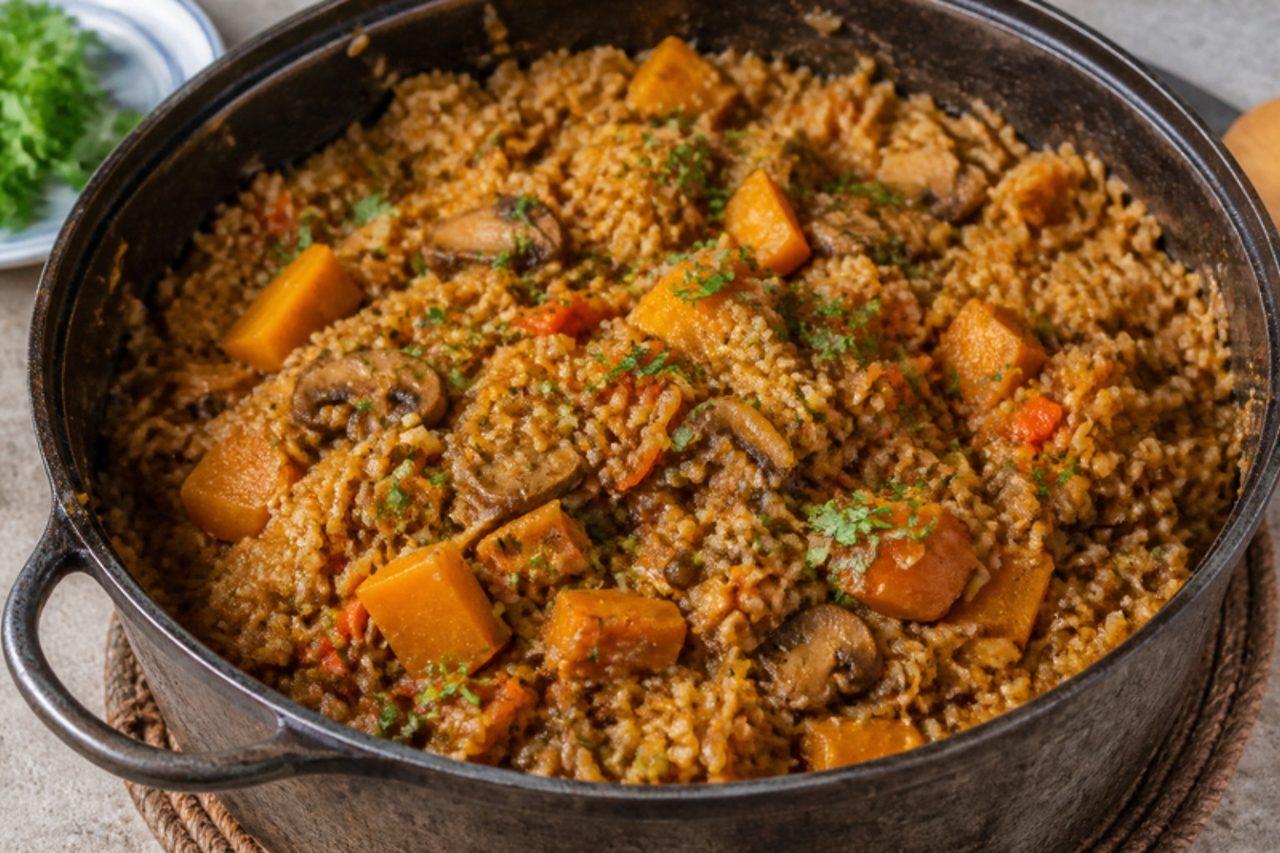
Pelau is the dish of the Trinidad beach lime and family gathering: rice and pigeon peas cooked in one big pot, coloured a deep brown by sugar caramelised in oil until almost burnt, then simmered with coconut milk, green seasoning and a whole hot pepper. It's usually made with chicken; here deeply browned mushrooms and chunks of pumpkin carry the savoury depth, so it's still rich, smoky-sweet and moreish. Serve with coleslaw, sliced cucumber and pepper sauce. Chef's tip: let the sugar go further than feels safe: it should melt, froth and turn the colour of dark chocolate, just starting to smoke, before anything goes in. Too pale and the pelau tastes sweet; too black and it's bitter.

by KrazyBadal 0 views

Trini callaloo soup

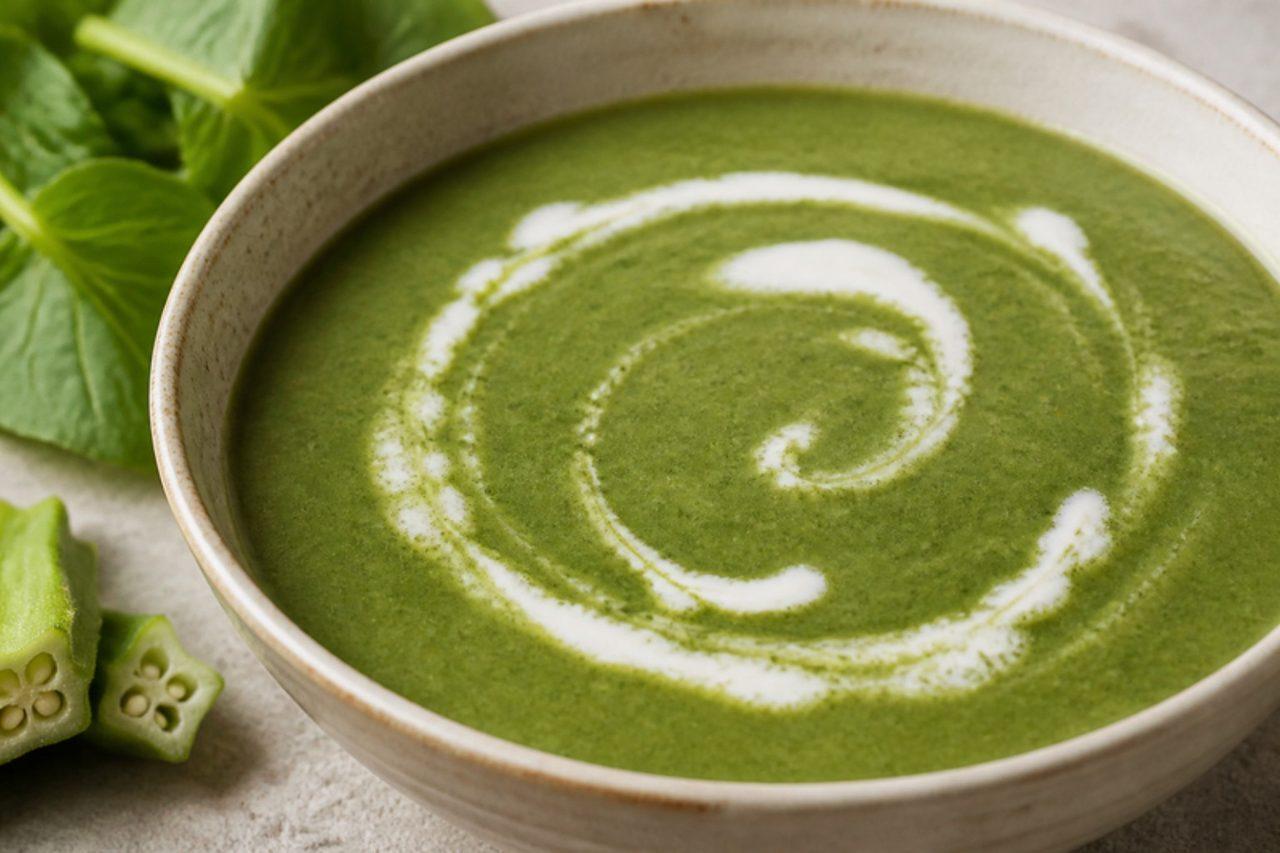
Callaloo is Trinidad and Tobago's national dish and part of the classic Sunday lunch, served beside rice, macaroni pie and stewed peas. Dasheen bush (young taro leaves) is simmered with okra, pumpkin, coconut milk, onion, garlic, chives and thyme, then beaten smooth with a wooden swizzle stick into a thick, velvety green soup. It's usually cooked with crab or salt pork; this vegetarian version leaves them out and adds a pinch of smoked paprika for depth. Spinach and Swiss chard can replace dasheen. Chef's tip: cook the dasheen leaves for at least 25–30 minutes. They must be very soft, both to swizzle silky smooth and because undercooked dasheen leaves make your throat itch.

50 minSoupsVeganGluten free
by KrazyBadal 0 views

Dalma

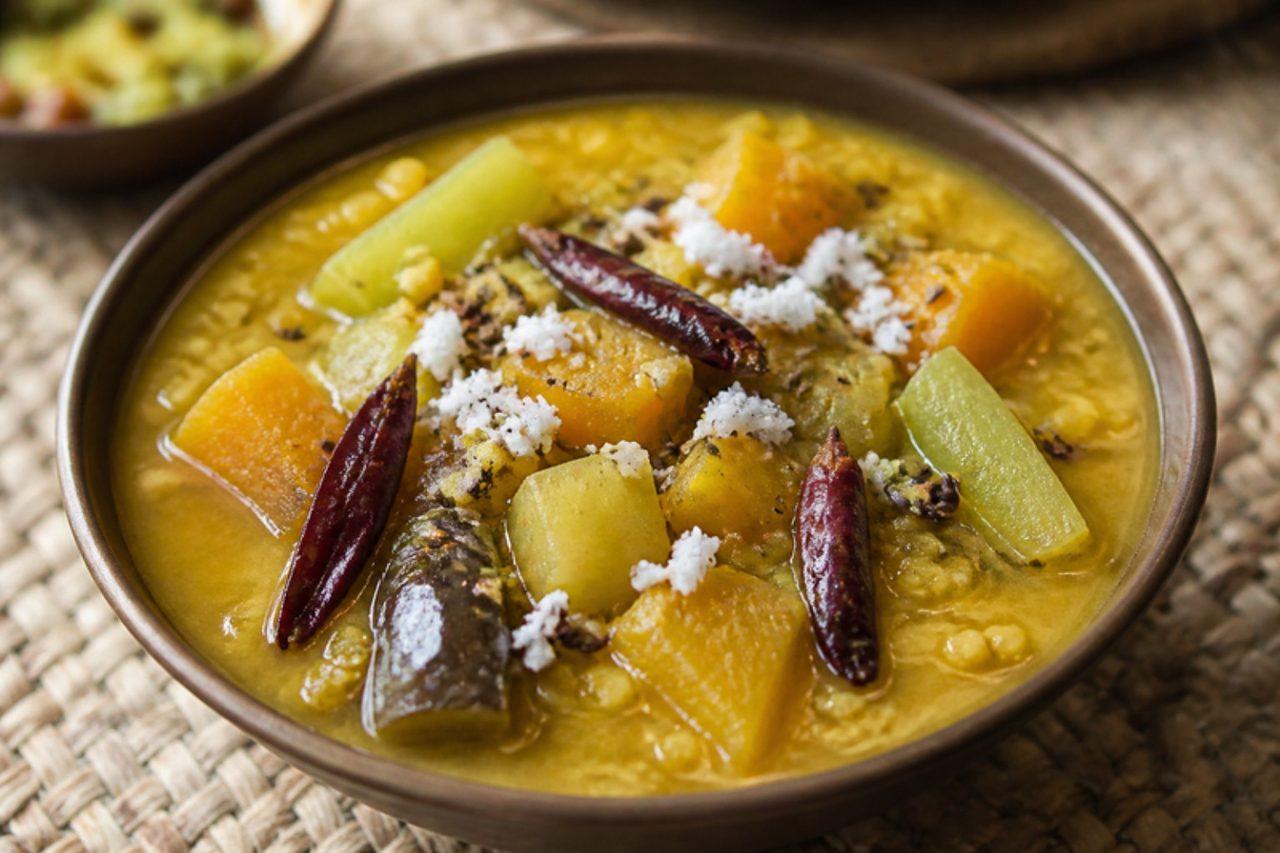
Dalma is the comfort food of Odisha and the dal offered at the Jagannath temple in Puri. Toor dal is cooked together with chunky vegetables, usually raw banana, pumpkin, aubergine and potato, so they soften into it and make it hearty enough to be a meal. A tempering of panch phoron and dried chilli and a sprinkle of roasted cumin-chilli powder give it its smoky warmth; a little grated coconut is often added on top. Odia homes finish it with a spoonful of ghee; this version uses oil so it stays vegan. Serve with plain rice. Chef's tip: add the vegetables halfway through cooking the dal, not at the start, so they keep their shape and the dal stays thick rather than watery.

40 minCurriesVeganGluten freeIndian
by KrazyBadal 0 views

Picarones

Picarones are Lima's favourite street sweet, fried to order at stalls in the parks and outside churches, especially in October during the Señor de los Milagros processions. The light, chewy rings are made from a yeasted dough of sweet potato and squash, scented with anise, fried until crisp and drenched in miel de chancaca, a dark syrup of unrefined cane sugar with orange peel, cinnamon and cloves. They are eaten hot, straight from the oil, with plenty of syrup. Chancaca is sold in Latin shops; dark muscovado or piloncillo makes a very good syrup too. Chef's tip: the dough should be very soft and sticky, like a thick batter; resist adding more flour, or the picarones turn heavy and bready.

80 minDessertsVegan
by KrazyBadal 0 views

Seven-vegetable couscous (bidaoui)

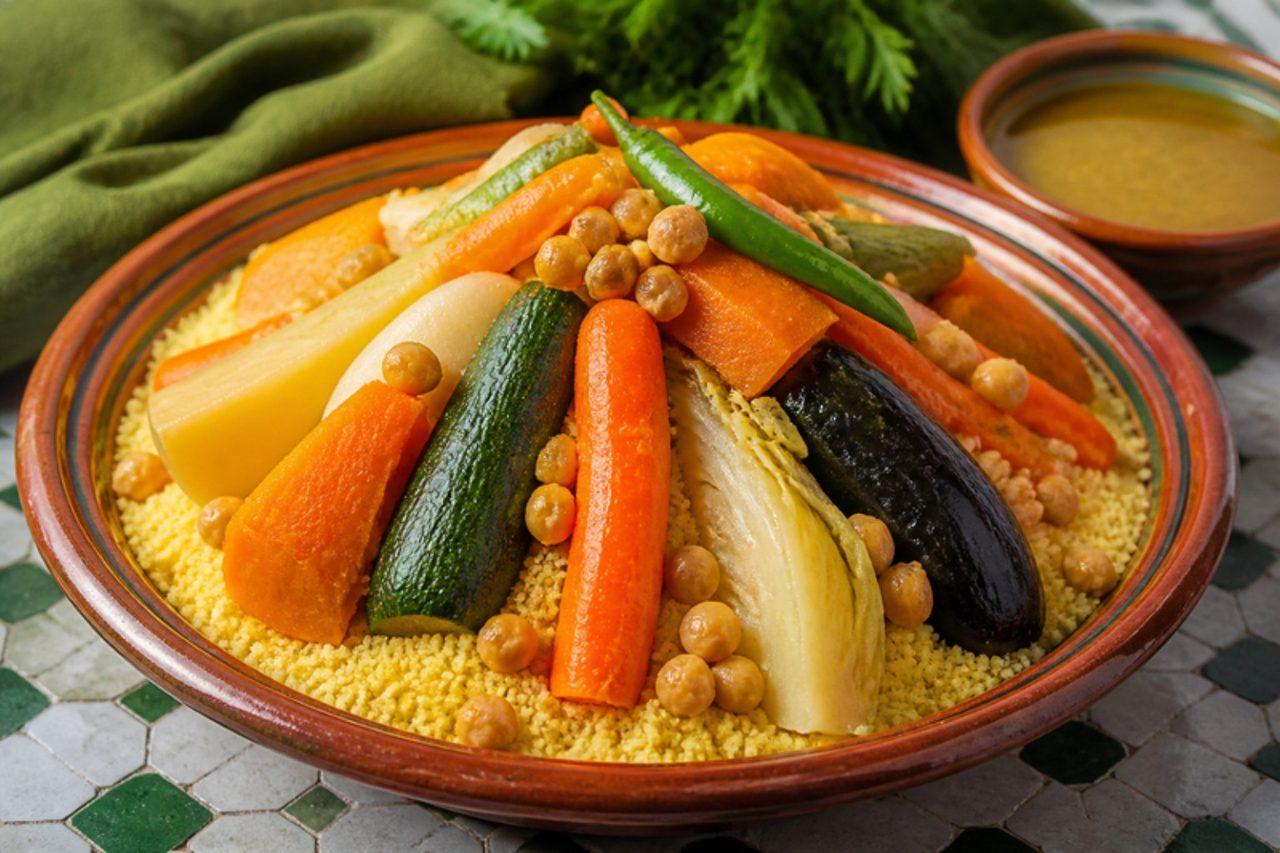
In Casablanca, Friday lunch after midday prayers means couscous bidaoui, the city's own version piled with seven vegetables, from pumpkin and turnip to cabbage and carrot. Families eat it from one great dish, each person working on their own corner of the mound, with extra broth ladled on as they go. The grains are steamed twice over the simmering broth so they swell into separate, fluffy beads that soak up the flavour without turning soggy. This vegetarian version builds the broth from onion, tomato, saffron and chickpeas, so it is rich enough without meat. Chef's tip: rub the couscous between your palms after each steaming to break up every clump; that is what makes it light.

by KrazyBadal 0 views

Duba wat

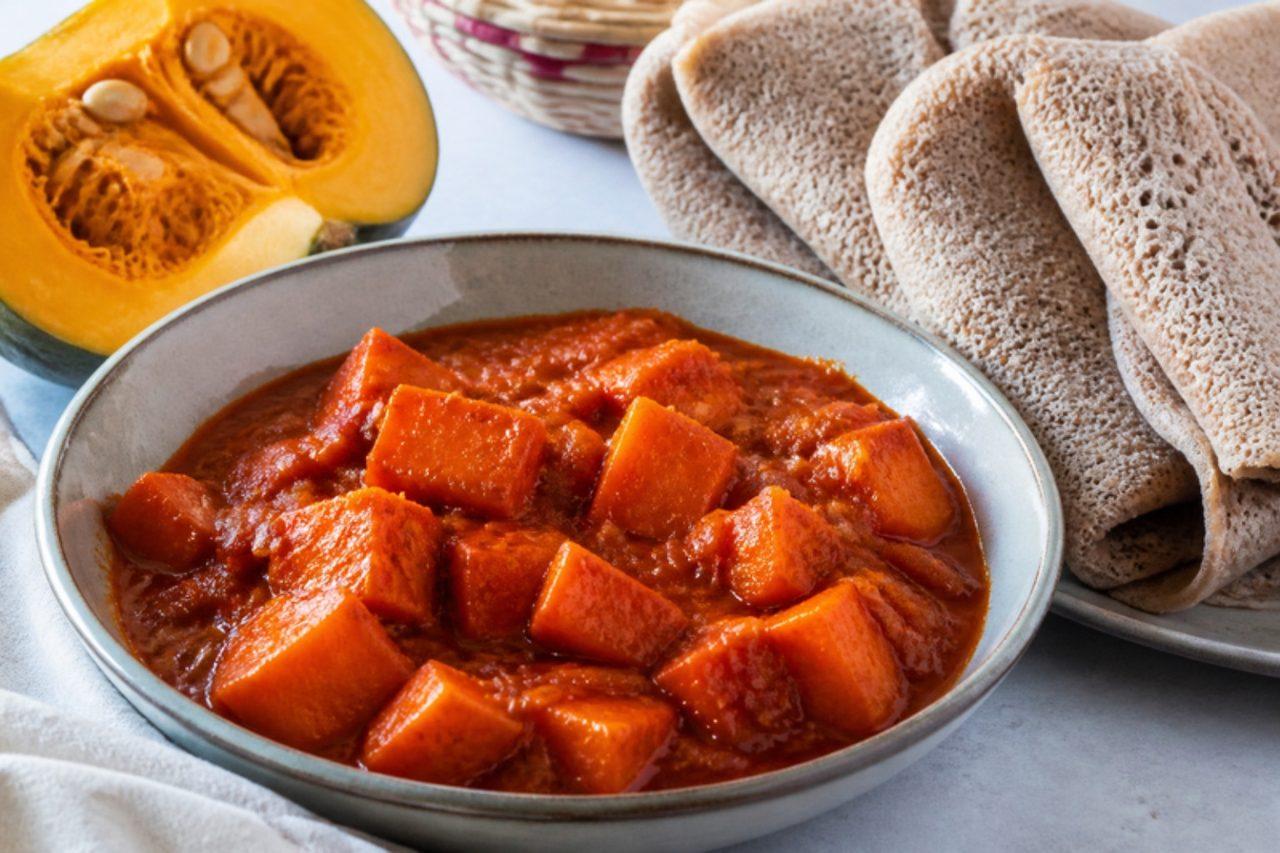
Duba wat is a fasting-season stew from the Ethiopian highlands, made when pumpkins are plentiful after the rains around Meskel in late September. Chunks of pumpkin are cooked in a classic red wat base of slow-cooked onion, garlic and berbere, so the sweetness of the squash plays against the heat of the spices. It is softer and sweeter than most wats and goes well with gomen and injera. Chef's tip: add the pumpkin only once the onion and berbere base is fully cooked and glossy; raw-tasting berbere spoils the dish.

40 minCurriesVeganGluten free
by KrazyBadal 0 views

Pumpkin kibbeh

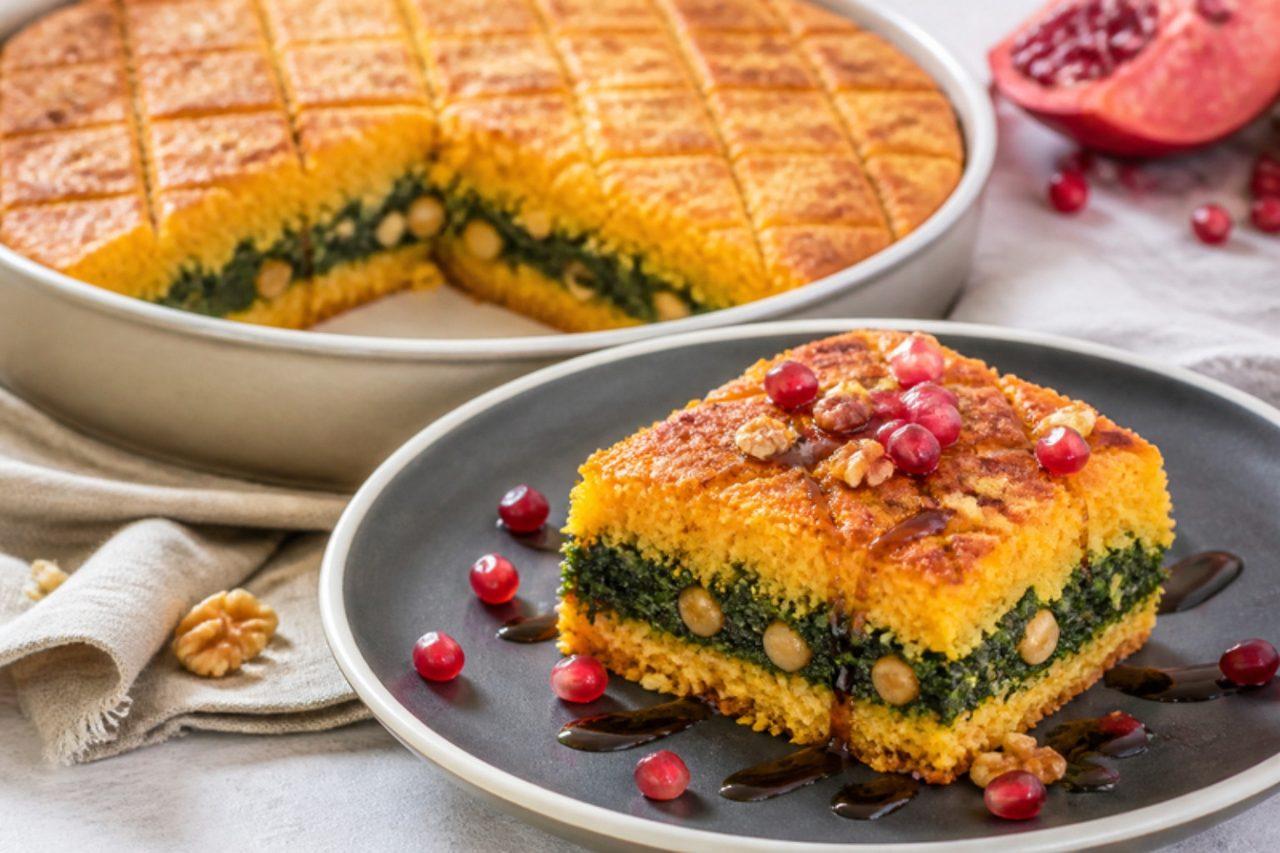
Kibbet laqteen is the Lenten kibbeh of Lebanon's Christian villages, made in the weeks before Easter when meat is off the table: roasted pumpkin is kneaded with fine bulgur, onion and warm spices into a soft dough, which is pressed in layers around a filling of caramelised onion, chickpeas, spinach and walnuts, then baked in a round tray. It is cut into diamonds and eaten warm or cold, often with a plate of pickles and a bowl of salad. The common slip is a wet pumpkin, which makes the dough too sticky to spread; roast the pumpkin rather than boiling it. Chef's tip: score a deep diamond pattern before baking and pour oil into the cuts, so every piece comes out with crisp edges.

75 minVegetarianVegan
by KrazyBadal 0 views

Wattakka curry

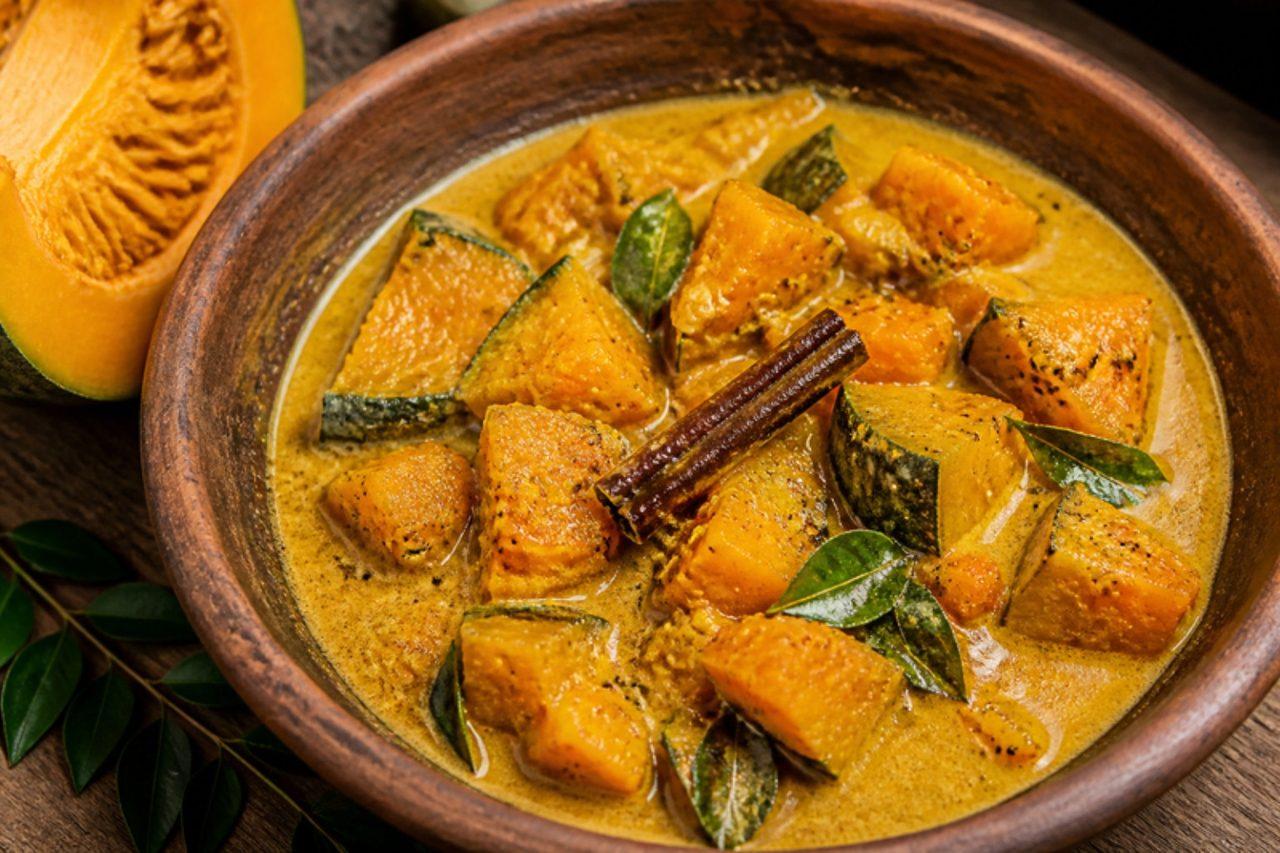
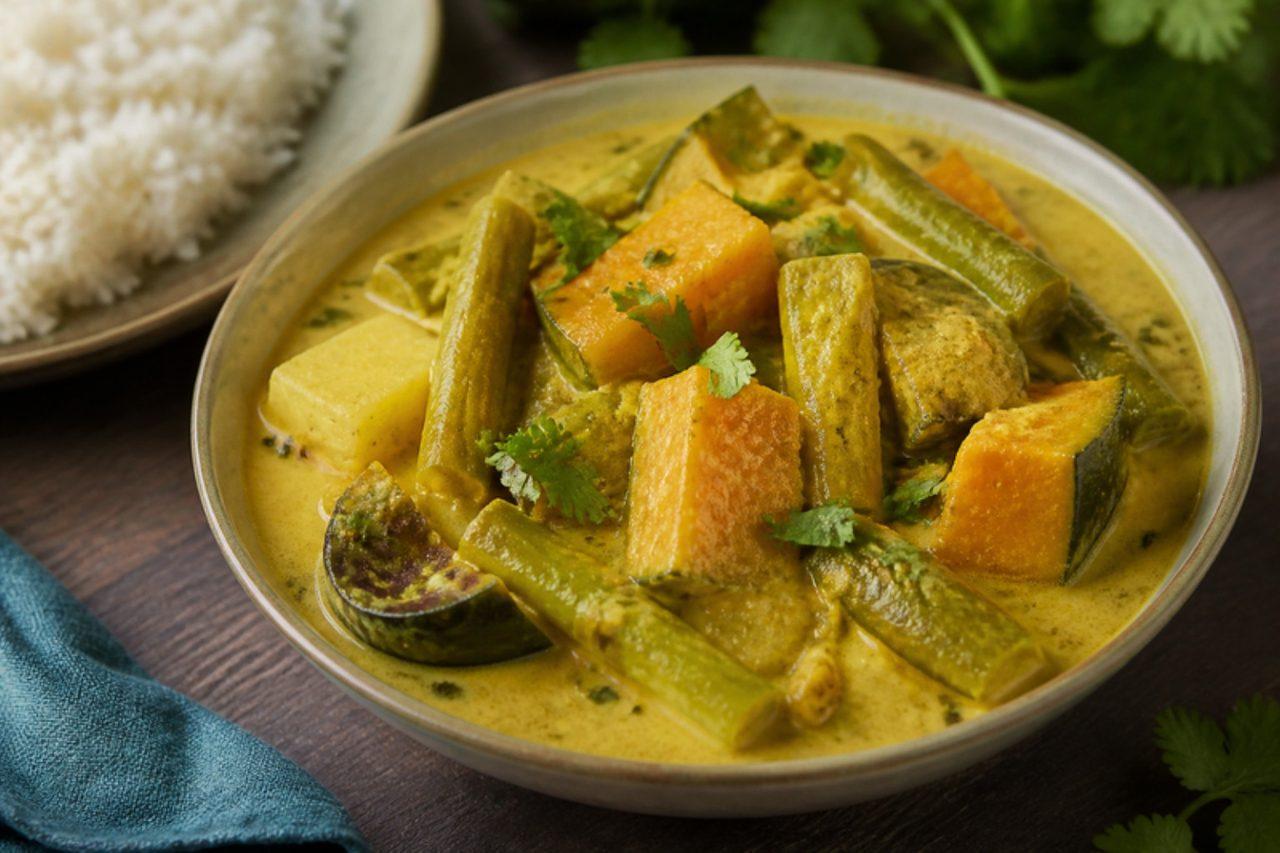
Wattakka (pumpkin) curry is one of the soft, sweet dishes on a Sri Lankan buth (rice) spread, and in villages around Kurunegala it often appears at Poya day almsgivings, when temple meals are always meat-free. The pumpkin is cooked in its skin with dark roasted curry powder, cinnamon, a pinch of fenugreek and pandan, then thickened with coconut milk and a spoonful of ground mustard, which gives it a gentle tang. Some cooks also add toasted coconut paste (kalu pol); we keep it simpler. The common mistake is cutting the pumpkin too small, so it dissolves into mush before the gravy is ready; keep the chunks about 4 cm. Chef's tip: leave the skin on butternut or Kent pumpkin; it holds each piece together and softens completely as it cooks.

35 minCurriesVeganGluten free
by KrazyBadal 0 views

Bastar aamat

Aamat comes from the forested Bastar region of southern Chhattisgarh, where Gond and Halba families cook whatever the garden and forest give: pumpkin, brinjal, beans, drumsticks and, in the monsoon, sour fermented bamboo shoot. There is almost no oil and no heavy masala. Instead a paste of soaked rice turns the broth silky, and garlic, ginger and green chilli carry the flavour. It is served in bowls with plain rice, especially at village feasts and the Bastar Dussehra gatherings. Tinned bamboo shoot works well; leave it out and add lime at the end if you cannot find it. Chef's tip: keep stirring as you pour in the rice paste, because it sinks and sets into lumps on the bottom of the pot if left alone.

55 minCurriesVeganGluten freeIndian
by KrazyBadal 0 views

Santula

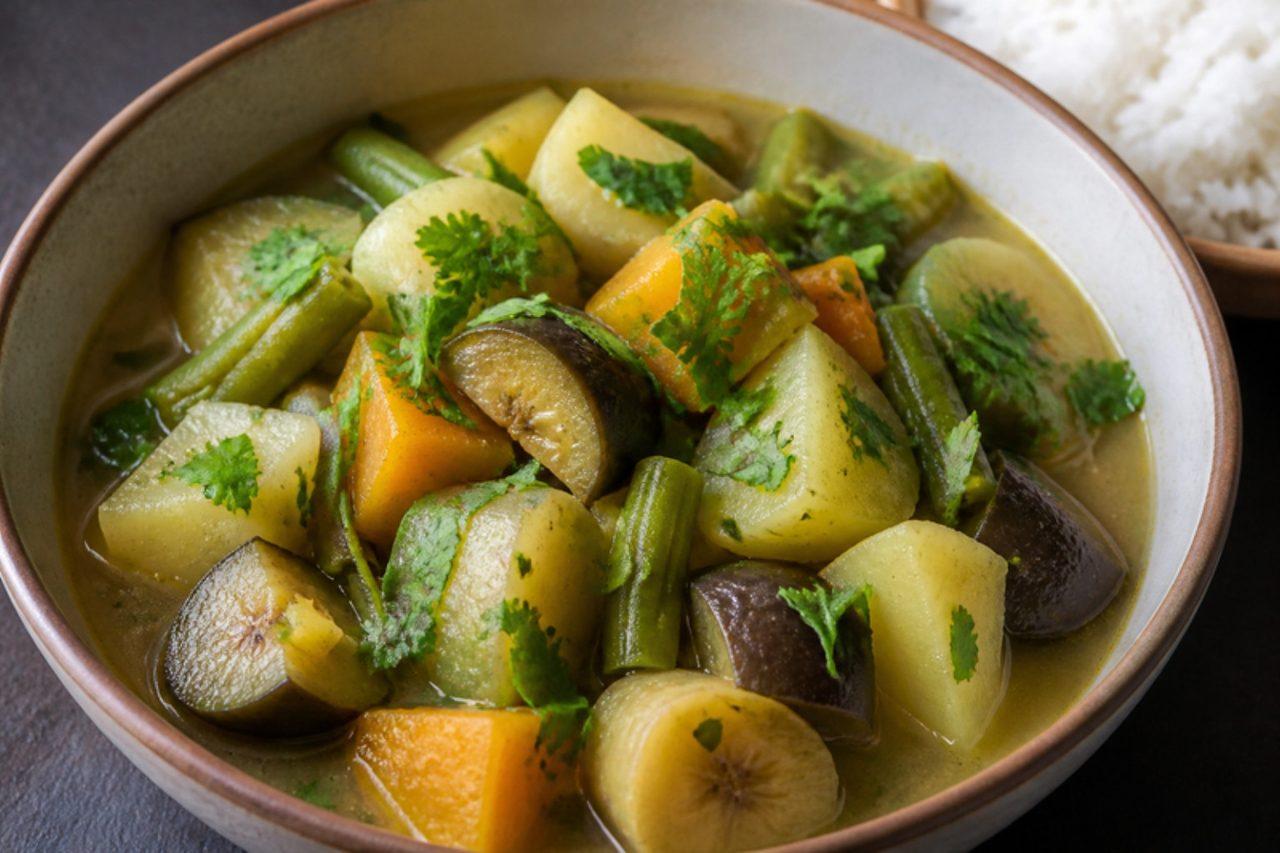
Santula is everyday Odia comfort food, the dish cooks in Bhubaneswar and Cuttack make when someone is unwell or when the family wants something light after festival meals. Papaya, potato, aubergine, pumpkin and raw banana are boiled with turmeric, then given a quick tempering of panch phoron, garlic and dried chilli in a little oil, and finished, in many homes, with a spoon of milk. It is soft, mild and slightly soupy, and eaten with rice and dal. Chef's tip: boil the vegetables only until just tender; santula should look like separate pieces, not a mash.

35 minSidesVeganGluten freeIndian
by KrazyBadal 0 views

Besara

Besara means 'with mustard', and in Odisha it is the name of any dish cooked in a freshly ground paste of mustard seeds, garlic and green chilli. Fish besara is the best known; this is the vegetarian version cooked in Odia homes with pumpkin, potato, aubergine, raw banana and a few drumsticks, made sour with a little tamarind or dried mango. The mustard gives it a clean, sinus-clearing heat that is very different from a turmeric-and-chilli curry. Chef's tip: grind the mustard with a pinch of salt and a green chilli; this stops the paste turning bitter.

45 minCurriesVeganGluten freeIndian
by KrazyBadal 0 views

Galho

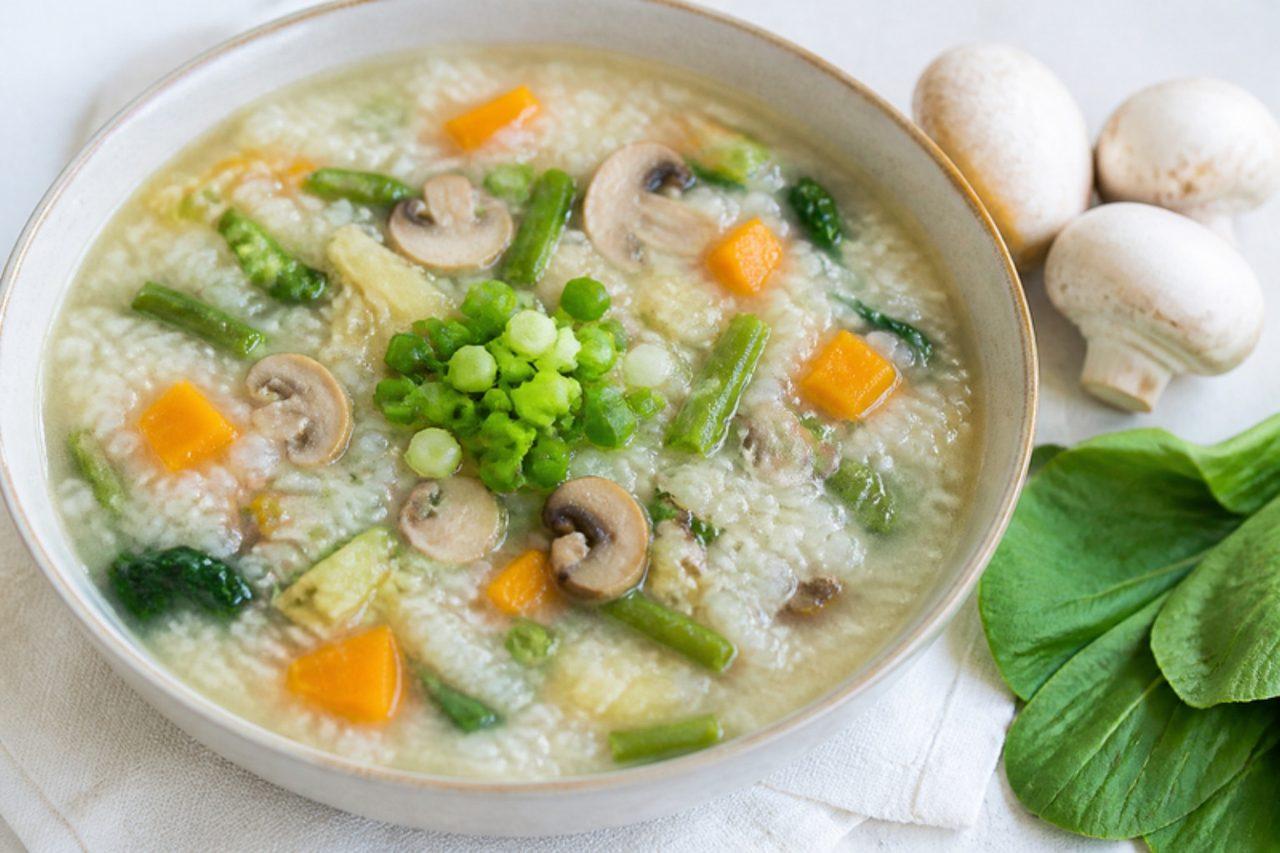
Galho is Nagaland's comfort food, a soft, loose rice porridge cooked with seasonal vegetables, greens, ginger and chilli, sometimes thickened with a spoon of fermented soybean (axone). In Kohima homes it is the dish for cold evenings and for anyone unwell, and in restaurants it is often made with pork; this vegetarian version uses mushrooms and axone for savour. It sits somewhere between khichdi and congee, thick but spoonable. Chef's tip: stir only occasionally; galho should be soupy with distinct grains, not a smooth paste.

by KrazyBadal 0 views

Bai

Bai is the everyday dish of Mizoram, cooked in Aizawl homes almost daily: a stew of greens such as mustard leaves or pumpkin leaves, bamboo shoot, pumpkin and beans, boiled in water with a pinch of soda (traditionally 'chingal', an ash-filtered alkali) that softens the greens. It has almost no oil and little spice, and often a spoonful of pork fat goes in; this vegetarian version leaves it out and adds a little more ginger. Bai is light, green and soothing, eaten with rice and a chilli dip. Chef's tip: add the soda with the greens, not before, and only a pinch; too much turns the stew slimy.

40 minSoupsVeganGluten freeIndian
by KrazyBadal 0 views

Chhum han

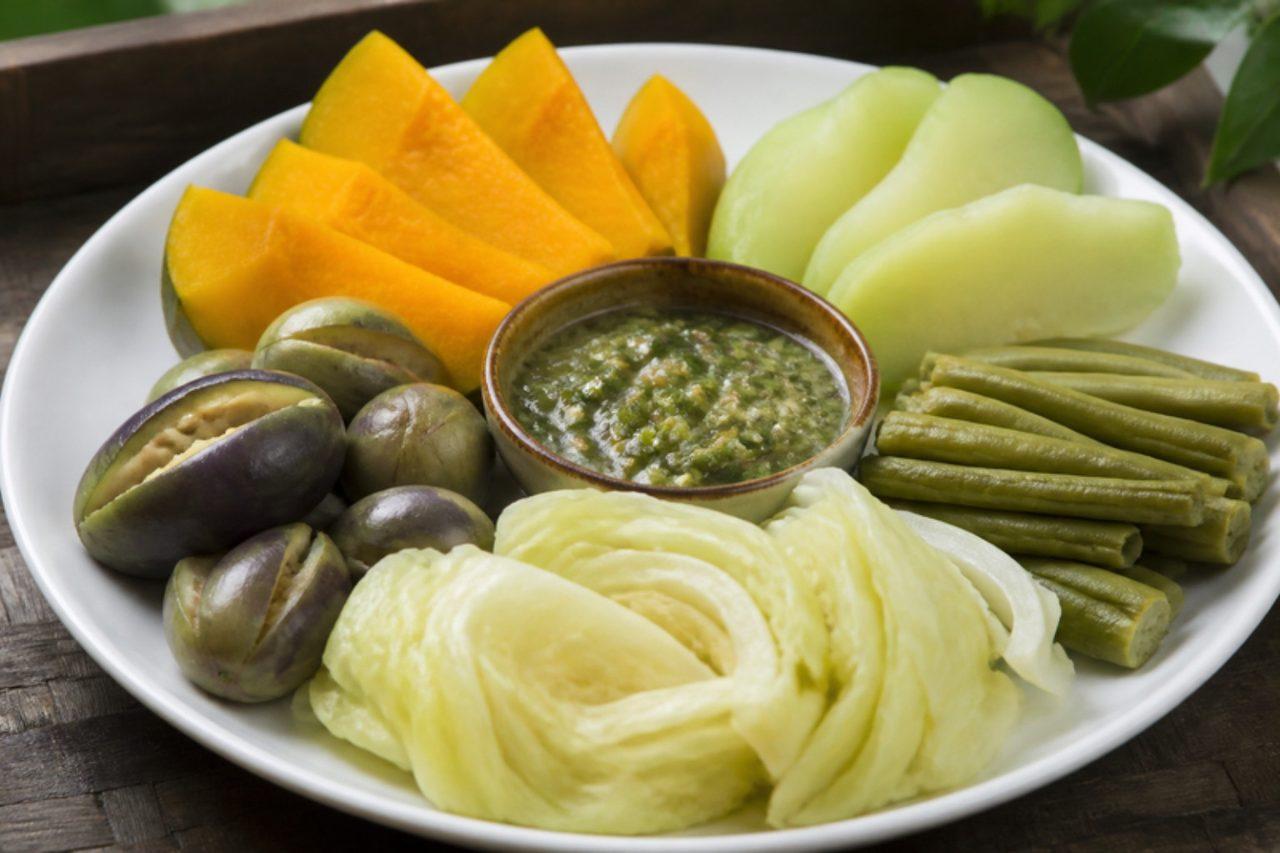
Chhum han is how Mizo families eat vegetables at their simplest: whatever is in the garden (pumpkin, chayote, beans, aubergine, cabbage, potato) steamed or boiled until just tender and served on a plate with a sharp dip of crushed chilli, garlic, salt and herbs. In Aizawl it is part of almost every home meal, eaten with rice and bai. The vegetables taste of themselves, and the dip does the work. Chef's tip: steam each vegetable for its own time and take it off when a knife slides in; overcooked chhum han is watery and dull.

25 minSidesVeganGluten freeIndian
by KrazyBadal 0 views

Kaeng tai pla jay (southern vegetable curry)

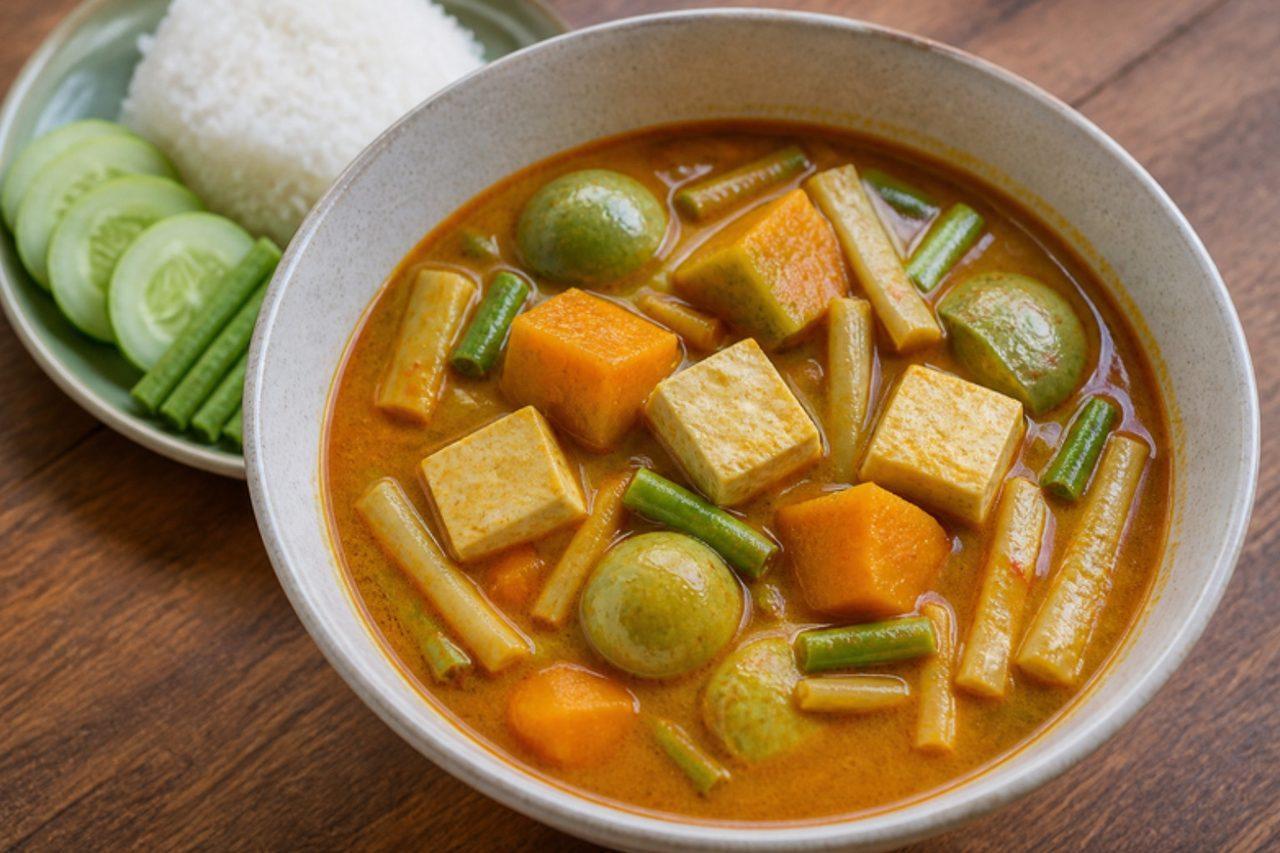
Kaeng tai pla is the boldest curry of southern Thailand, eaten from Surat Thani down to Hat Yai: a dark, pungent, fiercely hot broth of turmeric-heavy southern curry paste, pumpkin, bamboo shoots, aubergine and long beans, normally flavoured with fermented fish innards. During the Vegetarian Festival (thetsakan kin jay), held every autumn in Phuket and Trang, cooks make a 'jay' version with fermented soybean paste and roasted peanut, and that is the curry here. It is thinner than a coconut curry and served with rice and plenty of raw vegetables to cool the heat. Chef's tip: this curry is meant to be very hot. If you want less heat, add fewer bird's eye chillies to the paste but keep the black pepper and turmeric, which give it its character.

45 minCurriesVeganGluten freeSpicy
by KrazyBadal 0 views

Nhopi

Nhopi is a simple Shona dish from Zimbabwe, made at harvest time when the pumpkins come in: pumpkin or butternut boiled soft, mashed and enriched with peanut butter. Some families stir in a little maize meal to make it thicker (nhopi dovi), and it is eaten for breakfast or as a side with greens. It is sweet, nutty and loved by children. Chef's tip: drain the pumpkin very well before mashing, or the nhopi turns thin and watery.

30 minSidesVeganGluten free
by KrazyBadal 0 views

Tinutuan

Tinutuan, also called bubur Manado, is what North Sulawesi eats for breakfast: rice simmered with pumpkin until the pumpkin melts and turns the porridge golden, then loaded with sweetcorn, cassava and a big handful of greens and lemon basil at the end. In Manado it comes with small fried fish and a fiery tomato dabu-dabu; this version skips the fish and pairs it with fried tofu. It is filling, gentle and naturally vegan. Chef's tip: add the leafy greens only in the last 3 minutes so they stay green and fresh.

by KrazyBadal 0 views
Nom banh chok with green curry broth

Before seven in the morning, women carrying baskets on shoulder poles sell nom banh chok across Cambodia; around Siem Reap there is even a lane of stalls near the temples known for it. Soft, slippery rice noodles are piled into a bowl, ladled with a pale green broth of kroeung and coconut milk, then buried under shredded banana blossom, cucumber, beansprouts, long beans and handfuls of herbs. The market version thickens the broth with pounded fish; here pumpkin and creamy white beans give it the same body. Chef's tip: be generous with the raw vegetables and herbs; the dish is meant to be more garden than noodle, and the cool crunch is what balances the warm broth.

by KrazyBadal 0 views
Vegetable samlor korko

Samlor korko is called the national soup of Cambodia, cooked in villages from Battambang to Kampot and eaten at lunch with a bowl of rice. Its name means 'stirring soup', because the cook stands over the pot moving the vegetables as they go in one by one: green papaya, pumpkin, aubergine, long beans and leafy greens, all in a thin, herb-scented broth thickened with a spoonful of ground toasted rice. Prahok usually gives it its funk; fermented soybean paste and a little soy give depth here, and the soup stays light and full of vegetables. Chef's tip: toast the rice slowly until it is the colour of a hazelnut shell; that nutty smell is the backbone of the soup.

50 minSoupsVeganGluten free
by KrazyBadal 0 views

Vegetable charquicán

Charquicán is old Chilean country food: a thick mash of pumpkin and potato with corn and peas, once made with charqui, the dried meat of the Andes. In the south and in Santiago homes it's a winter weeknight dinner, served in a deep plate with a fried egg on top and pickled onions or a simple salad. Without the meat it's still rich and smoky with merkén (smoked chilli) and paprika. Chef's tip: mash only roughly at the end; charquicán should have soft chunks, not be a smooth purée.

50 minVegetarianGluten free
by KrazyBadal 0 views
Porotos granados

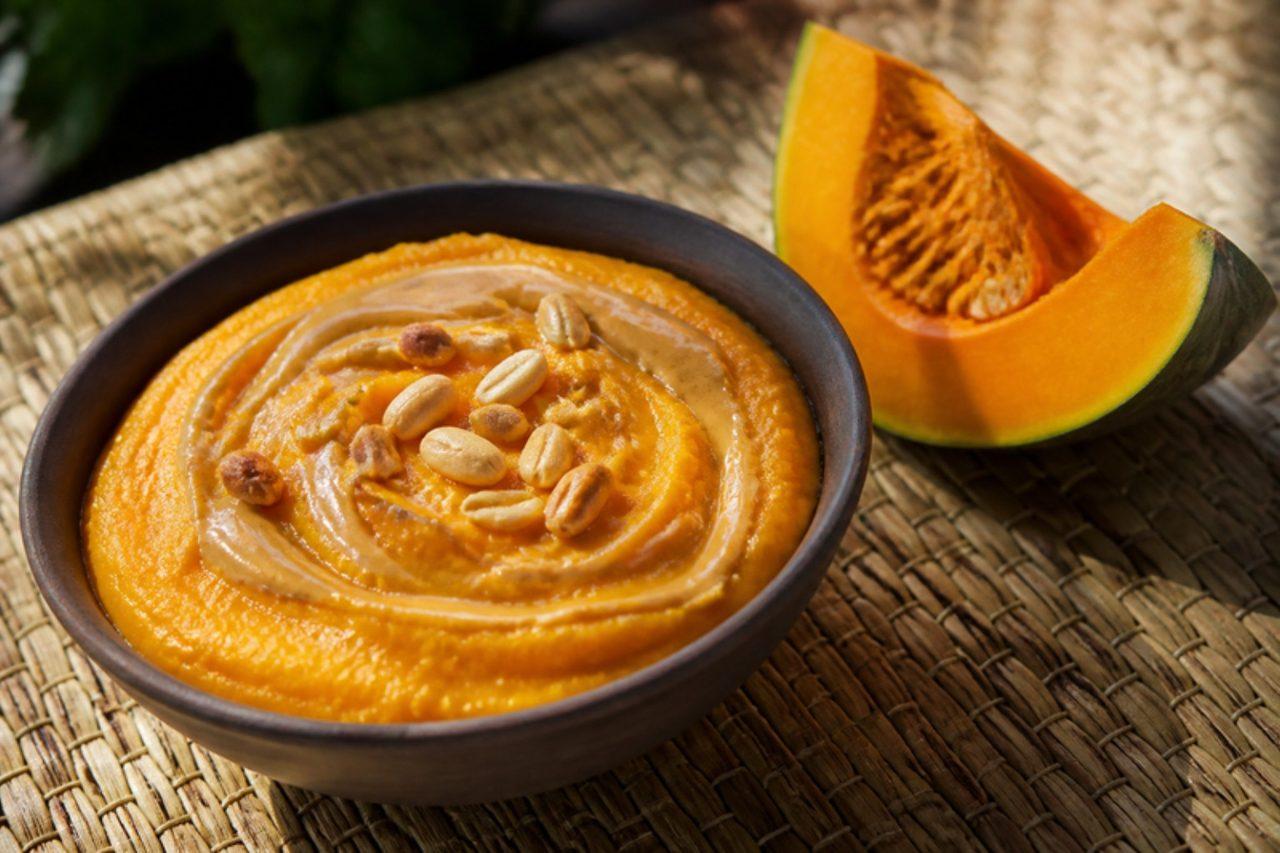
Porotos granados is what central Chile cooks when the fresh beans arrive in late summer: tender cranberry beans shelled at the kitchen table, simmered with pumpkin until it collapses into a thick orange sauce, then finished with grated corn and basil. Families in the Valle Central eat it on hot days, often with pebre and a tomato salad; when the corn is blended in larger amounts it's called 'con mazamorra'. It's hearty but fresh-tasting, and fully plant-based. Chef's tip: add the corn only in the last 10 minutes; it's there to thicken and sweeten, and overcooked it turns floury.

65 minVegetarianVeganGluten free
by KrazyBadal 0 views

Sopaipillas

When it rains in Santiago, Chileans make sopaipillas. These round, pricked discs of dough are made with mashed pumpkin, which gives them a soft orange crumb, and are fried until puffed. Street carts sell them with pebre, mustard or ketchup; at home on wet winter afternoons they're 'pasadas', simmered briefly in a spiced chancaca (raw cane sugar) syrup with orange peel and cinnamon. Chef's tip: prick each disc several times with a fork before frying, so they puff evenly and don't balloon into one big bubble.

by KrazyBadal 0 views

Vegetarian vori vori

Vori vori is the soup Paraguayan grandmothers make on cold June and July evenings: a golden broth full of bori, small balls of cornmeal and cheese that swell soft as they simmer. The name is a Guaraní take on the Spanish 'bolita' (little ball). It's usually made with hen; this version gets its colour and body from pumpkin, carrot and a sofrito with saffron or turmeric. Chef's tip: shape the balls no bigger than a hazelnut; they double in size and larger ones stay raw inside.

70 minSoupsGluten free
by KrazyBadal 0 views
Guyanese cook-up rice

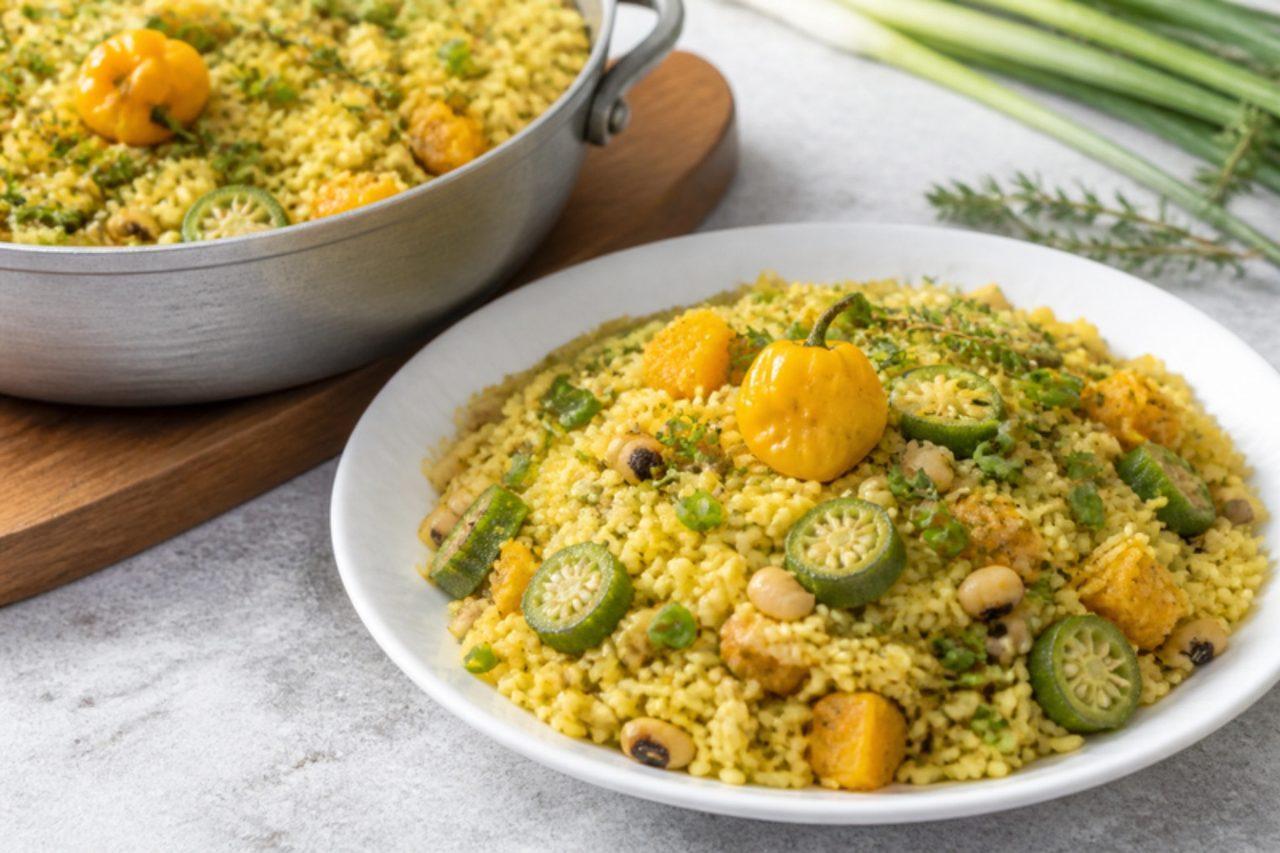
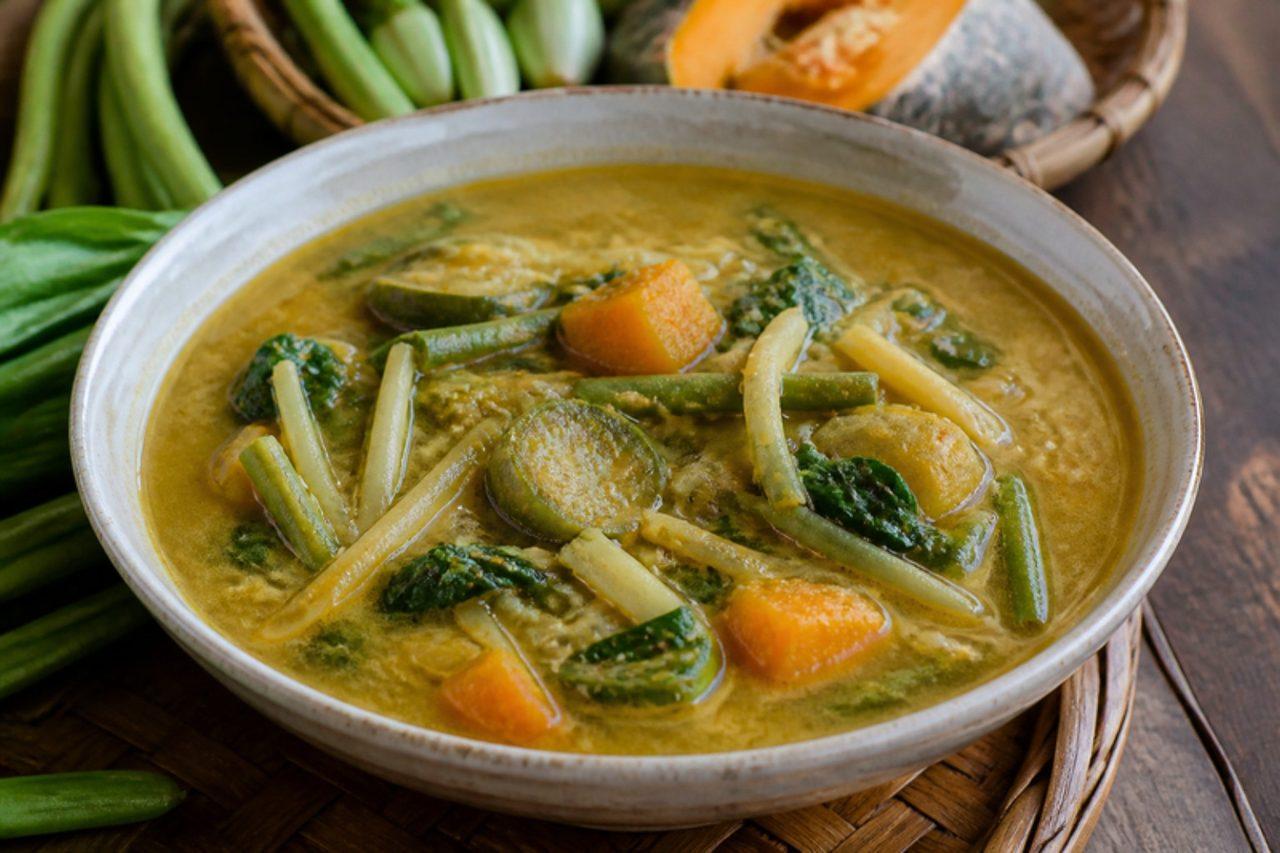
Cook-up rice is the dish Guyanese families make to see in the New Year, and on any Saturday when the week's odds and ends go into one pot. Rice, black-eyed peas and vegetables simmer in fresh coconut milk with fresh thyme, spring onion and a whole wiri wiri pepper (small, round and fiery) until every grain is soft and glossy. It's richer and wetter than Jamaican rice and peas, with the vegetables cooked right in. Chef's tip: let the pot sit covered off the heat for 10 minutes at the end; the rice finishes in the steam and a little crust forms on the bottom that people fight over.

by KrazyBadal 0 views
Tunisian fish couscous

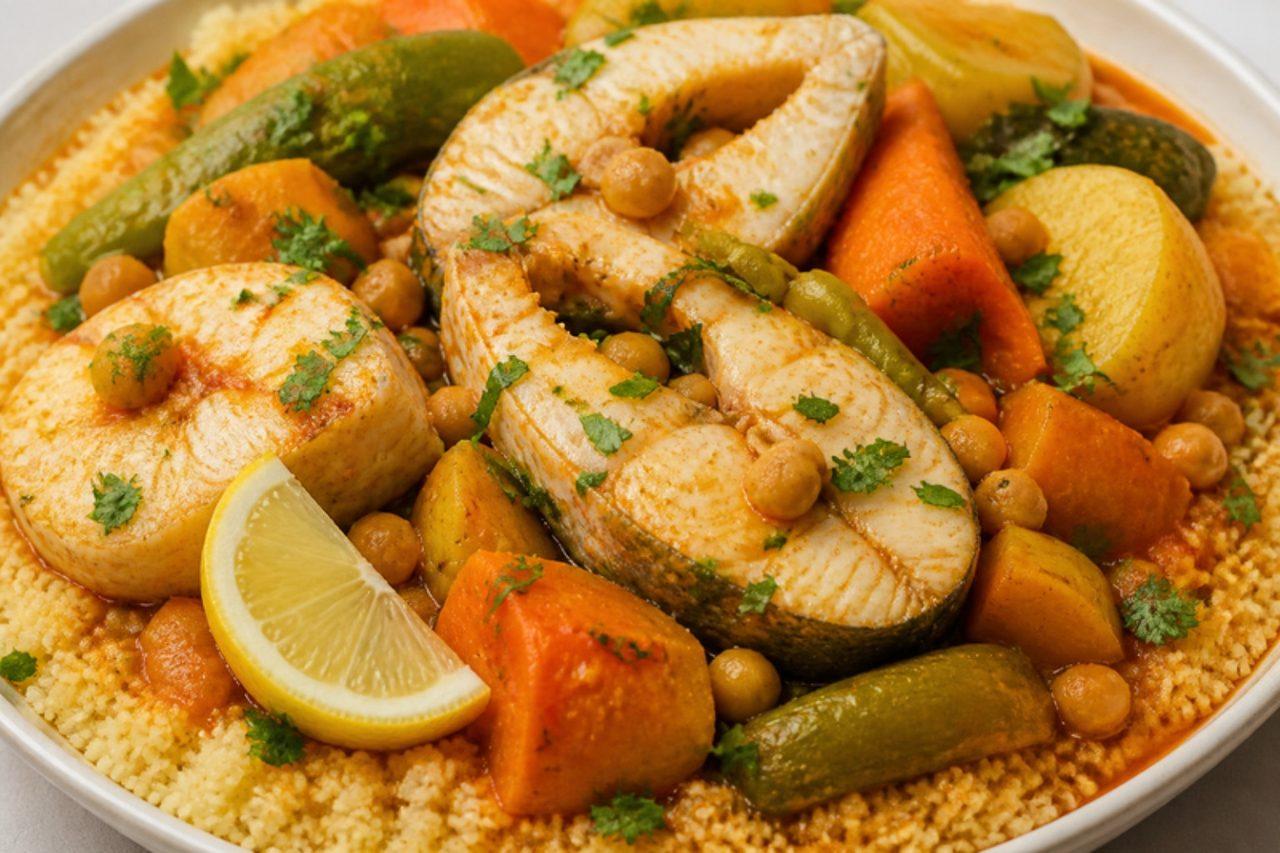
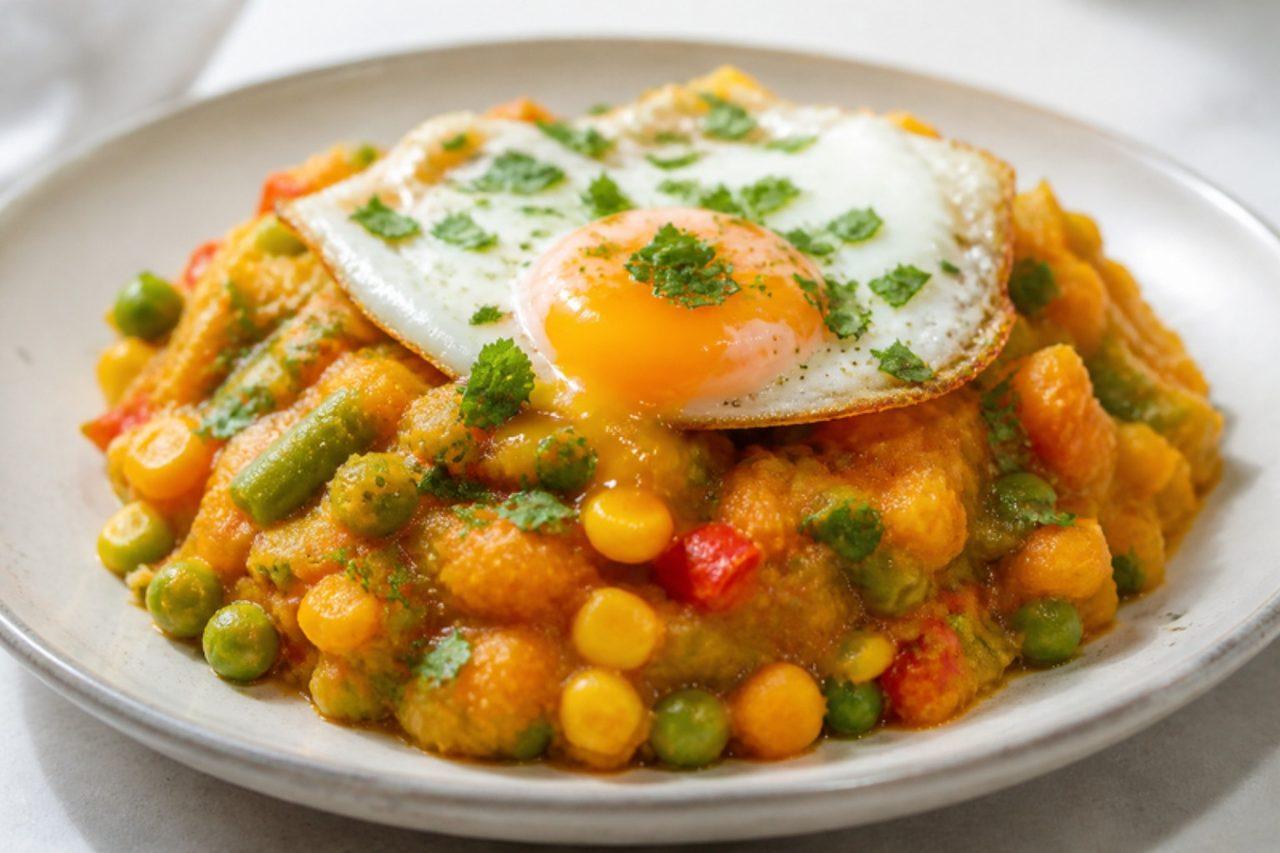
On Tunisia's coast, especially in Sfax, Mahdia and the fishing towns of Cap Bon, couscous for Friday lunch is made with fish instead of meat: a red, peppery broth of tomato, harissa and caraway in which the vegetables cook first and the fish is poached at the end, while the couscous steams on top. The broth is ladled over the grains at the table until they glisten. The mistake is boiling the fish too long, so it breaks into the broth; poach it gently for the last 10 minutes only. Chef's tip: oil and rub the couscous between your palms before and after the first steaming so every grain stays separate.

105 minFishSpicy
by KrazyBadal 0 views
Couscous royal

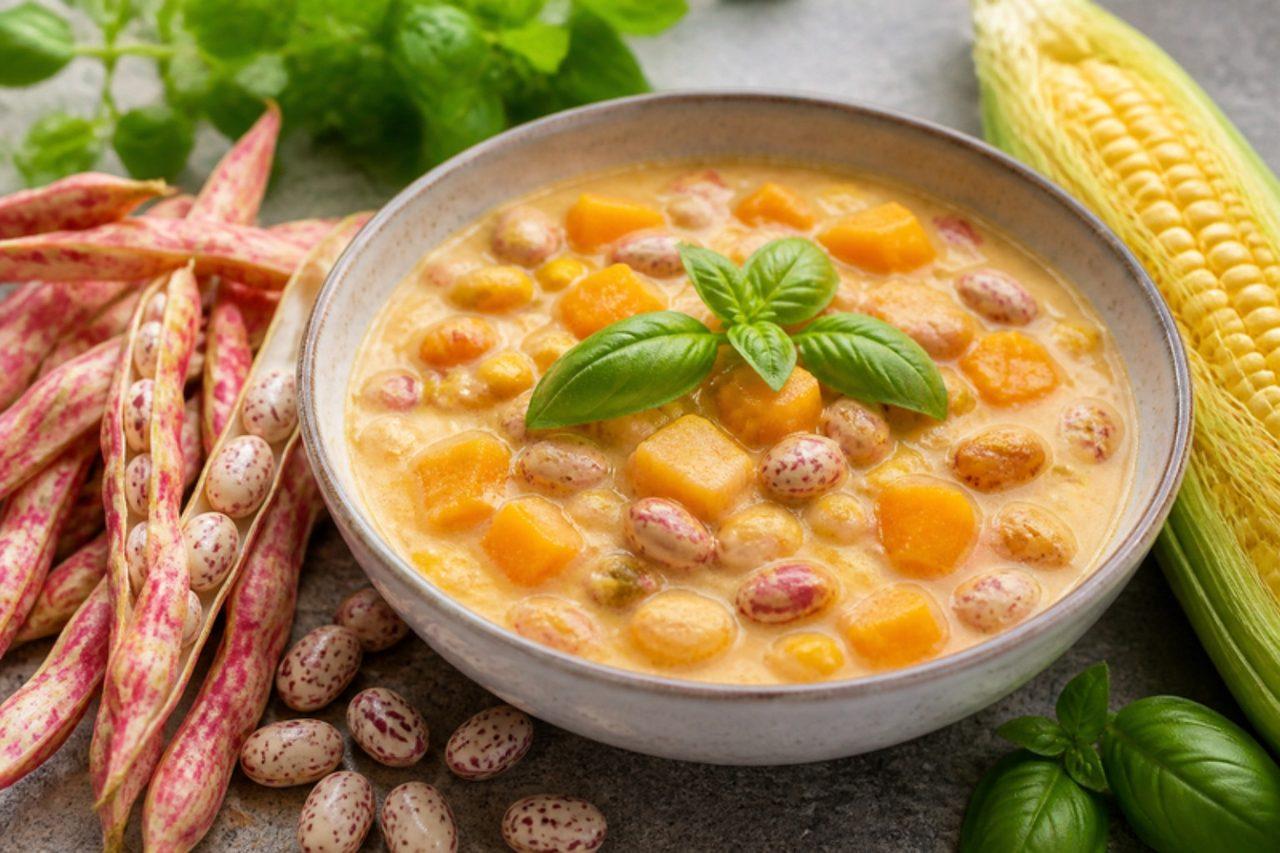
Couscous royal is the big-occasion couscous that Algerian and Moroccan families brought to France and that is now served for weddings and Sunday gatherings from Oran to Marseille: a pot of lamb and chicken simmered with vegetables and chickpeas in a mildly spiced broth, grilled merguez on the side, and a mountain of steamed couscous. The mistake is putting all the vegetables in at once; the courgettes go mushy while the turnips are still hard, so add them in stages. Chef's tip: brown the lamb and chicken well before the water goes in; that colour flavours the whole broth.

160 minMeat
by KrazyBadal 0 views

Cazuela de vacuno

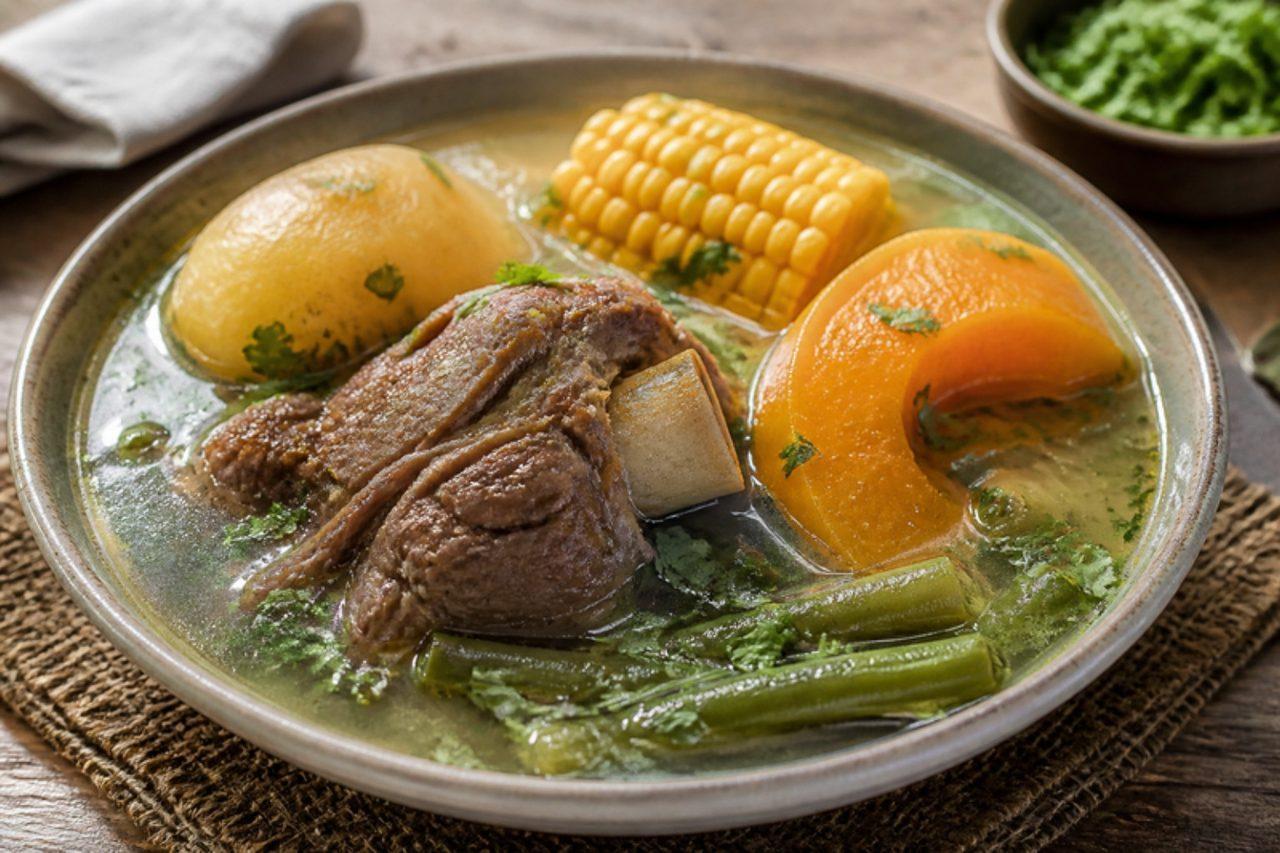
Cazuela is the soup Chilean grandmothers make all through winter, from Santiago's Central Valley to the farms of the south: each bowl gets a whole piece of beef on the bone, a whole potato, a wedge of pumpkin and a piece of corn in a clear broth, with a little rice or green beans and plenty of fresh coriander. It is eaten as a full meal, with pebre and bread. The mistake is cutting the vegetables small: they should stay in big pieces, one of each per person. Chef's tip: simmer the beef very gently and skim it well so the broth stays clear.

145 minSoupsGluten free
by KrazyBadal 0 views

Goes well with pumpkin