Skip to content
Recipes

All recipes

Vegetarian, or something you can't eat? Set your diet once and we'll hide recipes that don't fit.

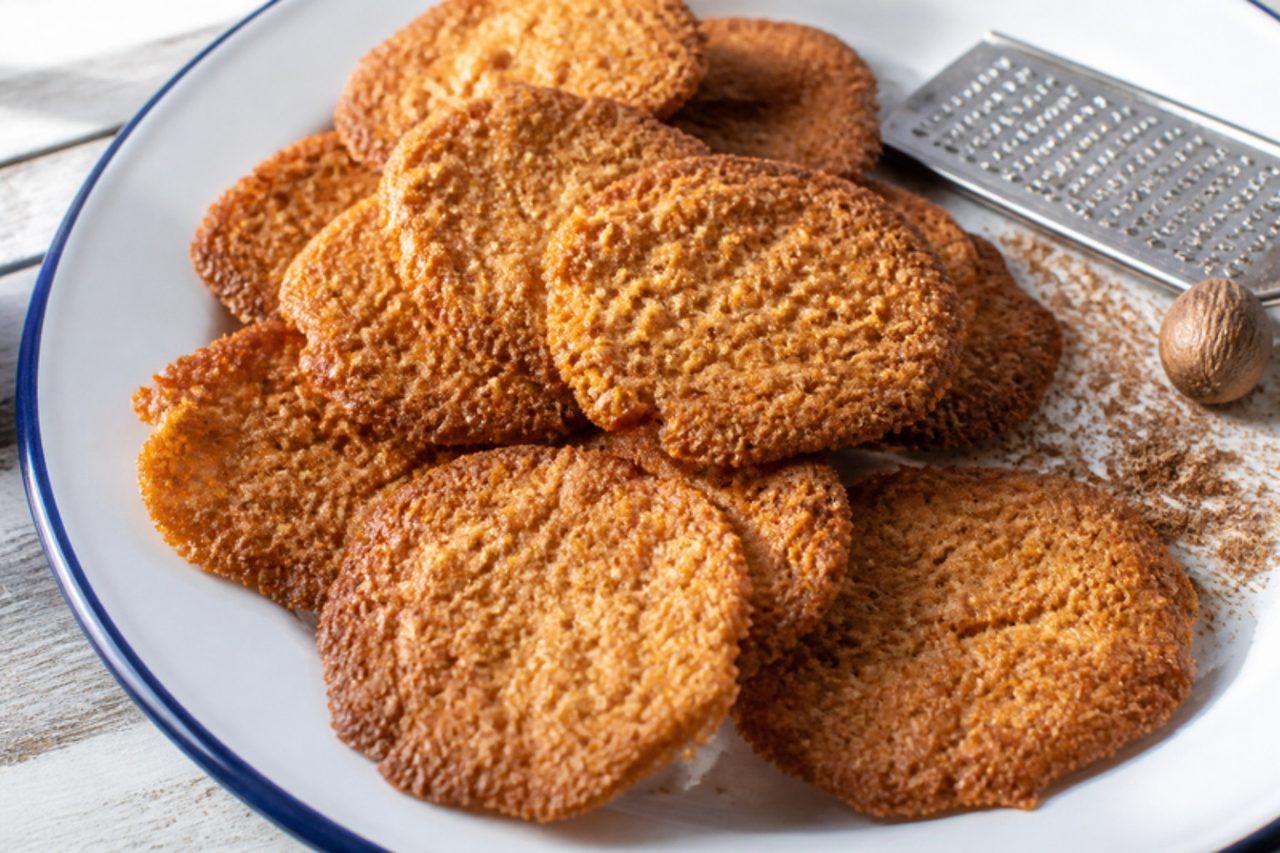
Jackass corn (Jamaican hard coconut biscuits)

Jackass corn is one of the hard little biscuits of old Jamaica, sold in paper bags at roadside stalls and corner shops and packed for long journeys because it keeps for weeks. The name is usually explained as a joke about how much chewing it takes. It is made from plenty of grated coconut, brown sugar, flour and a good grating of nutmeg, rolled out very thin and baked until crisp right through, so every bite cracks and then turns sweet and nutty with toasted coconut. Have it with hot cocoa tea, mint tea or a glass of cold sorrel juice, or break it over ice cream. There has never been egg in it: coconut oil and water hold the dough together, and the coconut's own fat and the melted sugar set it hard as it bakes and cools. Chef's tip: roll it as thin as you dare, about 3 mm; the common mistake is leaving it thick, which gives a biscuit that is soft in the middle and goes stale instead of staying crunchy.

by KrazyBadal 0 views

Stagga back (Jamaican molasses ginger cookies)

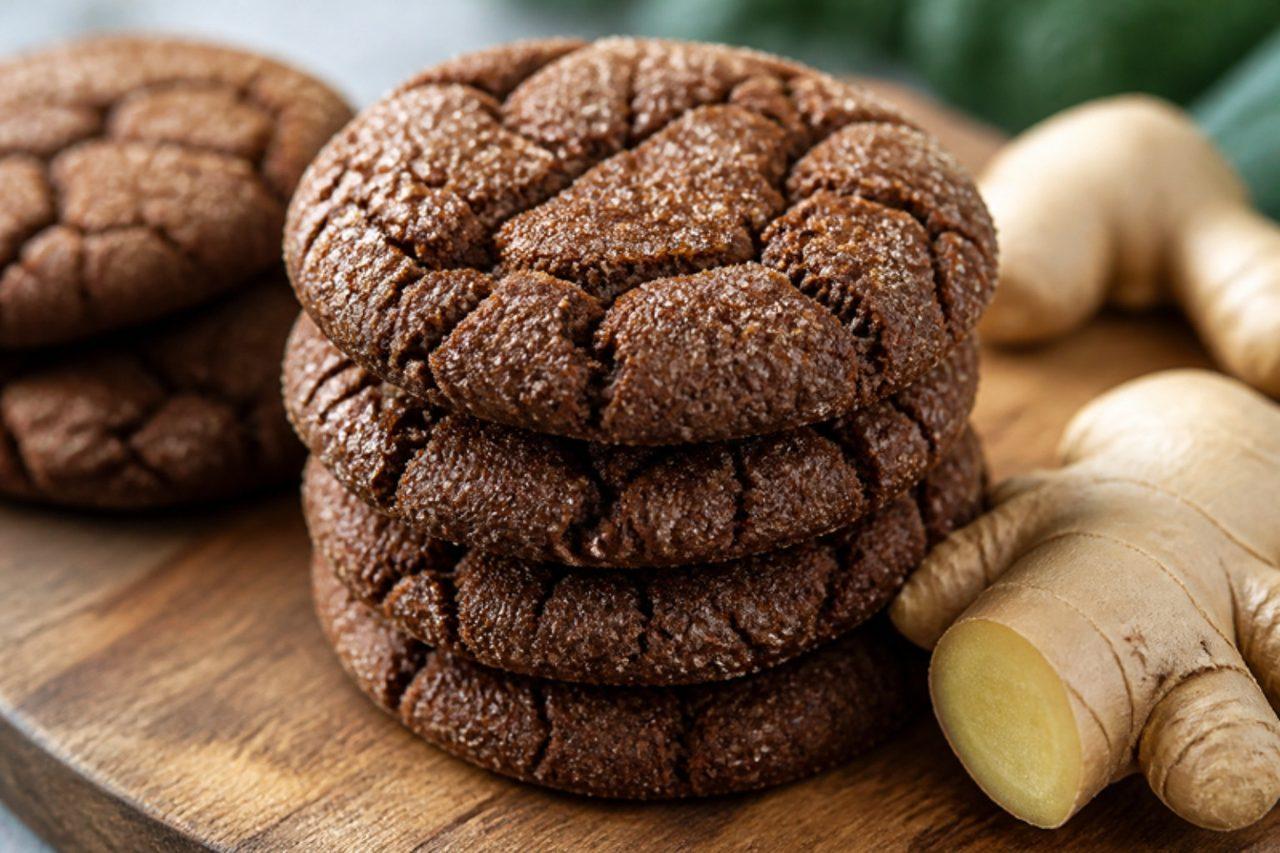
Stagga back are the dark, chewy cookies that sat in glass jars on the counters of Jamaican country shops, sold singly to schoolchildren on the way home and to anyone wanting something sweet with a cold drink in the heat of the afternoon. They are made with plenty of molasses, brown sugar and both dried and fresh ginger, with a little nutmeg and allspice, so they taste deep, almost smoky, and warm at the back of the throat. The texture should bend before it snaps: firm edges, soft and toffee-like in the middle. Eat them with a cup of mint or ginger tea, or a glass of cold coconut water. They are naturally egg-free: the thick molasses and the oil bind the flour on their own, and bicarbonate of soda reacting with the acidic molasses gives them their lift and crackled tops. This version uses oil instead of butter, so it is vegan. Chef's tip: take them out while the centres still look a little underdone; the common mistake is baking until they feel firm in the oven, and then they cool into rock-hard discs.

by KrazyBadal 0 views

Jamaican ginger cake

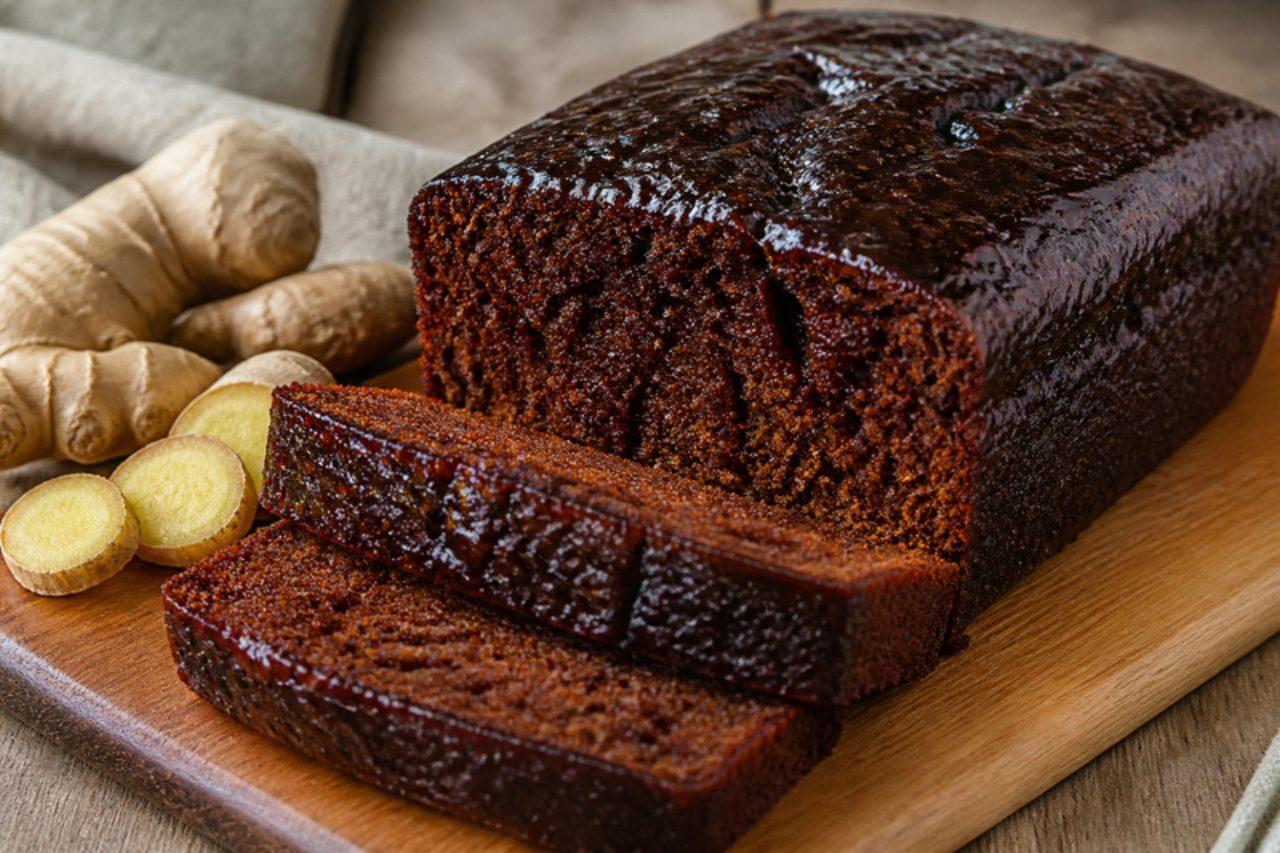
Jamaica grows some of the world's most pungent ginger in the hills of Clarendon and St Mary, and island ginger cake shows it off: a dark, sticky loaf made with molasses, a big knob of freshly grated root, and allspice (pimento), another Jamaican crop. Corner shops sell it in wrapped slabs for school lunches and road trips, and at home it comes out with afternoon tea or a cup of hot cocoa. The heat is real but warm, not harsh. Overbaking is the easy mistake: a few minutes too long and it loses its stickiness, so take it out once a skewer comes out clean even if the top still feels slightly tacky. Chef's tip: wrap the cooled cake and leave it a day before slicing; the top turns properly sticky and the ginger mellows.

by KrazyBadal 0 views

TopfengolatschenSweet quark puff pastry squares

A Topfengolatsche is what Viennese office workers grab from the bakery on the way in, and what grandparents order with a Melange in a coffee house on a Sunday afternoon. The corners of a puff pastry square are folded over a lemony, vanilla-scented filling of Topfen (Austrian quark) with plump raisins, and the top gets a thin white glaze. It is flaky, light and not too sweet. Raisins are sometimes soaked in rum; warm water or orange juice works just as well, and the recipe below is alcohol-free. Wet quark is the classic problem, because it turns the filling runny and it leaks out in the oven. Chef's tip: hang the quark in a sieve lined with a clean cloth for an hour, or squeeze it, until it is as thick as soft cream cheese.

by KrazyBadal 0 views

Khanom kleeb lamduanFlower shortbread cookies

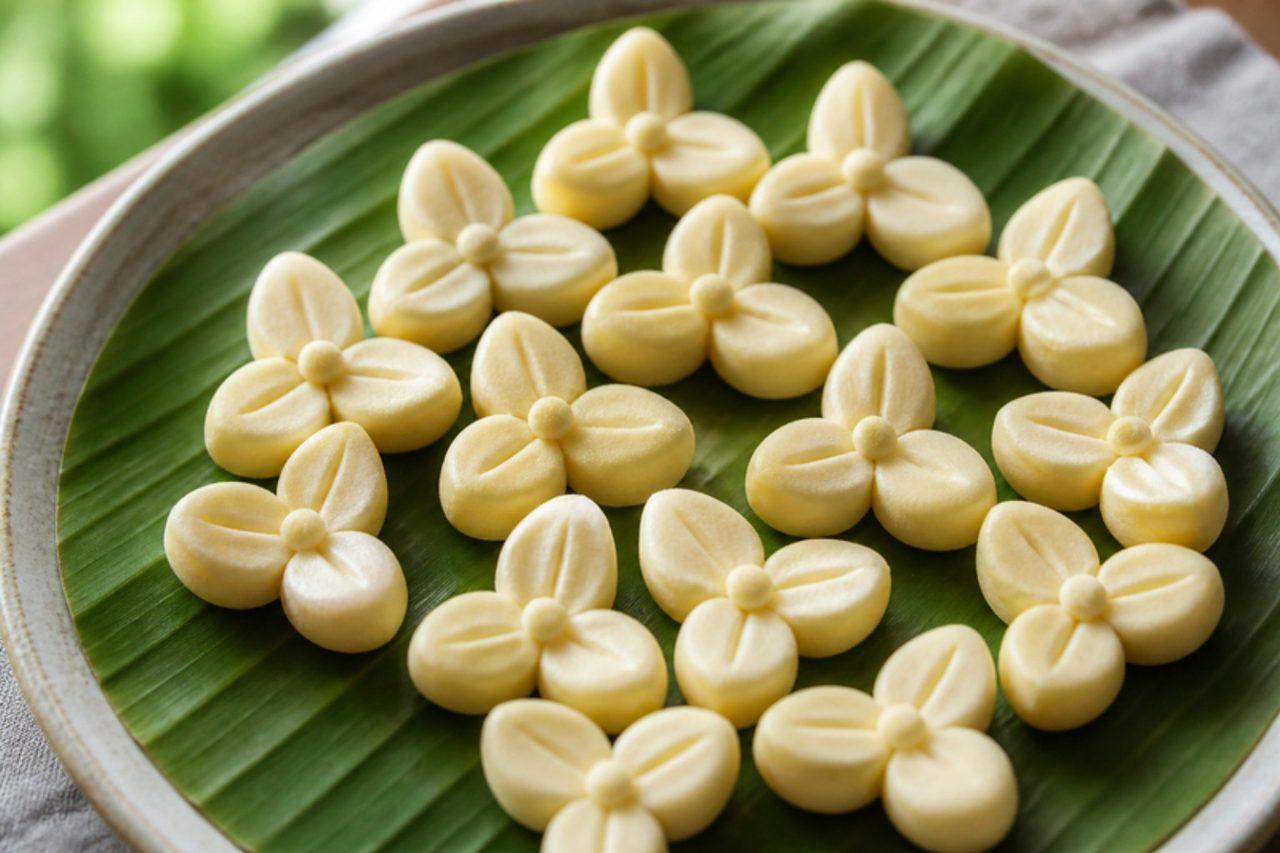
Named after the lamduan, a fragrant cream-coloured flower with three curled petals, these tiny Thai shortbreads are a classic of the royal-style Thai sweets once made in palace kitchens and now sold in Bangkok's old dessert shops and given at weddings and merit-making. Each flower is three teardrop petals around a ball, pale and fragile, and they melt like sandy fudge. Their perfume comes from tian op, a special scented dessert candle: it is lit, blown out, and left to smoke inside a closed container with the cookies. If you cannot find one, a little jasmine water in the dough gives a different but lovely scent. The mistake is baking them hot or long; they should stay ivory, never golden. Chef's tip: candle smoke is real fire and smoke, so do it in a metal or ceramic pot, well away from curtains and children, with the flame blown out before the lid goes on.

78 minThaiBakingVegan
by KrazyBadal 0 views

Kärntner ReindlingCinnamon raisin yeast cake

Carinthia's Easter loaf takes its name from the Reindl, the round, deep pan it is baked in, and in southern Austria no Easter basket goes to church without one. Inside the golden yeast crust is a spiral of butter, cinnamon sugar and plump raisins, so every slice shows a dark swirl. Locals eat it two ways: sweet with coffee on Easter morning, or alongside the savoury Easter platter with horseradish. Many bakers soak the raisins in rum overnight; warm water or tea works just as well and keeps it alcohol-free. A dry, crumbly Reindling usually means too much flour went in during kneading, so keep the dough soft and only lightly floured. Chef's tip: butter the pan well and dust it with sugar, which caramelises into a thin crunchy shell.

by KrazyBadal 0 views

Khanom khai (Thai egg cakes)

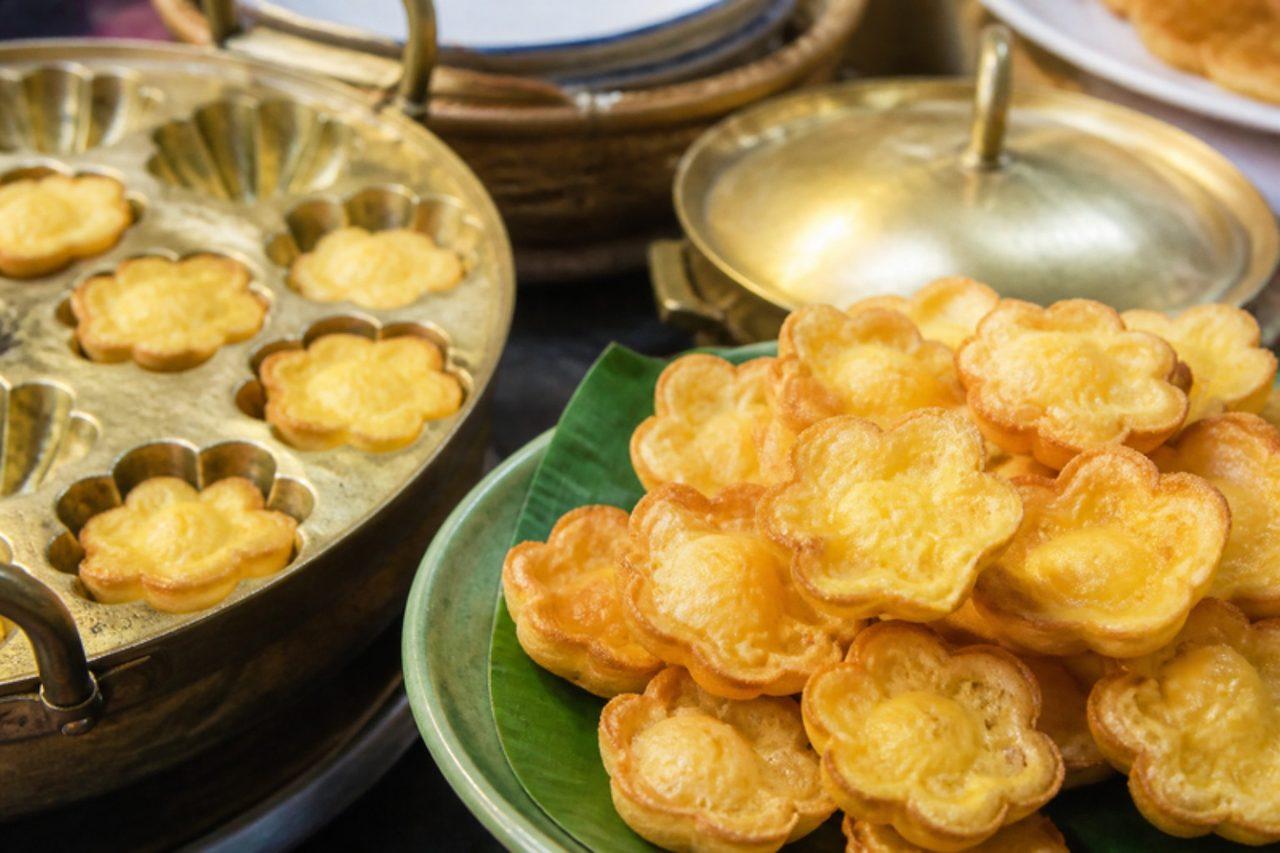
Khanom khai are the tiny golden sponge cakes that Thai market vendors bake in heavy brass moulds, filling the air with a sweet, eggy smell, and Bangkok children buy a paper bag of them after school. They are light and spongy inside with crisp, caramelised edges, and taste of egg and vanilla. They're made with oil rather than butter. They contain egg and gluten. Without a traditional mould, a mini-muffin or madeleine tin works well. Chef's tip: beat the eggs and sugar until really thick and pale; all the lift comes from that air.

30 minThaiBaking
by KrazyBadal 0 views

Oliang (Thai black iced coffee)

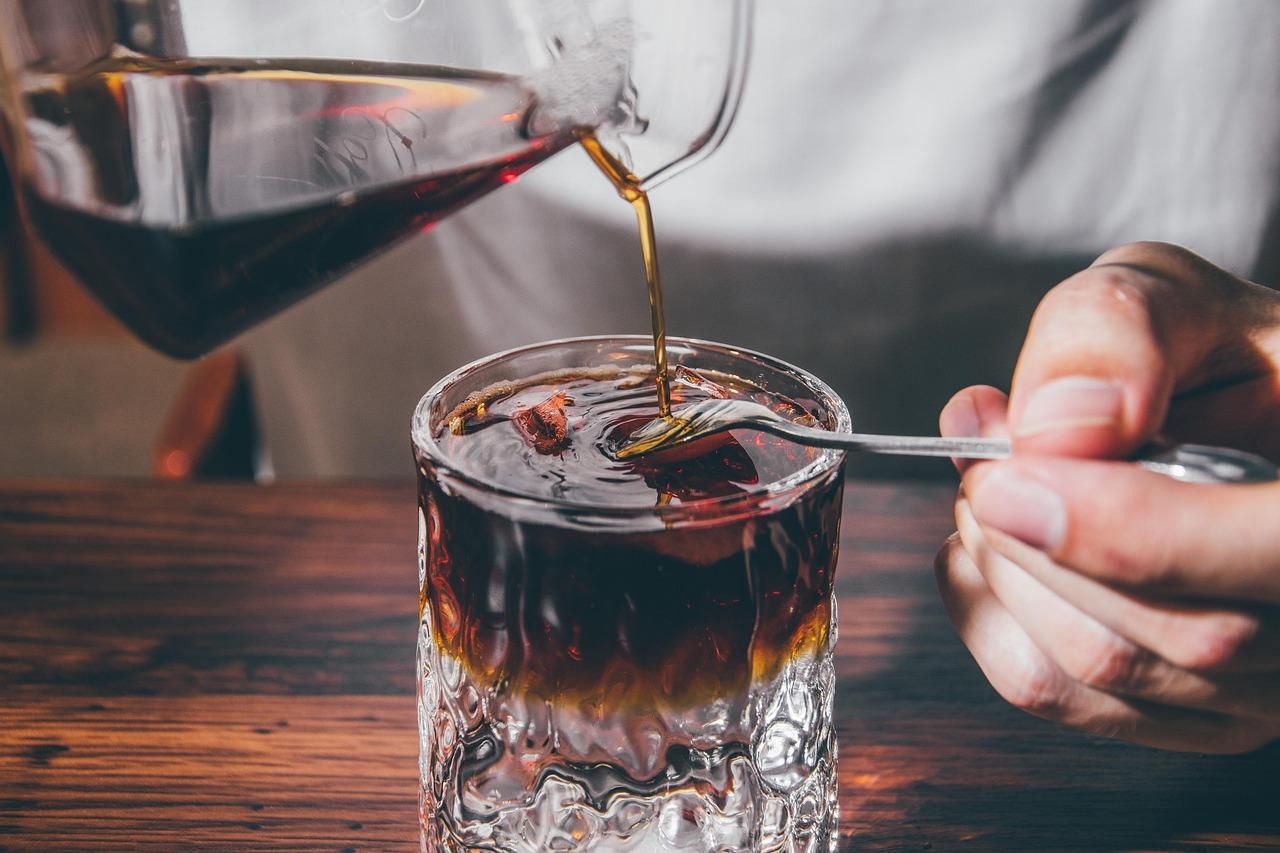
Old Bangkok coffee shops in Chinatown and Bang Rak still brew oliang through a long cotton sock, using a dark blend of coffee roasted with corn, soybeans, rice and sesame that gives it a toasty, almost cocoa-like flavour. It is served black, heavily sweetened and poured over crushed ice in tall glasses, a mid-morning pick-me-up for market traders. Look for any Thai 'oliang powder' blend in Asian shops, or mix dark coffee with roasted grains as below. It contains caffeine, so it is not one for children. Chef's tip: adding sugar after chilling is the mistake; dissolve it while the coffee is hot, or it stays gritty.

15 minThaiDrinksVeganGluten free
by KrazyBadal 0 views

Nam takrai (lemongrass drink)

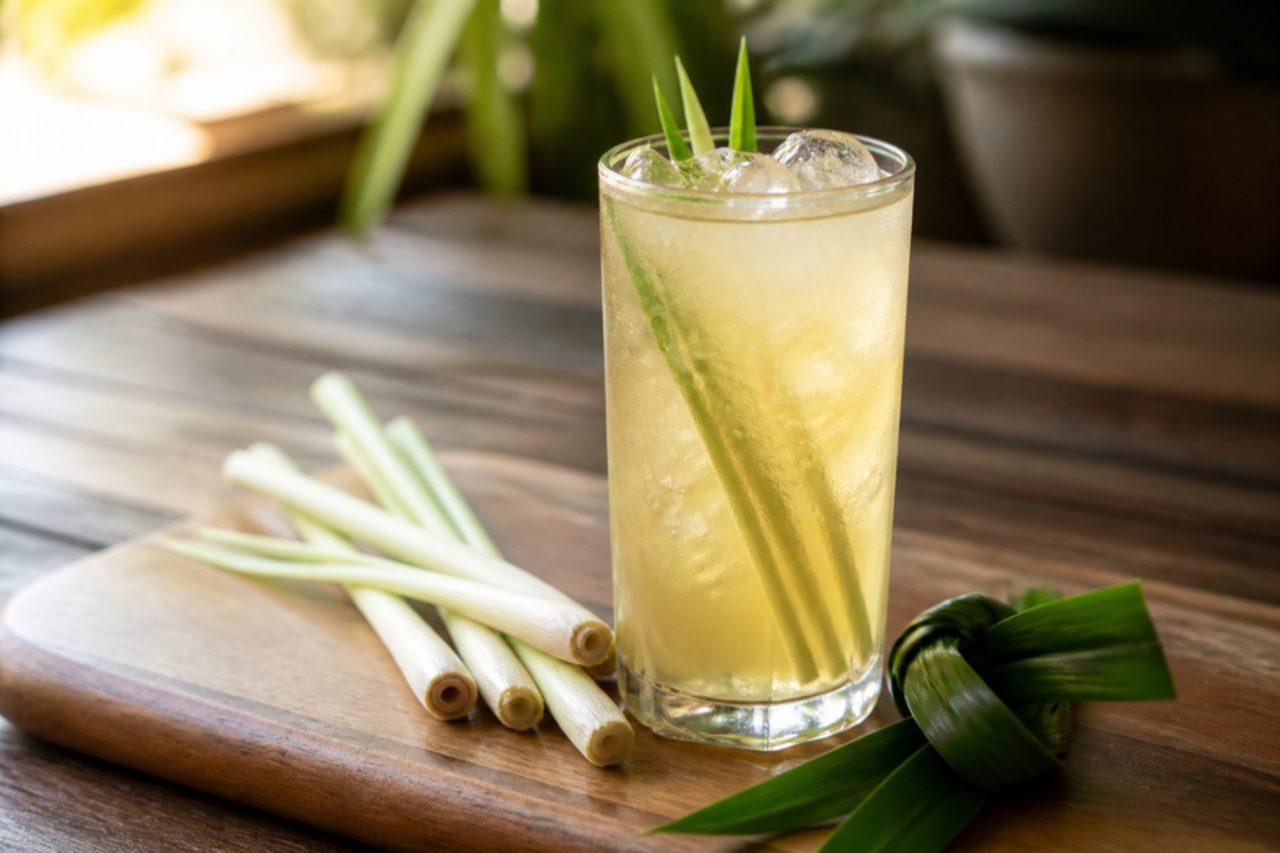
Thai spa receptions and roadside rice shops both pour this from big glass jars, and in Chiang Mai and Bangkok homes a pot is often simmering on hot afternoons. Bruised lemongrass gives a clean, lemony, slightly grassy taste and pandan a soft vanilla note; lightly sweetened, it is refreshing over ice and soothing warm on a rainy-season evening. Chef's tip: the usual mistake is chopping the lemongrass fine and boiling it hard, which makes it bitter; bash the stalks and simmer gently.

20 minThaiDrinksVeganGluten free
by KrazyBadal 0 views

Nom yen (pink milk)Pink iced milk

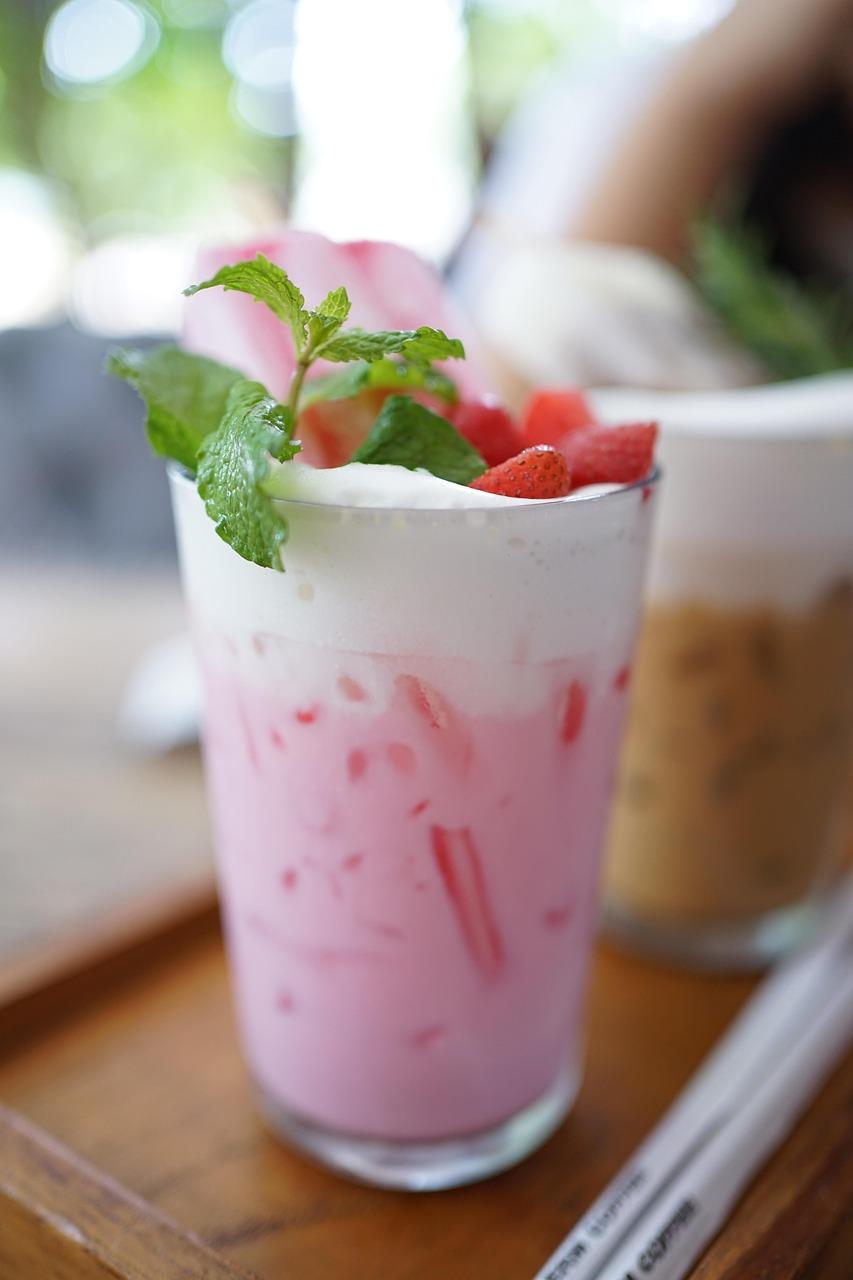
Thai drink stalls outside schools and markets keep a bottle of red sala syrup next to the condensed milk for this sweet, bubblegum-pink milk, a favourite of children from Bangkok to Hat Yai. Sala is a tangy palm fruit, and the syrup tastes of it lightly, almost like cream soda; any red sala-flavoured syrup from an Asian shop works. Shake it with ice until frothy. Chef's tip: the mistake is too much syrup, which turns it lurid and cloying; start with a tablespoon per glass and add more to taste.

by KrazyBadal 0 views

Nam bai toey (pandan drink)

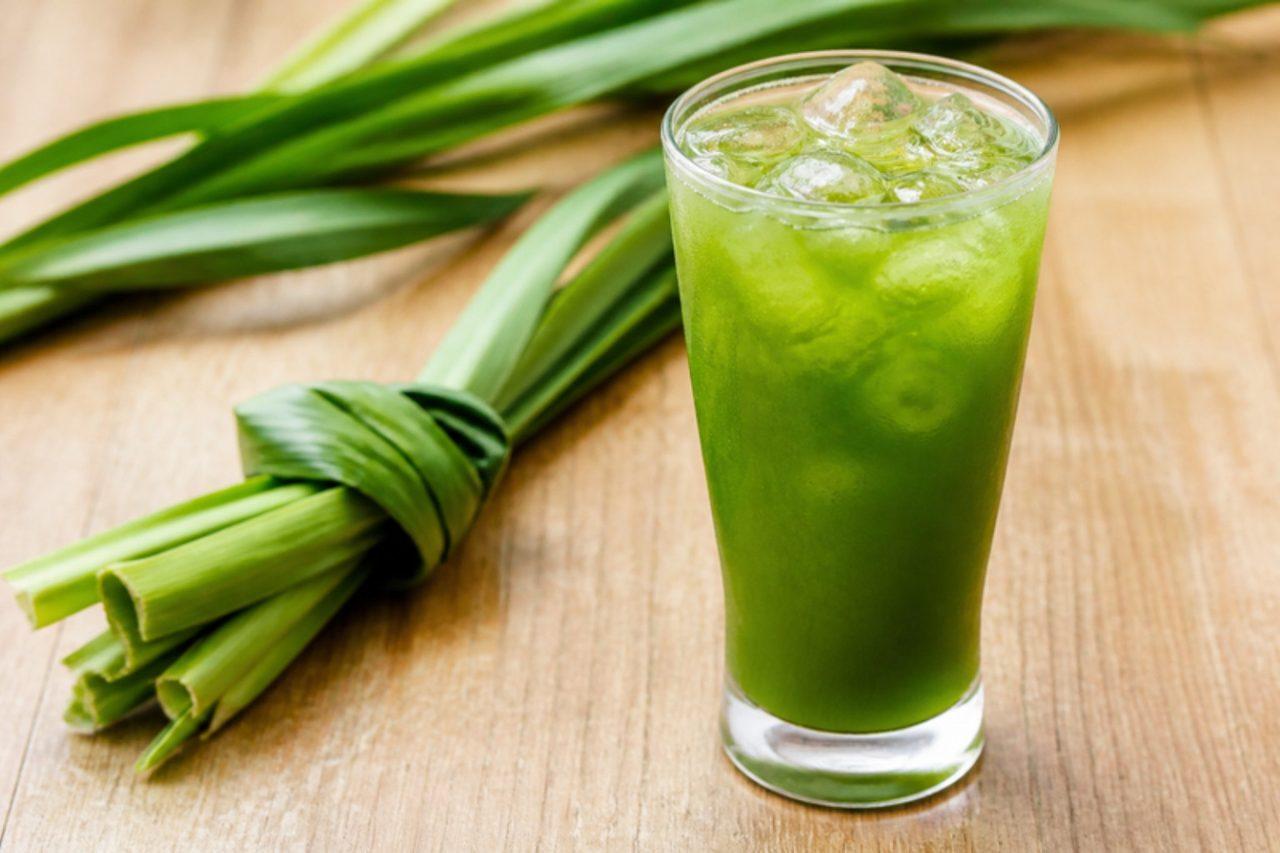
Every Thai garden seems to have a clump of pandan by the tap, and on hot days cooks across the country blitz a handful of leaves into this bright green drink sold at temple fairs and noodle shops. It tastes sweet, grassy and faintly of vanilla and basmati, and is said to cool the body. Fresh leaves give the best colour; frozen ones from Asian shops work well too. Chef's tip: the mistake is serving it unstrained or leaving it for hours; strain it twice through cloth and drink it the same day, as it fades and turns grey.

15 minThaiDrinksVeganGluten free
by KrazyBadal 0 views

Nam krachiap (roselle drink)

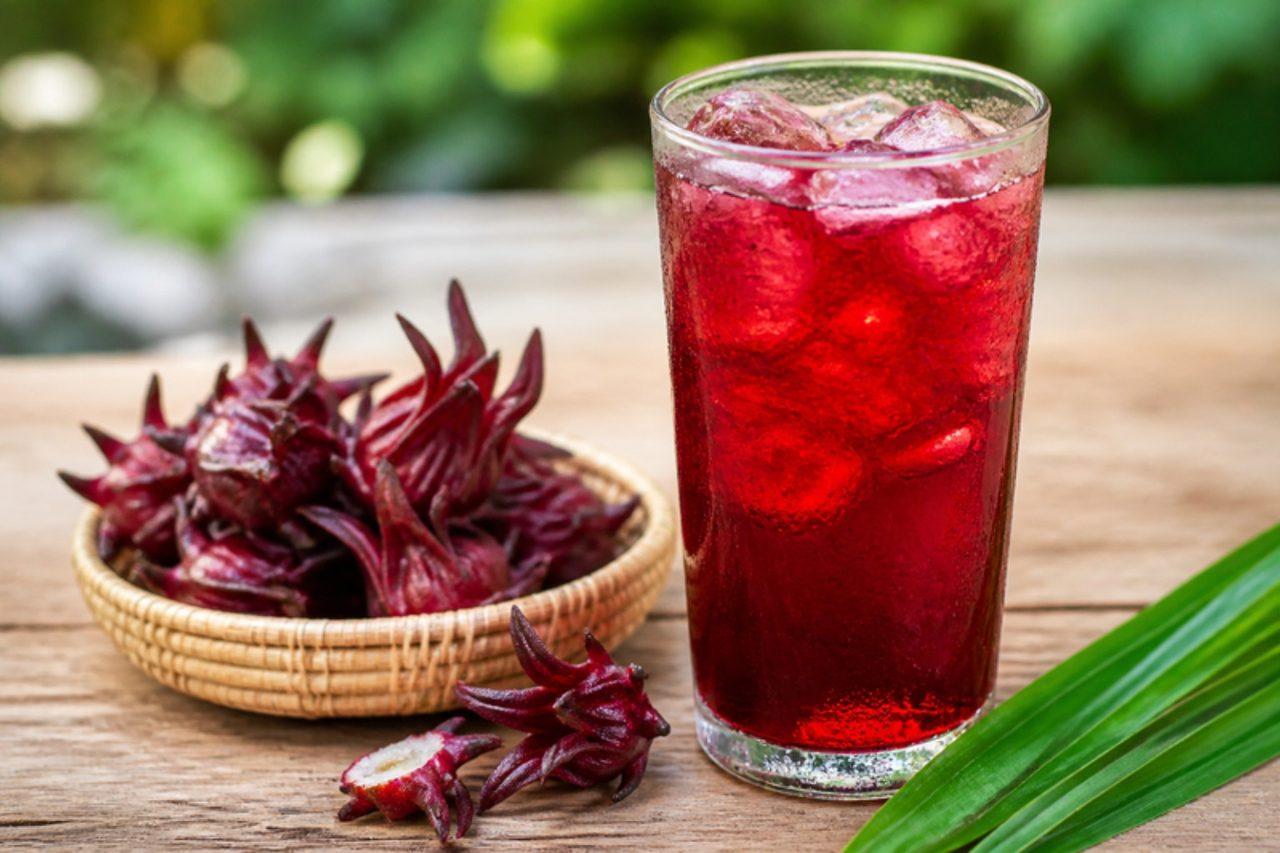
In the dry hot season Thai markets from Isan to Bangkok sell bags of this ruby drink tied with a straw, made from the dried calyces of the roselle plant grown in the northeast. It tastes like cranberry with a floral edge, sharply tart and only lightly sweet, with a pinch of salt to lift it. Drink it very cold; it keeps for days in the fridge. Chef's tip: the mistake is boiling the roselle for a long time, which turns it bitter and dull; simmer briefly and then let it steep off the heat.

20 minThaiDrinksVeganGluten free
by KrazyBadal 0 views

Nam dok anchan (butterfly pea lemonade)

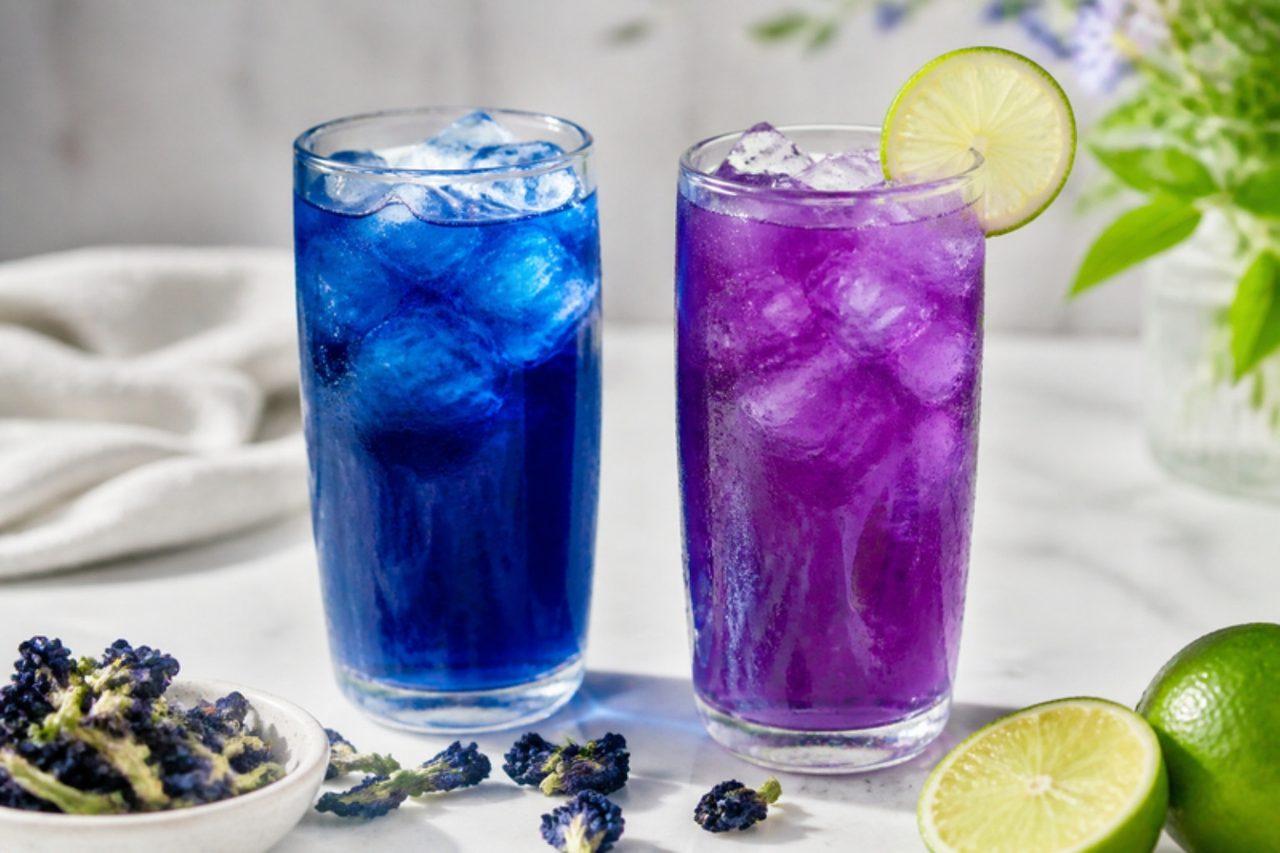
Vines of butterfly pea climb fences in gardens all over Thailand, and cafés from Bangkok to Krabi serve the flowers as an iced drink that changes colour at the table. The tea itself is mild and earthy, blue as ink; stirring in lime juice turns it violet and makes it tangy, which children love to watch. Chef's tip: the common mistake is mixing the lime in beforehand; serve the blue tea and lime separately so the colour change happens in the glass.

15 minThaiDrinksVeganGluten free
by KrazyBadal 0 views

Wiener MelangeCoffee with milk and foam

In Vienna you never simply order 'a coffee'; you order by name, and the Melange is the one most Viennese ask for. It arrives in a large cup on a small silver tray with a glass of water and often a tiny chocolate, and you may sit over it for an hour with the newspapers at Café Prückel or Hawelka, mid-morning or after lunch. Traditionally it is a mild, longer espresso (a Verlängerter) with roughly equal hot milk and a soft cap of milk foam; it is gentler than a cappuccino and the foam is looser and creamier. Expect a round, nutty, slightly sweet cup with little bitterness. The common mistake is overheating the milk: once it passes about 70 °C it smells cooked and loses its sweetness and the foam turns big-bubbled and dry. Stop when the jug is too hot to hold for more than a second or two. It is ready when the foam sits in a smooth, glossy dome about a finger thick and the coffee shows as a brown ring at the edge. One cup has about the caffeine of a single espresso. Chef's tip: always serve the glass of water alongside, as Vienna does; it is drunk first to clear the palate.

by KrazyBadal 0 views

Kafae boran (old-style Thai coffee)

Before espresso bars reached Bangkok, coffee in Thailand meant kafae boran from Hainanese-Chinese shophouses and market carts: a dark robusta roast mixed with toasted grains, poured through a long cotton sock called a tung tom and stirred into thick sweetened condensed milk. Uncles still order it hot at 6 am with patongko dough sticks, and in the afternoon heat the same brew is poured over crushed ice and topped with evaporated milk as oliang or kafae yen. The taste is strong, roasty and slightly smoky, sweet and creamy, with a faint caramel-cereal edge from the grains; the iced version is silky and cold. The common mistake is brewing it like filter coffee with too little grounds: once milk and ice go in, it tastes thin. Use plenty, steep it in the sock and pour it through twice. The brew is ready when it is opaque, nearly black and leaves a brown film on a white spoon. It is high in caffeine, so not one for children or late evenings. Chef's tip: rinse the cloth sock in hot water only, never soap, and keep it in a jar of clean water in the fridge between uses so the coffee oils season it.

10 minThaiDrinksGluten free
by KrazyBadal 0 views

Nam lamyai (longan drink)

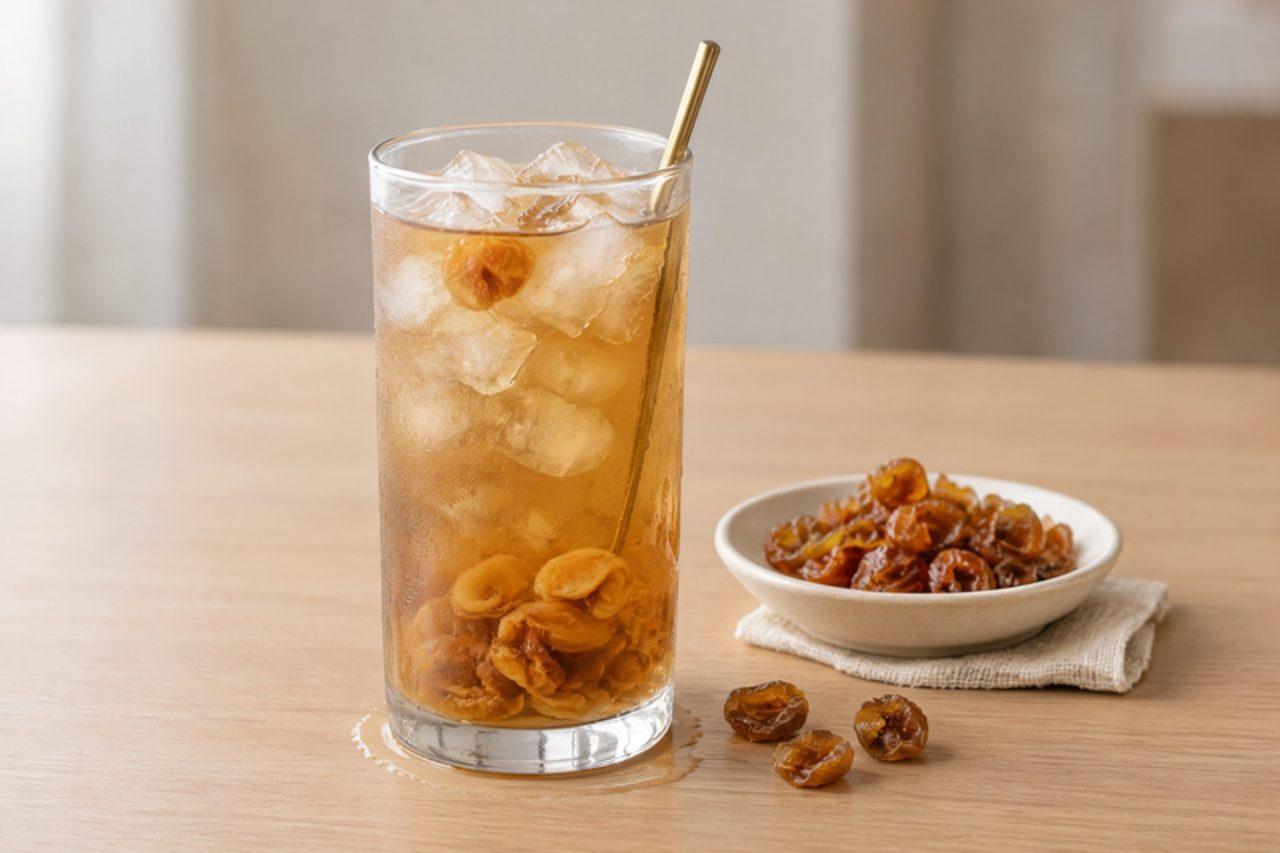
Longan orchards cover the valleys of Chiang Mai and Lamphun, and every August the harvest is smoked and dried in big brick ovens so the fruit lasts all year. That dried lamyai is the base of nam lamyai, sold in plastic bags with a straw at Warorot Market, at roadside stalls on the way to Doi Suthep and in school canteens across the north, especially in the hot season from March to May. It tastes like toffee and smoked honey with a light floral note, and each glass comes with a few plump, chewy longans at the bottom to fish out. The common mistake is boiling the fruit too long with all the sugar at the start: the drink turns syrupy and the longans go mushy. Simmer the fruit first, sweeten at the end and taste before adding everything. It is ready when the liquid is clear amber-brown, the longans have swollen back to roughly their fresh size and the kitchen smells of caramel. It keeps 4 days in a closed jug in the fridge. Chef's tip: a tiny pinch of salt is the street-vendor trick that makes the sweetness taste rounder and brings out the smoky edge.

30 minThaiDrinksVeganGluten free
by KrazyBadal 0 views

Bissy tea (kola nut tea)

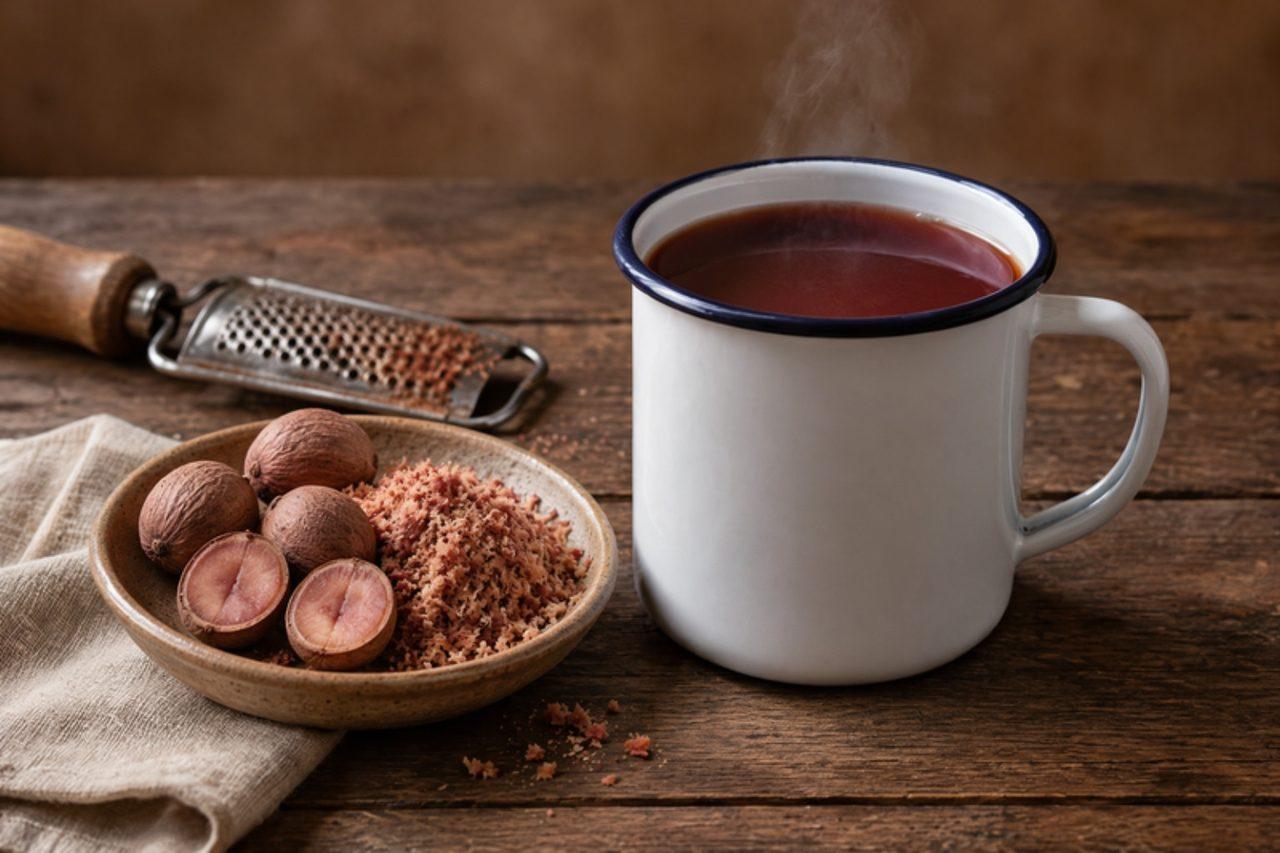
Kola trees came to Jamaica with enslaved West Africans, and the nut, called bissy on the island, has stayed in country medicine ever since. Older people in St Mary, St Elizabeth and the hills of Clarendon still keep a dried bissy in the kitchen and grate some into boiling water when the stomach is upset or after eating something that disagreed with them,. Parched in a dry pan first, the grated nut gives a reddish-brown tea that smells faintly of cocoa and tastes bitter and astringent, softened by plenty of sugar. The common mistake is boiling raw, ungrated nut and expecting much flavour: whole pieces give little. Grate it finely, parch it until it darkens and smells like toasted cocoa, then boil. It is ready when the tea is a deep reddish-brown and coats the tongue with bitterness. Kola nut is very high in caffeine, as strong as a big mug of coffee or more, so drink one cup, not late in the day, and keep it away from children, pregnant people and anyone sensitive to caffeine or with heart trouble. Chef's tip: strain it through a fine cloth; the grated nut leaves a gritty sediment that a sieve lets through.

by KrazyBadal 0 views

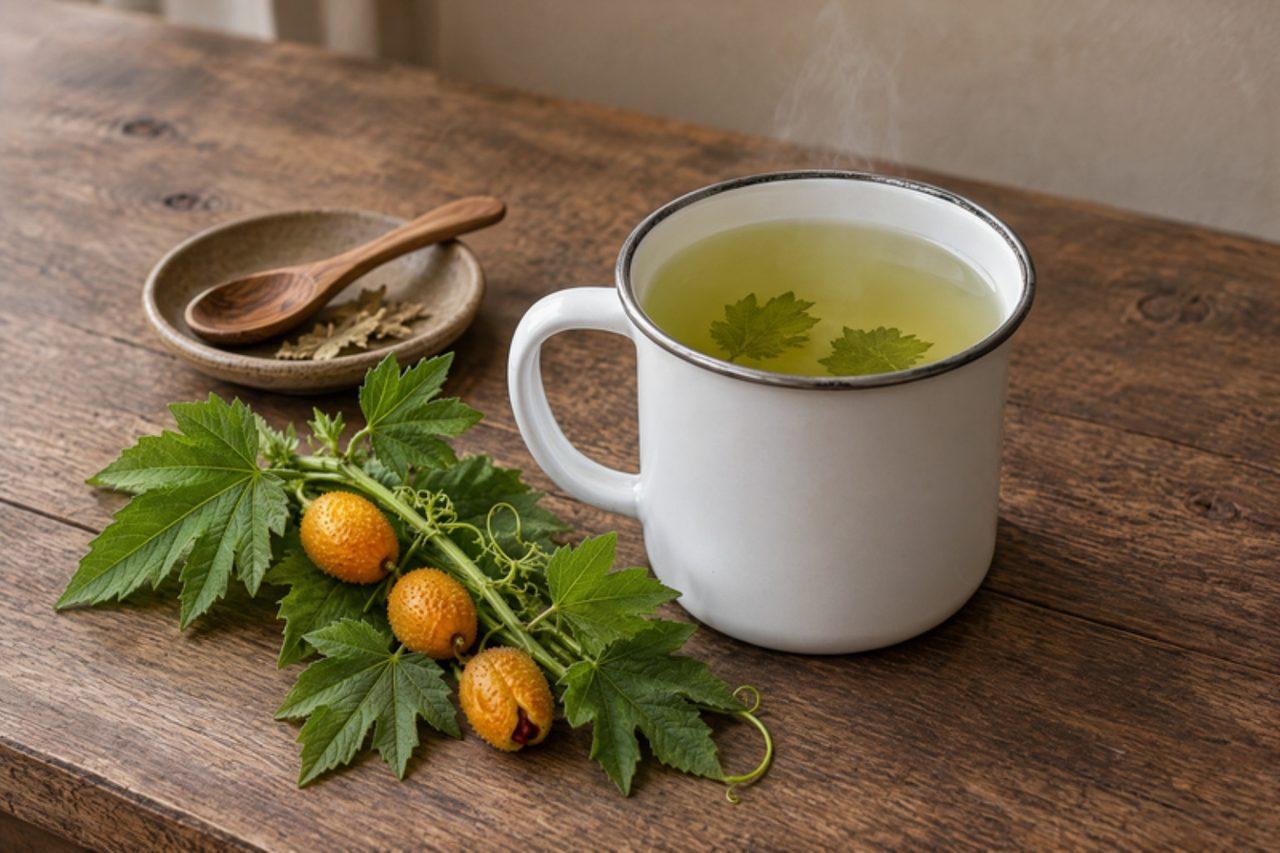
Cerasee teaBitter melon vine tea

Cerasee grows wild on fences and roadsides all over Jamaica, a thin vine with lacy leaves, yellow flowers and small warty orange fruit. It is the best known of the island's bush teas: generations of Jamaican children were given a cup at the end of the summer holidays, before going back to school, as a wash-out, and adults still drink it now and then as a cleansing and cooling tonic, or for the skin. The tea is pale green-gold and seriously bitter, with a grassy, slightly vegetal taste; some add sugar or lime. The common mistake is boiling the vine hard for a long time, which makes the tea far harsher than it needs to be. Pour boiling water over it and let it steep instead, and leave out any ripe fruit and seeds. It is ready when the water is light green-gold and smells green and herbal. Do not drink it if you are pregnant, breastfeeding or trying to conceive, do not give it to young children, and check with a doctor if you have diabetes or take medication, as it may lower blood sugar. Chef's tip: dried cerasee from Caribbean shops works well; use a little less.

by KrazyBadal 0 views

Cocido quemadoBurnt sugar mate drink

Cocido is how Paraguay starts the day: in Asunción, in the villages of Guairá and Itapúa, and in school kitchens, a pot of burnt yerba is brewed and poured into cups with chipa, the cheesy cassava bread, or with a hard galleta. The old way is to drop a glowing piece of charcoal into a pot with yerba and sugar and stir until the sugar burns. On a home stove you caramelise them together in a dry pan instead, which is safer and gives the same smoky, toffee-like taste. The drink is clear amber-brown, with roasted, slightly bitter mate notes over burnt-sugar sweetness; with milk added it becomes cocido con leche, creamy and coffee-coloured. Yerba mate contains caffeine, so treat it like a cup of coffee. The common mistake is letting the sugar go black: it turns acrid and bitter. Pull it off the heat when the caramel is deep amber and the yerba smells toasted, not burnt. It is ready when the liquid is a clear dark amber and tastes of toffee and smoke. Chef's tip: the water will spit fiercely when it hits the hot caramel, so pour it in from the side, at arm's length.

by KrazyBadal 0 views

Postre MassiniCustard sponge with burnt sugar top

Montevideo's birthday cake of choice since the early twentieth century, the Massini is two thin layers of sponge sandwiching a thick filling of whipped cream folded with egg-yolk custard, crowned with a thin glassy crust of torched yolk and sugar. Bakeries across Uruguay sell it on Sundays. Traditional versions sometimes add a sweet fortified wine to the custard; this one is alcohol-free. The custard is cooked to a safe 71 °C. The common mistake is assembling with warm custard, which melts the cream into a puddle. Chef's tip: if you don't have a blowtorch, put the sugared top under a very hot grill for a minute and watch it closely.

by KrazyBadal 0 views

TereréIced yerba mate

In Asunción the hottest part of the day stops for tereré: a horn or cup packed with yerba mate, topped up again and again with ice water infused with crushed herbs, and passed round the group through a metal straw. It was recognised by UNESCO as part of Paraguay's cultural heritage, and the herbs (yuyos) change with the season and the drinker's mood. Yerba mate contains caffeine, so it isn't one for small children. The common mistake is pouring water straight into loose yerba, which then clogs the straw; tilt the yerba to one side first. Chef's tip: for tereré ruso, swap the water for cold orange or grapefruit juice.

by KrazyBadal 0 views

EinspännerBlack coffee with whipped cream

The Einspänner is named after the one-horse carriages of old Vienna: coachmen waiting outside in winter supposedly liked their coffee under a lid of cream that kept it hot and stopped it slopping. Today it is served in a handled glass at classic coffee houses, a strong black mocha (a double espresso or Großer Brauner without milk) topped with a thick layer of cold, lightly sweetened whipped cream and a pinch of icing sugar. You do not stir it: you sip the hot, bitter coffee through the cold, sweet cream, so each mouthful is two temperatures and two textures. It is an afternoon or late-morning coffee, often with a slice of Sachertorte. The common mistake is runny cream that sinks and turns the drink into a milky latte; whip it until it just holds a peak and spoon it on gently so it floats. It is ready when the cream stands at least 2 cm above the coffee and slowly sinks at the edges. It is strong: a double shot of caffeine in one glass. Chef's tip: pour the coffee in first and wait ten seconds before adding the cream, so the crema settles and helps support the cap.

by KrazyBadal 0 views

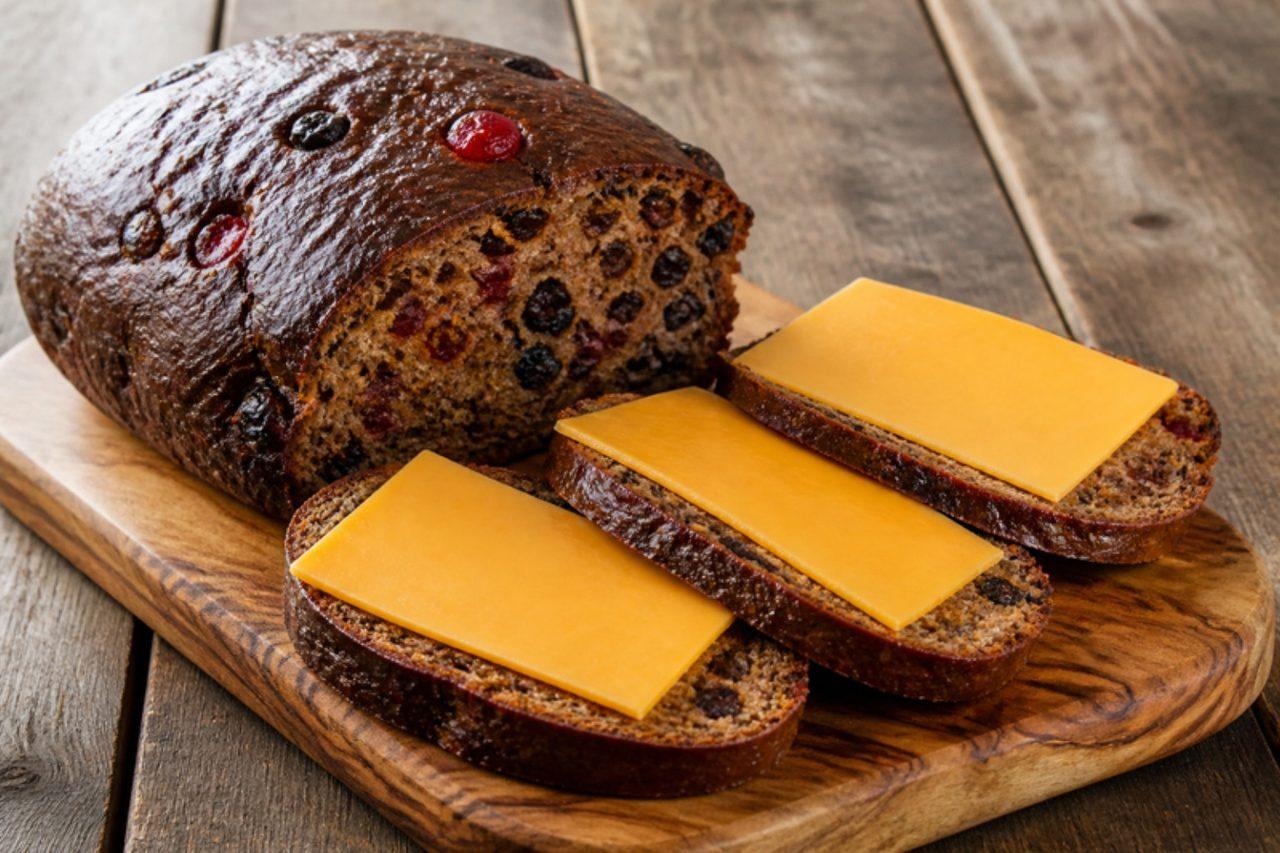
Jamaican Easter bunSpiced Easter loaf

Every Good Friday, Jamaicans from Kingston to London buy or bake a dark, glossy spiced bun to slice and eat with processed cheese, a tradition that grew out of the British hot cross bun. This quick-bread version is moist and dense with dried fruit, molasses and warm spice; it traditionally uses stout, which contains alcohol, so for an alcohol-free bun use the same amount of malt drink. The commonest mistake is slicing the bun warm, when it is still sticky and crumbles; it needs a day to firm and mellow. Chef's tip: brush the hot loaf with a honey or sugar syrup glaze straight from the oven for the shiny top.

by KrazyBadal 0 views

Jamaican plantain tartsSpiced plantain turnovers

Bakeries across Jamaica sell plantain tarts in the glass case beside gizzada and bulla, each a half-moon of short pastry with a sticky, spiced ripe plantain filling and a pink-red rim from a dab of food colouring in the crimped edge. They are eaten as an afternoon snack with a cold drink or a cup of cocoa tea. People often use plantains that are only half ripe, and the filling never turns jammy; you want skins that are mostly black. The red edge is traditional but optional. Chef's tip: cook the filling until it is thick enough to hold a trail when you drag a spoon through it, or it will leak in the oven.

by KrazyBadal 0 views

Showing 24 of 41 recipes

Show more recipes

Page 1 of 2