Skip to content
WhatToEat.Today

All recipes

5

Vegetarian, or something you can't eat? Set your diet once and we'll hide recipes that don't fit.

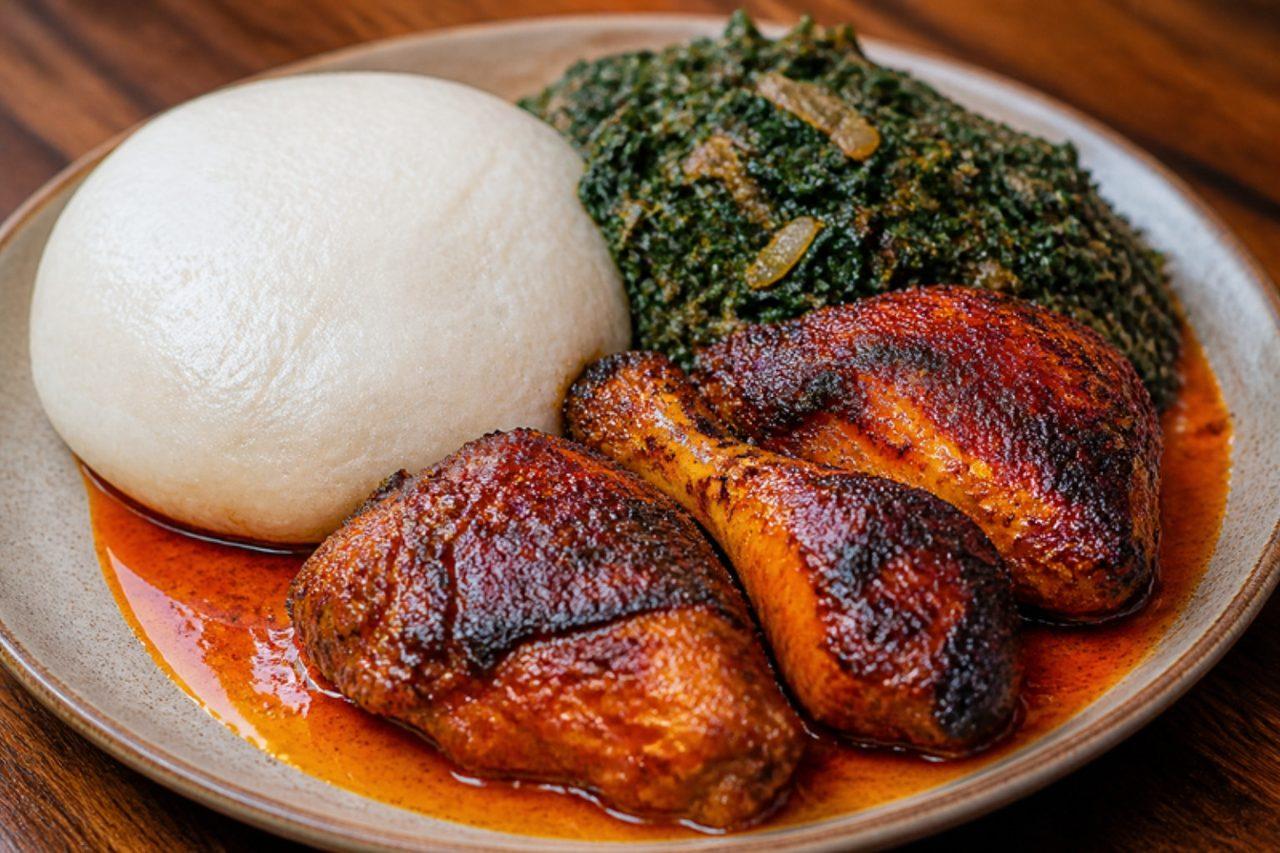
Kati katiGrilled chicken in palm oil

From Kom country near Bamenda, kati kati is chicken cooked twice: first grilled over open coals until smoky and charred in places, then chopped and simmered briefly in red palm oil with onion and hot pepper until every piece is lacquered. It turns up at celebrations in the North West and in Bamenda chop houses, always with fufu corn and a heap of njama njama. The flavour is smoky, rich and fiery, and the sauce is thick enough to cling, not pool. A charcoal grill gives the best flavour, though a hot oven grill works well. Chef's tip: chop the grilled chicken into small pieces before it goes into the pot, so the palm oil sauce reaches every surface.

by KrazyBadal 0 views

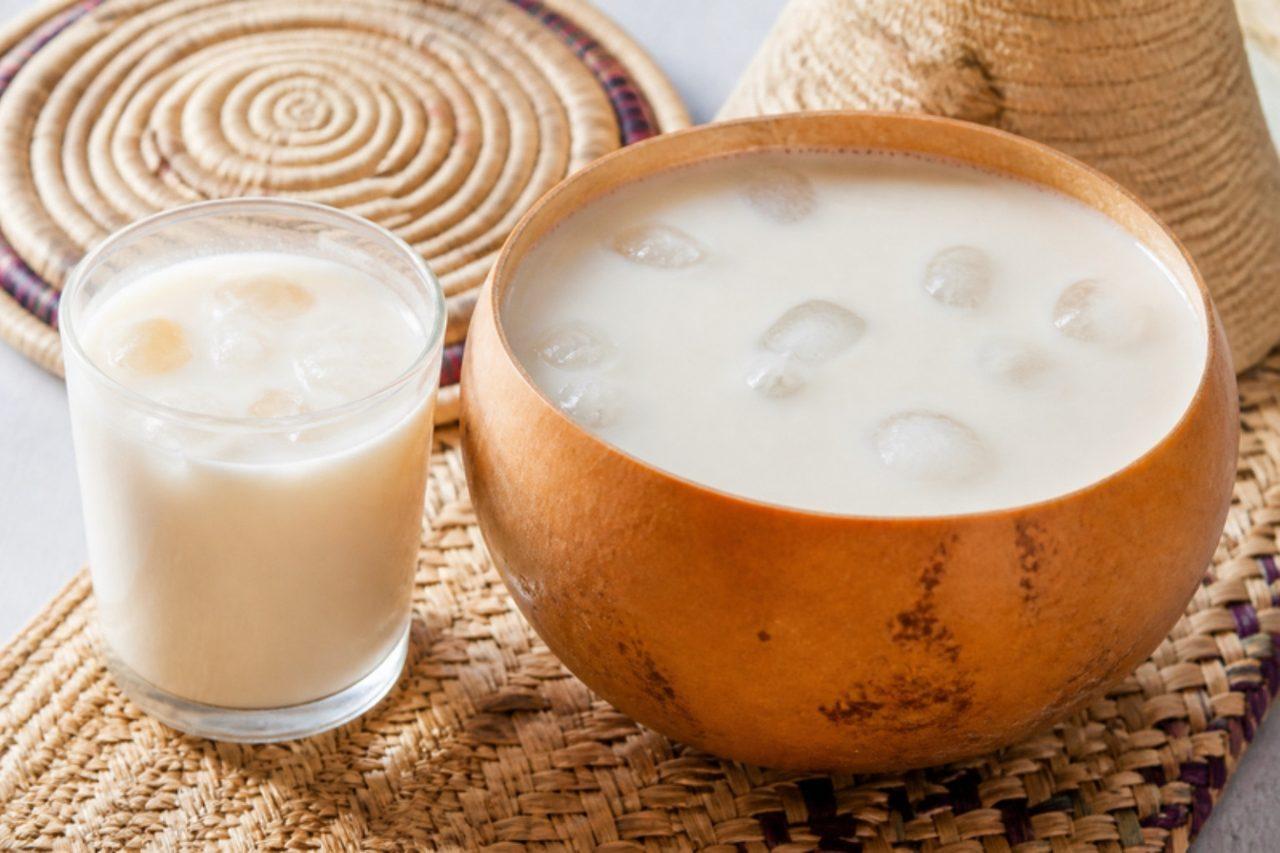
KossamFresh or soured Fulani milk

Fulani herders of the Adamawa plateau measure hospitality in kossam: a calabash of cool milk offered to a guest after a long ride, or sold in Ngaoundéré's markets fresh in the morning and pleasantly soured by afternoon. Fresh kossam is simply creamy whole milk, sometimes sweetened, drunk cold with couscous or on its own as a light meal in the heat of the day. For the tangy soured style, stir two spoonfuls of live plain yoghurt into the milk, leave it somewhere warm for 8–12 hours until thickened, then chill. Traditionally it is made with raw milk; at home, always use pasteurised. Chef's tip: chill the milk for several hours and whisk the sugar in hard just before serving, which gives the light froth you see on calabash-served kossam.

by KrazyBadal 0 views

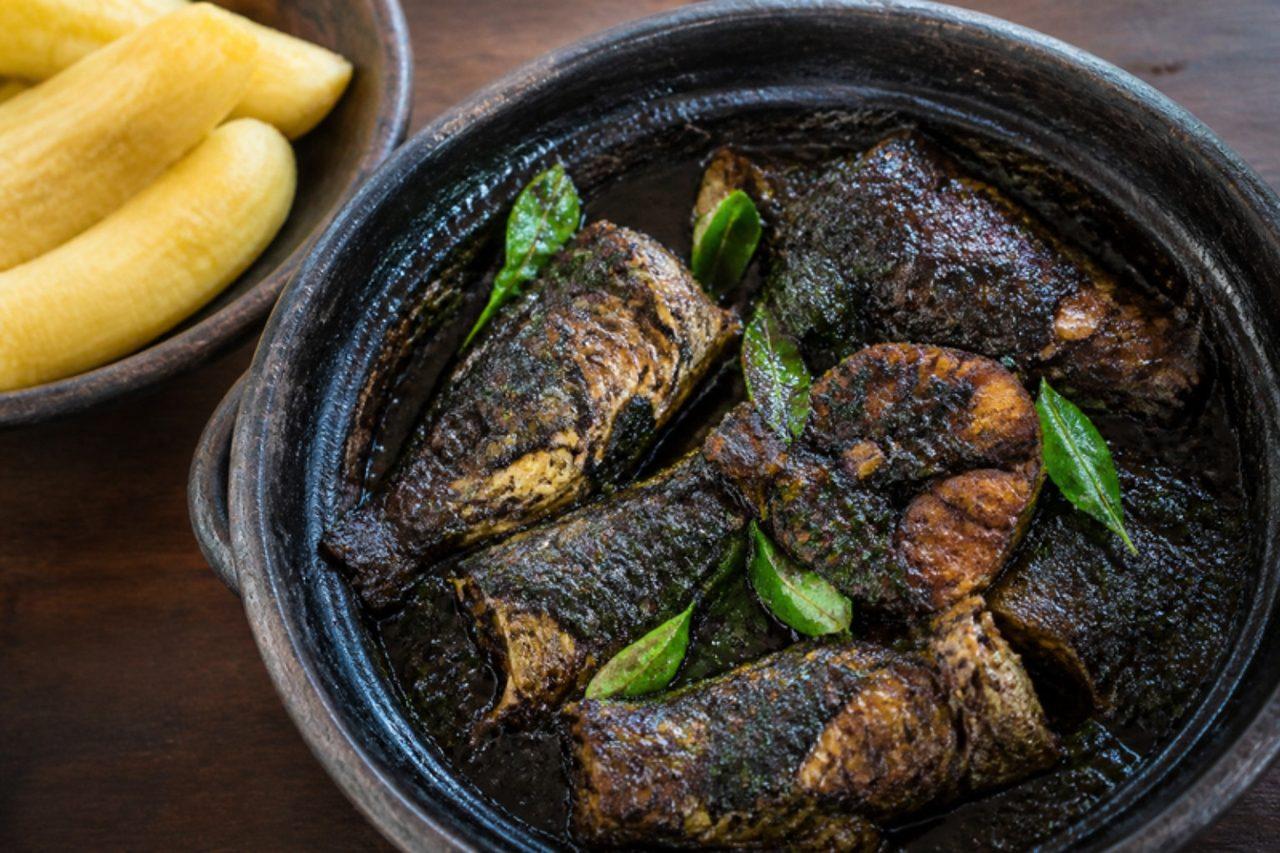
Mbongo tchobiFish in black spice sauce

The Bassa people of the Littoral, between Douala and Édéa, are famous for mbongo tchobi, fish cooked in a startling jet-black sauce. The colour comes from mbongo, the pods of a wild plant in the ginger family, charred over a flame until black and ground with onion, garlic, ginger and njansang; the taste is smoky, peppery and deeply aromatic rather than burnt. Freshwater fish such as carp or tilapia is traditional, simmered gently in the sauce for family gatherings and in Douala restaurants, with boiled plantain, miondo or rice on the side. If mbongo is hard to find, charred black cardamom with grains of paradise gives a similar smoky warmth. Chef's tip: shake the pan instead of stirring once the fish goes in, so the pieces stay whole.

by KrazyBadal 0 views

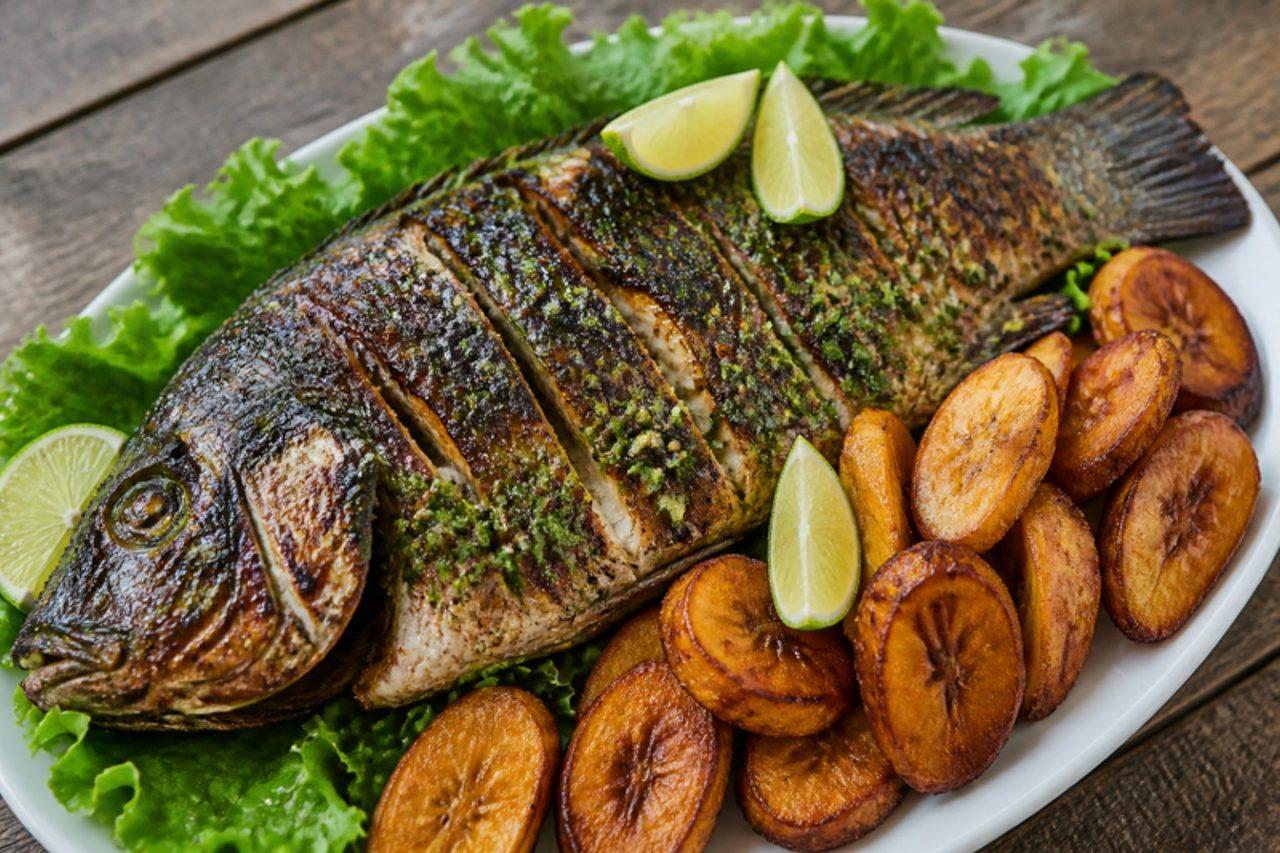
Poisson braiséCharcoal-grilled fish

On the roadside grills of Douala and Yaoundé, women split tilapia or mackerel, smear them with a green paste of ginger, garlic, onion and herbs, and grill them over charcoal while people wait with a cold drink; it is late-evening food, eaten with fried plantain, bobolo (cassava sticks) or miondo and a fiery tomato pepper sauce. At home a very hot grill or a barbecue does the job. The mistake is turning the fish too early, so it sticks and breaks: wait until the skin is crisp and releases. Chef's tip: oil the fish and the grill bars, not just one of them.

by KrazyBadal 0 views

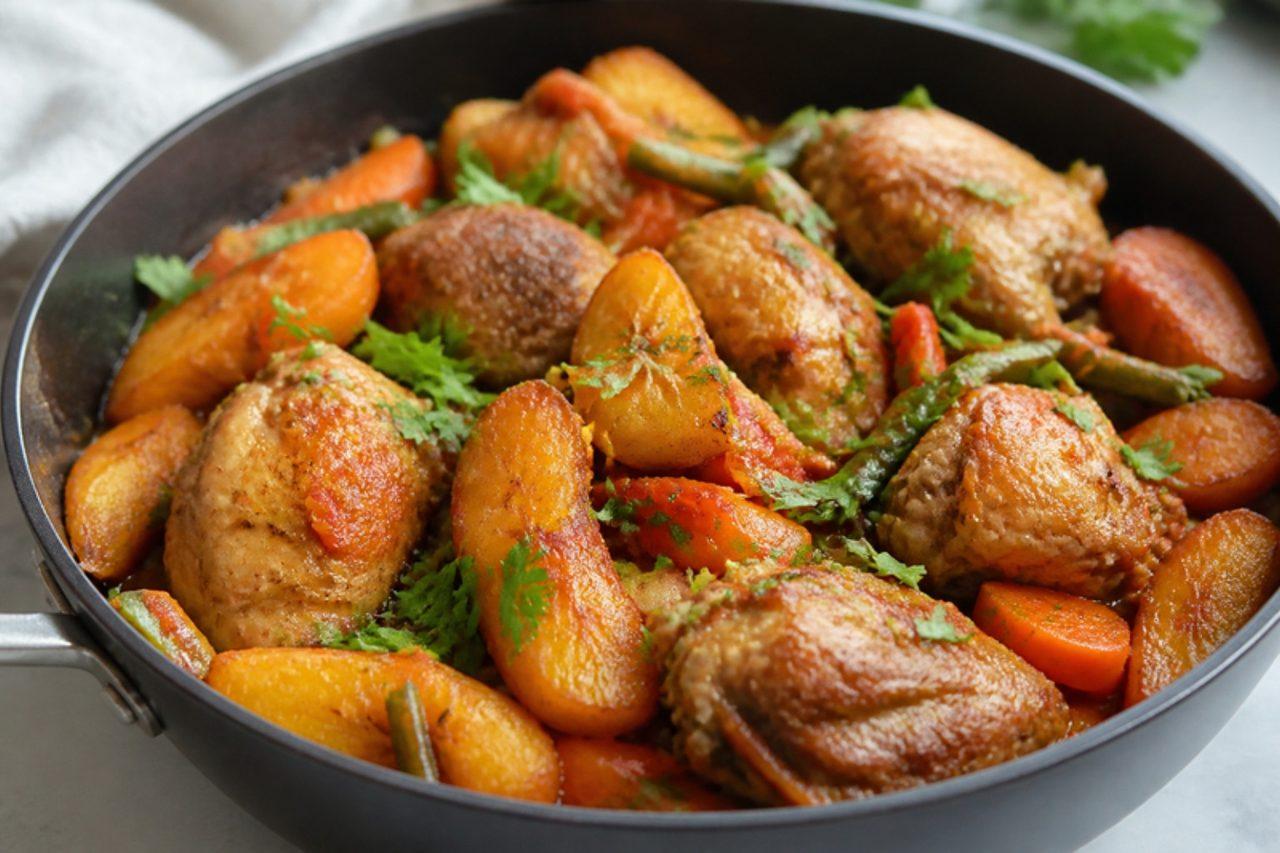
Poulet DGChicken with plantain and vegetables

Poulet DG, short for "poulet directeur général", earned its name in Yaoundé in the 1980s as a dish rich enough for the boss; now it is the centrepiece at weddings and Sunday lunches across Cameroon. Chicken is browned and simmered with tomato, peppers, carrots and green beans, then fried ripe plantain is folded in at the end, so every mouthful is savoury and sweet. The mistake is stirring the plantain in too early, when it breaks up and goes mushy; add it in the last few minutes. Chef's tip: choose plantains that are yellow with lots of black spots, ripe enough to caramelise but still firm.

by KrazyBadal 0 views