Skip to content
Recipes

All recipes

Vegetarian, or something you can't eat? Set your diet once and we'll hide recipes that don't fit.

Wiener MelangeCoffee with milk and foam

In Vienna you never simply order 'a coffee'; you order by name, and the Melange is the one most Viennese ask for. It arrives in a large cup on a small silver tray with a glass of water and often a tiny chocolate, and you may sit over it for an hour with the newspapers at Café Prückel or Hawelka, mid-morning or after lunch. Traditionally it is a mild, longer espresso (a Verlängerter) with roughly equal hot milk and a soft cap of milk foam; it is gentler than a cappuccino and the foam is looser and creamier. Expect a round, nutty, slightly sweet cup with little bitterness. The common mistake is overheating the milk: once it passes about 70 °C it smells cooked and loses its sweetness and the foam turns big-bubbled and dry. Stop when the jug is too hot to hold for more than a second or two. It is ready when the foam sits in a smooth, glossy dome about a finger thick and the coffee shows as a brown ring at the edge. One cup has about the caffeine of a single espresso. Chef's tip: always serve the glass of water alongside, as Vienna does; it is drunk first to clear the palate.

by KrazyBadal 0 views

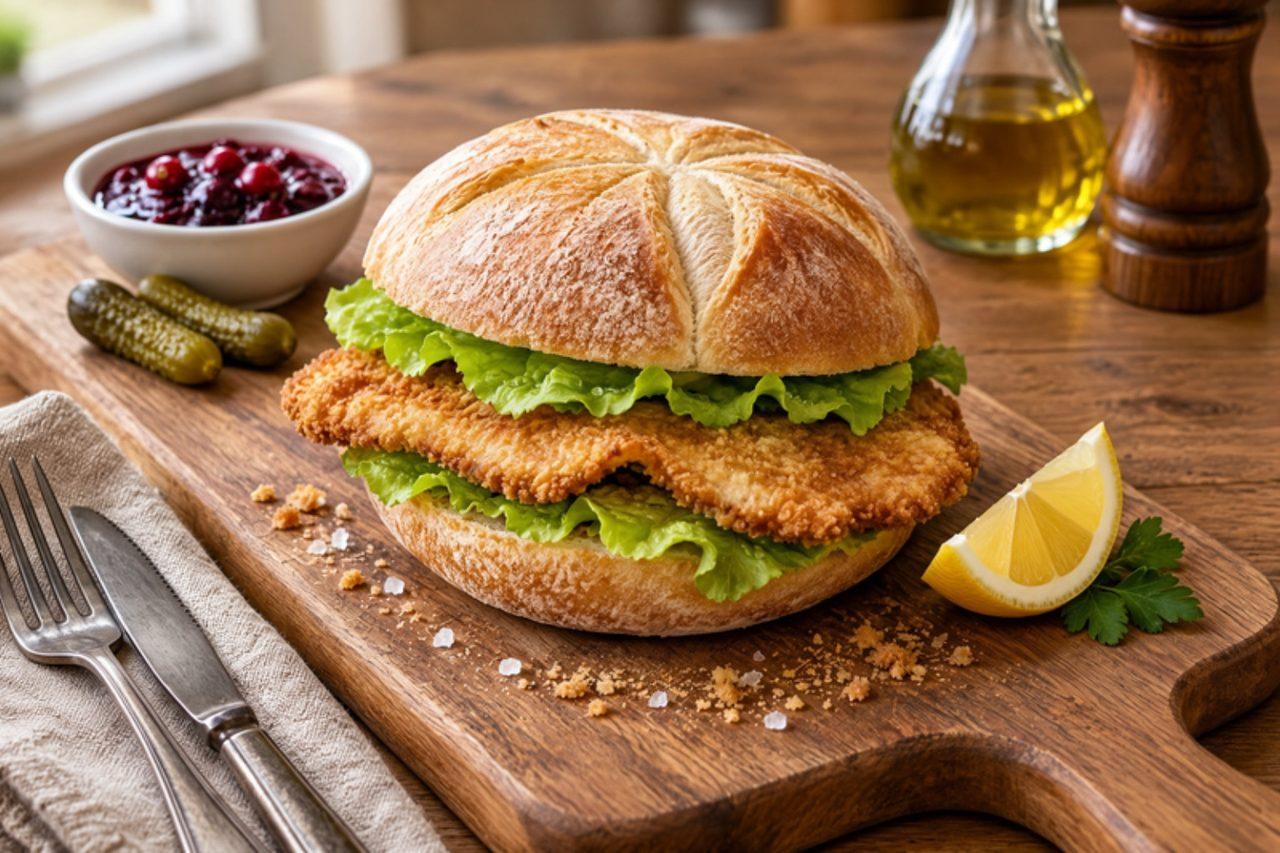
SchnitzelsemmelSchnitzel in a bread roll

Austrians setting off on a train journey, a ski day or a building-site shift pack a Schnitzelsemmel: a crisp Kaisersemmel roll holding a cold, golden pork schnitzel (veal for special days), a leaf of lettuce and a squeeze of lemon, sometimes with a smear of mustard or a gherkin. Leftover Sunday schnitzels are made for it. The common mistake is pressing the breadcrumbs on hard; they should sit loosely so they puff up and ripple away from the meat as it fries. Chef's tip: shake the pan constantly while frying so hot fat washes over the top, and the crust soufflés into those famous waves.

by KrazyBadal 0 views

EinspännerBlack coffee with whipped cream

The Einspänner is named after the one-horse carriages of old Vienna: coachmen waiting outside in winter supposedly liked their coffee under a lid of cream that kept it hot and stopped it slopping. Today it is served in a handled glass at classic coffee houses, a strong black mocha (a double espresso or Großer Brauner without milk) topped with a thick layer of cold, lightly sweetened whipped cream and a pinch of icing sugar. You do not stir it: you sip the hot, bitter coffee through the cold, sweet cream, so each mouthful is two temperatures and two textures. It is an afternoon or late-morning coffee, often with a slice of Sachertorte. The common mistake is runny cream that sinks and turns the drink into a milky latte; whip it until it just holds a peak and spoon it on gently so it floats. It is ready when the cream stands at least 2 cm above the coffee and slowly sinks at the edges. It is strong: a double shot of caffeine in one glass. Chef's tip: pour the coffee in first and wait ten seconds before adding the cream, so the crema settles and helps support the cap.

by KrazyBadal 0 views

TereréIced yerba mate

In Asunción the hottest part of the day stops for tereré: a horn or cup packed with yerba mate, topped up again and again with ice water infused with crushed herbs, and passed round the group through a metal straw. It was recognised by UNESCO as part of Paraguay's cultural heritage, and the herbs (yuyos) change with the season and the drinker's mood. Yerba mate contains caffeine, so it isn't one for small children. The common mistake is pouring water straight into loose yerba, which then clogs the straw; tilt the yerba to one side first. Chef's tip: for tereré ruso, swap the water for cold orange or grapefruit juice.

by KrazyBadal 0 views

Morcilla dulceSweet blood sausage with walnuts

No Uruguayan parrilla is complete without morcilla dulce: a soft pork blood sausage sweetened with sugar and scented with orange peel, studded with walnuts and raisins, grilled until the skin crisps and served first, as part of the achuras, while the beef is still cooking. It is pork throughout: pork blood, pork back fat and natural pork casings. Making it at home is a project. Buy fresh pork blood with an anticoagulant added from a butcher who supplies it for sausage making, keep it chilled below 4 °C and use it within a day. The common mistake is poaching at a rolling boil, which bursts the casings. Chef's tip: keep the water at 80–85 °C, just shivering, and prick a sausage after 25 minutes: it is done when brown, not red, juice comes out.

by KrazyBadal 0 views

Mandi'o chyryryFried cassava with onion and egg

Mandi'o chyryry means 'fried cassava' in Guaraní, and it is what rural Paraguayan families make from yesterday's boiled mandi'o: chunks crushed and fried in a big pan with onion until crisp in places, then scrambled with eggs. It comes out for breakfast with cocido or for a quick supper, and costs next to nothing. Use sweet cassava, the kind sold in supermarkets. The mistake is stirring constantly, which turns it to mush; let the cassava sit and brown. Chef's tip: the best chyryry starts with cold, day-old boiled cassava, which fries crisper than freshly boiled.

by KrazyBadal 0 views

BusecaTripe and white bean stew

Buseca arrived in Montevideo with Italian immigrants from Lombardy and became a classic winter dish of Uruguayan bodegones and family kitchens, eaten on cold June and July days. Honeycomb tripe is simmered until tender, then stewed with white beans, pork chorizo, bacon, peppers, tomato and paprika into a thick, warming stew served with crusty bread. Buy tripe that is already cleaned and blanched (dressed). The usual mistake is undercooking the tripe: it needs a full 2 hours, until it's soft enough to cut with a spoon. Slow-cooker option: after step 4, cook on low for 8 hours. Chef's tip: a little grated lemon zest and parsley stirred in at the end lifts the rich, gelatinous sauce.

by KrazyBadal 0 views

Cocido quemadoBurnt sugar mate drink

Cocido is how Paraguay starts the day: in Asunción, in the villages of Guairá and Itapúa, and in school kitchens, a pot of burnt yerba is brewed and poured into cups with chipa, the cheesy cassava bread, or with a hard galleta. The old way is to drop a glowing piece of charcoal into a pot with yerba and sugar and stir until the sugar burns. On a home stove you caramelise them together in a dry pan instead, which is safer and gives the same smoky, toffee-like taste. The drink is clear amber-brown, with roasted, slightly bitter mate notes over burnt-sugar sweetness; with milk added it becomes cocido con leche, creamy and coffee-coloured. Yerba mate contains caffeine, so treat it like a cup of coffee. The common mistake is letting the sugar go black: it turns acrid and bitter. Pull it off the heat when the caramel is deep amber and the yerba smells toasted, not burnt. It is ready when the liquid is a clear dark amber and tastes of toffee and smoke. Chef's tip: the water will spit fiercely when it hits the hot caramel, so pour it in from the side, at arm's length.

by KrazyBadal 0 views

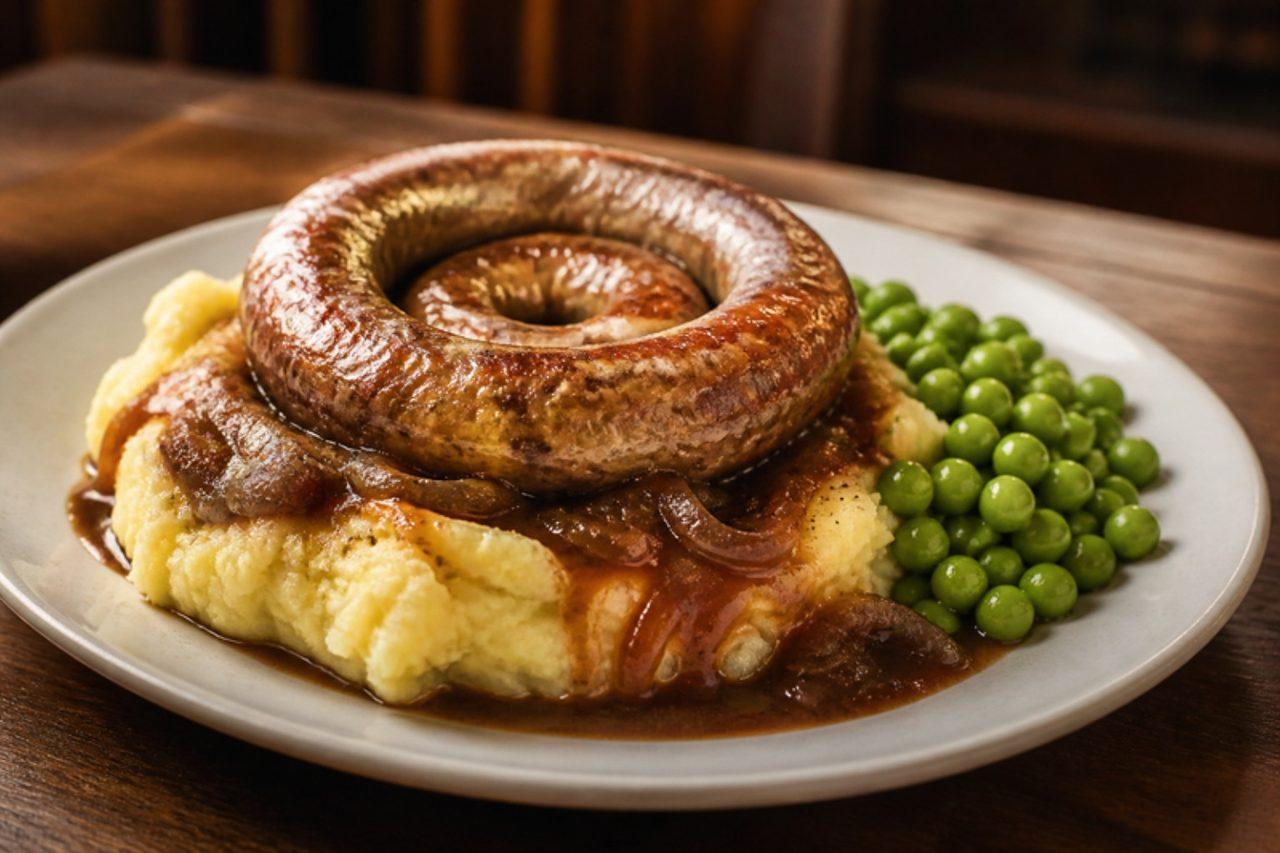
Cumberland sausage and mash

The Cumberland sausage is a long, unlinked coil of coarse, peppery pork sausage from the old county of Cumberland in the Lake District, cooked whole and cut at the table. With buttery mash and a slow onion gravy it's the pub and family supper of the North West. Chef's tip: cook the coil gently in the oven, held flat with skewers, so it doesn't split and stays juicy.

by KrazyBadal 0 views

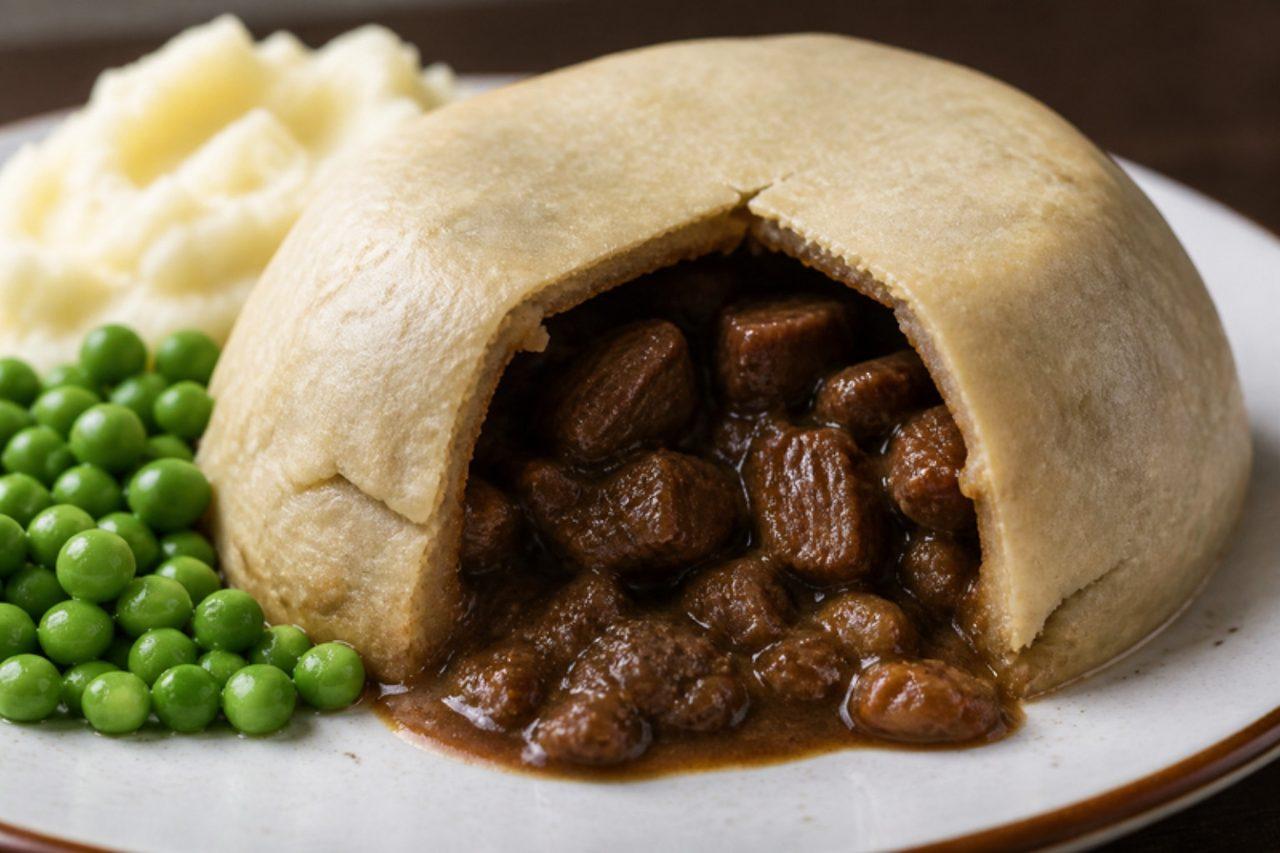
Steak and kidney pudding

Steak and kidney pudding is the steamed suet pie of old English chop houses and Northern family kitchens, the kind of dish that filled up mill workers through Lancashire winters. Beef and lamb's kidney in rich gravy are sealed in a basin lined with suet pastry and steamed for hours until the crust is soft and the filling falls apart. Chef's tip: cook the filling first; it gives tender meat and a crust that isn't soggy.

340 minBritishMeat
by KrazyBadal 0 views

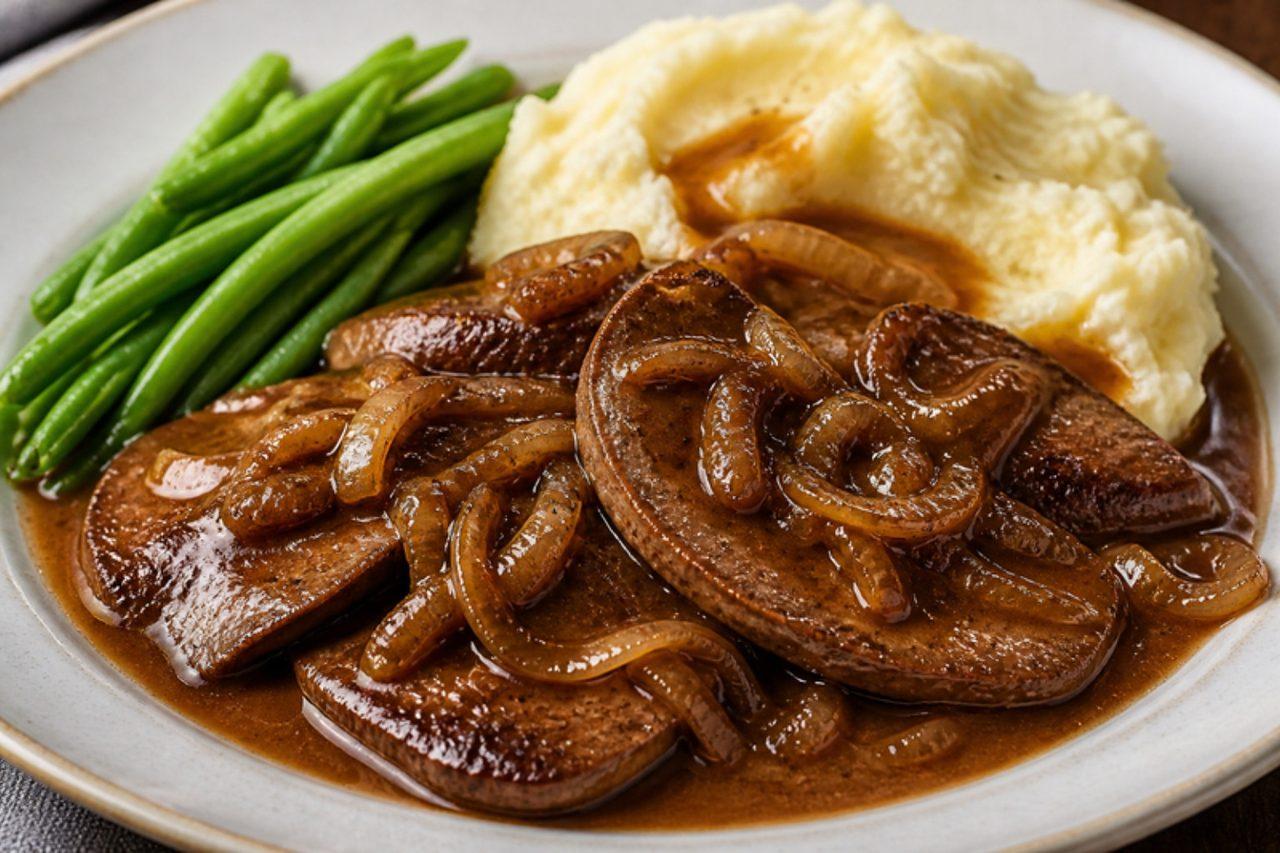
Liver and onions

Liver and onions is a café and works-canteen classic across the North and the Midlands, cheap, quick and full of iron, eaten with mash and a dollop of gravy. Thin slices of calf's or lamb's liver are fried briefly in butter after the onions have turned slow and sweet. Chef's tip: soak the liver in milk for 30 minutes if you find its flavour strong; it softens the taste.

by KrazyBadal 0 views

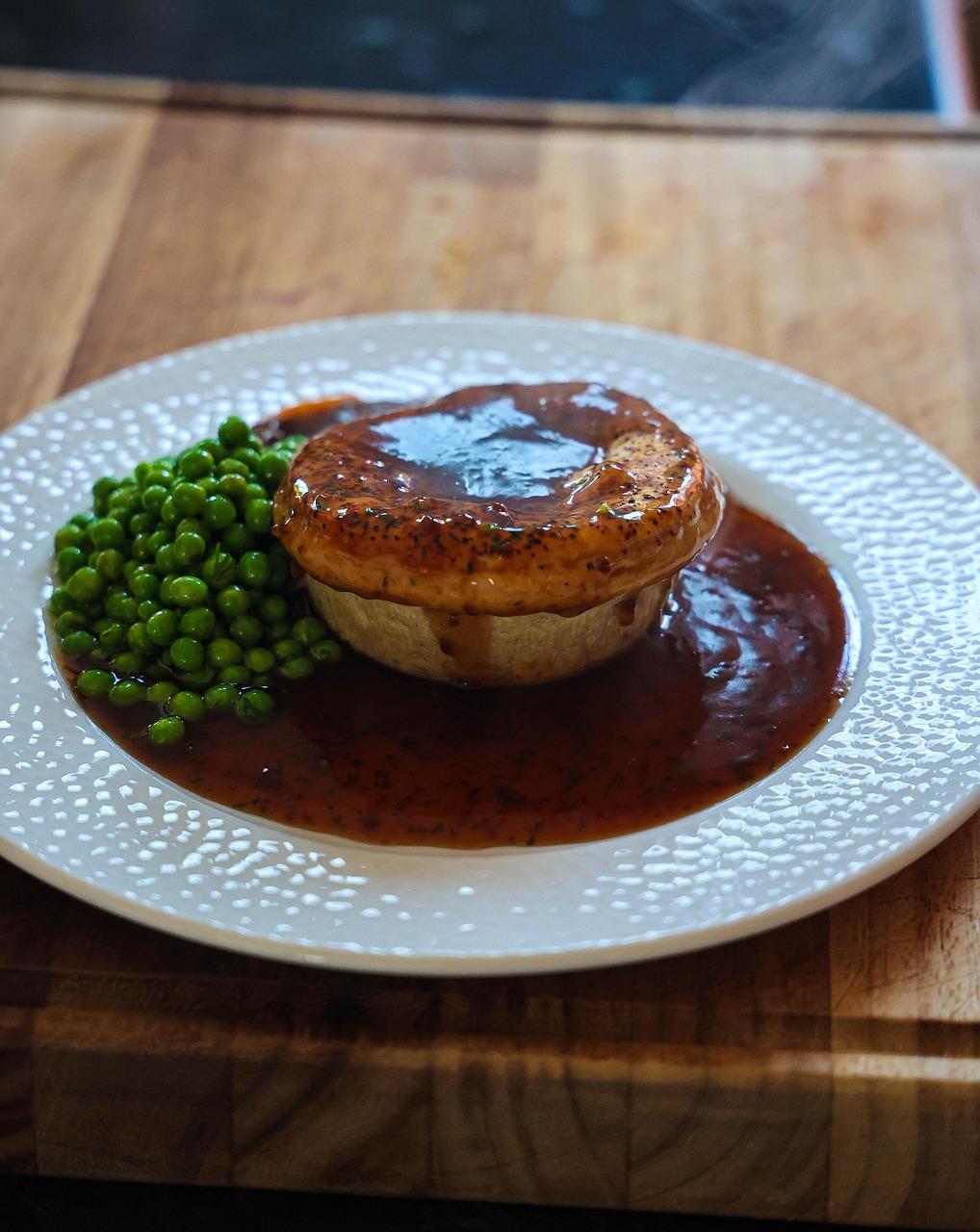
Beef and ale pie

Beef and ale pie is the pub supper of Yorkshire and the Midlands, where brewing towns like Burton upon Trent made a dark ale gravy part of the region's cooking. Chuck steak is braised slowly in ale with onions and mushrooms until tender, then topped with flaky pastry. This recipe contains alcohol, most of which cooks off; for an alcohol-free pie use the same amount of beef stock with 1 tablespoon of malt vinegar and a teaspoon of brown sugar. Chef's tip: let the filling cool before topping, so the pastry stays crisp and puffy.

210 minBritishMeat
by KrazyBadal 0 views

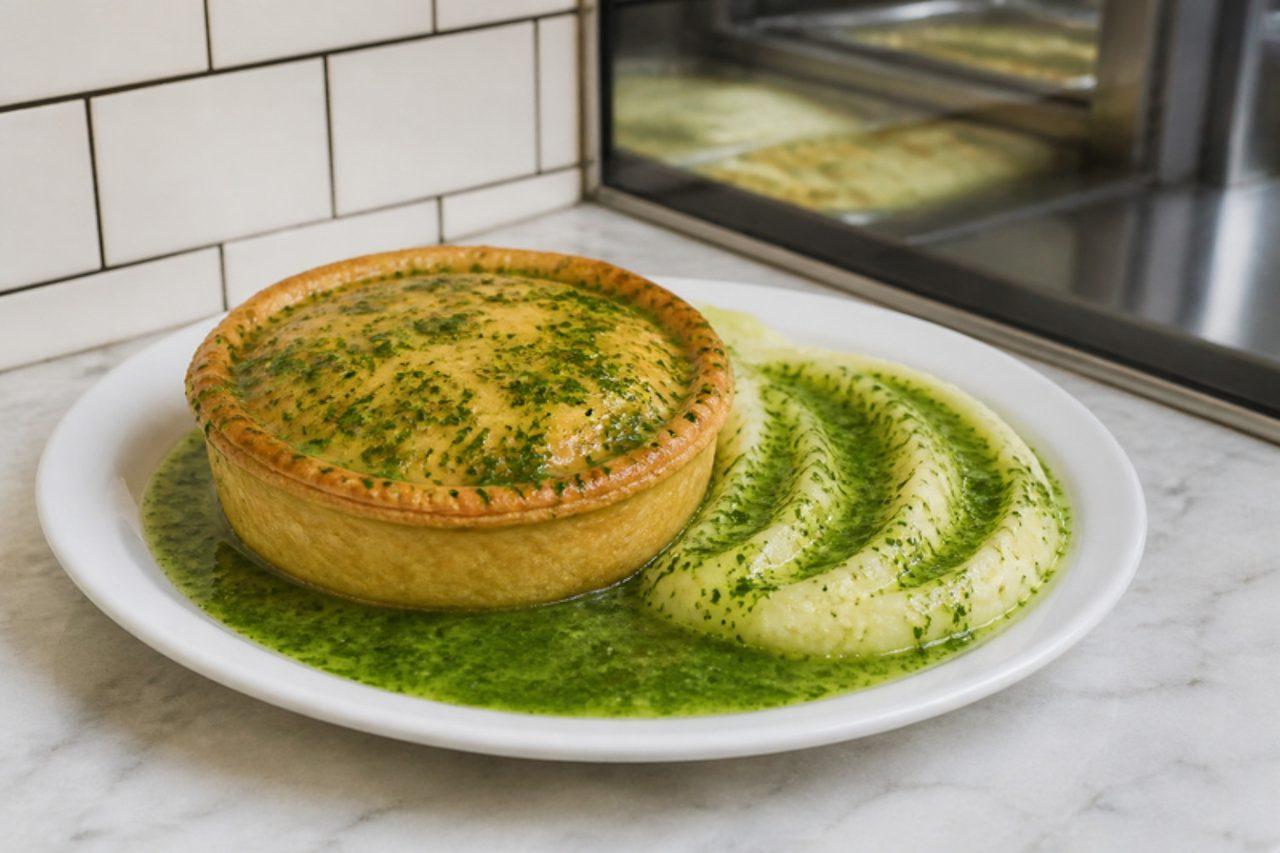
Pie and mash with liquor

Pie, mash and liquor is the working-class lunch of the East End of London, served in tiled pie shops from Bethnal Green to Walthamstow since the 1800s. Small minced beef pies with a soft suet-style base and a crisp puff lid sit next to a scoop of smooth mash, all flooded with liquor, a thin, bright green parsley sauce. Pie shops make the liquor with the stock from stewed eels; this version uses fish or vegetable stock. Locals add chilli vinegar. Chef's tip: keep the liquor thin and pourable, like single cream, not thick like gravy.

by KrazyBadal 0 views

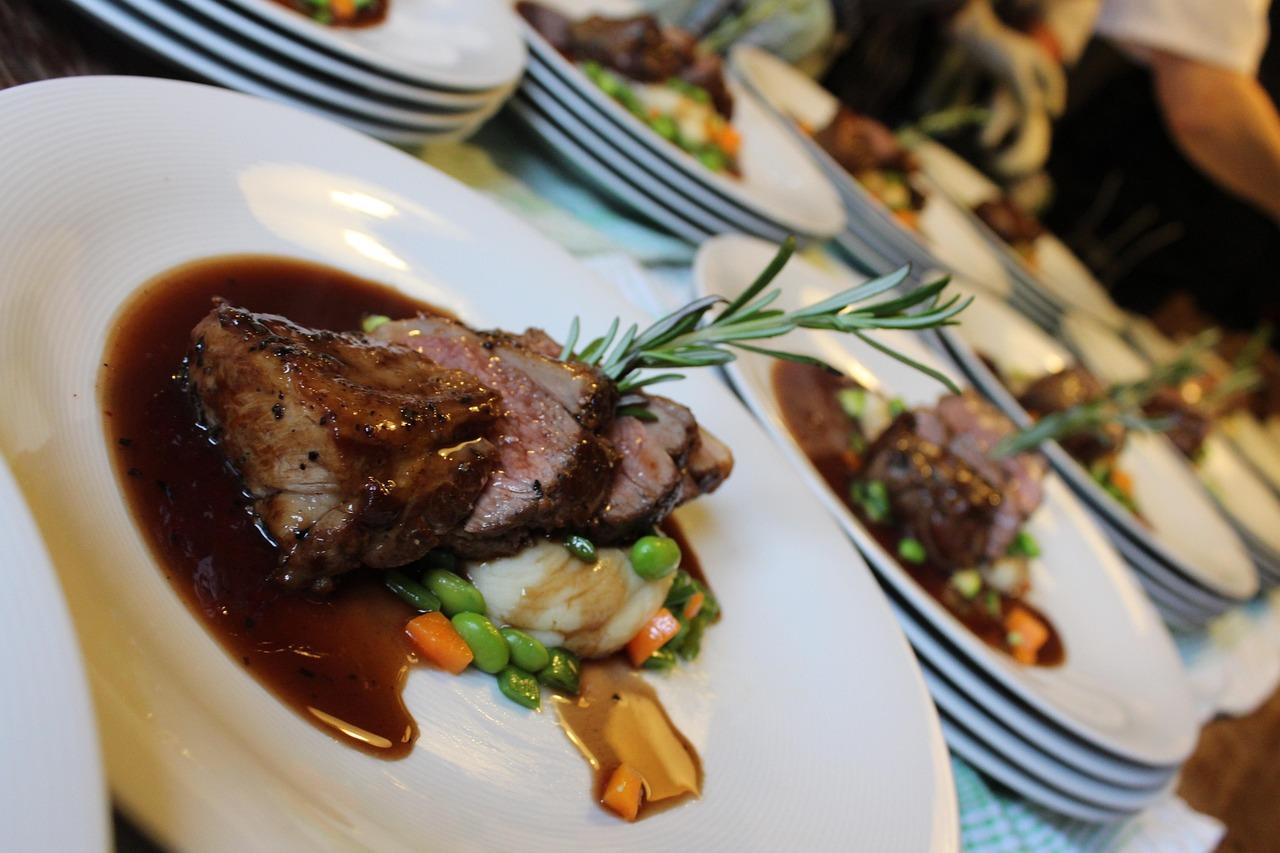
Roast lamb with mint sauce

Roast leg of lamb is the Easter Sunday lunch of England, when spring lamb from the South Downs and the West Country comes in, served with roast potatoes, spring greens and a jug of mint sauce. The sauce is the English twist: chopped garden mint steeped in vinegar and a little sugar, sharp enough to cut the richness of the meat. Chef's tip: make the mint sauce an hour ahead so the vinegar mellows and the mint flavour comes out.

120 minBritishMeatGluten free
by KrazyBadal 0 views

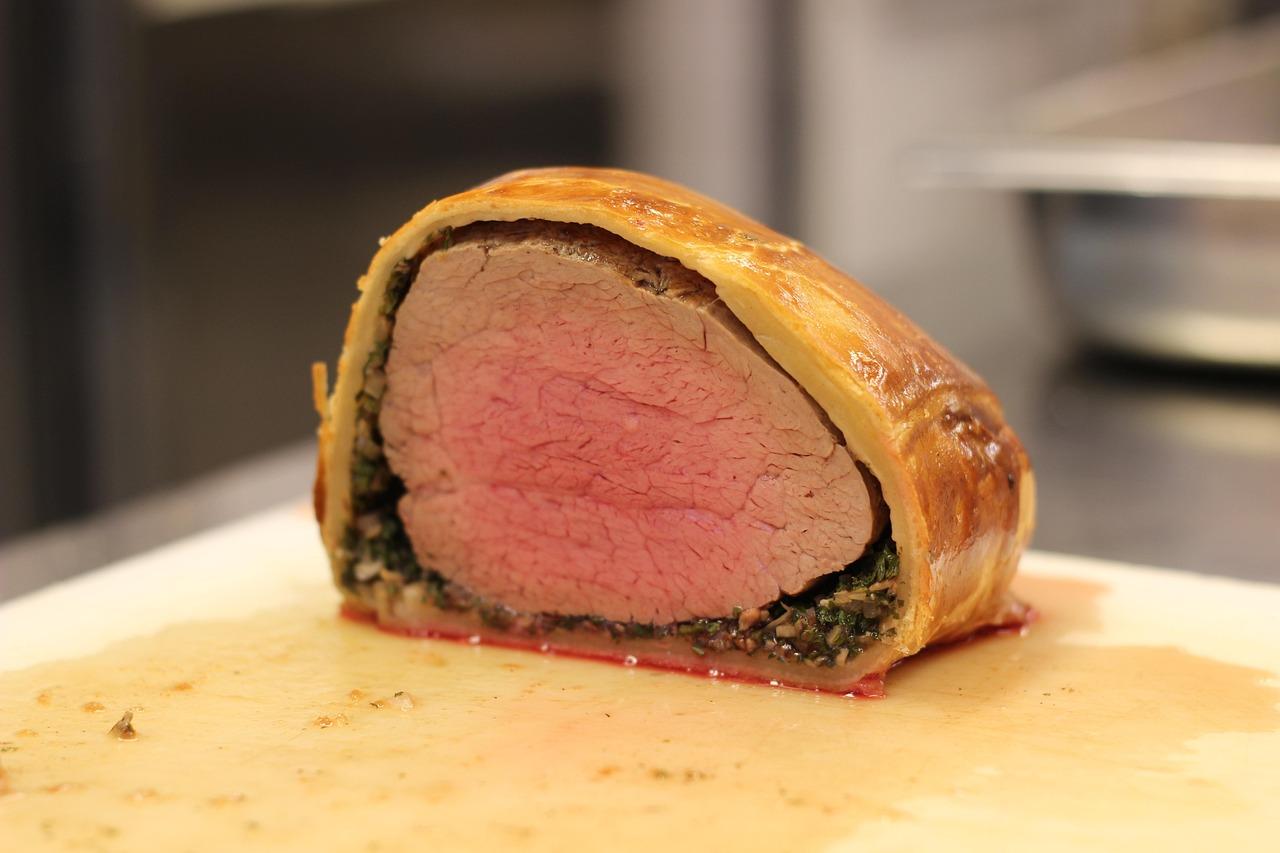
Beef Wellington

Beef Wellington is the grand centrepiece of British Christmas and celebration dinners, a whole beef fillet coated in finely chopped mushroom duxelles, wrapped in thin pancakes or ham and golden puff pastry, then sliced at the table to show a pink middle. It is linked, without much proof, to the Duke of Wellington. This version wraps the fillet in crêpes instead of the usual Parma ham. The duxelles is deglazed with a splash of white wine, which contains alcohol; use a little stock for an alcohol-free version. Chef's tip: chill the wrapped fillet before it goes in the pastry so everything stays tight and the base doesn't go soggy.

105 minBritishMeat
by KrazyBadal 0 views

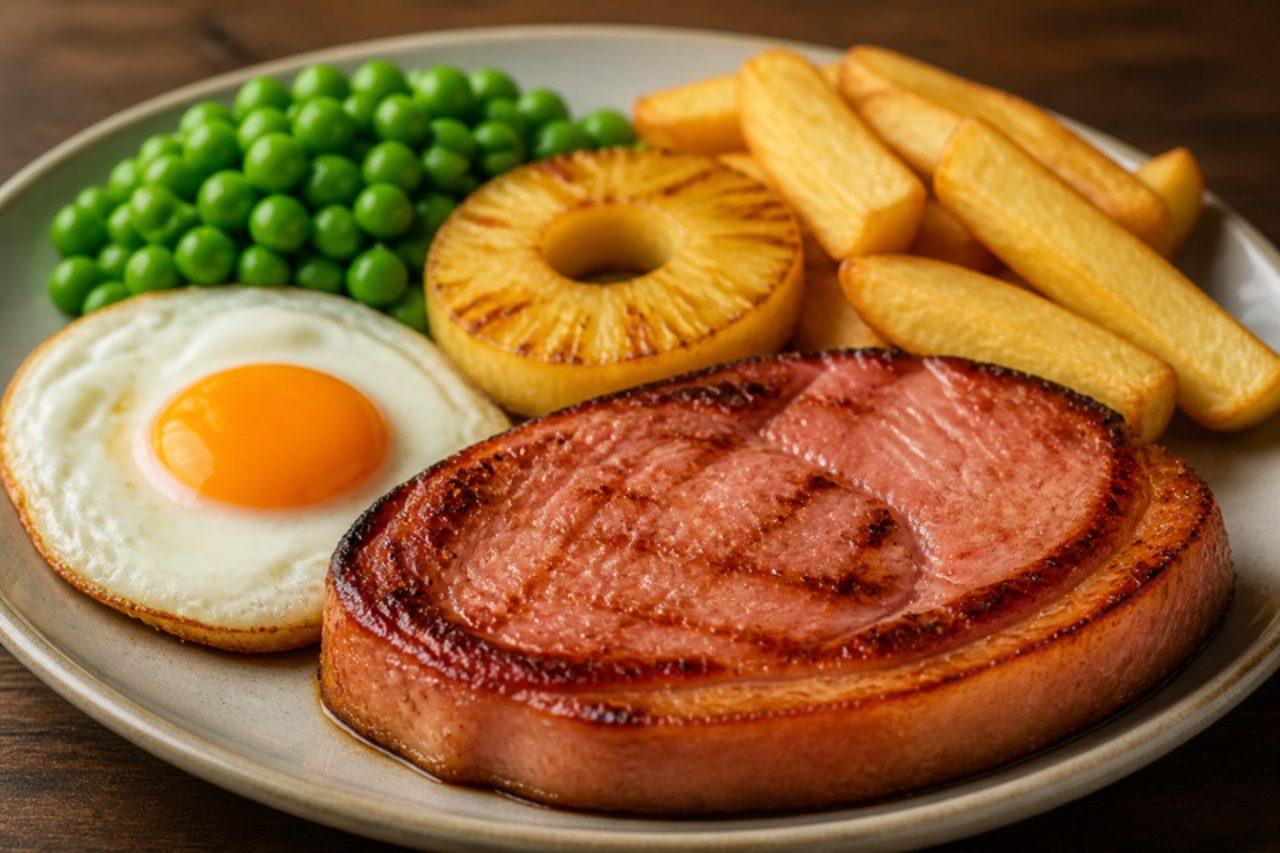
Gammon, egg and chips

Gammon, egg and chips is the great English pub and transport-café dinner, on the menu from roadside diners on the A1 to Devon seaside pubs. A thick steak of cured pork gammon is grilled until the fat crisps, then topped with a fried egg or a ring of pineapple (or both), next to chunky chips and peas. Chef's tip: snip the fat around the edge every 2 cm before cooking so the steak stays flat.

by KrazyBadal 0 views

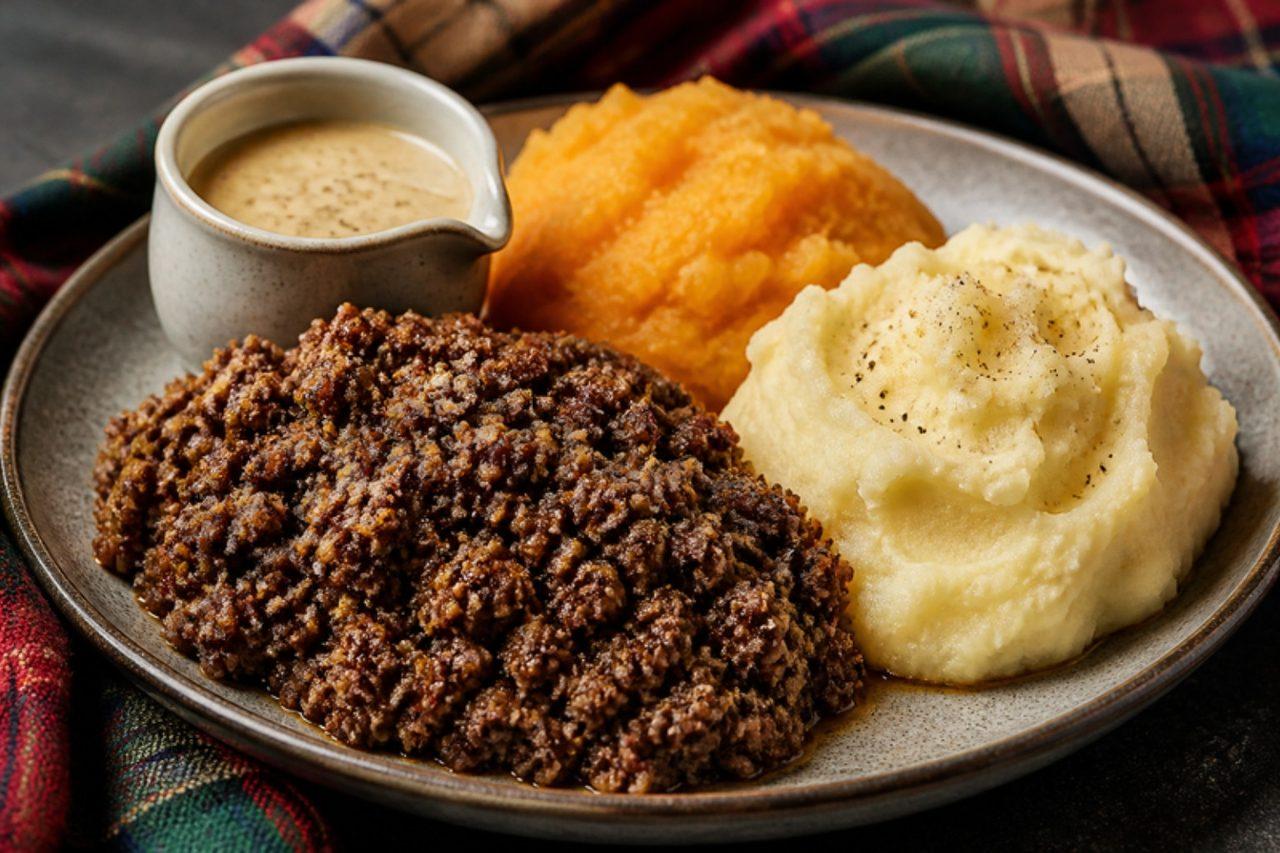
Haggis, neeps and tatties

Haggis, neeps and tatties is the centre of every Burns Supper on 25 January, when the haggis is piped in, addressed with Robert Burns's poem and cut open with a flourish. Haggis is a peppery, oaty pudding of minced lamb's offal, onion and spice; nearly everyone in Scotland buys it from a butcher, then simply heats it and serves it with mashed swede (neeps) and potatoes (tatties). The cream sauce has a splash of whisky, which contains alcohol; leave it out and add a teaspoon of mustard for an alcohol-free sauce. Chef's tip: wrap the haggis tightly in foil before it goes in the water so the casing doesn't burst.

by KrazyBadal 0 views

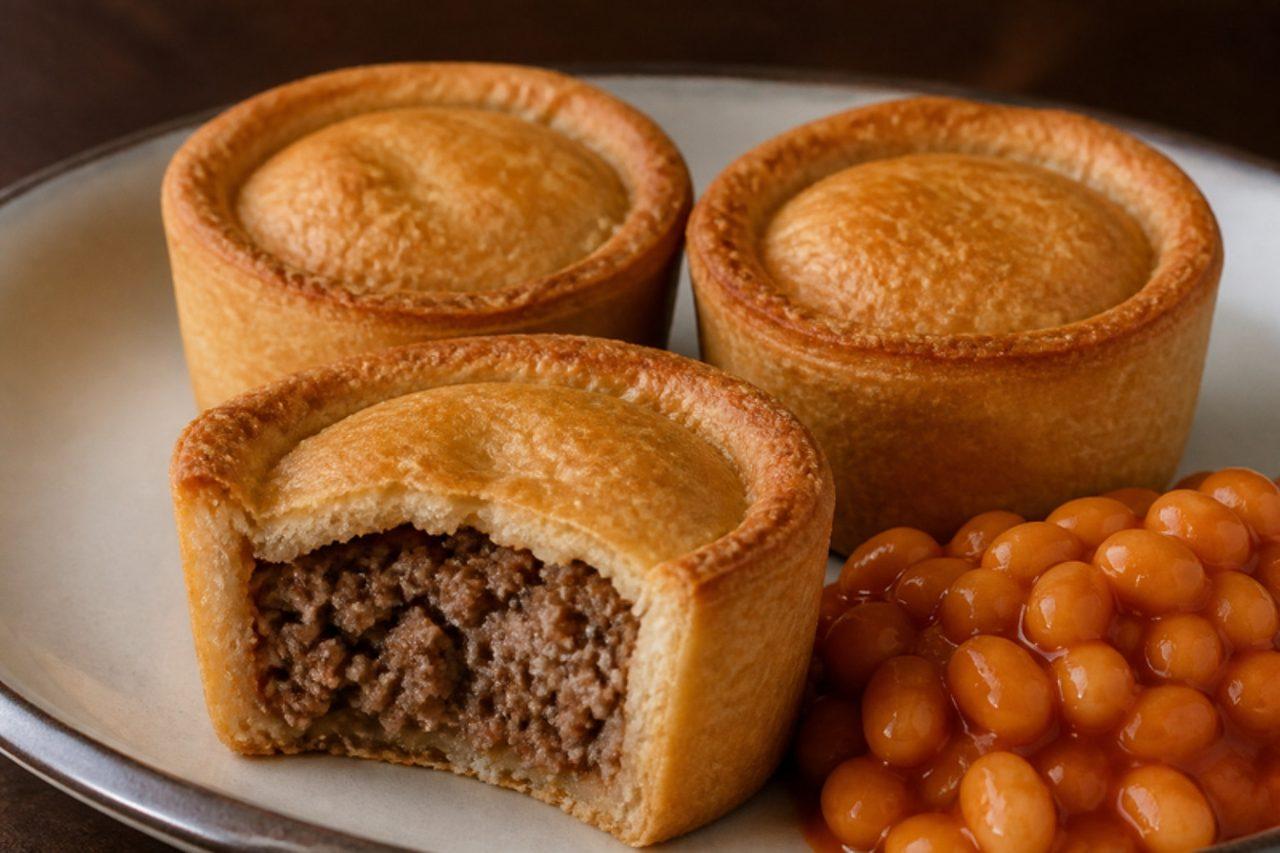
Scotch pies

The Scotch pie is the straight-sided, double-crust mutton pie eaten at half time on football terraces and bought from butchers' counters in every Scottish town, with an open rim at the top for adding gravy, beans or mash. The pastry is a hot water crust made with lard (an animal fat) and the filling is peppery minced mutton or lamb. Chef's tip: shape the pastry while it is still warm; cold hot-water pastry cracks.

by KrazyBadal 0 views

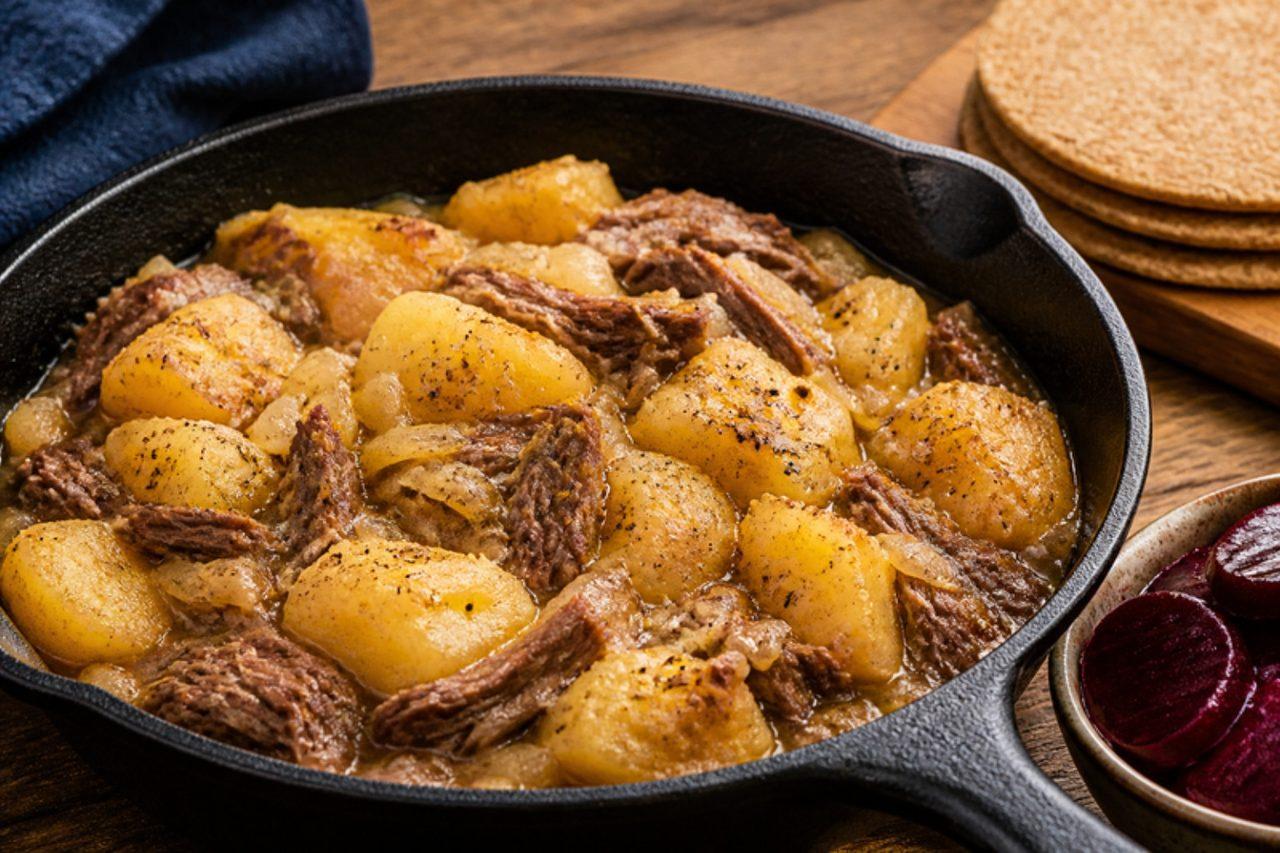
Scottish stovies

Stovies, from the Scots word for stewing on the stove, is the Monday dish made from Sunday's roast all over Scotland, and the ceilidh and wedding supper served late in the evening with oatcakes and beetroot. Potatoes and onions are cooked slowly in beef dripping with the leftover meat and its jelly until some potatoes collapse into a thick, savoury mash and some stay in chunks. Chef's tip: don't stir too often; let the bottom catch a little, as those brown bits are the best part.

by KrazyBadal 0 views

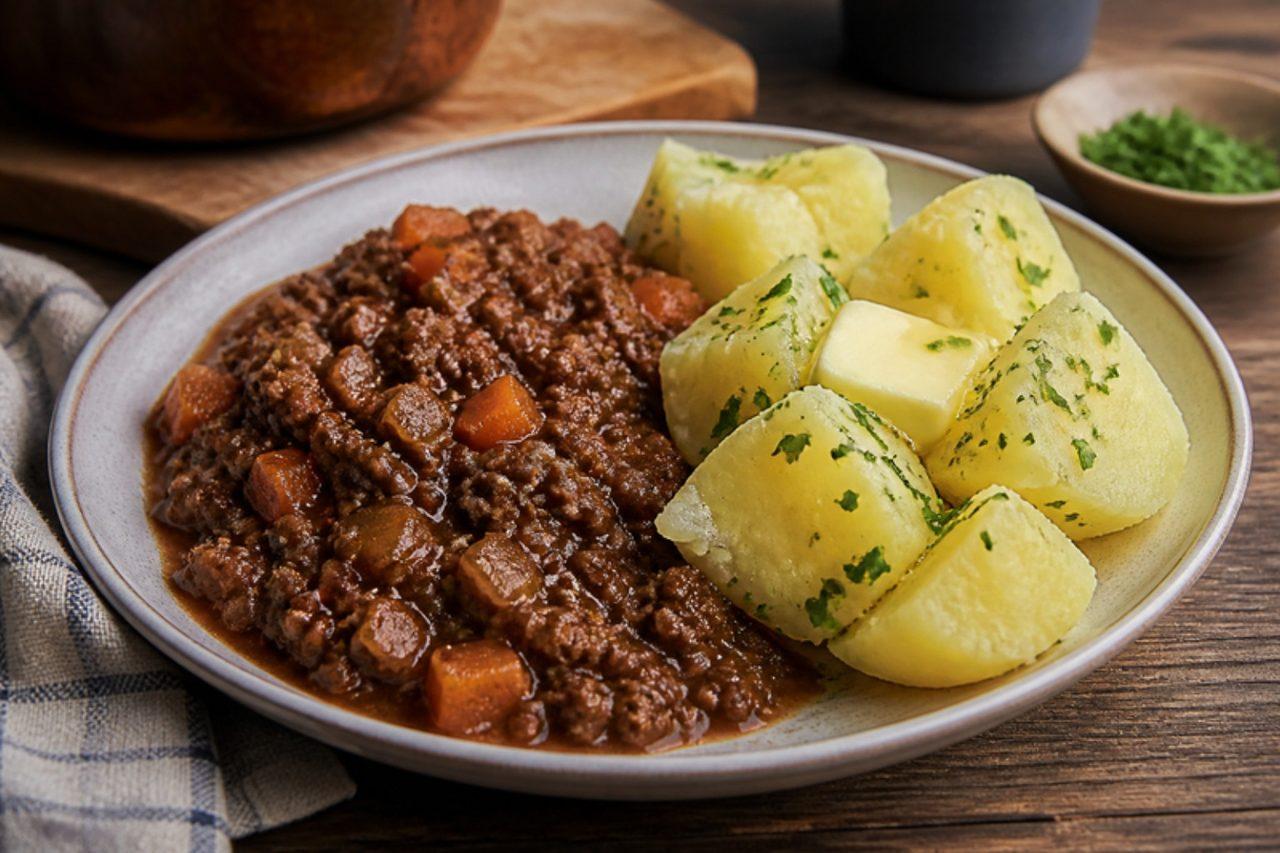
Mince and tatties

Mince and tatties is the weekday tea of Scottish homes and school canteens, so familiar that 'mince' is Scots slang for nonsense. Beef mince is browned and simmered with onion, carrot and a little oatmeal to thicken, then served with plain boiled or mashed potatoes and often peas. Chef's tip: brown the mince in batches until it crackles and turns properly brown; grey mince gives a flat flavour.

by KrazyBadal 0 views

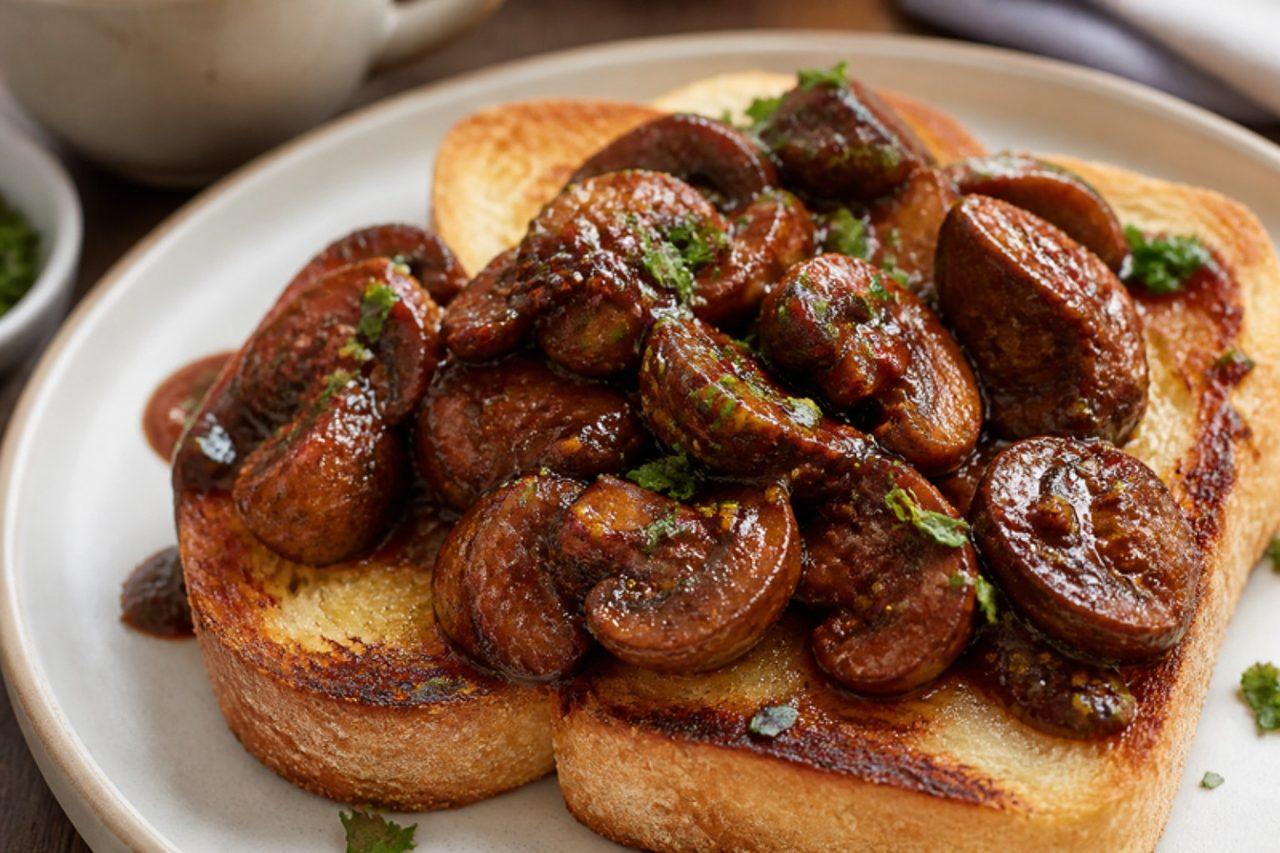
Devilled kidneys

Devilled kidneys were a Victorian gentlemen's club breakfast in London and on country house sideboards, and they have come back on the menus of British chop houses as a brunch dish. Lamb's kidneys are dusted with flour, mustard powder and cayenne, fried quickly and finished in a peppery sauce, then piled on hot buttered toast. Chef's tip: snip out the white core from each kidney; it is tough and has a strong taste.

by KrazyBadal 0 views

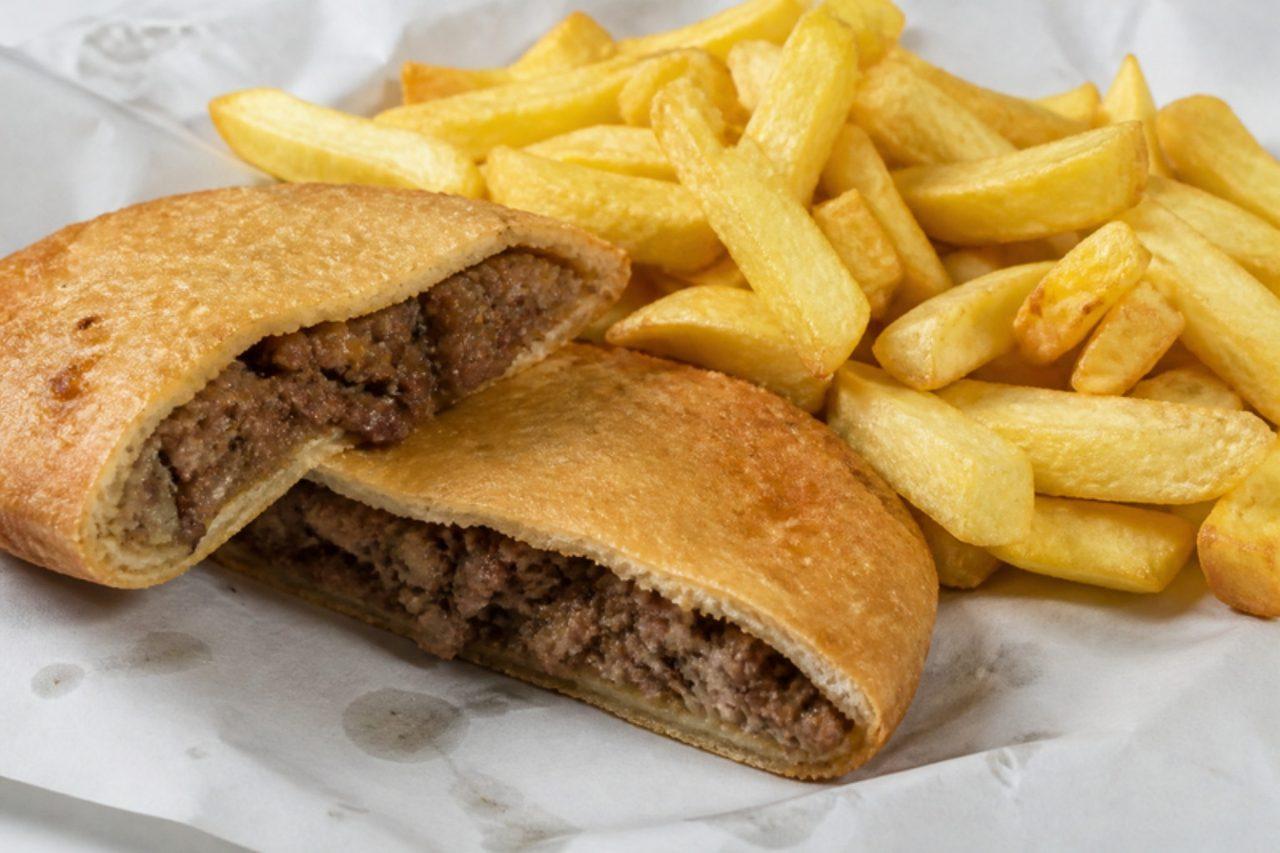
Belfast pastie supper

Despite the name, a Belfast pastie has no pastry: it is a round patty of seasoned pork mince, onion and potato, dipped in batter and deep-fried, and served as a 'pastie supper' with chips in chip shops across Northern Ireland. It is crisp outside and soft and peppery within, and is eaten with salt, vinegar and gravy. Chef's tip: chill the patties until firm before battering so they keep their shape in the fryer.

by KrazyBadal 0 views

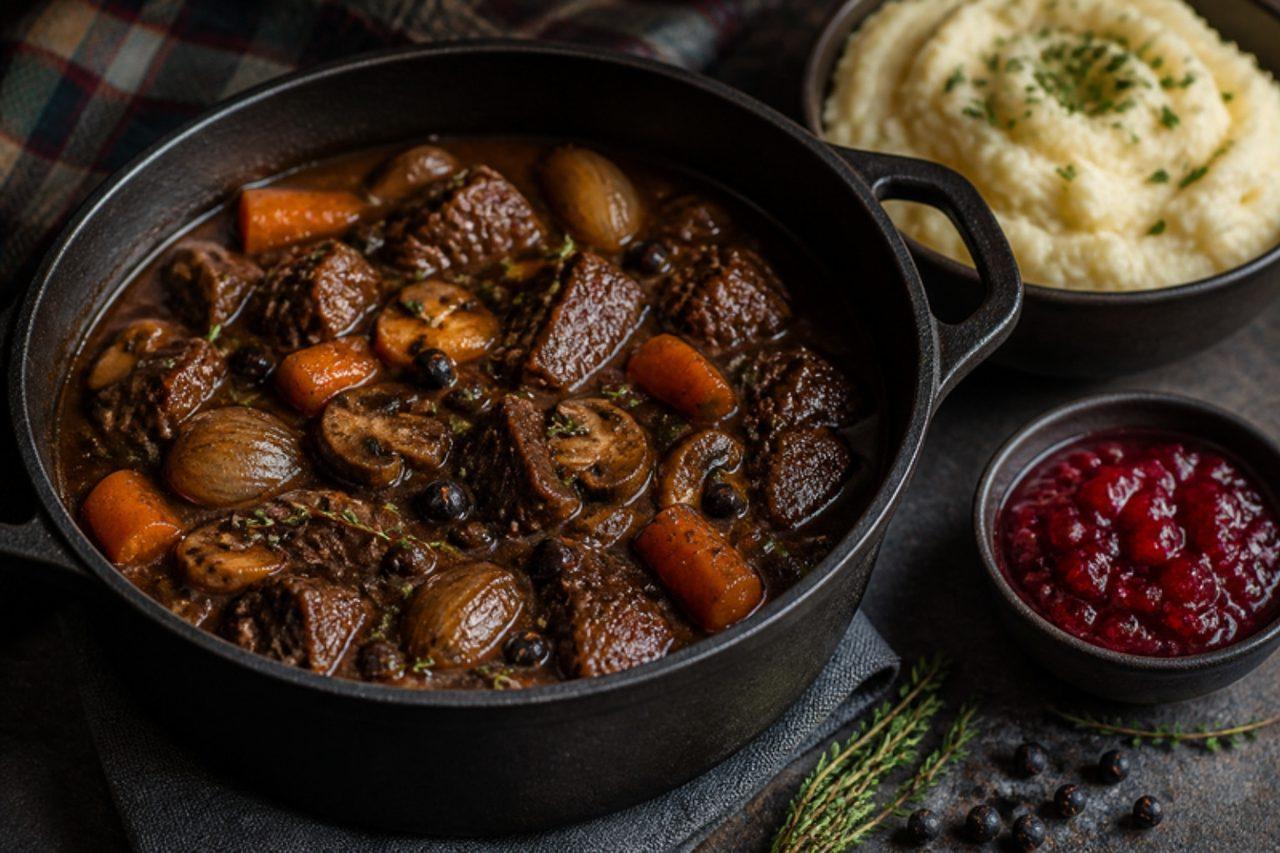
Scottish venison casserole

Venison from red deer on the Highland estates is cooked in autumn and winter when the stalking season brings it to Scottish butchers, and a slow casserole is the warming way to eat the cheaper cuts. Shoulder is braised with red wine, juniper berries and a spoon of redcurrant jelly until tender and dark. The wine contains alcohol; for an alcohol-free version use extra stock with a tablespoon of balsamic vinegar. Chef's tip: venison is very lean, so cook it at a bare simmer; boiling makes it dry and stringy.

175 minBritishMeat
by KrazyBadal 0 views

Forfar bridiesBeef and onion pastries

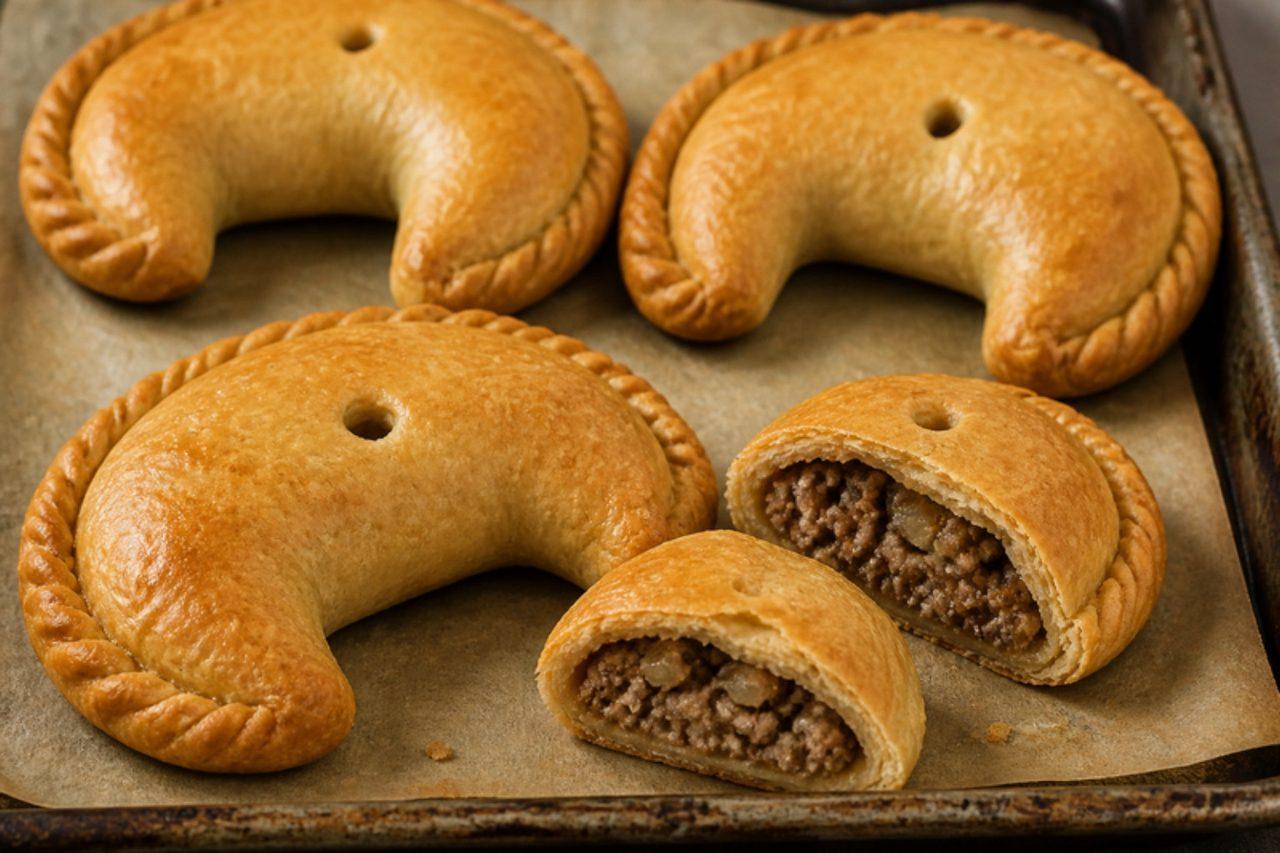
The bridie is the pride of Forfar in Angus, a horseshoe-shaped pastry stuffed with chopped beef steak and onion, sold hot from the town's bakers and eaten on market days and at weddings. Unlike a Cornish pasty there is no potato, just peppery beef, onion and beef suet in shortcrust. The holes on top tell you the filling: one hole for plain, two for onion. Chef's tip: chop the steak by hand into small pieces rather than using mince; it keeps the filling juicy.

by KrazyBadal 0 views

Showing 24 of 45 recipes

Show more recipes

Page 1 of 2