Skip to content
Recipes

All recipes

Vegetarian, or something you can't eat? Set your diet once and we'll hide recipes that don't fit.

OsterpinzeEaster anise brioche

Osterpinze is the Easter bread of Styria, Carinthia and the area around Trieste, a soft, golden brioche dome with three deep cuts on top for the Holy Trinity, so that it opens into a crown as it bakes. The dough is rich with egg yolks and butter and flavoured with anise and lemon; old recipes add a splash of white wine, left out here. It is blessed in the Easter basket on Holy Saturday and eaten on Easter morning with ham, horseradish and eggs, or with butter and jam. Chef's tip: make the three cuts with scissors just before baking, deep enough to reach halfway down, so the crown opens wide.

by KrazyBadal 0 views

Chipa so'oCheese bread with spiced beef

In Paraguay, families bake chipa in the clay tatakua ovens on Holy Wednesday so there is food for Thursday and Good Friday, when cooking stops. Chipa so'o ('chipa with meat') is a cassava-starch and cheese bread wrapped around a little filling of minced beef cooked with onion and egg, then baked until crisp outside and chewy within. It is naturally gluten free. Chef's tip: knead the dough until it no longer cracks at the edges when pressed; dry dough splits around the filling.

by KrazyBadal 0 views

Dowina (Kurdish yogurt soup)

Dowina, called ash-e doogh in Persian, is warming spring food in Kurdish homes around Newroz, when yogurt is plentiful and the first herbs are cut from the garden. Rice and chickpeas simmer in a tangy, lightly thickened yogurt broth, finished with fresh dill, coriander and a sizzle of dried mint in oil. It is eaten warm, never boiling hot, with flatbread. The common mistake is to heat the yogurt too fast without stirring, which makes it split into grainy curds. Chef's tip: whisk an egg yolk and a spoonful of rice flour into the yogurt before it goes on the heat; it holds the soup smooth all the way to the simmer.

by KrazyBadal 0 views

KalanehWild leek stuffed flatbread

In Kurdistan and Kermanshah, Newroz arrives with the first spring greens on the hillsides, and families gather wild leeks to fold into kalaneh, thin griddle breads cooked over a fire or a hot pan and soaked in melted butter. The dough is plain and soft, rolled very thin around a pile of chopped leek or chives with a little salt and pepper, so the greens steam inside as the bread blisters. Eat it hot, torn into strips, with yogurt and tea at a Newroz picnic. The common mistake is wet greens, which turn the dough soggy and make it tear; dry them well after washing. Chef's tip: brush the butter on the moment the bread leaves the pan so it soaks right in.

by KrazyBadal 0 views

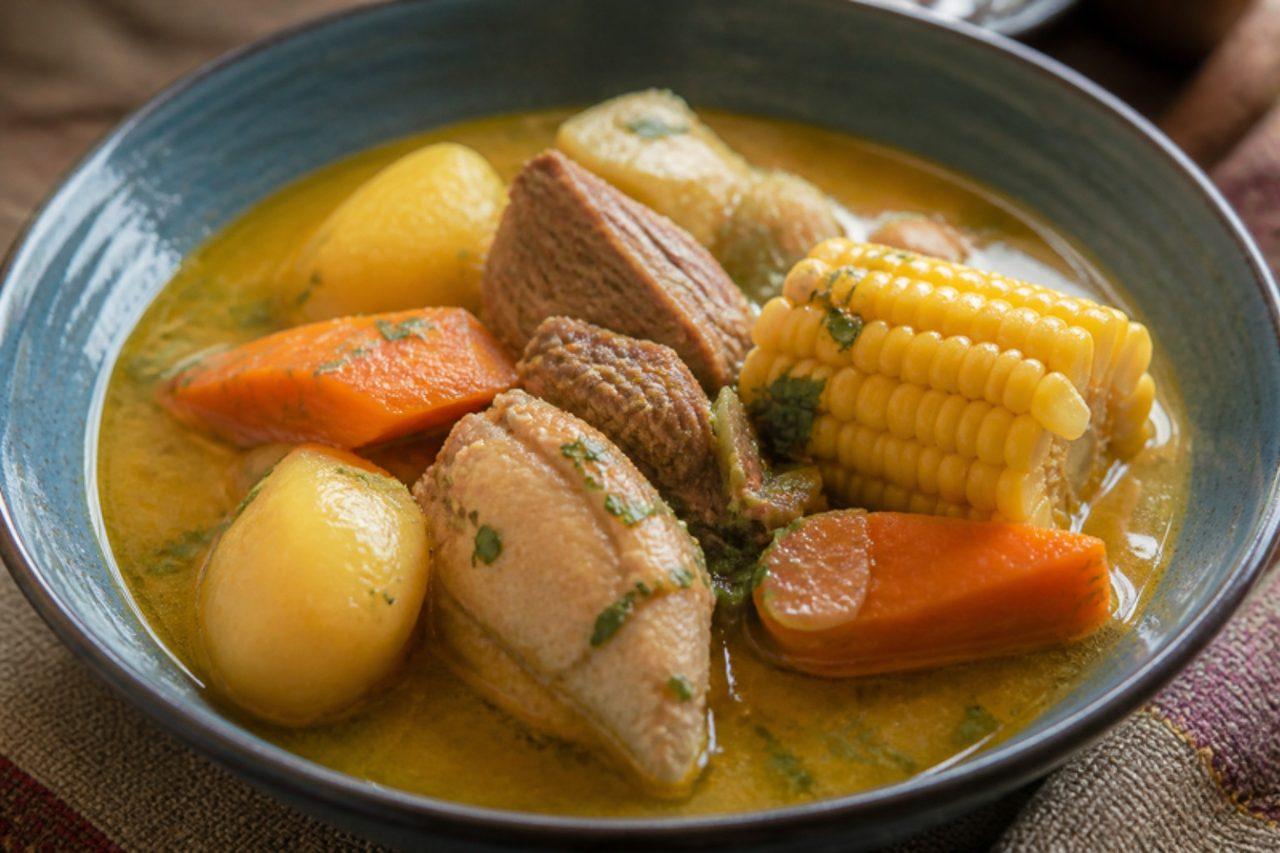
Picana bolivianaBeef, chicken and corn stew

In Bolivia, picana is what families eat after the midnight Misa de Gallo on Christmas Eve: a big pot of beef, chicken and sometimes lamb or pork simmered with corn on the cob, potatoes, carrots, raisins and spices, traditionally finished with a little wine and sugar for a sweetish broth. Each bowl holds a piece of every meat and a chunk of corn. Here the wine is optional; use extra stock and a spoon of grape juice for an alcohol-free pot. Chef's tip: add the chicken after the beef has had its head start, so both are tender at the same moment.

180 minAndeanSoupsGluten free
by KrazyBadal 0 views

Rosero quiteñoChilled spiced fruit and corn drink

Rosero is a festive drink of Quito in Ecuador, made for Corpus Christi in June, when the city once filled with processions and dancers. It is thick and refreshing: whole hominy (mote) and a thin purée of naranjilla (lulo) and pineapple, sweetened with sugar, spiced with cinnamon, cloves and allspice, and perfumed with orange-blossom water and rose petals, then served chilled in tall glasses with diced fruit. Frozen naranjilla pulp is sold in Latin shops. It is vegan. Chef's tip: simmer the pineapple peel with the spices for the syrup, as Quiteño cooks do; it adds a lot of flavour.

by KrazyBadal 0 views

Boudin blanc aux pommesWhite sausage with apple compote

In Liège and across Wallonia, Christmas Eve supper often begins with boudin blanc: pale, delicate sausages of finely minced pork and milk, sometimes with a little chicken, gently fried in butter until golden and served with warm, chunky apple compote and bread. Butchers make piles of them in December. Buy them fresh from a good butcher, or poached and ready to fry. Chef's tip: prick nothing and cook gently; boudin blanc is fragile, and a hot pan splits the skins.

by KrazyBadal 0 views

AllerheiligenstriezelBraided sweet loaf

In Bavaria and Austria, godparents give their godchildren an Allerheiligenstriezel on All Saints' Day, 1 November: a large braided loaf of sweet yeast dough, brushed with egg and scattered with almonds or pearl sugar. The braid is said to recall the old custom of cutting a plait of hair in mourning, and the size of the loaf once showed how generous the godparent was. It is lightly sweet, with lemon and vanilla, and is eaten sliced with butter or jam. Some recipes add rum-soaked raisins; these are soaked in warm water instead. Chef's tip: braid four strands for an impressive, high loaf.

by KrazyBadal 0 views

KaguyjyWhite corn pudding

On the night of 23–24 June, Paraguayans celebrate San Juan with bonfires, games like walking over hot coals and the 'paso de fuego', and a table of traditional foods, and kaguyjy (also mazamorra) is one of them. It is a soft, creamy pudding of cracked white corn (locro) simmered slowly in water and then milk with sugar or honey, sometimes with orange peel. It is eaten warm or cold. It is gluten free. Chef's tip: soak the corn overnight and cook it until each kernel is tender before adding the milk, or it never turns creamy.

by KrazyBadal 0 views

Pajagua mascadaBeef and cassava patties

Pajagua mascada is a Paraguayan street-food classic that appears on every table for the San Juan festival on 24 June, when bonfires burn and the night is full of games and traditional food. Minced beef is mixed with mashed cassava, onion, garlic and a little egg and flour, shaped into flat patties and fried until crisp. The name comes from Guaraní and refers to the 'chewing' of old Paraguayan cooks, who made it from leftover meat. Chef's tip: dry the boiled cassava well and remove its woody core, which keeps the patties light and crunchy.

by KrazyBadal 0 views

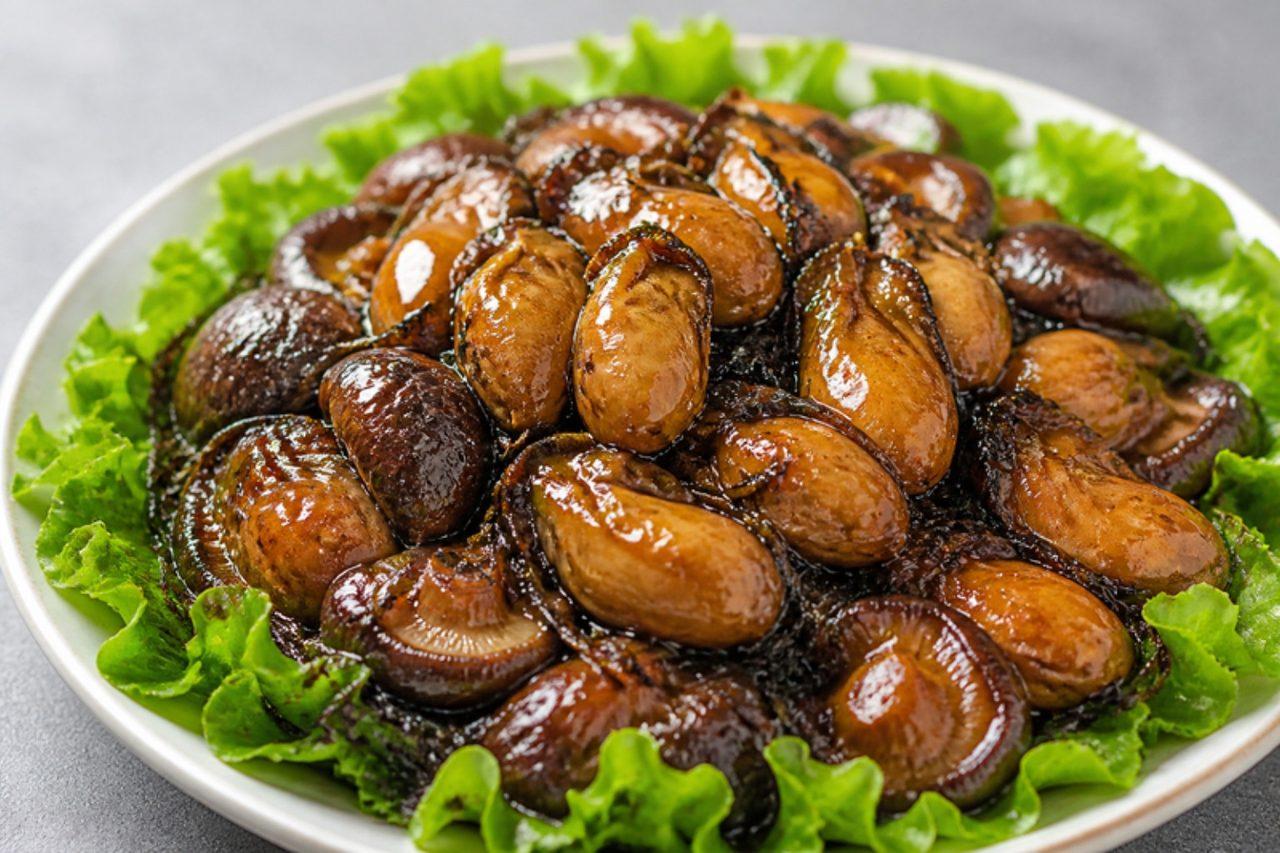
Ho si fat choy (dried oysters with black moss)

Ho si fat choy is the Cantonese Lunar New Year dish that every shopkeeper in Hong Kong wants on the table: ho si (dried oysters) sounds like 'good business' and fat choy (black moss) sounds like 'get rich'. Wild fa cai is now banned from harvest in China because gathering it damaged the grasslands, so this recipe uses the widely sold 'vegetarian black moss' substitute, which looks the same; you can also leave it out and the dish is still delicious. The dried oysters are soaked and slowly braised with shiitake until plump, chewy and deeply savoury, in a glossy oyster-sauce gravy. Serve it piled on blanched lettuce with steamed rice. Chef's tip: rinse the soaked oysters under running water, rubbing each one, to wash out any grit hiding in the folds.

by KrazyBadal 0 views

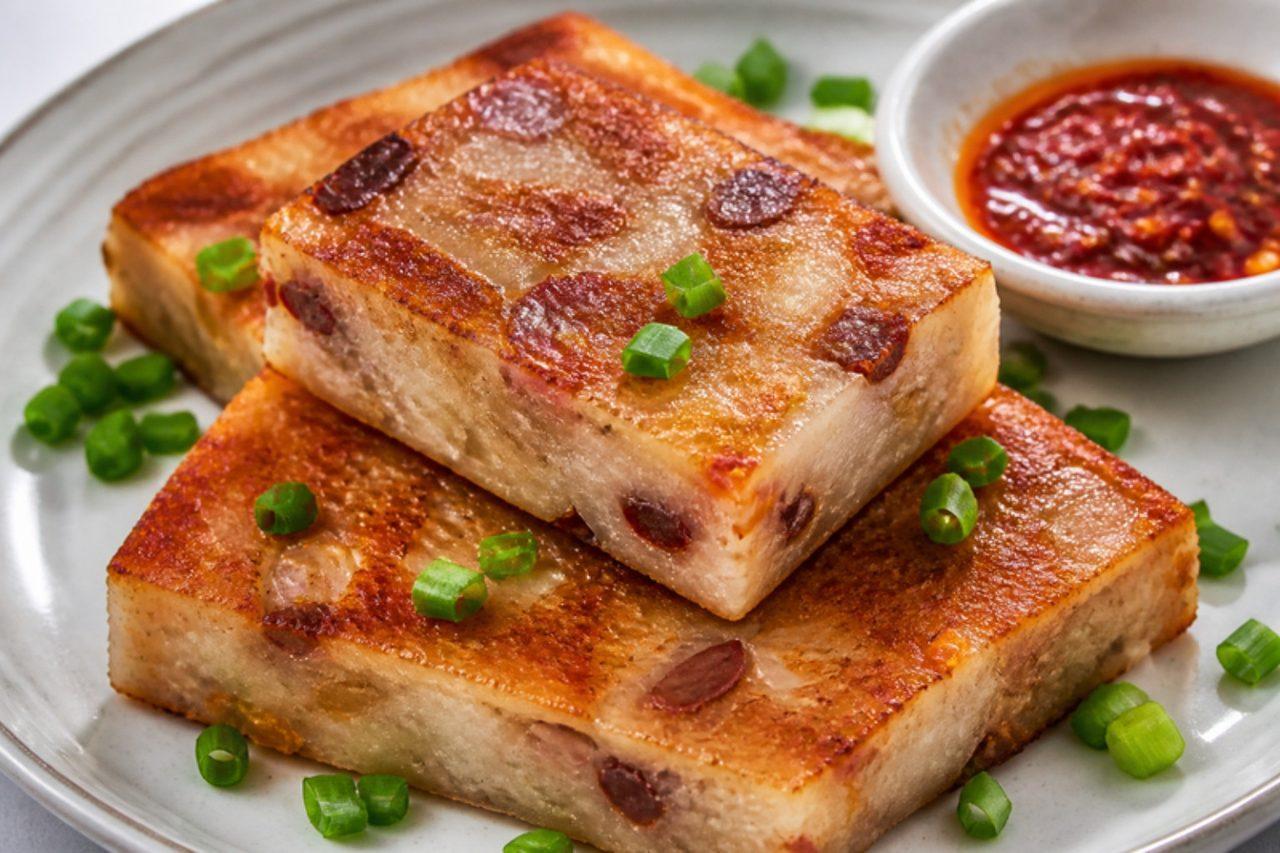
Wu tau go (taro cake)

Wu tau go is one of the 'gou' cakes that Hong Kong and Guangdong families steam before Lunar New Year, because gou sounds like 'tall' and promises a year that rises higher. This one is studded with chunks of taro, diced Chinese sausage (lap cheong, a sweet cured pork sausage usually made with rose wine or Shaoxing wine) and dried shrimp, set with rice flour and fragrant with five-spice. For an alcohol-free cake, choose a lap cheong labelled alcohol-free, or use the smoked tofu from the vegetarian variation. Cold, it slices cleanly; pan-fried, it gets a crisp golden crust over a soft, starchy, savoury middle with nubbly bits of taro. Serve slices hot with chilli sauce or oyster sauce, alongside turnip cake at New Year dim sum. Chef's tip: cook the batter on the hob until it is as thick as mashed potato before steaming; a runny batter lets the taro sink and leaves a pasty layer at the bottom.

by KrazyBadal 0 views

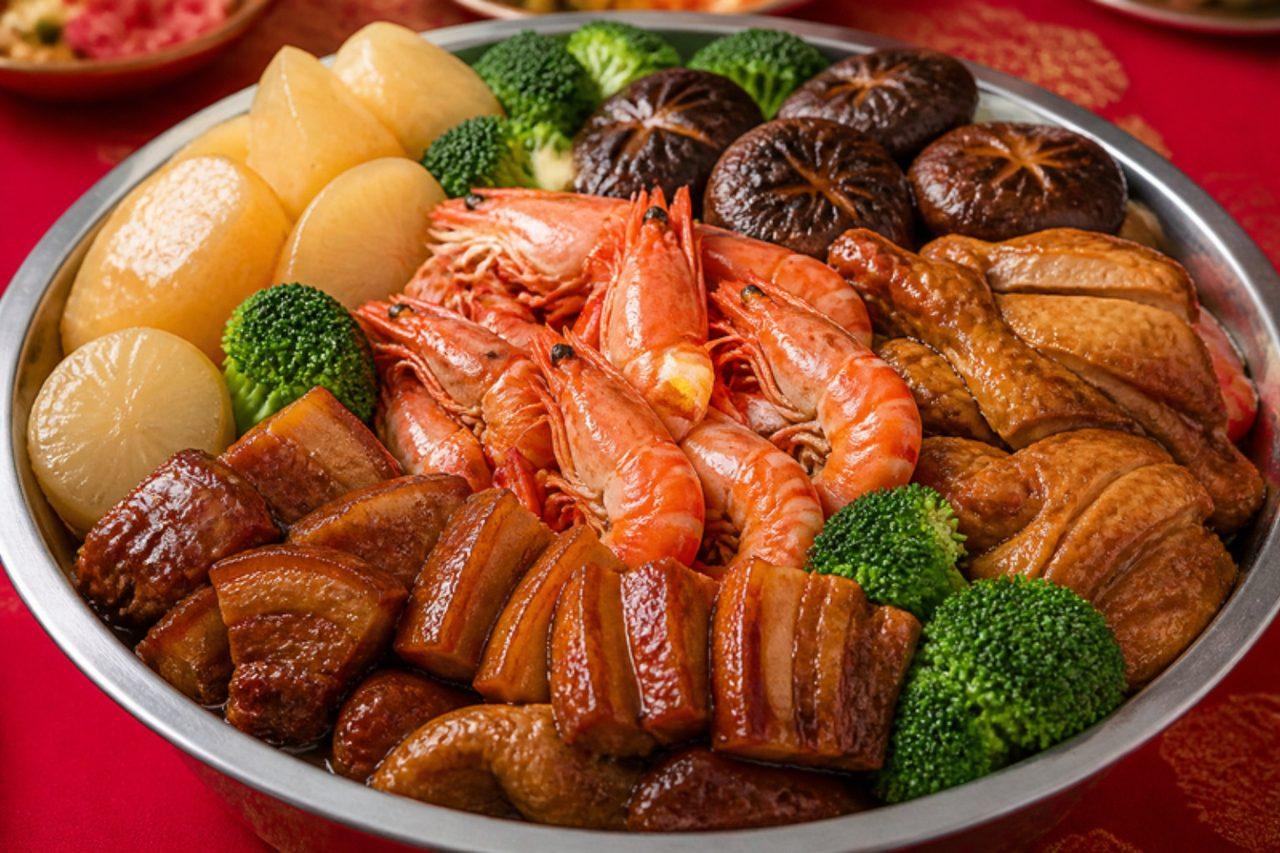
Poon choi (basin feast)Layered braised meat and seafood basin

Poon choi comes from the walled villages of Hong Kong's New Territories, where the whole clan eats from one great basin at Lunar New Year and other village celebrations; sharing a single pot stands for unity, and the layers piled to the brim for plenty. Each layer is cooked on its own and stacked so the sauces trickle downwards: soft braised pork belly and soy chicken near the top, prawns and mushrooms in the middle, and radish, tofu skin and cabbage at the bottom soaking up everything. The home version here leaves out shark fin, uses canned abalone only if you want it, and is made for 8 in a large flameproof casserole. Bring the whole basin to the table bubbling and serve with steamed rice. Chef's tip: pack the absorbent vegetables at the bottom and the showy pieces at the top; the radish should finish as the tastiest thing in the pot.

by KrazyBadal 0 views

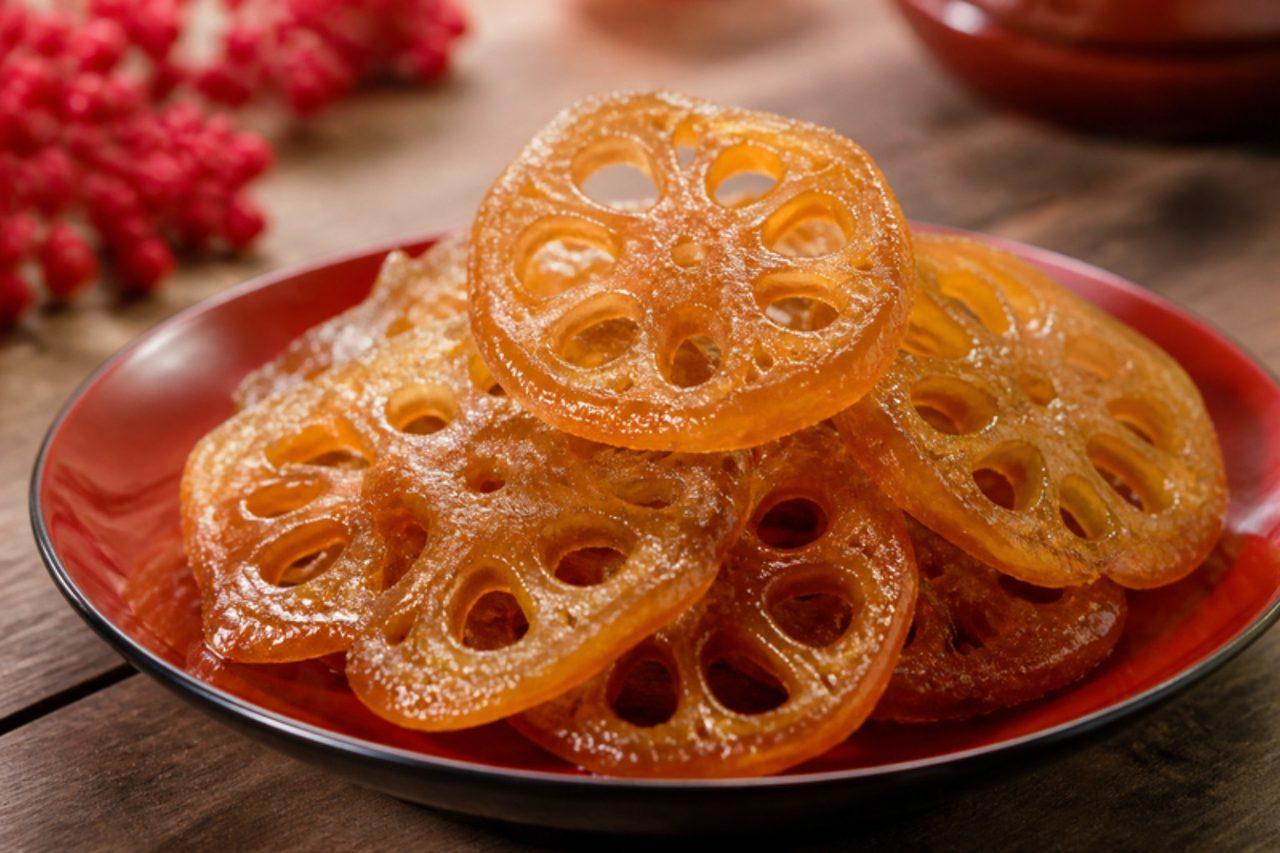
Candied lotus root (tong lin ngau)

Open the octagonal tray of togetherness in a Hong Kong or Guangdong home at Lunar New Year and you will usually find pale, sugar-frosted rounds of candied lotus root. The lotus is prized because its root grows in linked sections and its name, lin, sounds like the word for 'continuous', so the slices carry a wish for abundance that keeps coming back year after year. Simmered slowly in syrup and then dried, they turn translucent and chewy at the centre with a fine crust of sugar and a faint, earthy sweetness, and the lacy pattern of holes stays on show. Set them out with candied lotus seeds, melon seeds and a pot of jasmine or pu-erh tea for visitors. Chef's tip: blanch the slices with a pinch of salt and a splash of vinegar first; it stops them going grey and keeps them crisp-edged instead of mushy.

by KrazyBadal 0 views

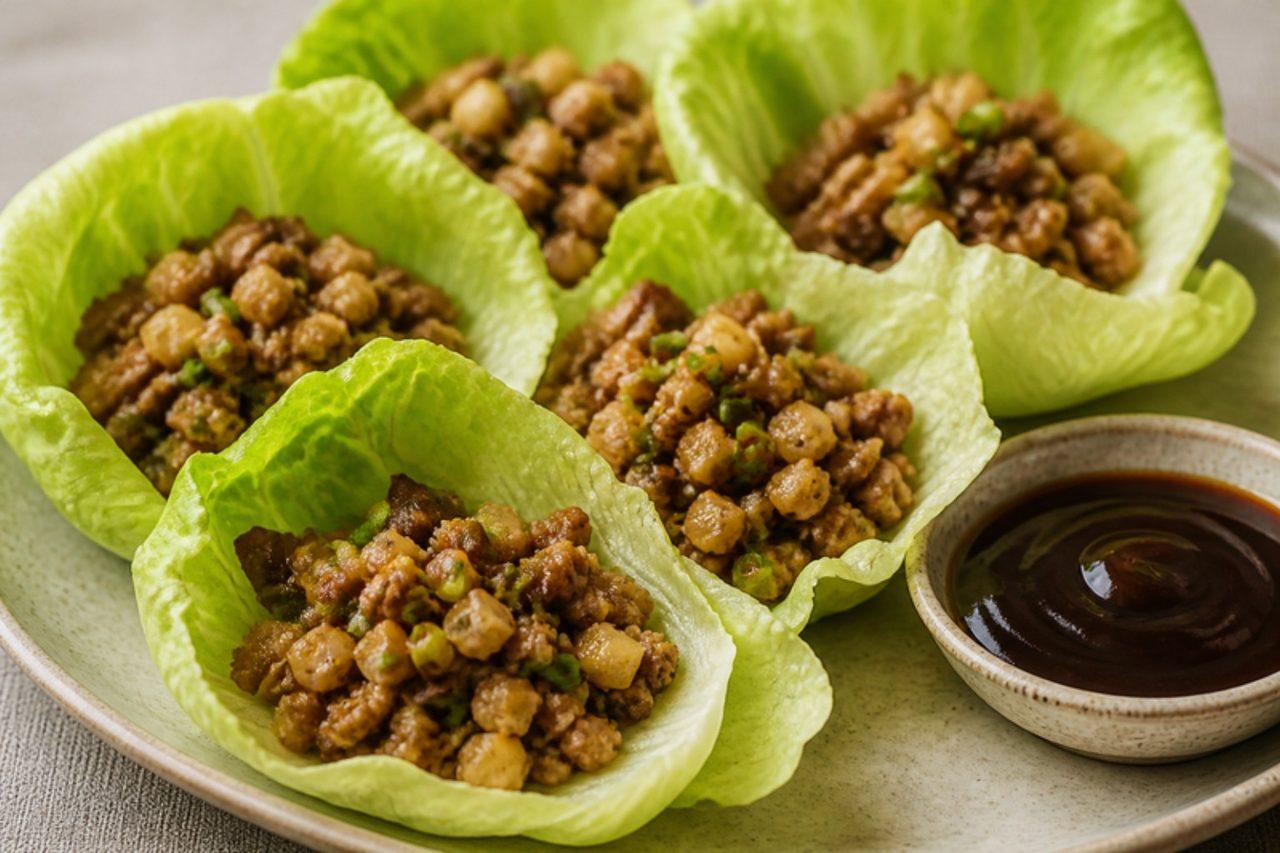
Sang choi bao (minced pork lettuce cups)

At Lunar New Year in Hong Kong, lettuce (saang choi) is on the table because its name sounds like 'growing wealth', and sang choi bao wraps that wish around a hot, savoury filling. Minced pork is stir-fried quickly with water chestnut, shiitake and a little oyster sauce, then spooned into cold, crisp iceberg cups so every bite is juicy, crunchy and fresh at once. It is fast enough to make while the bigger dishes braise, and it works as a starter or alongside rice and poon choi. Chef's tip: get the wok really hot and spread the mince out flat; crowded, cool mince stews in its juices instead of browning.

by KrazyBadal 0 views

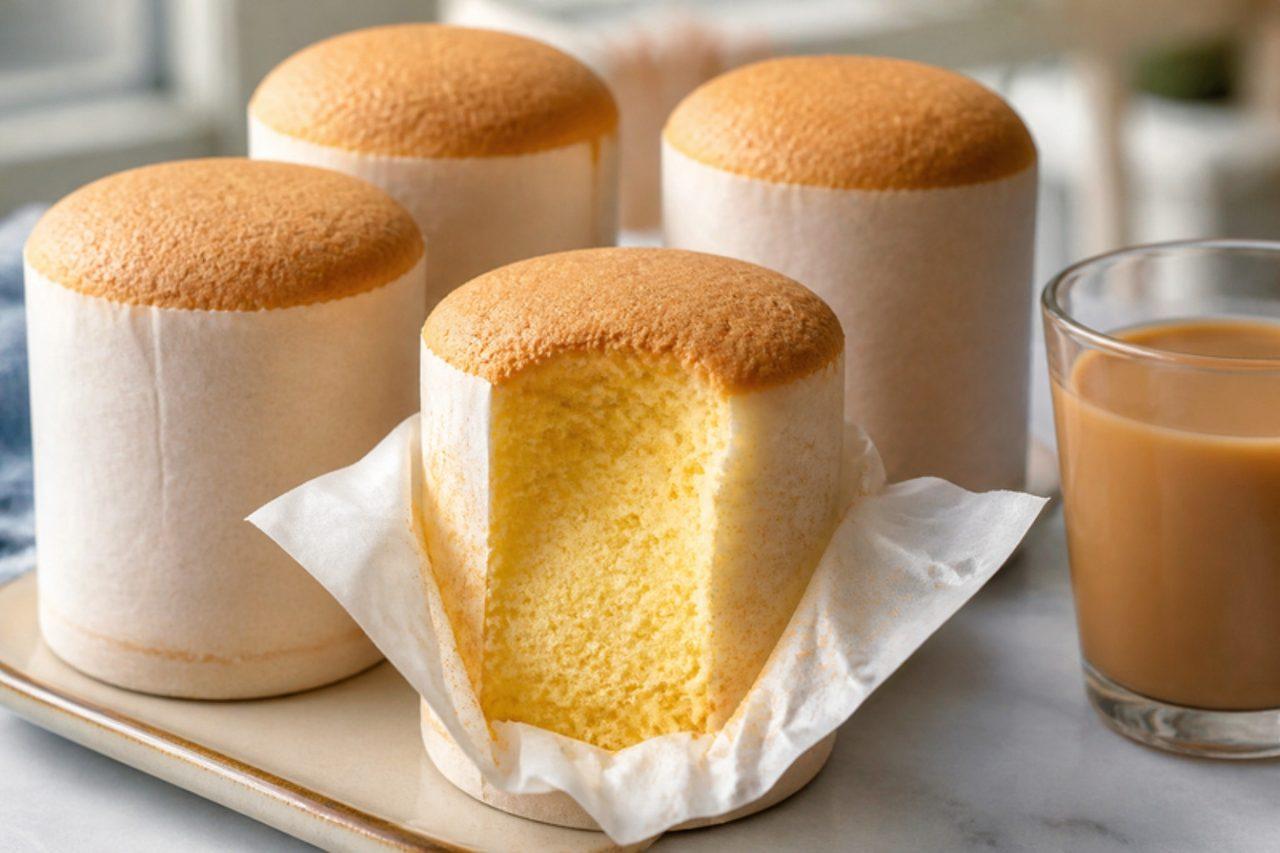
Hong Kong paper-wrapped sponge cake

Hong Kong bakery windows line up these tall, golden cylinders, each in its own band of greaseproof paper, and they sell out early as a breakfast with a glass of milk tea or an after-school snack. Known in Cantonese as zhi bao dan gao, they are close to a chiffon cake: oil and milk keep the crumb soft and moist, and whisked egg whites make it light and bouncy. You peel the paper off as you eat, and the thin outer crust is the best bit. Greasing the paper is a frequent mistake; the batter needs a dry surface to grip and climb, otherwise the sponges slump. Chef's tip: stand the paper cups in a deep muffin tin or ramekins so they keep their shape, and fill them only three-quarters full.

by KrazyBadal 0 views

Hong Kong coconut tarts

Next to the wobbling egg tarts in any Hong Kong bakery window sit their sturdier siblings, coconut tarts (yē tāt), with a domed, golden-brown filling of sweetened shredded coconut. Office workers grab one with a milk tea at cha chaan teng tea time around three o'clock, and children love the chewy, macaroon-like centre inside a crumbly, cookie-like butter crust. The filling is just coconut, sugar, egg, butter and a little evaporated milk, with a pinch of baking powder that lifts it into a dome. Overfilling the cases is the usual slip: the coconut rises and spills down the sides, so stop at the rim. Chef's tip: let the filling stand for 15 minutes while you line the tins; the coconut softens and soaks up the liquid, so the tops bake moist instead of scorching.

by KrazyBadal 0 views

TopfengolatschenSweet quark puff pastry squares

A Topfengolatsche is what Viennese office workers grab from the bakery on the way in, and what grandparents order with a Melange in a coffee house on a Sunday afternoon. The corners of a puff pastry square are folded over a lemony, vanilla-scented filling of Topfen (Austrian quark) with plump raisins, and the top gets a thin white glaze. It is flaky, light and not too sweet. Raisins are sometimes soaked in rum; warm water or orange juice works just as well, and the recipe below is alcohol-free. Wet quark is the classic problem, because it turns the filling runny and it leaks out in the oven. Chef's tip: hang the quark in a sieve lined with a clean cloth for an hour, or squeeze it, until it is as thick as soft cream cheese.

by KrazyBadal 0 views

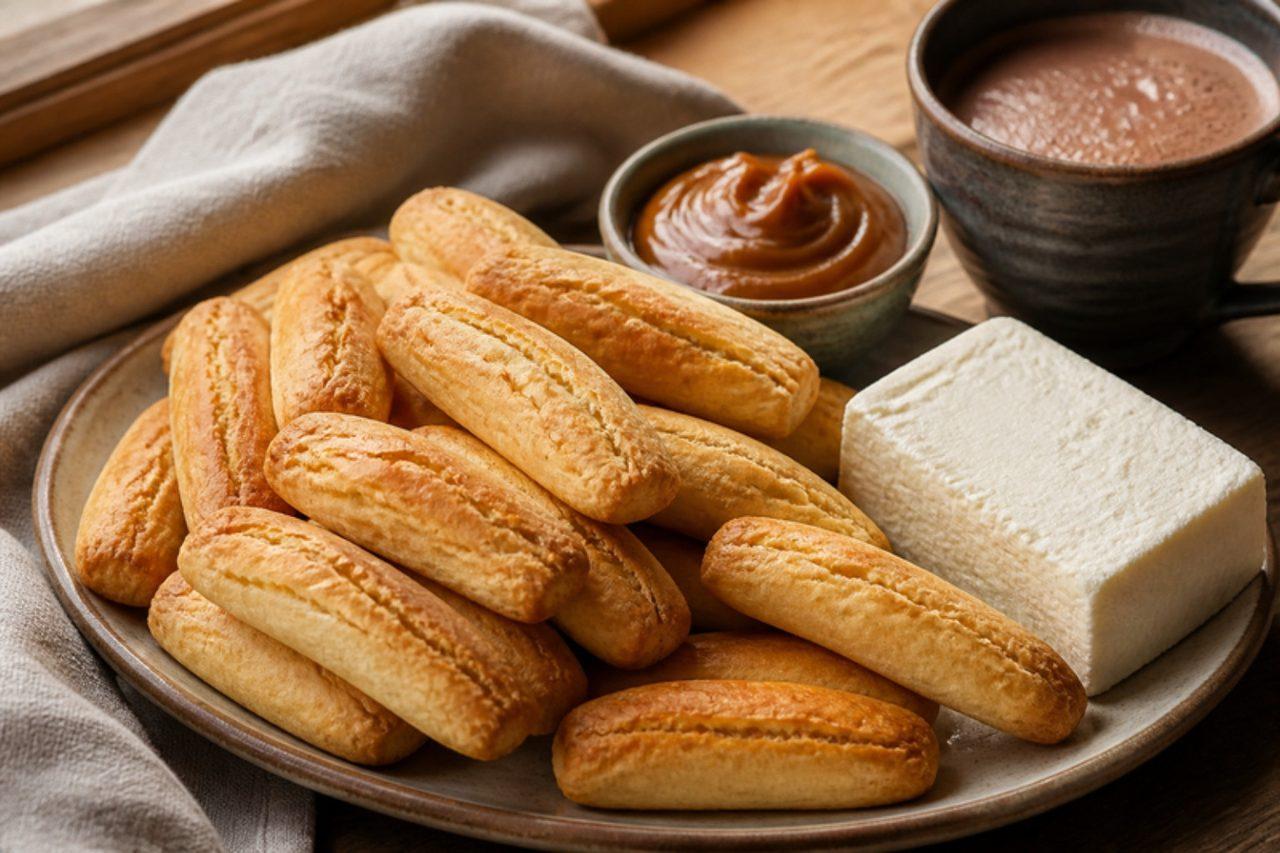
Bizcochos de CayambeTwice-baked butter biscuits

Drive north from Quito towards the snow-capped Cayambe volcano and the roadside is lined with bakeries selling paper bags of bizcochos, small finger-shaped biscuits baked twice until they shatter. Families stop there on weekend trips and order them with a slab of soft, salty queso de hoja, a cup of hot chocolate and a spoonful of dulce de leche (manjar) for spreading. The dough is a lightly yeasted butter dough, rolled into thin sticks, baked once until pale gold and then dried slowly until crisp right through, with a flaky, crumbly bite. A sealed jar keeps them for weeks. Chef's tip: the second bake is about drying, not browning, so keep the oven low; a hot second bake is the usual mistake and leaves them dark outside and chewy inside.

130 minAndeanBaking
by KrazyBadal 0 views

Wife cakeWinter melon flaky pastry

Wife cakes (lou po beng) are one of the gifts people carry home from Yuen Long in Hong Kong's New Territories, and every Cantonese bakery from Guangzhou to London's Chinatown sells them by the box. The thin, shattering pastry hides a soft, chewy filling of candied winter melon set with glutinous rice flour, with toasted sesame and ground almonds for a nutty sweetness. Serve them with a pot of oolong or pu'er. Traditionally the pastry is made with lard; this version uses vegetable shortening, which flakes just as well, so the cakes are vegetarian and dairy free. Rolling too hard is the mistake that ruins them: the layers tear and the pastry bakes up dense. Chef's tip: cook the filling until it pulls away from the pan in a single mass and chill it, because a soft, wet filling bursts through the thin pastry in the oven.

by KrazyBadal 0 views

Belgian frangipane tartlets

Look in the glass counter of a Flemish bakery and between the rice tarts and cream puffs sit rows of frangipanetaartjes: small shortcrust cases with a hidden layer of apricot jam, filled with almond frangipane and glazed with a thin, crackly white icing. Belgians pick them up on Saturday mornings or for a birthday at the office and eat them with coffee. They are buttery, nutty and moist, with a sharp fruity note from the jam. Too much jam is the mistake to watch: it bubbles up through the frangipane and glues the tartlets to the tin. Chef's tip: brush the warm tartlets with hot apricot jam first and let it set before the icing goes on; the jam seals the surface so the glaze stays white and shiny.

by KrazyBadal 0 views

Kärntner ReindlingCinnamon raisin yeast cake

Carinthia's Easter loaf takes its name from the Reindl, the round, deep pan it is baked in, and in southern Austria no Easter basket goes to church without one. Inside the golden yeast crust is a spiral of butter, cinnamon sugar and plump raisins, so every slice shows a dark swirl. Locals eat it two ways: sweet with coffee on Easter morning, or alongside the savoury Easter platter with horseradish. Many bakers soak the raisins in rum overnight; warm water or tea works just as well and keeps it alcohol-free. A dry, crumbly Reindling usually means too much flour went in during kneading, so keep the dough soft and only lightly floured. Chef's tip: butter the pan well and dust it with sugar, which caramelises into a thin crunchy shell.

by KrazyBadal 0 views

CraquelinBrioche with sugar cube pockets

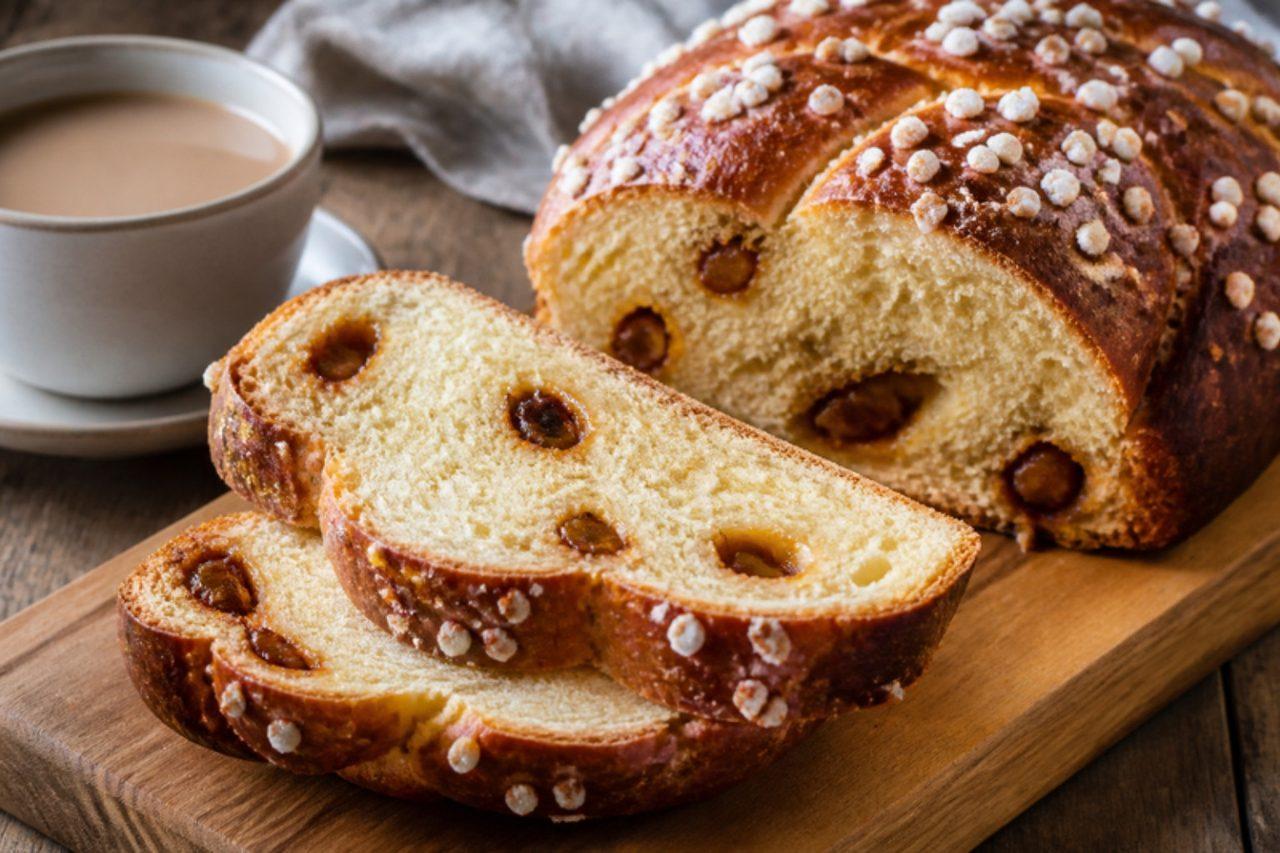
Sugar cubes, of all things, are the secret of the Belgian craquelin. Bakers in Ghent, Bruges and Brussels wrap broken cubes inside rich brioche, and as the loaf bakes they melt into little wells of syrup that set crunchy, while pearl sugar crackles on the crust (hence the name). It is a Sunday breakfast and weekend bakery loaf, sliced thick and eaten plain or with butter and a bowl of café au lait; Flemish bakers sometimes add orange zest. Leaving sugar pieces exposed on the outside, especially the base, is the usual pitfall: they caramelise, burn and glue the loaf to the tin. Chef's tip: chill the kneaded brioche for at least an hour before you fold in the sugar, so the butter firms and the dough is easy to wrap around the cubes.

by KrazyBadal 0 views

ErdäpfelstrudelSavoury potato strudel

Austrians, especially in the Mühlviertel of Upper Austria and the Waldviertel, make savoury strudels as often as sweet ones, and Erdäpfelstrudel is a farmhouse favourite for a meatless Friday or a cold evening. Thin pastry wraps a filling of potatoes, fried onion, sour cream, marjoram and parsley, baked until crisp and golden and sliced with a green salad or a dill and sour-cream dip. Bought filo makes it easy at home. The mistake to avoid is a wet filling, which turns the pastry soggy underneath. Chef's tip: cool the filling completely before rolling; warm filling makes the layers stick and tear.

by KrazyBadal 0 views

Showing 24 of 276 recipes

Show more recipes

Page 1 of 12