Skip to content
Recipes

All recipes

Vegetarian, or something you can't eat? Set your diet once and we'll hide recipes that don't fit.

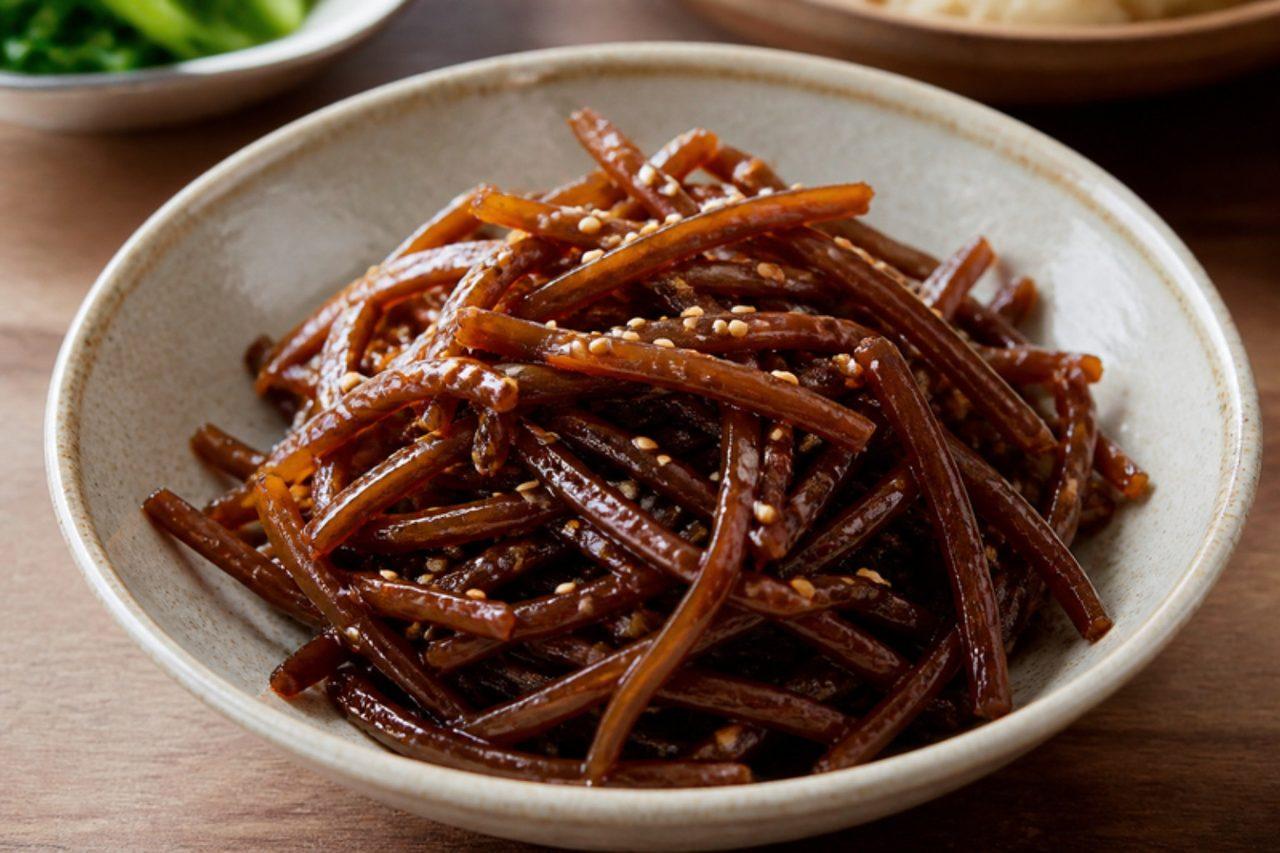
Ueong jorimBraised burdock root

Thin sticks of burdock root braised in soy and sugar until they are dark, glossy and chewy are one of the banchan Korean mothers make in a big batch on a weekend; they keep for a week and go into the lunch boxes of schoolchildren in Seoul and into gimbap rolls. The flavour is earthy, sweet and savoury, with a little stickiness from rice syrup. A portion is about 95 kcal. The common mistake is adding the sweetener too early, which makes the burdock hard; braise in the soy first, and add the syrup at the end for the shine. Chef's tip: soak the cut burdock in water with a splash of vinegar for 10 minutes; it stops it turning grey and takes away the bitter edge.

by KrazyBadal 0 views

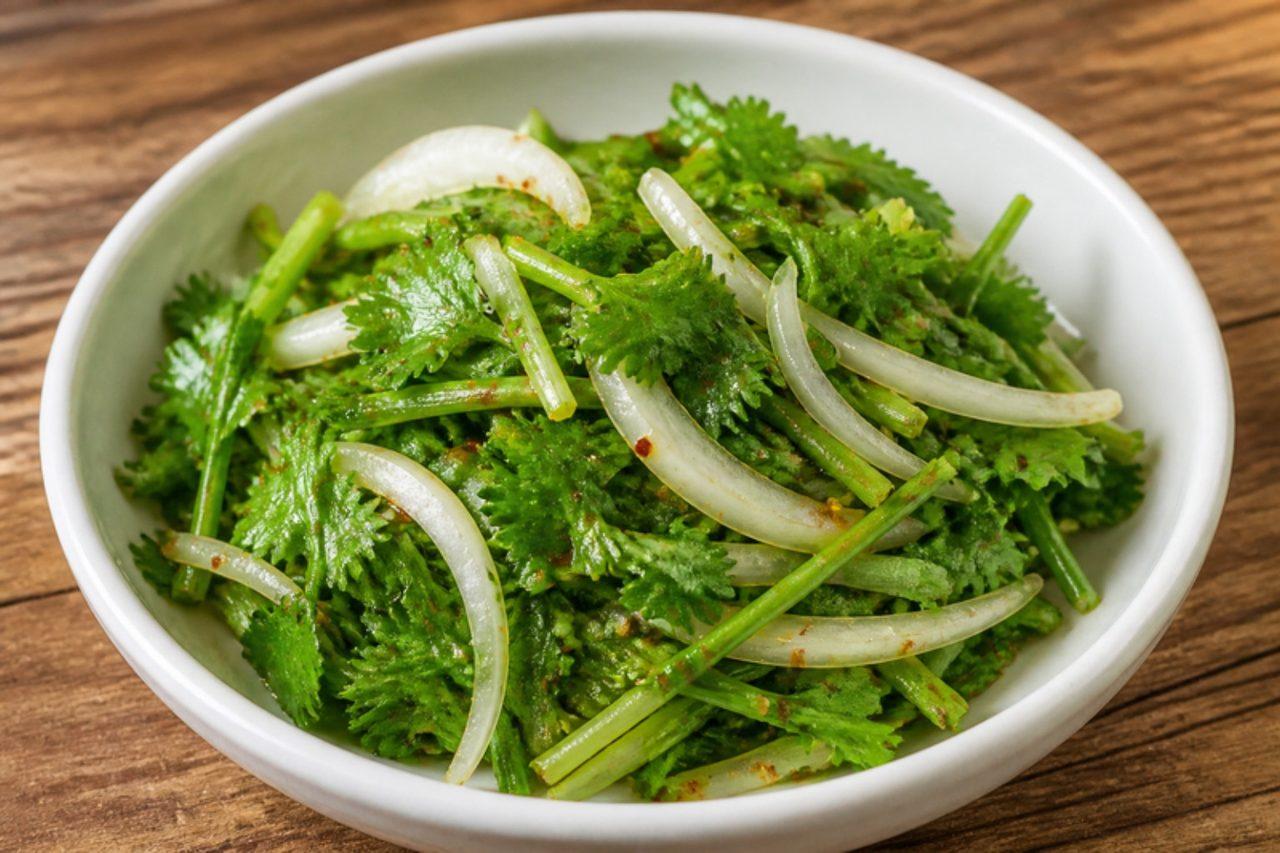
Minari muchimWater dropwort salad

Minari, Korean water dropwort, grows in the wet fields of Cheongdo and around Daegu, and in early spring Koreans eat it raw and crunchy as a sharp, peppery salad: the stems are tossed in a sweet-sour dressing of gochugaru, vinegar, garlic and a touch of sugar, with thinly sliced onion. It is served alongside grilled pork belly or a fish stew to freshen the palate. A portion is about 50 kcal. If minari is hard to find, use watercress or celery leaves with stems. The common mistake is dressing it too early: the leaves wilt and weep within half an hour, so toss it just before eating. Chef's tip: soak the cut minari in iced water for five minutes first; it turns very crisp.

by KrazyBadal 0 views

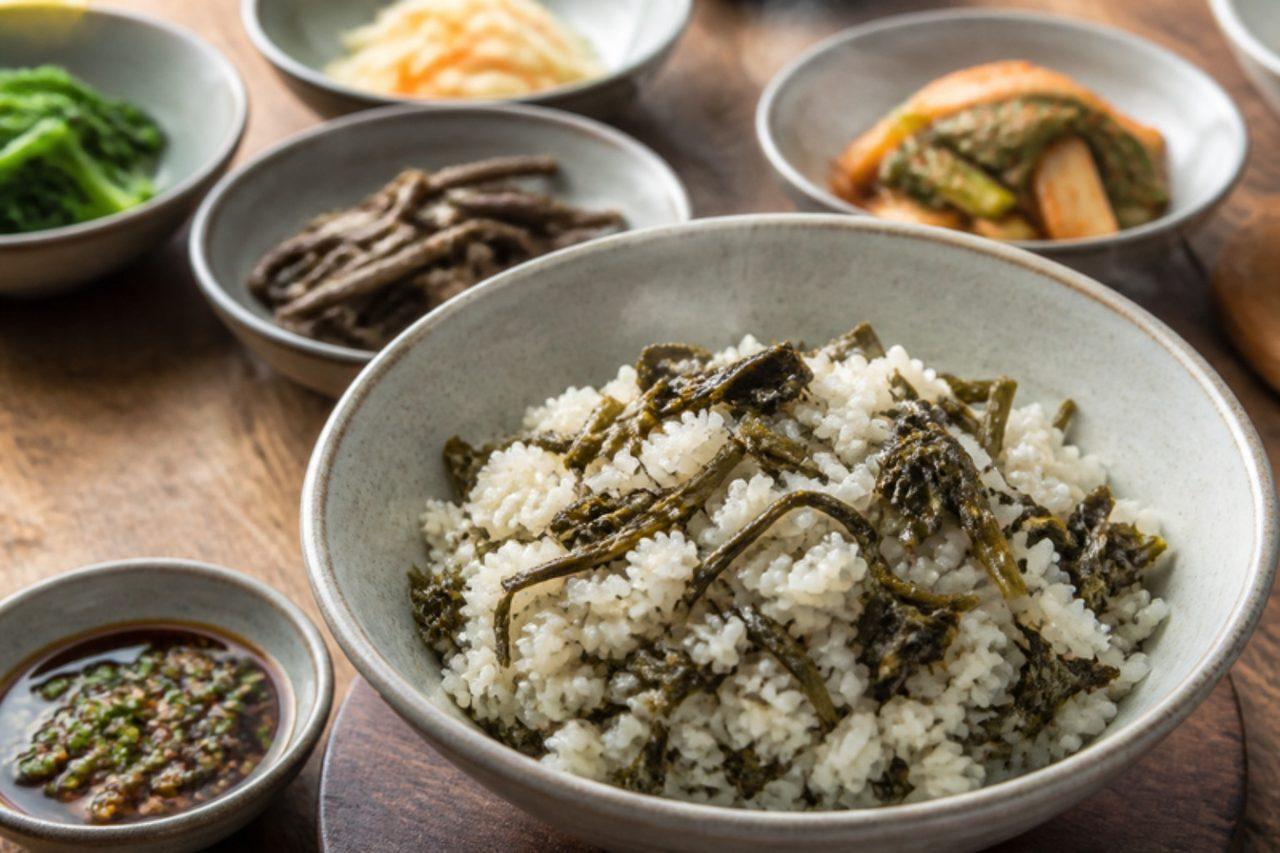
Gondeure bapThistle greens rice

Gondeure, a mountain thistle that grows on the steep slopes of Jeongseon in Gangwon, kept villagers fed through lean springs, and gondeure bap is now what visitors travel to Jeongseon's five-day market to eat: rice cooked with the soft, dried greens and a little perilla oil, served with a soy, spring onion and sesame sauce. It is earthy, mild and fragrant, a little like artichoke. A portion is about 320 kcal. Dried gondeure must be soaked overnight and boiled for 20 minutes beforehand, which is not counted; Korean grocers also sell it ready-boiled and frozen. The common mistake is not squeezing the greens well, which makes the rice wet and soft. Chef's tip: toss the squeezed greens with a spoon of perilla oil and soup soy before they go on the rice; they season the grains as they steam.

by KrazyBadal 0 views
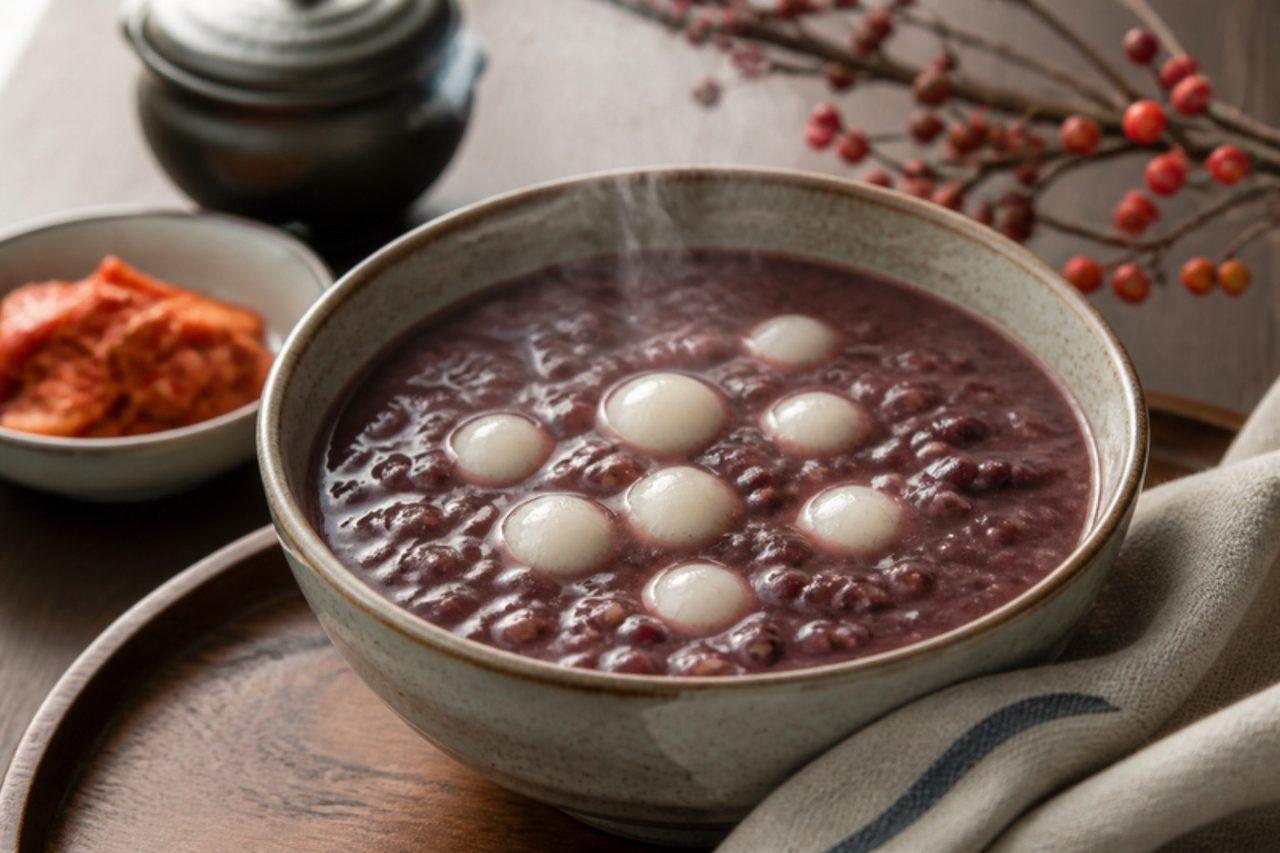
PatjukRed bean porridge

On Dongji, the winter solstice, Korean families eat a bowl of deep red patjuk: the colour was believed to drive away bad spirits on the longest night, and grandmothers still flick a little on the gate. Adzuki beans are boiled soft, pushed through a sieve and simmered with rice into a thick, earthy porridge, and little balls of glutinous rice dough called saealsim, one for each year of your age by tradition, are cooked in it. It is lightly salted; in Jeolla people add sugar. A bowl is about 380 kcal. The most common mistake is not stirring the bottom once the rice goes in; the thick porridge catches and burns quickly. Chef's tip: throw away the first boiling water of the beans; it removes bitterness and makes the porridge taste cleaner.

by KrazyBadal 0 views
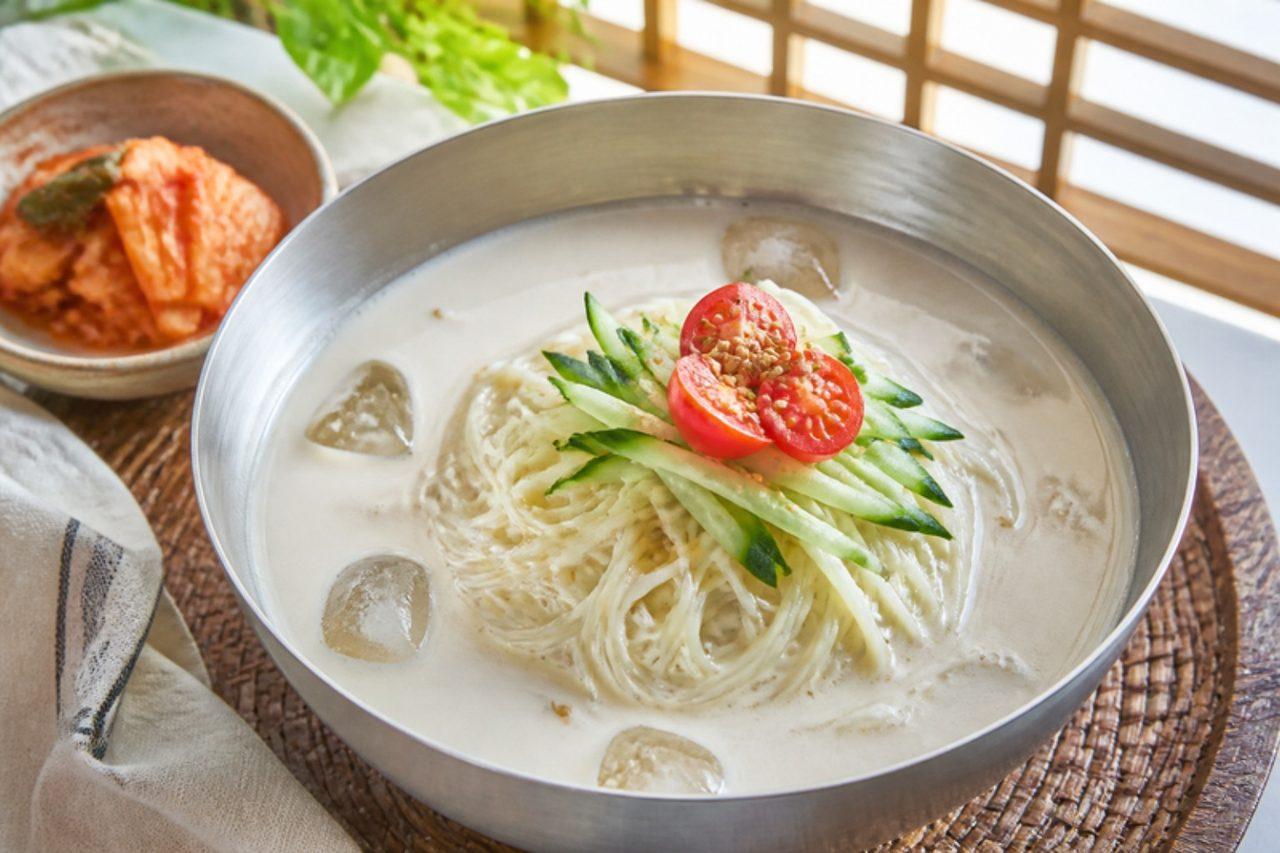
KongguksuCold soybean noodle soup

When the monsoon heat settles over Seoul in July, queues form outside old noodle houses near City Hall for kongguksu: thin wheat noodles in an ice-cold, thick, nutty broth of soybeans boiled and blended with their skins, topped with cucumber and sesame. It is plain, rich and very cooling, and people season it at the table with salt (in Seoul) or sugar (in Jeolla). A bowl is about 520 kcal, a full meal with plenty of protein. Soak the soybeans overnight first, not counted in the times. The most common mistake is overboiling the soybeans, which gives a fermented, "meju" smell; boil them for exactly 10–12 minutes and taste one: it should be cooked but not soft. Chef's tip: blend a handful of pine nuts or toasted sesame with the beans; it makes the broth even creamier.

by KrazyBadal 0 views
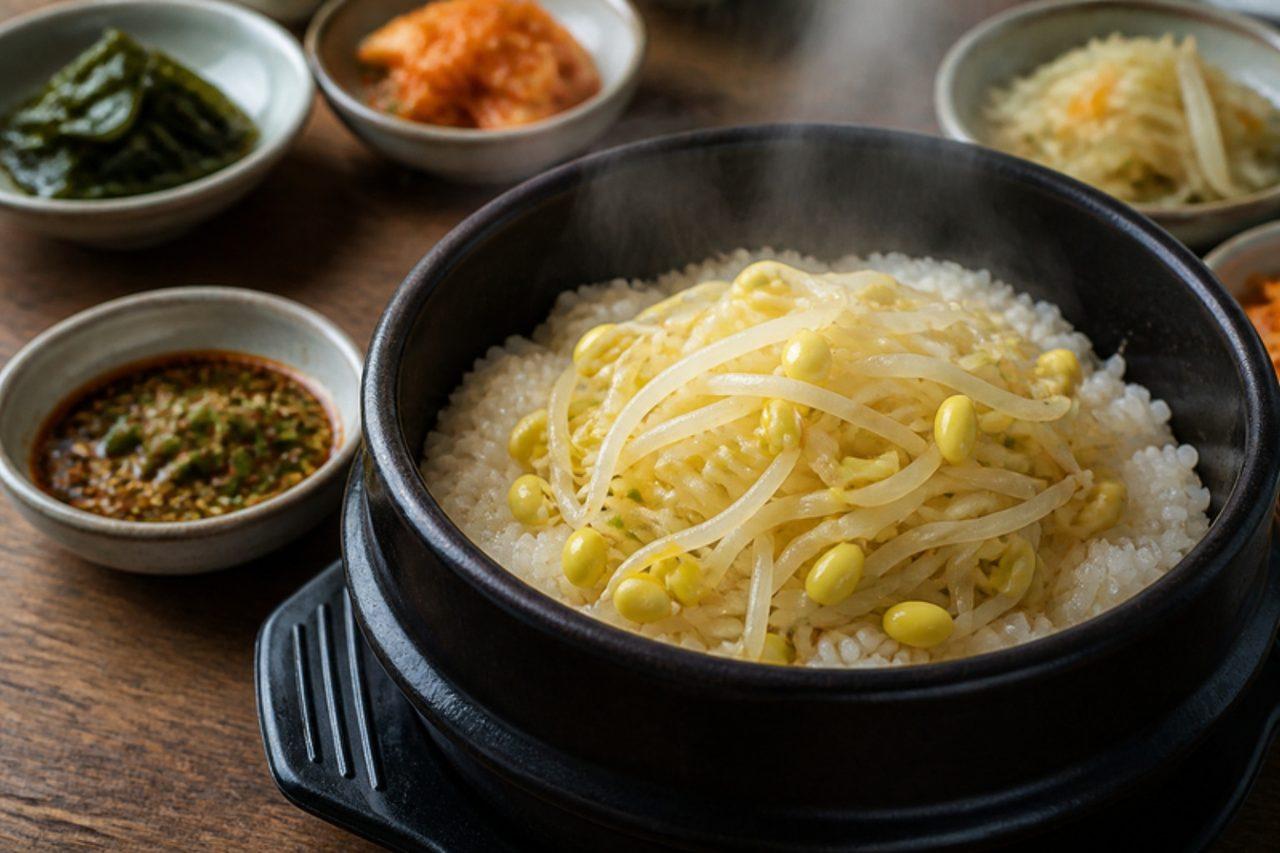
Kongnamul bapSoybean sprout rice

In Jeonju and Jeonbuk, the province famous for its soybean sprouts, kongnamul bap is the humble one-pot supper of winter: rice steamed with a thick layer of crunchy sprouts on top, so they wilt into the grains and give them a sweet, nutty flavour. Each person spoons on a sharp yangnyeom-jang, soy sauce with spring onion, garlic, chilli flakes and sesame, and mixes it through. A portion is about 300 kcal. Many homes add a little minced beef; this version keeps it vegetable-only. The common mistake is using the usual amount of water; the sprouts release a lot of liquid, so cut the water by about a fifth, or the rice turns mushy. Chef's tip: don't lift the lid while it cooks; the sprouts give off a raw, beany smell if the steam escapes halfway.

by KrazyBadal 0 views
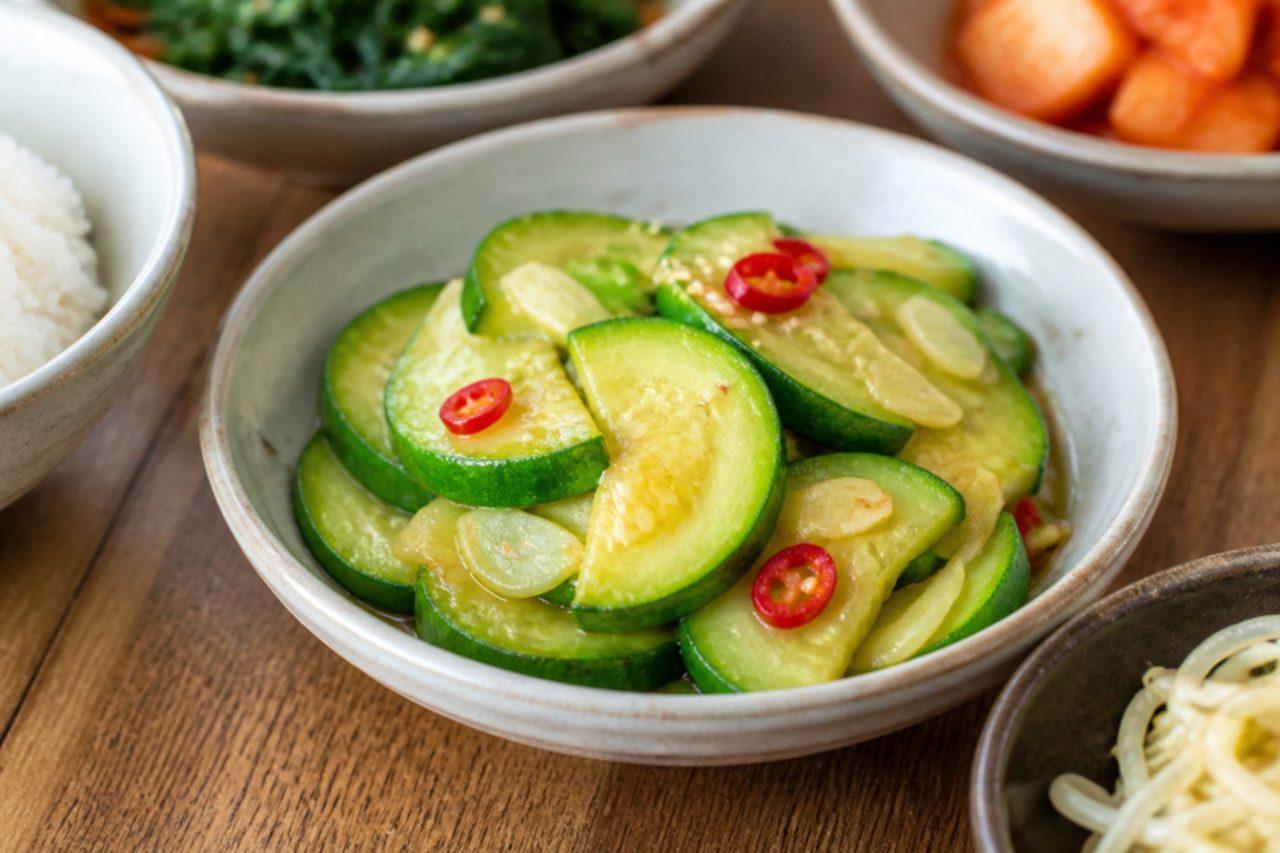
Aehobak bokkeumStir-fried courgette

Aehobak, the pale green Korean courgette, is in every market from Gwangjang in Seoul to Busan's Jagalchi all summer, and a quick stir-fry of it is one of the banchan most often on the family table and in school lunches. Half-moon slices are lightly salted, then stir-fried with garlic until just tender and glossy, and finished with sesame. Many homes season it with saeujeot, salted shrimp; this version uses salt and a little soy instead, so it is vegan. A portion is about 45 kcal. The common mistake is overcooking, which leaves limp, watery slices; cook it hot and fast and take it off while the slices still have a little bite. Chef's tip: salting the slices for 10 minutes and patting them dry keeps them firm and stops the pan filling with liquid.

by KrazyBadal 0 views
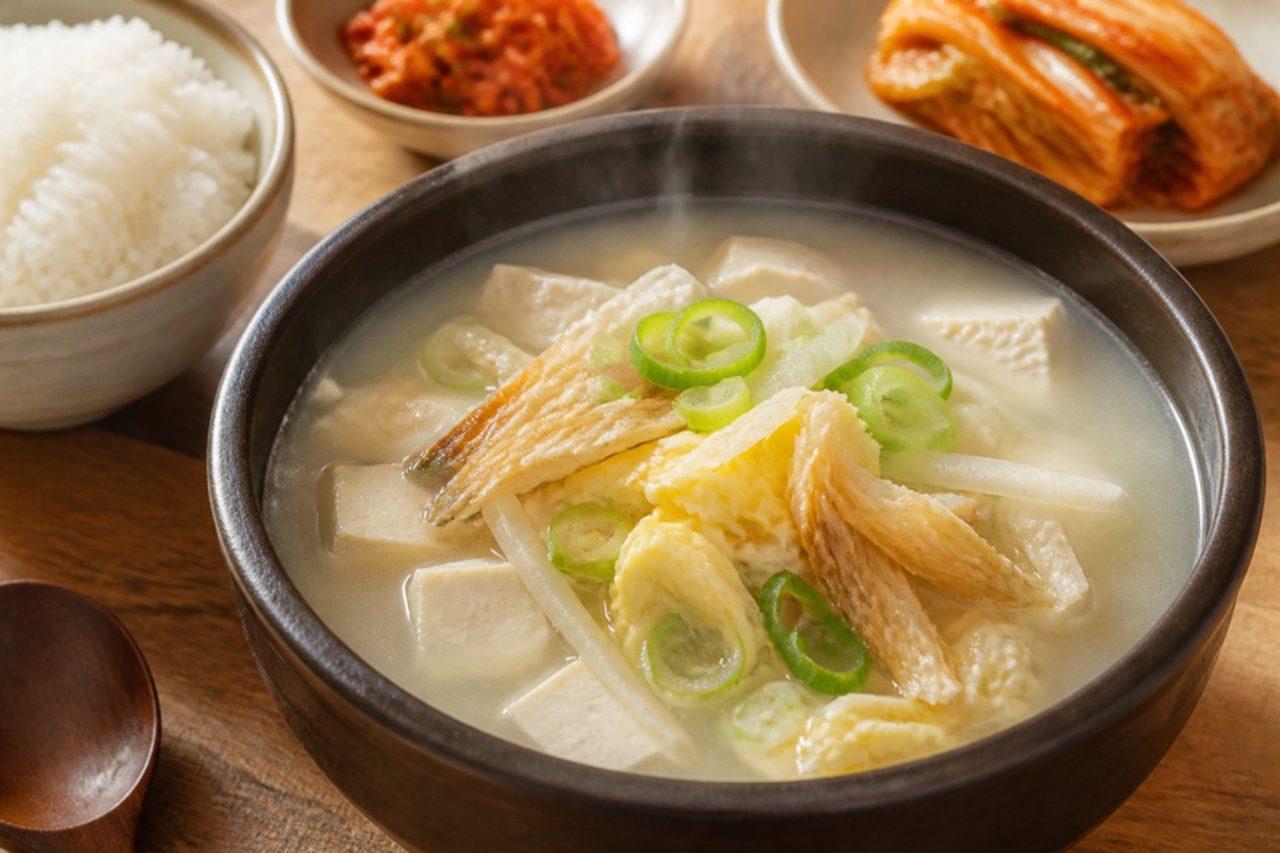
Bugeo gukDried pollack soup

In Seoul, little restaurants near Mugyo-dong have served bugeo-guk since dawn for decades to office workers recovering from the night before, and at home it is the light, fortifying soup for any cold morning: shreds of air-dried Alaska pollack fried briefly in sesame oil, then simmered with radish and tofu into a milky, savoury broth, with beaten egg swirled in at the end. It is clean and comforting. Fish and egg are the allergens. A bowl is about 130 kcal. The most common mistake is using the dried shreds straight from the bag; soak and squeeze them first, or they stay tough and the soup is salty. Chef's tip: fry the pollack in sesame oil until it smells toasty before adding water; it is what turns the broth white and rich.

by KrazyBadal 0 views
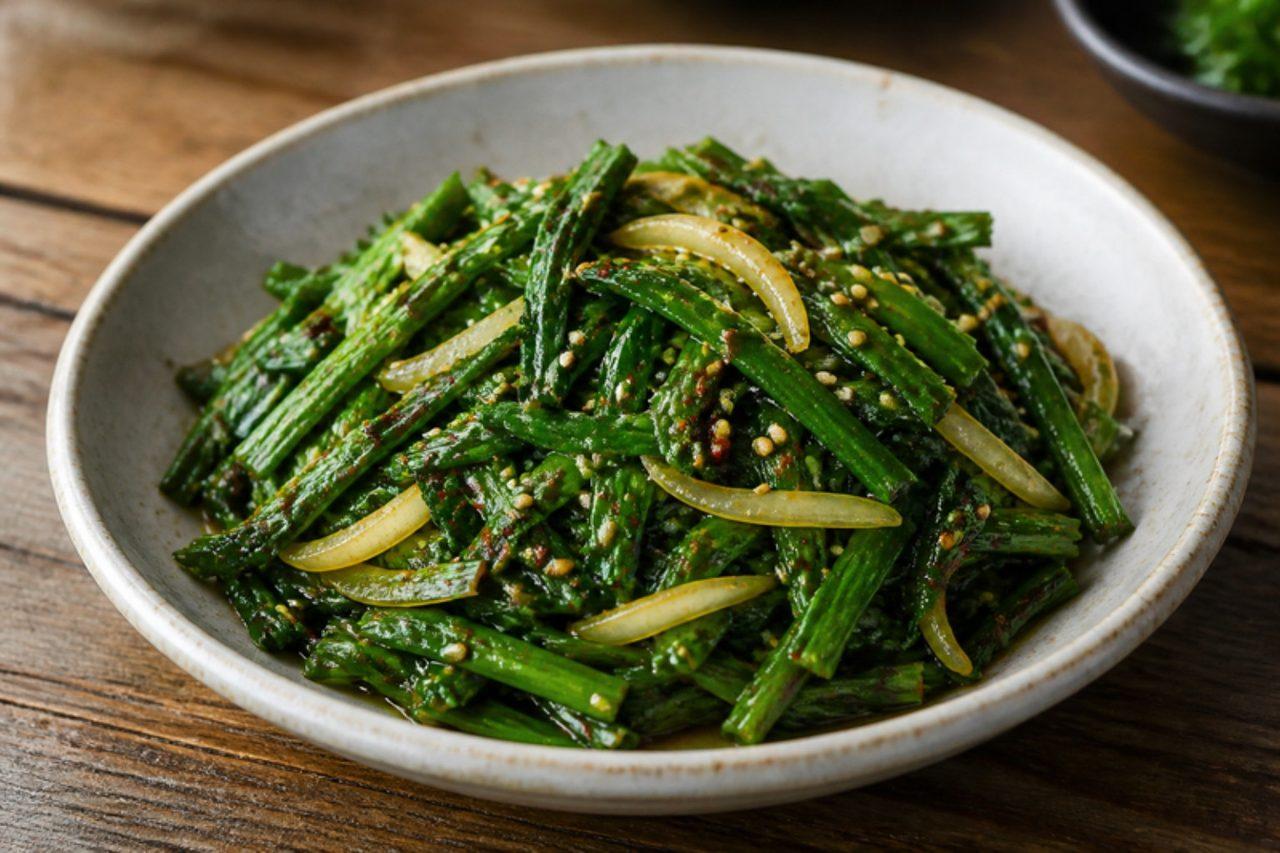
Buchu muchimSeasoned garlic chives

In Korean barbecue restaurants from Mapo in Seoul to Busan's Haeundae, a little bowl of dressed garlic chives comes to the table with the grilled pork, and at home buchu muchim is the five-minute banchan made when there is a bunch of chives in the fridge. The flat chives are cut into lengths and tossed raw with gochugaru, soy, vinegar and sesame; they have a punchy garlic-onion bite that cuts through rich meat or a simple bowl of rice. A portion is about 40 kcal. The usual mistake is mixing it hard, which bruises the chives and makes them bitter and slimy; toss lightly with your fingertips. Chef's tip: dress the chives with the oil first, then the salty and sour parts; the oil coats them and keeps them crisp longer.

by KrazyBadal 0 views
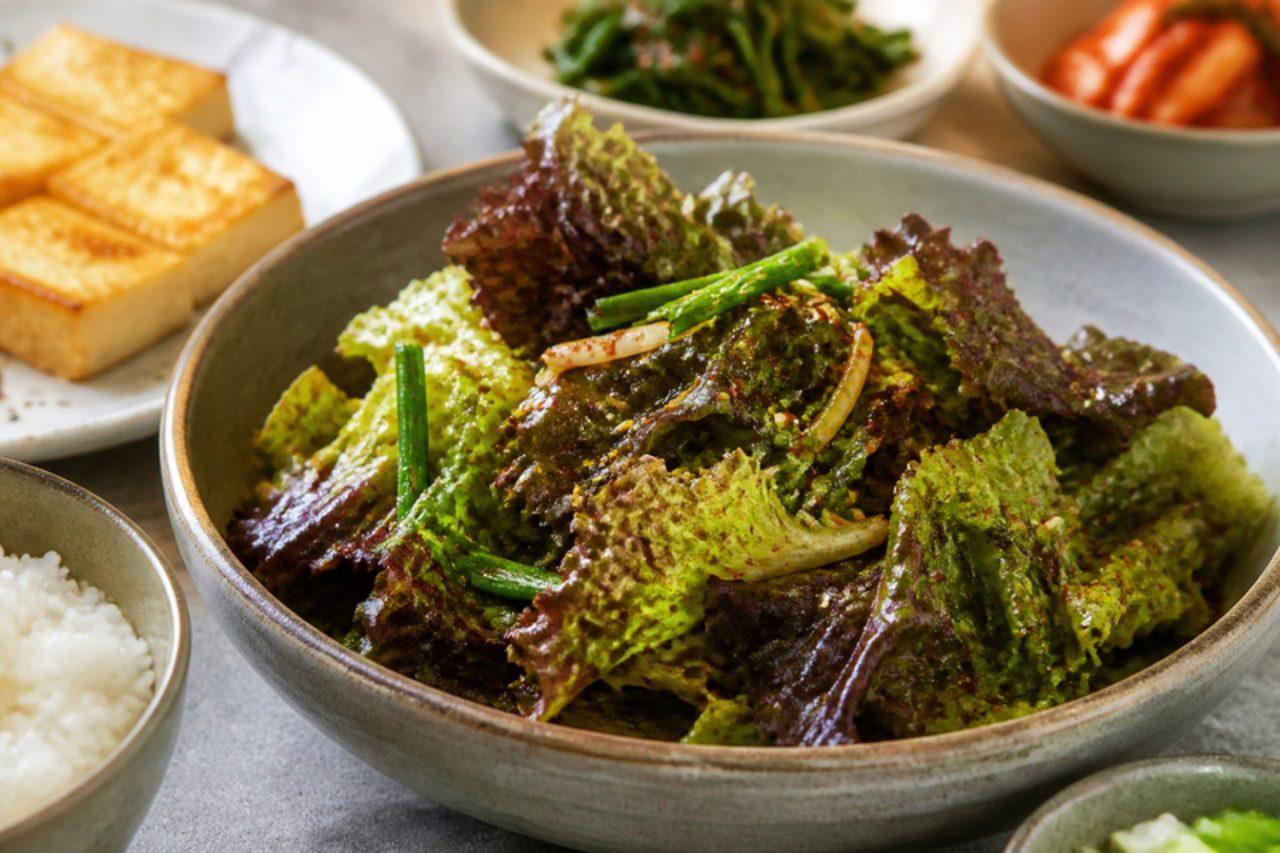
Sangchu geotjeoriFresh lettuce salad

Geotjeori is "fresh kimchi", made to be eaten the same day, and lettuce geotjeori is the summer version Korean families throw together in ten minutes when the leafy red lettuce from the garden or the market in Suwon is piling up: torn leaves and spring onion tossed in a garlicky gochugaru and soy dressing. It goes with grilled meat, bibimbap or just rice. Many homes add fish sauce; this vegan version uses soy and a little more sesame. A portion is about 45 kcal. The most common mistake is dressing it in advance; lettuce goes soggy within minutes, so mix it at the table. Chef's tip: dry the leaves very thoroughly in a salad spinner; any water left on them dilutes the dressing and stops it clinging.

by KrazyBadal 0 views

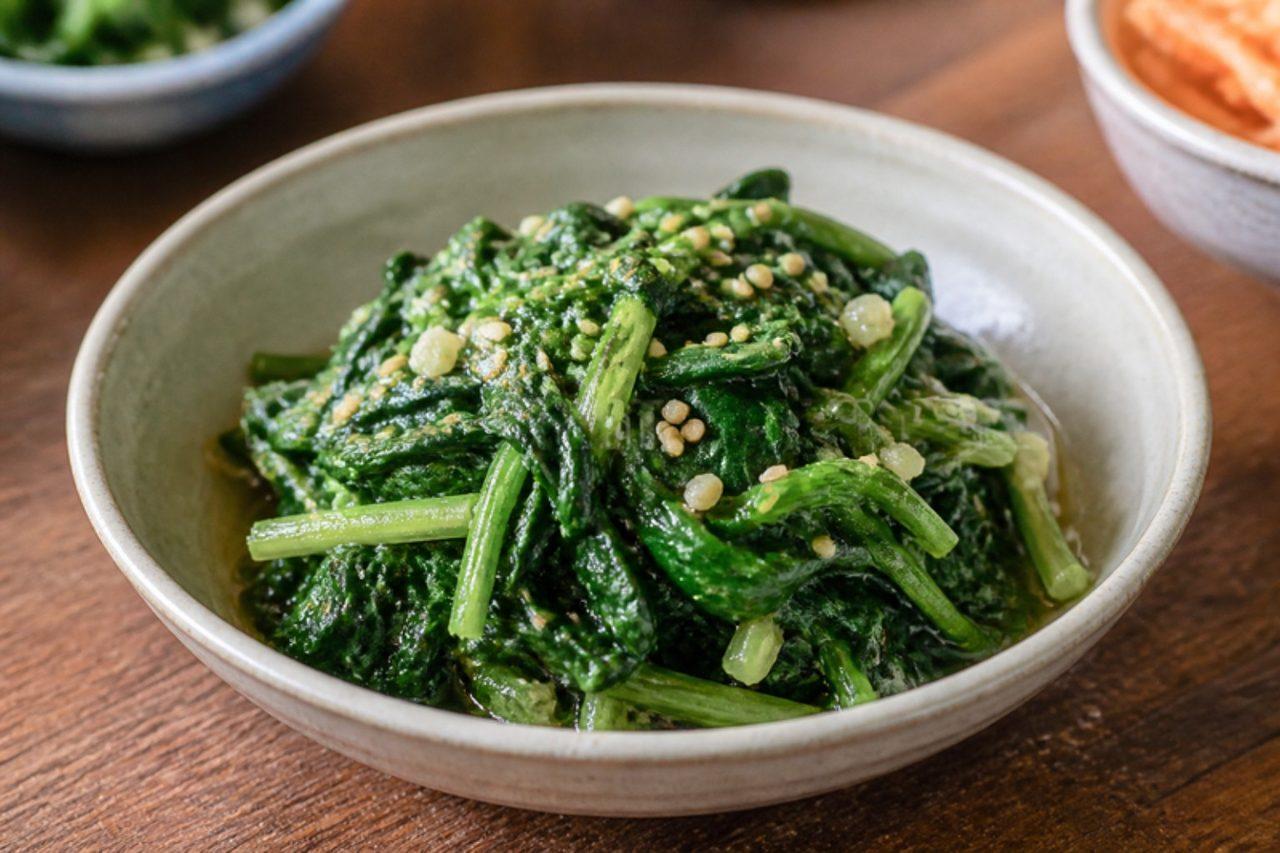
Chwinamul muchimSeasoned aster greens

Chwinamul, the wild aster that grows on the mountains of Gangwon and the slopes around Jirisan, is one of the most loved spring greens in Korea, sold by grandmothers at village markets in April and dried for the namul of Daeboreum, the first full moon of the lunar year. Blanched and squeezed, it is seasoned with soup soy sauce, garlic and sesame oil and has a deep, herbal, slightly bitter flavour that wakes up the rice. A portion is about 45 kcal. If you can't find chwinamul, use spinach or watercress, blanched for less time. The common mistake is not squeezing the greens well, so the seasoning slides off; press them firmly in your fist. Chef's tip: season with your fingertips, rubbing the dressing gently into the leaves; Korean cooks call it son-mat, the taste of the hands.

by KrazyBadal 0 views

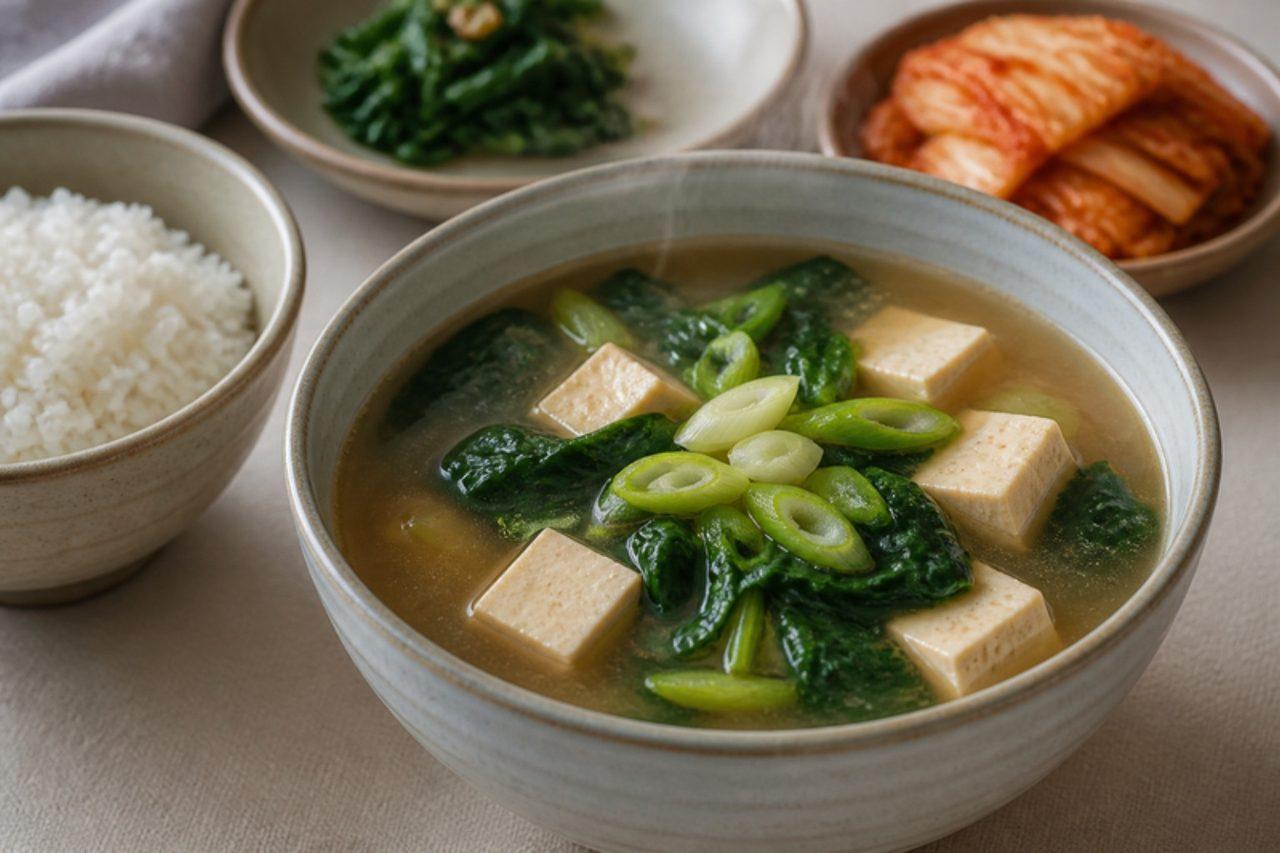
Sigeumchi doenjang gukSpinach soybean paste soup

Spinach doenjang-guk is one of the soups that appears most often on Korean breakfast and dinner tables in winter, when the short, sweet Pohang spinach called pohang-cho arrives from the east coast: a clear, savoury broth of fermented soybean paste with spinach, tofu and spring onion, eaten with rice and kimchi. It is usually made with anchovy stock; this version uses kelp and dried shiitake, so it is vegetarian. A bowl is about 60 kcal. The common mistake is boiling the doenjang hard for a long time, which makes it bitter and dulls its fragrance; dissolve it in, then simmer gently. Chef's tip: push the doenjang through a small sieve into the pot; it dissolves without lumps and leaves the husky bits behind.

by KrazyBadal 0 views

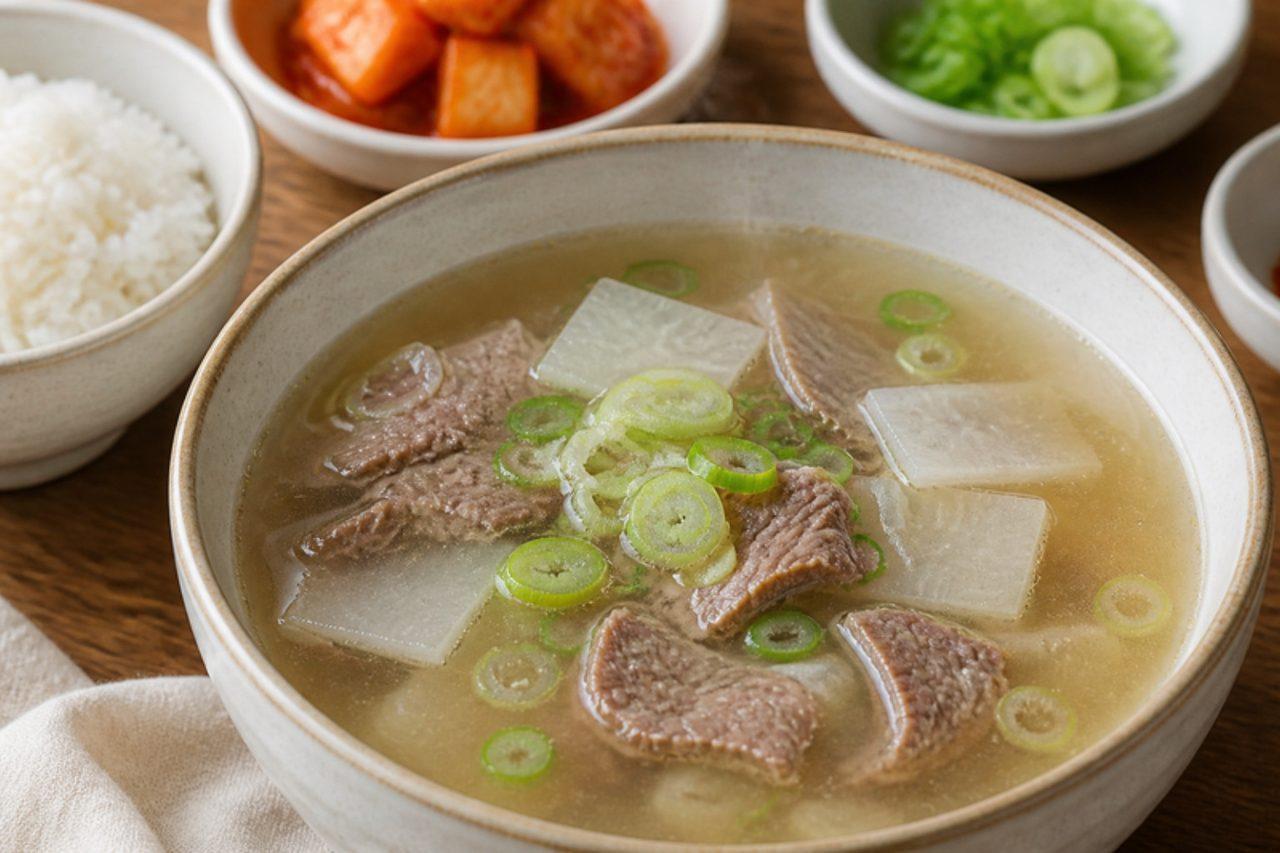
Sogogi mugukBeef and radish soup

Sogogi muguk is the soup of ordinary Korean mornings and of the ancestral memorial table in Gyeongsang homes, where a clear version is offered on rites days: thin slices of beef brisket or round sautéed in sesame oil with squares of Korean radish, then simmered in water until the radish turns translucent and the broth sweet and beefy. It is seasoned only with soup soy sauce, garlic and salt and eaten with rice and kimchi. A bowl is about 160 kcal. The common mistake is skipping the sauté: frying the beef and radish together in sesame oil first is what makes the broth rich without hours of simmering. Chef's tip: cut the radish into thin, flat squares, not chunks; they cook quickly and release their sweetness into the soup.

by KrazyBadal 0 views

JapgokbapMultigrain rice

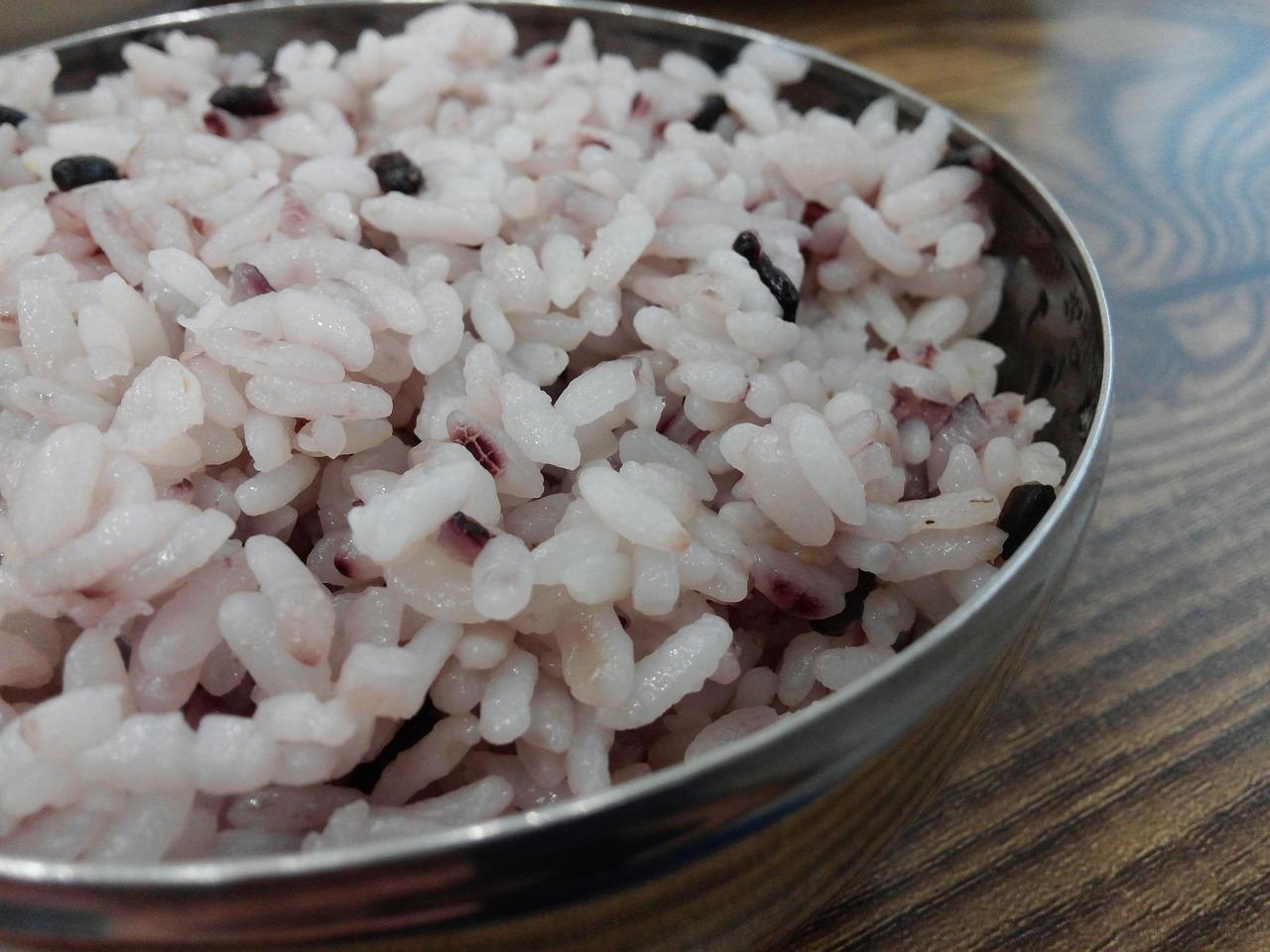
In Korean homes today, the bowl of rice beside the stew is more often japgokbap than plain white: short-grain rice cooked with a handful each of barley, brown rice, black rice, millet and beans, which turns it purple-grey, chewy and nutty. Supermarkets in Seoul sell ready-mixed bags of japgok for the rice cooker, and the habit goes back to times when rice was rationed and stretched with other grains. A portion is about 270 kcal, with far more fibre than white rice. The beans and brown grains need soaking: 4 hours or overnight (not counted). The common mistake is cooking it with the water for white rice; whole grains need about a quarter more. Chef's tip: soak the beans and brown grains separately from the white rice, which only needs 20 minutes; that way nothing ends up hard or mushy.

by KrazyBadal 0 views

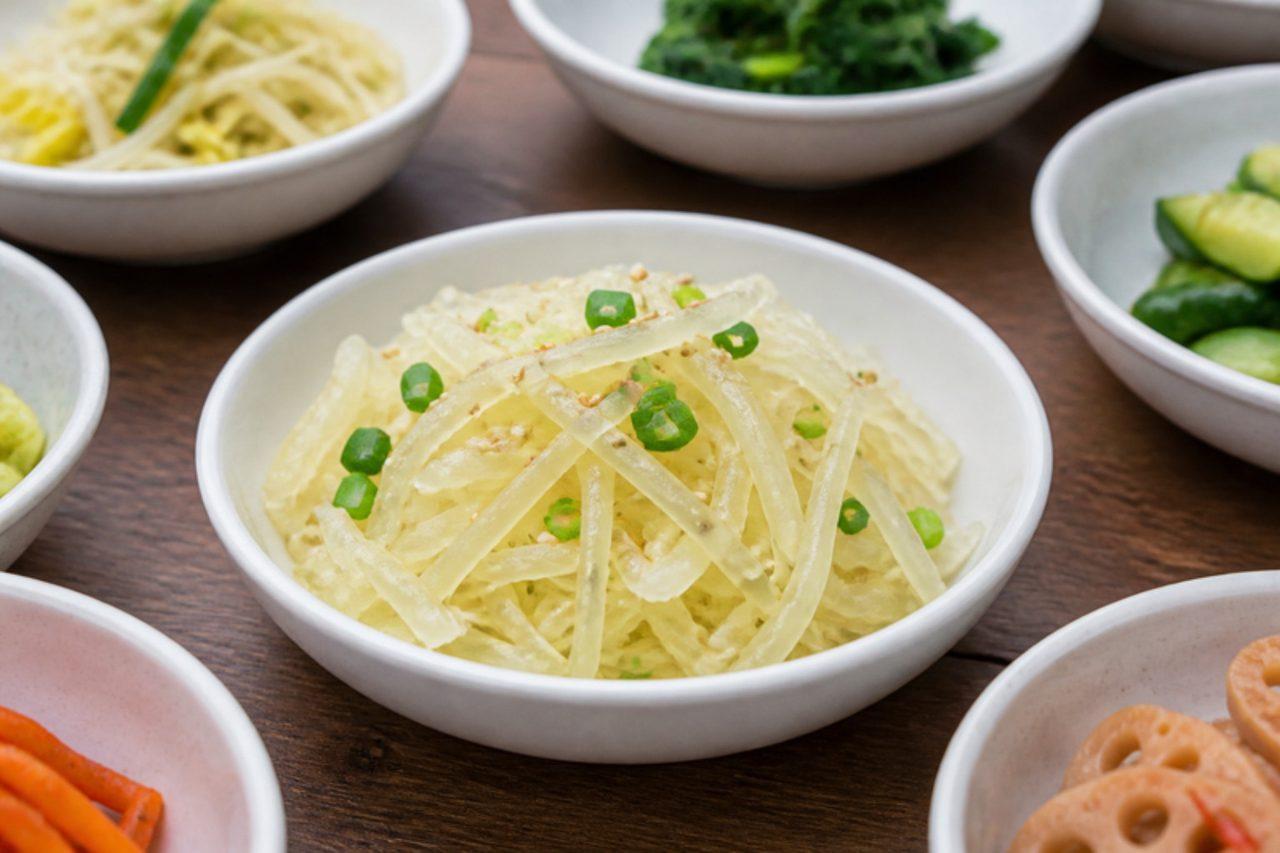
Mu namulStir-fried radish strips

Mu namul is the soft, white radish side dish that appears among the banchan of a Korean home table in autumn and winter, when the fat Korean radishes are at their sweetest, and it is always part of the namul set laid out for Chuseok and ancestral rites in Andong and Seoul. Thin matchsticks of radish are stir-fried with garlic and a pinch of salt, then steamed briefly in their own juice until tender and translucent, and finished with sesame. It is mild, sweet and very gentle on the stomach. A portion is about 50 kcal. The most common mistake is cutting the radish against the grain, so it breaks into short bits; cut lengthways, along the grain, so the strands stay long. Chef's tip: salt the radish first and let it sit for a few minutes; it releases water that it then cooks in, so you need almost no oil.

by KrazyBadal 0 views

Tteok kkochiRice cake skewers

Tteok kkochi is the after-school snack of Korea, sold for a few hundred won from carts outside primary schools, where children cluster round the vendor painting glaze onto the skewers. Cylinders of rice cake are fried until blistered and crisp outside but soft and chewy inside, then brushed with a sticky sauce of gochujang, ketchup and rice syrup. The usual mistake is frying rice cakes that are cold and hard from the fridge: they spit and stay tough in the middle, so soften them in hot water first. Rice cakes are dense and sticky, so cut them small for young children and older people and make sure they eat sitting down: they are a known choking risk. Chef's tip: dry the softened rice cakes very well before frying; water makes the oil spit.

by KrazyBadal 0 views

DalgonaHoneycomb toffee

Dalgona, or ppopgi, was the 1970s and 80s snack of Seoul alleyways, where an old man with a little stove melted sugar in a ladle and stamped a star or umbrella into it; if you could break the shape out without cracking it you won a free one. It is just sugar and a pinch of baking soda, puffed into a crisp, toffee-brown honeycomb that tastes faintly bitter-sweet. The common mistake is adding too much baking soda, which leaves the candy bitter and soapy; a tiny pinch on the tip of a chopstick is all it needs. Melted sugar reaches about 160 °C and burns badly, so children should watch while an adult does the melting, and should only press shapes once the candy has set a little. Chef's tip: use a stainless-steel ladle or small pan, not non-stick, and keep the flame low; the moment the sugar is clear and amber, take it off.

by KrazyBadal 0 views

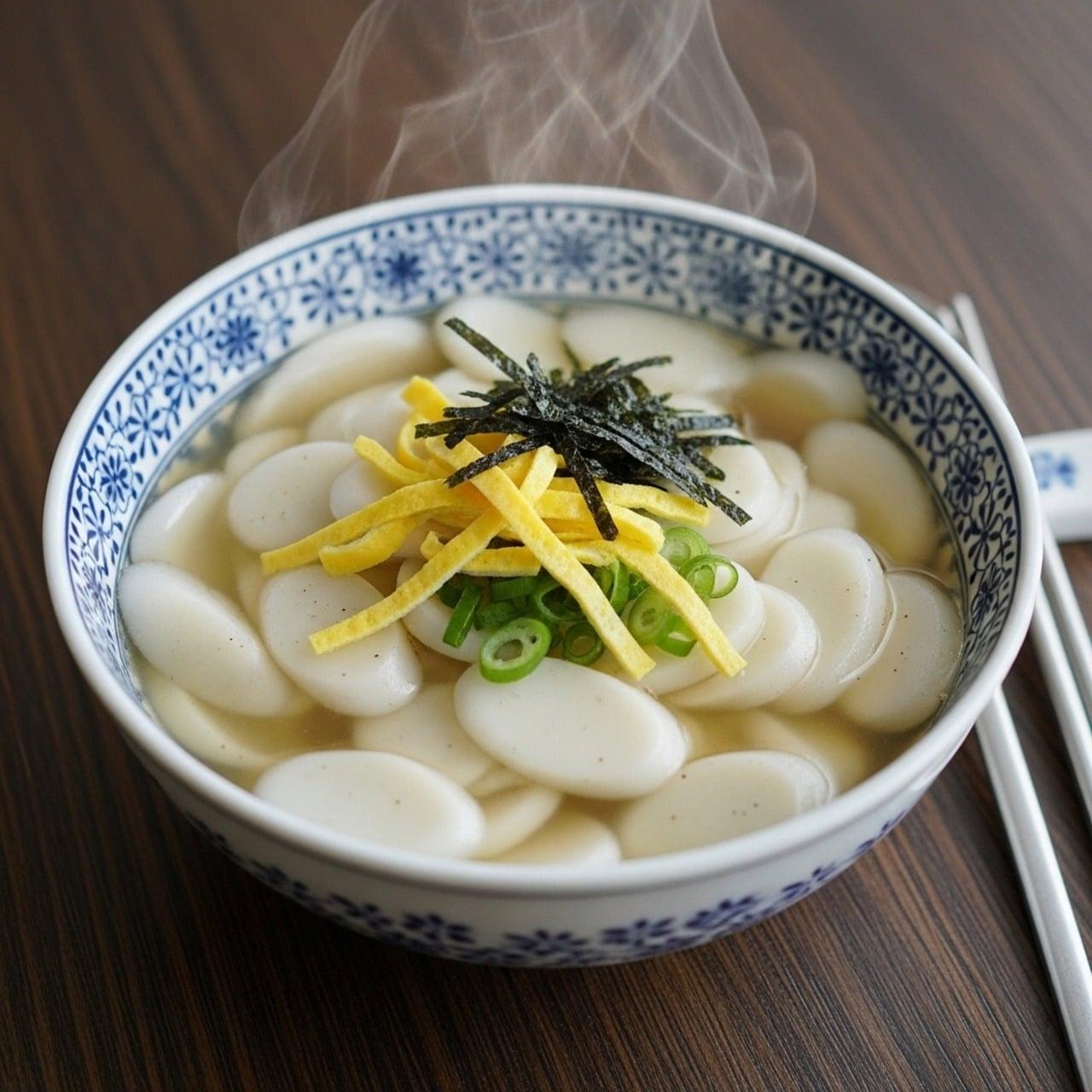
TteokgukRice cake soup

On the morning of Seollal, the Lunar New Year, families across Korea eat a bowl of tteokguk, and the saying goes that you only turn a year older once you have finished it. Thin ovals of white rice cake are simmered in a clear beef broth seasoned with soup soy sauce, then topped with strips of egg, shredded beef, spring onion and toasted laver. It is mild, comforting and chewy. Rice cakes are very sticky: cut pieces small and supervise young children and older people closely, as they can be a choking risk. The common mistake is boiling the rice cakes too long, until they turn mushy and the soup thick and gluey. Chef's tip: soak dried rice cake slices in cold water for 20 minutes before cooking; they cook evenly in 3 minutes and stay chewy.

by KrazyBadal 0 views

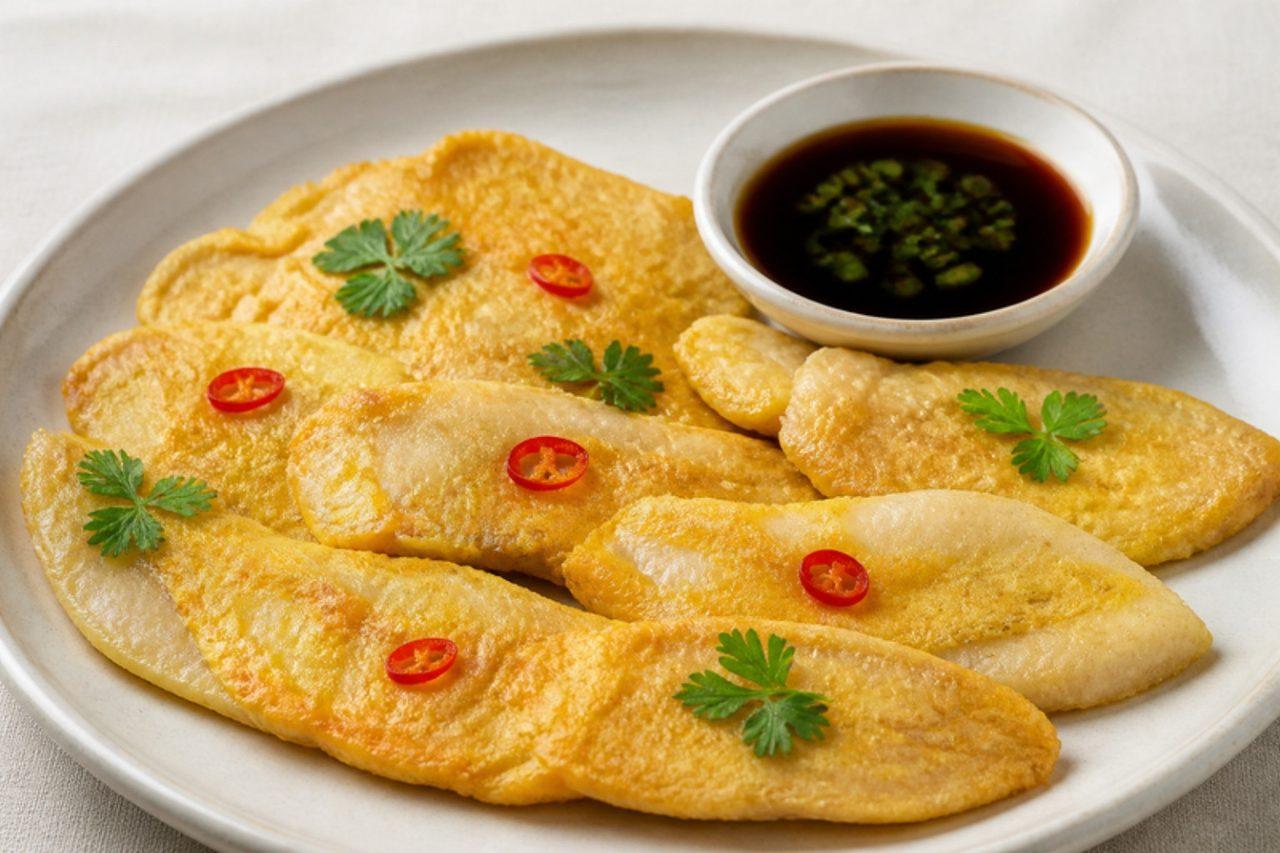
Saengseon jeonEgg-battered fish slices

Saengseon jeon is one of the golden jeon laid out on ancestral rite tables at Chuseok and Seollal, especially in coastal homes along the East Sea, where pollock and cod are the holiday fish. Thin slices of white fish are seasoned, floured, dipped in egg and fried gently, giving delicate, tender fish inside a soft yellow coat. They are eaten with a soy-vinegar dip. The common mistake is cutting the fish too thick, so the egg browns before the centre is cooked. Chef's tip: slice the fillets while they are still half-frozen; you can cut neat 7 mm slices that cook in the time it takes the egg to set.

35 minKoreanFish
by KrazyBadal 0 views

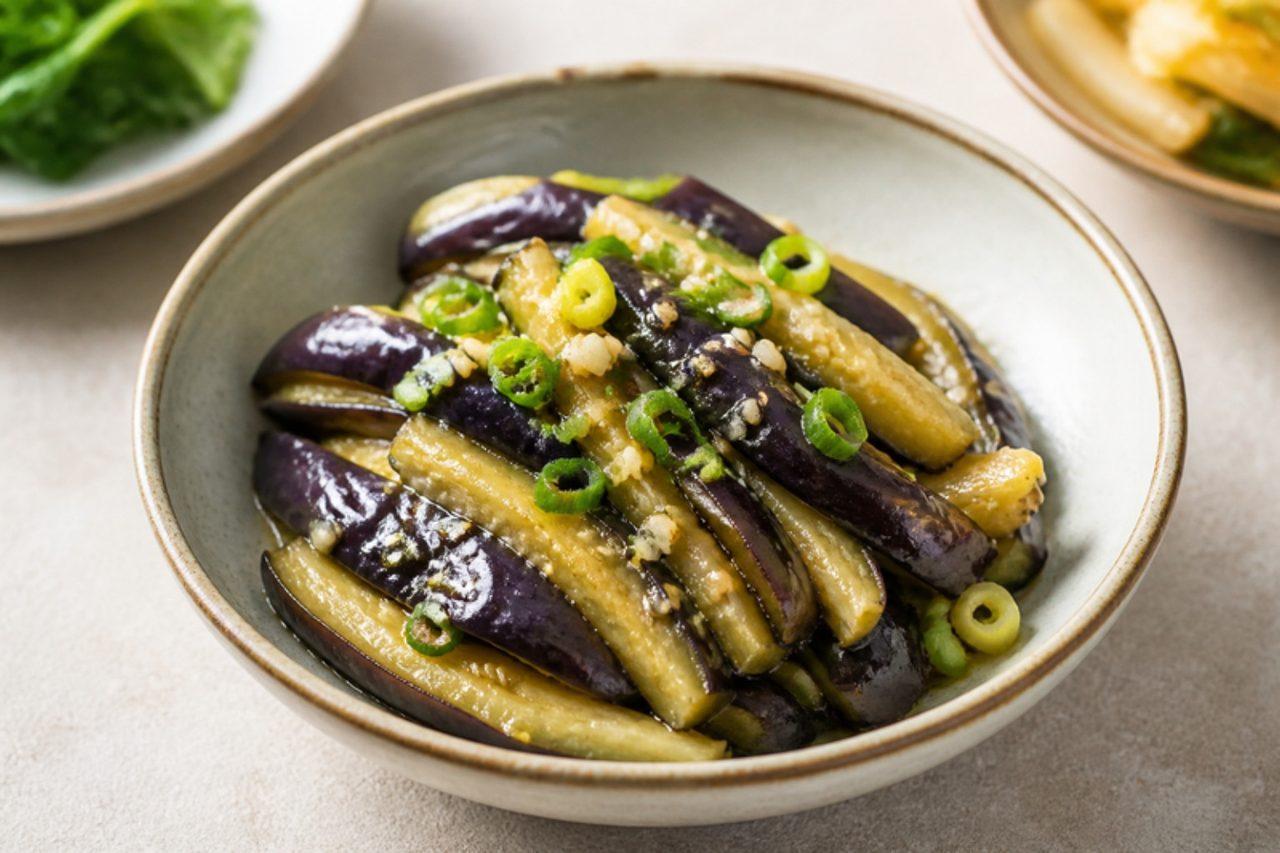
Gaji namulSeasoned steamed aubergine

In late summer, when aubergines pile up at Seoul's Gyeongdong market for next to nothing, gaji namul turns up beside the rice at almost every home dinner. Long strips of aubergine are steamed until silky, then torn and dressed with soy, garlic, spring onion and toasted sesame, so they taste mellow, savoury and faintly sweet. It is one of the gentlest banchan, good for anyone who finds kimchi too fierce. The usual mistake is dressing the aubergine while it is still hot and dripping: the seasoning slides off and the dish turns watery, so let it steam dry and cool first. Chef's tip: tear the strips by hand along the grain rather than slicing them; the rough edges hold far more dressing.

by KrazyBadal 0 views

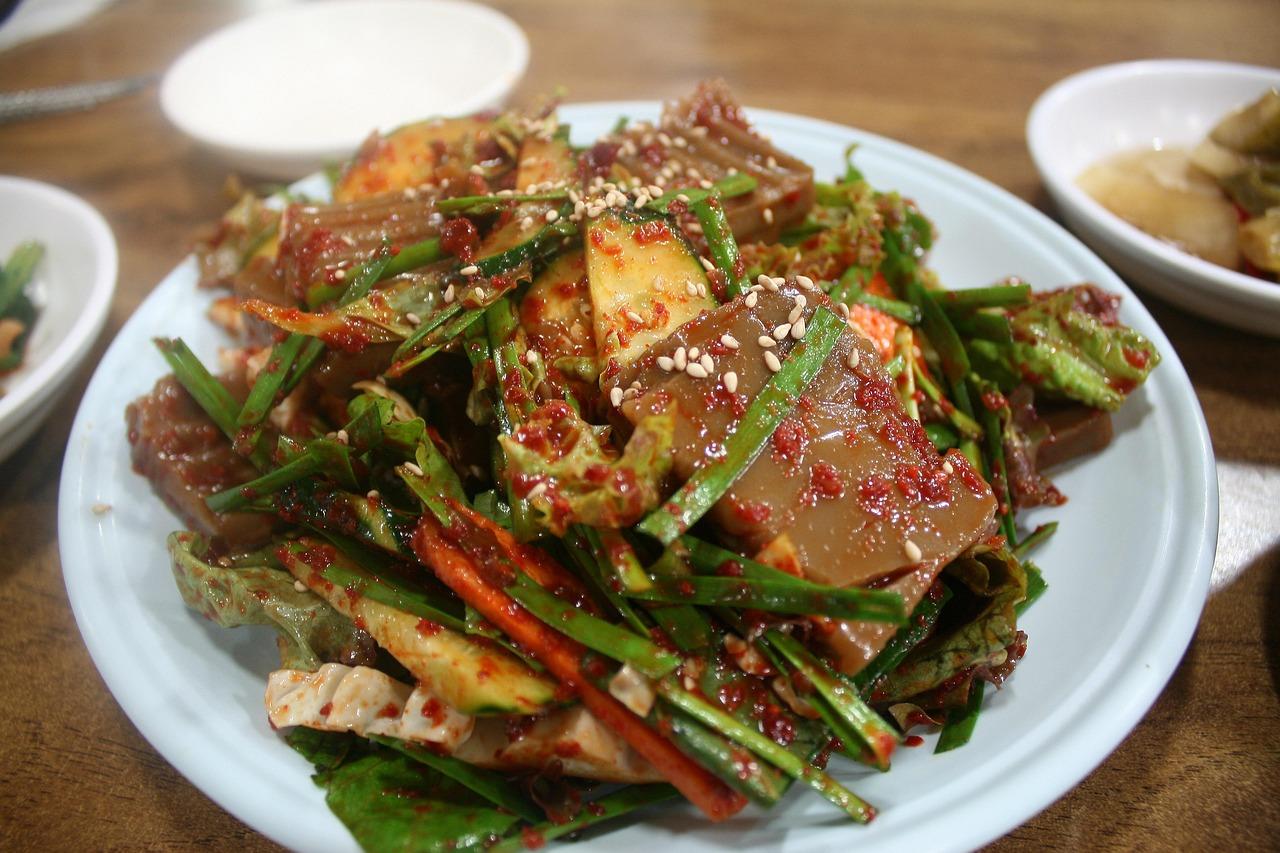
Dotorimuk muchimAcorn jelly salad

Dotorimuk is a jelly made from acorn starch, gathered in Korea's oak-covered mountains, and dotorimuk muchim is the salad hikers eat at the little restaurants at the foot of Bukhansan and Gwanaksan after a weekend climb. Wobbly, nutty-bitter cubes of jelly are tossed gently with lettuce, cucumber, carrot and a soy, chilli and sesame dressing. Temple cooks make it exactly like this, without garlic or onion. The common mistake is tossing it hard like a green salad: the jelly breaks into crumbs, so fold it with your fingertips. Chef's tip: if the jelly has firmed up in the fridge, blanch the block in boiling water for 30 seconds and cool it; it turns soft and bouncy again.

by KrazyBadal 0 views

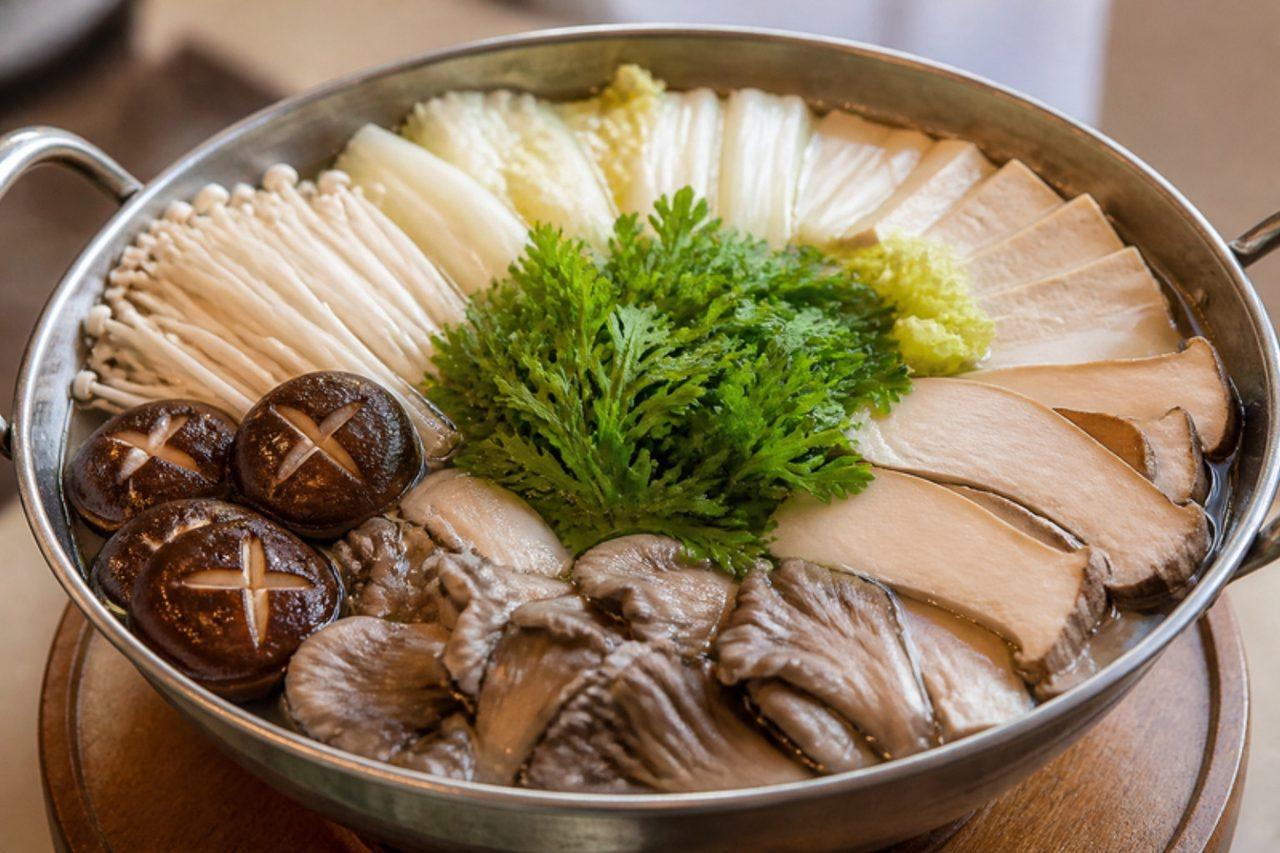
Beoseot jeongolMushroom hot pot

Beoseot jeongol is the mushroom hot pot that Korean temple kitchens and mountain restaurants around Odaesan and Songnisan serve in autumn, when wild mushrooms come down from the slopes. Fans of shiitake, oyster, enoki and king oyster mushrooms are arranged with tofu, cabbage and greens in a shallow pot and cooked at the table in a clear kelp and shiitake broth. It tastes deep, clean and woodsy, with no garlic or onion in the temple way. The common mistake is boiling it hard from the start, which turns the broth cloudy and the enoki stringy. Chef's tip: save the shiitake soaking water and add it to the broth; it doubles the savoury depth without any seasoning.

by KrazyBadal 0 views

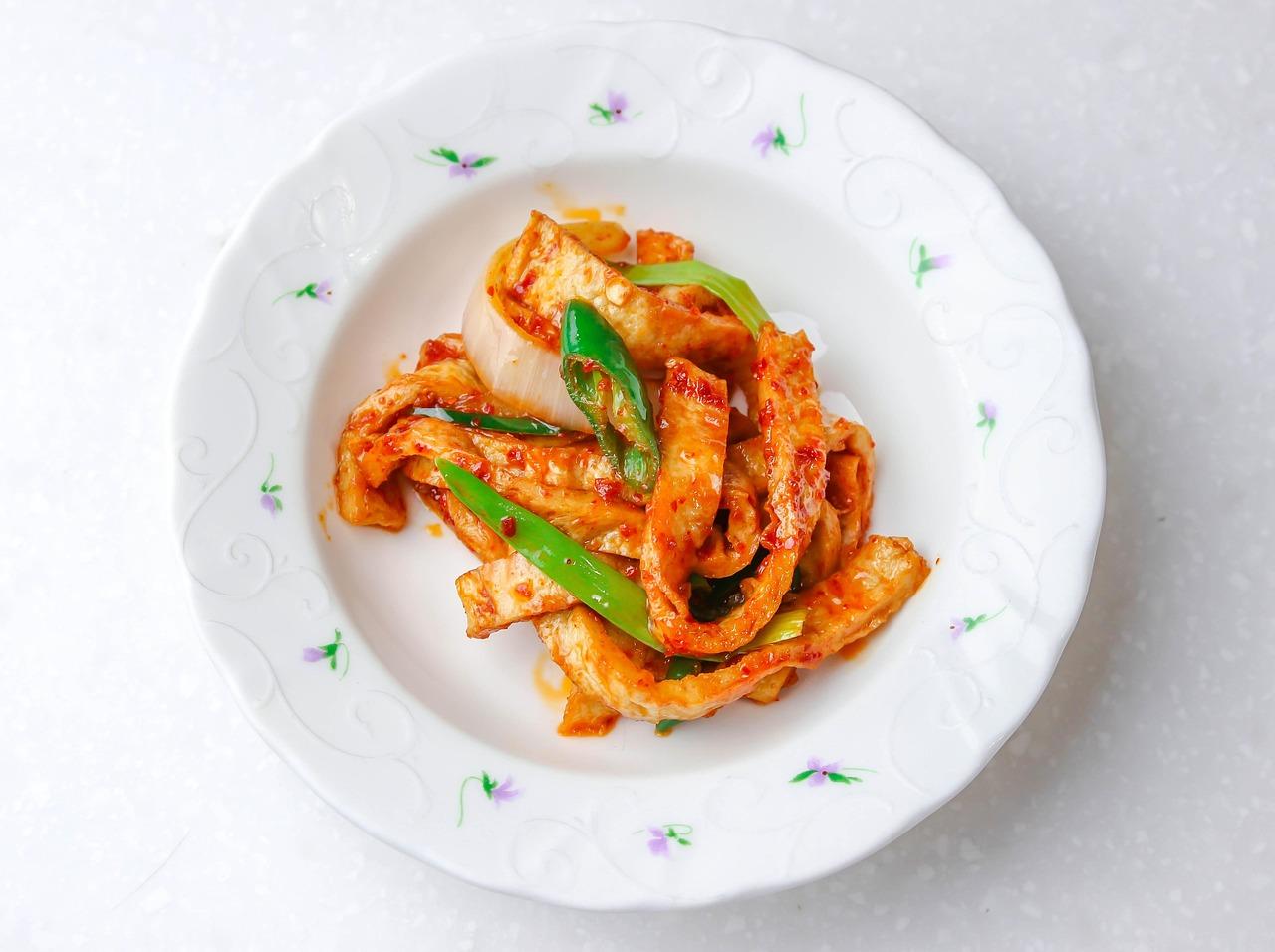
Eomuk bokkeumStir-fried fish cake

Busan's fish cake makers on the old docks near Bupyeong market made eomuk famous, and eomuk bokkeum is how Korean homes everywhere turn a pack of fish cake sheets into a quick side dish for school lunchboxes. Strips of fish cake are stir-fried with onion, carrot and pepper in a sweet soy glaze, staying soft and bouncy with crisp vegetable bites. Most children love it, and a pinch of chilli flakes makes a grown-up version. The common mistake is frying the fish cake straight from the packet: its frying oil turns the dish greasy and dulls the sauce. Chef's tip: pour boiling water over the strips and drain before cooking; they soak up the glaze much better.

18 minKoreanFish
by KrazyBadal 0 views

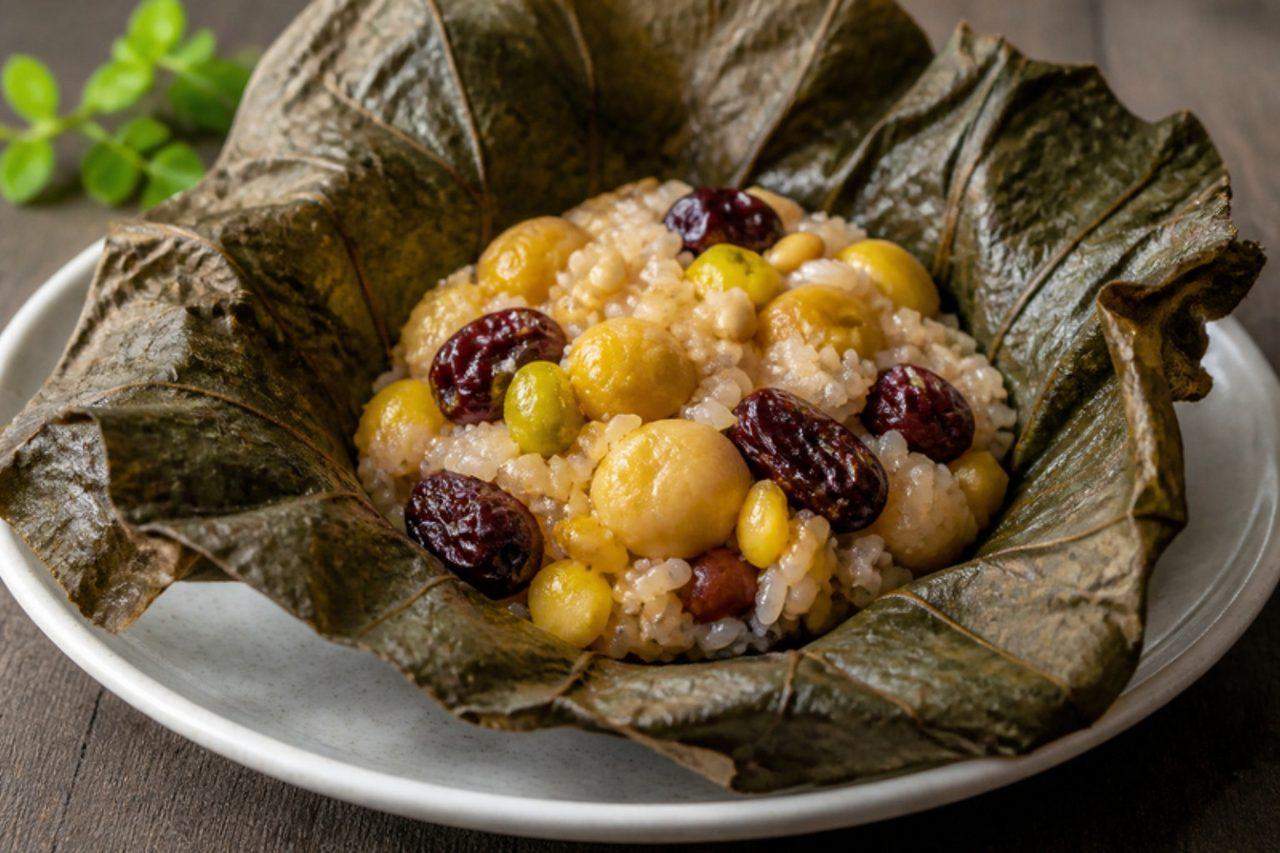
Yeonnip bapLotus leaf sticky rice

Yeonnip bap is a Buddhist temple dish from South Jeolla, where monasteries near the lotus ponds of Muan and the old temples of Jangseong wrap sticky rice in lotus leaves for festival days and visiting guests. Glutinous rice studded with chestnuts, jujubes, black beans and pine nuts is folded into a leaf parcel and steamed, so it comes out chewy, faintly sweet and scented with the green, tea-like aroma of lotus. Like all temple cooking, it uses no garlic, onion or other pungent alliums. Pine nuts are a tree-nut allergen. The common mistake is under-soaking the rice: it steams up hard in the middle however long you cook it. Chef's tip: sprinkle the rice with salted water halfway through steaming; it seasons every grain evenly and keeps the top layer from drying out.

by KrazyBadal 0 views

Showing 24 of 511 recipes

Show more recipes

Page 1 of 22