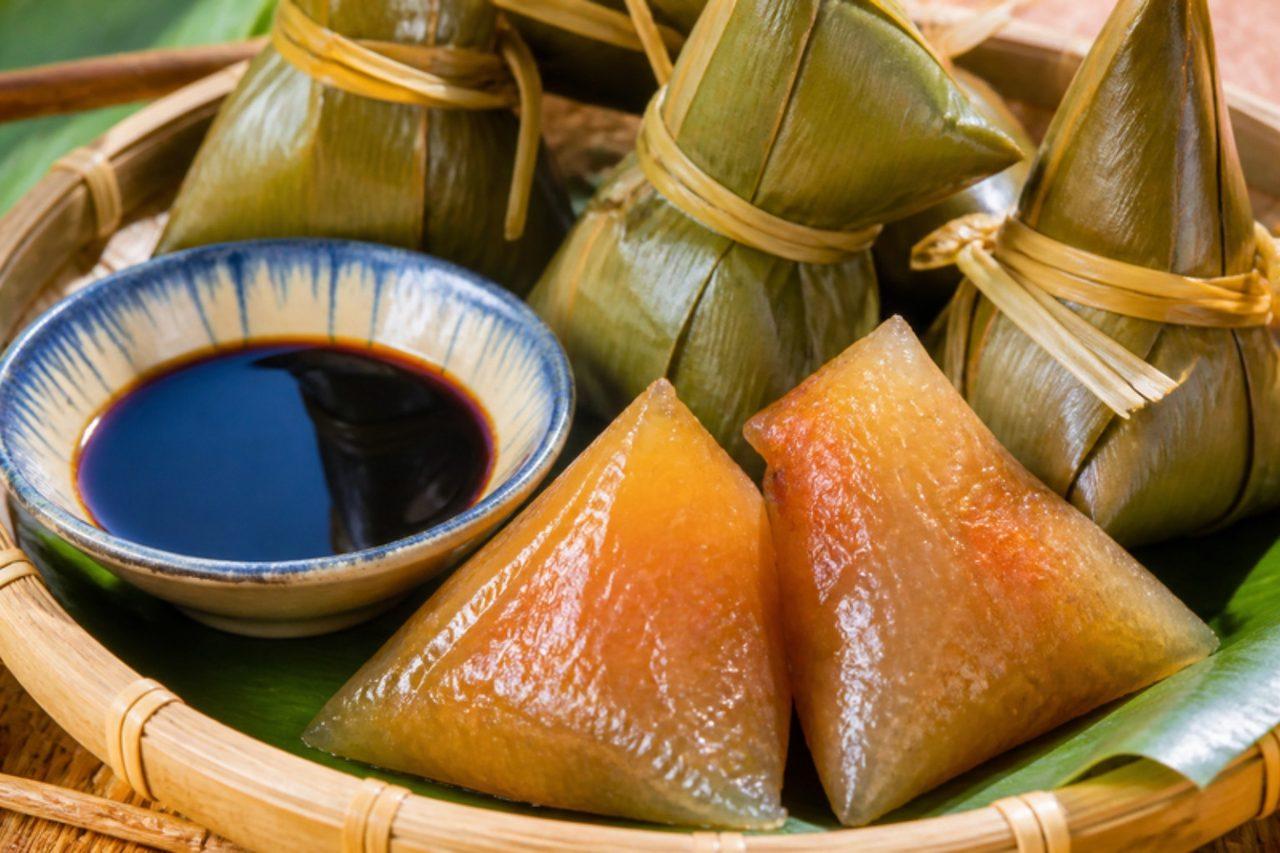
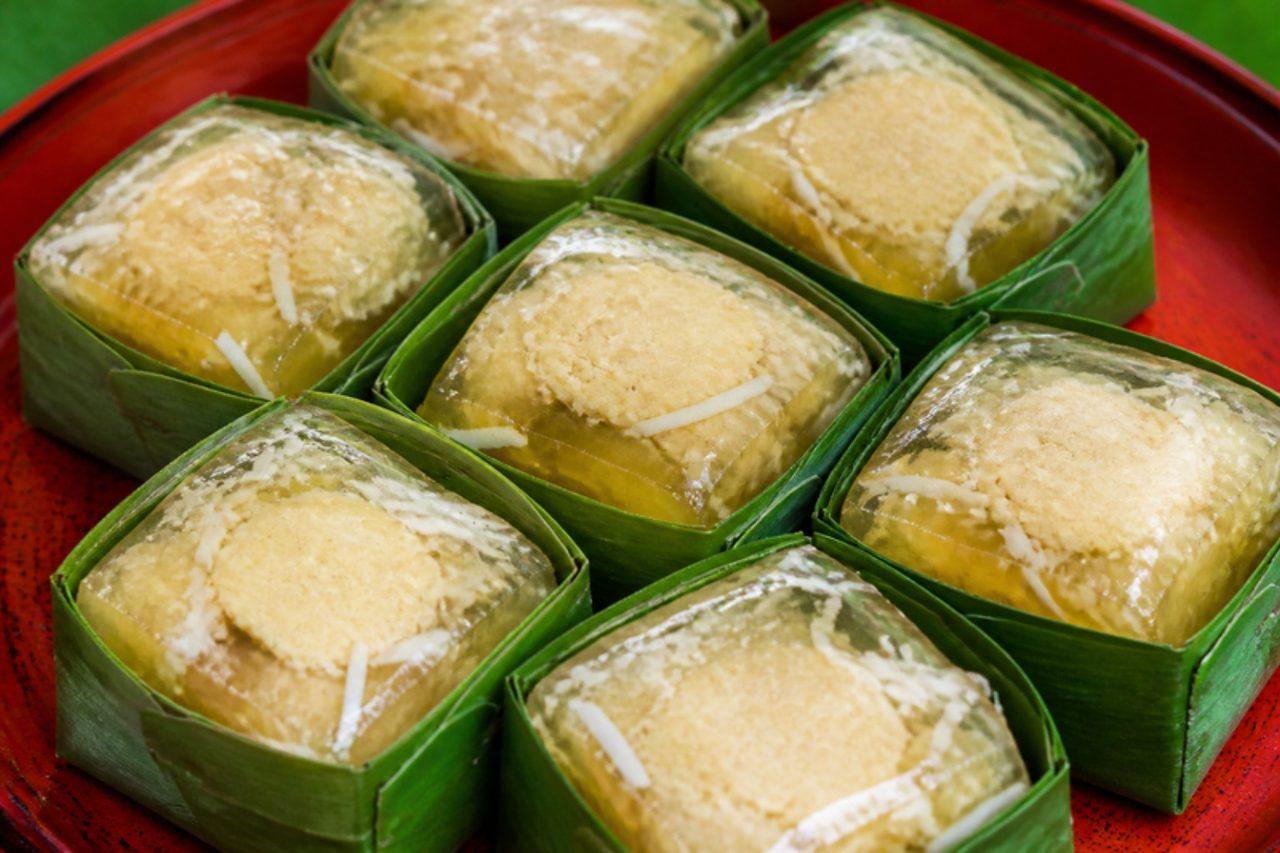
Bánh tro (bánh gio, amber glutinous rice cakes in leaves)Lye water glutinous rice cakes
On Tết Đoan Ngọ, the fifth day of the fifth lunar month, families in northern and central Vietnam eat bánh tro first thing in the morning, believing it cools the body as summer heat arrives. Glutinous rice is soaked in alkaline water, which was once made by steeping plant ash, then wrapped in leaves and boiled for hours. It turns amber, translucent and jelly-soft with a clean, faintly mineral flavour, and is eaten cold, dipped in sugarcane molasses or palm-sugar syrup. Bánh tro is naturally egg-free: the alkali softens the rice grains so their own starch melts together into a firm, sliceable cake. We use food-grade lye water (an alkaline solution of potassium carbonate and sodium bicarbonate sold in Asian shops for noodles and mooncakes). Handle it with care: wear gloves, keep it away from children, never use drain cleaner or caustic soda, and always dilute it as written. Chef's tip: the common mistake is skipping the rinse; wash the soaked rice twice so the cakes taste clean, not soapy.
 Vietnamese


 Argentinian



 Austrian