Skip to content
Recipes

All recipes

Vegetarian, or something you can't eat? Set your diet once and we'll hide recipes that don't fit.

Dowina (Kurdish yogurt soup)

Dowina, called ash-e doogh in Persian, is warming spring food in Kurdish homes around Newroz, when yogurt is plentiful and the first herbs are cut from the garden. Rice and chickpeas simmer in a tangy, lightly thickened yogurt broth, finished with fresh dill, coriander and a sizzle of dried mint in oil. It is eaten warm, never boiling hot, with flatbread. The common mistake is to heat the yogurt too fast without stirring, which makes it split into grainy curds. Chef's tip: whisk an egg yolk and a spoonful of rice flour into the yogurt before it goes on the heat; it holds the soup smooth all the way to the simmer.

by KrazyBadal 0 views

Taai-taaiAnise and honey biscuits

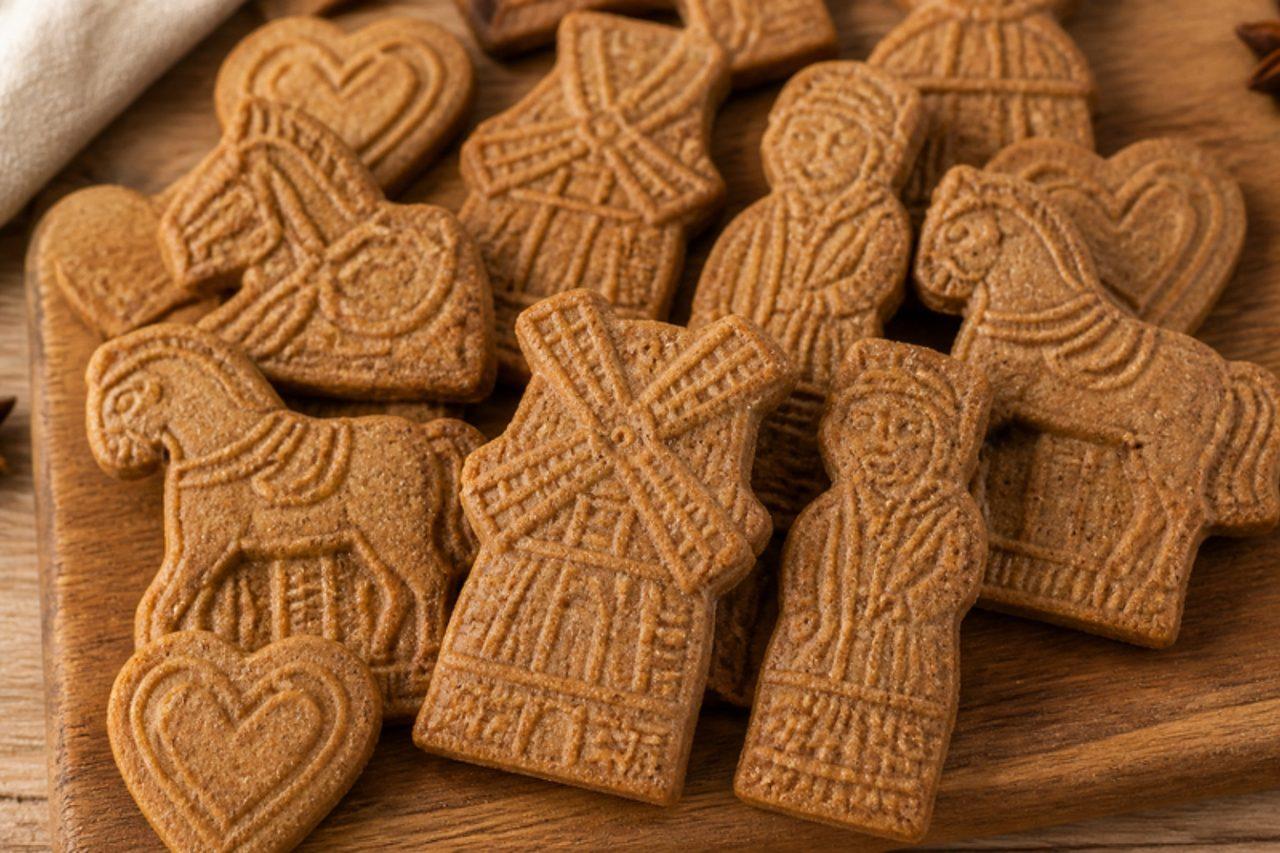
In the Netherlands, taai-taai ('tough-tough') are chewy honey and anise biscuits shaped into figures of Sinterklaas, his horse, windmills, sweethearts and animals, eaten from mid-November until his feast on 5 December. They contain no fat or egg, so they are firm and chewy rather than crisp, and they keep well. Bakers once used carved wooden moulds; cookie cutters work fine. Chef's tip: heat the honey only until runny, then let the dough rest overnight; the rest is what makes the chew.

by KrazyBadal 0 views

BorstplaatSugar fondant sweets

Borstplaat is the sweet of Sinterklaas in the Netherlands: small, melt-in-the-mouth discs or hearts of boiled sugar and cream or milk with a little butter, flavoured with coffee, vanilla or strawberry. Children find them in their shoes on the morning of 5 December alongside pepernoten and a chocolate letter. They need only a few ingredients and a little care, and are gluten free. Chef's tip: stir the cooled syrup until it turns cloudy and starts to thicken, then pour at once; that stirring forms the fine crystals that make borstplaat creamy.

by KrazyBadal 0 views

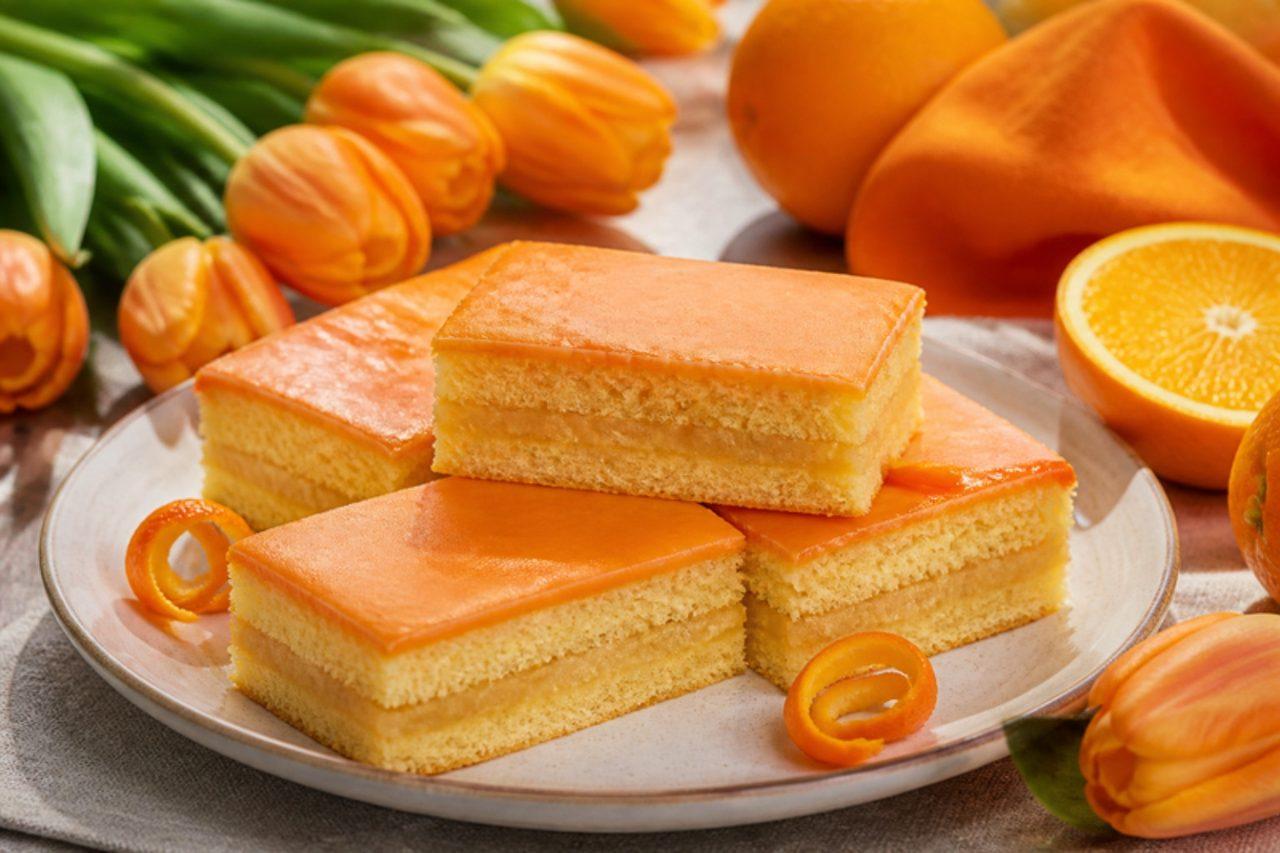
OranjekoekAlmond paste cake with orange icing

On Koningsdag, 27 April, the whole of the Netherlands turns orange: flea markets fill the streets, boats crowd the canals and bakeries sell oranjekoek, a buttery cake with a hidden layer of almond paste under a thick orange glaze. It is cut into neat squares and eaten with coffee between bargain hunting. The almond paste filling is like the one in gevulde koek, sweet and lemony. Chef's tip: let the cake cool fully before icing, or the glaze slides off and goes patchy.

by KrazyBadal 0 views

Chipa so'oCheese bread with spiced beef

In Paraguay, families bake chipa in the clay tatakua ovens on Holy Wednesday so there is food for Thursday and Good Friday, when cooking stops. Chipa so'o ('chipa with meat') is a cassava-starch and cheese bread wrapped around a little filling of minced beef cooked with onion and egg, then baked until crisp outside and chewy within. It is naturally gluten free. Chef's tip: knead the dough until it no longer cracks at the edges when pressed; dry dough splits around the filling.

by KrazyBadal 0 views

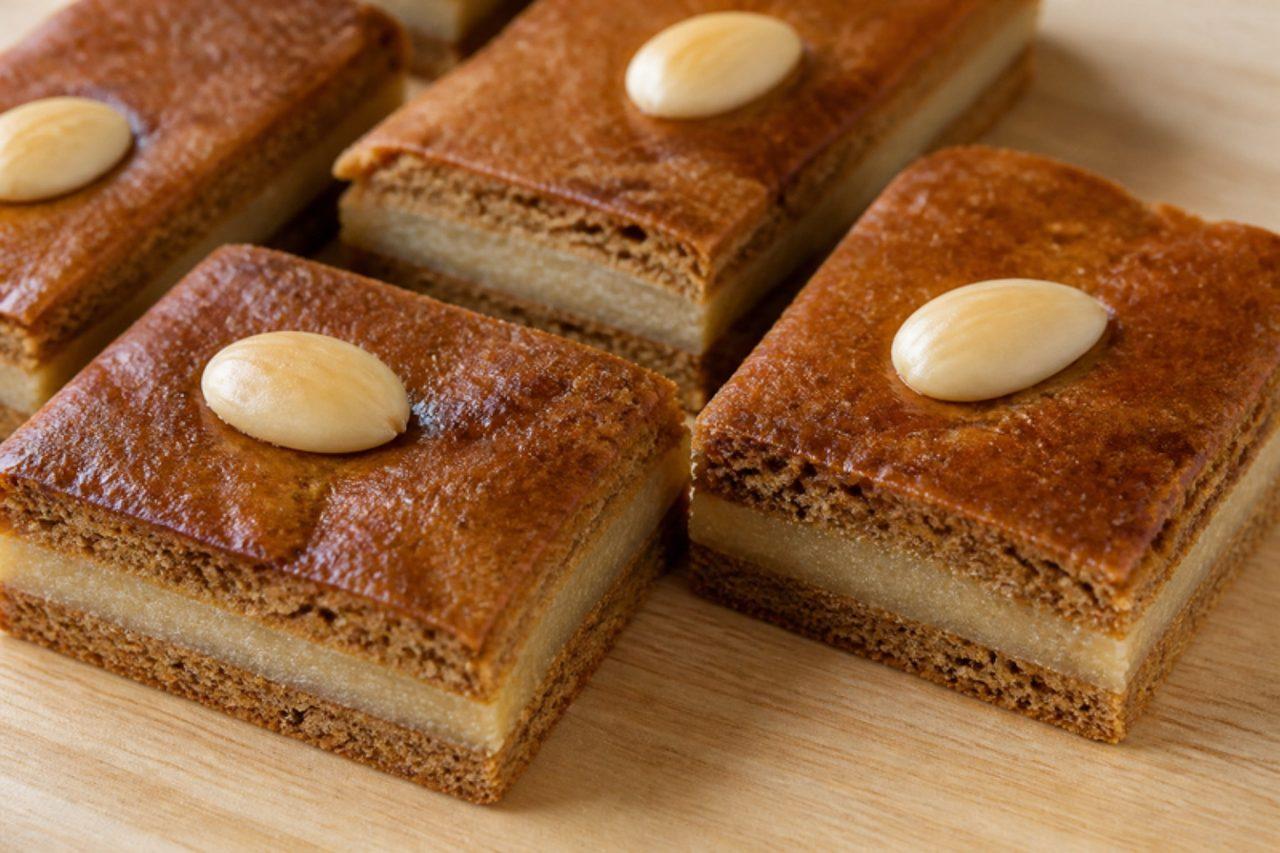
Gevulde speculaasAlmond-filled spiced pastry

Gevulde speculaas is a Sinterklaas favourite in the Netherlands from November to 5 December: a thick layer of almond paste baked between two layers of buttery, brown-sugar speculaas dough full of cinnamon, nutmeg, clove and ginger, decorated with blanched almonds and cut into squares. It is rich and best with a cup of coffee or hot chocolate. Chef's tip: make the almond paste a day ahead and let the dough rest overnight too, so the spices mellow and the layers bake evenly.

by KrazyBadal 0 views

AllerheiligenstriezelBraided sweet loaf

In Bavaria and Austria, godparents give their godchildren an Allerheiligenstriezel on All Saints' Day, 1 November: a large braided loaf of sweet yeast dough, brushed with egg and scattered with almonds or pearl sugar. The braid is said to recall the old custom of cutting a plait of hair in mourning, and the size of the loaf once showed how generous the godparent was. It is lightly sweet, with lemon and vanilla, and is eaten sliced with butter or jam. Some recipes add rum-soaked raisins; these are soaked in warm water instead. Chef's tip: braid four strands for an impressive, high loaf.

by KrazyBadal 0 views

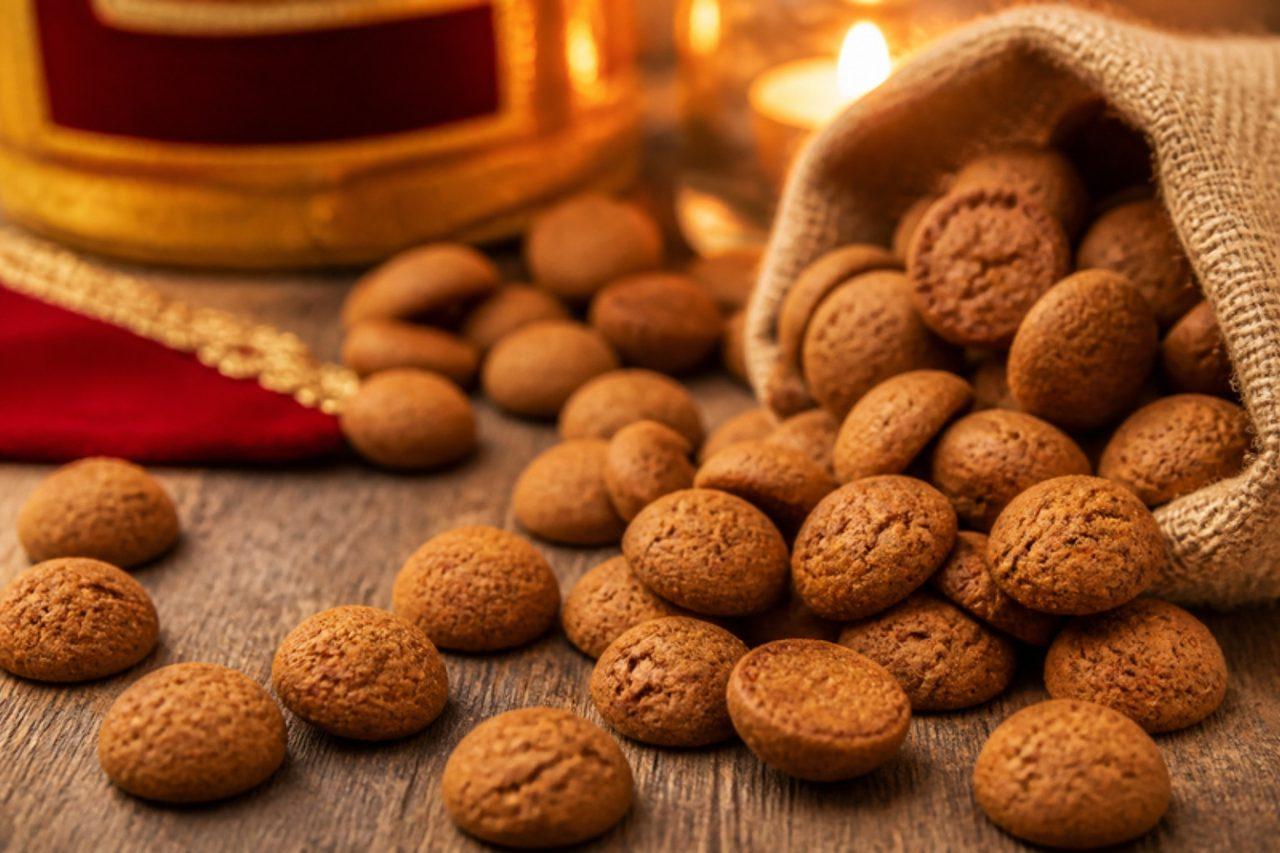
PepernotenAnise and honey spice drops

When Sinterklaas arrives in the Netherlands in mid-November, his helpers throw handfuls of pepernoten into the crowd and children find them in their shoes in the morning, until the big present evening of 5 December. Real pepernoten are the old-fashioned kind: soft, chewy, slightly irregular drops of rye flour, honey, anise and spice, paler and chewier than the crunchy kruidnoten sold today. This egg-free dough comes together in minutes. Chef's tip: let the dough rest for an hour so the honey softens the rye and the drops come out chewy, not cakey.

by KrazyBadal 0 views

OsterpinzeEaster anise brioche

Osterpinze is the Easter bread of Styria, Carinthia and the area around Trieste, a soft, golden brioche dome with three deep cuts on top for the Holy Trinity, so that it opens into a crown as it bakes. The dough is rich with egg yolks and butter and flavoured with anise and lemon; old recipes add a splash of white wine, left out here. It is blessed in the Easter basket on Holy Saturday and eaten on Easter morning with ham, horseradish and eggs, or with butter and jam. Chef's tip: make the three cuts with scissors just before baking, deep enough to reach halfway down, so the crown opens wide.

by KrazyBadal 0 views

KaguyjyWhite corn pudding

On the night of 23–24 June, Paraguayans celebrate San Juan with bonfires, games like walking over hot coals and the 'paso de fuego', and a table of traditional foods, and kaguyjy (also mazamorra) is one of them. It is a soft, creamy pudding of cracked white corn (locro) simmered slowly in water and then milk with sugar or honey, sometimes with orange peel. It is eaten warm or cold. It is gluten free. Chef's tip: soak the corn overnight and cook it until each kernel is tender before adding the milk, or it never turns creamy.

by KrazyBadal 0 views

MarsepeinShaped almond paste

On pakjesavond, the Sinterklaas present evening on 5 December, Dutch children find marzipan in every shape: little pink pigs for luck, pieces of fruit, potatoes rolled in cocoa, and the first letter of their name. Homemade marsepein is simply finely ground almonds kneaded with icing sugar and a little egg white, then coloured and shaped, a lovely job to share with children. This recipe uses pasteurised egg white so it is safe raw. Chef's tip: knead in the colour with a toothpick's worth at a time; marzipan takes colour very quickly.

by KrazyBadal 0 views

Pajagua mascadaBeef and cassava patties

Pajagua mascada is a Paraguayan street-food classic that appears on every table for the San Juan festival on 24 June, when bonfires burn and the night is full of games and traditional food. Minced beef is mixed with mashed cassava, onion, garlic and a little egg and flour, shaped into flat patties and fried until crisp. The name comes from Guaraní and refers to the 'chewing' of old Paraguayan cooks, who made it from leftover meat. Chef's tip: dry the boiled cassava well and remove its woody core, which keeps the patties light and crunchy.

by KrazyBadal 0 views

KalanehWild leek stuffed flatbread

In Kurdistan and Kermanshah, Newroz arrives with the first spring greens on the hillsides, and families gather wild leeks to fold into kalaneh, thin griddle breads cooked over a fire or a hot pan and soaked in melted butter. The dough is plain and soft, rolled very thin around a pile of chopped leek or chives with a little salt and pepper, so the greens steam inside as the bread blisters. Eat it hot, torn into strips, with yogurt and tea at a Newroz picnic. The common mistake is wet greens, which turn the dough soggy and make it tear; dry them well after washing. Chef's tip: brush the butter on the moment the bread leaves the pan so it soaks right in.

by KrazyBadal 0 views

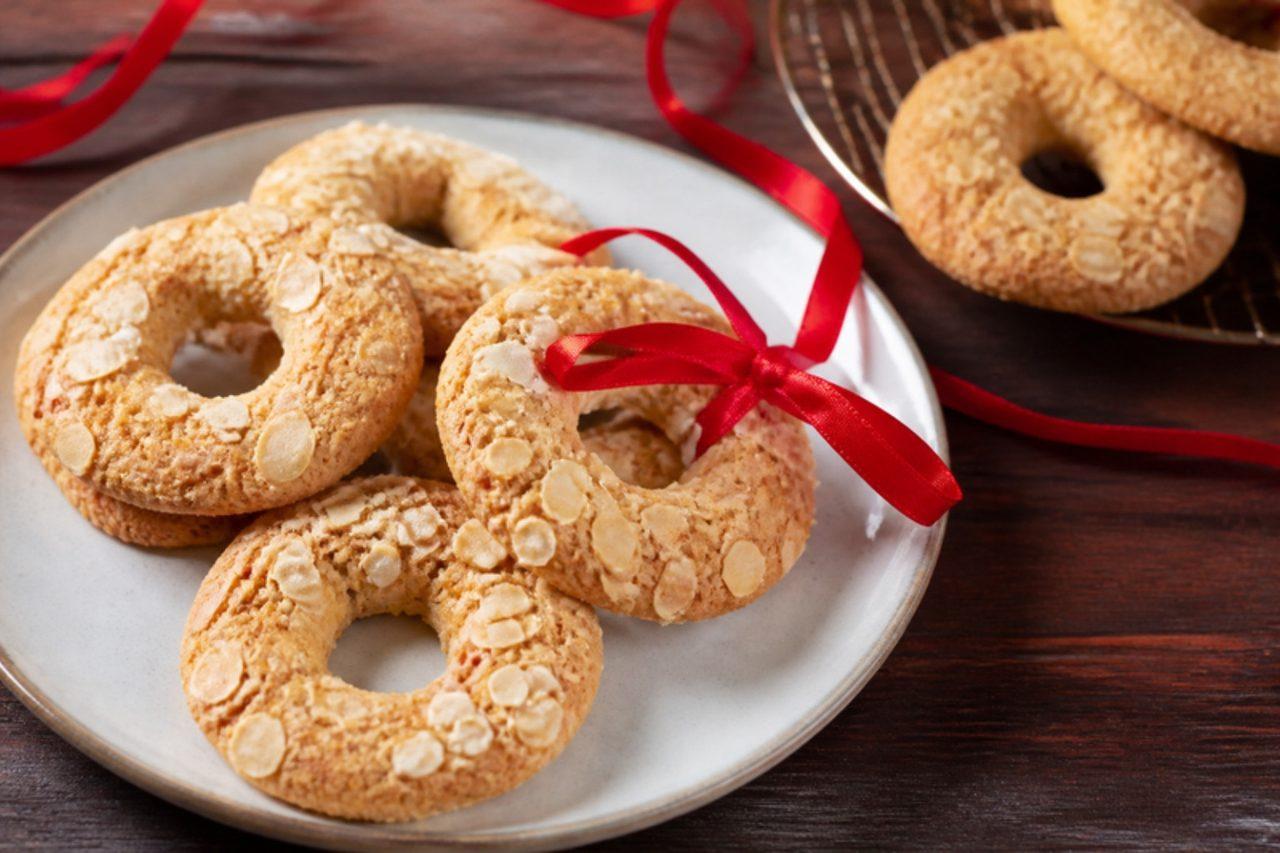
KerstkransjesAlmond butter ring biscuits

In the Netherlands, kerstkransjes are small, ring-shaped butter biscuits topped with flaked almonds and pearl sugar, traditionally threaded with a ribbon and hung on the Christmas tree for children to pick off. They are tender and buttery with a lemony crumb and a crunchy top, and keep well in a tin through the holidays. They take about 45 minutes from start to finish. Chef's tip: punch the centre hole slightly bigger than you want; it shrinks as the biscuits bake.

by KrazyBadal 0 views

DuivekaterLemon Christmas bread

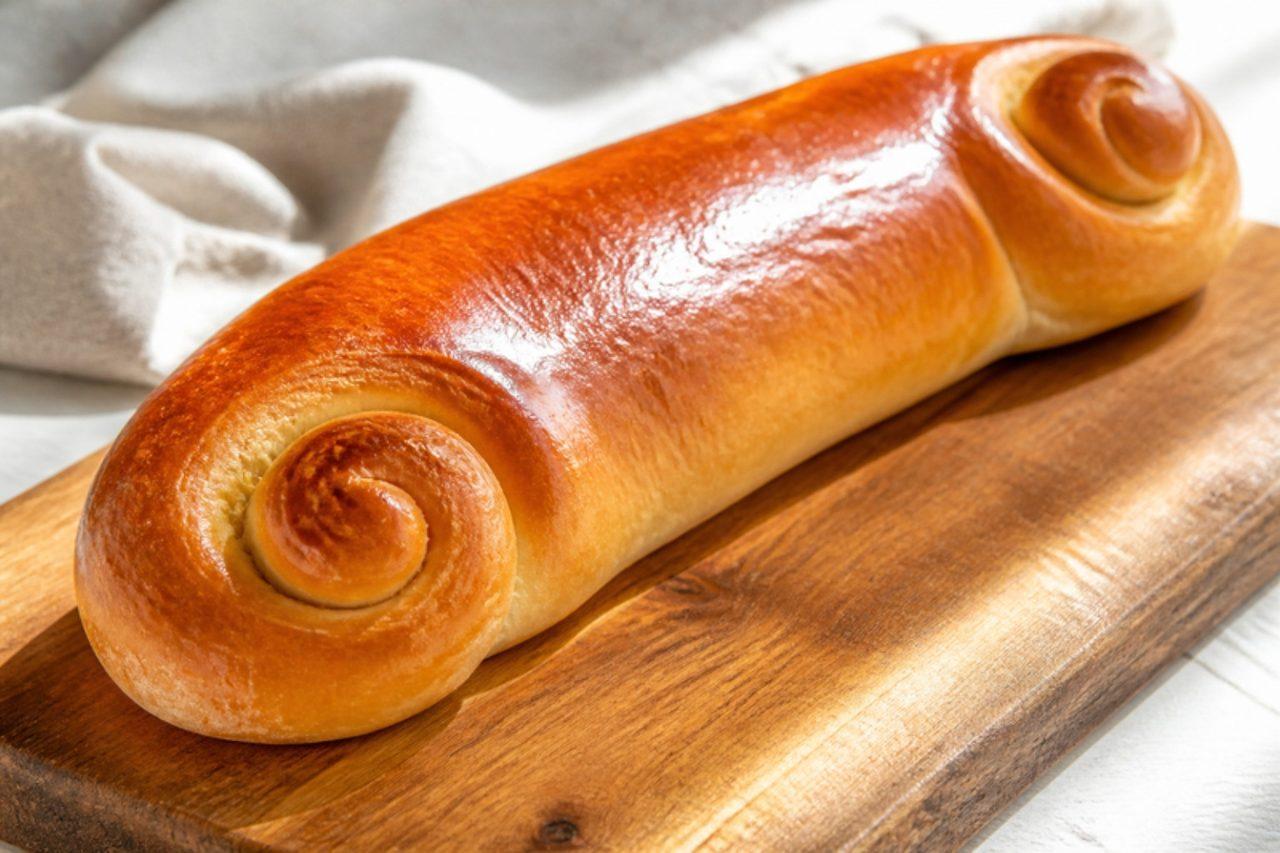
Duivekater is an old festive bread from Holland and Zeeland, baked for St Nicholas, Christmas and New Year's Eve. It is a long, flat, glossy loaf of rich, lemon-scented sweet dough, shaped with cuts at both ends that curl like a bone or a pair of legs; bakers once also made it for church feast days. Slices are eaten with butter. Chef's tip: give the shaped loaf a full second rise before cutting the ends, or the cuts close up in the oven.

by KrazyBadal 0 views

Bruine bonensoepBrown bean soup

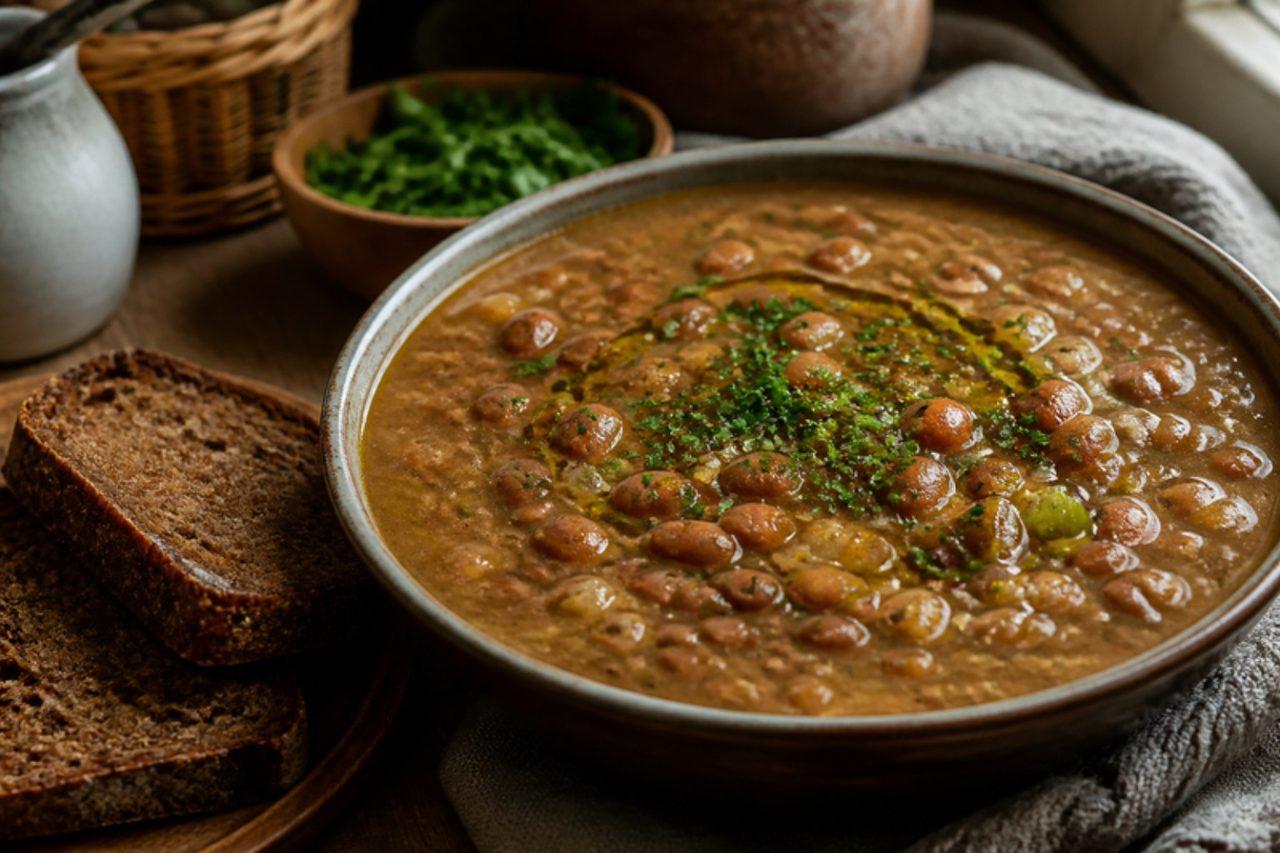
Bruine bonensoep is a Dutch winter staple, simmered in homes from Groningen to Zeeland on dark evenings between November and March and eaten with thick slices of rye bread. Brown beans are cooked with onion, leek, celery and carrot, then about half of the pot is blended, so the soup is velvety but still full of whole beans. Many families add bacon or smoked sausage; this version is vegetarian and vegan, with smoked paprika and a little soy sauce standing in for the smoky, savoury depth. A bowl gives about 22 g of protein from the beans. Brown beans are a type of kidney bean, so after soaking for 12 hours (not counted in the times) they must boil hard for 10 minutes. The most common mistake is blending the whole pot, which turns it into a heavy purée with no texture. Chef's tip: a pinch of ground cloves with the bay leaf gives the old-fashioned Dutch flavour.

100 minDutchSoupsVegan
by KrazyBadal 0 views

BanketstaafAlmond paste puff pastry log

From mid-November, when Sinterklaas arrives by boat, Dutch bakers fill their windows with banketstaven: long logs of buttery puff pastry with a thick seam of soft almond paste inside. They carry on through Christmas, and in many families a banketletter, the same pastry shaped into the first letter of a child's name, is part of the 5 December presents. Sliced thick, it is flaky outside and moist, sweet and marzipan-like inside; serve it with coffee or hot chocolate. Leaving a weak seam is the mistake that lets the almond filling burst out in the oven. Chef's tip: make the almond paste a day ahead and rest it in the fridge: the almonds absorb the egg and it bakes up softer and more fragrant.

by KrazyBadal 0 views

TopfengolatschenSweet quark puff pastry squares

A Topfengolatsche is what Viennese office workers grab from the bakery on the way in, and what grandparents order with a Melange in a coffee house on a Sunday afternoon. The corners of a puff pastry square are folded over a lemony, vanilla-scented filling of Topfen (Austrian quark) with plump raisins, and the top gets a thin white glaze. It is flaky, light and not too sweet. Raisins are sometimes soaked in rum; warm water or orange juice works just as well, and the recipe below is alcohol-free. Wet quark is the classic problem, because it turns the filling runny and it leaks out in the oven. Chef's tip: hang the quark in a sieve lined with a clean cloth for an hour, or squeeze it, until it is as thick as soft cream cheese.

by KrazyBadal 0 views

Tosti ham-kaas (Dutch ham and cheese toastie)

In the Netherlands the tosti is what children ask for after school, at the swimming-pool café and at Saturday lunch: two thin slices of white bread with ham and young Gouda, pressed in a tosti iron until crisp and golden and the cheese oozes at the edges, then dunked in ketchup. It is ready in ten minutes. It contains gluten (wheat) and milk. Chef's tip: butter the outside of the bread, not the inside, so it browns evenly and doesn't stick.

by KrazyBadal 0 views

Krentenbollen (Dutch currant buns)

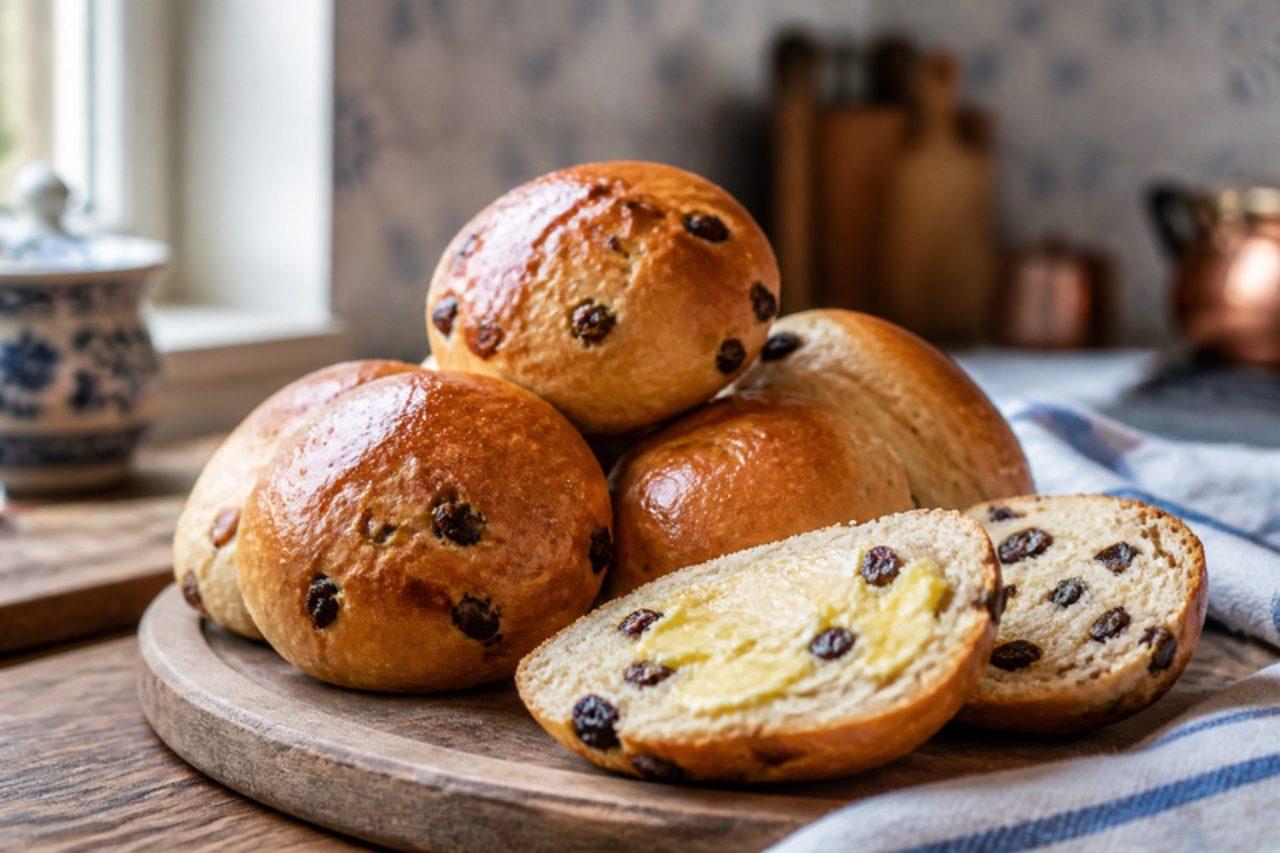
In the Netherlands a krentenbol, buttered and sometimes topped with a slice of Gouda, is packed in schoolbags for the morning break and eaten with milk after school. The buns are soft, slightly sweet and so full of currants and raisins that there is barely room for the bread. This version adds little sugar, letting the dried fruit sweeten it. It contains gluten and milk. Chef's tip: soak the dried fruit in hot water before kneading it in; dry fruit pulls moisture from the dough and burns on the surface.

by KrazyBadal 0 views

Beschuit met muisjesRusks with aniseed sprinkles

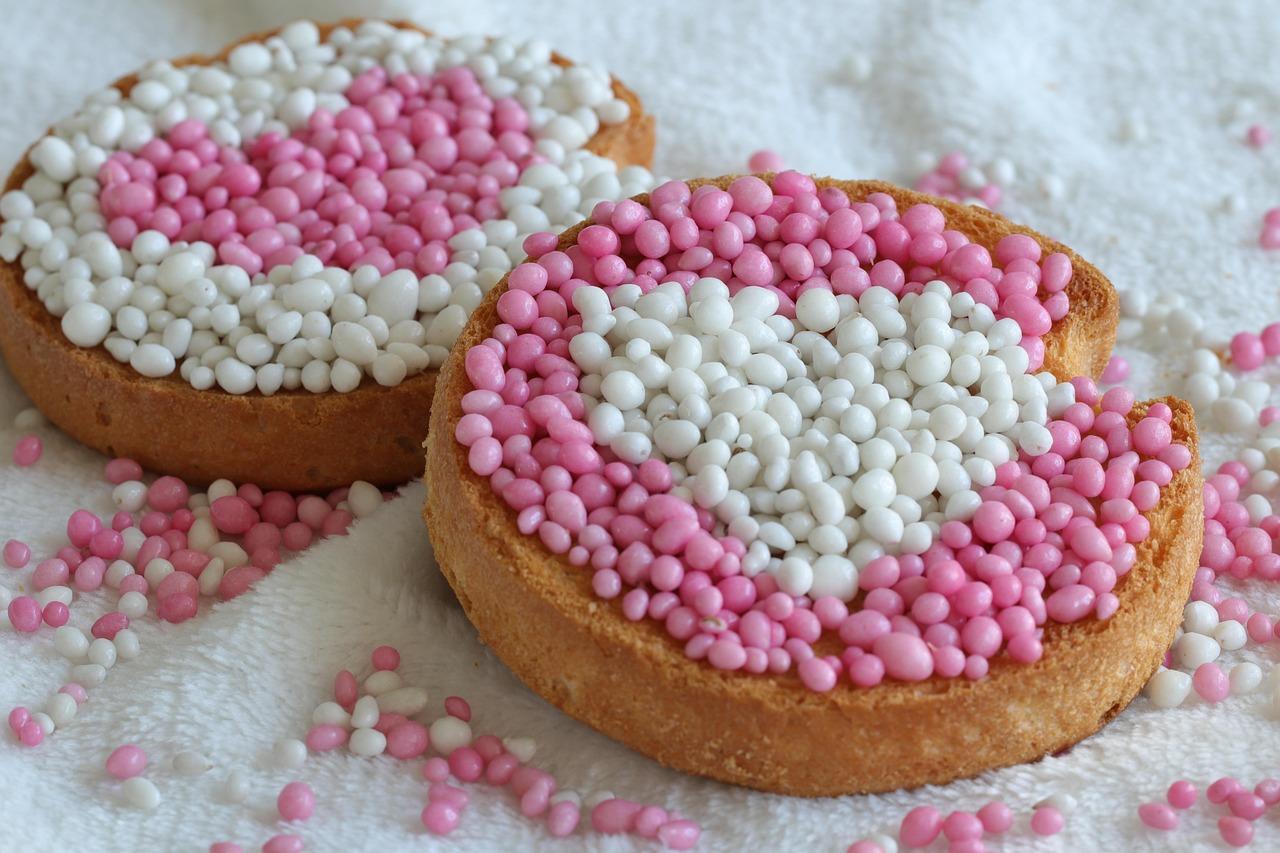
When a baby is born in the Netherlands, visitors are greeted with beschuit met muisjes: round, crisp rusks spread with butter and covered in sugared aniseed sprinkles, pink for a girl, blue for a boy, or the older white-and-pink or white-and-blue mix. Brothers, sisters and school friends love handing them round, and the sprinkles are also a favourite on bread at breakfast. Aniseed was once thought to help new mothers. It contains gluten and milk. Chef's tip: butter the rusks generously right to the edge, or the sprinkles roll off; that is why the Dutch say to 'press, not scatter'.

by KrazyBadal 0 views

Kärntner ReindlingCinnamon raisin yeast cake

Carinthia's Easter loaf takes its name from the Reindl, the round, deep pan it is baked in, and in southern Austria no Easter basket goes to church without one. Inside the golden yeast crust is a spiral of butter, cinnamon sugar and plump raisins, so every slice shows a dark swirl. Locals eat it two ways: sweet with coffee on Easter morning, or alongside the savoury Easter platter with horseradish. Many bakers soak the raisins in rum overnight; warm water or tea works just as well and keeps it alcohol-free. A dry, crumbly Reindling usually means too much flour went in during kneading, so keep the dough soft and only lightly floured. Chef's tip: butter the pan well and dust it with sugar, which caramelises into a thin crunchy shell.

by KrazyBadal 0 views

BoterkoekButter cake

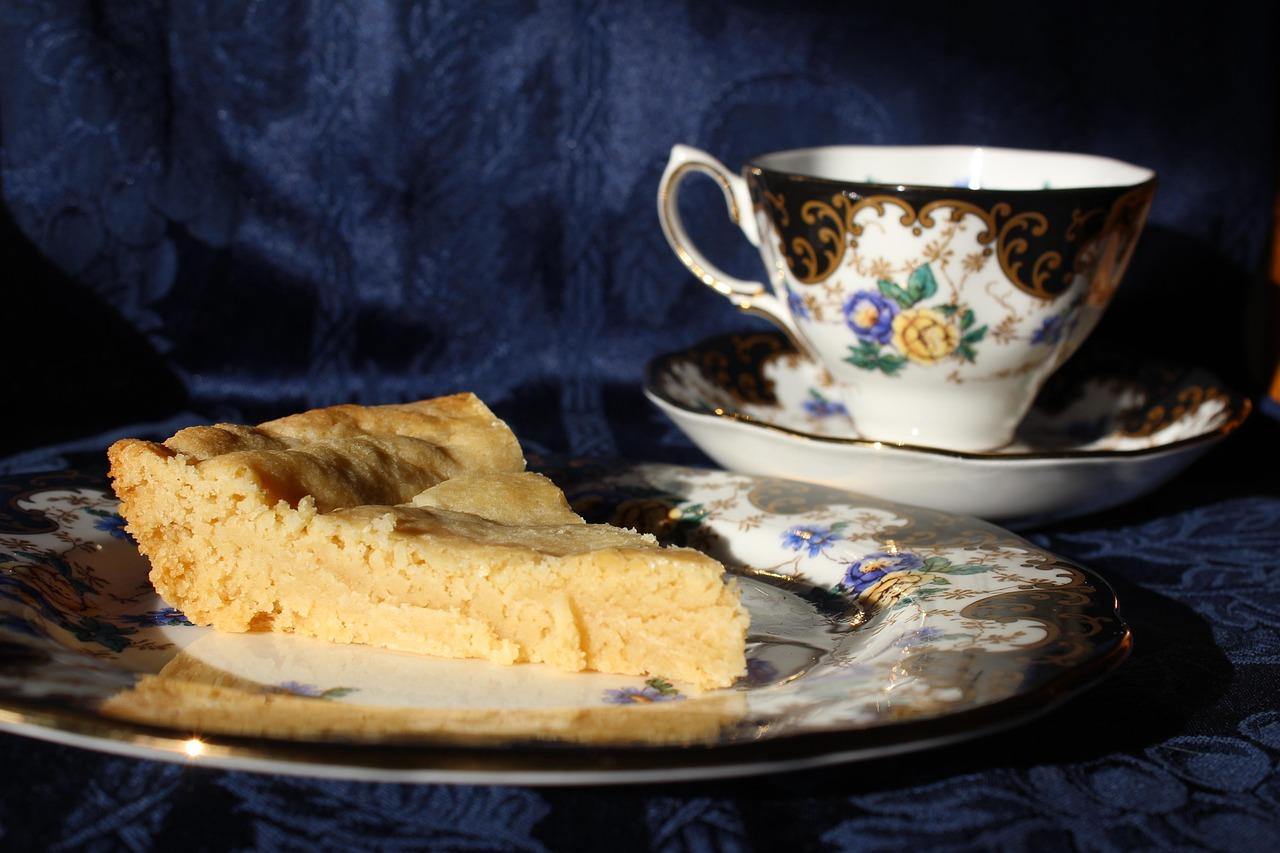
Boterkoek sits on the counter of almost every Dutch bakker, from Amsterdam to small towns in Brabant: a round, flat butter cake, scored in a criss-cross on top, glossy with glaze, dense and fudgy in the middle and crisp at the edges. It is cut into small wedges, because it is rich, and eaten with a cup of coffee at elf uur, the eleven o'clock break, or offered to visitors. The dough itself has no egg; only the top is brushed with beaten egg for shine (milk works too, though the colour is paler). Overbaking is the classic mistake: it should come out golden but still soft in the centre, so it sets fudgy, not dry. Chef's tip: use salted butter, or add the pinch of salt; it is what stops boterkoek tasting merely sweet.

by KrazyBadal 0 views

OntbijtkoekSpiced rye breakfast cake

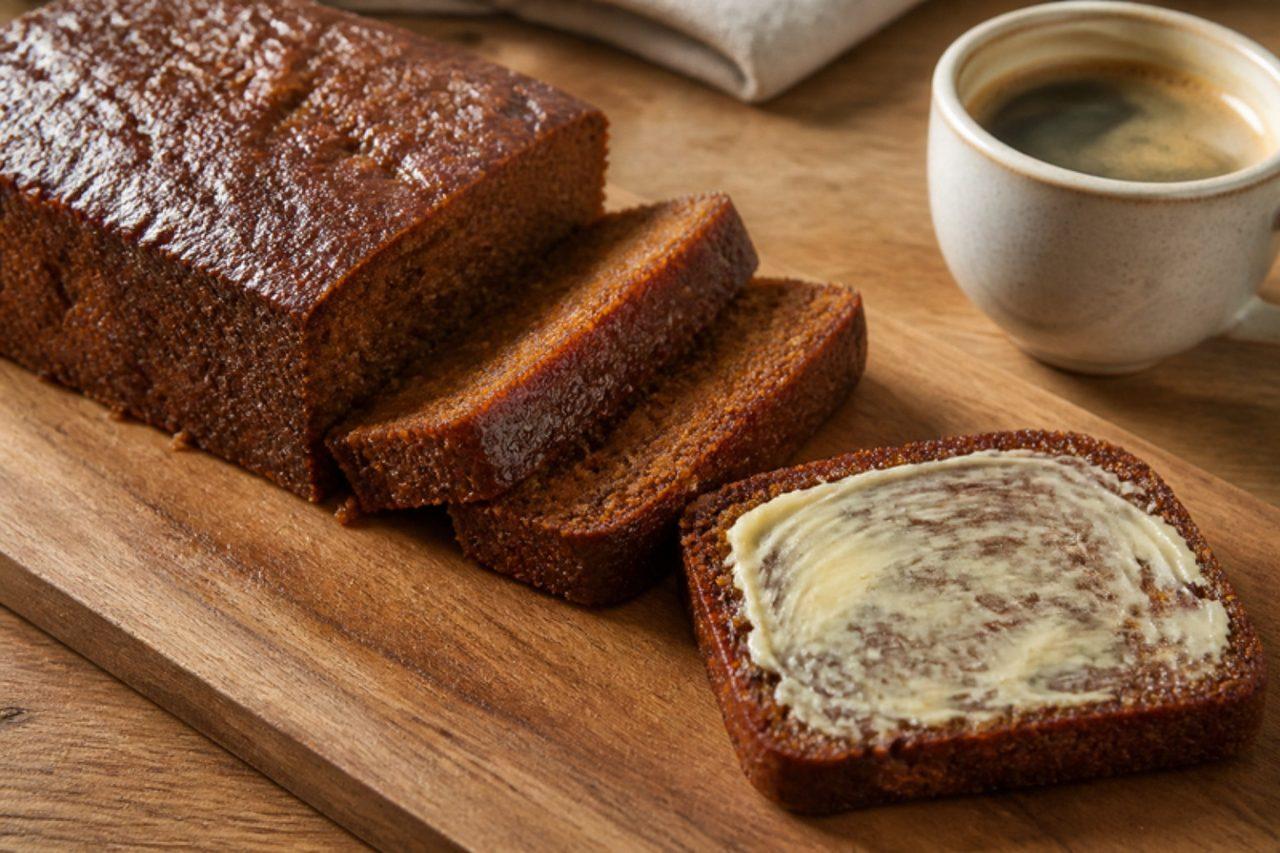
Ontbijtkoek means 'breakfast cake', and in Friesland and Groningen, where the best-loved versions come from, a thick slice spread with butter is still a normal start to the day or a mid-morning snack with coffee. The loaf is dark, sticky and springy, made with rye flour and syrup and scented with the Dutch spice mix koekkruiden: cinnamon, cloves, ginger, nutmeg and cardamom. It contains no egg and no butter in the batter, and it gets better after a day or two wrapped up. Baking it too hot is the usual mistake; the outside goes bitter before the middle sets, so bake it low and slow. Chef's tip: wrap the loaf in cling film while it is still slightly warm and leave it overnight; it softens into the classic tacky, chewy crust.

by KrazyBadal 0 views

Showing 24 of 207 recipes

Show more recipes

Page 1 of 9