Skip to content
Recipes

All recipes

Vegetarian, or something you can't eat? Set your diet once and we'll hide recipes that don't fit.

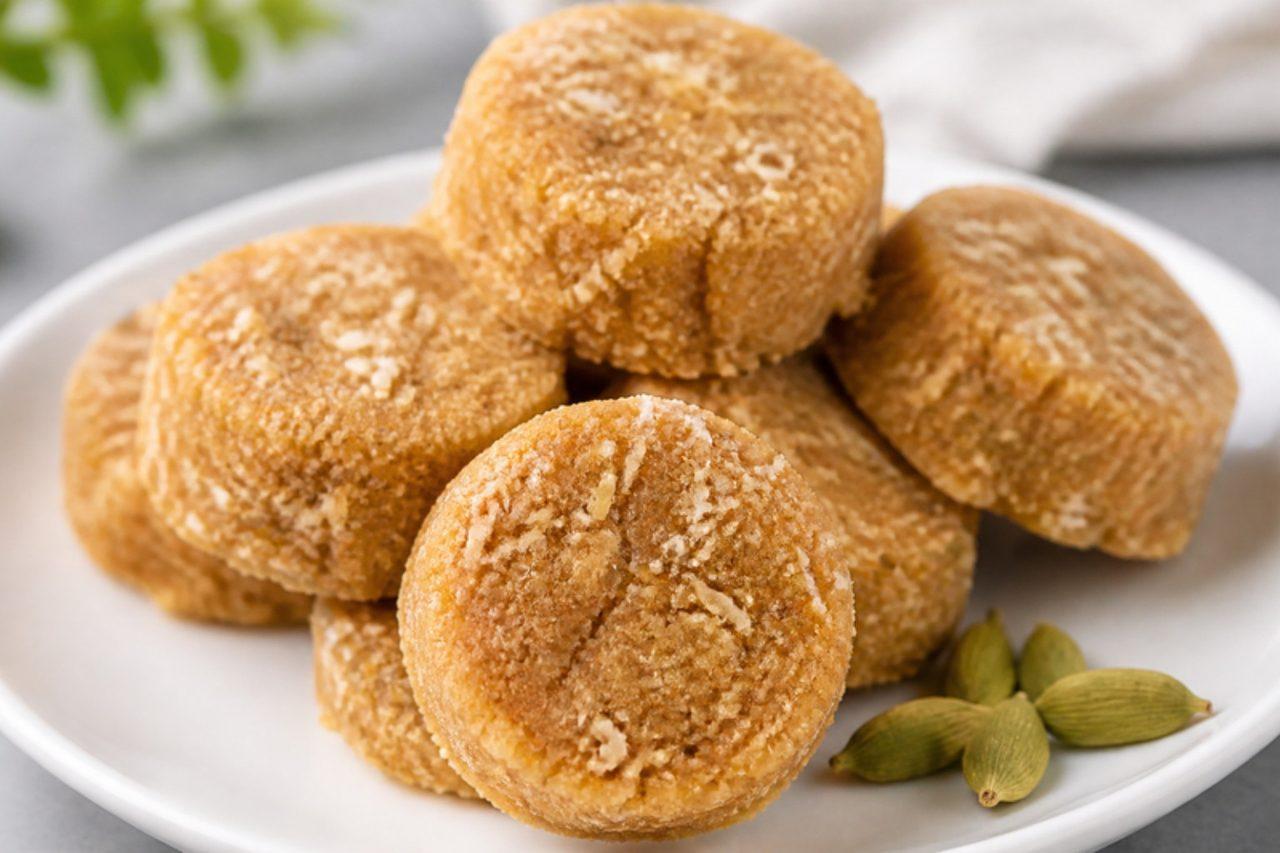
PinacaRice flour, jaggery and coconut cakes

Pinaca is one of the oldest Goan Christmas sweets in the kuswar tray, made in the weeks before Christmas from three things: rice flour roasted until golden and nutty, jaggery and freshly grated coconut. They are pressed into small cakes or squares and have a soft, crumbly, toffee-like bite. They are vegan and gluten free. Chef's tip: take your time roasting the rice flour, as it is the roasting that gives pinaca its flavour, but stir constantly because it burns at the edges.

by KrazyBadal 0 views

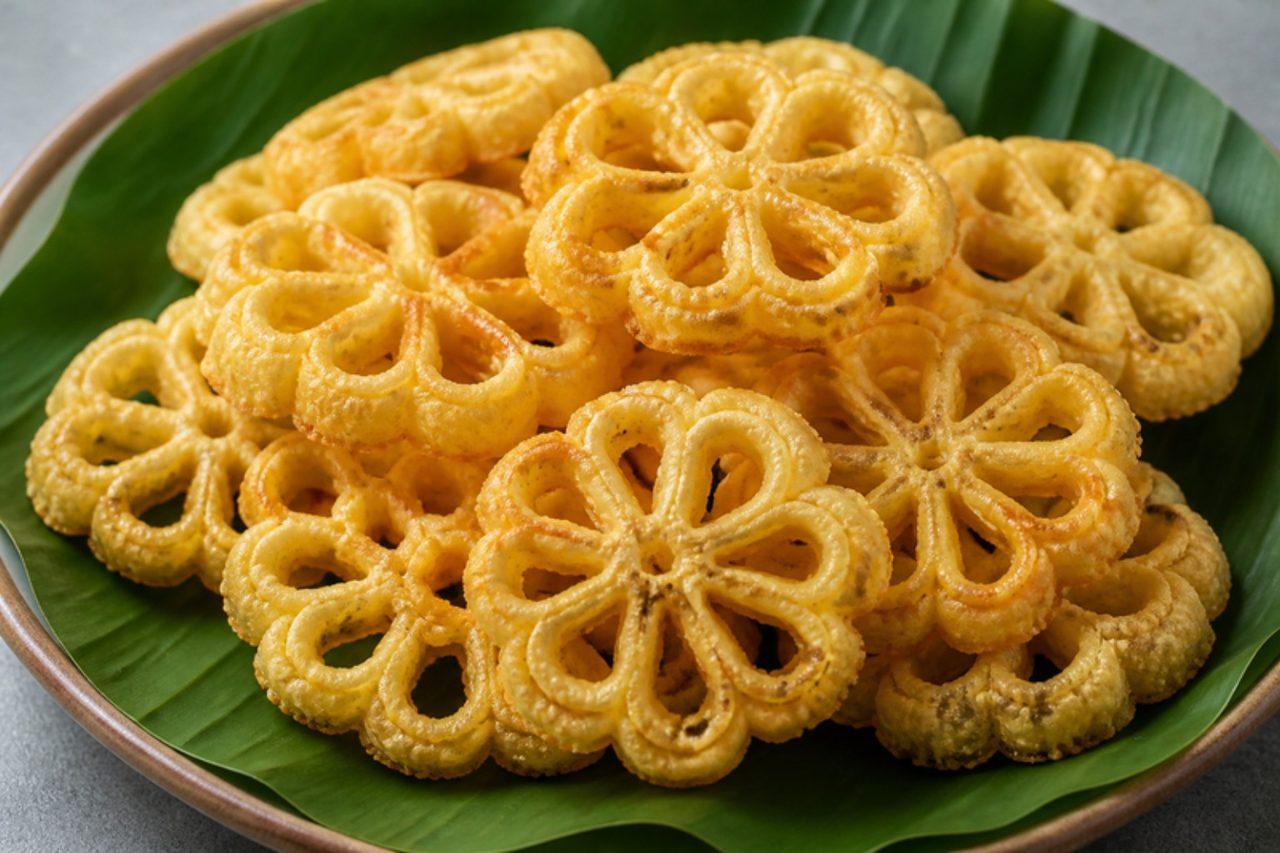
AchappamFried rose cookies

Achappam, the rose cookie, is a Christmas staple in Kerala's Syrian Christian and Latin Catholic homes, fried in big batches in December and offered to neighbours of every faith. A thin batter of rice flour, egg, coconut milk and sugar, scented with sesame or cumin, clings to a flower-shaped iron, which is dipped into hot oil until the lacy rose drops off. They keep for weeks in an airtight tin. You need an achappam (rosette) mould. Chef's tip: heat the mould in the oil each time; if the batter slides off, the mould is too cool, and if it won't release, it's too hot.

by KrazyBadal 0 views

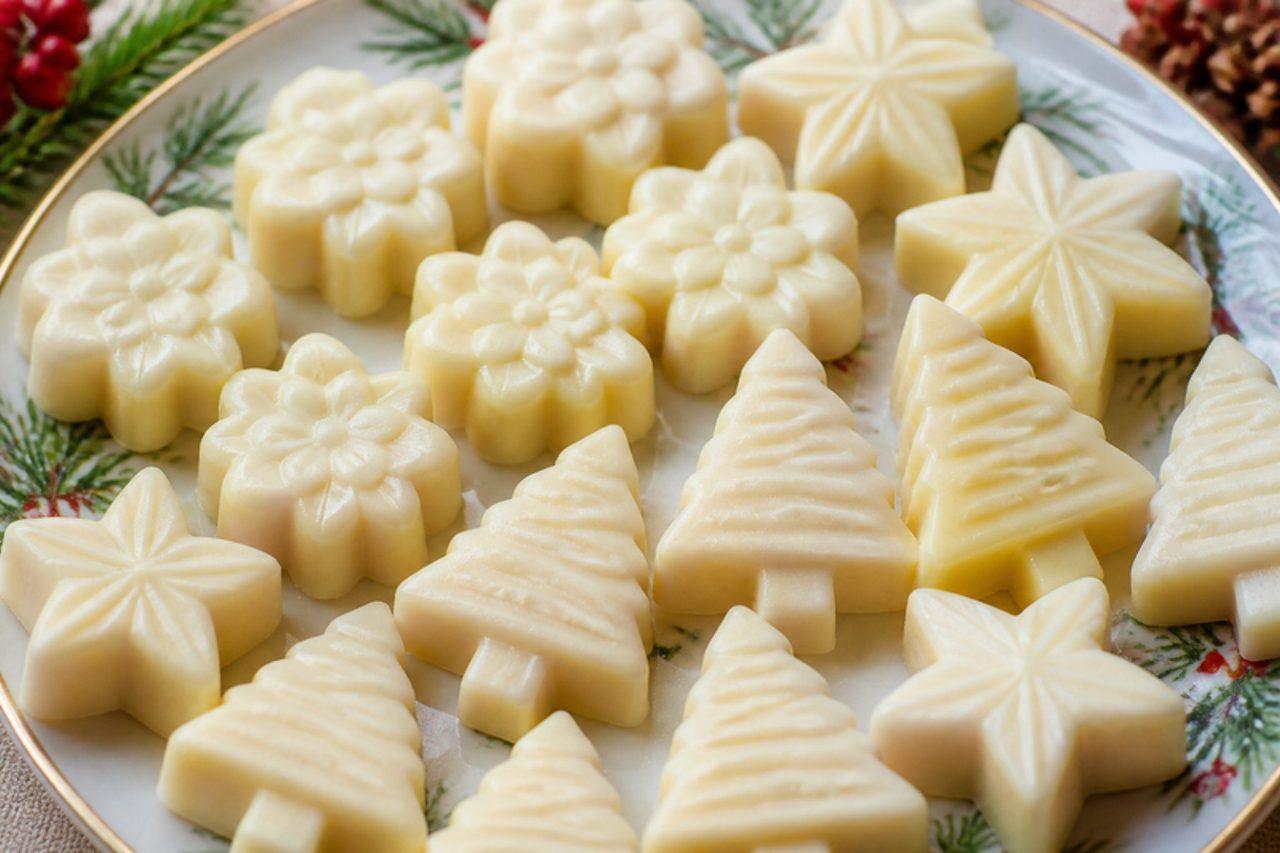
Goan milk creamMilk and cashew sweet

Milk cream is a pale, fudgy Goan Christmas sweet, set in pretty little moulds of flowers, stars and Christmas trees and laid on the kuswar platter beside neureos, bebinca and kulkuls. Whole milk is cooked down with sugar and ground cashews (and sometimes semolina) until it turns into a smooth paste, a little like Indian peda but softer. It is gluten free and very rich, so pieces are small. Chef's tip: dust the moulds with sugar, not flour, so the sweets pop out cleanly with crisp detail.

by KrazyBadal 0 views

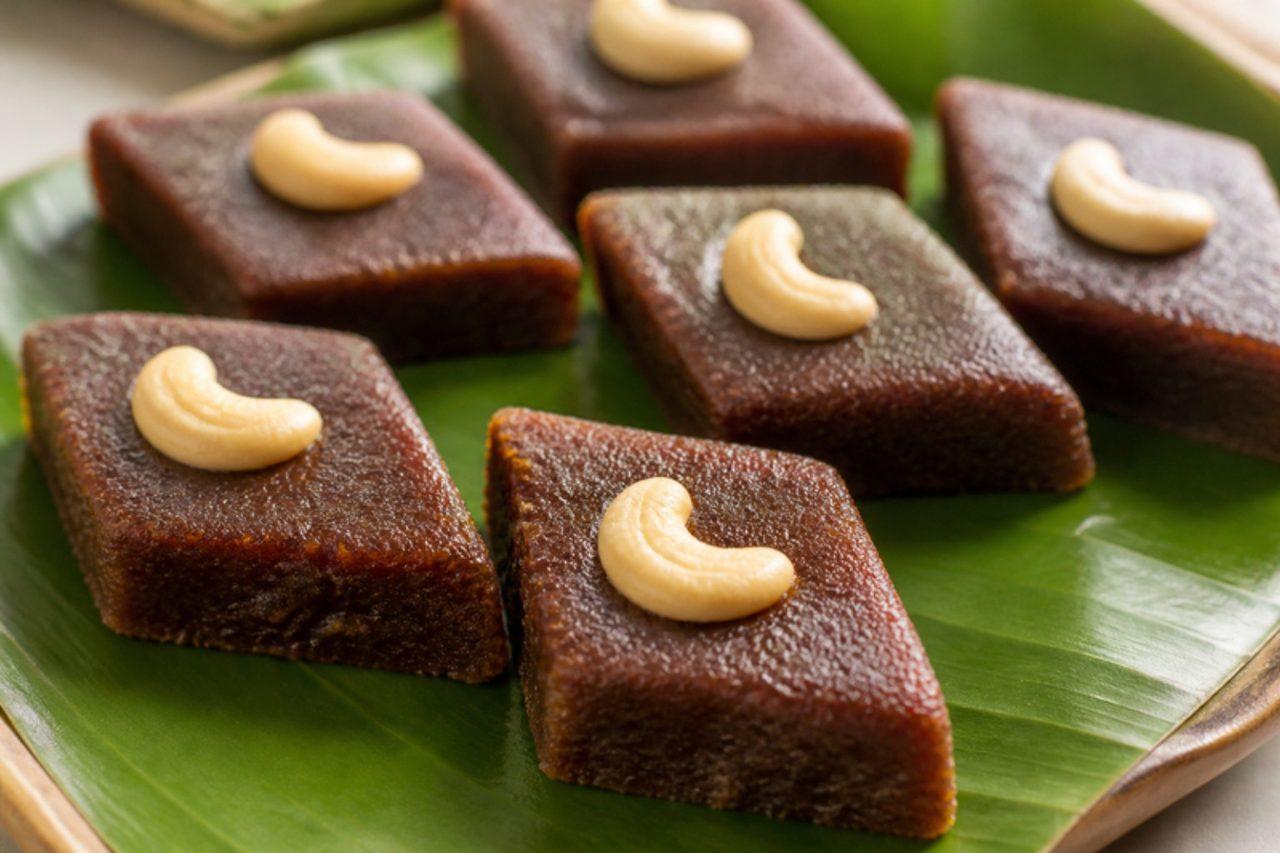
KokadCoconut, jaggery and semolina squares

Kokad is one of the sweets in the Goan Christmas kuswar, the tray of homemade sweets Catholic families swap with neighbours in the days around 25 December. Freshly grated coconut is cooked with jaggery, semolina and ghee until it pulls together into a dark, fudgy mass, then pressed into a tray, scored into diamonds and topped with cashews. It is chewy, caramel-sweet and fragrant with cardamom. Chef's tip: roast the semolina in ghee first, until it smells nutty, as raw semolina makes kokad pasty.

by KrazyBadal 0 views

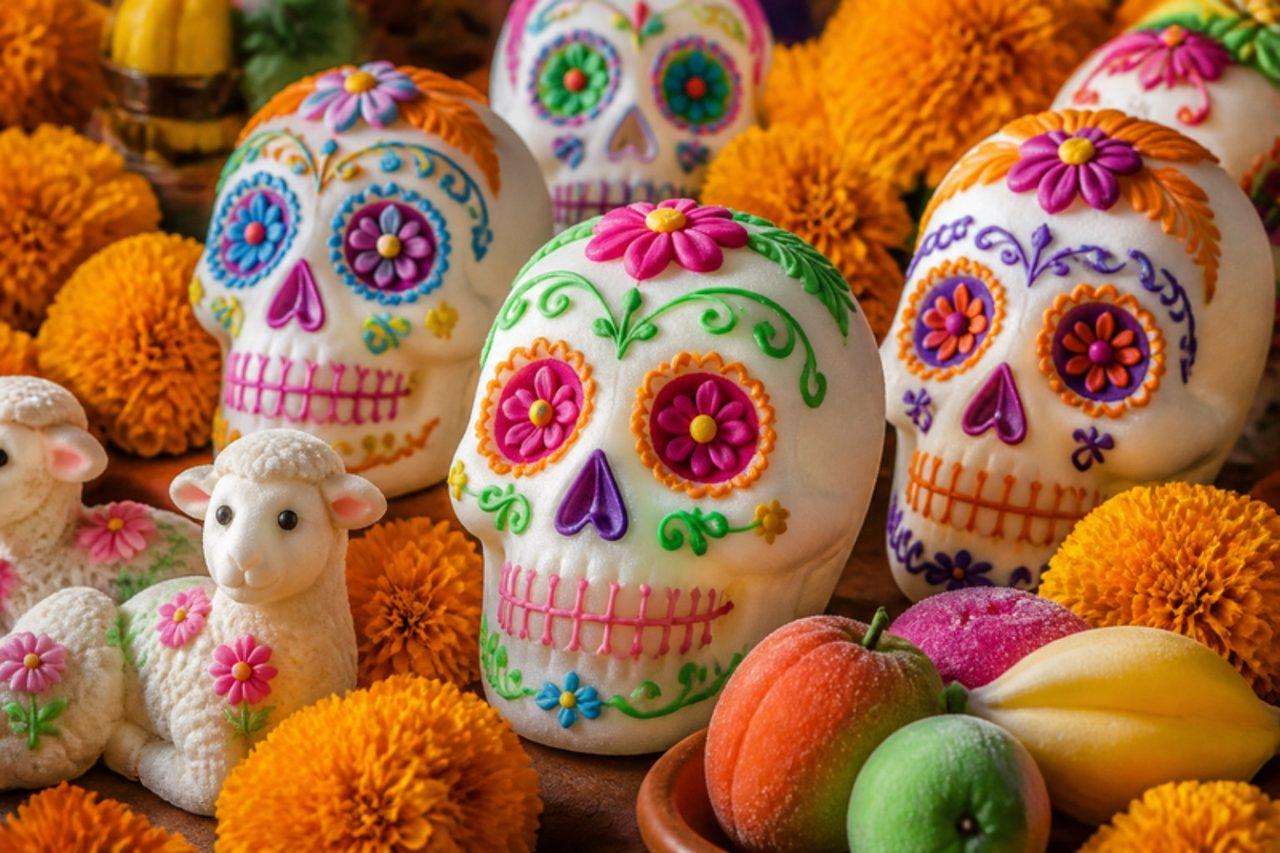
Alfeñique (Toluca Day of the Dead sugar-paste figures)

Each October the arcades of Toluca, in the State of Mexico, fill with the Feria del Alfeñique: stalls of little skulls, lambs, coffins, baskets and fruit, all modelled from sugar paste and painted bright colours for the Day of the Dead altars of 1 and 2 November. Children buy a skull with their own name on it; families place them on the ofrenda beside marigolds, candles and pan de muerto. The paste is snow-white, smooth and brittle once dry, with a clean sugar and lime taste. The old Toluca paste is egg-free, kneaded with chautle, a gum from an orchid bulb; here gum tragacanth plays that part, making the paste stretchy enough to model and helping it dry hard. The decorating icing is egg-free too, made from icing sugar, lime juice and a pinch of the same gum. Chef's tip: work the syrup while it is warm and keep the paste wrapped; the common mistake is letting it sit uncovered, so it dries out and cracks as you shape it.

by KrazyBadal 0 views

Quelites guisadosSautéed wild greens

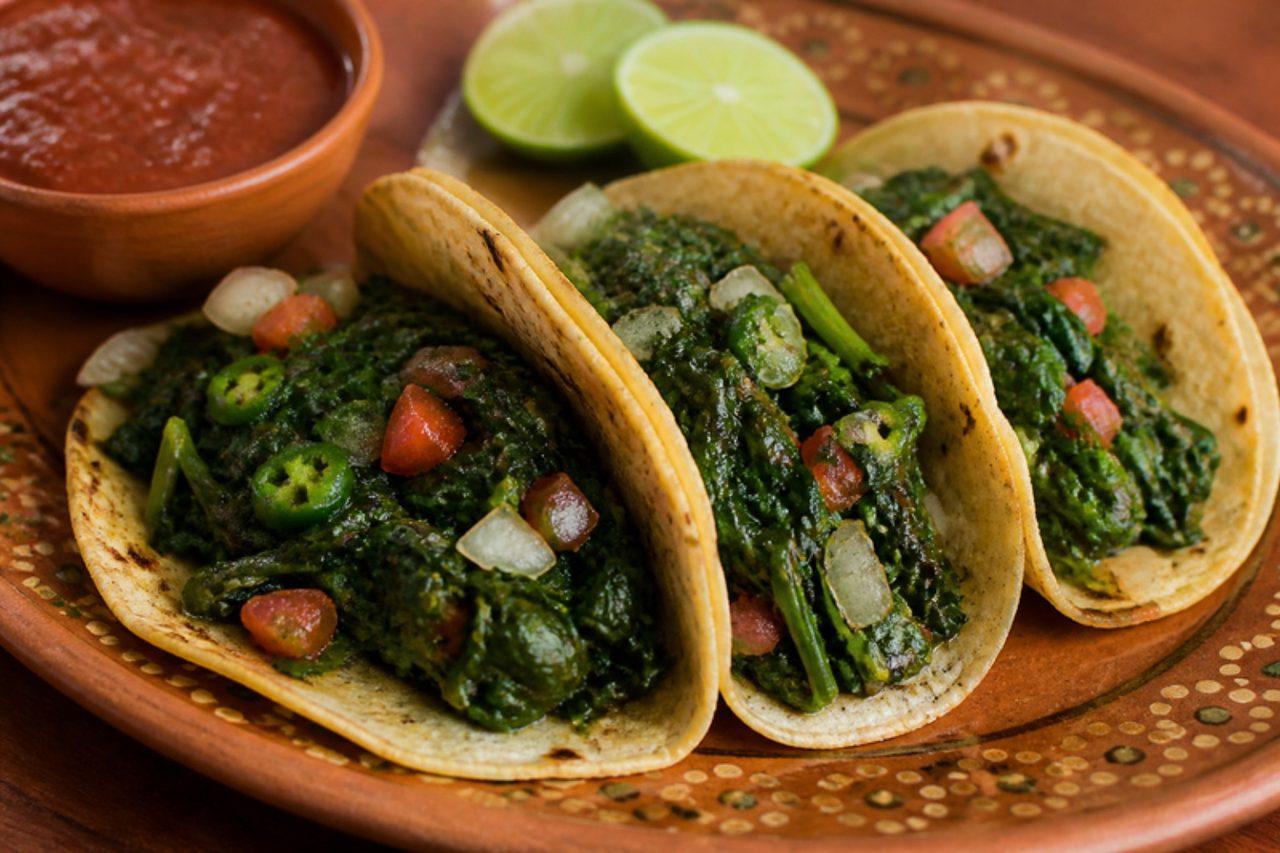
Quelites is the Nahuatl-rooted word for the edible wild greens of central Mexico, such as quintoniles (amaranth), verdolagas (purslane) and huauzontle, and in the markets of Mexico City, Puebla and Tlaxcala they are sold by the bunch in the rainy season and cooked this way for everyday lunches. The greens are blanched, then sautéed with onion, garlic, tomato and serrano chilli until soft and savoury, and piled into hot corn tortillas with salsa and, if you like, crumbled fresh cheese. Without cheese it is vegan, with about 6 g of protein per portion including two tortillas. The common mistake is leaving the greens wet: they steam and turn watery instead of frying. Spinach, chard or amaranth leaves work if you can't find quelites. Chef's tip: cut the serrano in half lengthways and fry it with the onion; it flavours the oil gently and you can lift it out if it's too hot.

by KrazyBadal 0 views

Bhapa doi (Bengali steamed sweet yogurt)

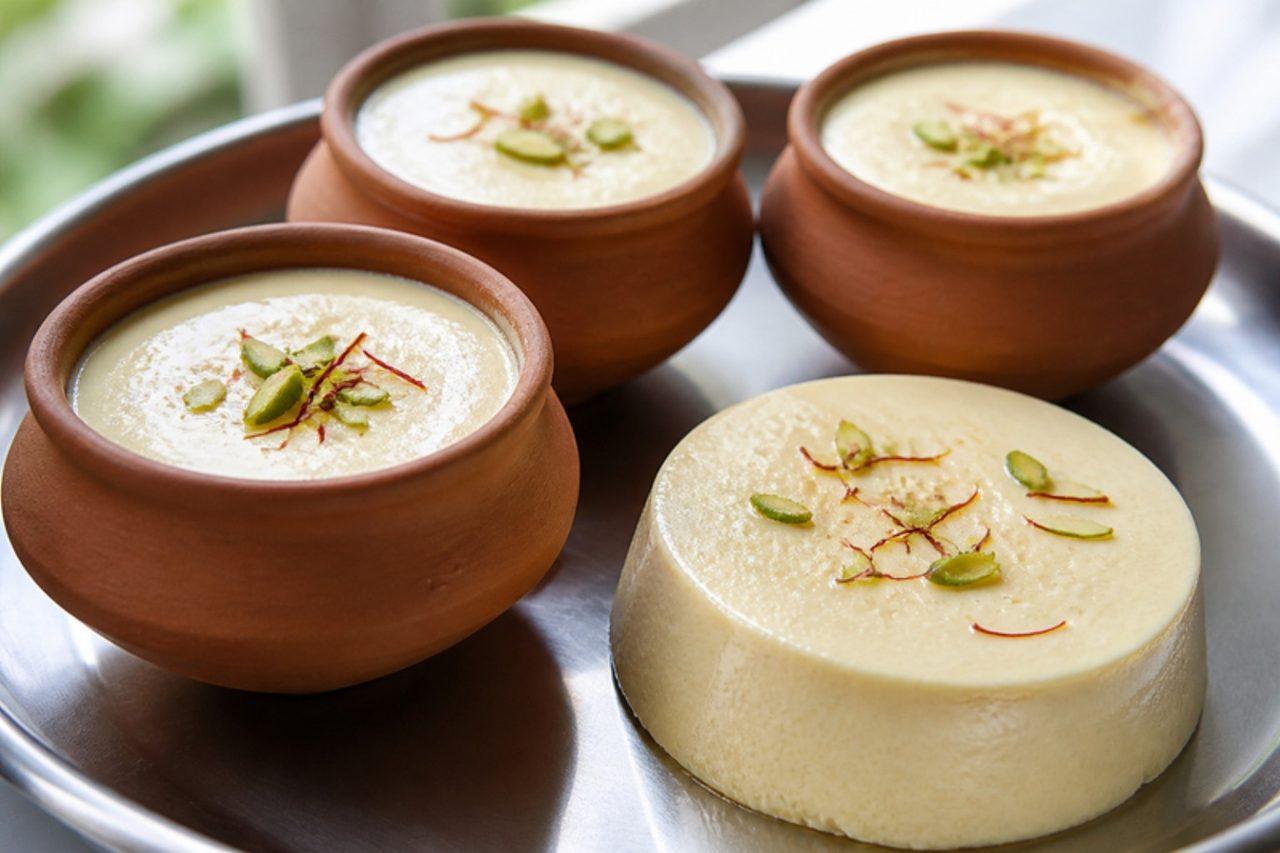
Bhapa doi means steamed yogurt, and it's the dessert Kolkata households make when there's no time to visit the sweet shop for mishti doi. It's especially popular on Jamai Shashthi and at Poila Baisakh, the Bengali New Year, but it appears at Sunday lunches all year. Thick hung yogurt is mixed with condensed milk and a little milk, scented with cardamom, then gently steamed until it sets like a soft cheesecake without a crust. Chilled, it's dense, smooth and tangy-sweet. Serve it plain in small bowls, topped with pistachios, or with ripe mango in summer. There is no egg here: the milk proteins in the yogurt and condensed milk set with gentle heat, just as eggs would set a baked custard, and the condensed milk adds body and sweetness. Chef's tip: steam it on a low, gentle simmer; the common mistake is a fierce boil, which makes the yogurt weep whey and turn grainy.

by KrazyBadal 0 views

Tam mak thuaPounded long bean salad

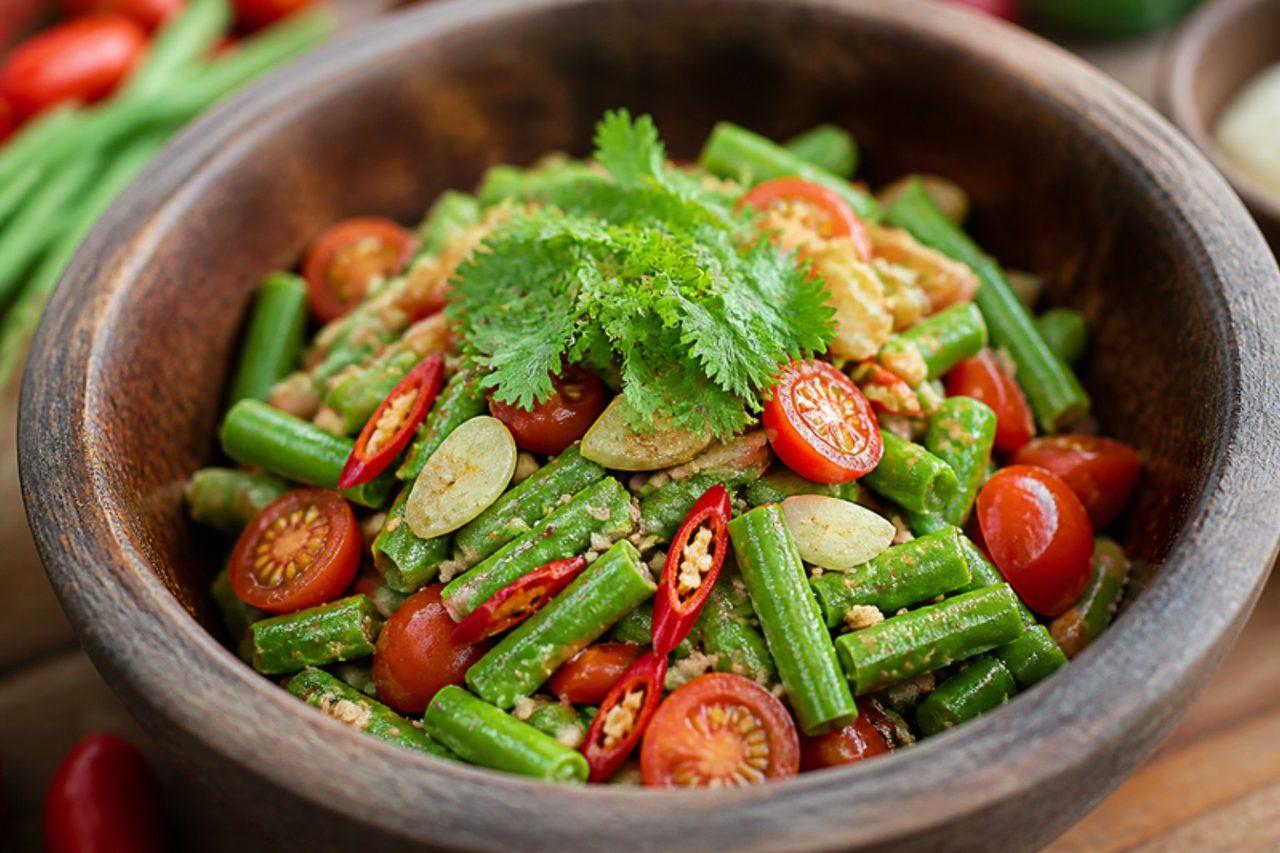
In Vientiane and Luang Prabang, tam mak thua is the everyday alternative to green papaya salad, pounded to order at market stalls and at home for lunch with sticky rice and grilled food. Raw long beans are bruised in a clay mortar with garlic, chilli, tomato and lime until they soak up the juices, giving a crunchy, sour-hot salad with a grassy sweetness. Lao cooks season it with fish sauce and padaek (fermented fish); this vegetarian version uses tamari (gluten-free soy sauce) and a few crushed peanuts for savouriness. It gives about 5 g of protein a portion, so serve it as a side to tofu or eggs and sticky rice. The most common mistake is cutting the beans too long or pounding too hard: bruise short pieces until they split, but don't mash them to pulp. Chef's tip: pound the garlic and chilli first, then the beans, and only add the tomato and lime at the end so the salad stays crisp.

15 minLaoSaladsVeganGluten freeSpicy
by KrazyBadal 0 views

Bhaja muger dalRoasted moong dal with ginger

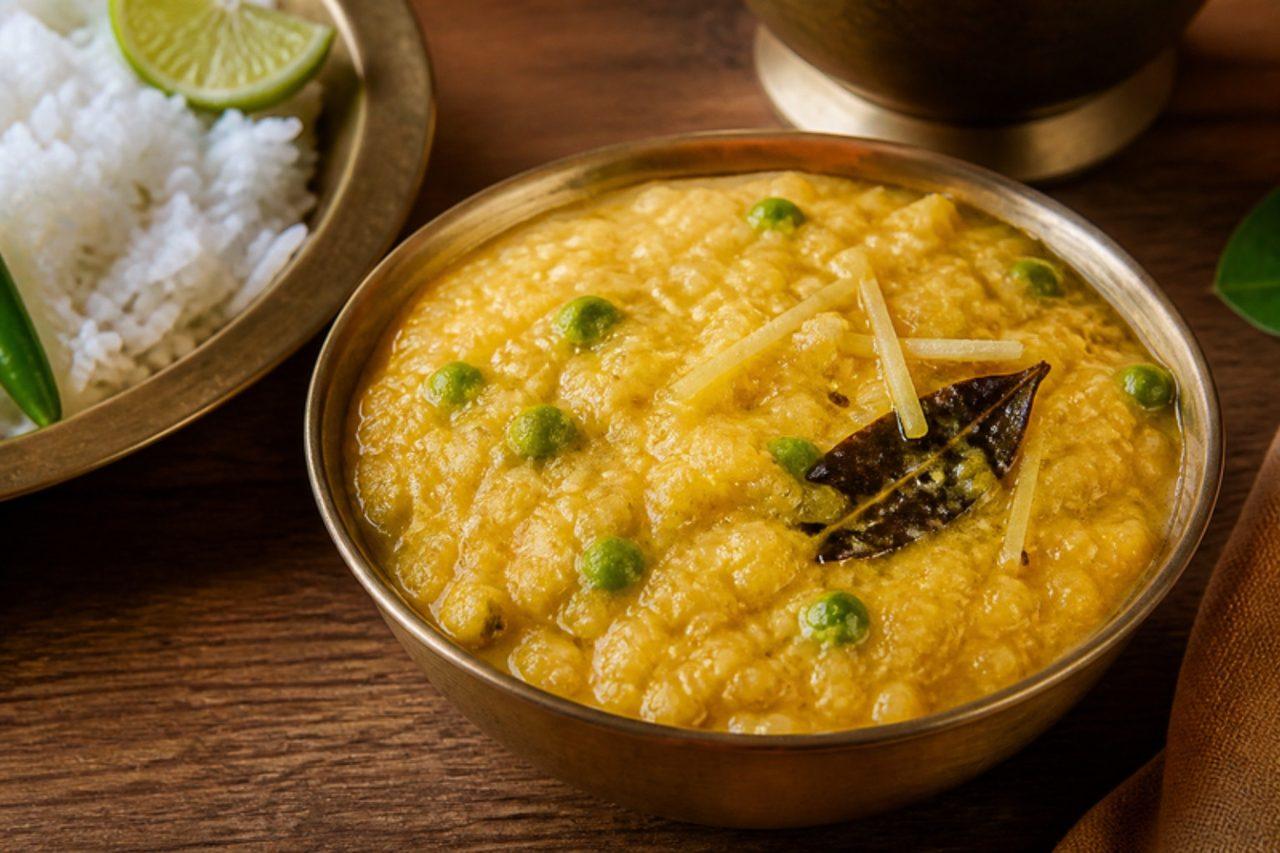
Bengali households in Kolkata make bhaja muger dal on winter weekdays, and it is a fixture of the vegetarian bhog served at Durga Puja and Saraswati Puja. The moong is dry-roasted in a heavy pan until it smells nutty, then cooked soft with ginger and green peas and finished with ghee, bay leaf and a whisper of sugar. The roasting gives it a toasty, almost sweet depth that plain moong dal never has. A portion gives about 21 g of protein from the moong and peas, for about 360 kcal. Serve it with rice and a fried vegetable such as begun bhaja. The most common mistake is roasting over too high a heat: the outside browns while the inside stays raw, and the dal tastes burnt and never softens evenly. Chef's tip: roast only until the dal is a couple of shades darker, pale gold, and you can smell it from the next room; stop the moment you see the first brown spots.

by KrazyBadal 0 views

Gil-e-firdaus (Hyderabadi bottle gourd and rice pudding)

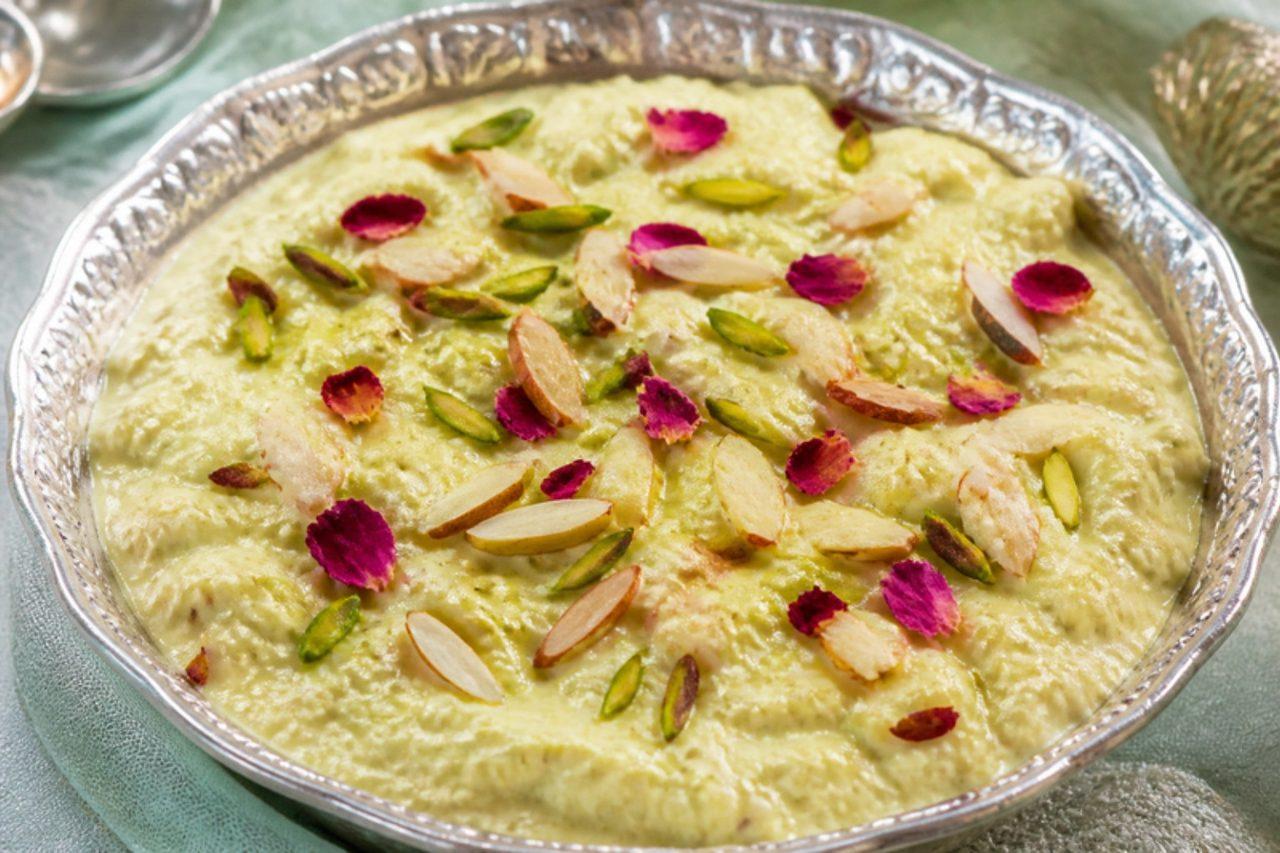
The name means 'clay of paradise', and gil-e-firdaus belongs to the grand dessert tables of Hyderabad, served at weddings, at Eid and during Ramadan iftars alongside double ka meetha. Grated bottle gourd (lauki) is softened in ghee, then cooked in milk with coarsely ground rice and crumbled khoya until thick, pale green and fragrant with cardamom and rose water. It's thicker than a kheer, creamy and gently grainy, with soft strands of gourd and plenty of almonds and pistachios. Serve it warm in winter or chilled in summer, in small bowls. It is naturally egg-free: the ground rice and khoya do the thickening, giving it the richness a custard would. Chef's tip: squeeze the grated gourd well and add the sugar only once the rice is cooked; sugar added too early is the common mistake that stops the rice softening and leaves the pudding runny.

by KrazyBadal 0 views

Ghanta tarkariMixed vegetables with dried peas

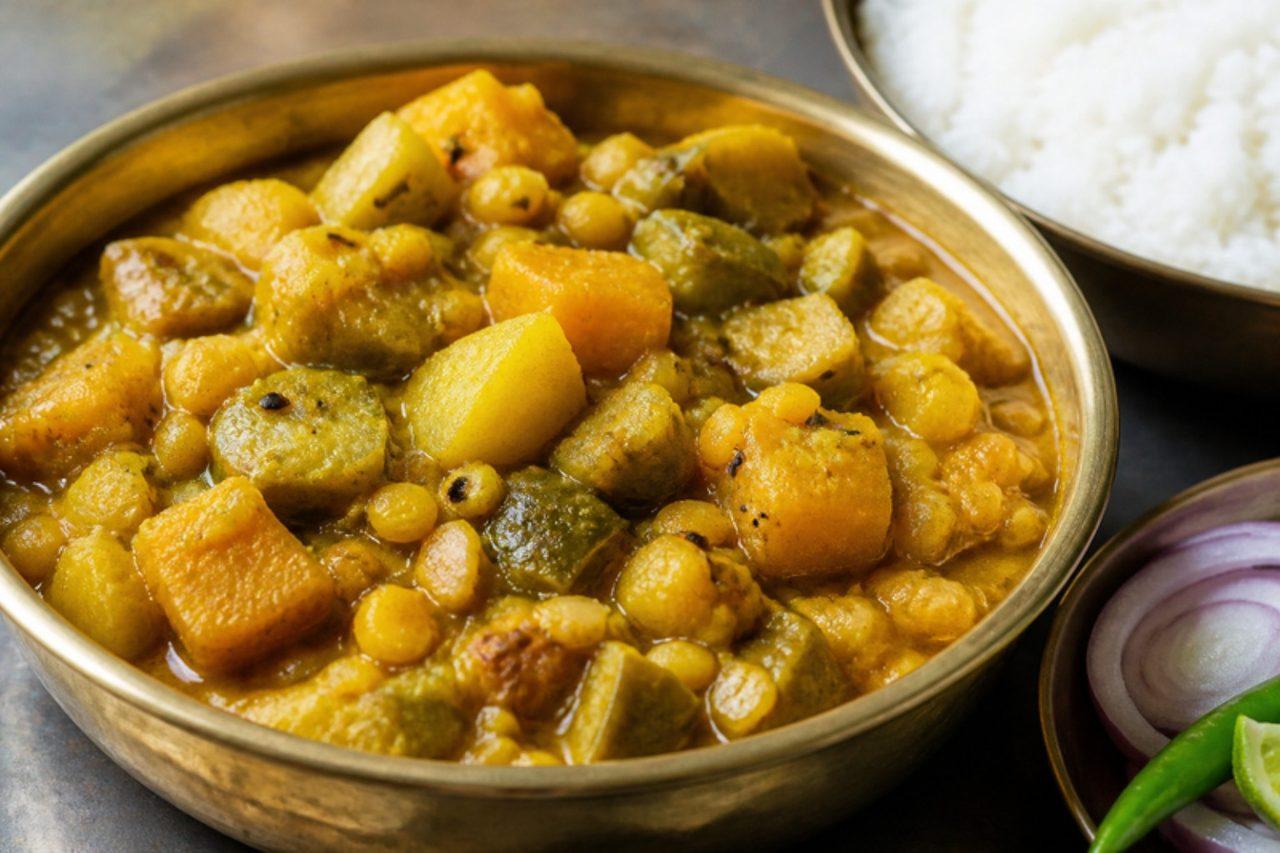
Ghanta is the Odia one-pot of everything the winter market offers, cooked in Bhubaneswar and Cuttack homes for festival days and pujas, and in a similar form in the temple kitchens at Puri. Pumpkin, raw banana, sweet potato, aubergine and beans are cooked with soaked dried peas and chana dal until the pulses thicken it into a soft, chunky stew, seasoned with ginger, cumin and a light panch phoron tempering. A portion gives about 20 g of protein from the dried peas, chana dal and vegetables. The dried peas and chana dal need 8 hours of soaking first (overnight), which is not counted in the times. The most common mistake is adding all the vegetables at once: pumpkin melts to mush while the raw banana is still hard, so add them in two stages. Chef's tip: grind the ginger and cumin with a little water to a fresh paste rather than using powder; it is what gives ghanta its clean, warm flavour.

by KrazyBadal 0 views

Sopa de nopalesCactus paddle soup

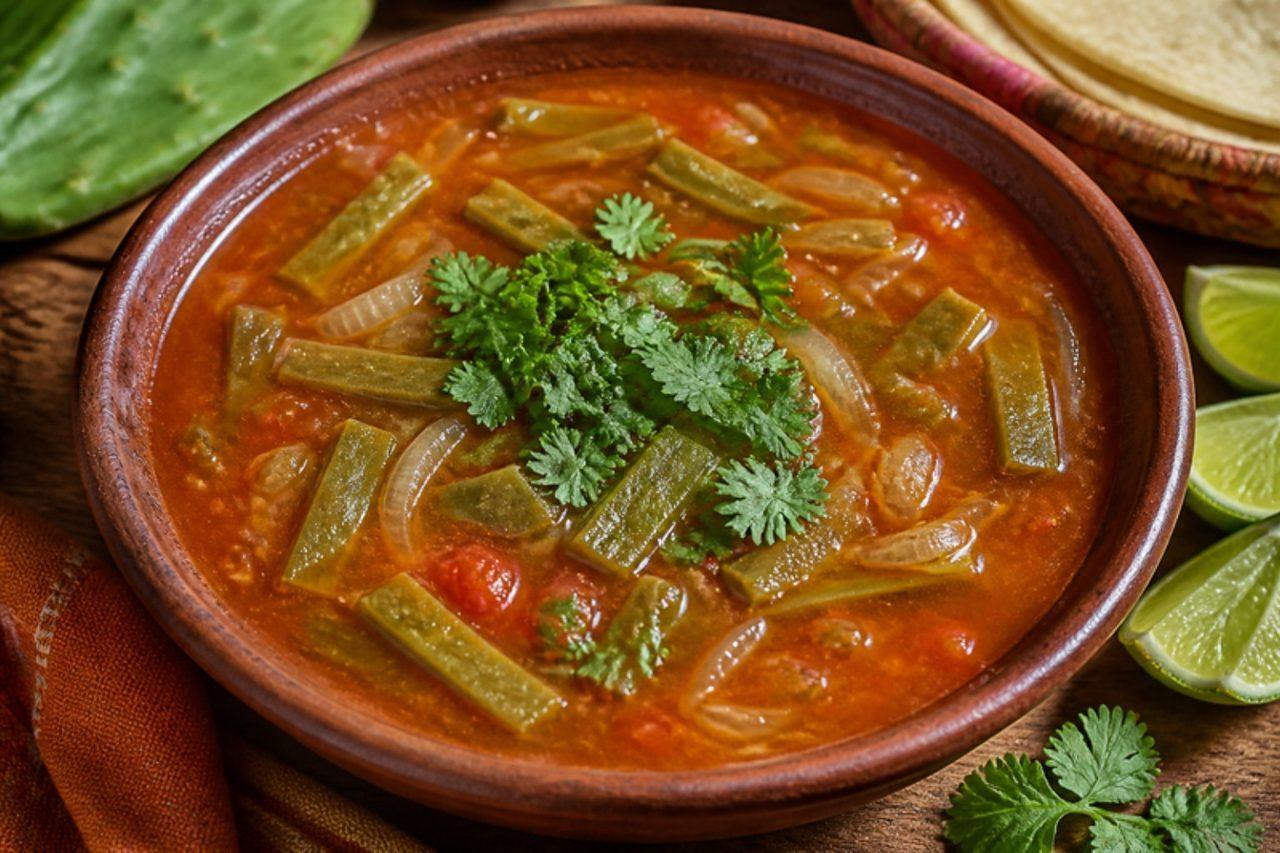
In Mexico City, Puebla and the towns of central Mexico, sopa de nopales is cooked at home during Lent and on any warm day when tender cactus paddles are cheap in the market. Diced nopales simmer in a light tomato and chilli broth with onion and coriander, giving a soup that is tangy, fresh and a little green-tasting, like green beans crossed with okra. It is very light, with about 3 g of protein per bowl; add a can of pinto beans or crumble fresh cheese on top for more. The most common mistake is putting raw nopales straight into the soup, which turns it slimy: boil them separately first and rinse them. Chef's tip: add a few tomatillo husks or a pinch of bicarbonate to the boiling water for the nopales; it helps set the slime so it rinses away.

by KrazyBadal 0 views

ChileatoleCorn and green chilli soup

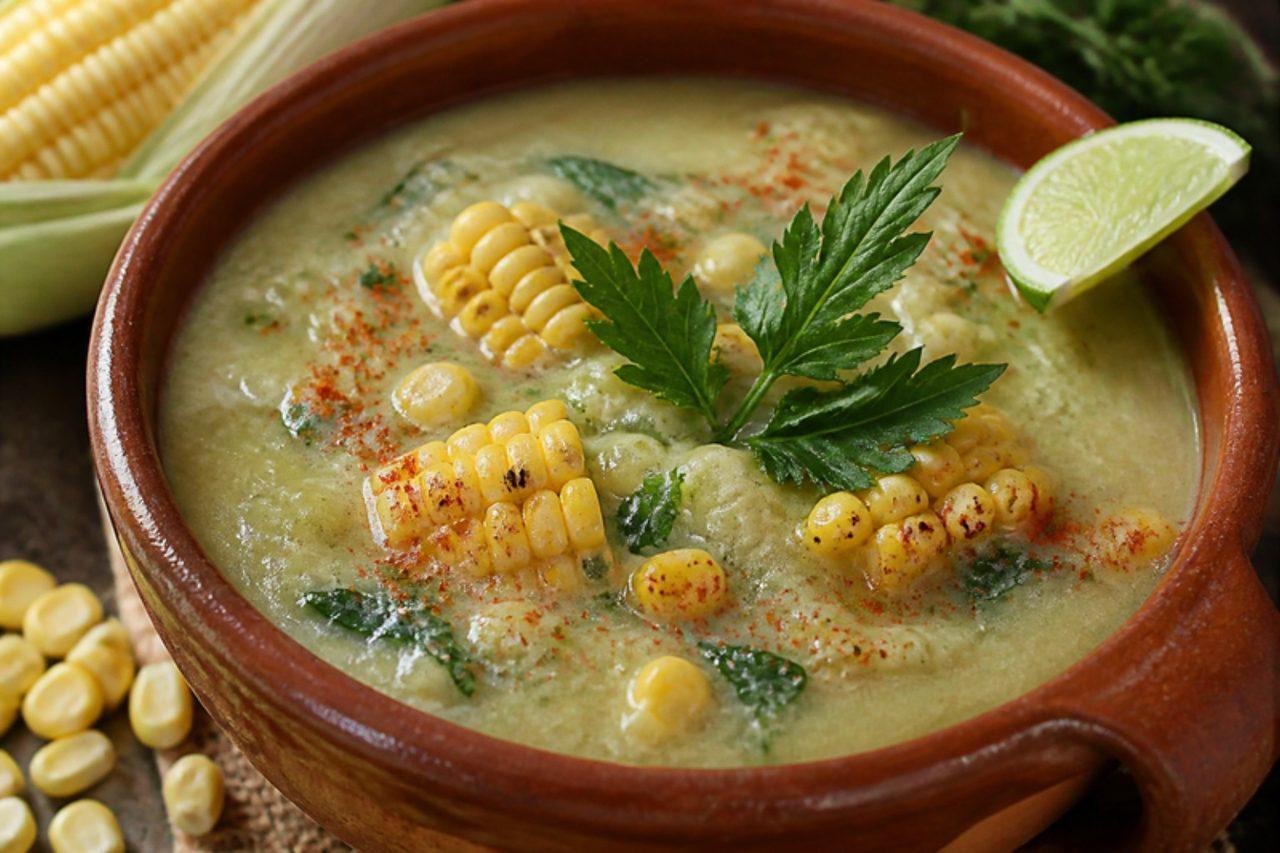
Chileatole is a thick, savoury atole made in Puebla and Tlaxcala during the rainy-season corn harvest from July to September, sold steaming from big pots at markets in the evening and made at home when fresh corn is everywhere. Fresh corn kernels and pieces of cob simmer in a broth thickened with masa harina and tinted green with blended chilli and epazote. It is comforting and corny, with a gentle heat, and about 6 g of protein per bowl from the corn and masa. The most common mistake is adding the masa dry, which makes lumps: always dissolve it in cold water first. Chef's tip: simmer the stripped cobs in the water before you start, for a sweeter, deeper corn broth.

by KrazyBadal 0 views

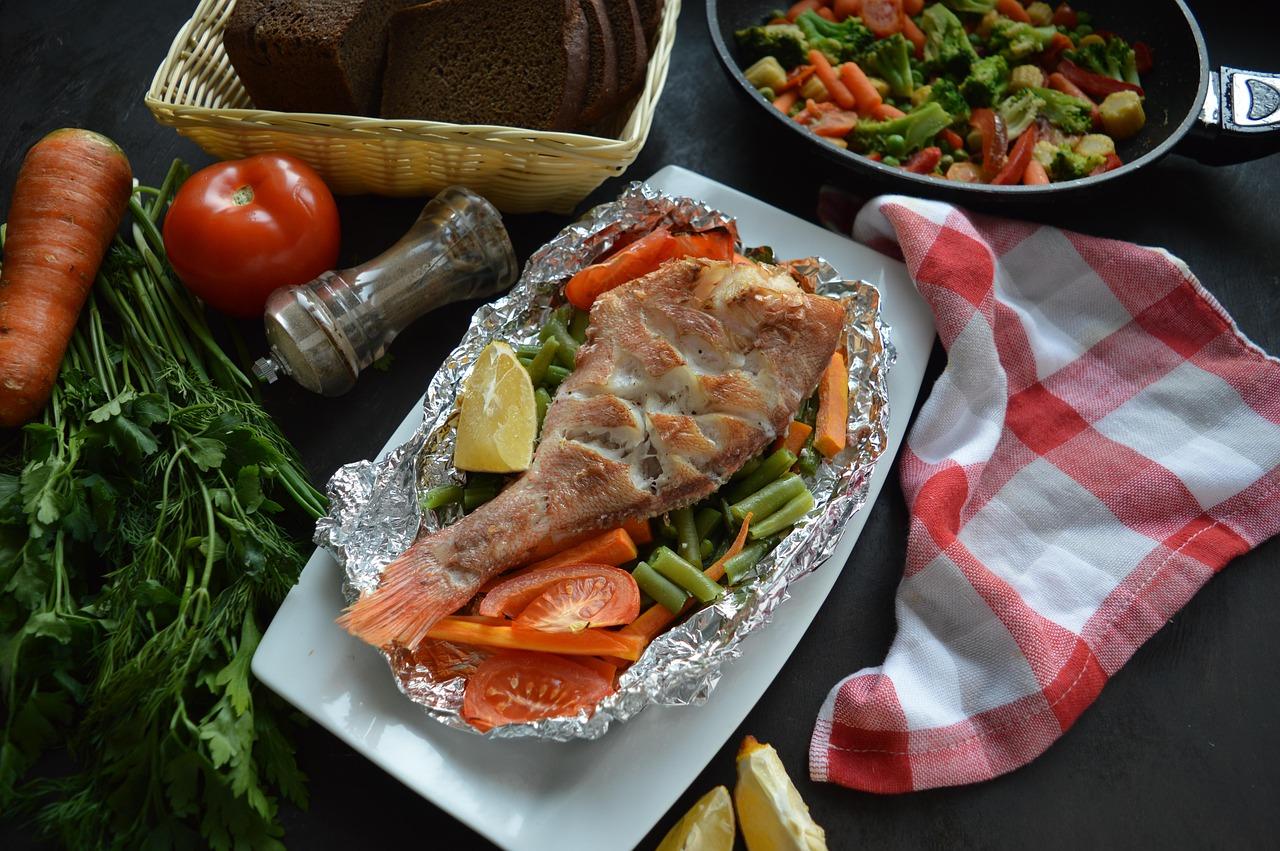
Pescado empapeladoFish baked in paper parcel

Along the Gulf coast of Veracruz, pescado empapelado is a weekday lunch and a Lenten Friday favourite: a fillet of snapper or other white fish is sealed in paper or foil with tomato, onion, peppers, olives, capers and herbs, then baked so it steams in its own juices. Each person opens their own fragrant parcel at the table. A portion gives about 32 g of protein, from the fish, for around 250 kcal. The common mistake is a loose parcel: if the edges aren't crimped tightly the steam escapes and the fish bakes dry, so fold and pinch the edges all the way round. The fish is done when it is opaque and flakes easily at the thickest point (63 °C). Chef's tip: slice the vegetables thinly and lay them under the fish as well as on top; they cook in the same 15 minutes and keep the fillet off the hot paper.

by KrazyBadal 0 views

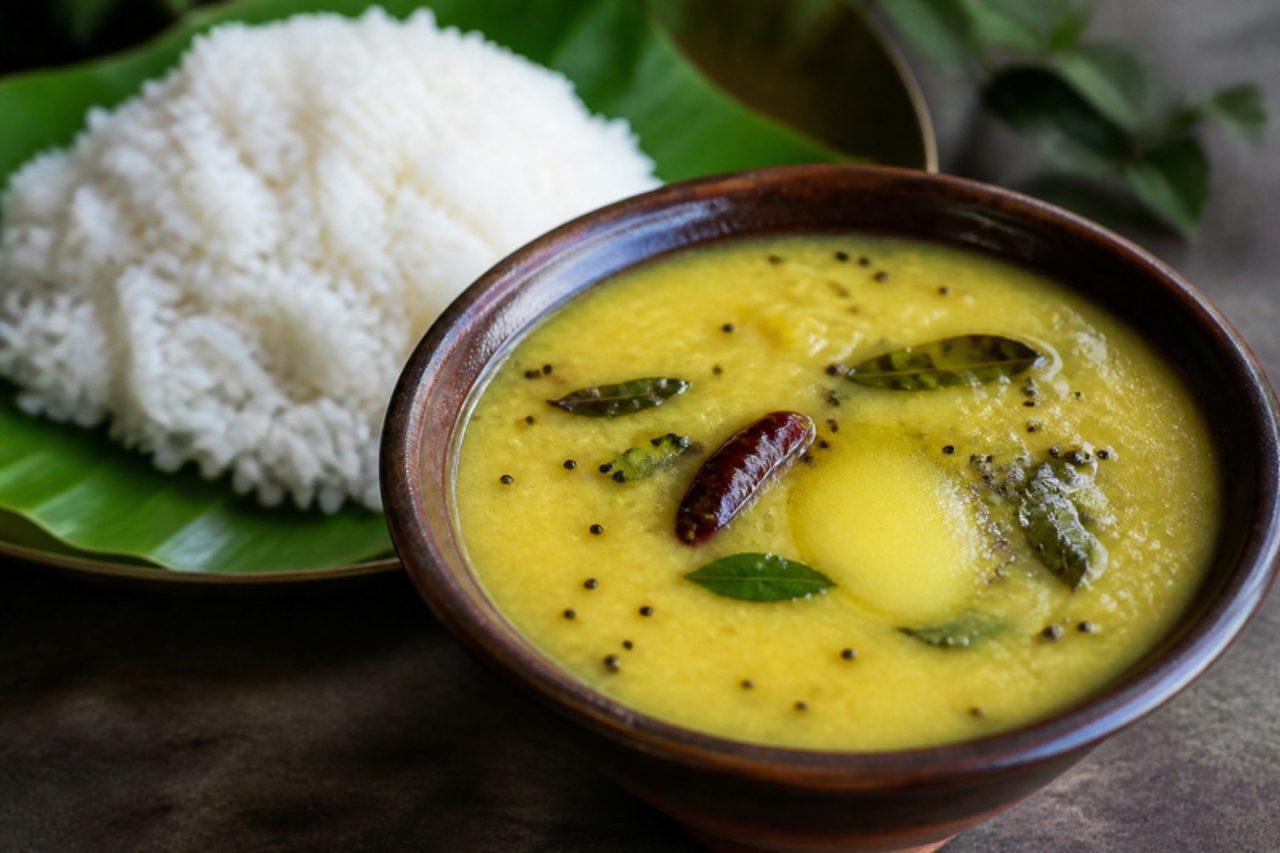
DalithoyMild toor dal with mustard

Dalithoy is the comfort dal of Konkani-speaking families in Goa, Mangalore and Udupi, eaten almost daily at lunch with red rice, and the first thing many make for someone recovering from illness. It is deliberately simple: toor dal cooked very soft with ginger and green chilli, thinned to a pourable soup and finished with coconut oil, mustard seeds, curry leaves and a good pinch of asafoetida. A portion gives about 19 g of protein from the toor dal, or about 23 g with a plate of rice, for about 330 kcal. With a pressure cooker it is on the table in half an hour. The most common mistake is skimping on the asafoetida or burning it: it is the main flavour here, so add it off the heat at the end of the tempering. Chef's tip: whisk the cooked dal until it is completely smooth before thinning it; dalithoy should be silky, with no whole grains left.

by KrazyBadal 0 views

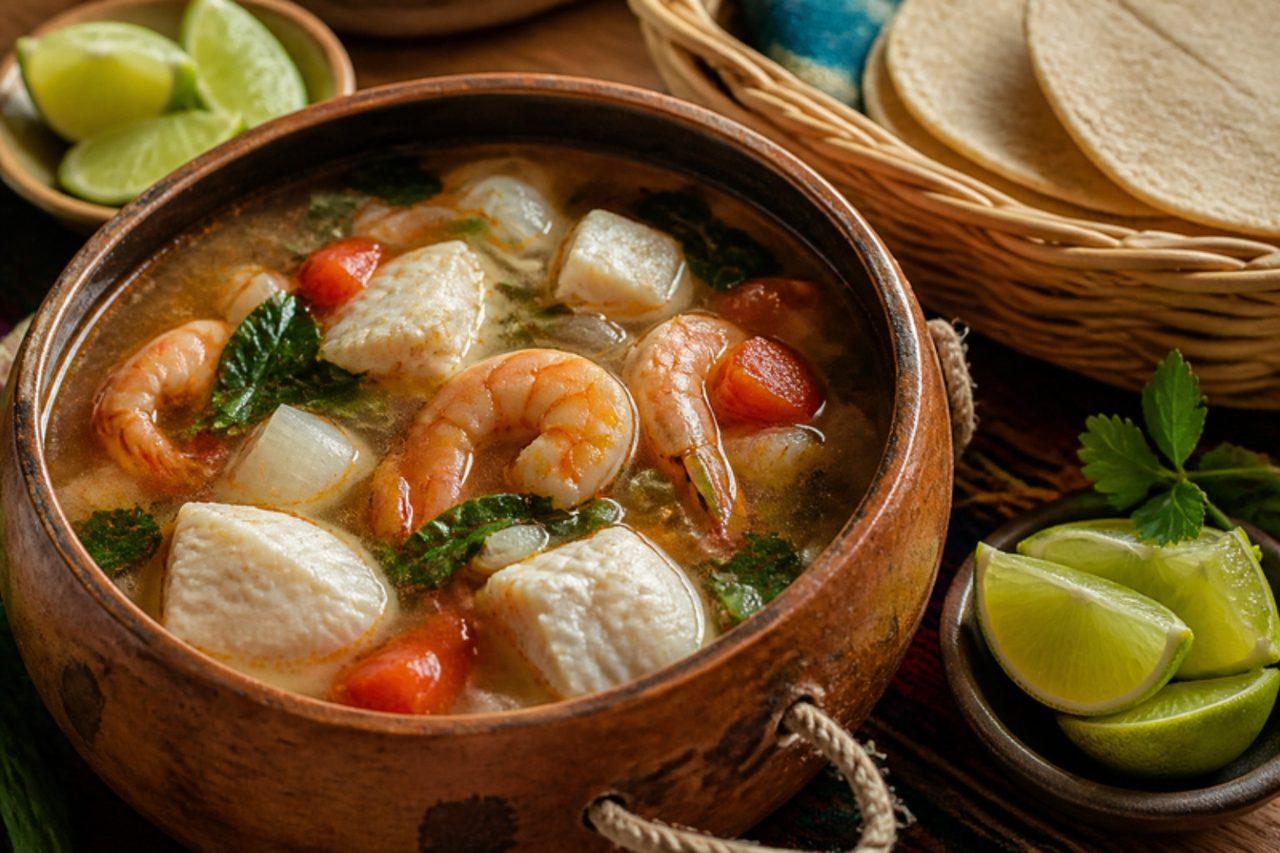
Caldo de piedraFish and tomato stone soup

Caldo de piedra comes from San Felipe Usila in the Chinantla of northern Oaxaca, where Chinantec men cook it by the river: fish, tomato, chilli and epazote go into a gourd bowl of water and red-hot river stones are dropped in to bring it to a fierce boil in seconds. It is eaten as a celebration and every year at a festival in the village. Heating stones at home is dangerous (wet or porous stones can crack or burst), so this version brings a heavy pot to a hard boil first and cooks the fish just as briefly. A portion gives about 38 g of protein, from the fish and prawns, for roughly 260 kcal. The common mistake is letting the fish boil on: it is done in 3–4 minutes, when it turns opaque and flakes, and after that it falls apart. Chef's tip: blend the tomato, onion and chilli raw; the broth tastes fresh and sharp, closer to the riverside original than a cooked sauce.

by KrazyBadal 0 views

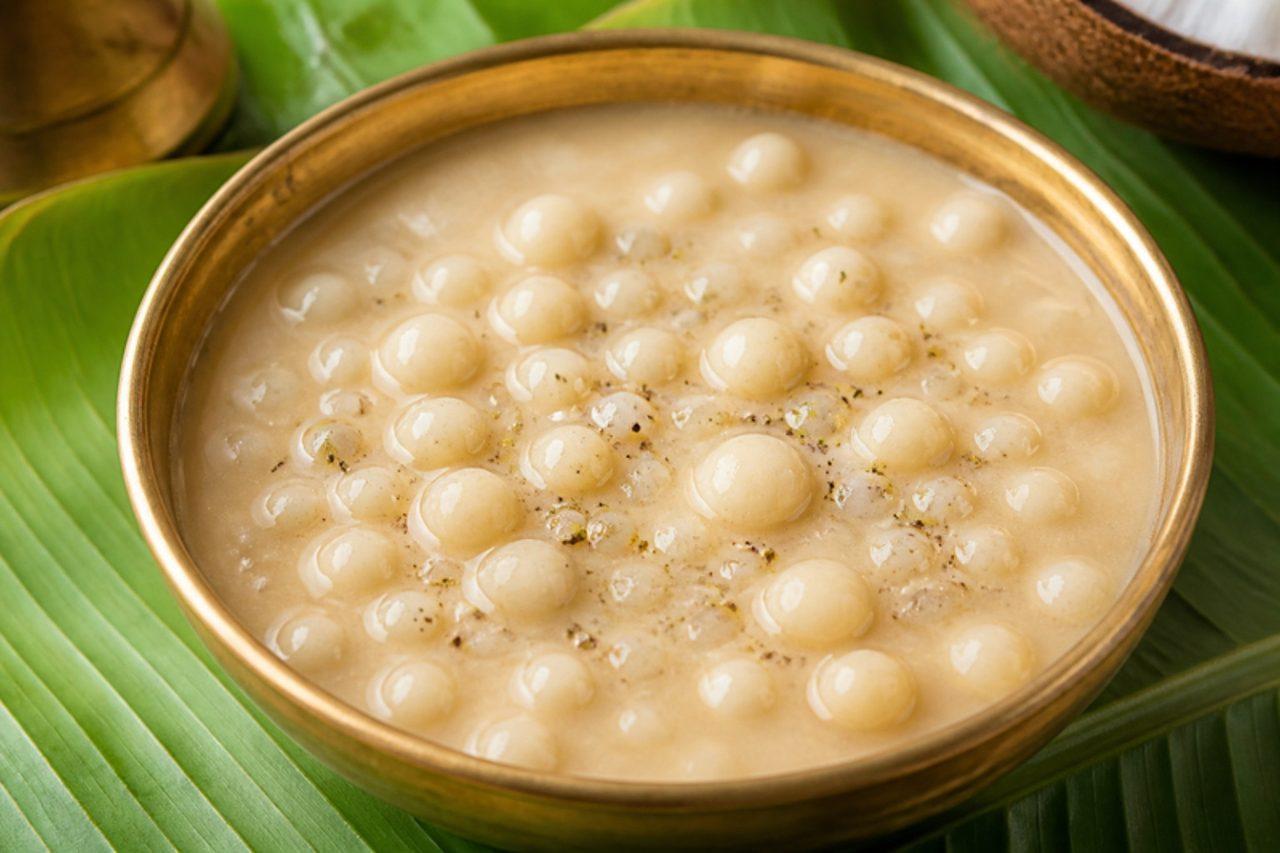
Paal kozhukattai (rice dumplings in sweet coconut milk)

Paal kozhukattai is made in Tamil Nadu homes for Vinayaka Chaturthi and on rainy evenings when something warm and sweet is wanted. Tiny pearls of rice-flour dough are cooked in thin coconut milk until they float and turn glossy, then the pot is sweetened with jaggery and finished with thick coconut milk and cardamom. The dumplings are soft and chewy, the liquid creamy and caramel-coloured, and the whole thing is served warm in small bowls, or at room temperature as part of a festival offering. It is naturally egg-free and vegan: the rice flour, scalded with boiling water, holds the dumplings together, and its starch thickens the coconut milk as they cook. Chef's tip: once the thick coconut milk goes in, keep it below a boil; boiling it hard is the common mistake that splits the coconut milk and makes it oily.

by KrazyBadal 0 views

Chilcano de pescadoClear fish broth

In the fishermen's terminals of Chorrillos and Callao, chilcano is what you drink on a Sunday morning after a long night: a clear, gingery broth made from the heads and bones left over from cleaning fish for ceviche, with chunks of fish, red onion, chilli and a squeeze of lime in the bowl. It is light and warming, around 160 kcal a bowl, and still gives about 24 g of protein from the fish fillet and the broth. The common mistake is squeezing the lime into the pot while it boils, which turns it bitter; add it to each bowl at the table. Don't boil the bones for more than 30 minutes either, or the broth turns cloudy and harsh. Chef's tip: ask the fishmonger for heads and frames from mild white fish like sea bass or cod, and leave out oily fish such as mackerel, which makes the broth strong and fishy.

by KrazyBadal 0 views

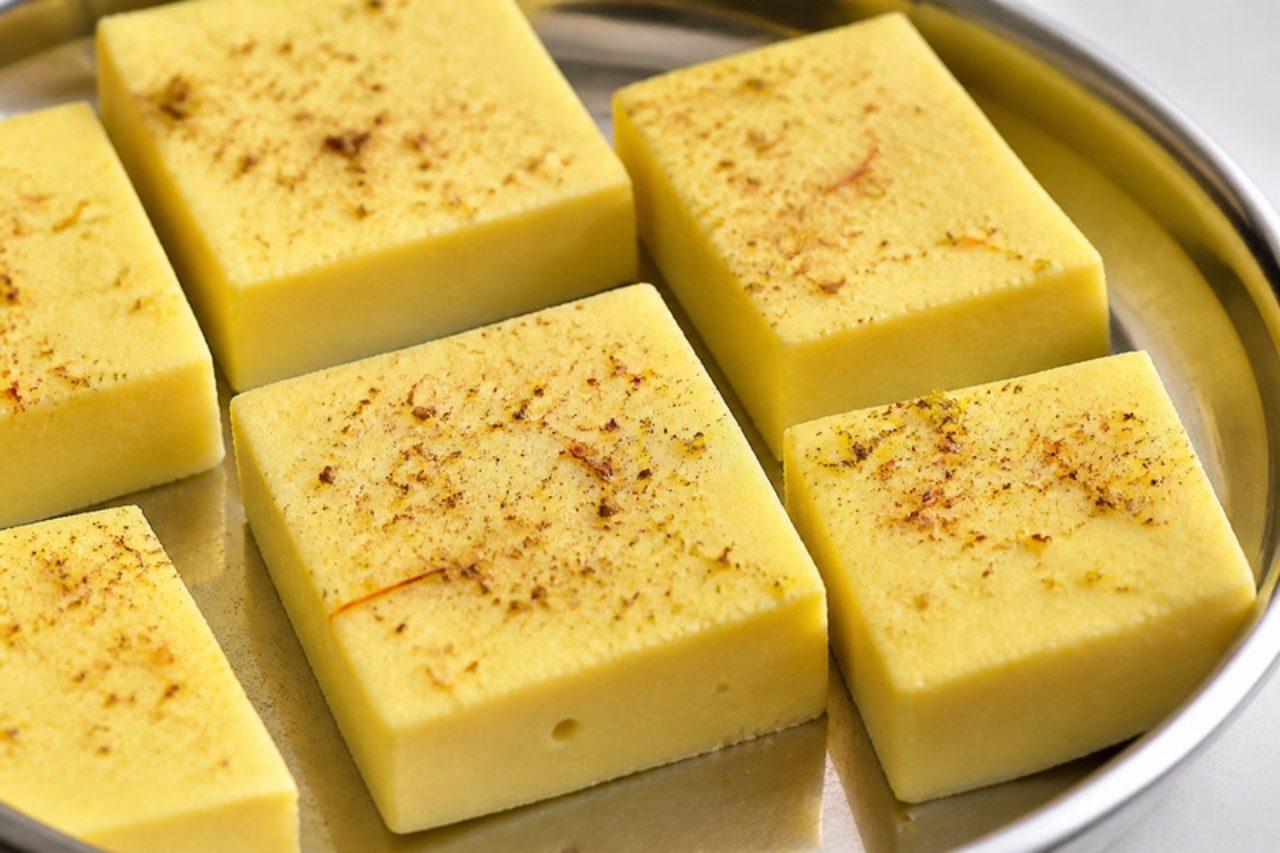
Kharvas (steamed milk-and-curd pudding, home method)

Kharvas is a festive treat in Maharashtra and Gujarat, traditionally made from the first milk a cow gives after calving, which sets into a wobbly pudding when steamed. That milk is hard to find in cities, so home cooks in Pune and Mumbai make a version with ordinary milk, curd and condensed milk, and that is the method here. It is steamed until it sets into a soft, sliceable square with a slightly springy texture, coloured with saffron and lightly sweetened with jaggery, with a hint of nutmeg. Families serve it at room temperature or cold as a teatime sweet, especially in the monsoon and around Ganesh Chaturthi. There is no egg: the curd and condensed milk proteins set on steaming the way colostrum does, and the condensed milk gives body and binds it. Chef's tip: whisk the mixture until completely smooth and strain it, because lumps of curd are the common mistake that leaves holes and a grainy set.

by KrazyBadal 0 views

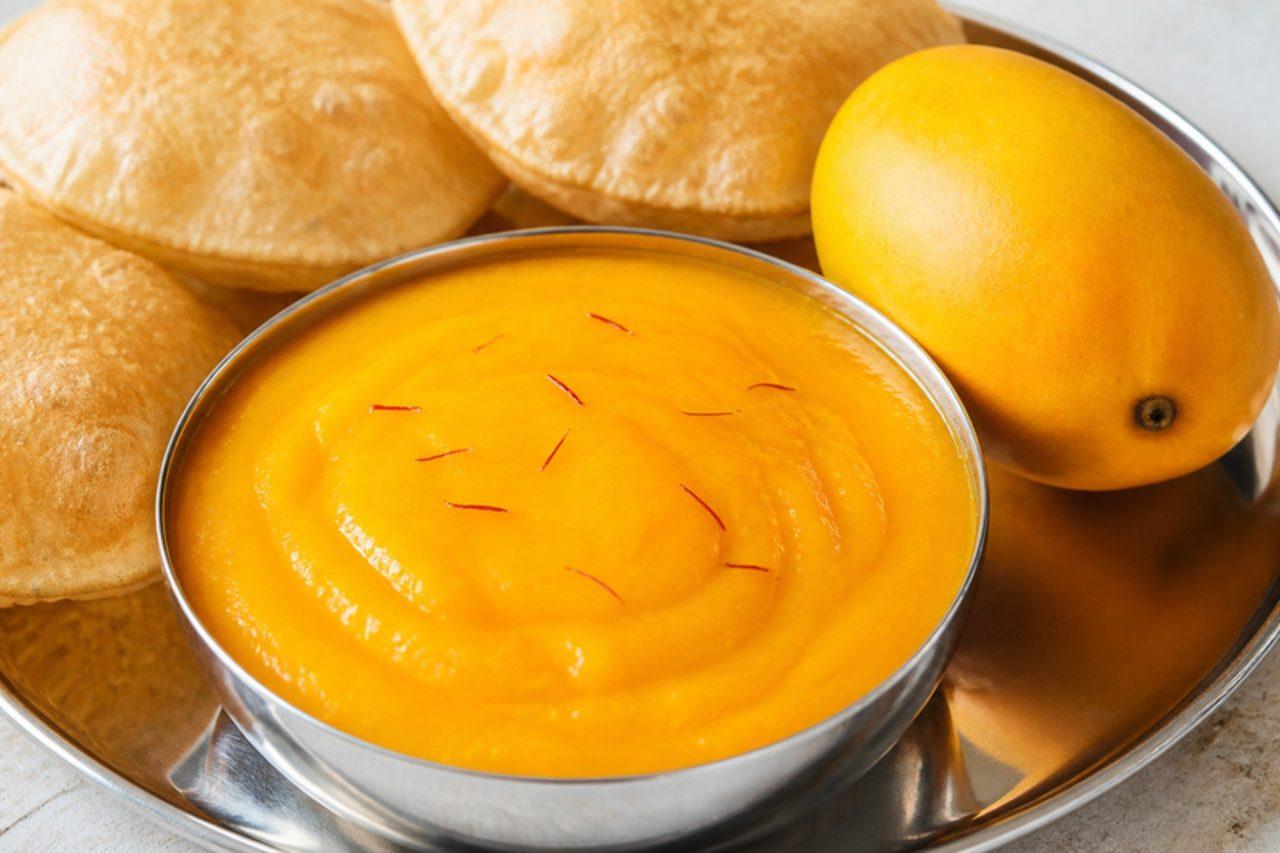
Aamras (spiced mango pulp)

When Kesar mangoes reach Ahmedabad and Alphonsos reach Pune in April and May, aamras appears at almost every summer lunch in Gujarat and Maharashtra. It's simply ripe mango pulp, thick and silky, with a pinch of dry ginger to help digestion, a little cardamom and sometimes a spoon of sugar if the fruit isn't sweet enough. It's eaten as part of the meal rather than after it, scooped up with hot puris, alongside a potato sabzi and dal; in Maharashtra it's also served at Akshaya Tritiya and Gudi Padwa. Spoon it out chilled in bowls, or offer it to children by itself. It is naturally egg-free and vegan: the mango's own thick pulp gives all the body, so nothing needs to bind or set it. Chef's tip: use only soft, fragrant, fully ripe mangoes and press the pulp through a sieve if they are fibrous; under-ripe fruit is the common mistake that makes aamras sour and thin.

by KrazyBadal 0 views

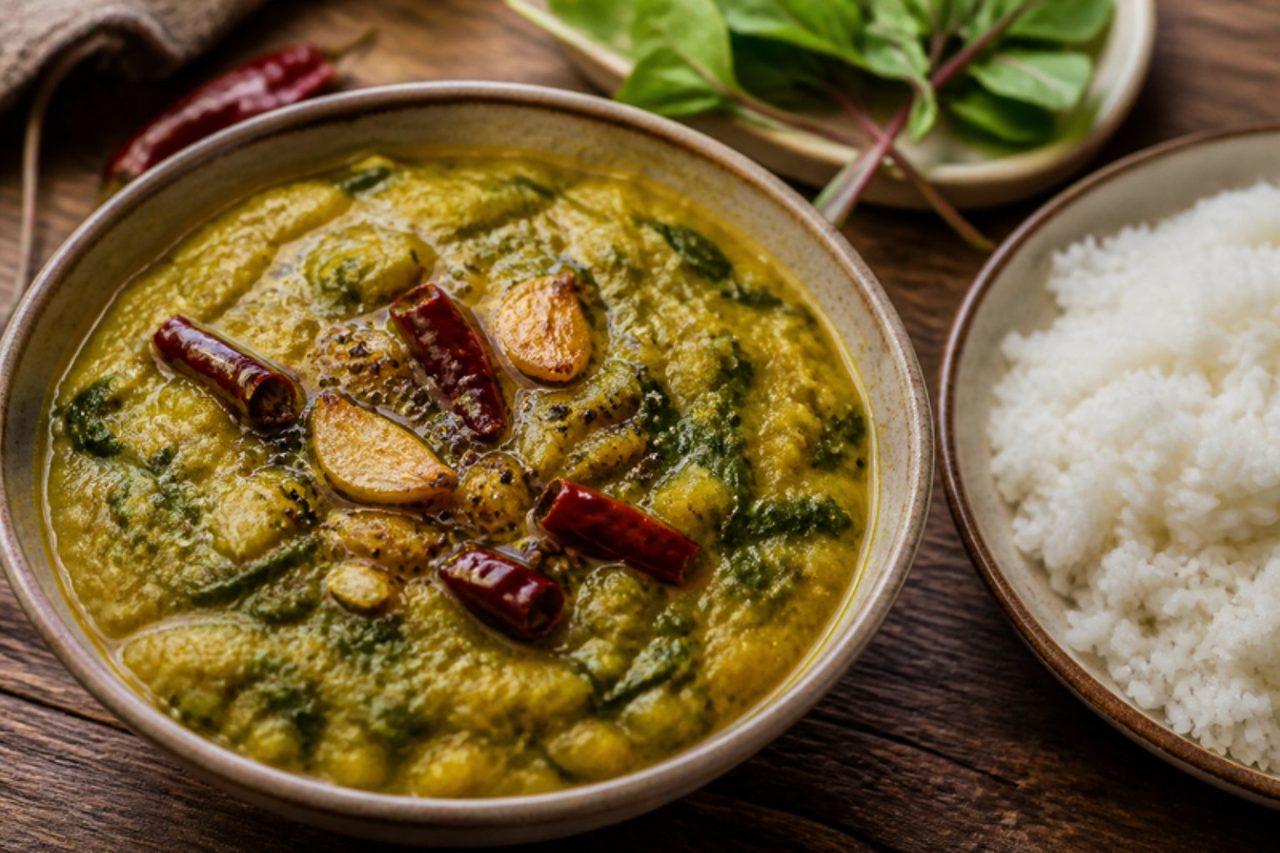
Gongura pappuLentils with sour roselle leaves

In Guntur, Vijayawada and across Telangana, gongura pappu is the everyday lunch dal that people who move away miss most: toor dal cooked soft with handfuls of sour roselle leaves, which melt into a tangy, olive-green purée, then finished with a sizzling tempering of garlic and dried red chillies. It is eaten mixed into hot rice with a spoon of ghee or oil and a crisp papad. A portion gives about 20 g of protein, almost all from the toor dal, and about 23 g with a plate of rice. Gongura is sold in Indian grocers in bunches; you need only the leaves. The most common mistake is cooking the leaves in an aluminium or iron pan: their acid reacts with the metal and the dal turns dark and tastes metallic, so use a steel or enamelled pot. Chef's tip: mash the dal and wilted leaves together hard with a whisk or wooden masher before tempering; a smooth, creamy pappu carries the sourness evenly instead of in stringy patches.

by KrazyBadal 0 views

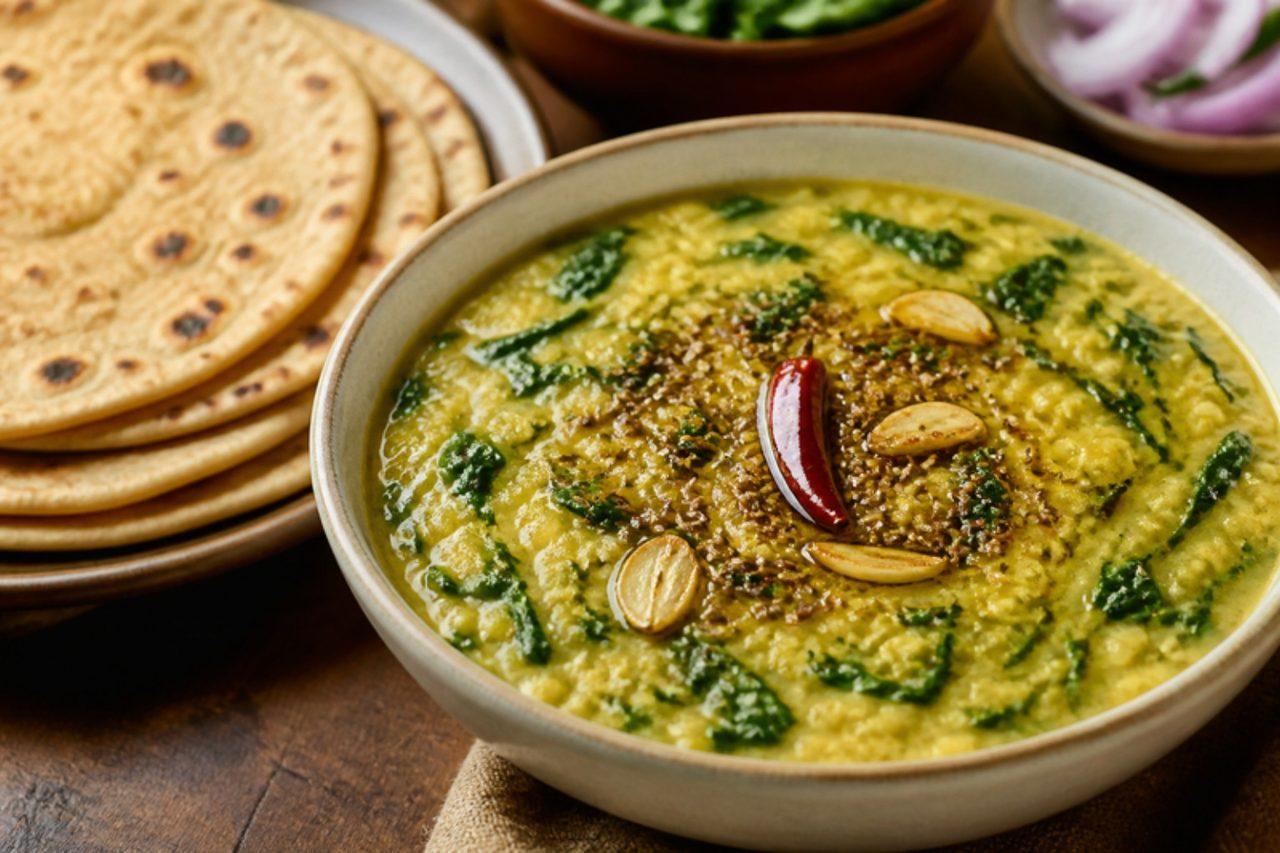
Methi dalLentils with fenugreek leaves

In Punjab, Rajasthan and Delhi homes, methi dal arrives in late autumn and winter, when bunches of fresh fenugreek are cheap and fragrant at every vegetable cart. The leaves are stirred into a pot of soft toor and moong dal, where their gentle bitterness balances the earthy lentils, and a cumin and garlic tadka goes over the top. It is a light everyday dinner with phulka or rice. A portion gives about 21 g of protein from the two dals, for about 350 kcal. The most common mistake is cooking the leaves for too long or chopping in the thick stems, which makes the dal bitter and stringy: use only leaves and tender tips and add them for the last few minutes. Chef's tip: toss the chopped leaves with a pinch of salt, leave them for 10 minutes and squeeze out the green juice; it takes the harsh edge off the bitterness without losing the flavour.

by KrazyBadal 0 views

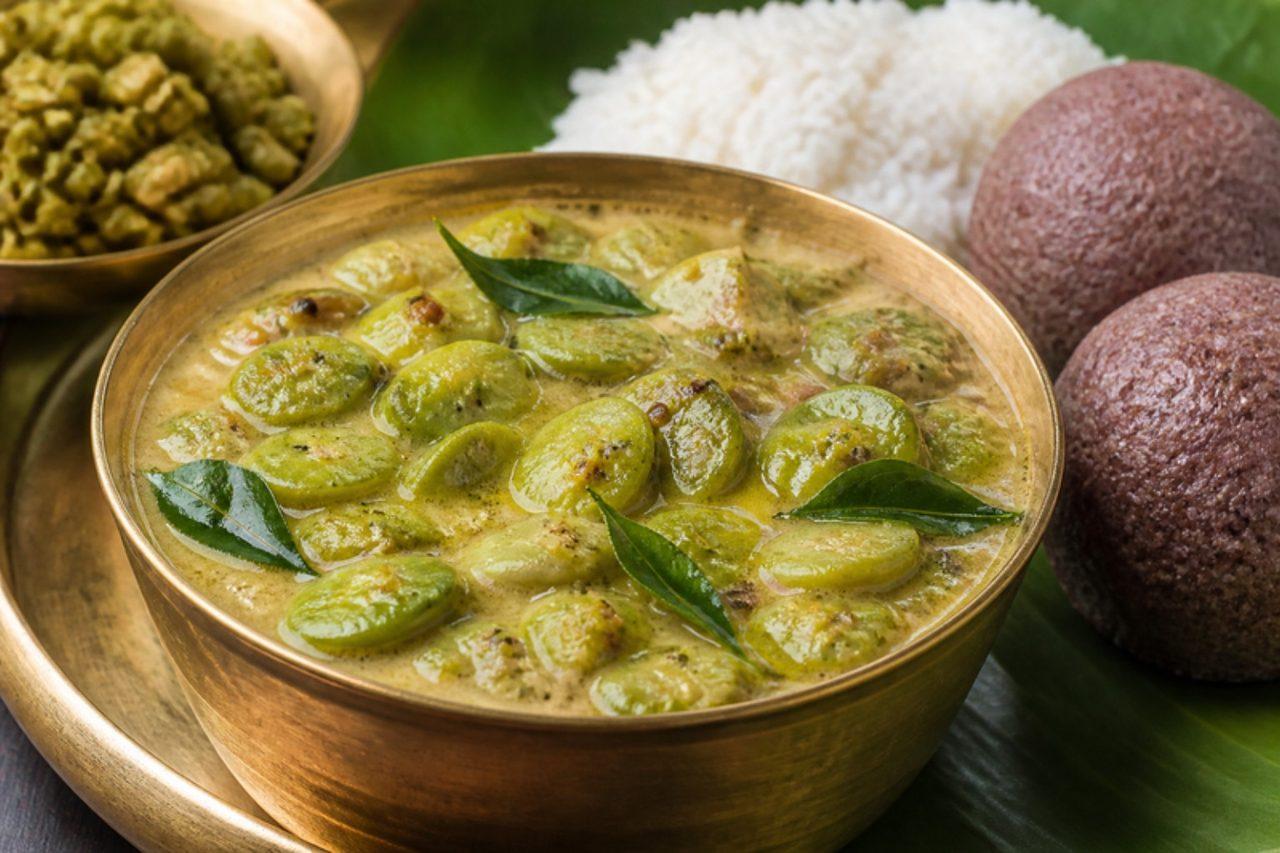
Avarekalu saaruField bean and coconut curry

When the avarekai (hyacinth bean) season comes to Bengaluru and Mysuru in December and January, the city celebrates with a whole street festival of avarekalu dishes, and this thin, fragrant saaru is the one cooked at home for lunch with ragi mudde or rice. The tender beans, popped out of their pods, are simmered in a gravy of coconut, roasted spices and a little tamarind and jaggery. Fresh beans are watery, so a portion gives about 12 g of protein, from the beans, a little toor dal and the coconut; that is why it is not tagged High protein. Frozen shelled avarekalu from Indian grocers works well out of season. The most common mistake is undercooking the beans: like all hyacinth beans they must be cooked until completely soft, never eaten raw or half-cooked. Chef's tip: for the classic hitikida flavour, soak the shelled beans in warm water for 30 minutes and squeeze each one out of its skin; it takes time but gives a creamier, sweeter saaru.

by KrazyBadal 0 views

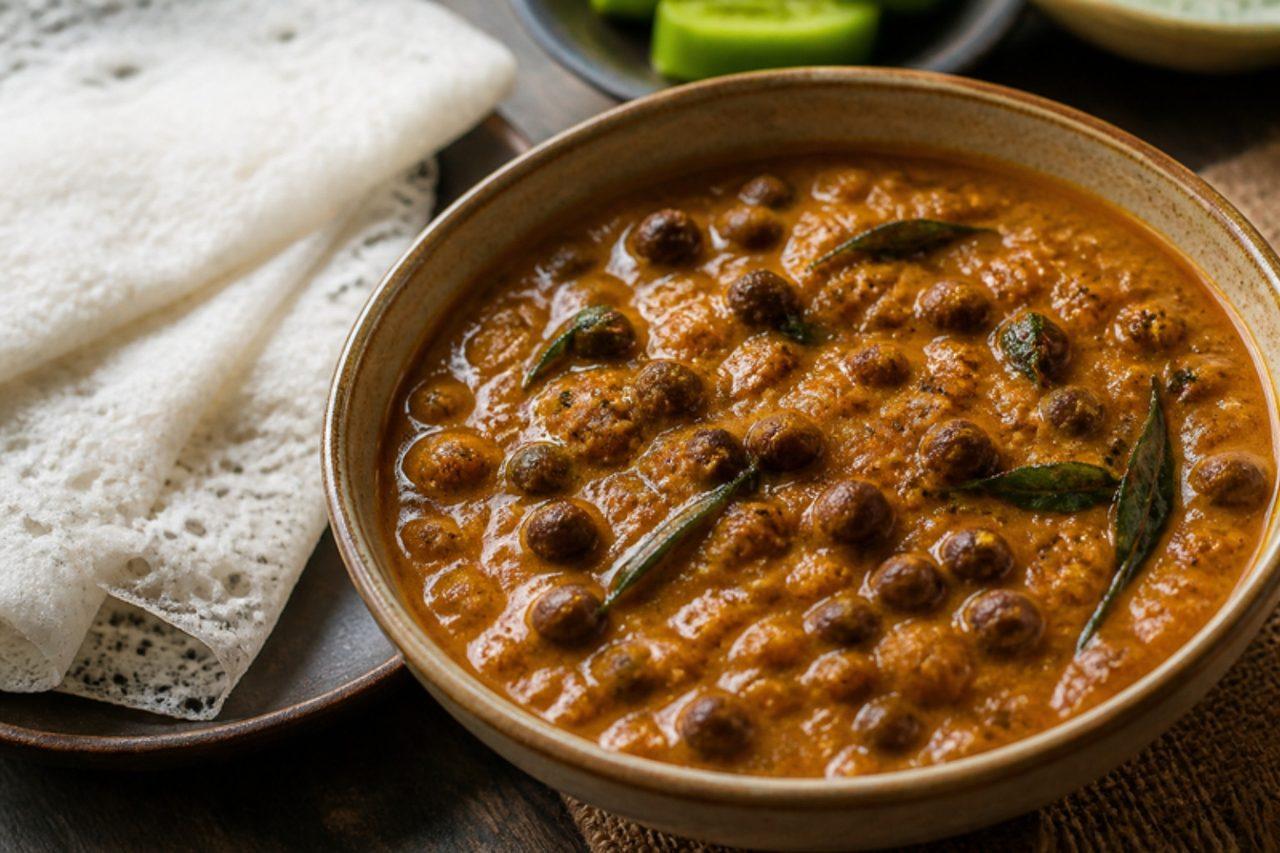
Chana ghassiBlack chickpea coconut curry

Chana ghassi is a Mangalorean and Udupi favourite, cooked for Sunday breakfast with soft neer dosa or for a weekday lunch over boiled rice. Small black chickpeas are simmered until tender and then cooked in a russet gravy of coconut and spices roasted in coconut oil, sharpened with tamarind and finished with fried onion and curry leaves. A portion gives about 21 g of protein, mostly from the black chickpeas with a little from the coconut. The chickpeas need 8 hours of soaking first (overnight is easiest), which is not counted in the times. The most common mistake is under-roasting the coconut and spices: the gravy then tastes raw and flat instead of deep and toasty. Chef's tip: roast the dried chillies, coriander and fenugreek first and the coconut last, until it turns an even reddish brown; grind it with a little of the chickpea cooking water for the smoothest gravy.

by KrazyBadal 0 views

Showing 24 of 1,716 recipes

Show more recipes

Page 1 of 72