Skip to content
Recipes

All recipes

Vegetarian, or something you can't eat? Set your diet once and we'll hide recipes that don't fit.

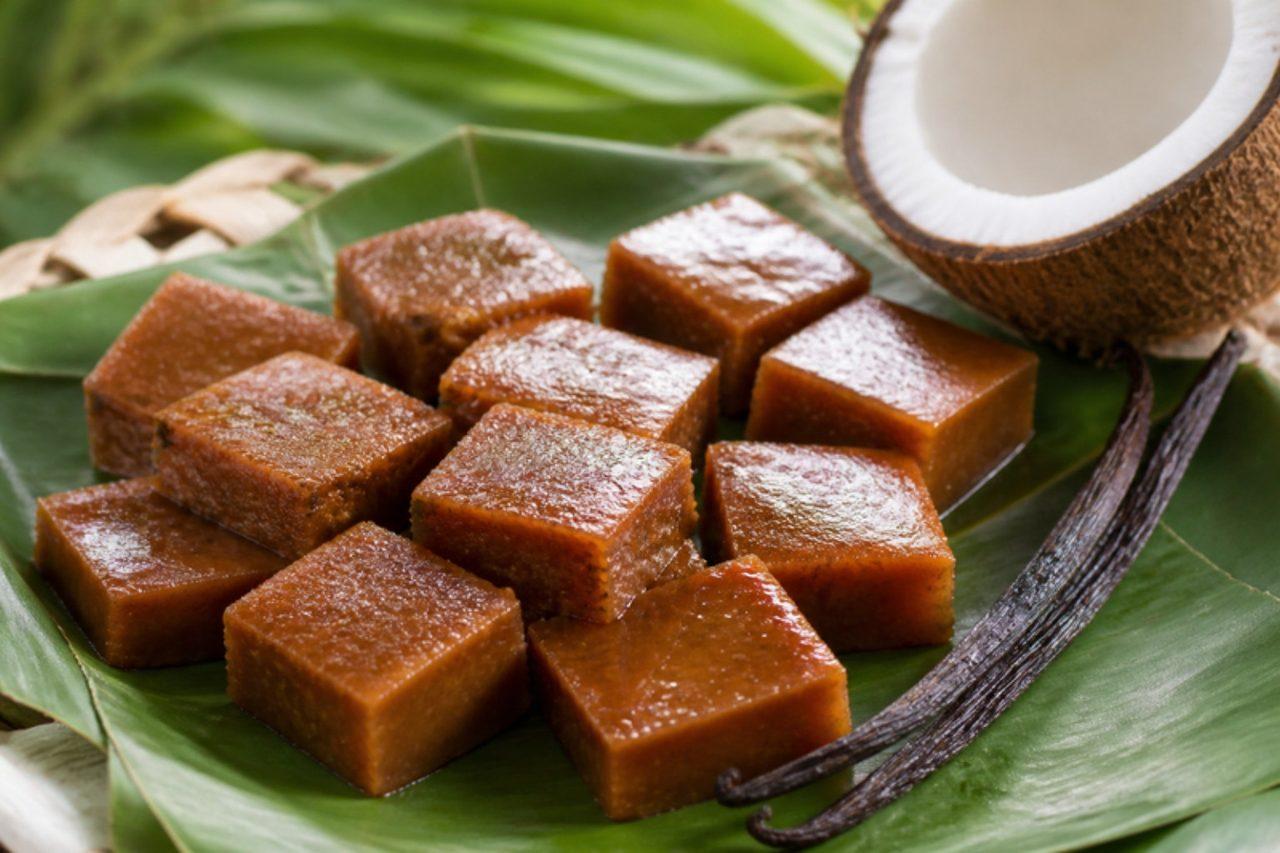
GodrogodroCoconut rice flour sweet

Along the northern coast around Antsiranana, and down to Mahajanga, godrogodro is a festival and family-celebration sweet, cut into diamonds and passed round at weddings, circumcision ceremonies and the New Year. Coconut milk, rice flour and dark sugar are stirred for the best part of an hour until the mixture thickens, darkens and pulls away from the pan, then it sets into a dense, sliceable fudge-like block, fragrant with vanilla and cardamom. It is rich, so small squares with a cup of tea are plenty. Stopping too early is the mistake to avoid: undercooked godrogodro stays sticky and pale and will not hold a clean edge. Chef's tip: use a heavy, non-stick pan and a flat wooden spatula that scrapes the whole base, and keep stirring as it thickens, as the bottom scorches easily.

by KrazyBadal 0 views

Mofo ananaGreens fritters

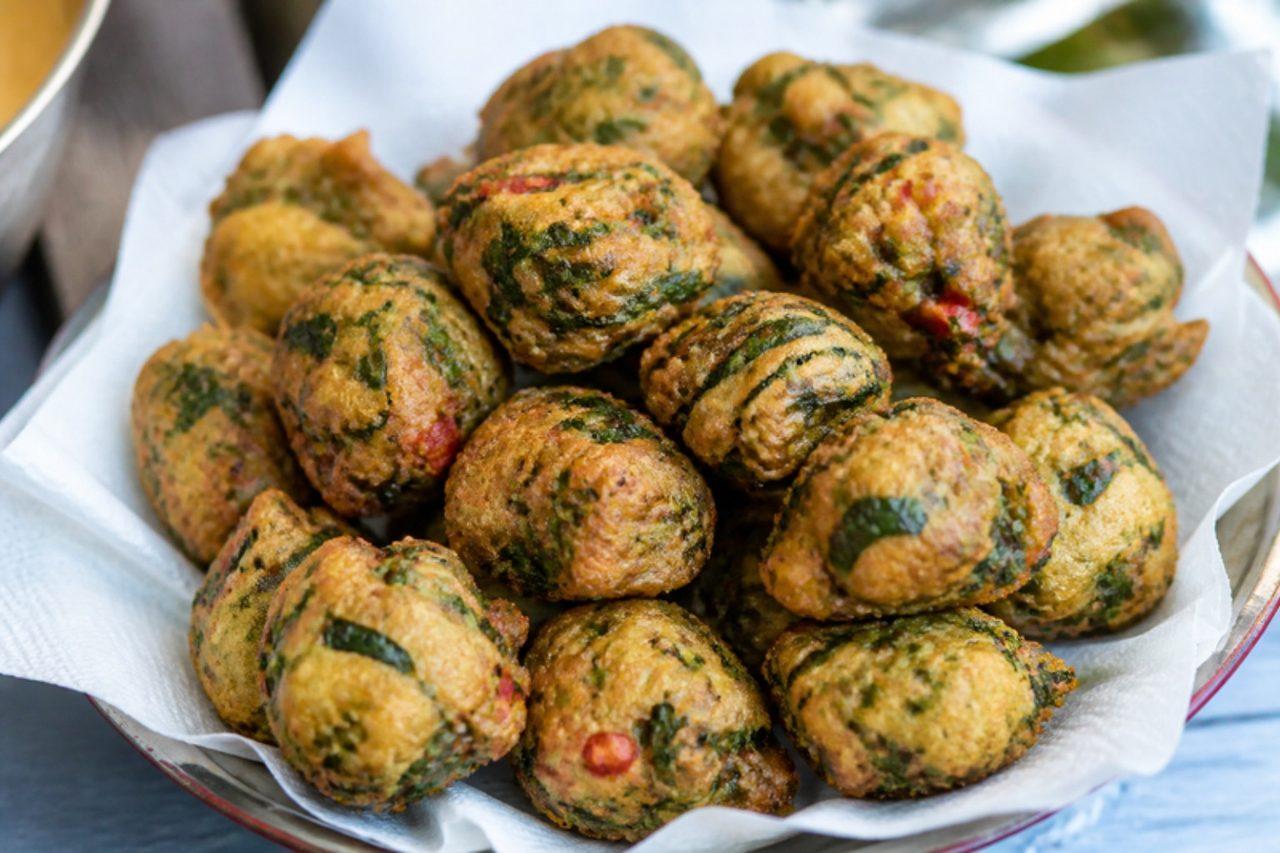
Stalls along Analakely market in central Antananarivo stack mofo anana in paper cones from mid-morning, and they rarely last past lunch. Each fritter is mostly leaves held together with a thin, savoury batter, so the outside fries lacy and crisp while the inside stays soft and grassy, with a lift from spring onion, garlic and chilli. Eat them hot as a snack with a cup of ginger tea, or set a plate of them beside a bowl of broth and some sakay for dipping. The usual mistake is a batter that is too thick: it should only just bind the greens, otherwise you end up with a heavy, doughy pancake. Chef's tip: squeeze the chopped leaves in a clean tea towel before mixing; wet greens spit in the oil and make the fritters soggy.

by KrazyBadal 0 views

SchmorgurkenBraised cucumbers

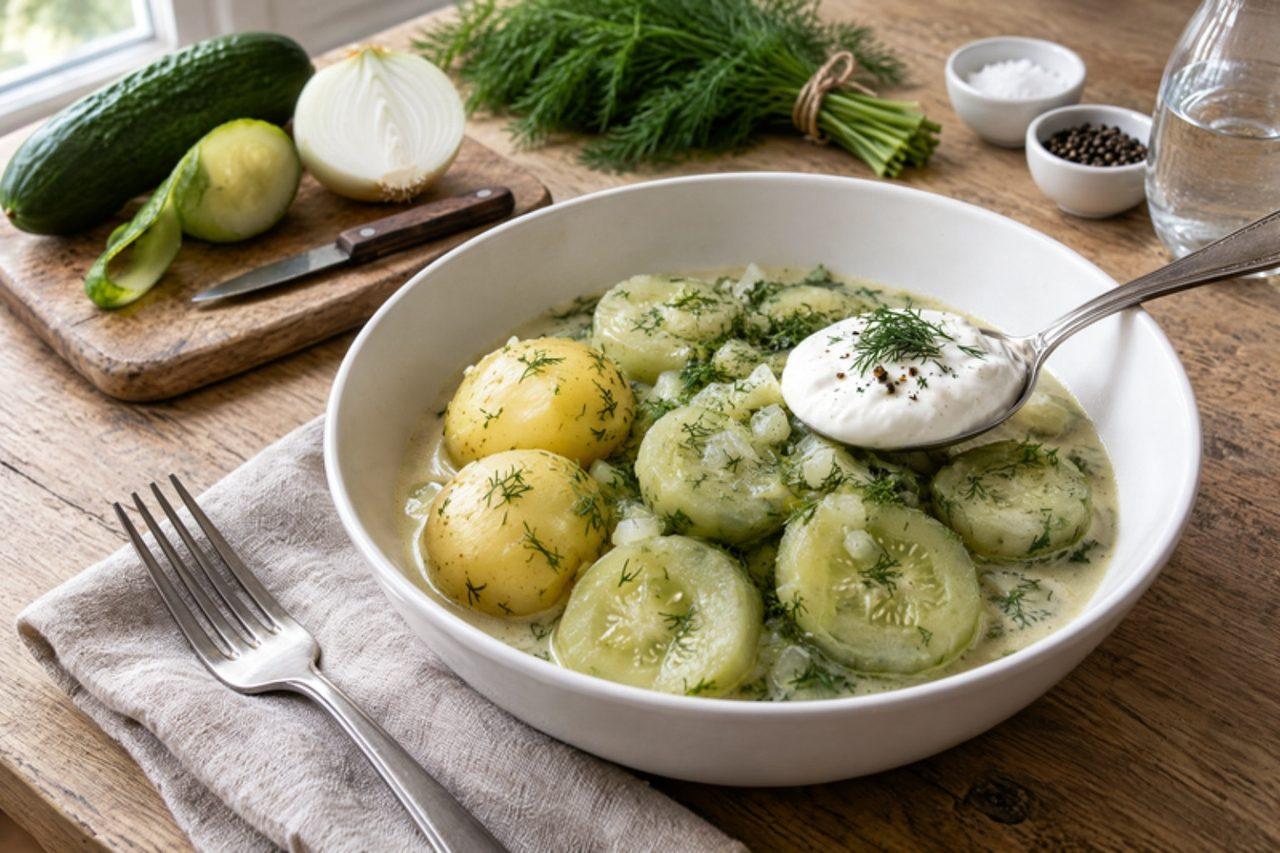
Schmorgurken are a late-summer dish of Berlin and the Spreewald, the market-garden country south-east of the city, where big, thick braising cucumbers are piled up in August. Peeled and seeded, they are braised with onion and a little stock until tender and juicy, then finished with dill, mustard and a spoon of sour cream. Many families add minced meat or bacon; this is the vegetarian version, good with boiled new potatoes or a fried egg. Suitable as part of a balanced diet, it is a low-starch vegetable dish: about 110 kcal and 9 g carbohydrate per portion. The usual mistake is braising them for too long until they collapse into mush; they are ready when just translucent. Chef's tip: scrape out the seeds thoroughly, or the dish turns watery.

by KrazyBadal 0 views

Akoho sy sakamalaoGinger and garlic chicken

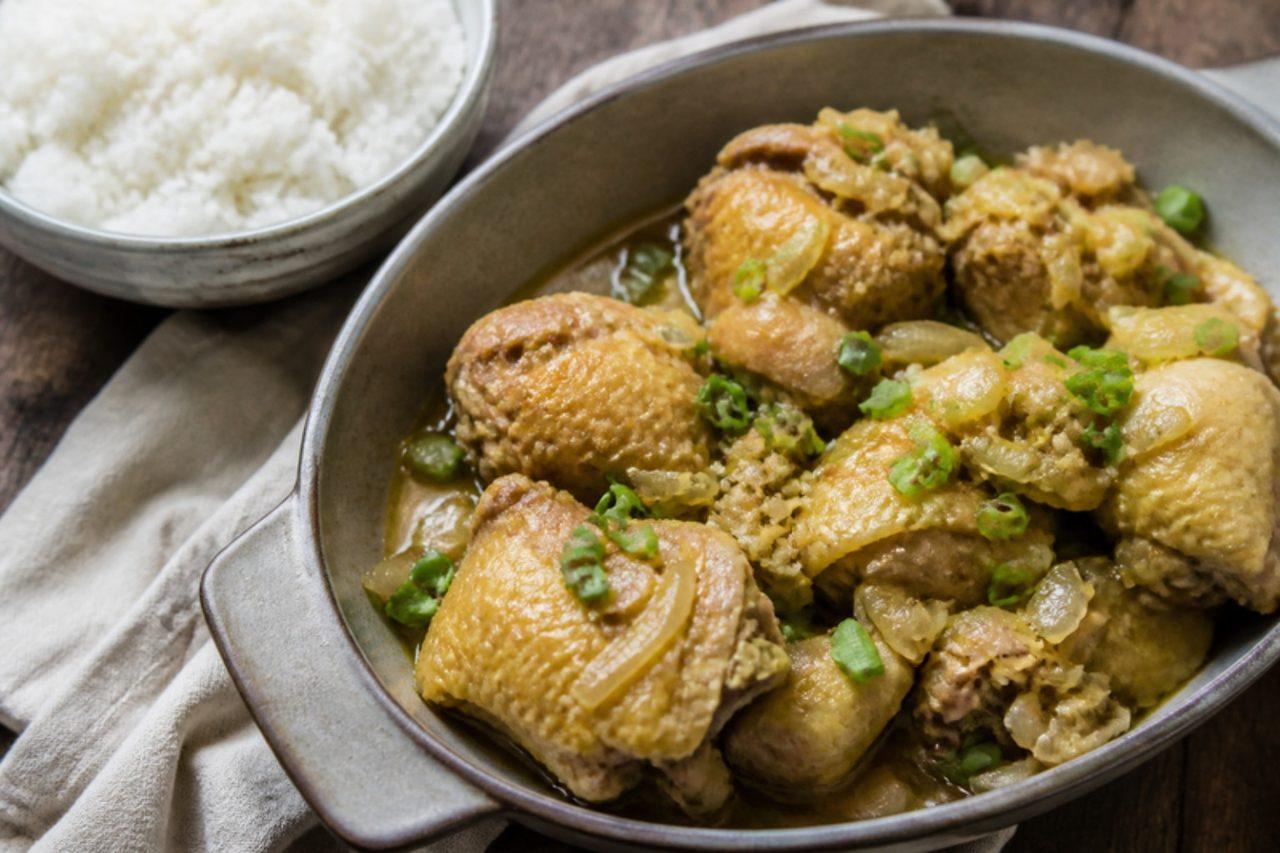
Sakamalao means ginger, and Malagasy cooks are generous with it: this everyday braise from family kitchens across the island uses a whole fist of the root, along with a full head of garlic and soft onions. Bone-in chicken is browned, then simmered gently in its own juices until the meat slides off the bone and the sauce turns golden, sticky and warming, with ginger heat that lingers rather than burns. Serve it with a big plate of rice, a dish of romazava greens or lasary, and sakay for anyone who wants more fire. Many people rush the onions; give them time to turn soft and golden, because they become the body of the sauce. Chef's tip: pound the ginger and garlic together into a coarse paste rather than slicing them, so they melt into the sauce and coat every piece of chicken.

by KrazyBadal 0 views

LasopyBlended vegetable soup

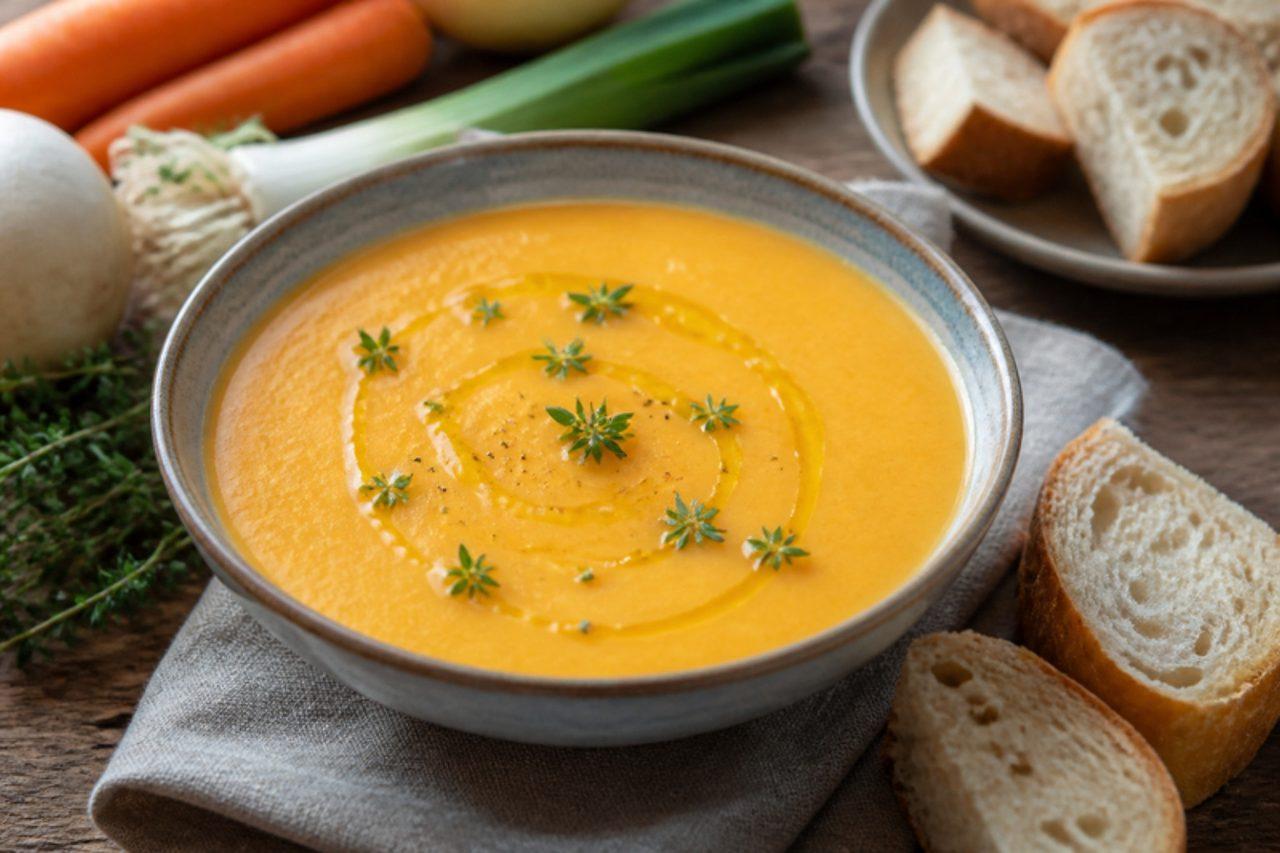
Highland evenings in Antananarivo can turn surprisingly cold, and that is when lasopy comes out, a smooth, pale-orange soup of carrot, leek, potato, turnip and green beans blended until velvety. Market cooks and grandmothers usually simmer it with beef bones; this version keeps it fully vegetarian, with the vegetables browned lightly first and a bay leaf and thyme for depth, so the water turns into a sweet, savoury broth on its own. It is often eaten with a handful of thin vermicelli cooked in it, or simply with bread, and a dab of sakay stirred in at the table. Leave the vegetables in big chunks: chopping them tiny makes them boil to mush before the flavour comes out. Chef's tip: hold back a ladle of cooking liquid and blend the rest, then thin to taste, because once lasopy is too watery there is no fixing it.

by KrazyBadal 0 views

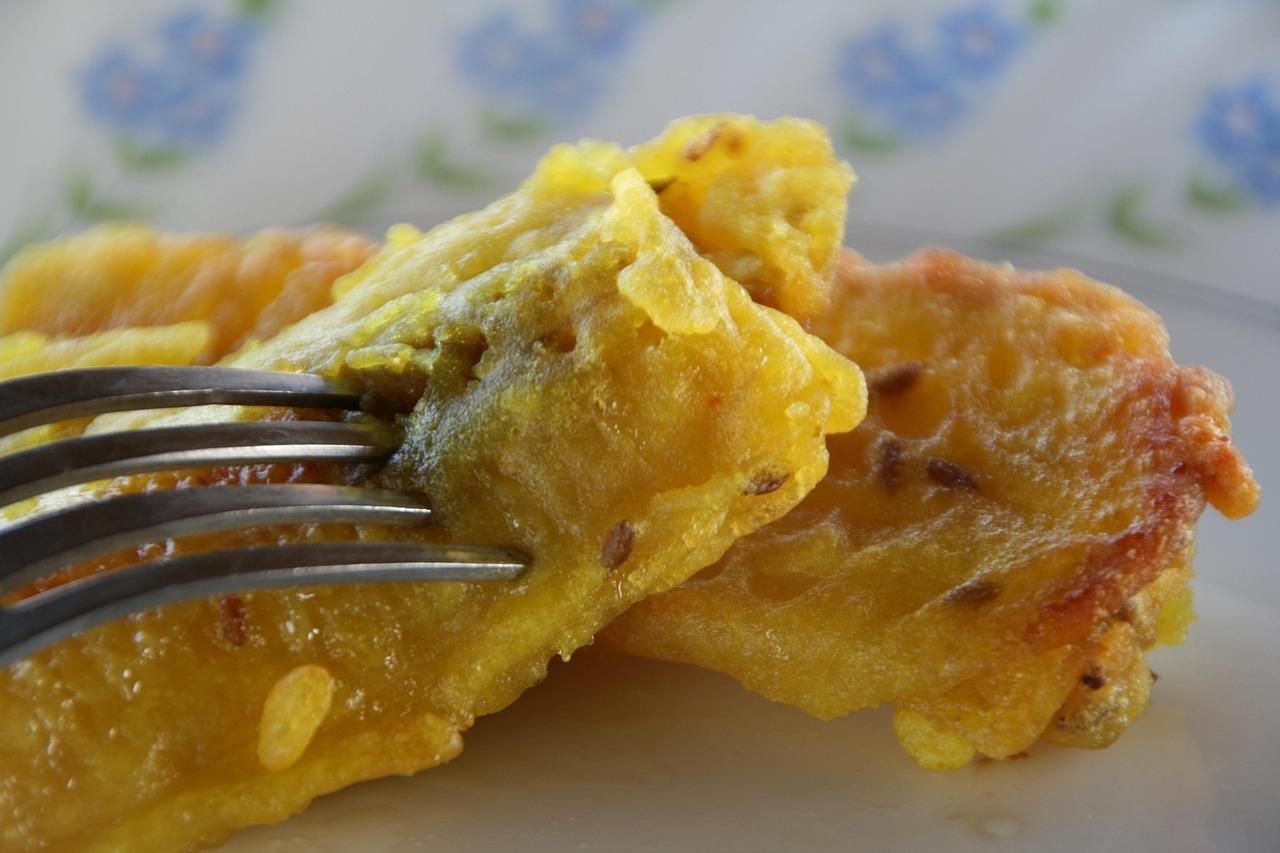
Mofo akondroBanana fritters

Wherever bananas pile up on market tables, from Toamasina on the east coast to the roadside stalls near Moramanga, someone is frying mofo akondro to sell warm in twists of paper. Ripe banana is cut into thick slices, dipped in a soft, vanilla-scented batter of flour, egg and milk, and fried until the coating puffs and crisps while the fruit inside turns jammy and sweet. Children love them after school, and they make an easy dessert with a dusting of sugar. Underripe bananas are the common mistake: they stay starchy and sour, so wait until the skins are well freckled with brown. Chef's tip: let the batter rest for 10 minutes before you dip, so the flour hydrates and the coating clings evenly instead of sliding off in the oil.

by KrazyBadal 0 views

KetwurstSausage in a hollowed roll

Ketwurst, from ketchup plus Wurst, was invented in 1977 in East Berlin as the GDR's own fast food, served from state-run snack counters around Alexanderplatz. A long roll was speared onto a heated metal spike to hollow and toast it at the same time, the hole was filled with a spicy ketchup and a hot boiled sausage, usually pork, was pushed inside. It vanished after reunification but is back at a few kiosks in Prenzlauer Berg and Friedrichshain, eaten on the go at lunchtime by Berliners who grew up with it. Chef's tip: heat the sausages in water just below a simmer; boiling hard splits the skins.

by KrazyBadal 0 views

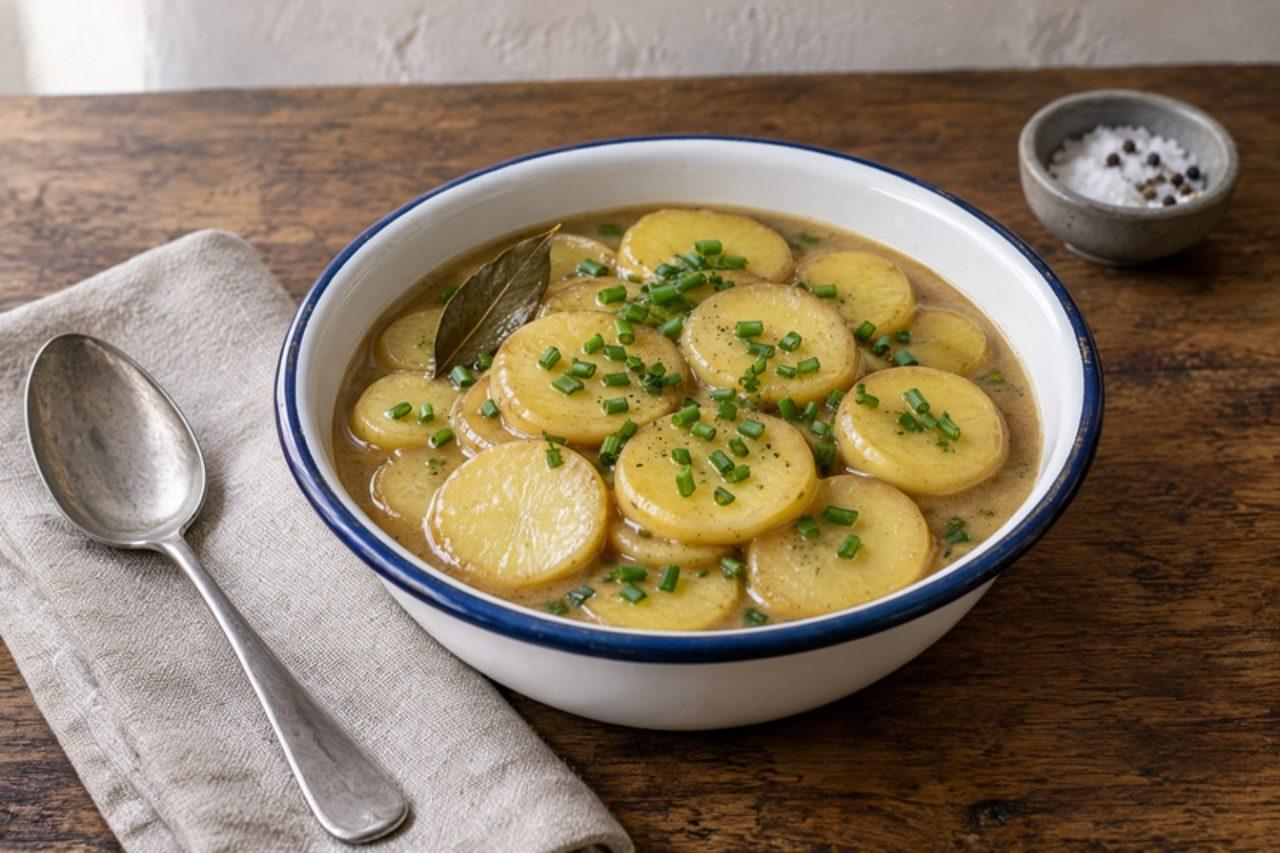
Saure KartoffelrädlePotato slices in vinegar sauce

Saure Rädle, 'sour little wheels', are old Swabian farmhouse food from the villages around Stuttgart and the Swabian Alb, cooked on Fridays or at the end of the month when there was no meat. Potato slices simmer in a nutty brown roux sauce sharpened with vinegar and scented with bay and clove, so the slices turn tender and the sauce glossy and tangy. Some families add a few pieces of bacon; this version is meat-free. Eat with a green salad or pickled gherkins. The usual mistake is rushing the roux: pale flour gives a floury, grey sauce, so brown it slowly to the colour of hazelnuts. Chef's tip: add the vinegar at the end, a splash at a time, and taste; the sauce should be pleasantly sour, not sharp.

by KrazyBadal 0 views

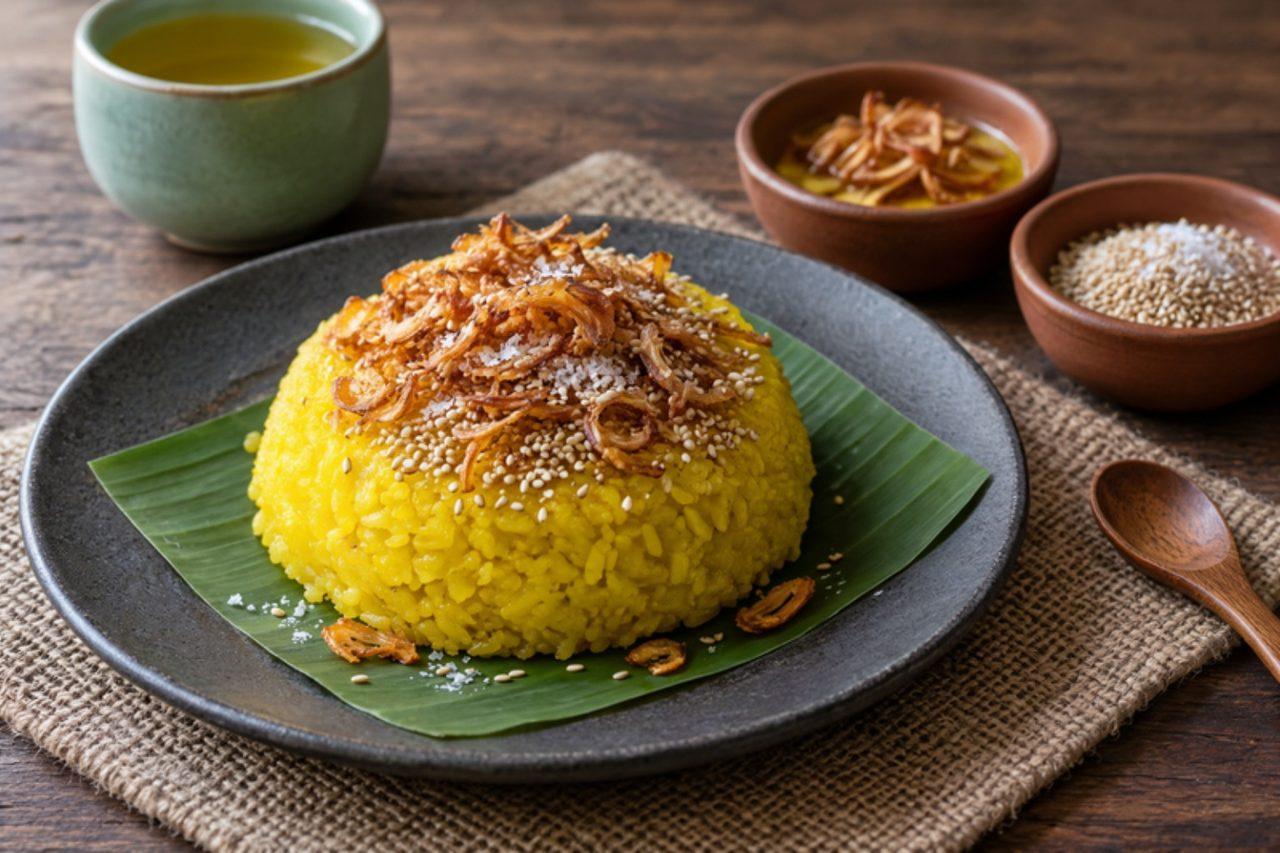
Hsi htaminTurmeric sticky rice with sesame

Hsi htamin, "oil rice", is a breakfast sold wrapped in banana leaf by morning vendors in Yangon and Mandalay: glutinous rice steamed golden with turmeric and oil, then topped with toasted sesame mixed with salt and a heap of crisp fried shallots. It is often paired with boiled yellow peas. The mistake is under-soaking the rice; it needs at least 4 hours, or overnight, to steam evenly. Chef's tip: fry the shallots first and use their fragrant oil in the rice; that oil is the soul of the dish.

by KrazyBadal 0 views

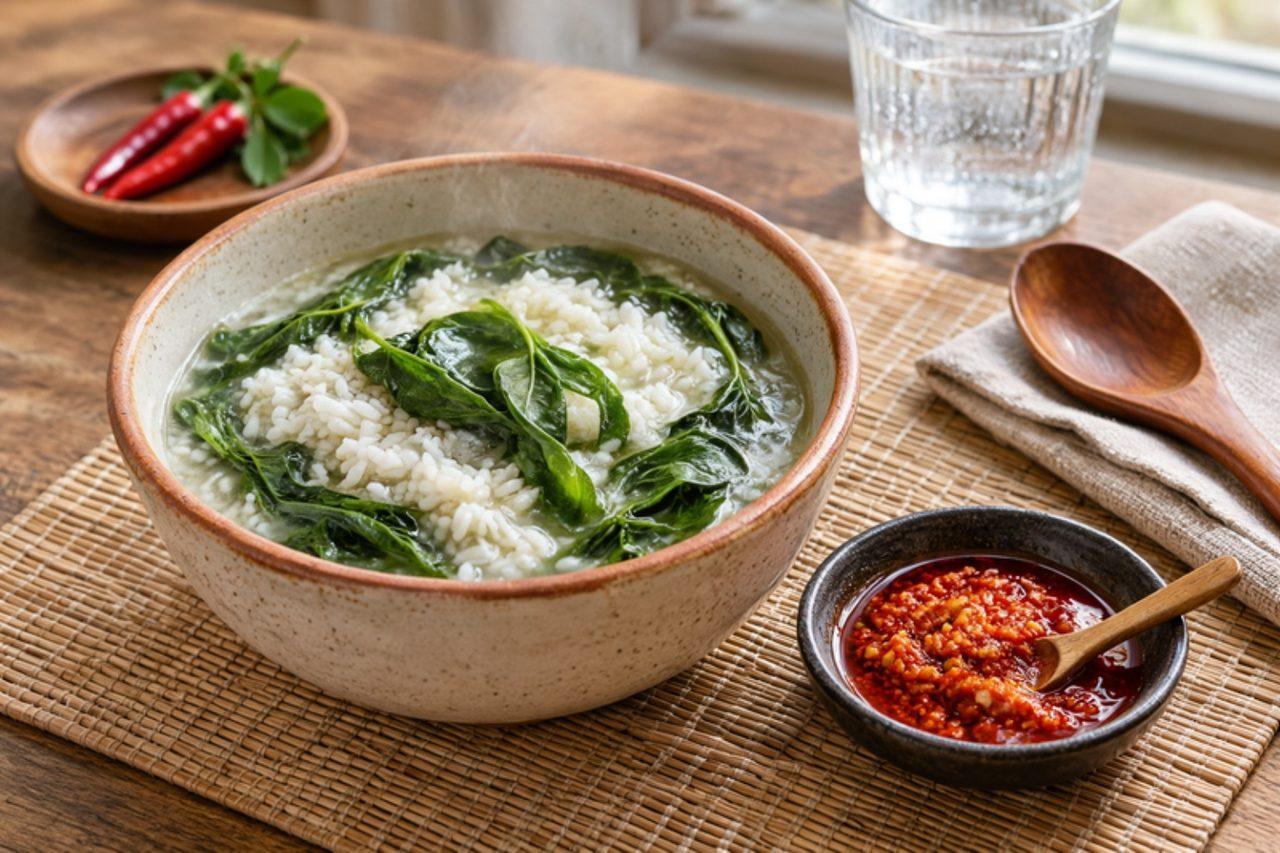
Vary sosoaRice soup with greens

In Antananarivo and across the highlands, the day starts with a bowl of vary sosoa: rice cooked with plenty of water until the grains are soft and loose in their milky cooking liquid, wetter than plain rice but not as smooth as congee. Stalls serve it with kitoza (dried meat), eggs or a spoon of fiery sakay; this vegan version tops it with garlicky greens and homemade sakay chilli paste. The common mistake is stirring it like risotto, which makes it gluey; stir only now and then. Chef's tip: make the sakay the day before; the ginger and chilli mellow overnight in the oil.

by KrazyBadal 0 views

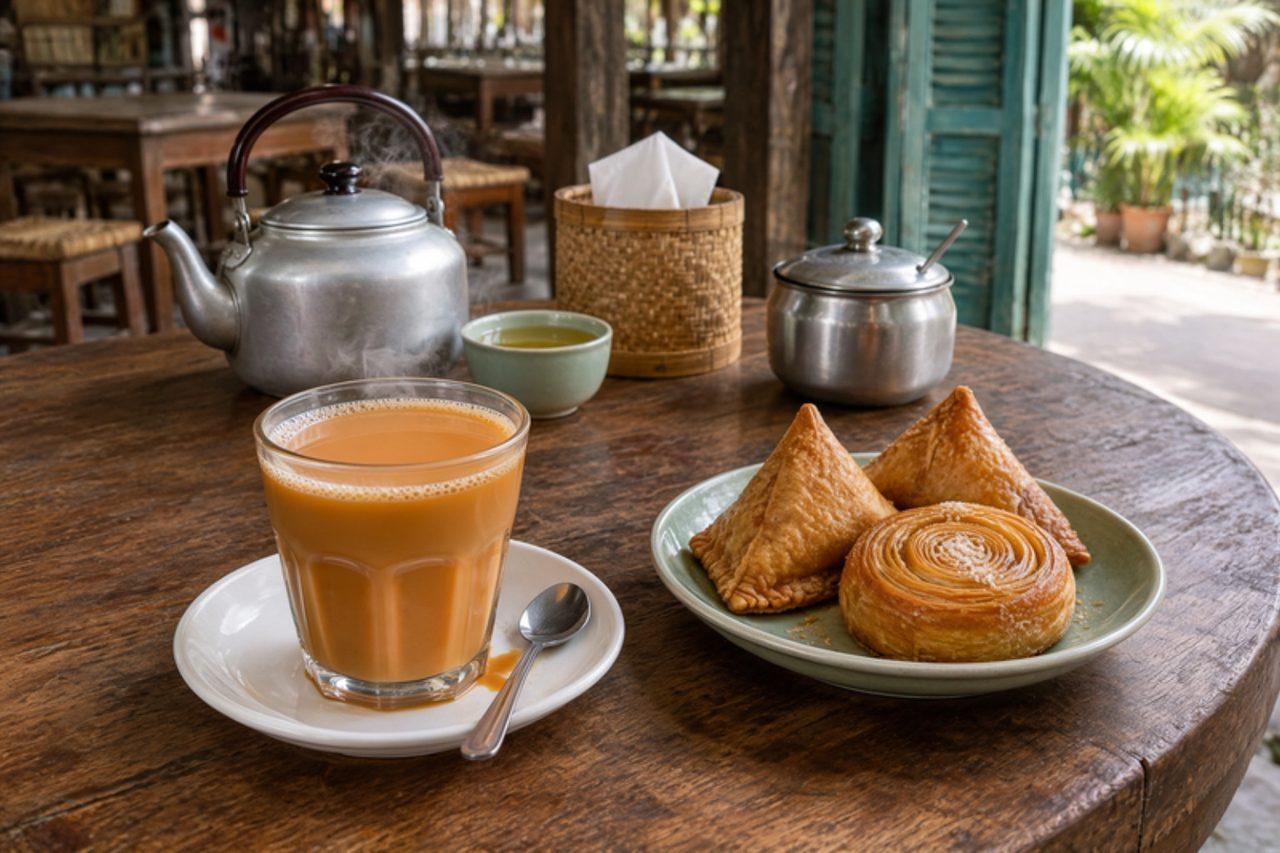
Lahpet yay (Burmese milk tea)

Yangon runs on lahpet yay. From before dawn, crowded teashops set out tiny plastic stools on the pavement, and the tea comes with mohinga, palata or a plate of samusa; people linger again at four in the afternoon to talk. The tea is a dark, very strong brew of cheap black leaf that has been boiled and kept hot in a kettle, mixed in the cup with condensed milk and evaporated milk. Regulars order in code: cho seint is sweet and creamy, kya seint is strong and less sweet, pawsein is the standard. It should be thick, silky, sweet, faintly smoky and bitter underneath. The common mistake is brewing it like ordinary tea: it ends up thin and the condensed milk just tastes of sugar. Boil the leaves hard and then let them stand so the liquor is almost black; the bitterness is needed to stand up to the milk. It is ready when the tea poured from height into the cup has a light froth and the colour of milk chocolate. It is strongly caffeinated, so not one for children or late evenings. Chef's tip: pour the finished tea between two jugs a few times to cool it slightly and give it the teashop froth.

by KrazyBadal 0 views

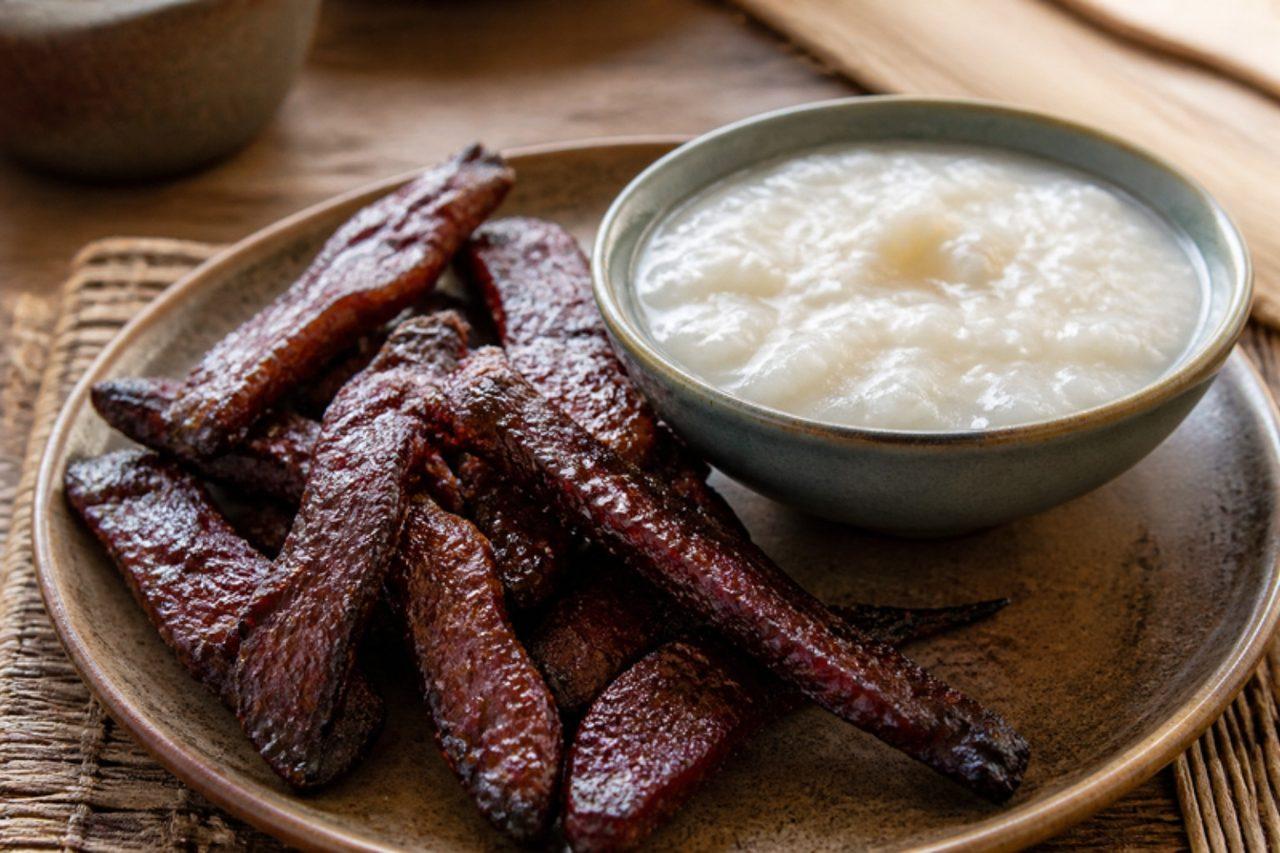
KitozaSmoked dried beef strips

Butchers in the Highland markets of Antananarivo and Ambositra hang long, dark strips of kitoza above smoky fires, and households grill a few pieces each morning to eat with a bowl of soft rice. The meat is lean, cut with the grain, seasoned with salt, garlic, ginger and pepper, then dried until it is chewy and concentrated; a quick grill before serving gives it a smoky, salty crust. This home version uses beef in place of zebu and, for safety, cooks the strips to 71 °C in the oven before drying them slowly at a low heat. It is not for pregnant women, young children or anyone with a weakened immune system. The common mistake is cutting the strips too thick, which leaves them leathery outside and damp inside. Chef's tip: half-freeze the beef for an hour so you can slice it in even 5 mm strips.

175 minMalagasyMeatGluten free
by KrazyBadal 0 views

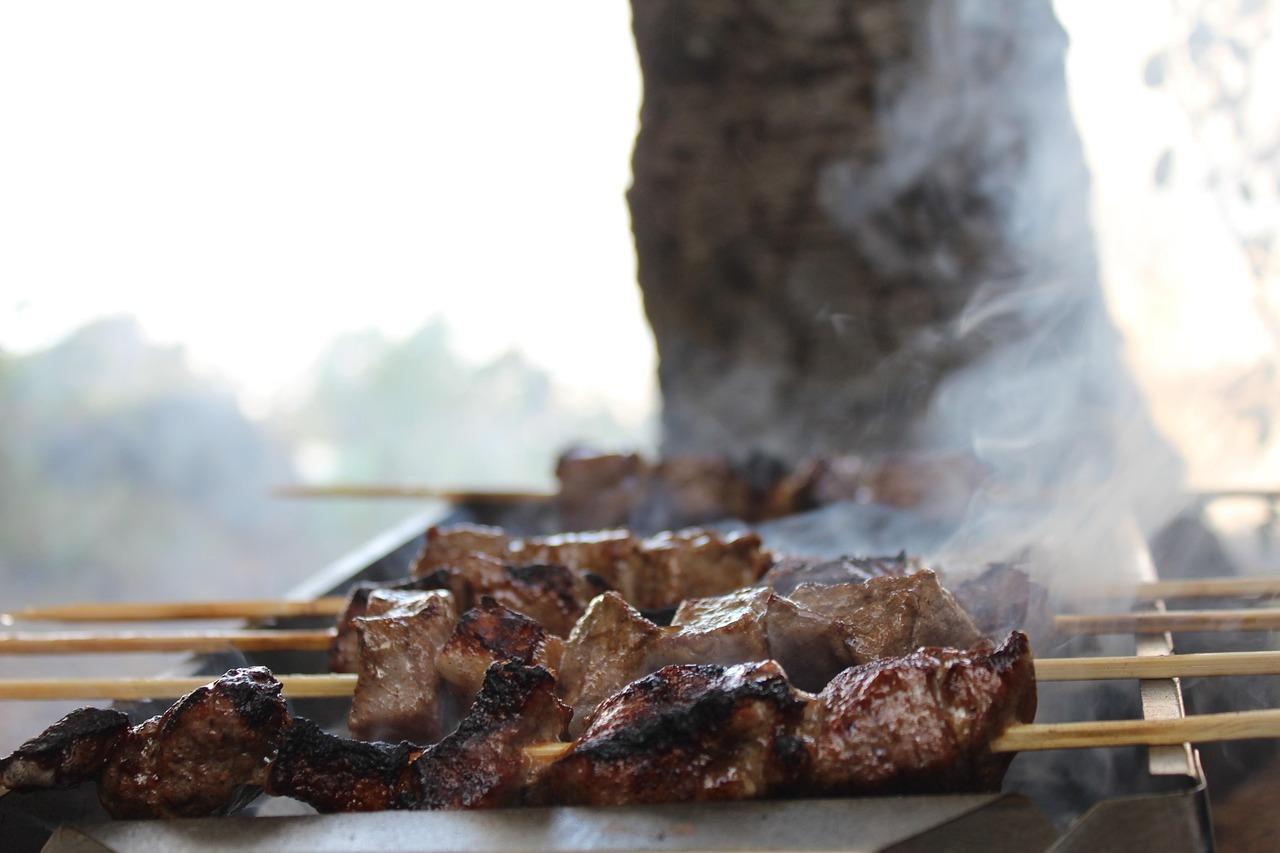
MasikitaGrilled beef skewers

As the light fades in Mahajanga, Toliara and Antananarivo, the smoke from masikita grills drifts along the pavements, with vendors fanning glowing charcoal under rows of tiny skewers. In Madagascar they are made with zebu, the humped cattle that are central to life on the island; good beef rump or sirloin is the closest match at home. Small cubes are marinated with garlic, ginger, pepper and a little oil, threaded tightly and grilled fast, so the outside chars and the inside stays juicy. Eat them straight off the stick with sakay, a squeeze of lime and a cold drink, or with rice for dinner. Cutting the cubes too big is the common mistake: masikita should be bite-sized so they cook through in minutes. Chef's tip: soak wooden skewers for 30 minutes first so they don't burn before the beef is done.

by KrazyBadal 0 views

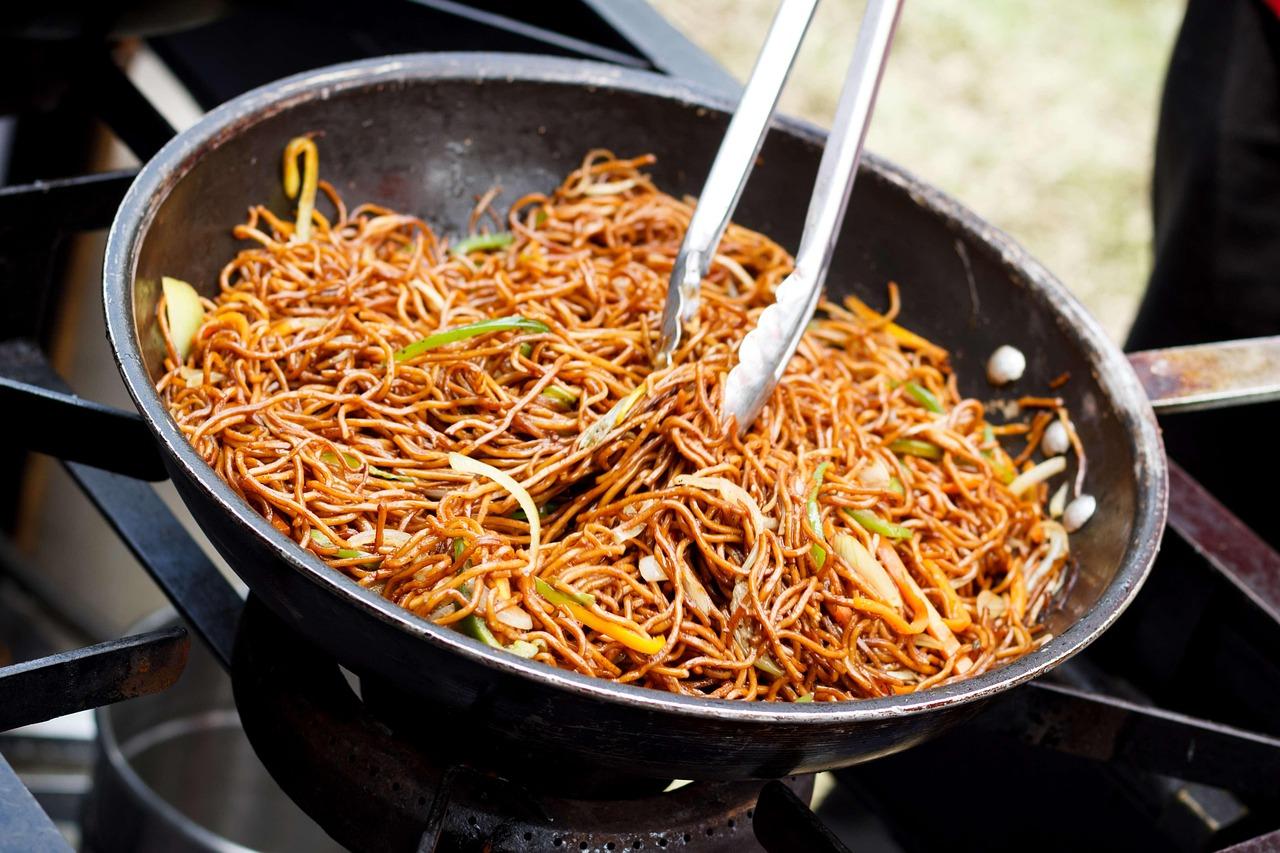
Mi saoVegetable fried noodles

Chinese families who settled in Toamasina and Antananarivo a century ago brought mi sao with them, and it is now one of the most ordered plates at any hotely, often eaten at lunch with a bowl of clear soup on the side. This version is all vegetables: shredded cabbage, carrot, green beans and spring onion tossed with springy wheat noodles, garlic, ginger and soy sauce until glossy and a little smoky. Because of the soy sauce and wheat noodles it is not gluten free. Overcrowding the pan is the usual mistake; it steams everything into a limp tangle, so cook in two batches if your wok or pan is small. Chef's tip: rinse the boiled noodles in cold water and toss them with a few drops of oil, so they fry into separate strands instead of a sticky clump.

by KrazyBadal 0 views

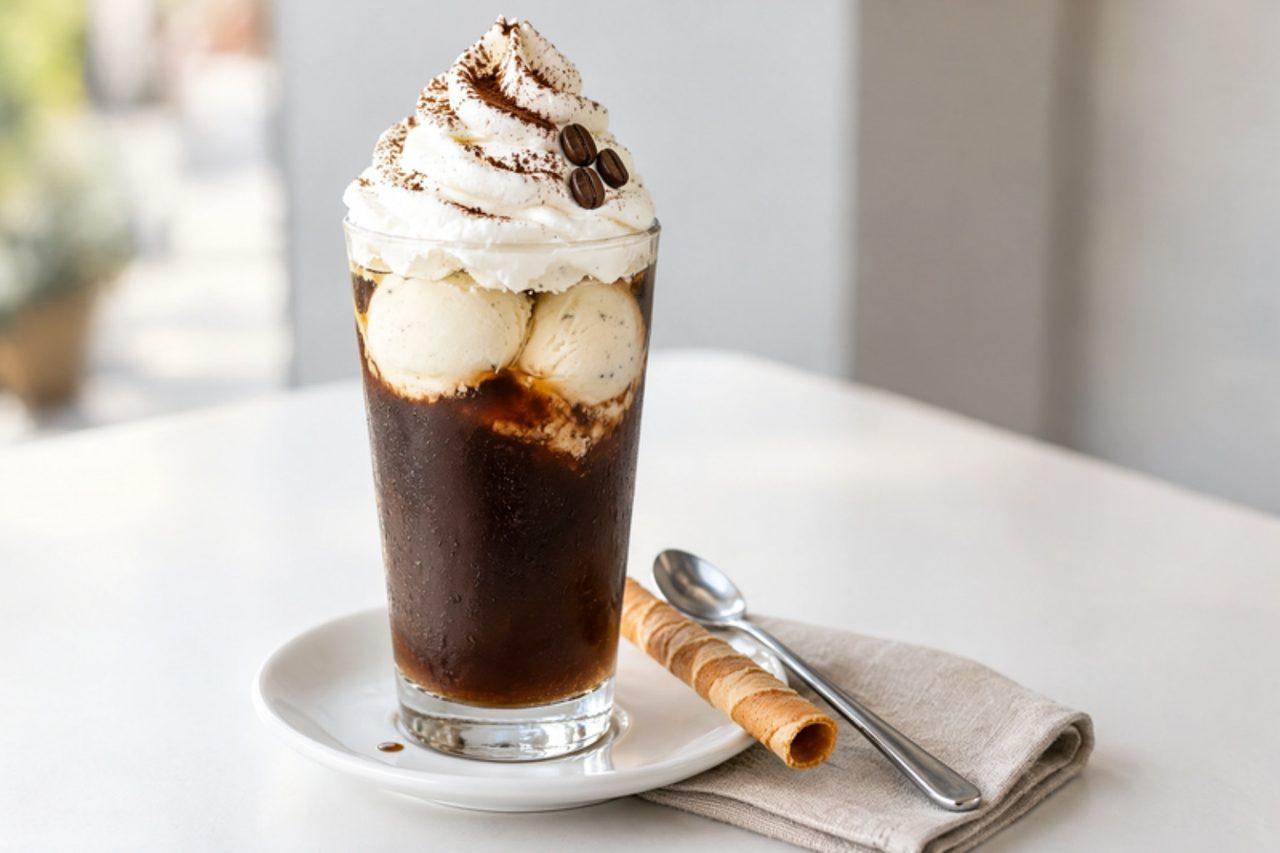
EiskaffeeIced coffee with ice cream

On a hot July afternoon in any German or Austrian Eiscafé, from a Hamburg promenade to a Viennese Gastgarten, the tall glass with the long spoon is Eiskaffee. It is not iced coffee in the American sense: strong coffee, chilled, is poured over two scoops of vanilla ice cream and crowned with sweetened whipped cream, sometimes a wafer and a dusting of cocoa or grated chocolate. You drink the cold coffee through a straw while the ice cream slowly melts into it, then spoon up the creamy, half-frozen rest, so it is part drink, part dessert, eaten at the café in the afternoon rather than with a meal. The usual mistake is pouring hot or even warm coffee straight onto the ice cream: it melts at once into a thin, lukewarm, milky soup. Brew it earlier and chill it properly. It is ready when the coffee is fridge-cold, the scoops sit just proud of the surface and the cream holds soft peaks on top. It is moderately caffeinated, so keep it for adults and older teens. Chef's tip: freeze leftover coffee in ice-cube trays and add a couple to the glass so nothing gets diluted with water.

by KrazyBadal 0 views

Grünkohl mit PinkelBraised kale with smoked sausage

In Bremen and Oldenburg, Grünkohl mit Pinkel is the dish of the winter Kohlfahrt, when groups walk out into the frosty countryside and finish at an inn for kale, smoked pork and Pinkel, a smoked sausage of pork, bacon and oats. The kale is braised for hours with onions, lard and smoked pork until dark, soft and almost creamy, then the sausages warm through on top. Serve with boiled potatoes or small caramelised ones and mustard. The usual mistake is cooking the kale briefly like a vegetable side; it needs the long braise to lose its bitterness. Chef's tip: kale is best after the first frost, which makes the leaves sweeter; frozen chopped kale is a good shortcut.

160 minGermanMeat
by KrazyBadal 0 views

MohnschneckePoppy seed rolls

Every German bakery counter has a tray of Mohnschnecken next to the cinnamon and nut snails, and they are bought by the bag for Saturday breakfast and afternoon coffee. A soft, buttery yeast dough is spread with a thick filling of ground poppy seeds cooked in milk with sugar and lemon, rolled up, sliced and baked, then brushed with a thin lemon glaze. The usual mistake is using whole poppy seeds straight from the jar: they must be ground (or bought ground, as "Mohn gemahlen") or the filling stays gritty and bland. Chef's tip: cool the poppy filling completely before spreading it, because a warm filling melts the butter in the dough and the spirals unroll in the oven.

by KrazyBadal 0 views

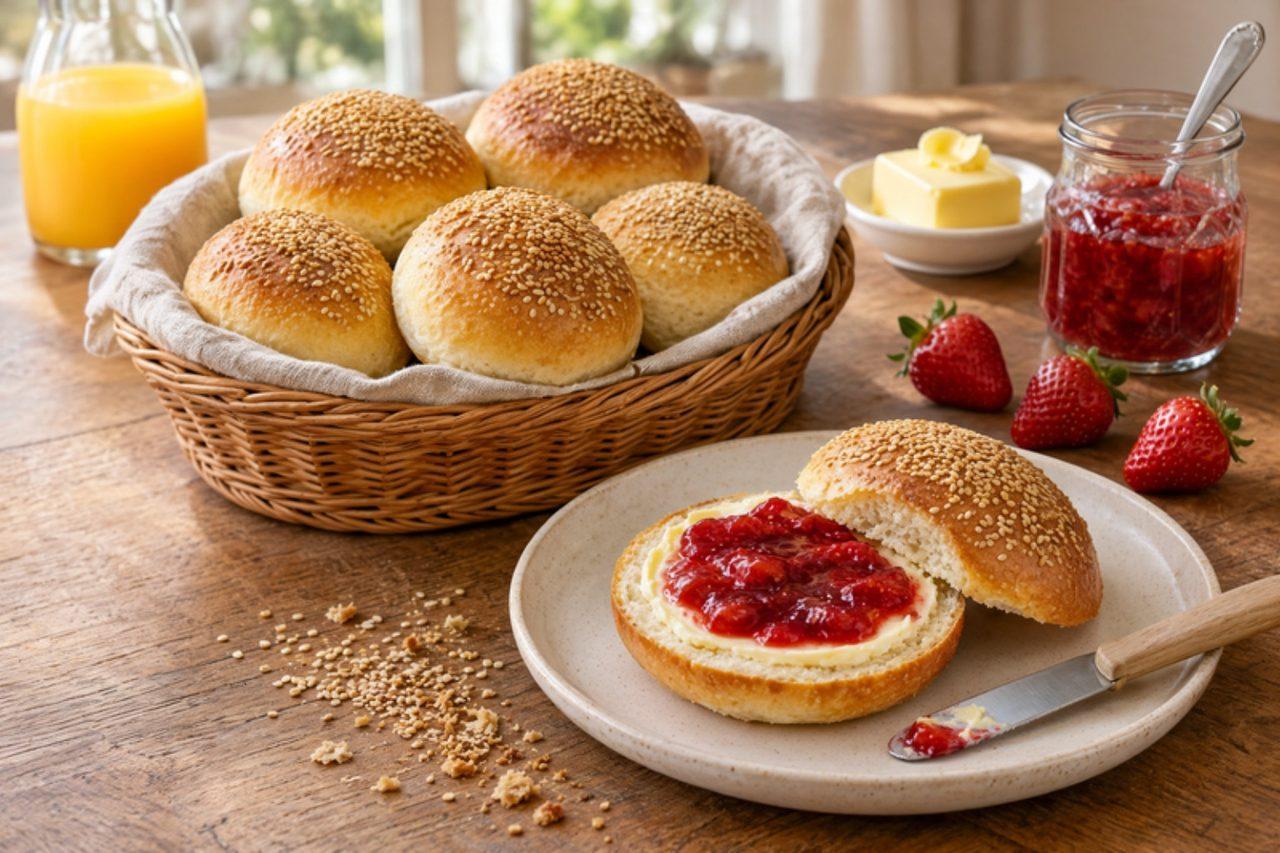
QuarkbrötchenQuark bread rolls

In German homes Quarkbrötchen are the Sunday-morning answer to an empty bread bin: no yeast, no rising, just quark, egg, flour and baking powder, shaped and in the oven while the coffee brews. They come out with a thin golden crust and a soft, slightly tangy crumb, best split warm with butter and jam or a slice of cheese. The usual mistake is kneading the dough like bread, which makes the rolls tough and flat; mix only until it comes together. Chef's tip: if your quark is very wet, drain it in a sieve for 10 minutes first, or the dough turns sticky and you end up adding so much flour that the rolls go dry.

by KrazyBadal 0 views

RinderrouladenStuffed beef rolls

Rinderrouladen are the Sunday and holiday roast of Germany, made by grandmothers from the Rhineland to Saxony and served at Christmas with red cabbage and potato dumplings. Thin slices of beef are spread with mustard and rolled round smoked bacon (pork), onion and gherkin, then browned and braised for two hours in red wine and stock until tender, giving a deep, glossy gravy. For an alcohol-free version use extra stock with a tablespoon of red wine vinegar. The usual mistake is rolls that unravel in the pot; tie them firmly or pin with two cocktail sticks. Slow-cooker: after browning, cook on low for 7 hours, then thicken the sauce in a pan. Chef's tip: ask the butcher for topside sliced 5 mm thick and beat it a little thinner, so it rolls easily without tearing.

165 minGermanMeat
by KrazyBadal 0 views

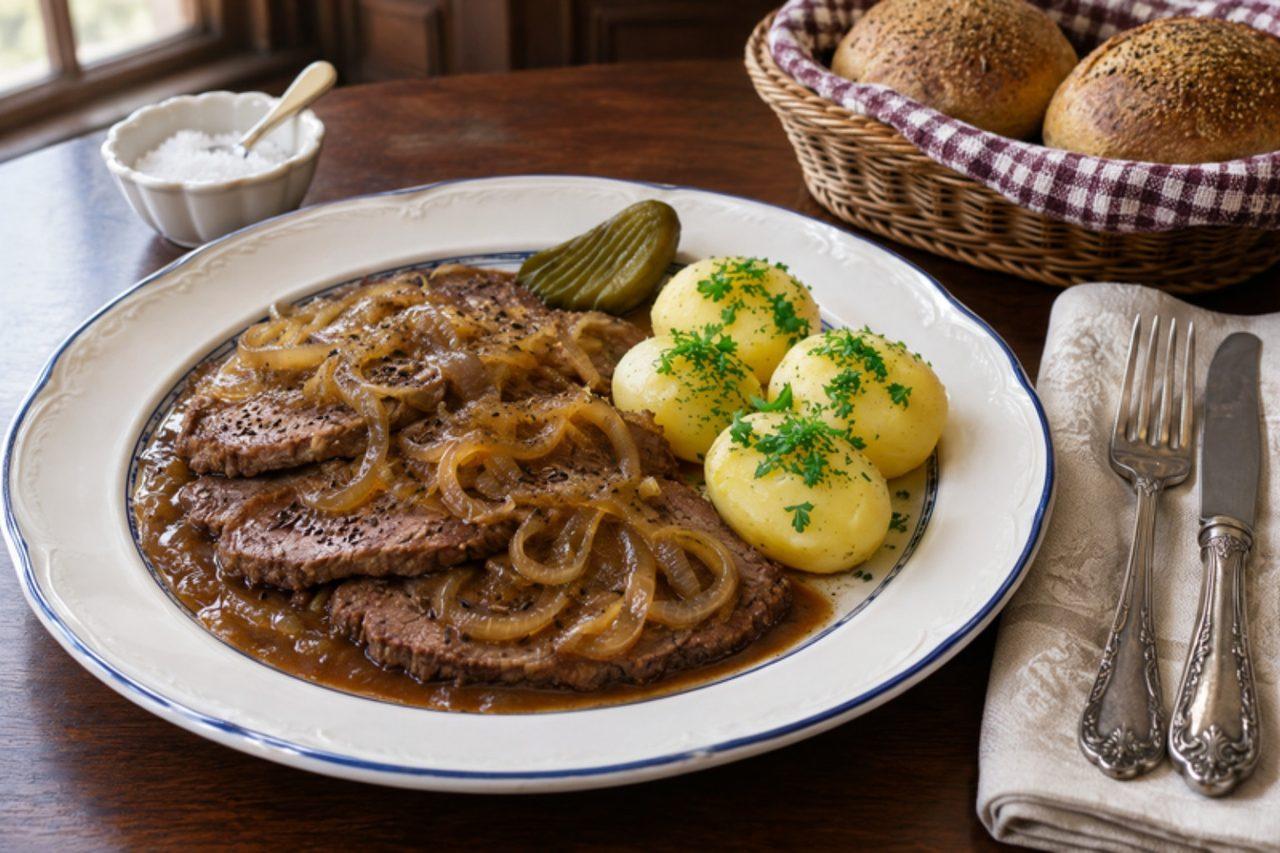
ZwiebelfleischBeef braised with onions

Zwiebelfleisch is an old Viennese Beisl dish, the kind of hearty lunch an inn serves on a cold weekday, with boiled or fried potatoes alongside. Thin slices of beef braise slowly with a mountain of onions, a splash of vinegar, caraway and marjoram until the onions melt into a sweet, tangy gravy. The usual mistake is browning the onions too fast: they turn bitter, so let them colour slowly to a deep gold. Pressure-cooker: 25 minutes at high pressure after browning. Chef's tip: a teaspoon of mustard stirred in at the end rounds out the sauce and brightens the vinegar.

125 minGermanMeat
by KrazyBadal 0 views

Laphet yayBurmese milk tea

Burmese teashops, from the busy corners of Yangon to small-town Shan State, run on laphet yay: very strong black tea poured over condensed and evaporated milk, and customers order it by sweetness, from "pan pyar" (less sweet) to "cho seint" (extra sweet and creamy). It comes with samusa, palata or a bowl of mohinga. The mistake is weak tea: it must be brewed long and dark so it stands up to all that milk. Chef's tip: pour the finished tea from one jug to another from a height a few times; it cools slightly and gets the frothy top teashops are proud of.

by KrazyBadal 0 views

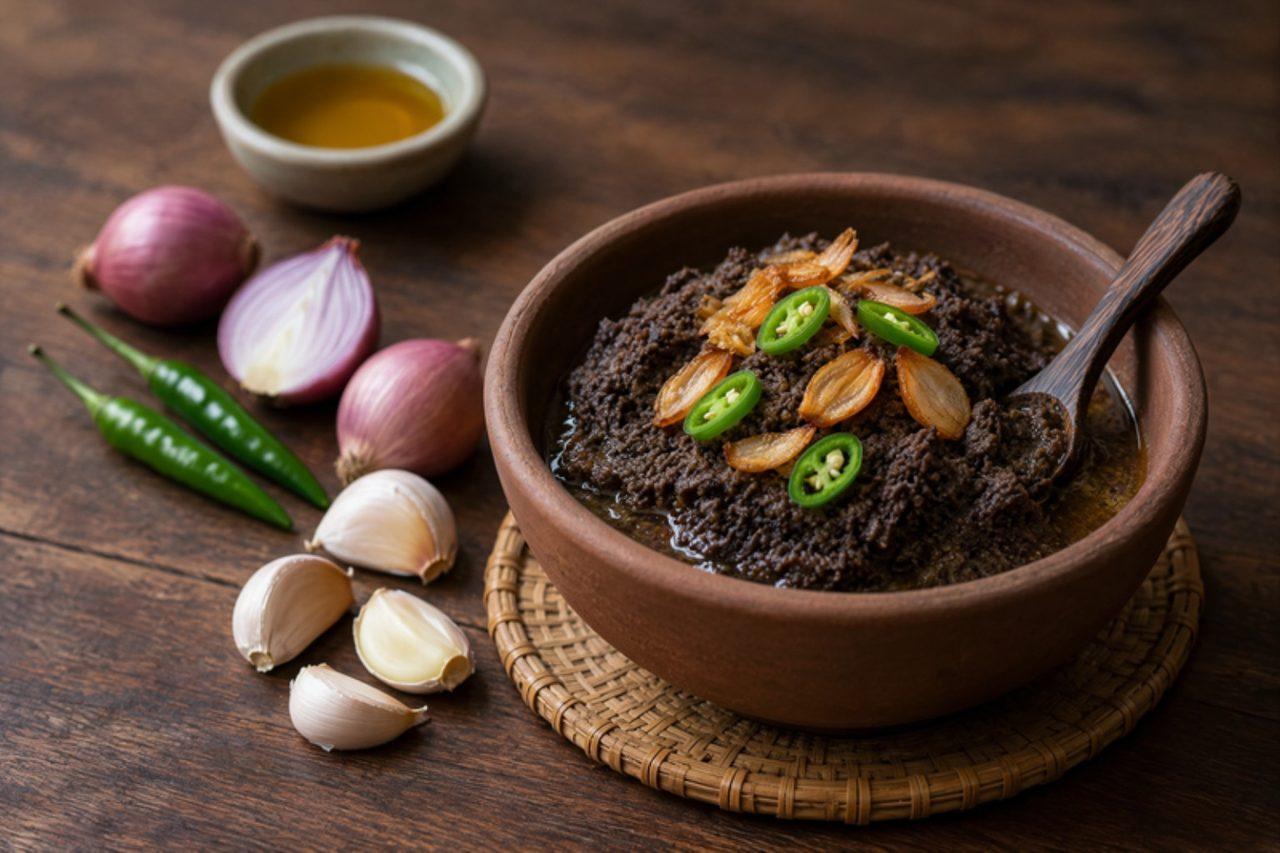
Pon ye gyiFermented bean sauce

Bagan, among its thousands of temples, is just as known in Myanmar for pon ye gyi, the thick, glossy black bean paste sold in clay pots at Nyaung-U market. Workshops there boil beans, ferment them under cloth, steep them in brine and boil the dark liquid down for hours. At home it is a seasoning rather than a dip: fried with garlic, onion and chilli as pon ye gyi kyaw, it becomes the savoury base for pork or chicken curries and for stir-fried greens, and is eaten with rice and raw vegetables through the hot dry season. The taste is deeply salty, savoury and slightly sweet-bitter, with a soft funk like miso and black bean sauce combined, and a texture like thick molasses. Common mistake: stopping the reduction too soon; a thin brown sauce will not keep and lacks depth, so cook it until it is black, glossy and falls from the spoon in ribbons. Bagan makers use different beans; this home method uses soybeans with a Bacillus-style ferment like thua nao. It is ready when a spoonful sets into a thick gloss on a cold plate. Chef's tip: stir more often near the end, when it can catch.

by KrazyBadal 0 views

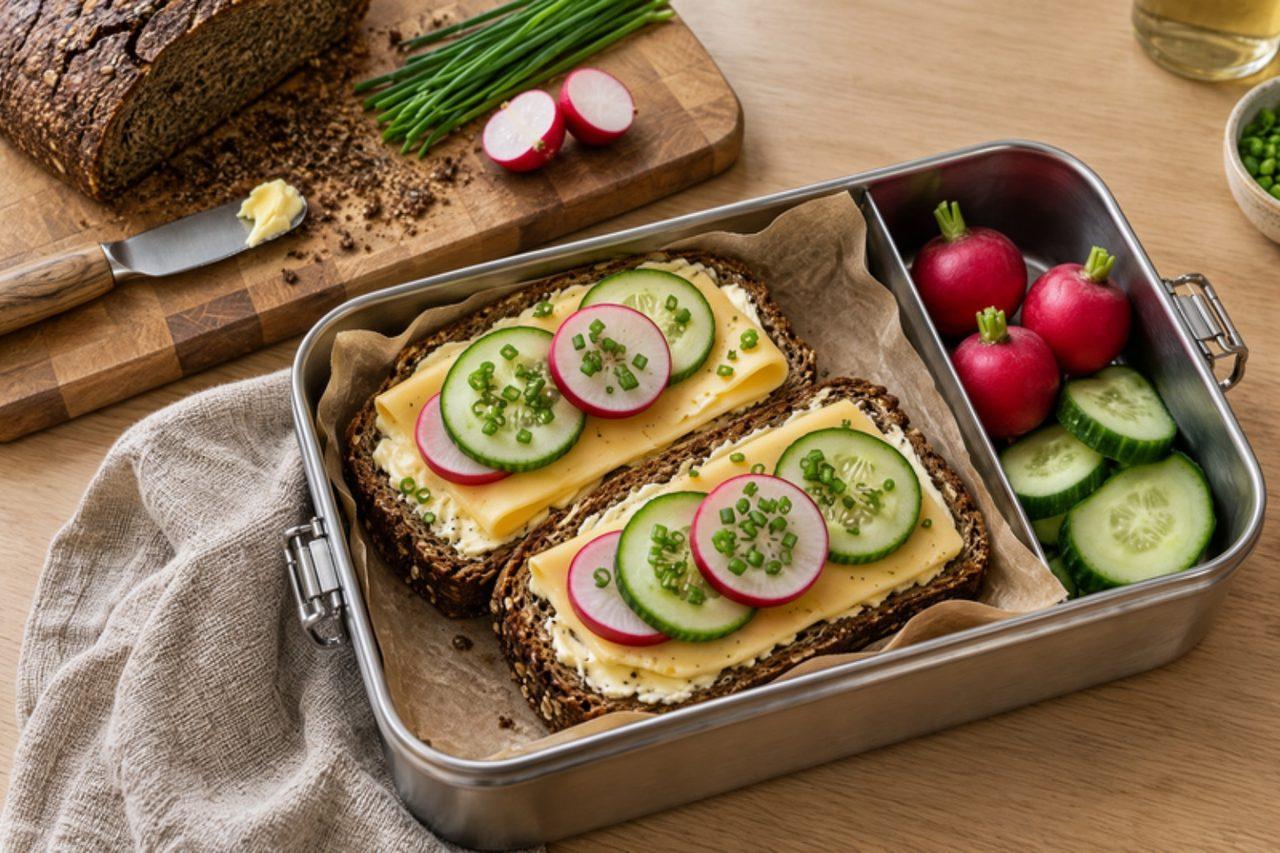
ButterbrotRye bread with cheese and vegetables

Every German schoolchild knows the Pausenbrot: two slices of rye or mixed-grain bread spread with good butter, closed around a slice of cheese, wrapped in paper and eaten in the mid-morning break, with a few cucumber or apple slices on the side. Adults take the same Butterbrot to work. The common mistake is spreading cold, hard butter, which tears the bread and leaves bare patches that let any wet filling soak in. Many Gouda-style cheeses use animal rennet, so choose one marked vegetarian. Chef's tip: butter right to the crust on both slices; the butter is a waterproof layer that keeps the bread fresh until lunchtime.

by KrazyBadal 0 views

Mofo menakelyRice flour doughnuts

Ring-shaped and no wider than a teacup, mofo menakely are fried in wide pans of oil at dawn on the street corners of Antananarivo and Antsirabe, then sold by the bagful to people heading for the bus. Rice flour gives them a crisp, slightly sandy shell and a chewy, faintly sour crumb from the slow rise, and they are only lightly sweet, which is why the Highlands dunk them in sugary coffee. Wheat flour helps the dough hold its shape; a few cooks go all rice and shape with wet hands. Expect the batter-like dough to feel too soft at first: adding more flour to make it handleable is a mistake that leaves them dense. Chef's tip: shape each ring straight into the hot oil from a wet palm, poking the hole with a wet finger, rather than trying to roll the dough on a board.

by KrazyBadal 0 views

Showing 24 of 239 recipes

Show more recipes

Page 1 of 10