Skip to content
Recipes

All recipes

Vegetarian, or something you can't eat? Set your diet once and we'll hide recipes that don't fit.

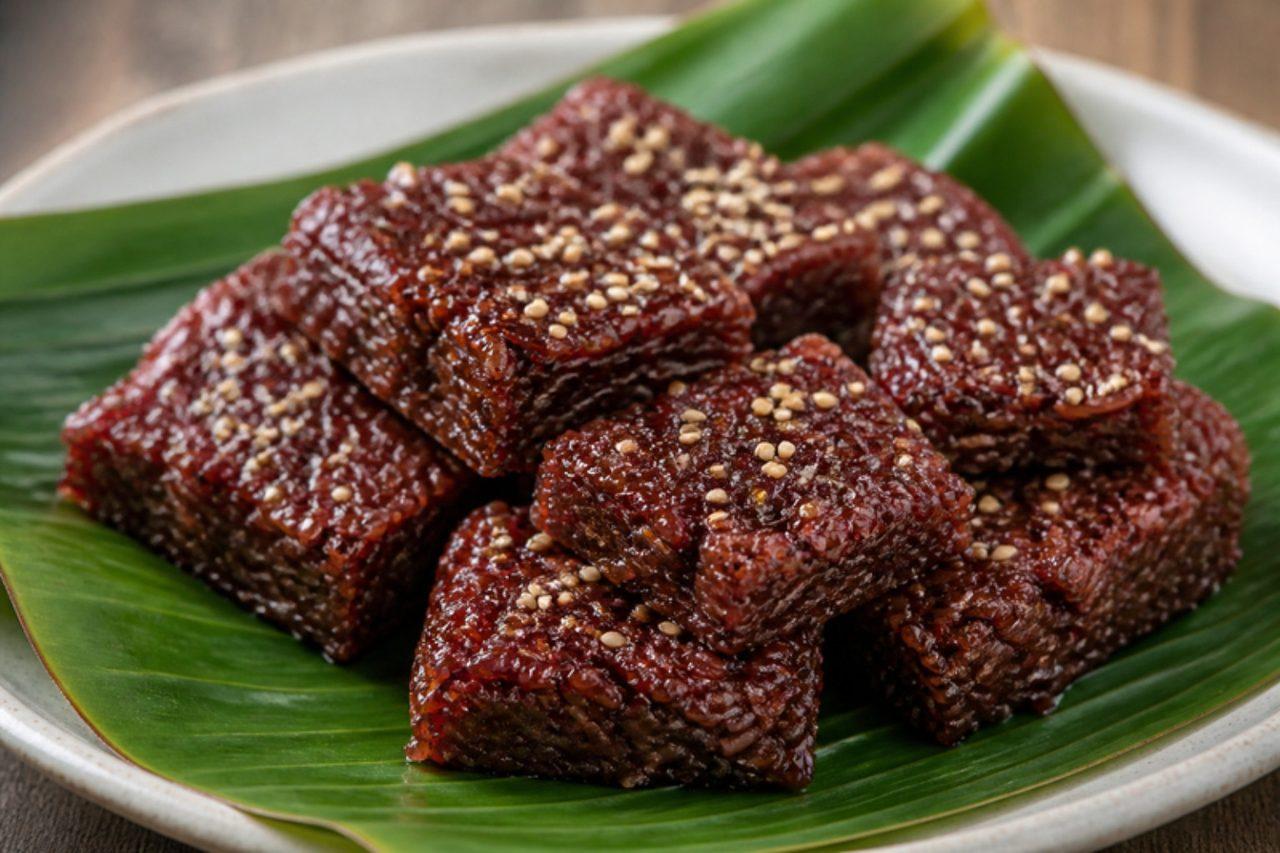
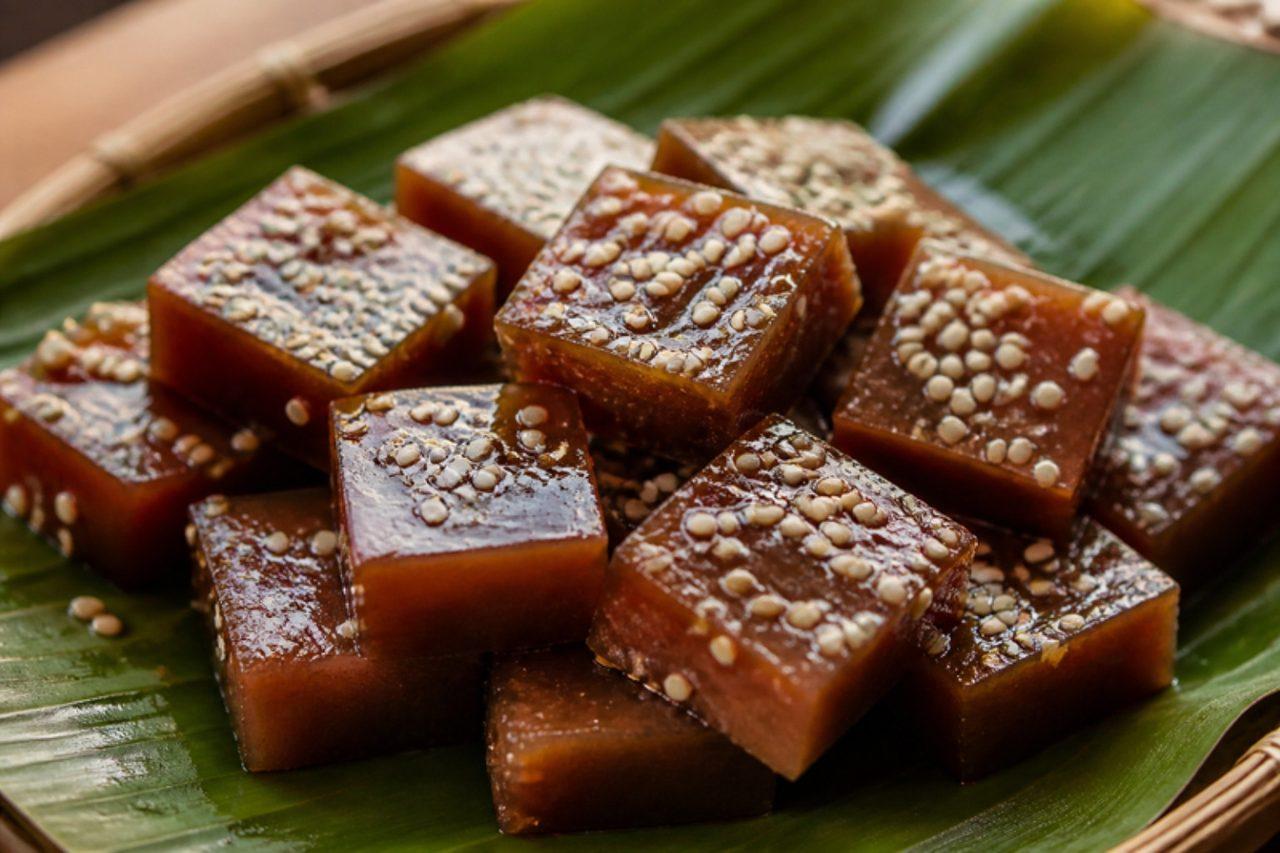
Kalamae (Thai coconut caramel sticky rice sweet)

Kalamae is the Songkran sweet of Central Thailand: in villages, neighbours take turns at a huge wok for hours, and the finished trays go to monks and elders at the New Year, the long shared stirring standing for a community pulling together and the sweetness for a sweet year ahead. Glutinous rice flour, coconut milk and palm sugar slowly turn from milky beige to a deep mahogany paste that is chewy, a little smoky and rich with coconut. Cut it into small squares and serve with jasmine tea, or wrap the pieces in banana leaf to give away. A home batch takes about two and a half hours at the stove, so put on some music and keep a wooden spoon moving. Chef's tip: use the widest heavy pan you own; more surface means faster thickening and less risk of scorching.

180 minThaiDessertsVeganGluten free
by KrazyBadal 0 views

Kuih loyang (honeycomb rosette cookies)

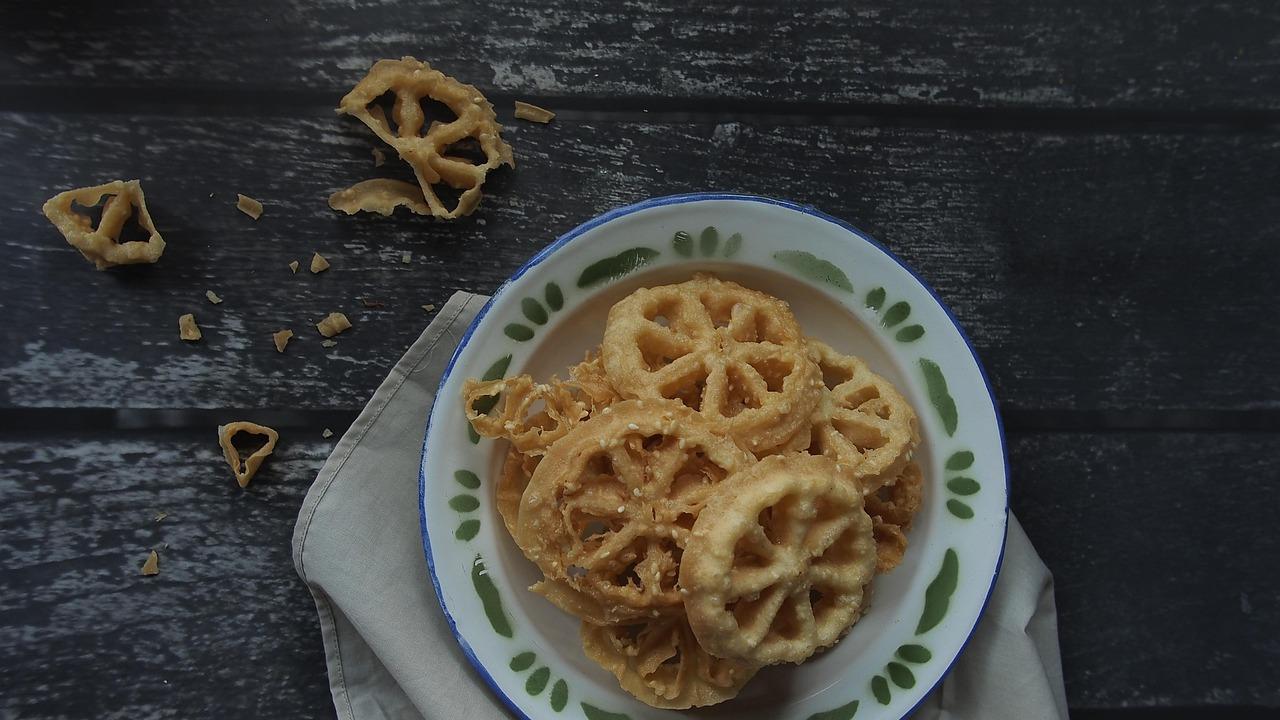
Kuih loyang, also called kuih rose or honeycomb cookies, are made in Malaysia for Chinese New Year and Hari Raya alike, so a jar of them is a small sign of the country's shared festive table. The flower shape stands for blossoming luck in the new year. A thin batter of eggs, coconut milk and rice flour clings to a hot brass or iron mould, and when it is dipped in hot oil it puffs into a lacy flower that shatters at the bite and tastes gently of coconut and sesame. Serve them with tea or coffee. Chef's tip: heat the empty mould in the oil before every cookie; a cold mould means the batter won't stick, and an overheated one makes it slide off.

by KrazyBadal 0 views

Krathong thong (crispy golden cups with chicken)

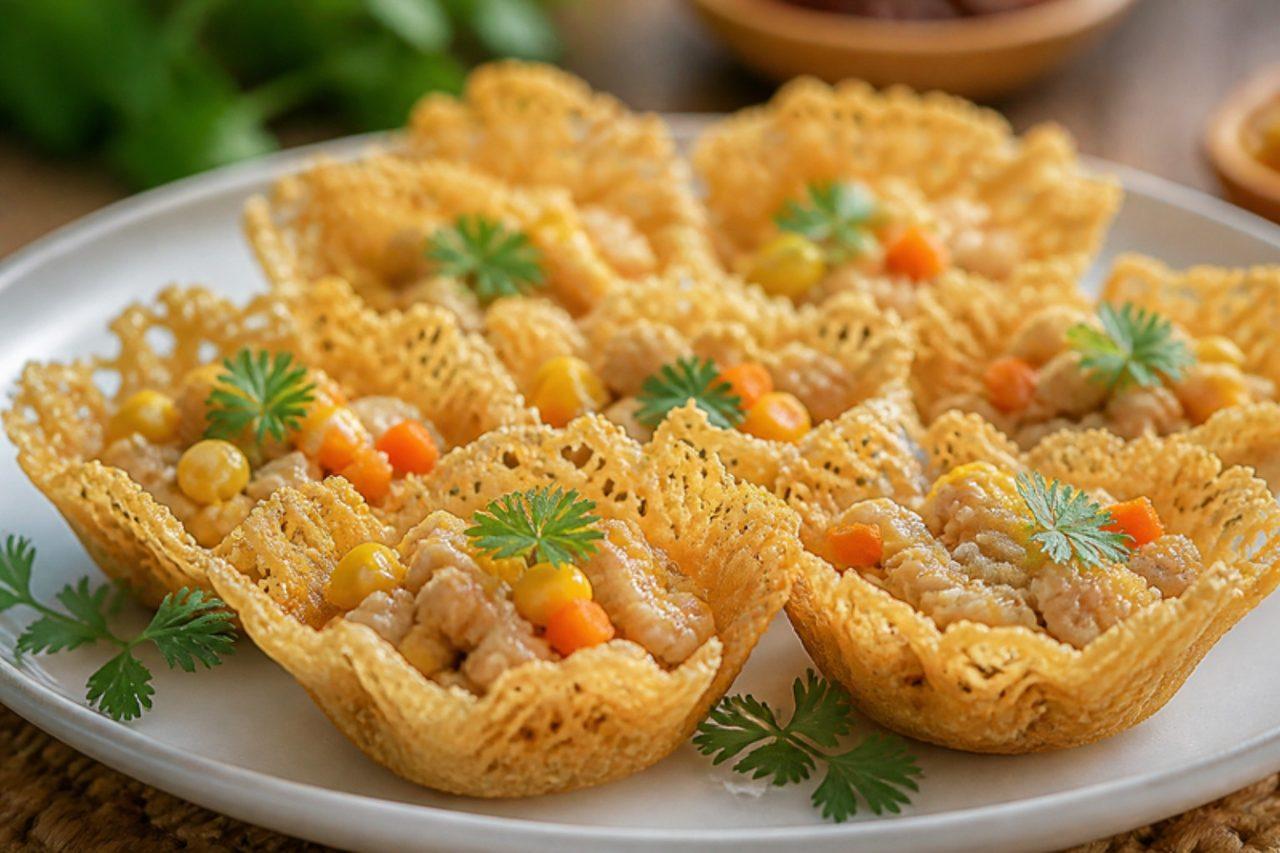
Krathong thong, "golden baskets", are named after the little floating krathong set on the rivers at Loy Krathong in Central Thailand, and their golden colour makes them a party bite for wishing wealth at festivals and New Year gatherings. A thin rice-flour batter is fried on a hot flower-shaped mould into crisp, delicate cups that shatter at the first bite. The filling is minced chicken cooked with sweetcorn, carrot, garlic and a little sugar, so it is gently sweet and savoury, which children love. Serve them as a starter with a sweet chilli dip, filling the cups just before serving so they stay crisp. Chef's tip: the cups keep for a week in an airtight tin, so fry them a day ahead and only cook the filling on the day.

by KrazyBadal 0 views

Khao chae (jasmine-scented chilled rice)

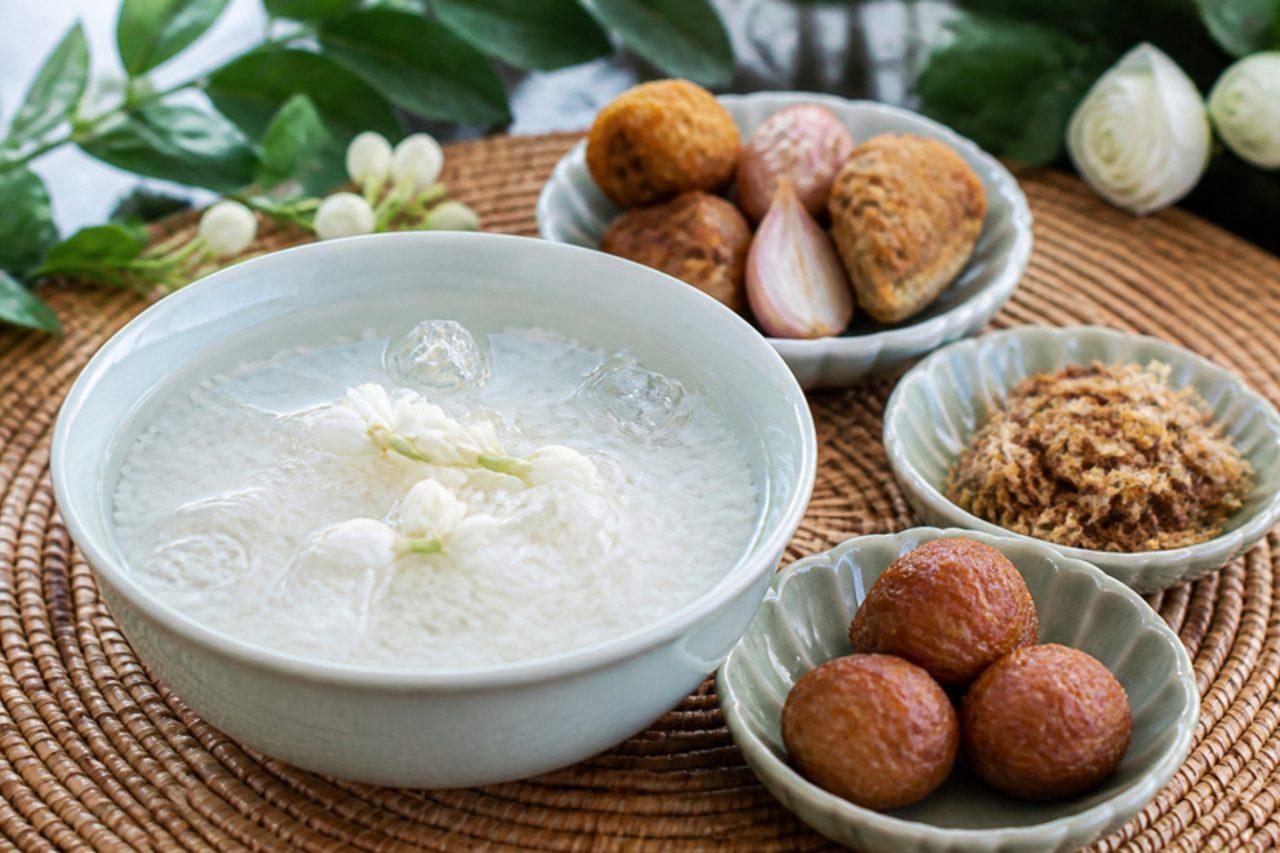
Khao chae came to Central Thailand with the Mon people and became the classic Songkran lunch for the hottest days of April: rice served in iced, flower-scented water to cool the body and honour the New Year with something cool and fresh. The rice sits in its fragrant water, surrounded by little savoury bites eaten in turn: fried shrimp-paste balls (luk kapi), battered stuffed shallots and moo foi, sweet shredded pork fried until it is dry and caramelised. Each mouthful is a bite of salty-sweet side followed by a spoon of cold, clean rice. Scent the water with food-safe, unsprayed jasmine flowers or a few drops of food-grade jasmine extract, never florist's flowers. Chef's tip: rinse the cooked rice to wash off its starch so the water stays clear and the grains stay firm.

by KrazyBadal 0 views

Kuih kapit (love letters)

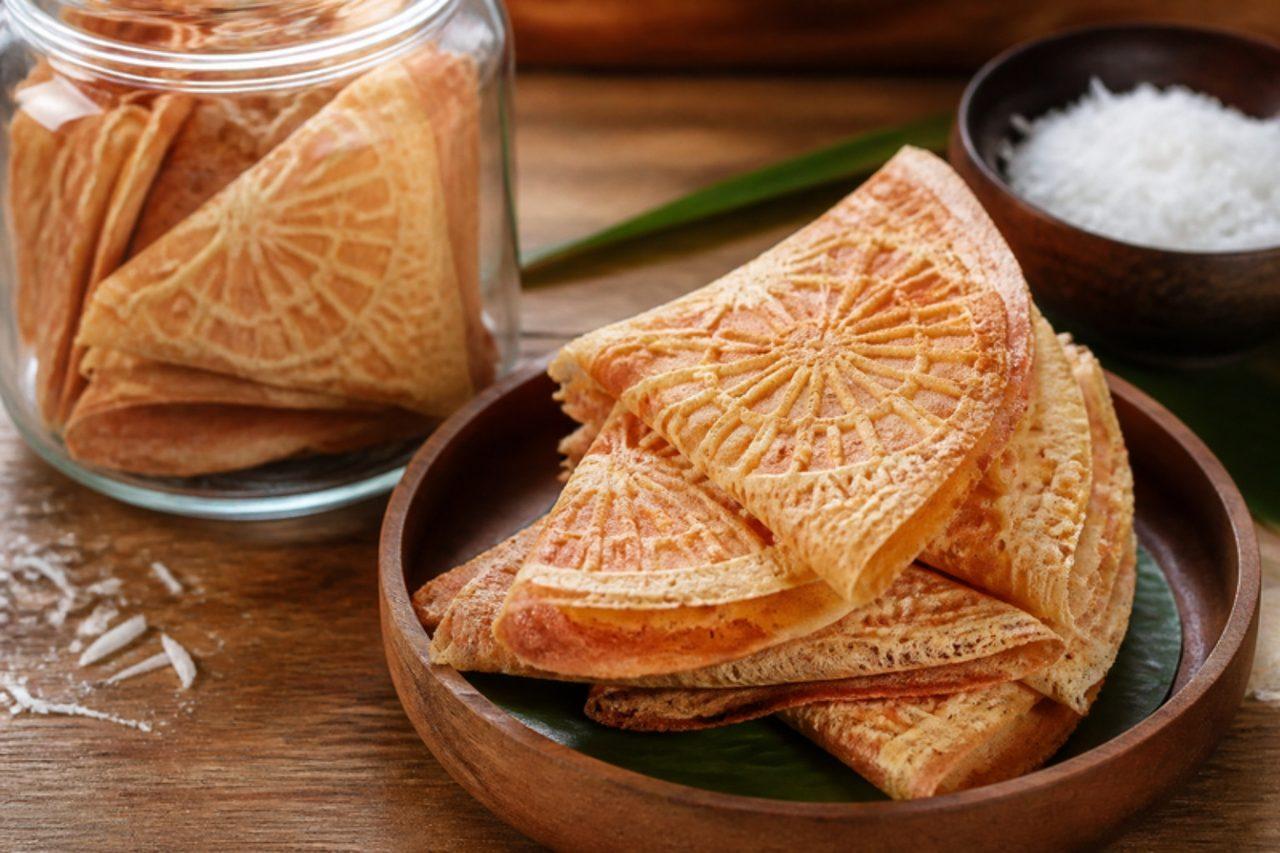
Kuih kapit, known in English as love letters, are the crisp coconut wafers that fill tins on coffee tables across Malaysia, especially in Penang, at Chinese New Year. Their folded shape is said to hold a sweet secret message, and the patterned moulds often carry lucky symbols, so a tin of them is a wish for a sweet, happy year. Each one is a thin batter of coconut milk, eggs, sugar and rice flour cooked between hot patterned irons and folded quickly while soft, cooling into a light, shattering wafer that tastes of toasted coconut and caramel. Serve with tea, and keep the tin tightly closed. Chef's tip: the first few wafers are always for testing; adjust the heat until each one is pale gold in about 30 seconds a side.

by KrazyBadal 0 views

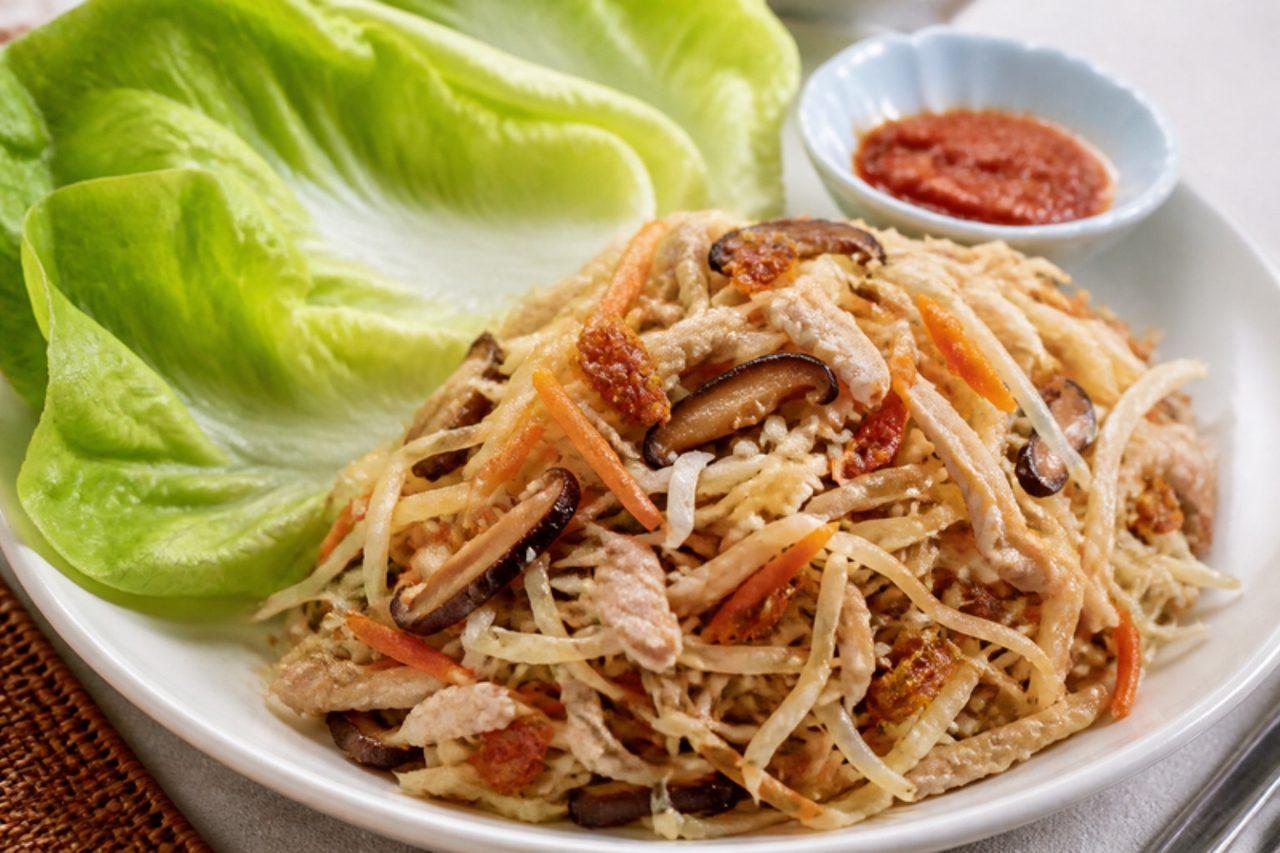
Jiu hu char (dried cuttlefish and jicama stir-fry)

Jiu hu char is a Penang Nyonya dish cooked in big batches for Chinese New Year, when it is passed round as a gift and kept on hand for visitors; its long, fine shreds stand for long life, and the abundance of the pot for a full year. Shredded jicama (yam bean), carrot and cabbage are fried slowly with strips of dried cuttlefish, a little pork and shiitake until sweet, soft and full of the savoury, slightly smoky flavour of the cuttlefish. Wrap spoonfuls in crisp lettuce with a dab of sambal belacan. Chef's tip: cut the vegetables into very fine, even matchsticks; this is what gives the dish its silky texture.

by KrazyBadal 0 views

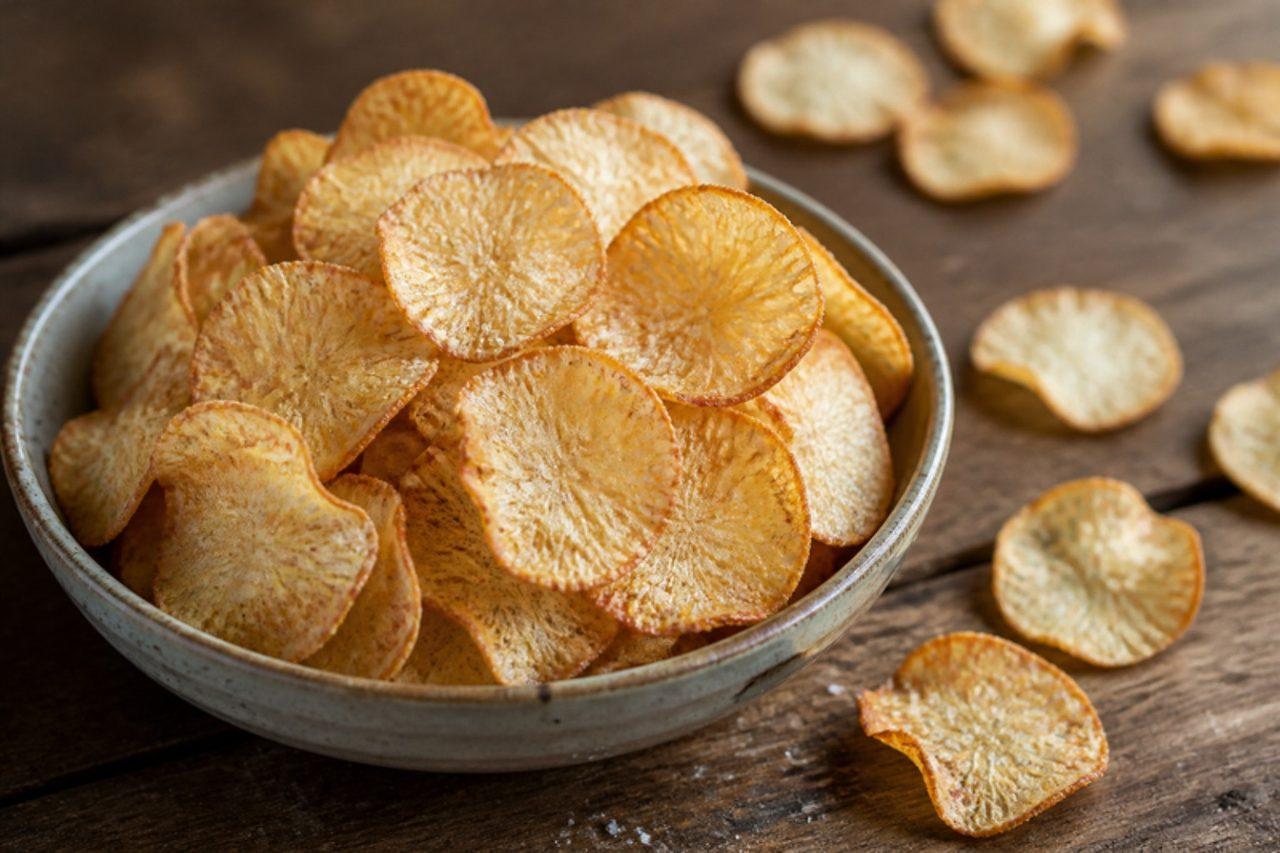
Arrowhead chips (nga gu chips)

Arrowhead (nga gu, or ngaku) is a small aquatic tuber that only shows up in Malaysian markets in the weeks before Chinese New Year, and frying it into chips is a family job. Its curved sprout looks like a shoot rising from the root, so it stands for growth and many descendants in the year ahead. Sliced thin and fried, the chips are crisp and nutty like potato crisps, with a gentle bitterness that keeps you reaching for more. Put them out in jars with peanuts and love letters for visitors. Chef's tip: soak the slices and dry them very well; wet slices make the oil spit and fry up chewy instead of crisp.

by KrazyBadal 0 views

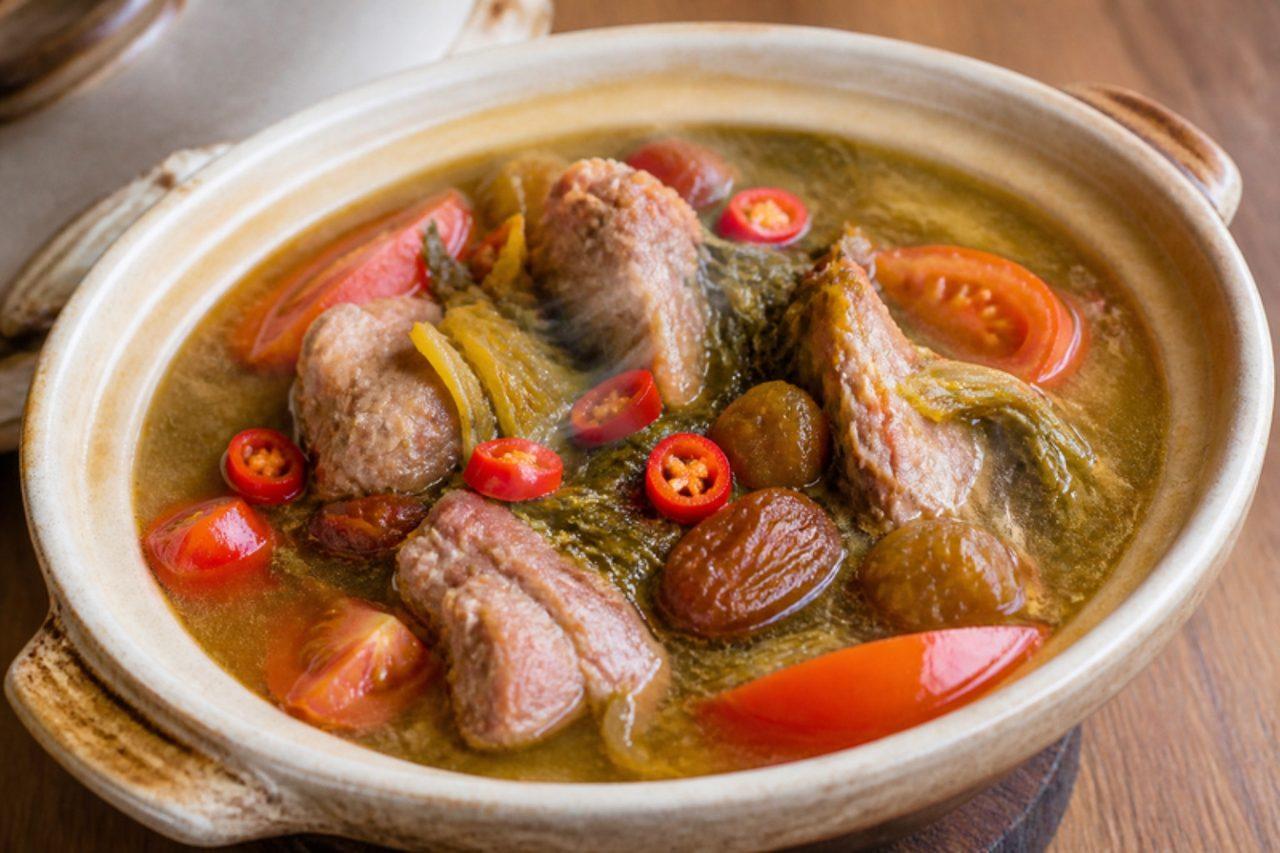
Kiam chye ark (salted vegetable duck soup)

Kiam chye ark is the soup Penang Nyonya families make around Chinese New Year, traditionally to use up roast duck from the reunion dinner; its sour, salty broth is said to settle the stomach after the feasting. This version starts from a fresh jointed duck. Duck is simmered with salted mustard greens (kiam chye), tomatoes, tamarind skins, preserved sour plums and a little ginger until the meat is falling-apart tender and the broth is clear, tangy and savoury. Serve it piping hot with plain rice and a dish of sliced chilli in soy. Chef's tip: soak and taste the salted greens first; some brands are fiercely salty and need a second soak.

by KrazyBadal 0 views

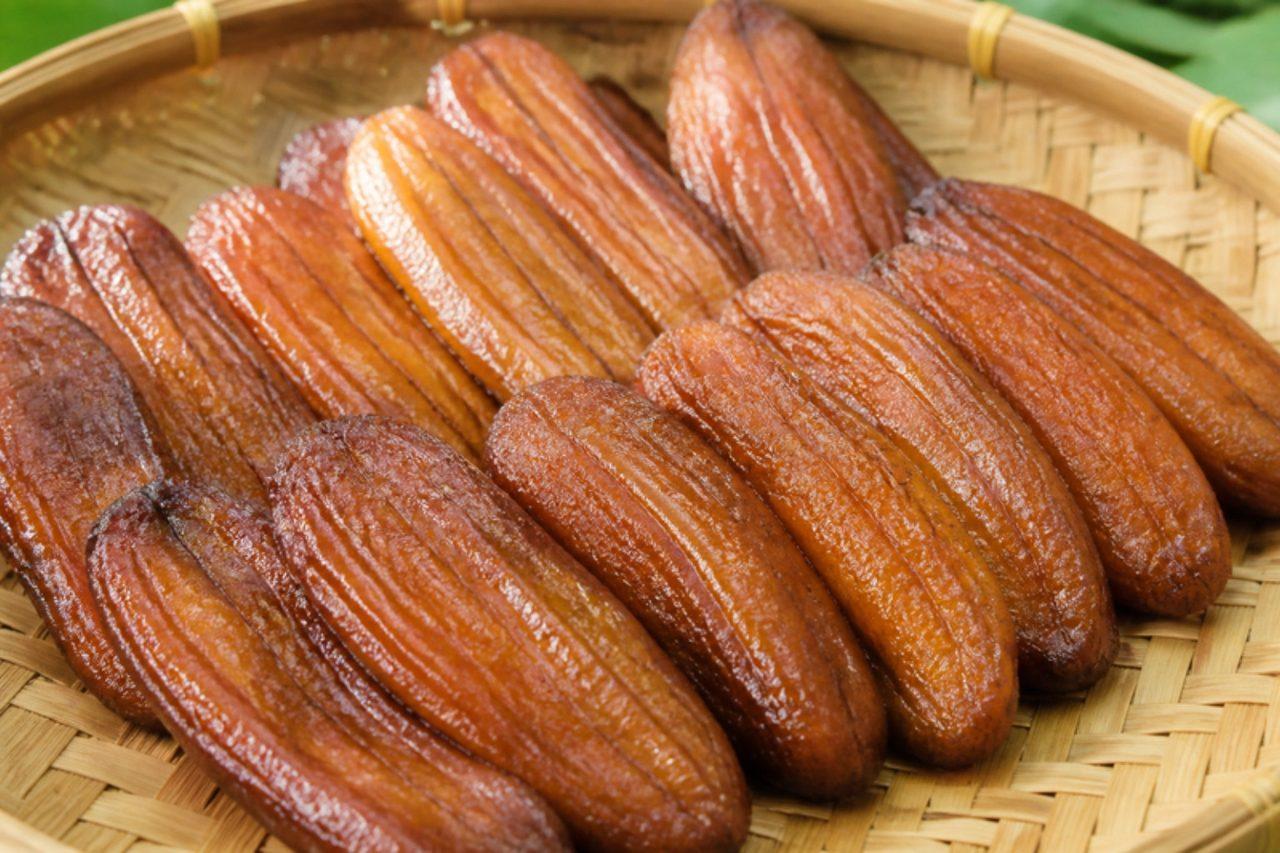
Kluay tak (Thai dried bananas, oven method)

In Bang Krathum, a district of Phitsanulok in lower northern Thailand, small nam wa bananas are peeled and laid out under the sun in glass-roofed drying boxes for several days, then pressed flat to make kluay tak. The district is famous for them, and bags are bought as a gift on the road home and nibbled with tea or coffee in the afternoon. They are dense and chewy like a soft toffee, dark amber, with a deep caramel and honey flavour that comes only from the fruit. As sun-drying takes days and needs steady heat, this version uses a very low oven overnight, then a rest in a jar so the moisture evens out. They are naturally egg-free and need nothing to bind them: the banana's own sugars concentrate and hold it together. Chef's tip: keep the oven low and prop the door open with a wooden spoon; the common mistake is a hot oven, which cooks and blackens the outside while the centre stays wet.

1340 minThaiDessertsVeganGluten free
by KrazyBadal 0 views

Khao niao daeng (Thai red sticky rice)

Khao niao daeng, "red sticky rice", is made in Central Thailand in the days before Songkran and carried to the temple as an offering, its sticky grains a wish that family ties hold fast through the year. The rice is steamed first, then folded into a long-reduced coconut and palm sugar caramel until it turns a glossy red-brown and every grain is sweet, chewy and fragrant. Pressed into a tray, it slices neatly and keeps for a few days, so it is a good make-ahead sweet for a crowd. Serve squares with a sprinkle of toasted sesame and a cup of tea. Chef's tip: reduce the caramel until it is thick and bubbling slowly before the rice goes in, or the rice turns mushy instead of chewy.

by KrazyBadal 0 views

Aguadito de polloCoriander chicken rice soup

Aguadito is the soup Lima serves in the small hours: at the end of a wedding, after New Year's Eve and at weekend family lunches, it is ladled out thick and steaming to revive everyone. Rice simmers in chicken broth coloured deep green with blended coriander and warmed with yellow ají amarillo, along with peas, carrot, pepper, sweetcorn and potato. A portion gives about 24 g of protein, from the chicken with a little from the rice and peas, for around 480 kcal. The common mistake is adding the coriander purée too early: cooked for long it turns khaki and loses its fresh taste, so stir it in for the last 10 minutes. The chicken must reach 74 °C at the bone. Chef's tip: blend a handful of spinach with the coriander; it keeps the colour vivid green without changing the flavour.

by KrazyBadal 0 views

ParihuelaSpicy seafood soup

Parihuela is the big weekend seafood soup of Callao and the Peruvian coast, eaten at long Sunday lunches in cevicherías and praised as a cure for tiredness and late nights. A deep red broth of ají panca, ají amarillo, tomato and fish stock is loaded with chunks of fish, prawns, squid and mussels. A portion gives about 30 g of protein, from the fish and shellfish, for roughly 300 kcal. Some cooks add chicha de jora or beer; this version has none. The common mistake is adding all the seafood at once: squid and prawns turn rubbery while the fish cooks, so they go in last. Before cooking, discard any mussels that stay open when tapped, and after cooking discard any that stay shut. Chef's tip: fry the chilli pastes in the oil until they darken and smell sweet; that toasted ají is what gives parihuela its depth.

by KrazyBadal 0 views

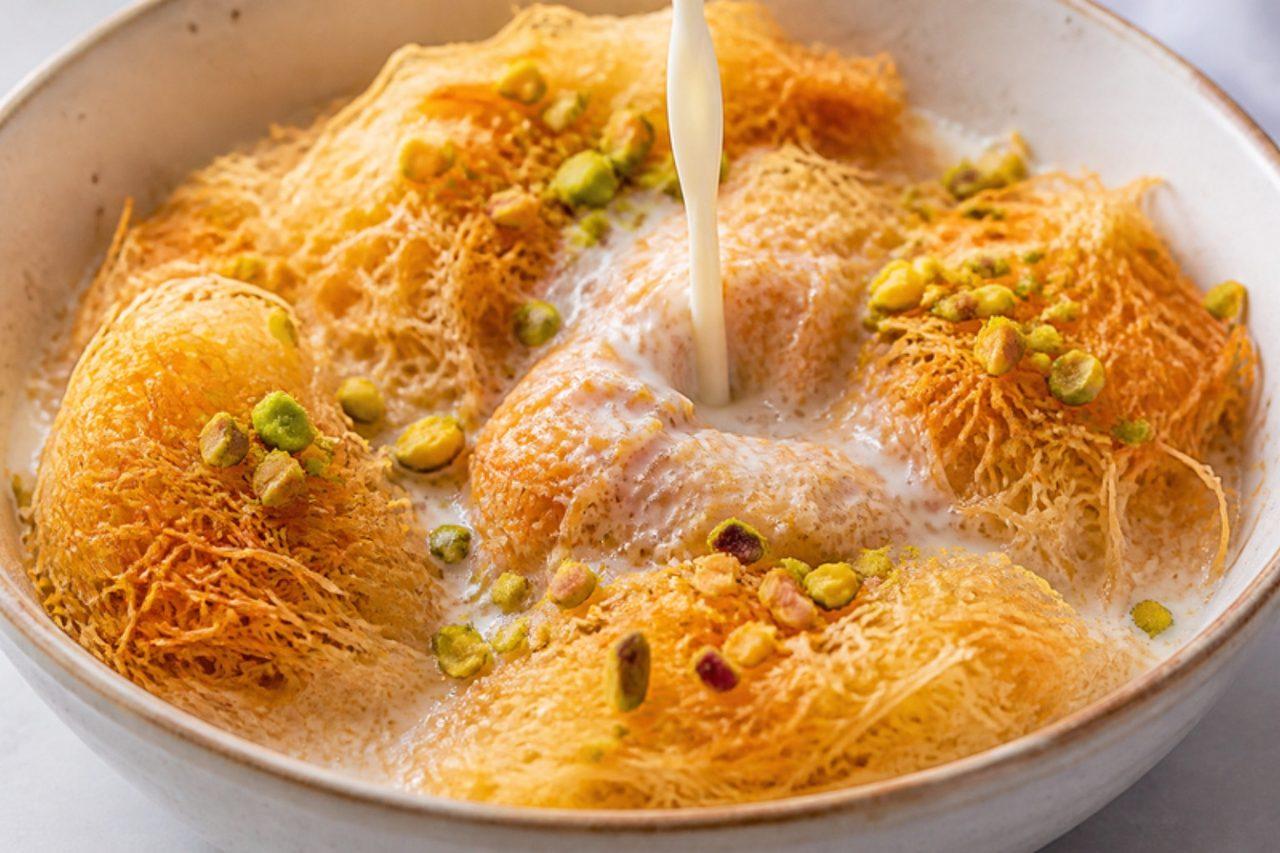
Pheni (layered fried vermicelli nests in sweet milk)

In Lahore and Karachi during Ramadan, sweet shops stack golden nests of pheni in towers, and families buy them to eat at sehri, the meal before dawn. The fine, brittle strands are crumbled into a bowl and drenched with hot sweetened milk, which softens them in a minute into something like a silky vermicelli pudding; it keeps you full through the fasting day. Shop pheni is pulled into hair-thin threads by skilled hands, so at home this recipe uses the layered method: thin sheets of dough are brushed with a ghee and rice-flour paste, rolled and sliced, and the paste makes the layers fan out into fine flaky rings when fried. They are crisp, buttery and delicate. It is naturally egg-free: the dough is just flour, ghee and water, and the rice-flour paste keeps the layers separate. Chef's tip: fry the nests in oil that is only moderately hot, about 160°C; oil that is too hot is the common mistake that browns the outside while the inner layers stay soft and doughy.

by KrazyBadal 0 views

Chilcano de pescadoClear fish broth

In the fishermen's terminals of Chorrillos and Callao, chilcano is what you drink on a Sunday morning after a long night: a clear, gingery broth made from the heads and bones left over from cleaning fish for ceviche, with chunks of fish, red onion, chilli and a squeeze of lime in the bowl. It is light and warming, around 160 kcal a bowl, and still gives about 24 g of protein from the fish fillet and the broth. The common mistake is squeezing the lime into the pot while it boils, which turns it bitter; add it to each bowl at the table. Don't boil the bones for more than 30 minutes either, or the broth turns cloudy and harsh. Chef's tip: ask the fishmonger for heads and frames from mild white fish like sea bass or cod, and leave out oily fish such as mackerel, which makes the broth strong and fishy.

by KrazyBadal 0 views

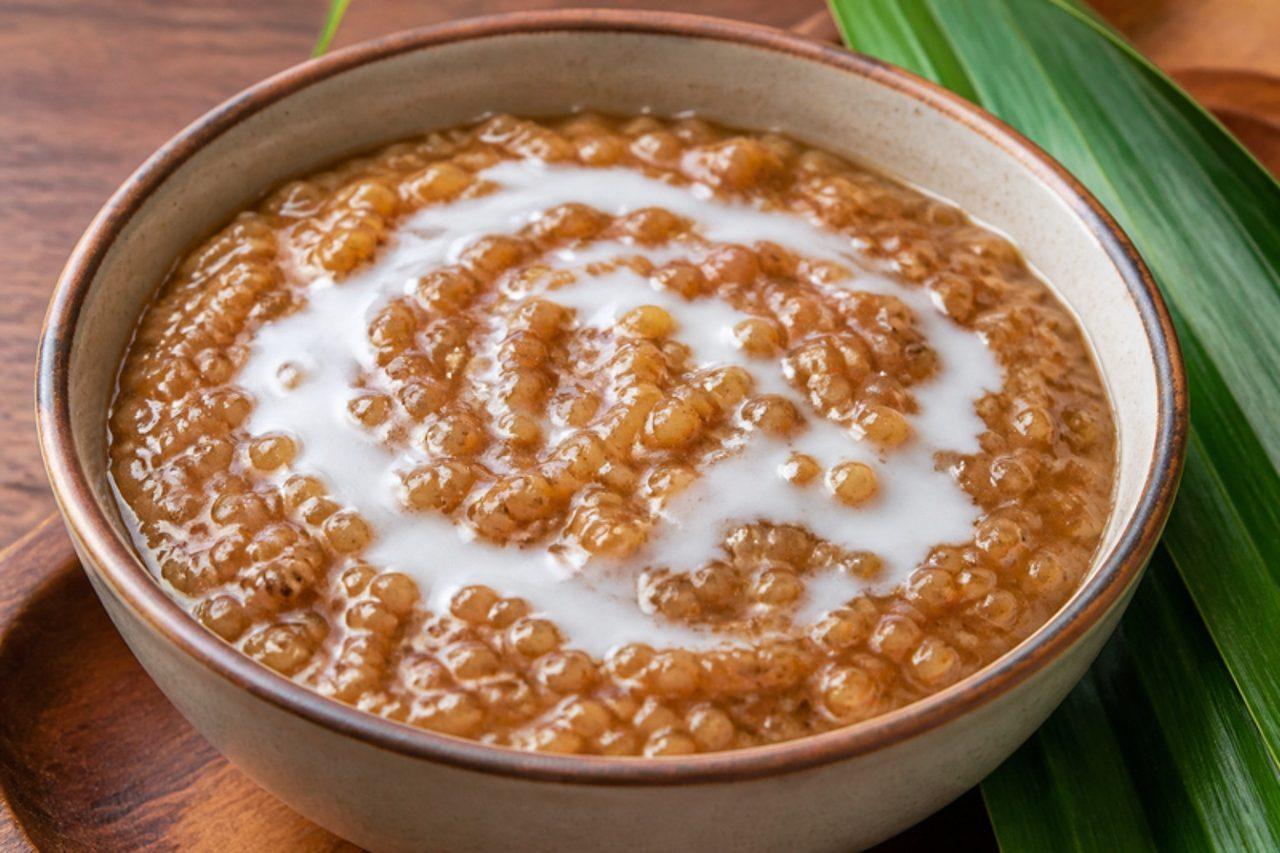
Bubur gandum (wheat pudding with coconut milk and palm sugar)

In Malaysia bubur gandum belongs to Ramadan: it is ladled out at the bazaars that open before sunset and cooked in giant pots at mosques for breaking the fast, and it appears again at Hari Raya open houses. Pearled wheat is simmered until the grains burst and turn chewy, then cooked with gula Melaka, pandan and coconut milk into a thick, toffee-brown porridge. The texture is somewhere between rice pudding and soft barley, with a sweet, smoky, coconut flavour. Serve it warm, or at room temperature on a hot evening. The pudding has always been egg-free, because the starch released by the wheat thickens the coconut milk as it simmers, so nothing else is needed to bind it. Chef's tip: cook the wheat in water until fully soft before adding the sugar and coconut milk; the common mistake is adding them too early, which keeps the grains hard however long you cook them.

by KrazyBadal 0 views

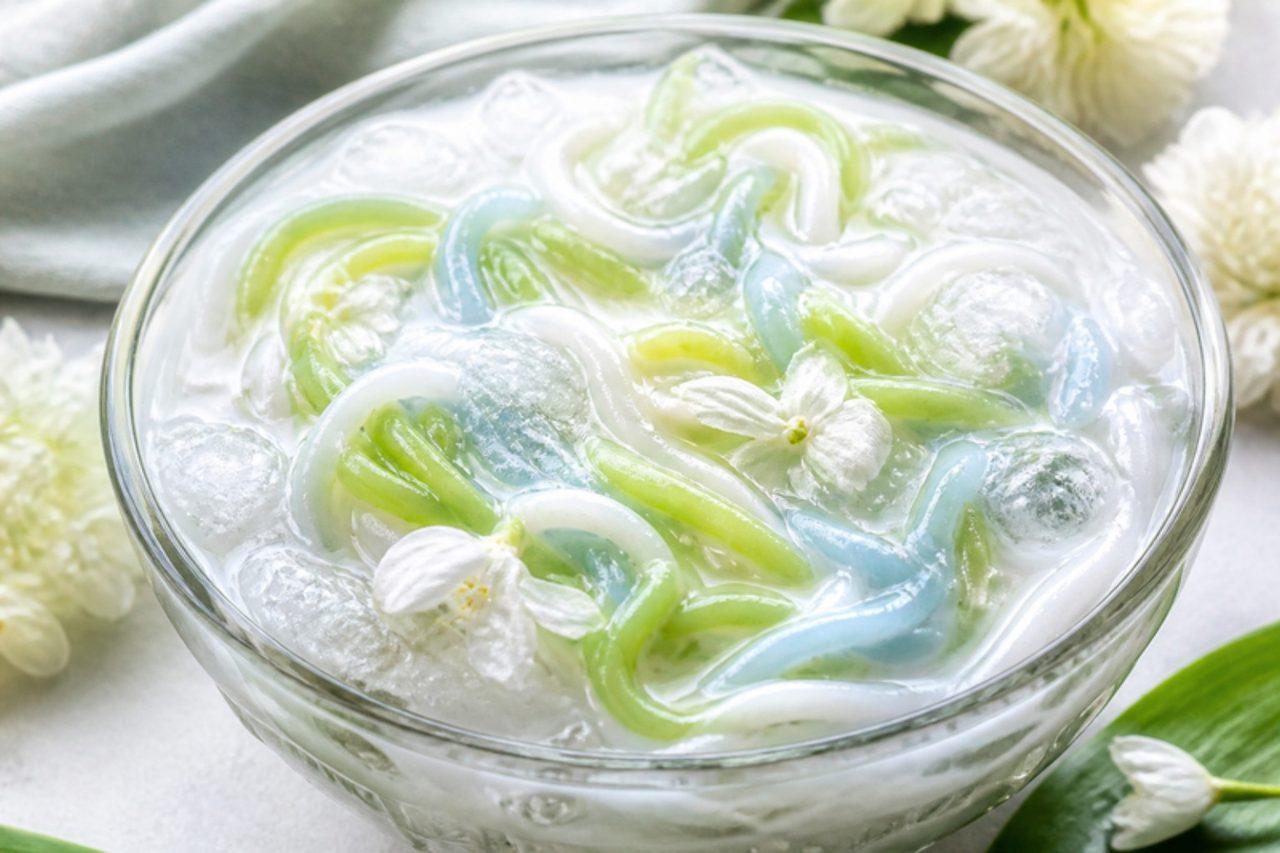
ซาหริ่ม (Sarim, mung bean noodles in coconut syrup)

Sarim is an old dessert of central Thailand, served at temple fairs and in market dessert shops on sweltering afternoons: thin, slippery strands in pastel green, blue and white, floating in a pale coconut syrup over a mound of crushed ice. The strands are almost flavourless and very soft, so the syrup does the work; in Thailand it is scented with jasmine flowers or the smoke of a scented candle, and here with pandan and optional fresh jasmine. It is naturally egg-free: the strands are pure mung bean starch cooked with water into a clear, thick paste, which sets into a soft gel the moment it hits ice water. Pandan juice and butterfly pea flowers give the colours, so there is no need for dyes. Serve it straight away, as a light end to a spicy meal. Chef's tip: cook the paste until it turns fully glossy and see-through; the common mistake is stopping while it is still milky, which gives strands that break and taste floury.

by KrazyBadal 0 views

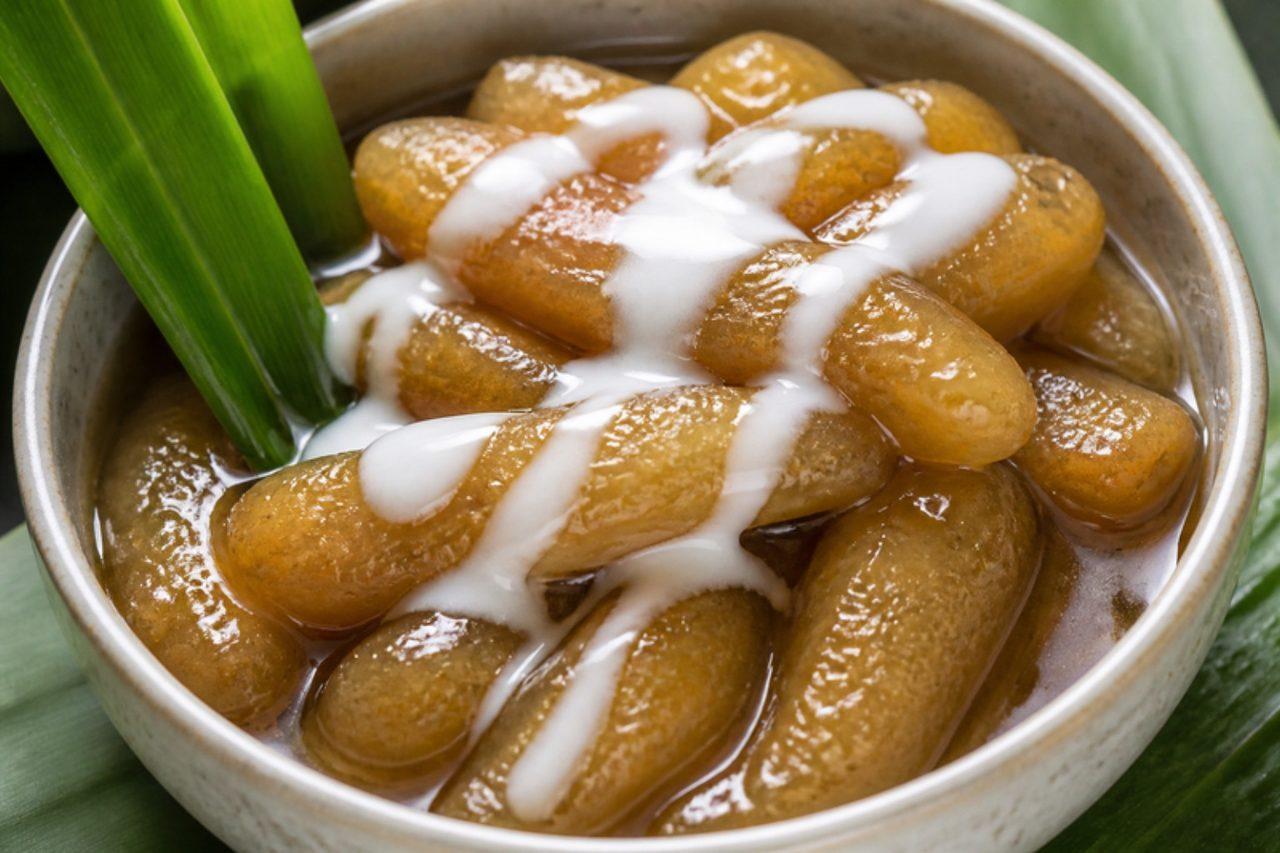
Kluay chuam (Thai bananas in palm-sugar syrup)

Kluay chuam is a market dessert of central Thailand, cooked in big brass pans and sold by the bag year round, and it is a common sweet to offer monks at merit-making. Small, starchy nam wa bananas are simmered slowly in palm-sugar syrup until they turn translucent and amber, soft and chewy rather than mushy, then served with thick, salty coconut cream poured over. The flavour is deep caramel and banana, cut by the salt. Serve at room temperature in small bowls. Being egg-free by nature, it relies on the long simmer in syrup firms the bananas and a little rice flour thickens the coconut topping. Chef's tip: keep the syrup at the gentlest simmer and don't stir; the common mistake is a fast boil and a spoon, which break the bananas before they have time to turn glassy.

by KrazyBadal 0 views

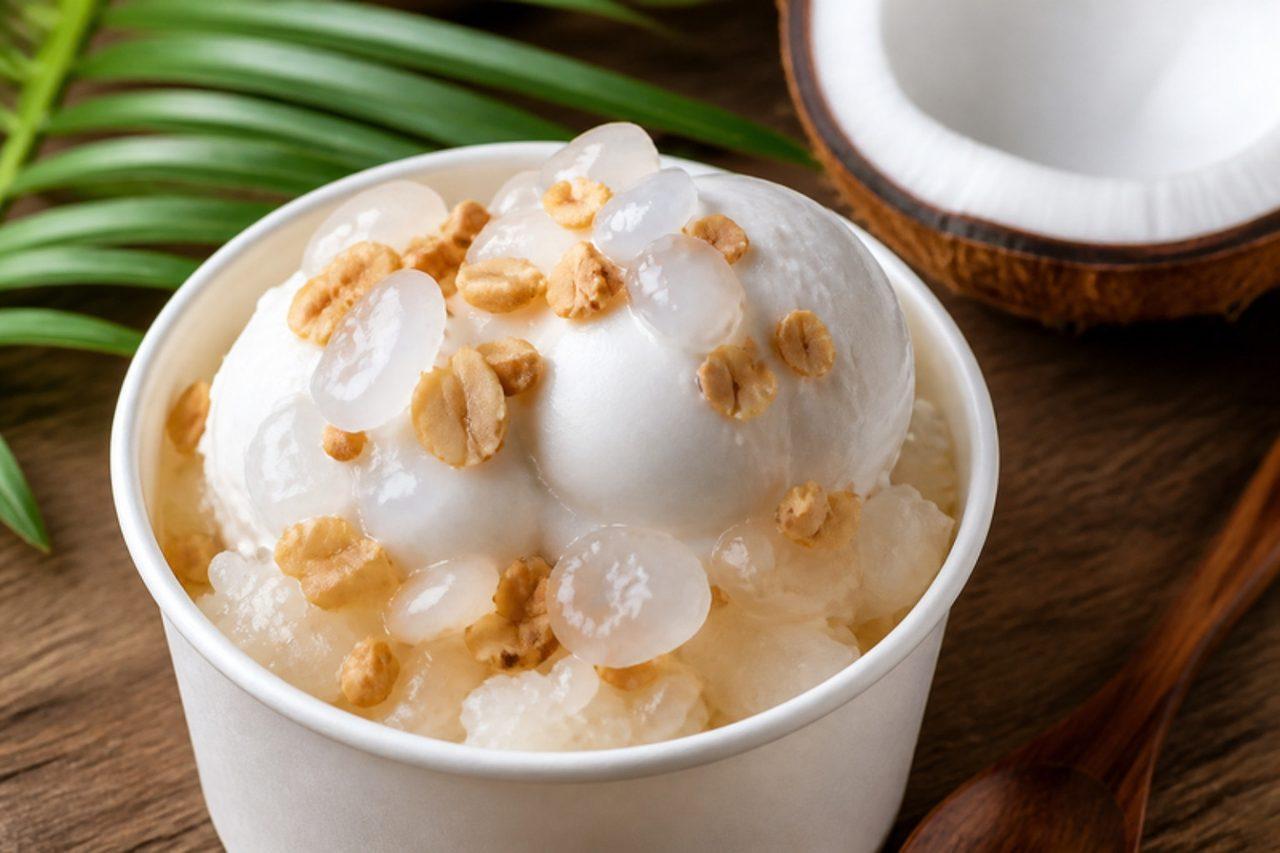
ไอติมกะทิ (Itim kathi, Thai coconut ice cream)

Itim kathi is the ice cream of Bangkok's pushcarts: a vendor lifts the lid of an insulated drum, scrapes up a scoop of snow-white coconut ice cream and piles it into a small cup over sticky rice, then adds whatever the customer points at, from roasted peanuts and sweet corn to chewy palm seeds. It is sold all afternoon in the hot months, outside schools and temples and in markets. Some vendors tuck the scoop into a soft bread roll; serve it in cups as here and it stays gluten free. It is naturally egg-free and dairy-free. Coconut milk carries the fat that makes it creamy, and a little cornflour cooked into it binds the water so crystals stay fine and the texture stays smooth without any custard, while a pinch of salt sharpens the coconut. Chef's tip: use full-fat coconut milk with no added water; the common mistake is using a light one, which freezes hard and icy.

300 minThaiDessertsVeganGluten free
by KrazyBadal 0 views

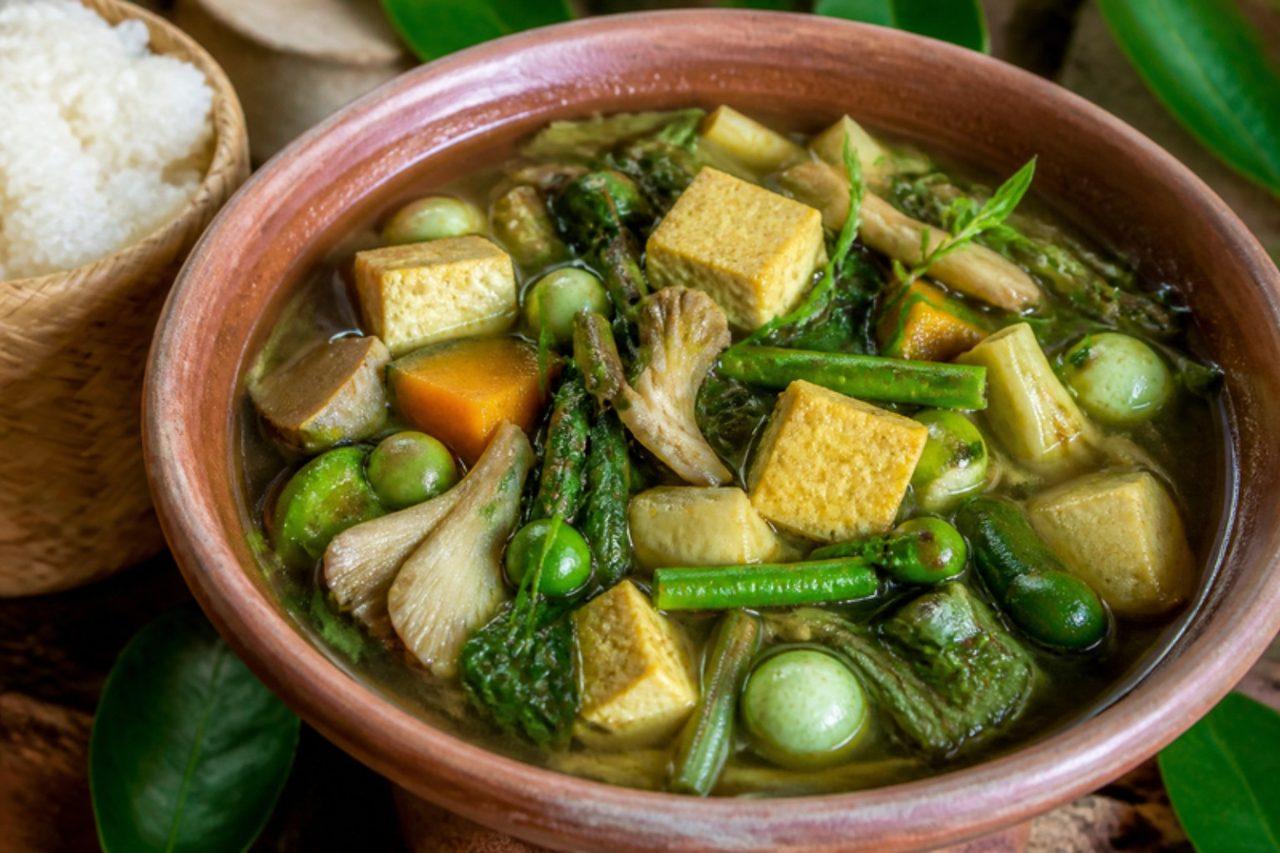
Kaeng khae with tofu and mushroomsHerb curry with tofu and mushrooms

Kaeng khae comes from the hills around Chiang Mai and Lampang, where it is cooked through the rainy season with whatever the garden and forest give: pea aubergines, long beans, pumpkin tips, acacia shoots and handfuls of leaves, in a brothy, coconut-free curry scented with lemongrass and the peppery prickly ash called makhwaen. In northern homes it is a lunch dish eaten with sticky rice. It is normally cooked with chicken, frog or fish and seasoned with fermented fish; this vegetarian version uses firm tofu, oyster mushrooms, soy sauce and a little salted soybean paste. With the tofu a portion has about 11 g of protein, so it is light rather than high protein. The common mistake is adding all the vegetables at once: the leaves are done in a minute while the beans and aubergines need five. Chef's tip: dry-fry the curry paste in a spoon of oil until it smells toasty before adding water; it gives the broth its depth without any fish.

by KrazyBadal 0 views

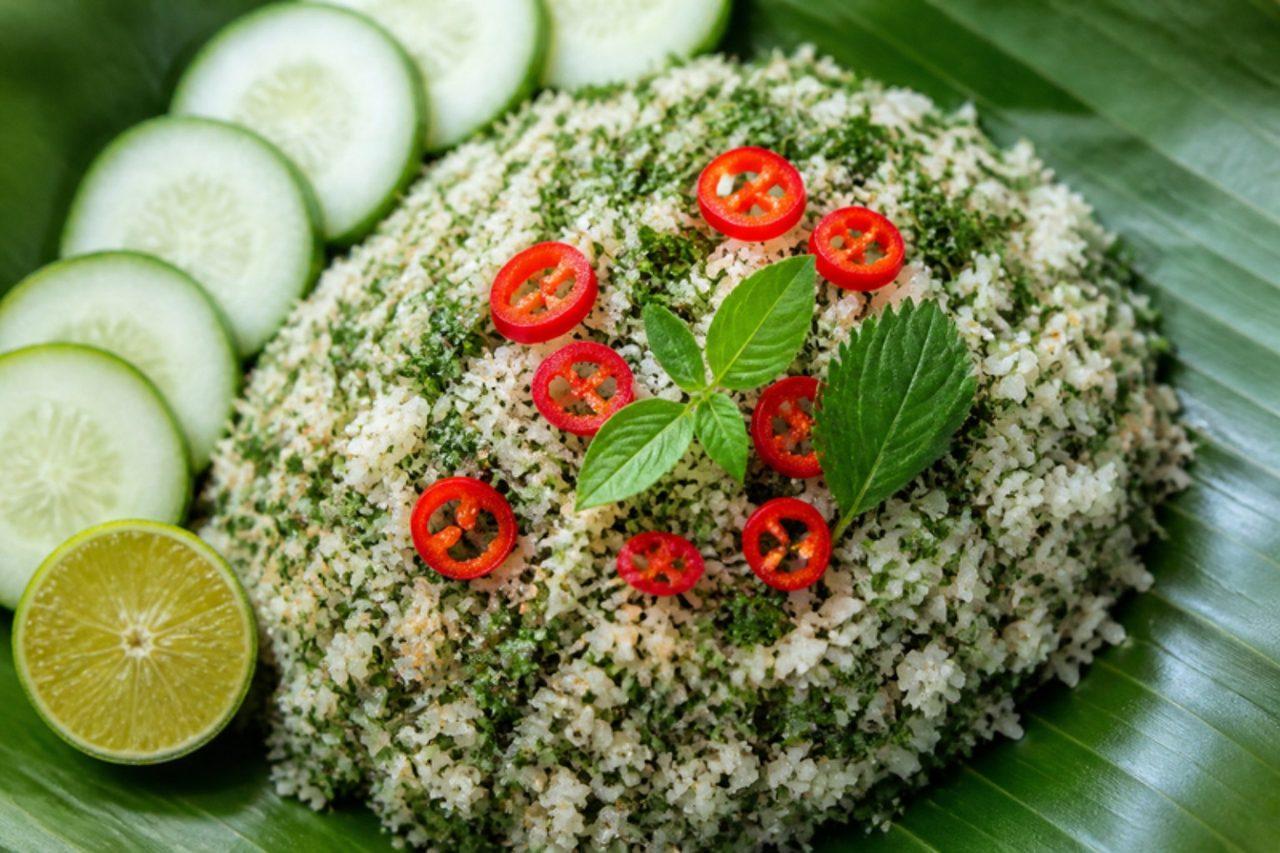
Nasi ulamHerb rice

In Kelantan and Terengganu on Malaysia's east coast, nasi ulam is the cool, fragrant rice eaten at lunch in the heat: day-old rice tossed with a heap of hair-thin raw herbs (ulam), lemongrass, lime leaf, shallots and dry-toasted coconut. It is traditionally mixed with flaked salted or dried fish; this is a vegetarian version that leaves the fish out and leans on the toasted coconut and a squeeze of lime for depth. It is a light meal of about 340 kcal, with around 7 g of protein, so it is not high in protein; serve it with fried tofu or tempeh. The common mistake is using hot rice, which wilts the herbs into a dark mush; the rice must be cold. Chef's tip: stack the leaves, roll them into a tight cigar and slice across as thinly as you can; the finer the herbs, the more perfume.

by KrazyBadal 0 views

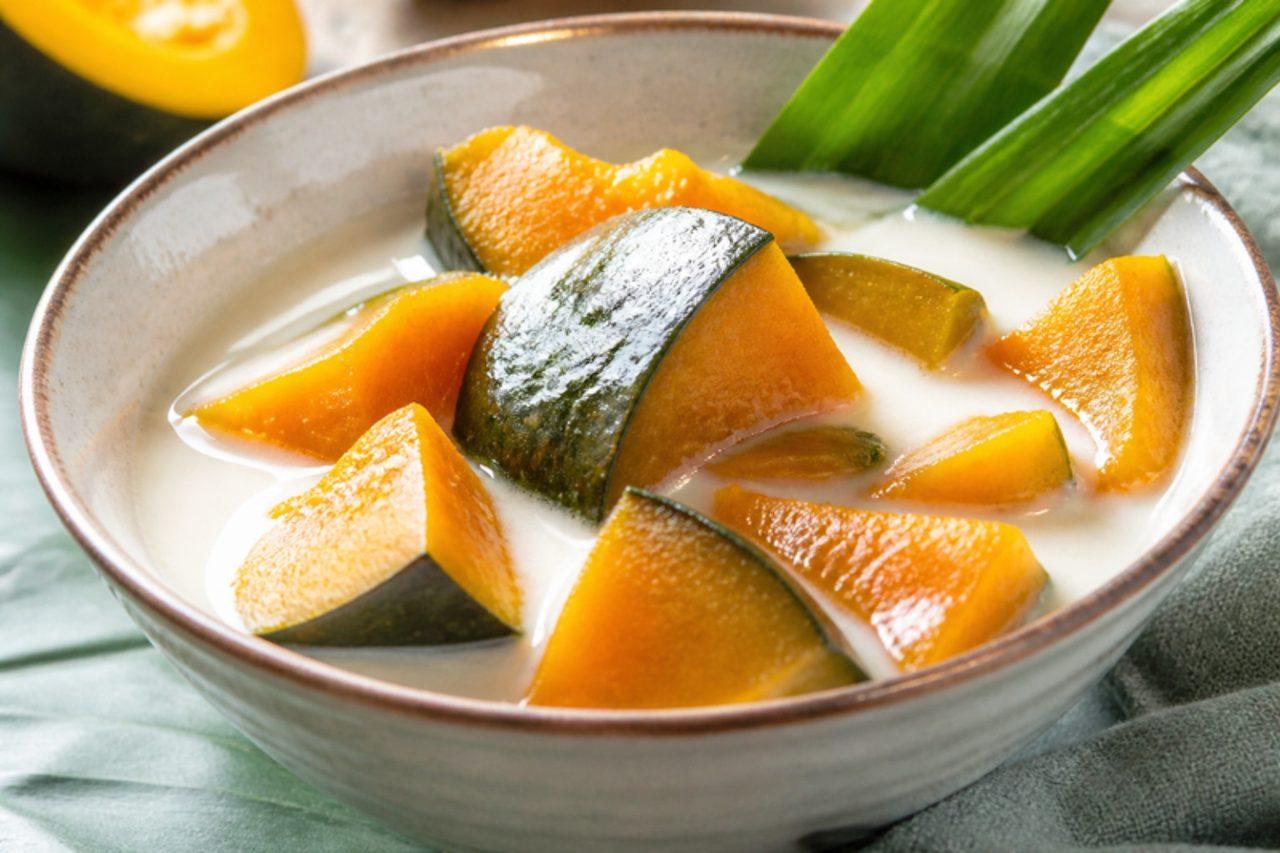
Fak thong kaeng buat (Thai pumpkin in coconut milk)

When the rains end and pumpkins pile up in the markets of central Thailand, kaeng buat is what cooks make with them: chunks of dense kabocha simmered in coconut milk sweetened with palm sugar and sharpened with a pinch of salt. It is a homely, everyday dessert, sold warm from big pots at markets in the afternoon and also cooked at Ok Phansa, the end of Buddhist Lent. The pumpkin turns velvety but keeps its shape, and the thin, creamy, caramel-scented broth is meant to be drunk from the spoon. Eat it warm or at room temperature, in small bowls. There is no egg in it and never was: nothing needs setting or binding, as the pumpkin's own starch gives the coconut milk a light body as it cooks. Chef's tip: pick a dry, orange-fleshed kabocha and keep the coconut milk at a bare simmer; letting it boil hard is the common mistake that splits the milk and breaks the pumpkin into mush.

by KrazyBadal 0 views

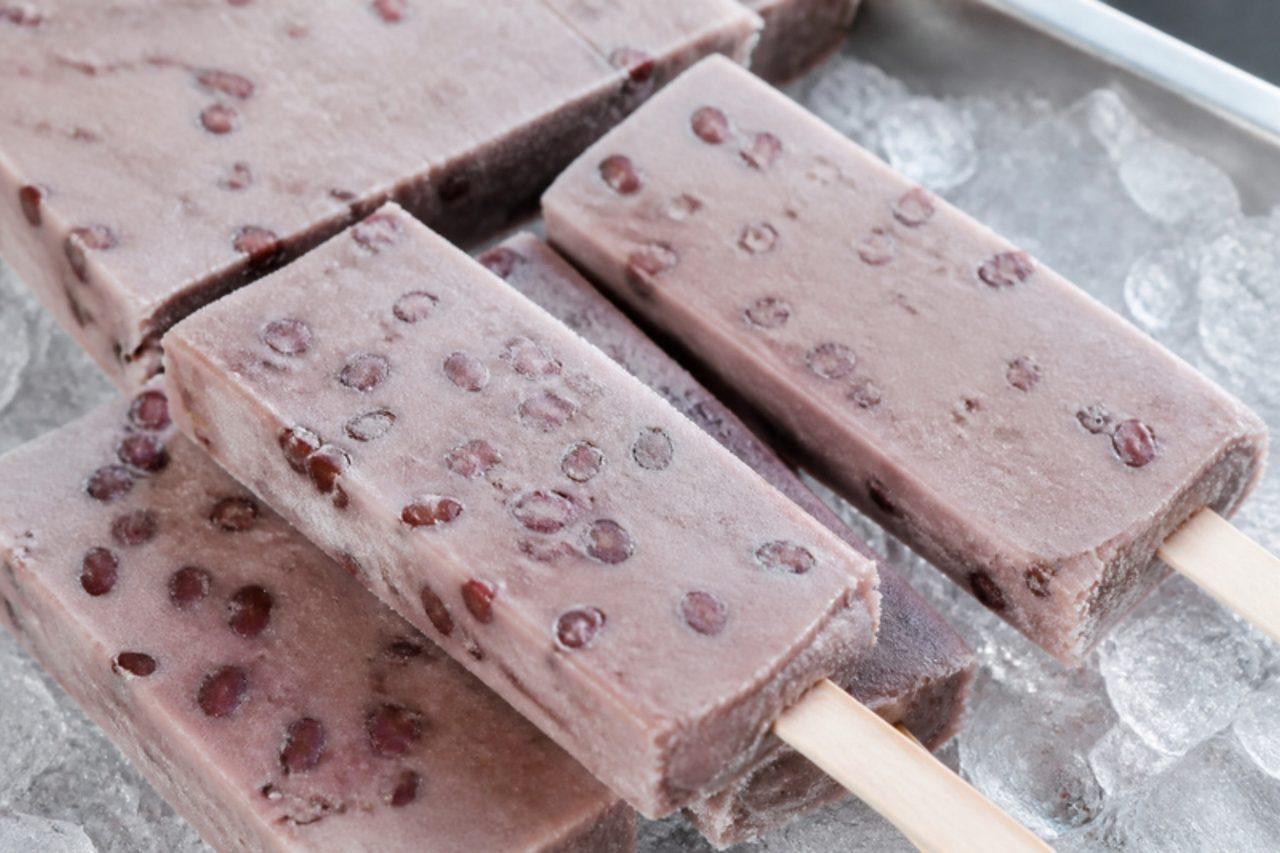
Aiskrim potong (Malaysian red bean ice-cream bars)

Aiskrim potong, literally cut ice cream, comes from the days when Malaysian factories froze long blocks of dense ice cream that vendors sliced into bars to order. It is still sold nationwide from motorbike freezers and kampung shops, especially in the afternoon heat after school, in flavours like coconut, sweet corn, yam and durian, with red bean as the classic. It is firmer and denser than scooped ice cream and melts slowly in the hand. There is no egg: the base is cornflour cooked into coconut milk and milk, with a little condensed milk. The cooked starch gives the bars their chewy, close bite and keeps them smooth because it ties up the water before it can form big crystals. Chef's tip: stir the half-frozen block once so the beans don't all sink; the common mistake is pouring and leaving it, which gives a bean-heavy bottom and a plain top.

by KrazyBadal 0 views

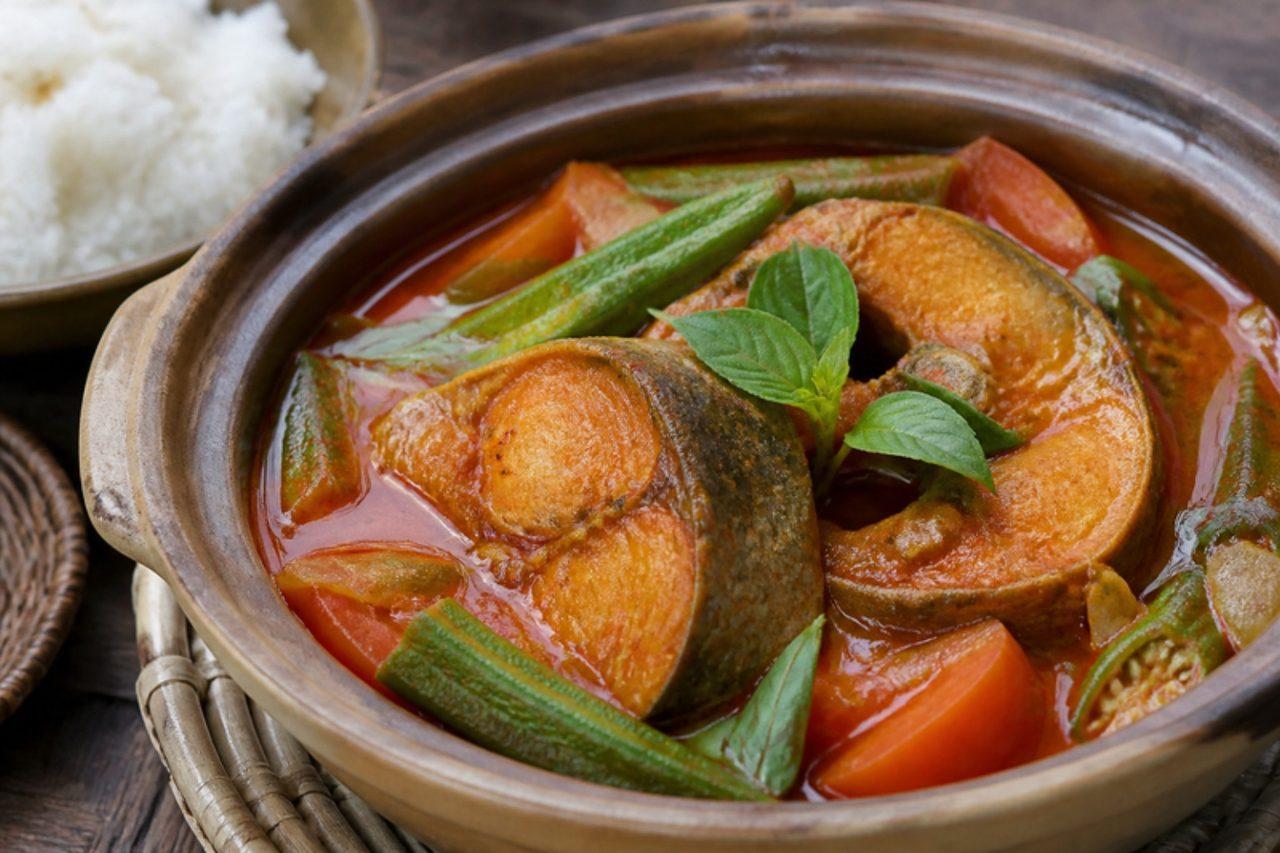
Asam pedas ikanSour spicy tamarind fish

Asam pedas, "sour and spicy", is the pride of Malay kitchens in Melaka and Johor, cooked for everyday lunches and sold at rice stalls with a dozen other dishes. Fish steaks simmer in a thin, brick-red gravy of dried chilli, shallot and belacan soured with tamarind, with okra and tomato soaking up the sauce and Vietnamese mint scenting it. It is fiery, tangy and light, with about 29 g of protein a portion from the fish; eat it with plenty of plain rice. The common mistake is rushing the chilli paste: if it isn't fried until the oil separates, the gravy tastes raw and harsh. Chef's tip: use oily, firm fish such as Spanish mackerel or stingray, which stand up to the sour broth.

by KrazyBadal 0 views

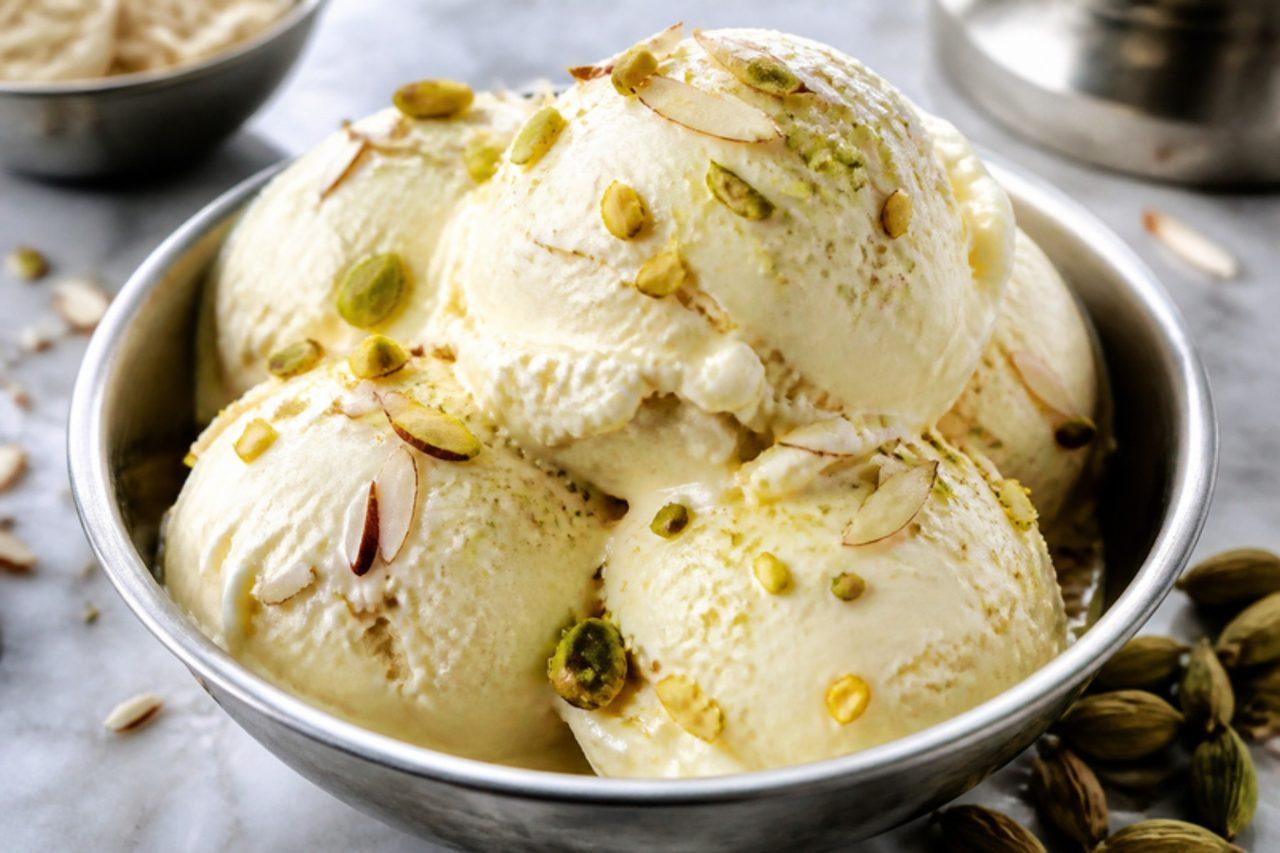
پشاوری آئس کریم (Peshawari ice cream)Cardamom pistachio ice cream

In the Qissa Khwani bazaar of Peshawar, ice-cream sellers spin a tall metal drum inside a tub of crushed ice and salt, scraping the freezing milk off the walls with a long paddle until it turns thick, stretchy and pale. It is a summer evening treat, eaten from small bowls after dinner or late at night when the streets cool down, and often topped with a spoonful of falooda vermicelli or more chopped pistachio. The flavour is simple: slowly reduced milk, green cardamom and a little rose. This version has no eggs and no custard: a cornflour slurry cooked into the milk thickens it the way yolks would, and the starch holds on to water so ice crystals stay small and the texture stays smooth, while milk powder adds body without extra fat. You can churn it in a machine or still-freeze it in a tray and stir it every 45 minutes. Chef's tip: the common mistake is churning a warm base; chill it until it is fridge-cold right through, or it will turn icy instead of silky.

by KrazyBadal 0 views

Showing 24 of 545 recipes

Show more recipes

Page 1 of 23