Skip to content
Recipes

All recipes

Vegetarian, or something you can't eat? Set your diet once and we'll hide recipes that don't fit.

Revuelto de zapallitosCourgettes scrambled with egg and cheese

Revuelto de zapallitos is a weeknight dinner in Buenos Aires homes and all over Argentina in summer, when the little round courgettes called zapallitos are cheap: diced courgette and onion cooked down in oil, scrambled with eggs and finished with grated cheese. It is eaten with bread or as a side to a salad. Grated hard cheese like reggianito or Parmesan is usually made with animal rennet, so use a vegetarian hard cheese for a vegetarian dinner. The common mistake is adding the eggs before the courgettes have given up their water, which turns the scramble wet and grey. Chef's tip: salt the courgettes as they go in, so they release their juice early and it cooks away.

by KrazyBadal 0 views

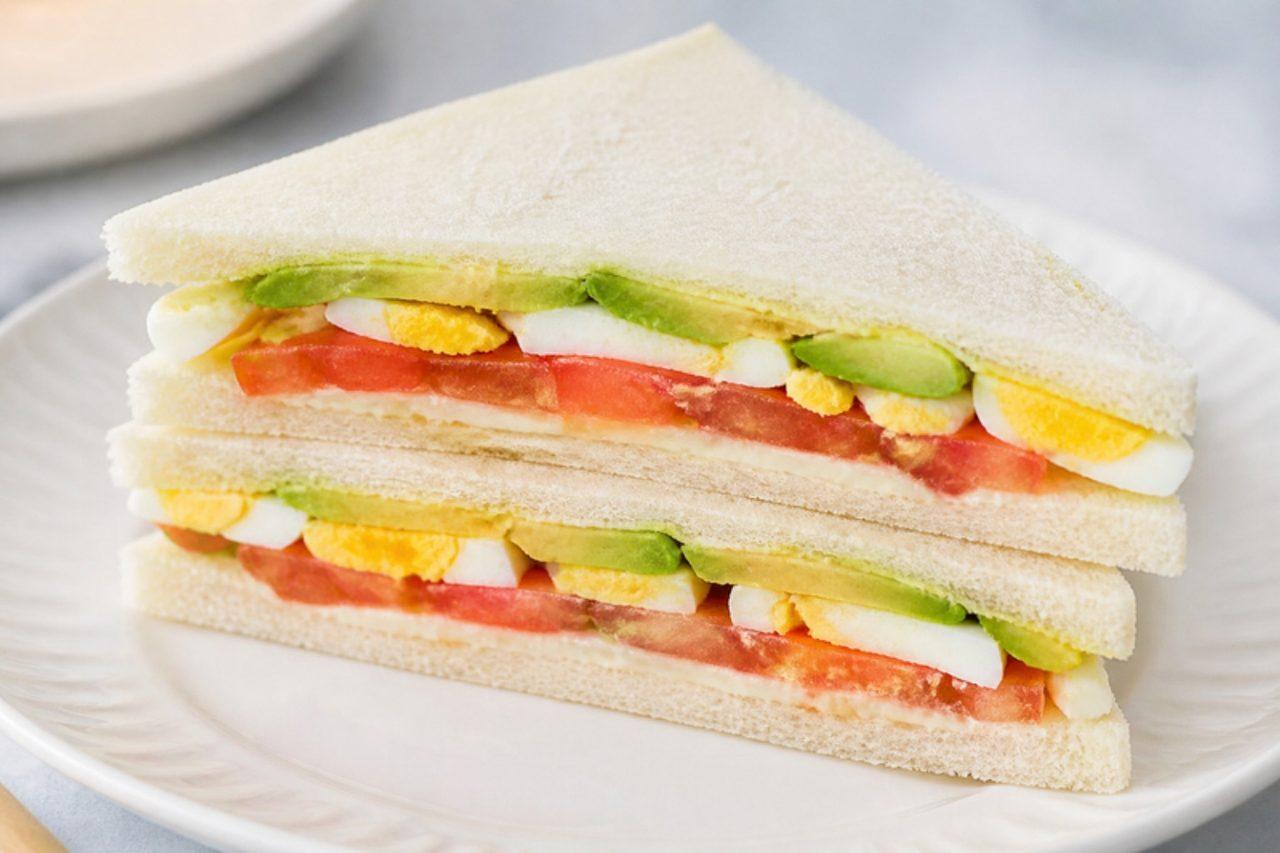
TripleAvocado, tomato and egg sandwich

The triple is the soft, layered sandwich of Lima's cafés and bakeries, eaten at lonche, the Peruvian late-afternoon meal, or as a light supper: three slices of crustless white bread layered with avocado, tomato and sliced hard-boiled egg, all held together with mayonnaise. It looks neat, tastes fresh and is loved by children. Shop-bought mayonnaise is made with pasteurised egg, so it is safe for everyone. The common mistake is letting wet tomato touch the bread, which turns it soggy within minutes. Chef's tip: pat the tomato dry and sit it between the avocado and egg, then press the sandwich under a board for a minute before cutting.

by KrazyBadal 0 views

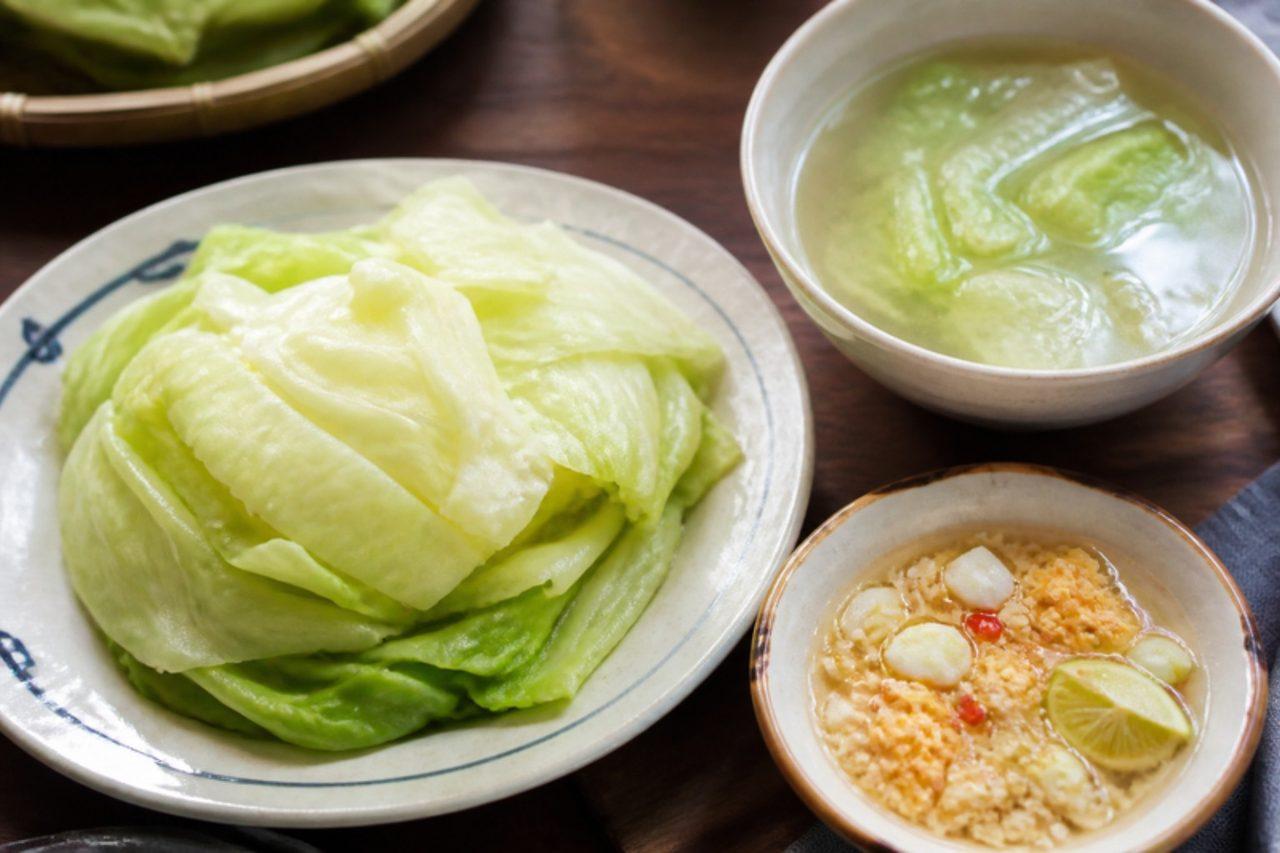
Bắp cải luộc chấm trứngBoiled cabbage with egg dip

In northern Vietnam, especially in Hanoi family homes, boiled cabbage with egg-mashed fish sauce turns up on the everyday dinner tray, most of all in the cooler months when cabbage is sweet. The cabbage is boiled until just tender, the cooking water becomes a light soup to drink with rice, and hard-boiled egg is crushed into fish sauce with lime and chilli for dipping. It contains fish sauce, so it isn't vegetarian. The common mistake is boiling the cabbage too long, until it goes limp and smells of sulphur; take it out while the ribs still have a little bite. Chef's tip: mash the yolks into the fish sauce first so they dissolve into a creamy dip, then stir in the chopped whites.

by KrazyBadal 0 views

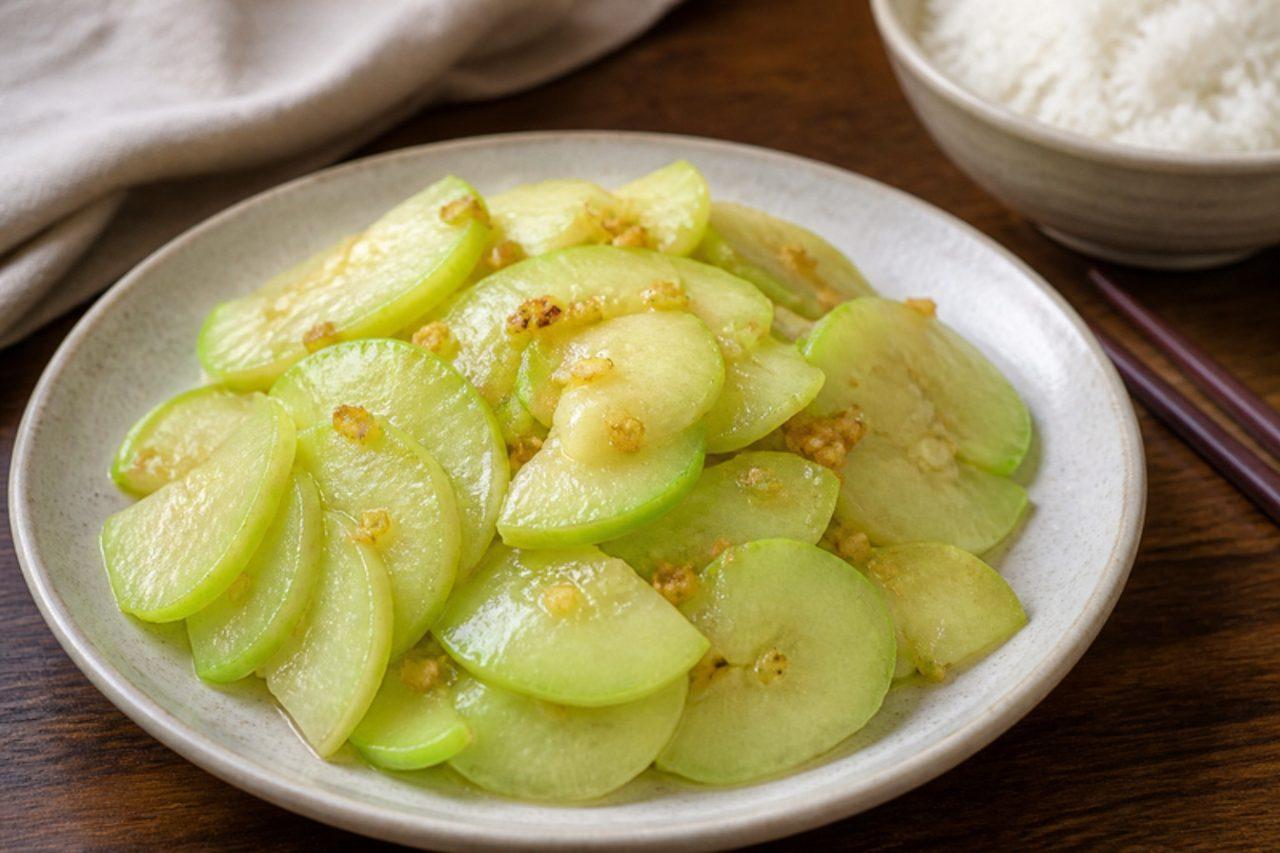
Su su xào tỏiGarlic stir-fried chayote

Su su xào tỏi is one of the cheapest, quickest vegetable dishes on the Vietnamese family table, especially in Hanoi and the cool highlands around Đà Lạt where chayote grows on every fence. Thin slices of the pale-green squash are stir-fried with crushed garlic until glossy and just tender, keeping a fresh crunch, and eaten with rice, a soup and a braised dish. Some cooks season it with fish sauce; salt and a pinch of sugar keep it vegan. The common mistake is cutting thick slices, which stay raw in the middle by the time the outside softens; slice no thicker than 3 mm. Chef's tip: peel chayote under running water or with gloves, because the sap makes hands sticky and tingly.

by KrazyBadal 0 views

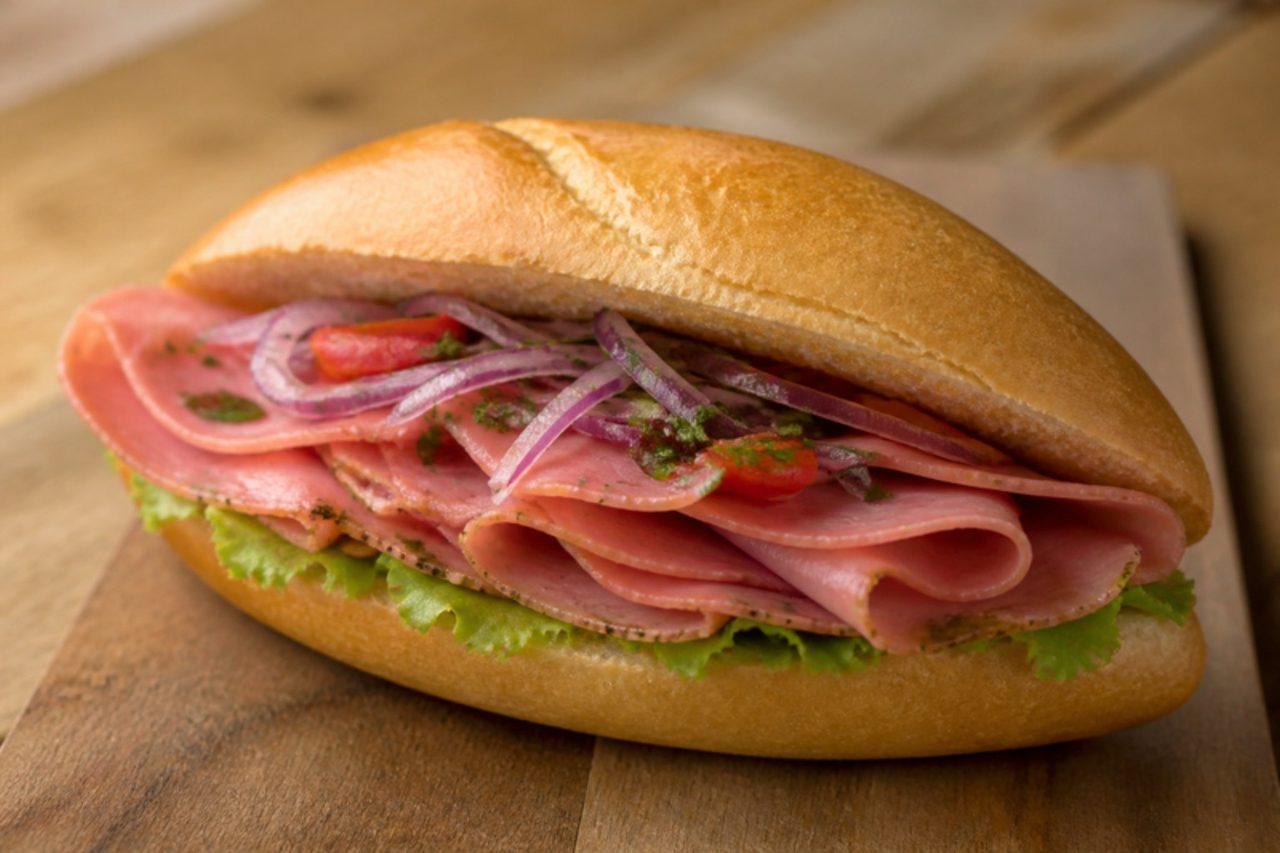
Pan con butifarraHam roll with onion salsa

Pan con butifarra is Lima's evening sandwich, sold in old-school sangucherías and made at home for a light dinner with coffee: a crusty roll filled with jamón del país, a spiced Peruvian pork ham, under a heap of salsa criolla, red onion sliced thin and soaked in lime with chilli. Outside Peru, use a good cooked pork ham. The common mistake is leaving the onion harsh; give it a quick rinse in salted water before dressing it. Chef's tip: a leaf of lettuce under the ham stops the lime juice soaking straight into the bread.

by KrazyBadal 0 views

Tostado de jamón y quesoPressed ham and cheese sandwich

The tostado is what Buenos Aires orders in a café at merienda or as a light late dinner, and what Uruguayan kids get made at home: thin crustless pan de miga layered with cooked pork ham and mild cheese, buttered outside and pressed until crisp and oozing. The common mistake is too much filling; this sandwich is meant to be thin, so the cheese melts before the bread burns. Chef's tip: if you have no sandwich press, weigh it down in the pan with a second heavy pan so it toasts flat and even.

by KrazyBadal 0 views

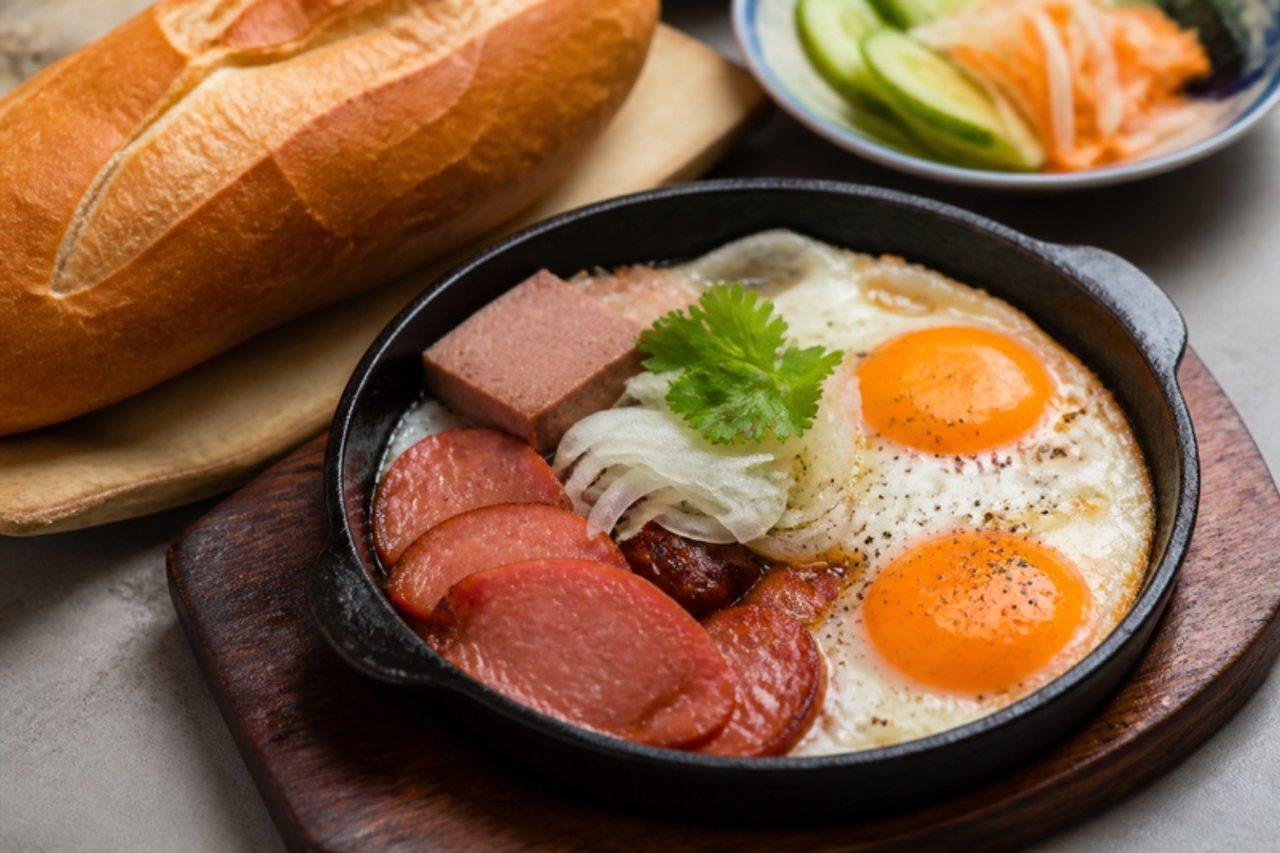
Bánh mì chảoSkillet eggs, pâté and baguette

Bánh mì chảo, 'pan bread', is served at Saigon breakfast stalls in small black skillets still spitting from the stove, and more and more people eat it for a quick dinner too. Eggs are fried with sliced onion beside pork liver pâté and pork sausages, then you tear a crisp baguette and mop everything up with chilli sauce and a little soy. It's rich, so serve cucumber and tomato beside it. This dish contains pork. The common mistake is crowding the pan, so the eggs steam instead of frying with crisp, lacy edges. Chef's tip: get the pan really hot before the eggs go in, and warm the baguette in the oven so the crust shatters.

by KrazyBadal 0 views

KaguyjyWhite corn pudding

On the night of 23–24 June, Paraguayans celebrate San Juan with bonfires, games like walking over hot coals and the 'paso de fuego', and a table of traditional foods, and kaguyjy (also mazamorra) is one of them. It is a soft, creamy pudding of cracked white corn (locro) simmered slowly in water and then milk with sugar or honey, sometimes with orange peel. It is eaten warm or cold. It is gluten free. Chef's tip: soak the corn overnight and cook it until each kernel is tender before adding the milk, or it never turns creamy.

by KrazyBadal 0 views

Chipa so'oCheese bread with spiced beef

In Paraguay, families bake chipa in the clay tatakua ovens on Holy Wednesday so there is food for Thursday and Good Friday, when cooking stops. Chipa so'o ('chipa with meat') is a cassava-starch and cheese bread wrapped around a little filling of minced beef cooked with onion and egg, then baked until crisp outside and chewy within. It is naturally gluten free. Chef's tip: knead the dough until it no longer cracks at the edges when pressed; dry dough splits around the filling.

by KrazyBadal 0 views

Sopa teólogaTurkey broth with bread and cheese

Sopa teóloga ('the theologian's soup') goes back to colonial convents in Lima and Arequipa, where it was cooked for feast days, and it is still served at Holy Week and family celebrations. A rich turkey (or chicken) broth is thickened with soaked bread, milk and fresh cheese, with yellow potatoes and shreds of turkey, and finished with a little ají amarillo and chopped huacatay or parsley. It is thick, comforting and filling. Chef's tip: blend part of the soaked bread with broth before adding it, which gives the soup its creamy body without lumps.

by KrazyBadal 0 views

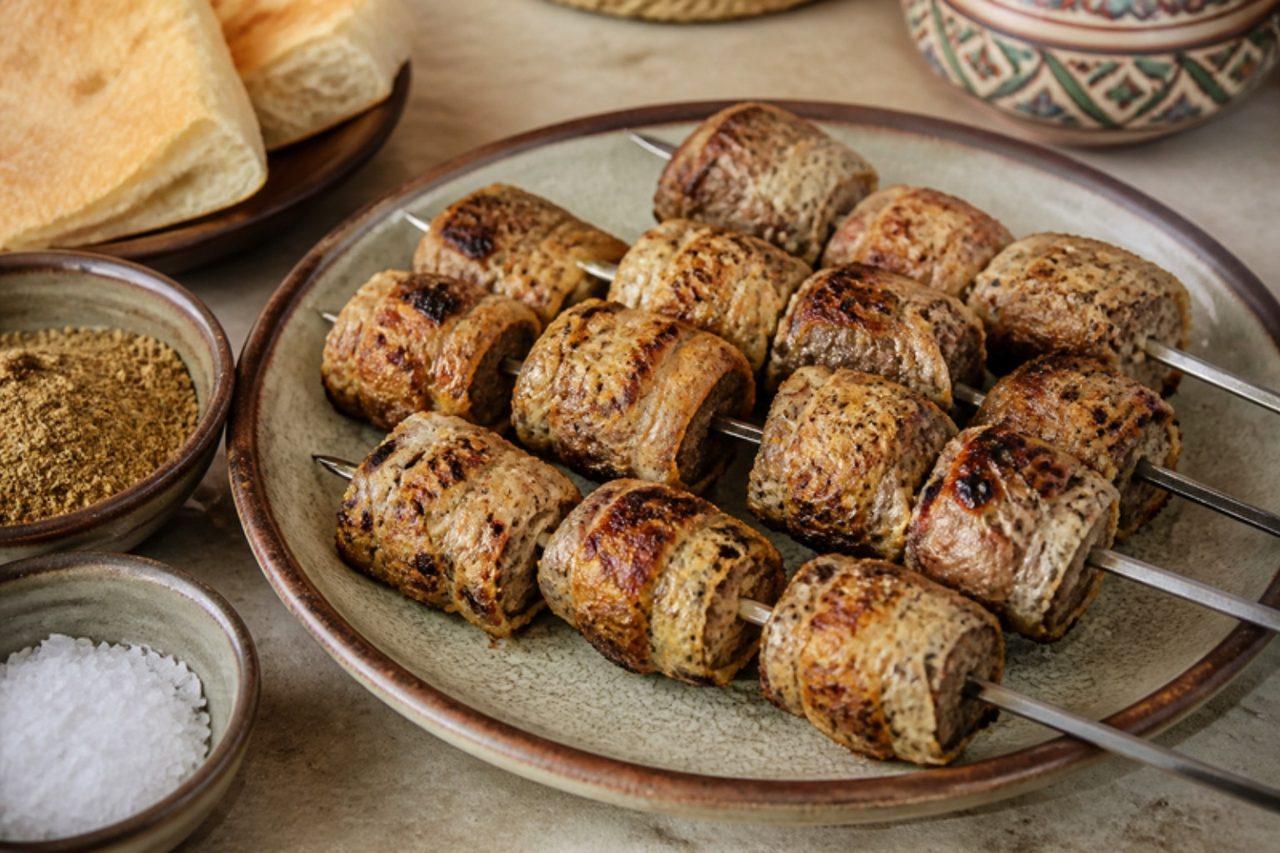
KourdassGrilled lamb liver bundles

After the sacrifice of Eid al-Adha, Moroccan families use every part of the lamb, and kourdass is one of the dishes made in the days that follow: pieces of tripe and liver rubbed with cumin and paprika, wrapped in caul fat and traditionally hung up to air-dry before grilling. This home version skips the drying, which is hard to do safely in a modern kitchen, and grills the bundles fresh over charcoal or under a grill until the fat crisps and the liver is cooked through. Buy cleaned, pre-cooked tripe and caul fat from a halal butcher. Chef's tip: wrap the bundles tightly so the caul fat bastes them as it melts.

by KrazyBadal 0 views

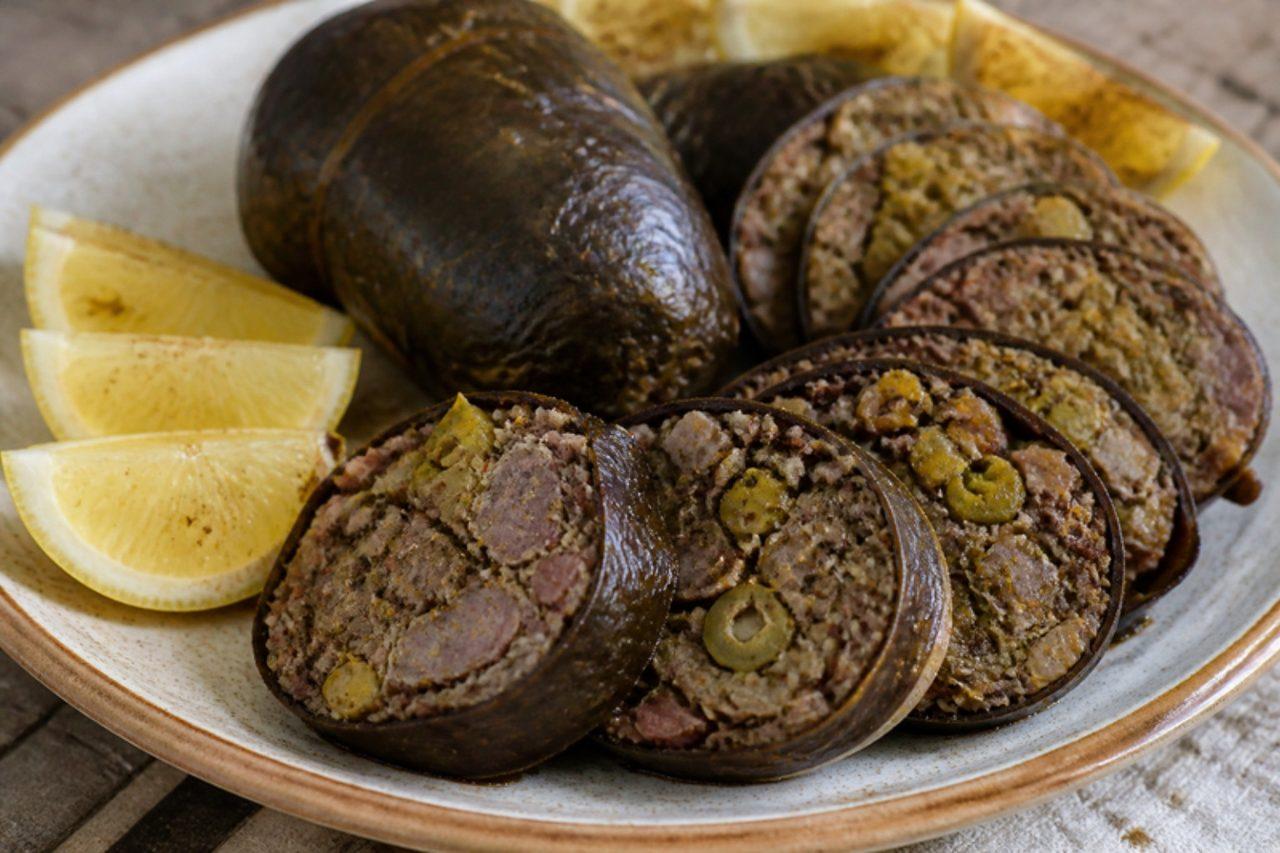
TihaneStuffed lamb spleen

Tihane, or tehal, is an old Eid al-Adha speciality from Moroccan towns such as Fez and Marrakech, made on the days after the sacrifice when the offal is shared out. The lamb's spleen is cut open into a pocket and stuffed with chopped liver and heart, a little fat, green olives, preserved lemon, garlic and cumin, then sewn shut, poached and roasted until browned. It is sliced thin and eaten warm or cold with bread. Ask a halal butcher for the spleen and offal. Chef's tip: prick the spleen with a fine needle before poaching so it doesn't burst in the pot.

130 minMoroccanMeatGluten free
by KrazyBadal 0 views

KalanehWild leek stuffed flatbread

In Kurdistan and Kermanshah, Newroz arrives with the first spring greens on the hillsides, and families gather wild leeks to fold into kalaneh, thin griddle breads cooked over a fire or a hot pan and soaked in melted butter. The dough is plain and soft, rolled very thin around a pile of chopped leek or chives with a little salt and pepper, so the greens steam inside as the bread blisters. Eat it hot, torn into strips, with yogurt and tea at a Newroz picnic. The common mistake is wet greens, which turn the dough soggy and make it tear; dry them well after washing. Chef's tip: brush the butter on the moment the bread leaves the pan so it soaks right in.

by KrazyBadal 0 views

Pajagua mascadaBeef and cassava patties

Pajagua mascada is a Paraguayan street-food classic that appears on every table for the San Juan festival on 24 June, when bonfires burn and the night is full of games and traditional food. Minced beef is mixed with mashed cassava, onion, garlic and a little egg and flour, shaped into flat patties and fried until crisp. The name comes from Guaraní and refers to the 'chewing' of old Paraguayan cooks, who made it from leftover meat. Chef's tip: dry the boiled cassava well and remove its woody core, which keeps the patties light and crunchy.

by KrazyBadal 0 views

Dowina (Kurdish yogurt soup)

Dowina, called ash-e doogh in Persian, is warming spring food in Kurdish homes around Newroz, when yogurt is plentiful and the first herbs are cut from the garden. Rice and chickpeas simmer in a tangy, lightly thickened yogurt broth, finished with fresh dill, coriander and a sizzle of dried mint in oil. It is eaten warm, never boiling hot, with flatbread. The common mistake is to heat the yogurt too fast without stirring, which makes it split into grainy curds. Chef's tip: whisk an egg yolk and a spoonful of rice flour into the yogurt before it goes on the heat; it holds the soup smooth all the way to the simmer.

by KrazyBadal 0 views

Lengua a la vinagretaBeef tongue with vinaigrette

Argentina's Nochebuena is a hot summer night, so the table is full of cold dishes, and lengua a la vinagreta is one of the classics: beef tongue simmered until tender, peeled, sliced and covered with a sharp vinaigrette of parsley, garlic, red pepper, onion and chopped hard-boiled egg. It is made a day ahead and served chilled with vitel toné and Russian salad. Chef's tip: peel the tongue while it is still hot, as the skin comes away easily then and clings once it cools.

by KrazyBadal 0 views

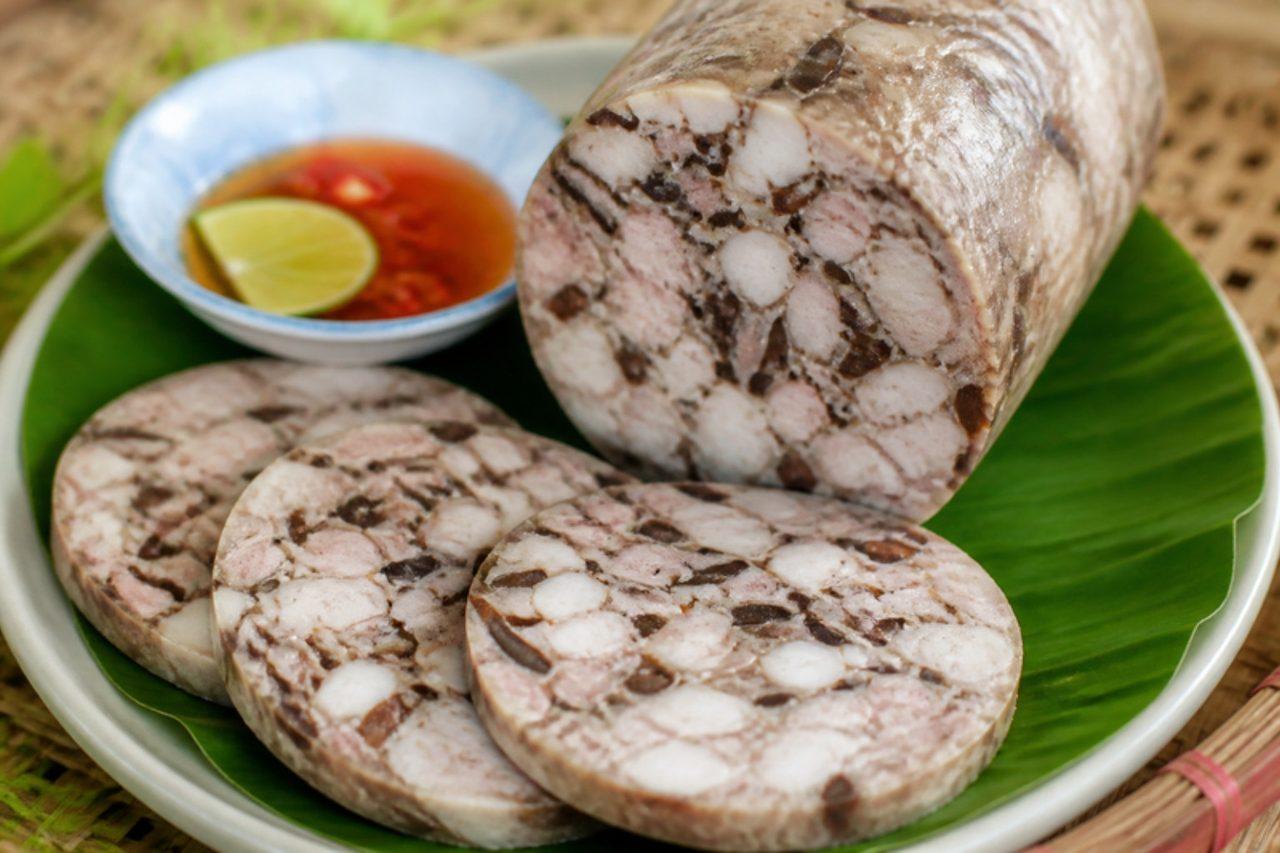
Giò thủ (pressed pork roll)

Giò thủ is a northern Tết classic, a mosaic roll made from pork ear, pork tongue and boneless pork cheek meat with crunchy wood ear mushrooms and plenty of black pepper. Using these cuts is an old way of honouring the whole animal at the year's biggest feast, and the roll's neat round slices are a wish for a complete, well-ordered year. The pieces are boiled, sliced, stir-fried with fish sauce and packed hot into banana leaf, where their natural gelatine binds them as they cool. Every slice is crunchy, chewy and peppery; serve with pickled shallots, fish sauce with lime and chilli, and bánh chưng. Chef's tip: pack and press the filling while it is still very hot; once it cools the gelatine sets and the roll will not hold together.

by KrazyBadal 0 views

Quinotos en almíbar (Argentine kumquats in syrup)

In Buenos Aires and the river provinces of the Litoral, kumquat trees ripen in the middle of winter, between June and August, and the fruit goes straight into jars of syrup. Grandmothers' pantries held quinotos for the whole year, brought out for birthdays and long Sunday lunches. Each little fruit turns glossy orange and translucent, with a soft, bittersweet skin and a sharp, juicy centre. Spoon them over vanilla ice cream, serve them with a slice of fresh cheese in the style of postre vigilante, or eat them straight from the jar. Many bar menus offer them steeped in spirits; this version keeps only the syrup. Naturally egg-free, the quinotos rely on sugar syrup to preserve them, while pectin from the peel gives the syrup a light, jammy body. Chef's tip: blanch the fruit three times from cold water; the common mistake is skipping this, which leaves the skins tough and bitter.

by KrazyBadal 0 views

Canh măng (dried bamboo shoot soup)

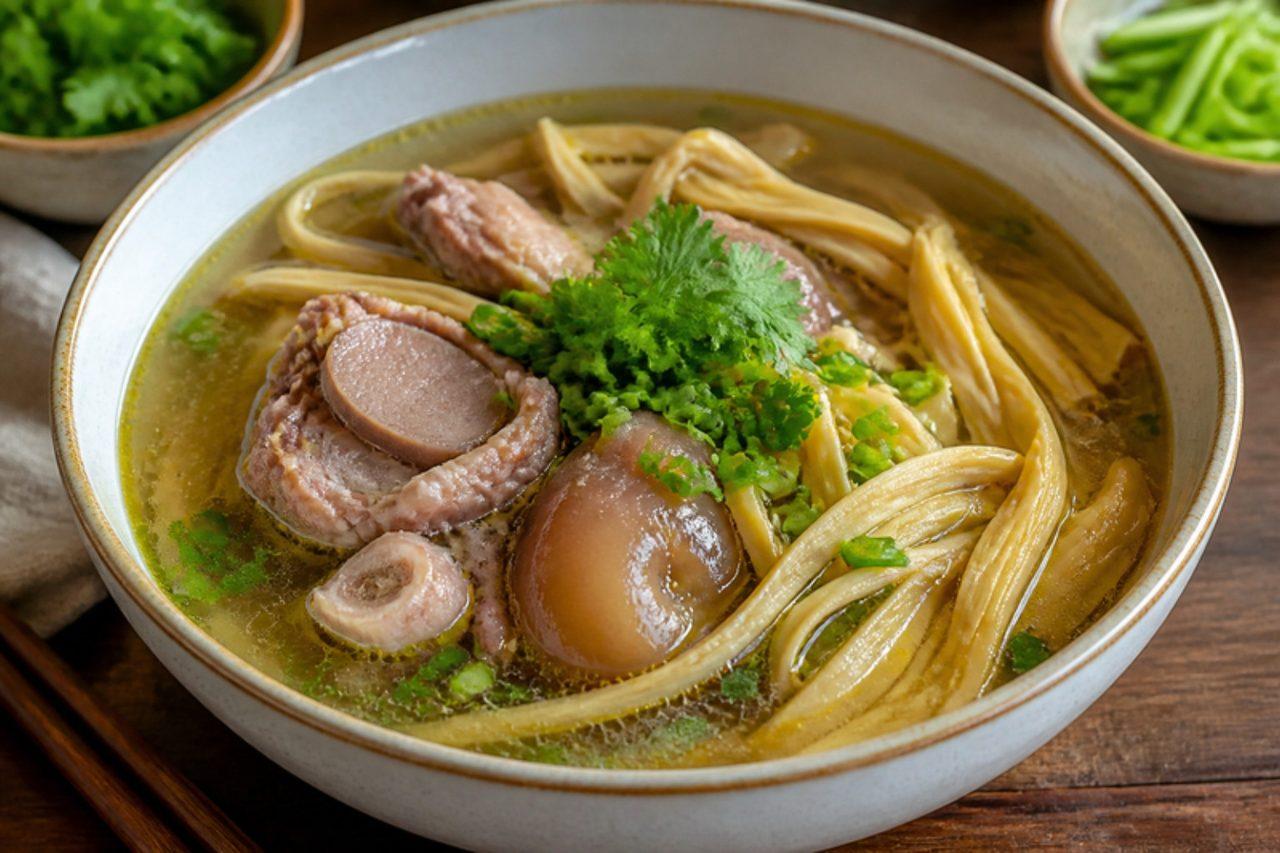
A deep bowl of canh măng sits at the centre of the northern Tết feast tray, where its long, chewy strands of bamboo stand for steady growth in the new year. The dried shoots are soaked and boiled several times until mild and tender, then simmered with pork hock until the broth is clear, sweet and lightly smoky. It is rich but clean-tasting, served with rice beside the boiled chicken, spring rolls and giò. If you prefer chicken, a variation is given in the steps. Chef's tip: tear the soaked shoots into thin strips along the grain rather than cutting across; they stay chewy and soak up more broth.

by KrazyBadal 0 views

Mứt tắc (candied kumquats)

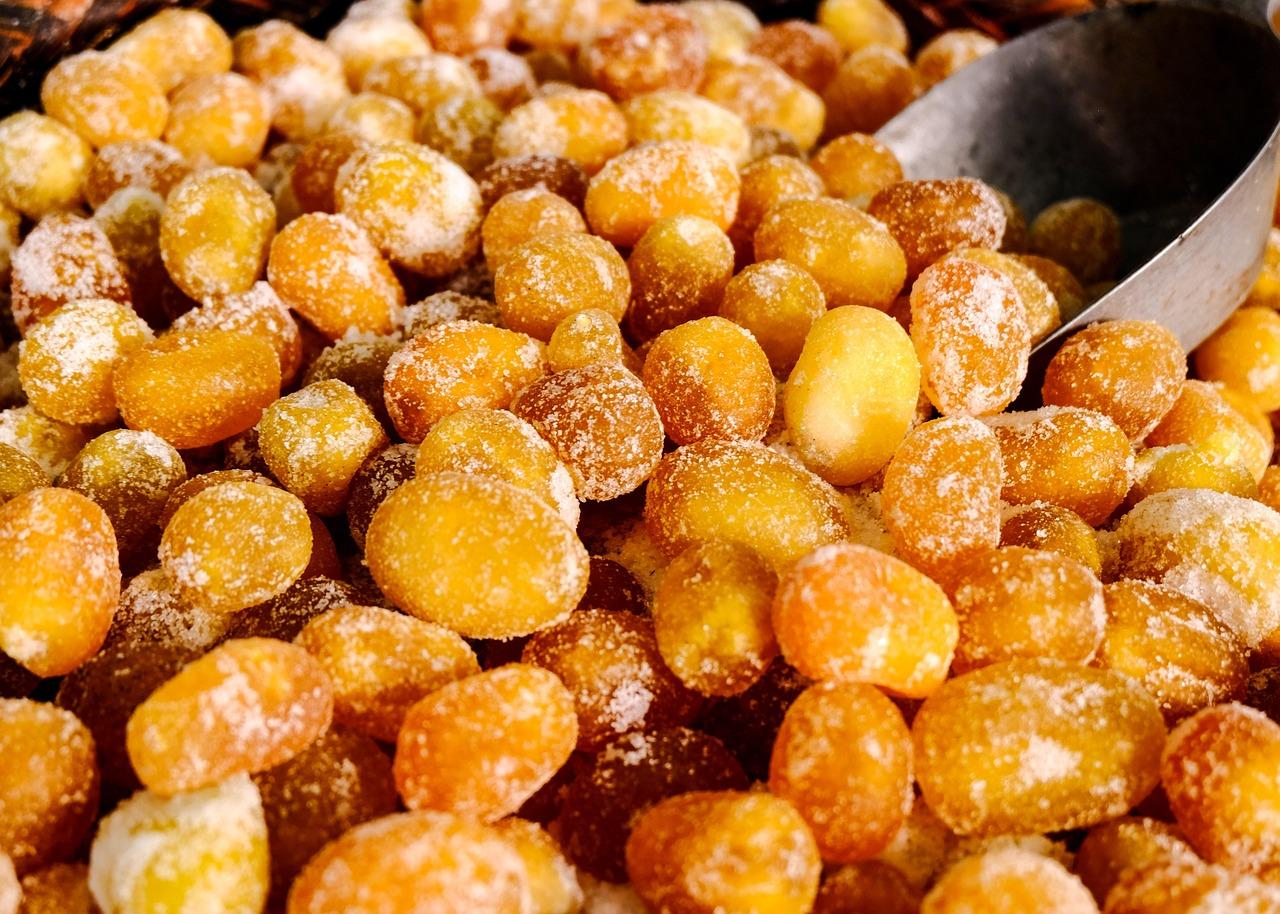
In the south, potted kumquat trees heavy with fruit stand at the door for Tết, because their round gold fruit promises plenty; mứt tắc brings that same luck to the candy tray. Each fruit is slit, gently pressed to push out the seeds and juice, firmed briefly in clear water made with food-grade slaked lime (vôi ăn), then candied until glossy and amber, with a chewy skin and a pleasant bitter-sweet edge. A no-lime method is given too. Serve with strong tea, or drop a fruit into hot water with honey for a soothing drink. Chef's tip: blanch the fruit twice in fresh water before candying; it tames the bitterness without losing the perfume.

by KrazyBadal 0 views

Turrón de maníPeanut nougat

On an Argentine Christmas Eve, after midnight toasts, the 'mesa dulce' appears with pan dulce, garrapiñadas and turrón de maní: a chewy white nougat of honey, sugar, whipped egg white and roasted peanuts, often set between two sheets of rice paper. Families make it in the days before Nochebuena. The egg white is cooked by the hot syrup. It is gluten free if you use gluten-free wafer paper or none. Chef's tip: work fast once the syrup is in, as the nougat stiffens as it cools and gets hard to spread.

by KrazyBadal 0 views

Canh bóng (Hanoi puffed pork skin soup)

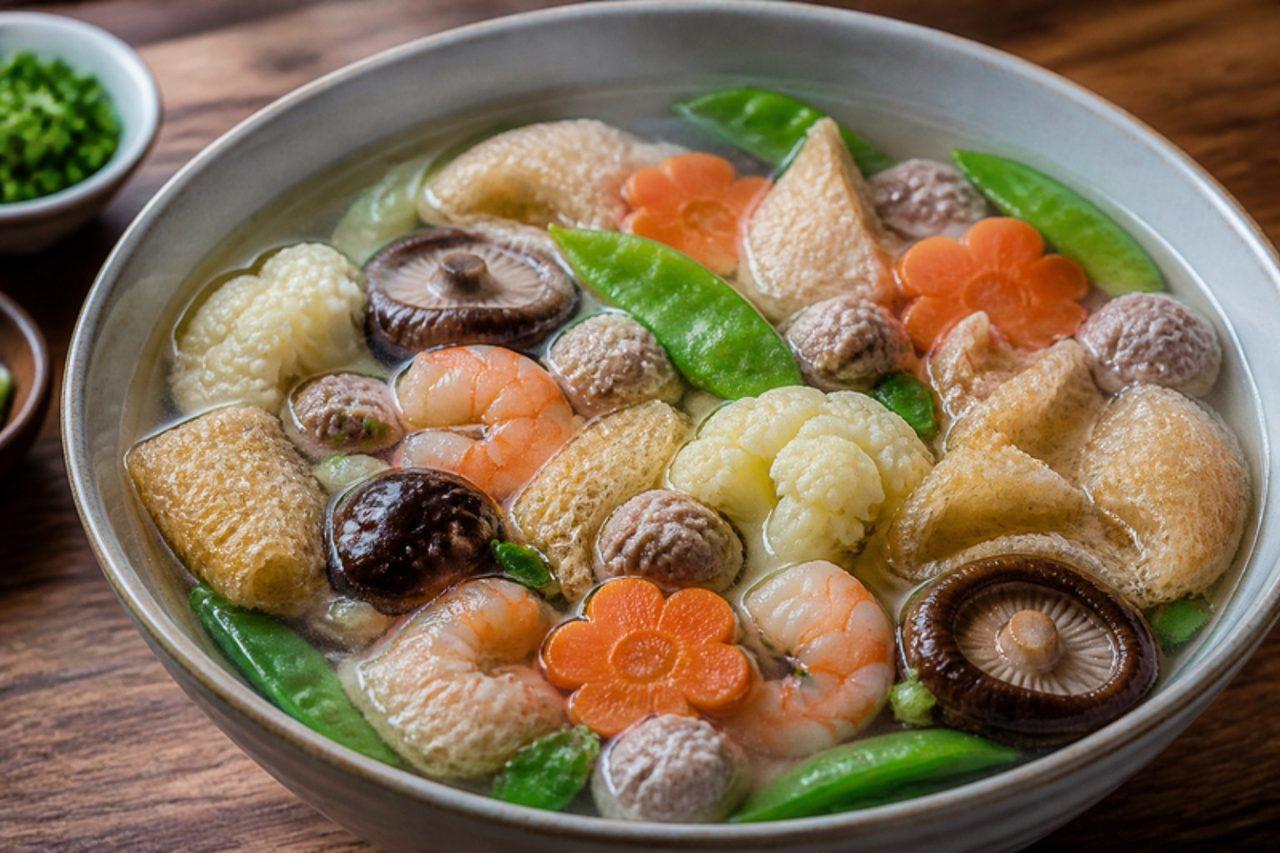
Canh bóng is the showpiece soup of the Hanoi Tết feast tray: a clear pork bone broth full of colour, with carrot flowers, cauliflower, snow peas and mushrooms floating beside pork meatballs, prawns and bóng bì, the puffed dried pork skin that soaks up broth like a sponge. Its many ingredients stand for abundance, and its clarity for a clean start to the year. It is light yet deeply savoury, served with rice and the rest of the feast. Buy bóng bì ready-puffed in packets from Vietnamese grocers. Chef's tip: soak and squeeze the pork skin in warm ginger water twice; it removes the frying oil so the broth stays sparkling.

by KrazyBadal 0 views

Thịt đông (pork in aspic)

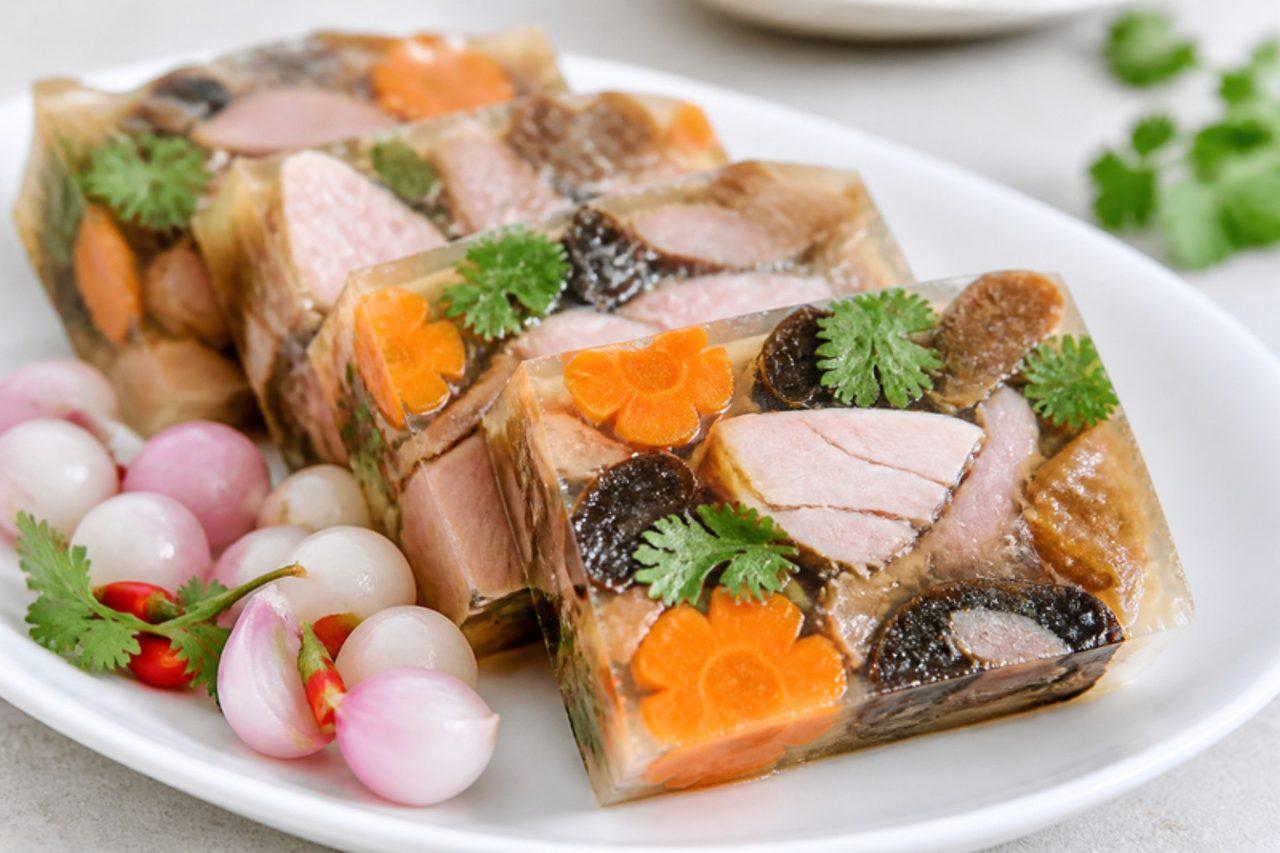
Thịt đông is a dish of the cold northern Tết, when families once left bowls of simmered pork outside overnight to set; today the fridge does the job. Pork hock and pork skin are cooked gently with shallots, fish sauce and black pepper until the meat is tender and the broth is rich in natural gelatine, then wood ear mushrooms are added for crunch and everything sets into a clear, wobbly jelly. It is eaten cold, cut into wedges, with hot rice, bánh chưng and a bowl of pickled shallots to cut the richness. No gelatine powder is needed. Chef's tip: keep the pot at a bare simmer and skim often; a rolling boil clouds the jelly.

by KrazyBadal 0 views

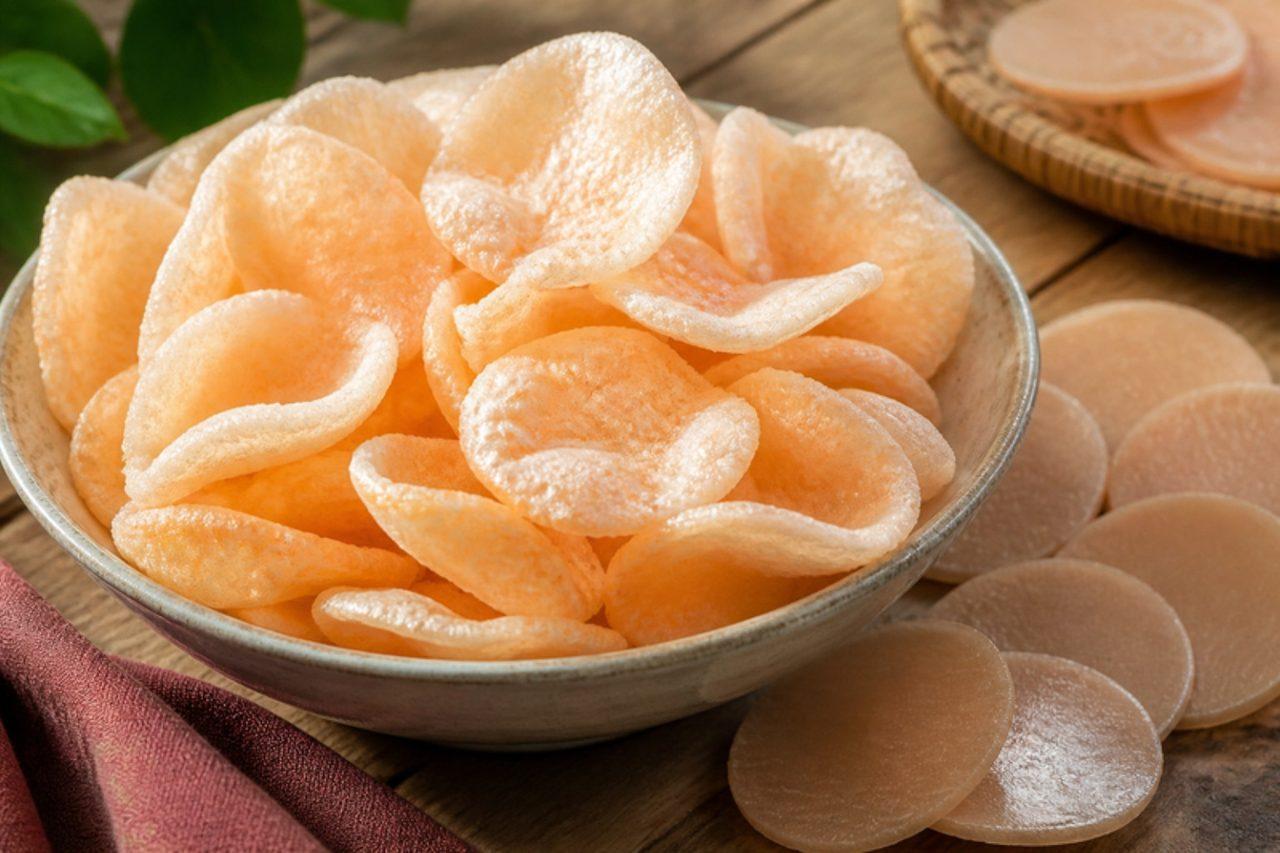
Bánh phồng tôm (prawn crackers)

In the Mekong Delta, and above all in Sa Đéc, whole streets lay out trays of prawn crackers to dry in the sun before Tết; a cracker that puffs big in the hot oil is a cheerful sign that the family's fortunes will grow too. Home-made ones taste far more of prawn than packet crackers: light, airy, crisp and a little sweet, perfect for guests with drinks or beside a salad. The dough is steamed, chilled, sliced thin and dried for a day in the sun or a few hours in a very low oven, so plan ahead; if you buy dried crackers, just do the frying step. Chef's tip: slice the chilled logs as thin as a coin; thick slices stay hard in the middle instead of puffing.

by KrazyBadal 0 views

Showing 24 of 702 recipes

Show more recipes

Page 1 of 30