
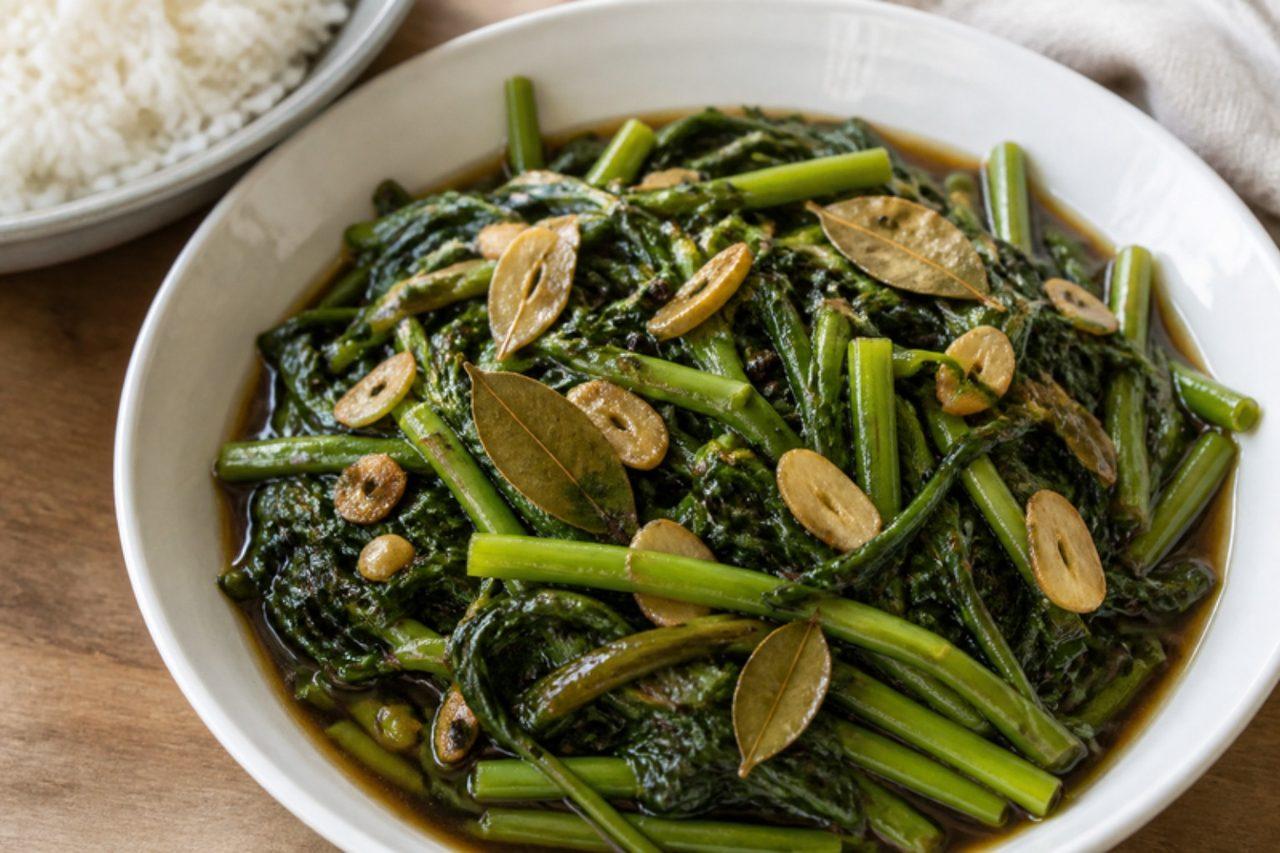
AI-generated image
Adobong kangkong
Braised water spinach
Water spinach braised Filipino adobo-style in cane vinegar, soy, garlic and bay


In Manila and across Luzon, adobong kangkong is the cheap green that sits in a tray at the carinderia, the roadside canteen where office workers and jeepney drivers point at two or three dishes to go with their rice. It is not a stir-fry in the Chinese or Malay sense: the water spinach is cooked briefly in an adobo base of cane vinegar, soy sauce, bay and cracked pepper, so the stems stay crunchy while the leaves soak up a sharp, salty, garlicky sauce that runs into the rice. It costs very little, takes ten minutes and is often the only vegetable on a weekday plate. Chef's tip: let the vinegar boil for a full minute before you stir anything, the way Filipino cooks do; the raw, harsh edge cooks off and the sauce turns mellow.
- Total time
- 18 min
- Difficulty
- easy
- Serves
- 4
Ingredients
- 14 oz water spinach (kangkong)stems cut into 5 cm lengths, leaves kept separate
- 2 tbsp vegetable oil
- 6 cloves garliccrushed and roughly chopped
- 1 onionsmall, sliced
- 3 tbsp cane vinegaror white wine vinegar
- 2 tbsp soy sauce
- ¼ cup water
- ½ tsp black peppercornscoarsely cracked
- 1 tsp sugar
Shop this recipe on Amazon
What you'll need
Fresh ingredients (3)
Links open Amazon in a new tab. As an Amazon Associate, WhatToEat.Today earns from qualifying purchases.
Method
0/5 doneStep 1: Wash 14 oz water spinach (kangkong) in a big bowl of cold water, lifting it out so grit stays behind. Keep the thick stems and the leafy tops in two piles; the stems need a head start.
Step 2: Heat 2 tbsp vegetable oil in a wok or wide frying pan over a medium heat. Add 6 cloves garlic and fry, stirring, until pale gold and smelling nutty, about 1 minute. Add 1 onion and cook until it softens, 2 minutes.
3 minStep 3: Pour in 3 tbsp cane vinegar, 2 tbsp soy sauce and ¼ cup water, drop in 2 bay leaves and ½ tsp black peppercorns, and bring to the boil. Do not stir for 1 minute: the sharp smell of vinegar will soften noticeably. The common mistake is stirring straight away, which locks in a raw, sour taste.
1 minStep 4: Add the kangkong stems and 1 tsp sugar, turn the heat to high and toss for 2 minutes until the stems turn bright green but still snap.
2 minStep 5: Add the leaves and toss for 1 minute more, just until they wilt and look glossy. Taste the sauce: it should be sour first, then salty. Remove the bay leaves and serve at once with rice, spooning the sauce over.
1 min
Nutrition per serving
- Calories
- 70 kcal
- Protein
- 3 g
- Carbs
- 8 g
- Fat
- 4 g
- Fibre
- 3 g
Nutrition values are estimates.
KrazyBadal
Good to know
- How long does adobong kangkong take?
- About 18 minutes in total: 10 minutes to prepare and 8 minutes to cook.
- How many people does it serve?
- 4 as written. Change the servings above the ingredients and every amount scales to match.
- Is it vegan?
- Yes. It has no meat, fish, dairy or eggs.
- What can I use instead of garlic?
- ½ tsp garlic paste or ⅛ tsp garlic powder per clove.
- What can I use instead of onion?
- 2 shallots per onion.
Reviews
No reviews yet. Be the first to cook it.
Rate this recipe
Sign in to rate and review this recipe.
You might also like

Tiyula itumBlack beef soup
Tiyula itum, 'black soup', is the pride of the Tausug people of Sulu in the far south of the Philippines, cooked for weddings, Eid celebrations and when guests come home. Beef (it is a halal, pork-free dish) is simmered with ginger, lemongrass and turmeric, then darkened with pamapa itum, a paste of grated coconut toasted until almost black and pounded with spices. The broth looks dramatic but tastes smoky, earthy and gently peppery, with heat from chillies. Serve it with plain rice. Chef's tip: toast the coconut slowly, stirring all the time, until it is very dark brown but not ashy; burnt-to-ash coconut tastes bitter and ruins the soup.

Lumpiang sariwaFresh vegetable spring rolls
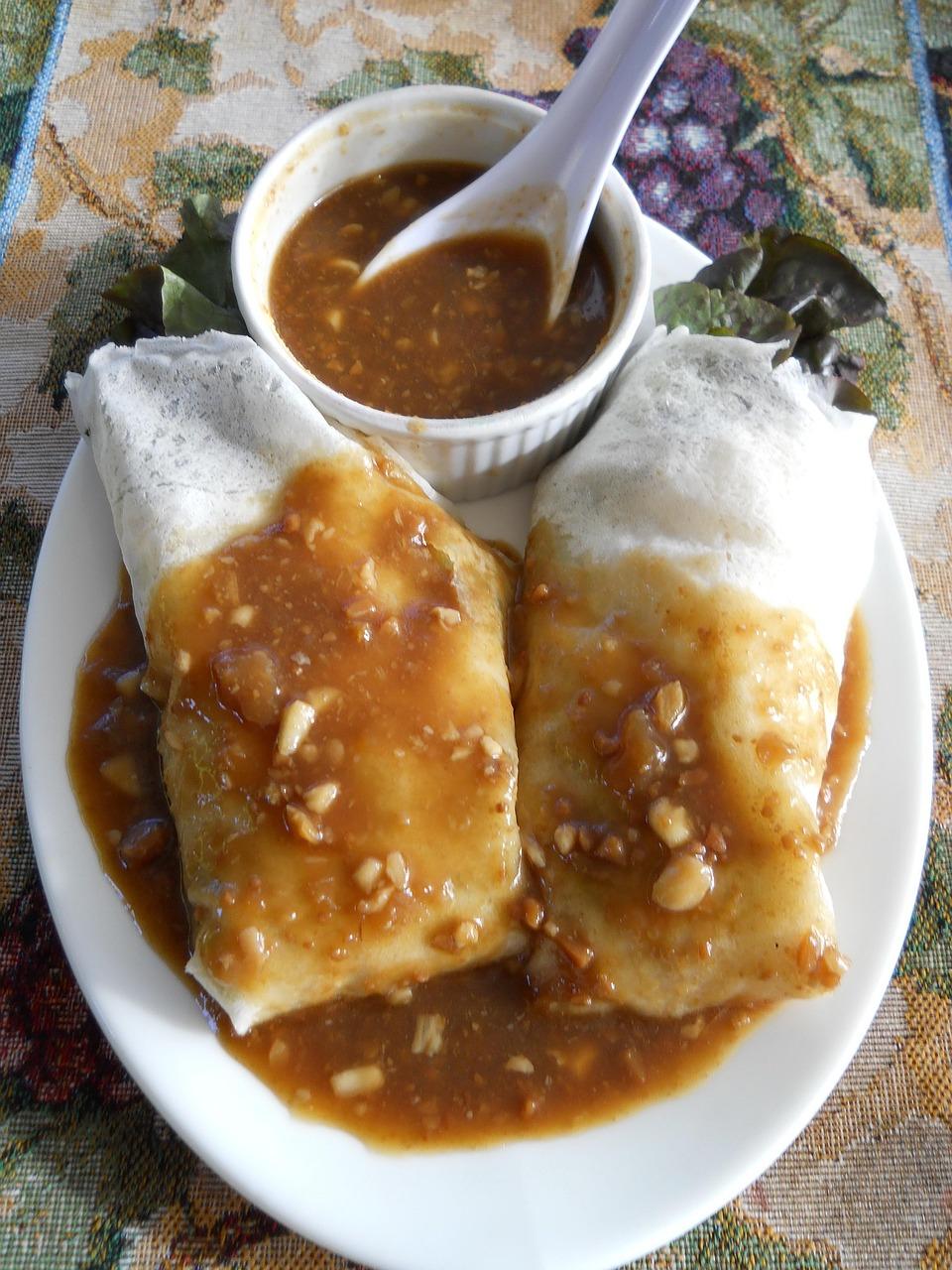
Lumpiang sariwa ('fresh lumpia') is the unfried cousin of the crisp Filipino spring roll, served at fiestas, family gatherings and as a substantial afternoon merienda around Manila and the Tagalog provinces. A thin, soft egg crepe is wrapped around a lettuce leaf and a warm sauté of sweet potato, jicama, carrot, green beans, cabbage and tofu, then covered in a glossy brown garlic sauce and a shower of crushed peanuts. In Negros the filling is heart of palm (ubod) instead. It is eaten with a knife and fork, or carefully by hand. Chef's tip: make the crepes thin enough that you can almost see light through them; thick ones turn rubbery and hide the filling.
TashmijabiMashed potatoes with stretchy cheese
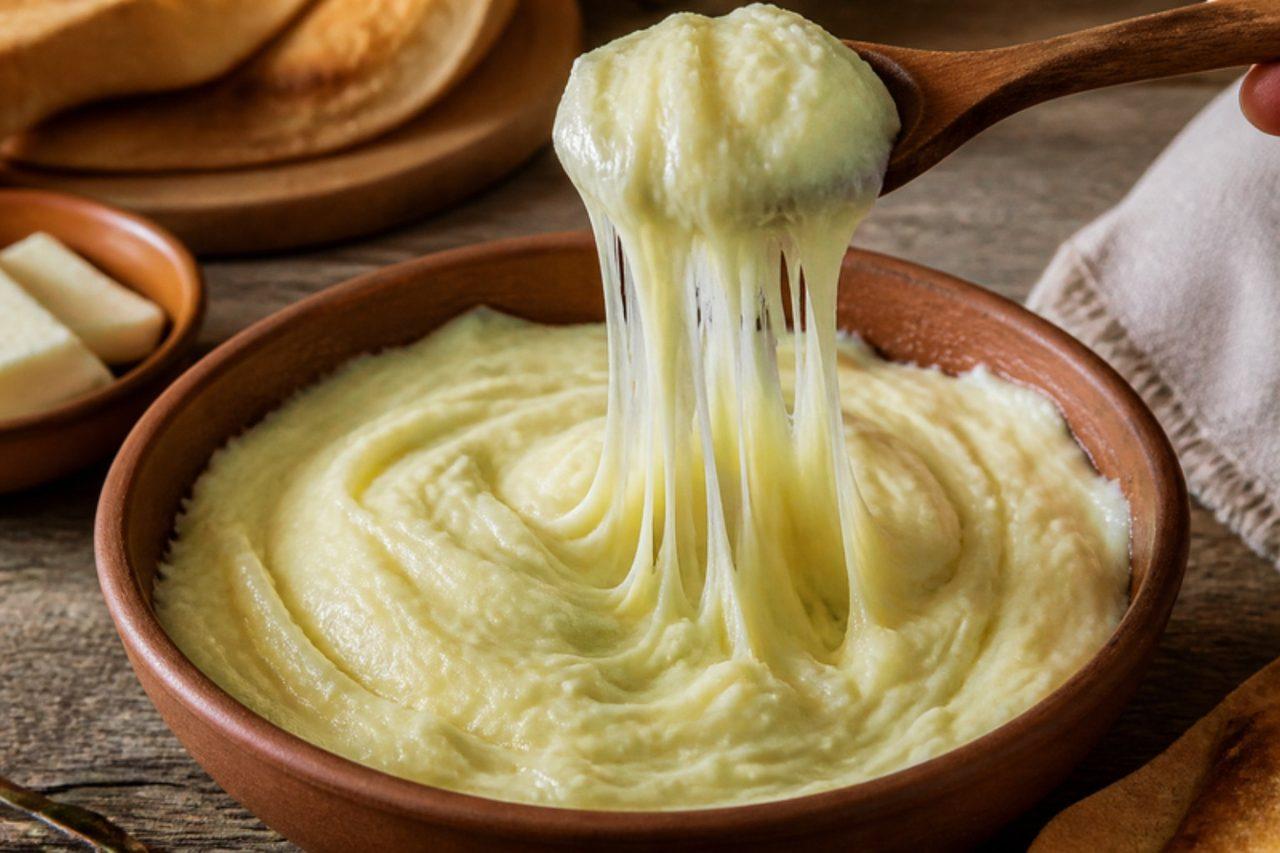
Potatoes grow well in the cold valleys of Svaneti, and tashmijabi is how families around Mestia turn them into a feast dish: they are mashed hot, then beaten with handfuls of young sulguni until the purée becomes glossy and stretches from the spoon in long strands. It is served with grilled meat, kubdari or simply with pickles and Svan salt. A common mistake is letting the potatoes cool before adding the cheese; they must be piping hot for the cheese to melt and stretch. Chef's tip: keep the pan on a low heat while you beat, and use a firm wooden spoon. Most sulguni uses animal rennet; choose a vegetarian one or use mozzarella.
 Georgian