
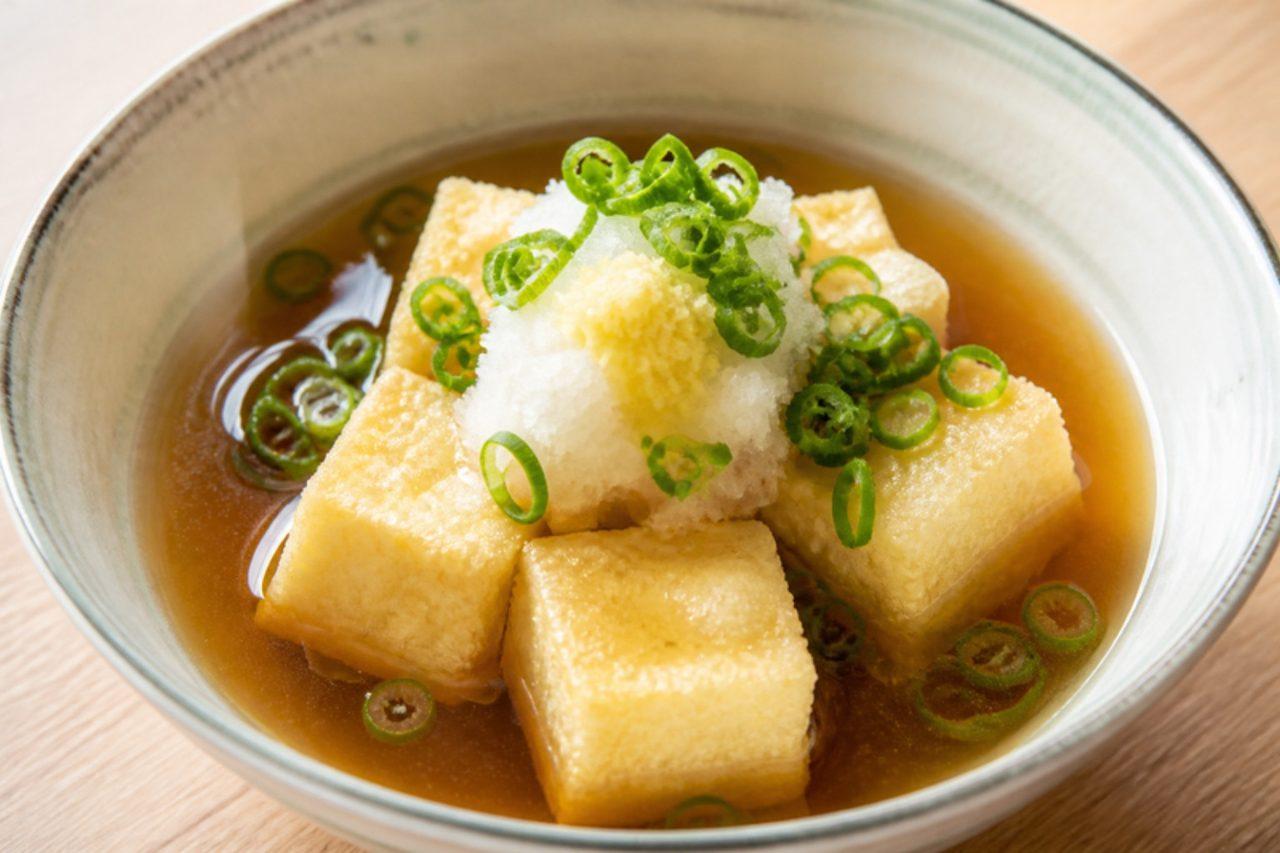
AI-generated image
Agedashi tofu
揚げ出し豆腐: crisp-coated silken tofu in a warm soy and kombu broth

Agedashi tofu (揚げ出し豆腐) is a classic izakaya dish eaten all over Japan: cubes of soft tofu dusted in potato starch, fried until they form a thin, crisp shell, then bathed in a hot, savoury broth. The coating turns silky as it soaks up the sauce while the tofu inside stays creamy. Usually topped with bonito flakes; here it's grated daikon, ginger and spring onion with a kombu-shiitake broth instead. Chef's tip: coat the tofu in starch right before it goes into the oil, not ahead of time; if it sits, the starch turns damp and the coating fries up gummy instead of crisp.
- Total time
- 20 min
- Difficulty
- easy
- Serves
- 2
Ingredients
For the broth
For the tofu
To serve
Method
0/5 doneStep 1: Wrap 10 ½ oz silken or soft tofu in kitchen paper and set on a plate with a small plate on top for 10 minutes to drain. Don't press too hard or silken tofu breaks.
10 minStep 2: Meanwhile, put ¾ cup water, ⅛ oz kombu (dried kelp) and 1 dried shiitake mushroom in a small pan and heat slowly. Remove the kombu just before it boils, simmer for 3 minutes, then add 2 tbsp soy sauce and 2 tbsp mirin. Remove the shiitake and keep the broth hot.
6 minStep 3: Cut the tofu into 6 cubes and pat dry. Roll each gently in 4 tbsp potato starch or cornflour so it's evenly coated.
Step 4: Heat 2 cm of vegetable oil in a small pan to 350°F. Fry the tofu in 2 batches for 2–3 minutes, turning, until the coating is crisp and very pale gold. Drain on kitchen paper.
5 minStep 5: Put the tofu in shallow bowls and pour the hot broth around it, not over it, so the top stays crisp. Top with 2 ⅞ oz daikon radish, 1 tsp ginger and 1 spring onion, sprinkle with 1 pinch shichimi togarashi (seven-spice) and eat straight away.
Nutrition per serving
- Calories
- 250 kcal
- Protein
- 11 g
- Carbs
- 20 g
- Fat
- 14 g
- Fibre
- 1 g
Nutrition values are estimates.
KrazyBadal
Good to know
- How long does agedashi tofu take?
- About 20 minutes in total: 10 minutes to prepare and 10 minutes to cook.
- How many people does it serve?
- 2 as written. Change the servings above the ingredients and every amount scales to match.
- Is it vegan?
- Yes. It has no meat, fish, dairy or eggs.
- What can I use instead of dried shiitake mushroom?
- Aubergine, diced, same weight.
- What can I use instead of soy sauce?
- Tamari, same amount (gluten free).
Reviews
No reviews yet. Be the first to cook it.
Rate this recipe
Sign in to rate and review this recipe.
You might also like
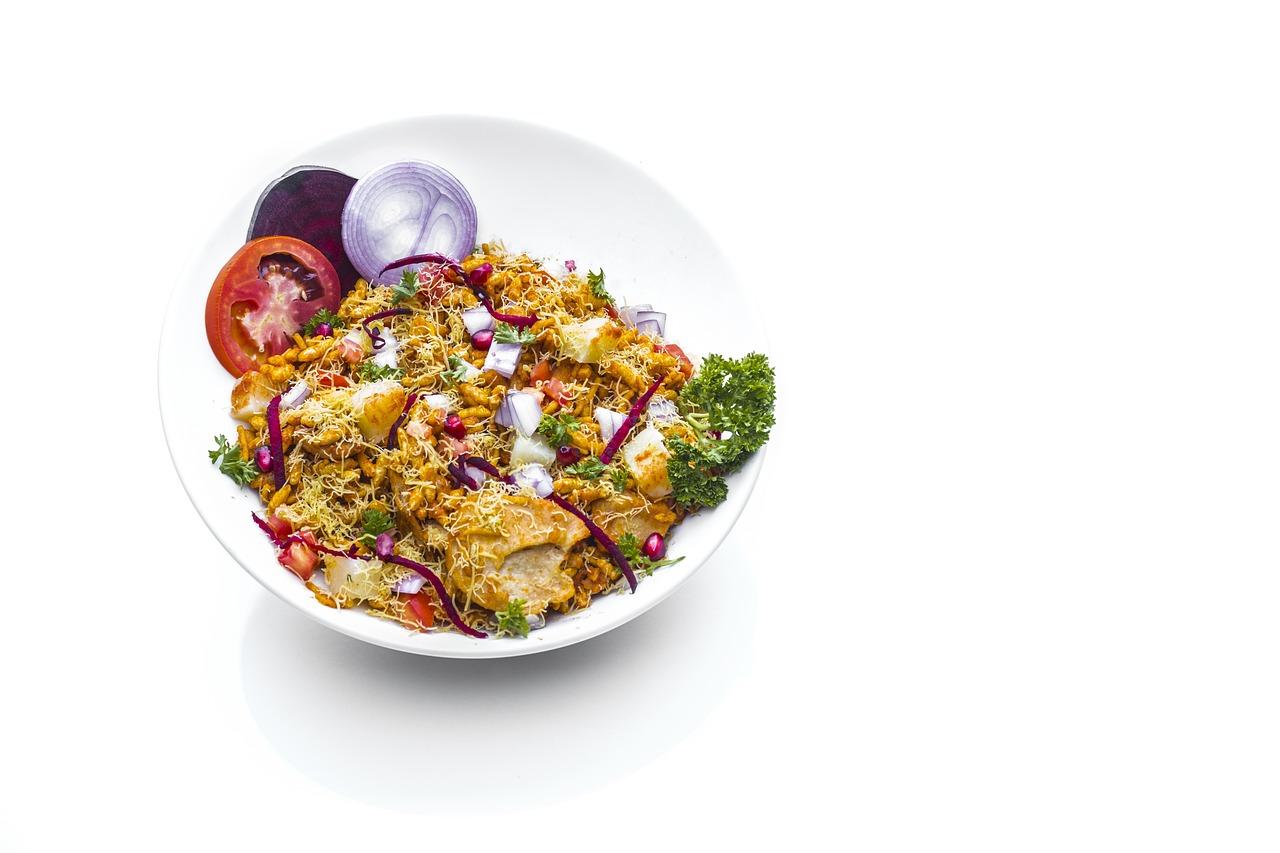
Coastal Mombasa mix
A Mombasa street-food bowl: chickpeas and potato simmered in coconut milk with raw mango and chilli, ladled into small bowls and topped with crisp lentil fritters, crunchy chevdo and red, green and tamarind chutneys. Make the fritters and chevdo ahead and assemble at the table. It's sweet, sour, hot and crunchy all at once.

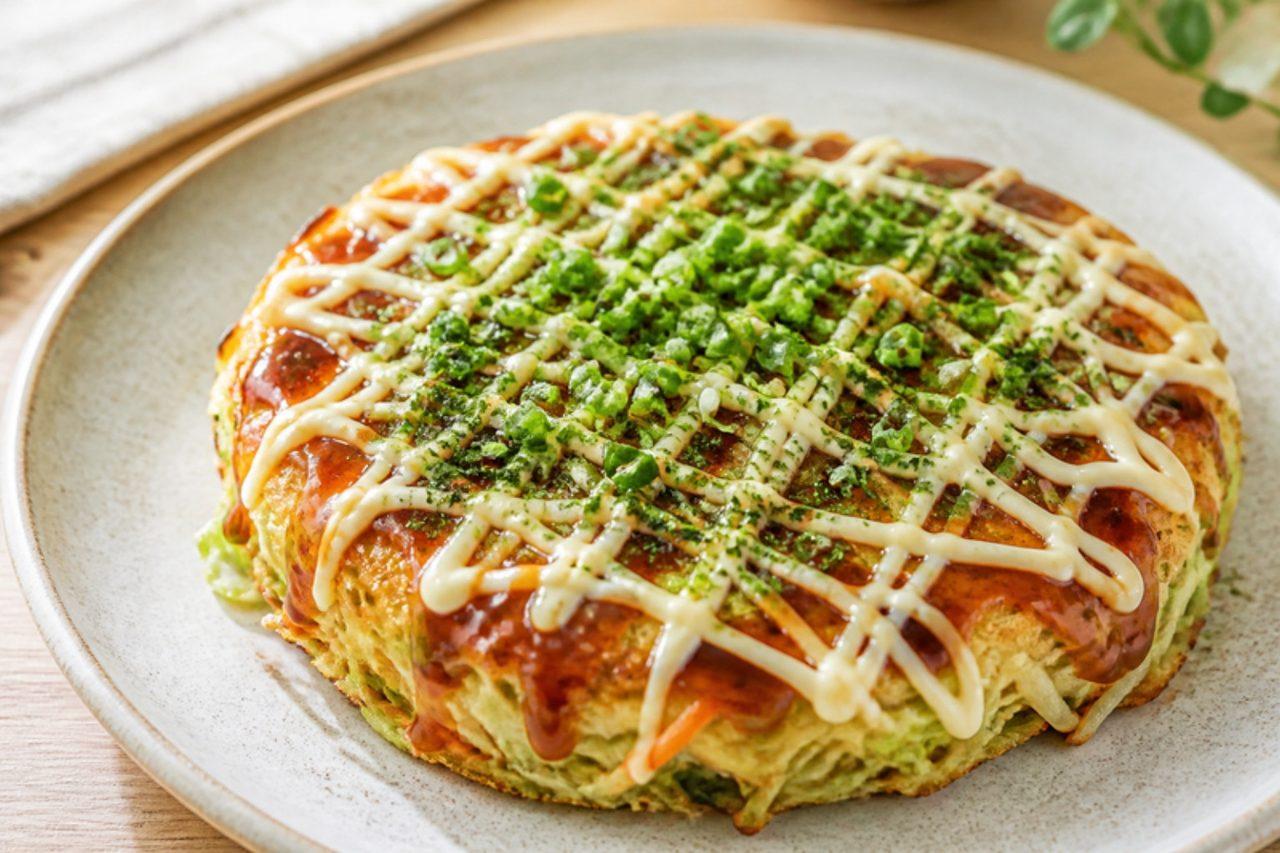
Okonomiyaki
Okonomiyaki (お好み焼き, 'grilled as you like it') is the pride of Osaka, where it's cooked on hot iron griddles in lively restaurants. Finely shredded cabbage is folded into a light batter with egg and spring onion, then fried into a thick, soft pancake with a crisp outside. It's painted with a fruity brown sauce and zigzagged with mayonnaise. Bonito flakes are usual on top; this vegetarian version uses seaweed flakes and pickled ginger instead. Chef's tip: don't press the pancake down with your spatula while it cooks. Osaka cooks leave it alone so the cabbage steams inside and stays light and fluffy; pressing squeezes out the air.

Masala khakhra
Khakhra are thin chapaties roasted slowly on a griddle until they turn crisp, like a cracker. This masala version adds gram flour, fresh fenugreek, turmeric and chilli to the wheat dough. They are a light Gujarati breakfast or tea-time snack, and lovely with pickle, chutney or a smear of butter. You can also make them in a roti maker.

