
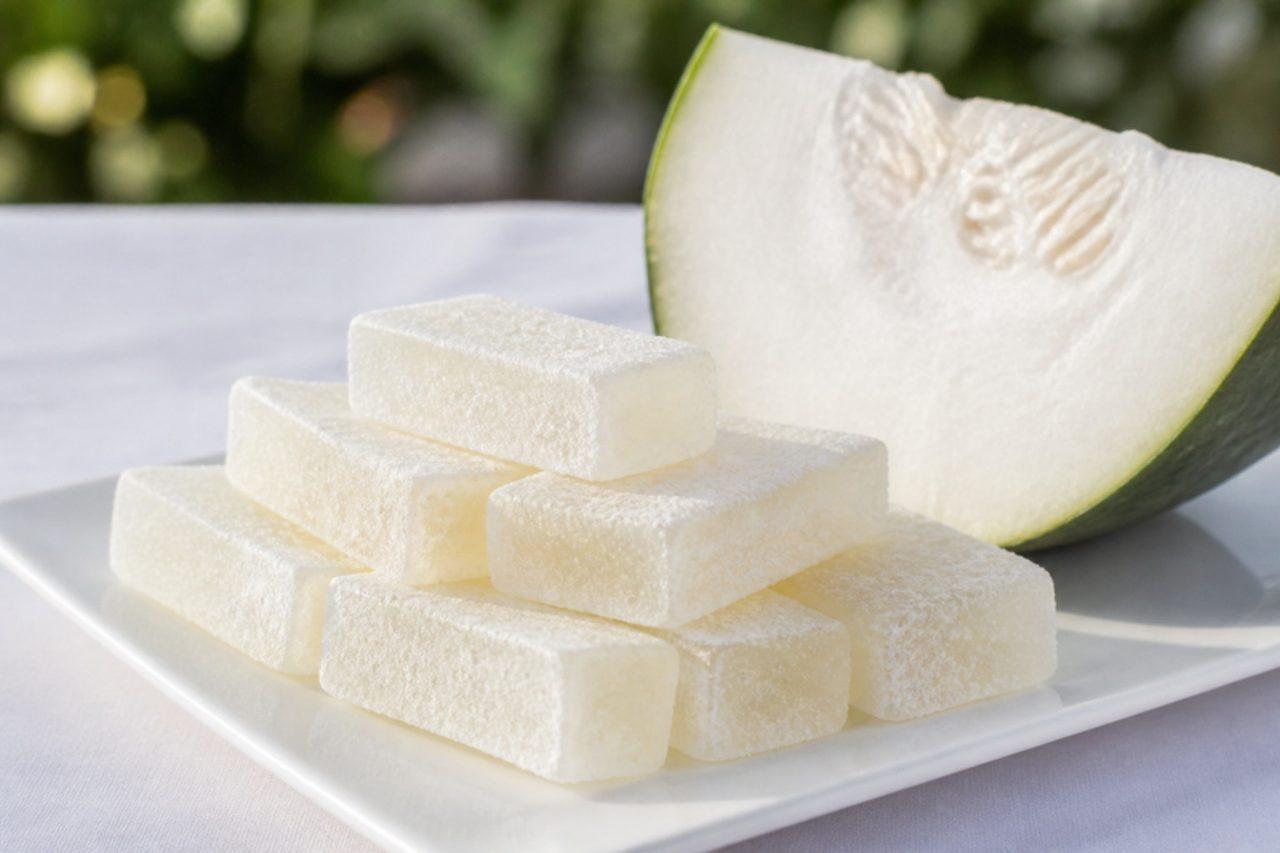
AI-generated image
Agra petha
Candied ash gourd sweets
Agra's translucent candied ash-gourd sweets (आगरा पेठा), crisp outside and juicy within (plus 8 hours soaking)



Every train pulling out of Agra carries boxes of petha. The city's halwais have been candying ash gourd for generations, and the plain white kind remains the classic: firm, crystal-clear cubes with a sugar crust and a juicy centre, lightly scented with rose or kewra. At home it makes a good festival sweet for Diwali gifting because it keeps for two weeks. The firmness comes from soaking the gourd in food-grade slaked lime (chuna, sold as pickling lime) or, as some cooks prefer, in alum water. Leaving out the soak, or rushing it, is the most common mistake: the cubes fall apart in the syrup. Chef's tip: prick each cube deeply all over with a fork before soaking, so the lime water and later the syrup reach the centre.
- Total time
- 110 min
- Difficulty
- medium
- Serves
- 10
Ingredients
For the gourd
- 2 ¼ lb ash gourd (white pumpkin, petha)a mature one with a white bloom on the skin
- 1 tbsp food-grade slaked lime (pickling lime, chuna)or use the alum below
- 1 tsp food-grade alum (fitkari) (optional)instead of the lime
- 6 ¼ cups cold water
For the syrup
- 1 ⅓ lb sugar
- 1 ¼ cups water
- 1 tsp lemon juice
Shop this recipe on Amazon
Spices & pantry
Fresh ingredients (3)
Links open Amazon in a new tab. As an Amazon Associate, WhatToEat.Today earns from qualifying purchases.
Method
0/7 doneStep 1: Peel the 2 ¼ lb ash gourd (white pumpkin, petha) thickly, removing the green layer under the skin, then scoop out the seeds and the spongy core. Cut the firm flesh into 4 cm cubes; you should have about 700 g.
15 minStep 2: Prick every cube deeply and all over with a fork, on every side. This lets the lime water and syrup soak right through.
10 minStep 3: Stir the 1 tbsp food-grade slaked lime (pickling lime, chuna) into the 6 ¼ cups cold water in a glass or steel bowl (not aluminium) and let it settle for 5 minutes. Pour off the clear water over the cubes, leaving the sediment behind, and soak for 8 hours. If using 1 tsp food-grade alum (fitkari) instead, dissolve it in the same water and soak for 2–3 hours.
Step 4: Drain and rinse the cubes under running water, then soak them in fresh water for 10 minutes. Repeat the rinsing and soaking 4–5 times until the cubes no longer feel slippery or smell chalky. Do not skip this.
40 minStep 5: Boil the cubes in plenty of fresh water over medium-high heat for 10–15 minutes, until they turn slightly translucent and a fork goes in with little resistance. Drain well.
15 minStep 6: In a wide pan, dissolve the 1 ⅓ lb sugar in the 1 ¼ cups water over medium heat, add the 1 tsp lemon juice, then the cubes. Simmer gently for 30–40 minutes, turning occasionally, until the cubes are completely translucent and the syrup is thick enough to form a single thread between your finger and thumb.
40 minStep 7: Stir in the ½ tsp kewra water or rose water, then lift the cubes onto a wire rack. Leave them to dry for 2–3 hours, turning once, until a thin, dry sugar crust forms. Store in an airtight box for up to 2 weeks.
Nutrition per serving
- Calories
- 240 kcal
- Protein
- 0 g
- Carbs
- 62 g
- Fat
- 0 g
- Fibre
- 1 g
Nutrition values are estimates.
KrazyBadal
Good to know
- How long does agra petha take?
- About 110 minutes in total: 40 minutes to prepare and 70 minutes to cook.
- How many people does it serve?
- 10 as written. Change the servings above the ingredients and every amount scales to match.
- Is it vegan?
- Yes. It has no meat, fish, dairy or eggs.
- Is it gluten free?
- Yes, as written. Check the labels on stock, sauces and spice mixes, which sometimes contain gluten.
- Can I make it ahead?
- Yes. It keeps well, so you can cook it earlier in the day or the day before and reheat it.
- What can I use instead of food-grade slaked lime (pickling lime, chuna)?
- Lemon, same amount.
- What can I use instead of sugar?
- Caster sugar, same amount.
Reviews
No reviews yet. Be the first to cook it.
Rate this recipe
Sign in to rate and review this recipe.
You might also like

SakarpadaSweet fried dough diamonds
Sakarpada (shakarpara) are little sweet diamonds of a rich dough made with ghee, milk and sugar, fried until golden and crunchy. They are a Diwali favourite with tea, and the cubes go into bhusu too. They keep for weeks in an air-tight tin.
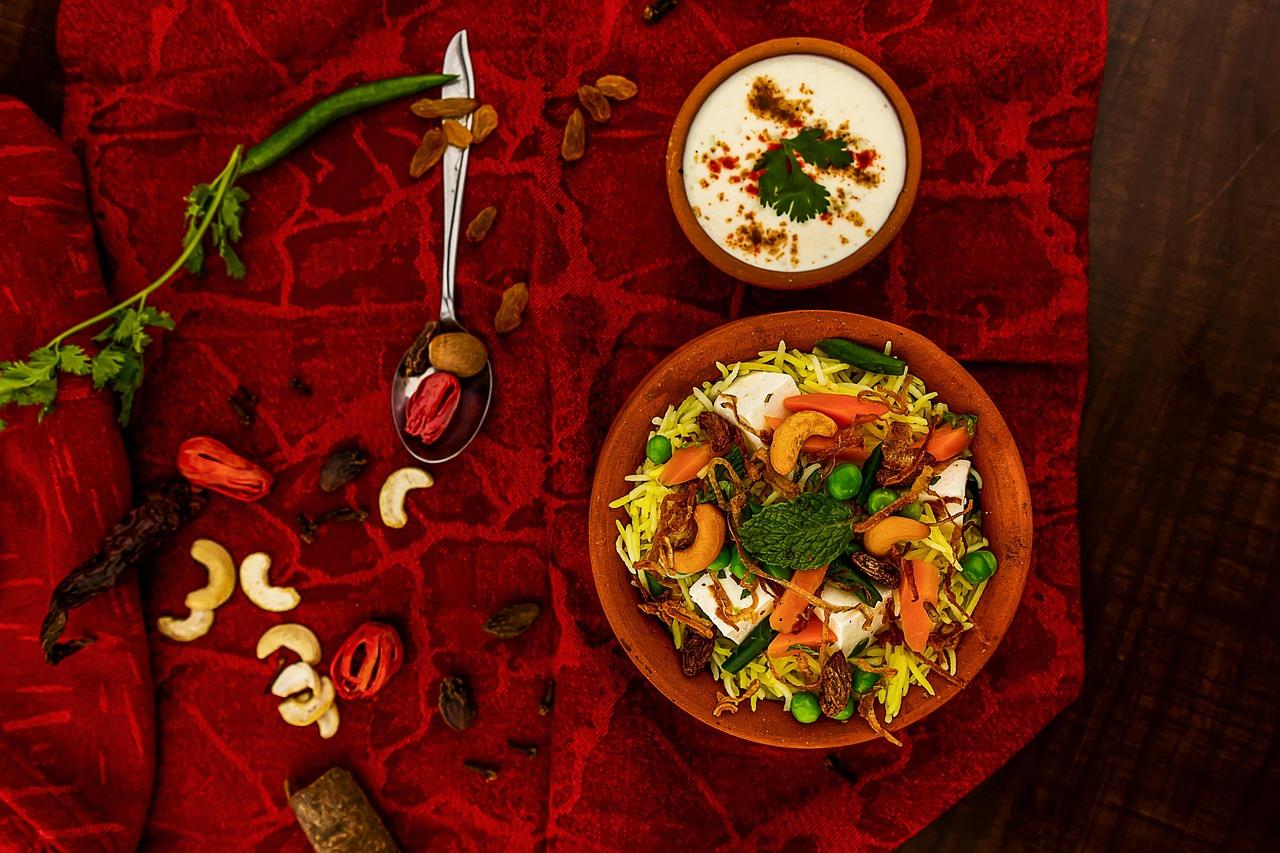
Paneer biryaniRice and moong dal in coconut milk
A mild, creamy biryani: rice and husked green gram roasted in ghee, then cooked in coconut milk with peas, carrots, potatoes, peanuts and cashews, and finished with soft fried paneer and a fresh coriander yogurt. Serve hot, garnished with more fried cashews and paneer.


Sabudana khichdiSago with peanuts and potato
Sabudana khichdi is the dish that sees Maharashtra through every vrat (fast), from Navratri to Ekadashi, but it's so good that people eat it any day of the week. Soaked sago pearls are tossed in a pan with crushed roasted peanuts, cubes of potato, cumin and green chilli until each pearl turns glassy and separate, then finished with lemon and coriander. It's soft, chewy, nutty and gently hot. Fasting rules vary from family to family, so check yours; this version uses rock salt and no asafoetida, onion or garlic. Traditionally it's cooked in ghee; use ghee instead of oil if you aren't keeping it vegan. Chef's tip: soak the sago in just enough water to cover by the height of the pearls themselves, no more; too much water is the reason khichdi turns into one sticky lump.
