
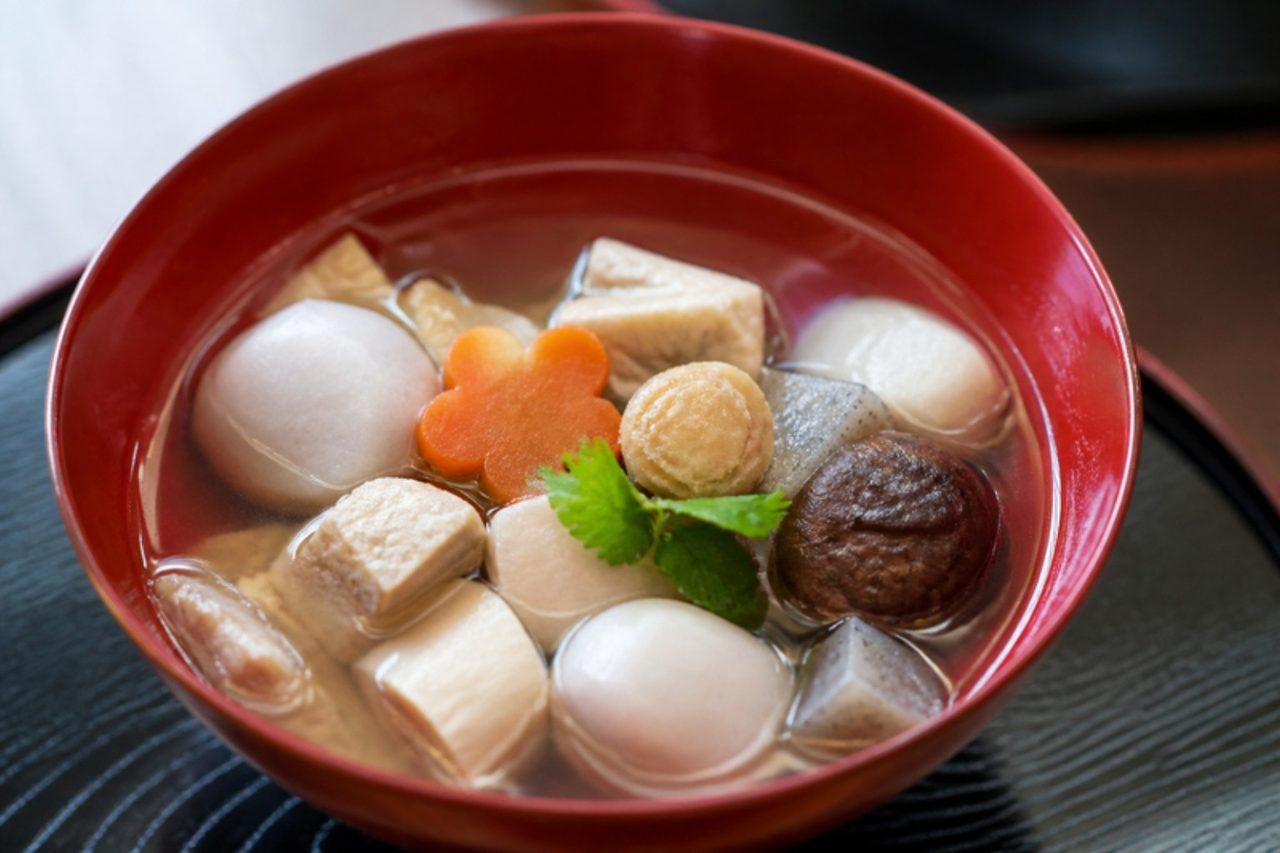
AI-generated image
Kozuyu (Aizu dried scallop soup)
こづゆ: a clear, gentle soup of dried scallops, taro and vegetables served at New Year and weddings in Aizu
Far inland in the Aizu basin of Fukushima, the old castle town of Aizu-Wakamatsu builds its festive soup on dried scallops, which reached these mountains by trade from the northern coast. Kozuyu is served at New Year, weddings and other celebrations in shallow red lacquer bowls, and it is polite to accept a second or third helping. The stock is clear and lightly salted, full of small cubes of taro, carrot, mushroom, konjac noodles and tiny wheat gluten balls. Expect a delicate, sweet sea flavour rather than anything strong. Chef's tip: keep every drop of the scallop soaking water; it is the whole stock, and the scallops themselves shred into soft threads in the soup.
- Total time
- 50 min
- Difficulty
- medium
- Serves
- 4
Ingredients
For the stock
For the soup
Method
0/8 doneStep 1: Put the 1 oz dried scallops (hotate kaibashira), 3 dried shiitake mushrooms and ⅛ oz dried wood ear mushrooms (kikurage) in separate bowls and divide the 4 ¼ cups hot water between them, using about 600 ml for the scallops and the rest for the mushrooms. Soak for 30 minutes, until the scallops break apart when pressed. For the deepest flavour, soak the scallops overnight in the fridge instead.
30 minStep 2: While they soak, cut the 7 oz taro (satoimo), 1 carrot and 3 ½ oz shirataki (konjac noodles). Drop the shirataki into boiling water for 2 minutes and drain, to take away the smell.
5 minStep 3: Lift out the mushrooms, squeeze them gently over their bowl and slice them into small pieces, discarding the hard shiitake stems. Shred the soft scallops with your fingers. Strain all the soaking water through a fine sieve into a pot; you should have about 900 ml (top up with water if needed).
Step 4: Add the scallops, mushrooms, taro and carrot to the pot. Bring to a simmer over a medium heat and skim off any foam.
6 minStep 5: Lower the heat so the surface barely trembles and cook for 10 minutes, until the taro and carrot are just tender. Common mistake: letting the soup boil. A rolling boil breaks up the taro and turns the clear stock cloudy.
10 minStep 6: Add the shirataki, ⅓ oz small dried wheat gluten balls (mame-fu) (if using), 1 tbsp sake, 1 ½ tbsp light soy sauce (usukuchi) and ½ tsp salt. Leave out the sake or replace it with water for an alcohol-free soup. Simmer for 3 minutes.
3 minStep 7: Add the 1 ⅜ oz frozen edamame beans or ginkgo nuts and warm through for 1 minute. Taste; the soup should be lightly salted, like a good stock. Serve in small, shallow bowls.
1 minStep 8: To make ahead, cool the soup quickly, refrigerate within 2 hours and keep for up to 2 days. Reheat gently until steaming; the flavour improves overnight.
Nutrition per serving
- Calories
- 110 kcal
- Protein
- 7 g
- Carbs
- 17 g
- Fat
- 1 g
- Fibre
- 4 g
Nutrition values are estimates.
KrazyBadal
Good to know
- How long does kozuyu (Aizu dried scallop soup) take?
- About 50 minutes in total: 30 minutes to prepare and 20 minutes to cook.
- How many people does it serve?
- 4 as written. Change the servings above the ingredients and every amount scales to match.
- Can I make it ahead?
- Yes. It keeps well, so you can cook it earlier in the day or the day before and reheat it.
- What can I use instead of dried shiitake mushrooms?
- Aubergine, diced, same weight.
- What can I use instead of dried wood ear mushrooms (kikurage)?
- Aubergine, diced, same weight.
Reviews
No reviews yet. Be the first to cook it.
Rate this recipe
Sign in to rate and review this recipe.
You might also like

Soto Banjar
Along the rivers of Banjarmasin in South Kalimantan, breakfast often means soto Banjar eaten at a wooden riverside warung, sometimes after a dawn trip to the floating market. Unlike the turmeric sotos of Java, this broth is pale and clear, perfumed with the sweet spices that traders brought up the river centuries ago: cinnamon, cloves, star anise, cardamom and nutmeg. Shredded chicken, glass noodles, carrot and a boiled egg go into the bowl with rice cakes, and lime and a little chilli sharpen it at the table. Chef's tip: toast the whole spices in the pan for a minute before the paste goes in; it brings out their sweetness without the dusty edge of ground spice.

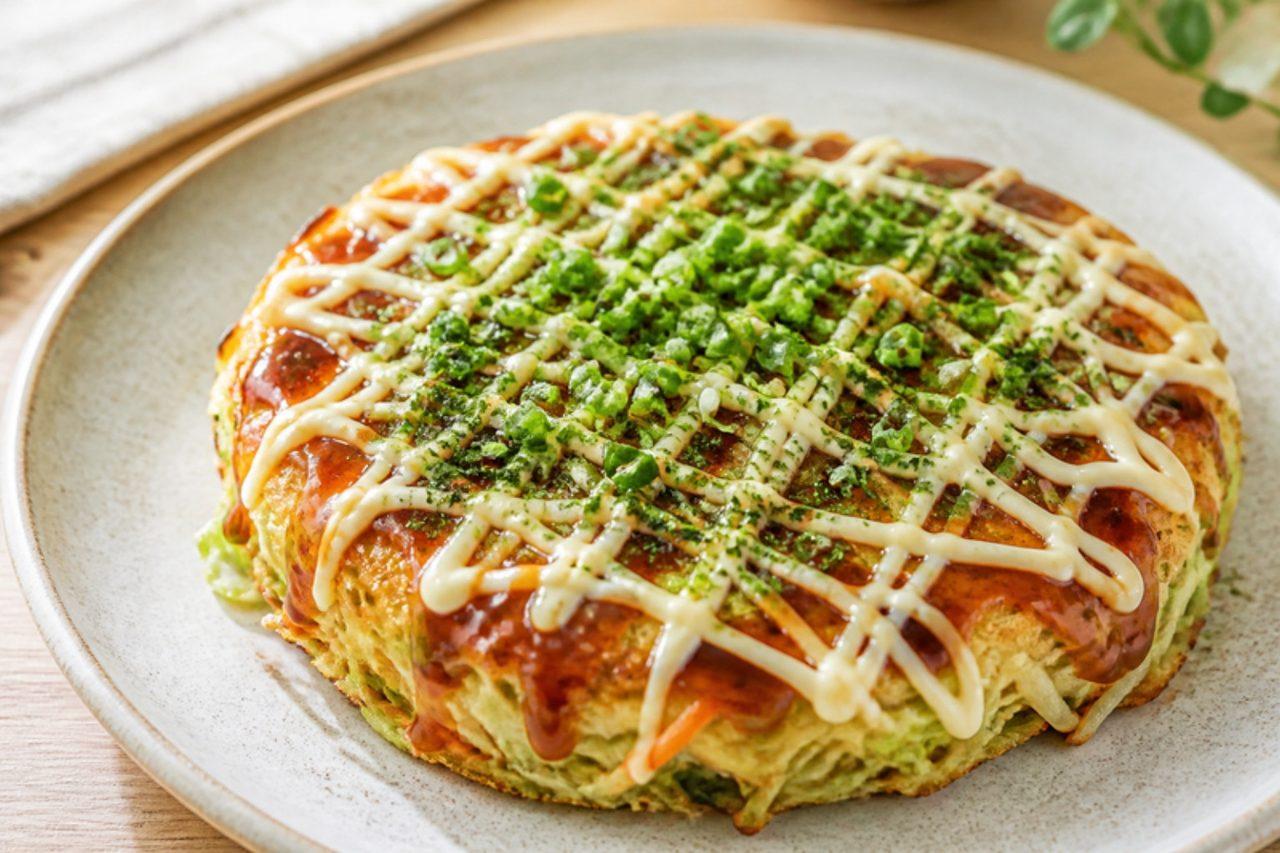
Okonomiyaki
Okonomiyaki (お好み焼き, 'grilled as you like it') is the pride of Osaka, where it's cooked on hot iron griddles in lively restaurants. Finely shredded cabbage is folded into a light batter with egg and spring onion, then fried into a thick, soft pancake with a crisp outside. It's painted with a fruity brown sauce and zigzagged with mayonnaise. Bonito flakes are usual on top; this vegetarian version uses seaweed flakes and pickled ginger instead. Chef's tip: don't press the pancake down with your spatula while it cooks. Osaka cooks leave it alone so the cabbage steams inside and stays light and fluffy; pressing squeezes out the air.

Miso soup
Miso soup (味噌汁) is drunk every day in homes all over Japan, at breakfast as well as dinner, beside a bowl of rice. The base is dashi; this vegan version uses kombu and dried shiitake instead of bonito, which gives it a deep, rounded flavour. Silken tofu and wakame seaweed are the classic fillings. It takes ten minutes; just remember not to boil the miso. Chef's tip: add the miso at the very end and never let it boil. Boiling kills the miso's fresh, fermented aroma; Japanese cooks say the soup should only 'smile', with the surface barely trembling.
