
AI-generated image
Aji no tataki
Chopped horse mackerel with ginger
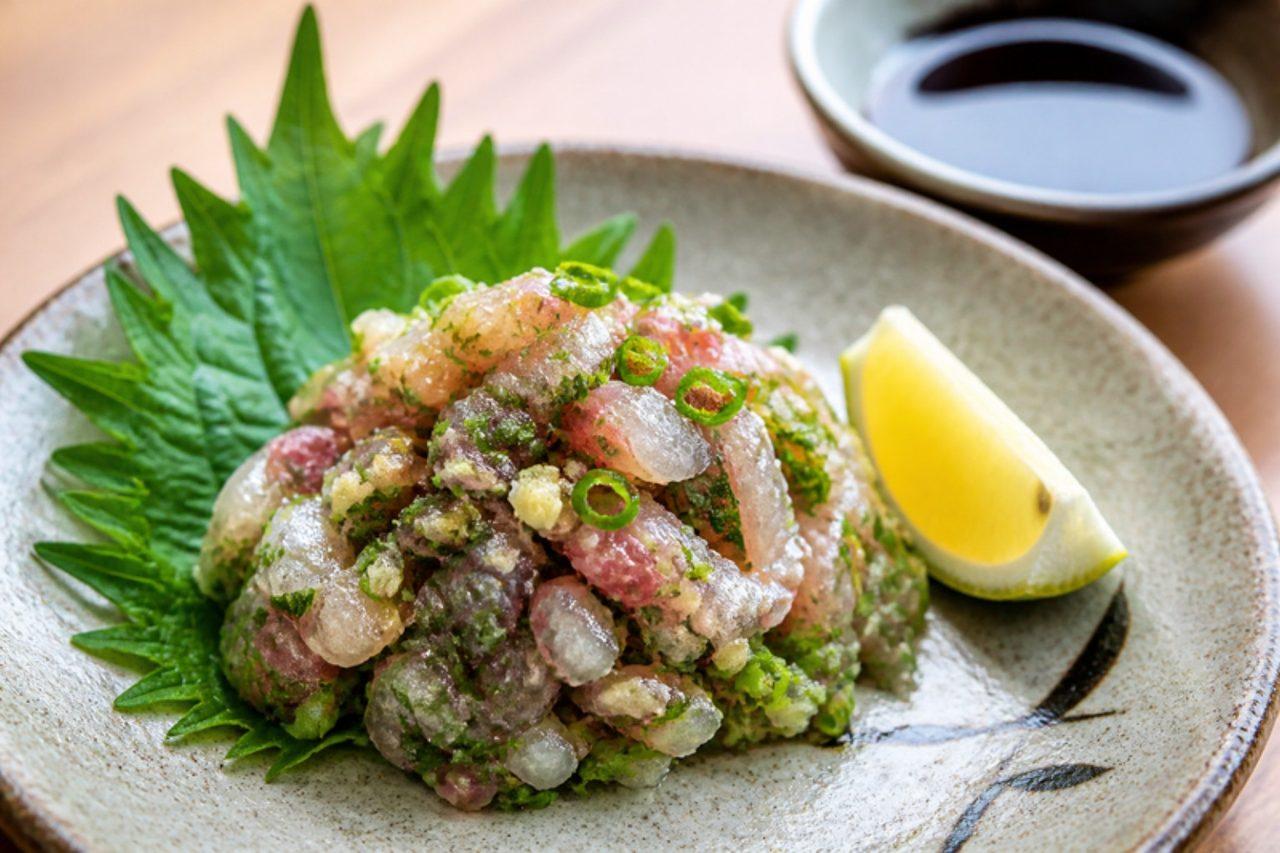
Aji no tataki (鯵のたたき): very fresh horse mackerel chopped with ginger, spring onion and shiso

Aji no tataki is a dish of Japan's fishing ports, from the Izu peninsula to Kyushu, eaten as a summer lunch over rice or a starter with cold drinks when the horse mackerel come in fresh. The raw fillets are skinned and chopped with a knife, then mixed with grated ginger, spring onion and shiso, so the fish is soft, cool and clean-tasting with a sharp herbal bite. As a main over rice, a portion has about 28 g of protein from the fish. This is raw fish: buy only sashimi-grade fish from a fishmonger you trust, keep it ice-cold, and freeze it at −20 °C for at least 24 hours first to kill parasites; anyone pregnant, very young, older or with a weak immune system should not eat it. The common mistake is chopping it into a paste: keep small pieces with some texture. Chef's tip: chill the board and the bowl, and work quickly, so the fish never warms up.
- Total time
- 20 min
- Difficulty
- medium
- Serves
- 2
Ingredients
- 10 ½ oz horse mackerel (aji) fillets, sashimi gradefrom 3–4 fish; previously frozen as described
- ¾ in gingerfinely grated
- 3 spring onionsfinely sliced
- 6 shiso leaves4 finely shredded, 2 whole to serve
- 1 tsp white miso (optional)
- 2 tbsp soy sauceto serve
- ½ lemon (optional)cut into wedges
Shop this recipe on Amazon
Spices & pantry
Fresh ingredients (3)
Links open Amazon in a new tab. As an Amazon Associate, WhatToEat.Today earns from qualifying purchases.
Method
0/6 doneStep 1: Check the fillets: they should smell of the sea, not fishy, and look glossy. Pull out the pin bones with tweezers, running a finger along each fillet to find them.
Step 2: Peel the thin skin off from the head end towards the tail with your fingers; it should come away in one sheet and leave the silver layer behind.
Step 3: Cut 10 ½ oz horse mackerel (aji) fillets, sashimi grade into strips, then across into 5 mm pieces. Chop a little more with the heel of the knife, but stop while you can still see separate pieces.
Step 4: In a chilled bowl, fold the fish with most of 3 spring onions, the shredded 6 shiso leaves, half of ⅜ in ginger and 1 tsp white miso, if using.
Step 5: Lay the whole shiso leaves on chilled plates and mound the fish on top. Scatter over the rest of the spring onion and put the rest of ⅜ in ginger alongside.
Nutrition per serving
- Calories
- 200 kcal
- Protein
- 28 g
- Carbs
- 3 g
- Fat
- 8 g
- Fibre
- 1 g
Nutrition values are estimates.
KrazyBadal
Good to know
- How long does aji no tataki take?
- About 20 minutes in total.
- How many people does it serve?
- 2 as written. Change the servings above the ingredients and every amount scales to match.
- What can I use instead of spring onions?
- Chives, or a little finely sliced onion.
- What can I use instead of soy sauce?
- Tamari, same amount (gluten free).
Reviews
No reviews yet. Be the first to cook it.
Rate this recipe
Sign in to rate and review this recipe.
You might also like

Moreton Bay bugsSlipper lobster with garlic butter
Moreton Bay bugs are the flat, shovel-nosed slipper lobsters caught off the Queensland coast around Brisbane and the Sunshine Coast, and for Queenslanders they are a summer treat, split and grilled at the beach house. The tail meat is sweet and rich, somewhere between lobster and prawn. Buy them raw, frozen or fresh, from a fishmonger and ask them to halve them if you like. A common mistake is overcooking, which makes the meat rubbery; it is ready the moment it turns white. Chef's tip: grill flesh side down first to mark it, then turn and baste in the shell.
 Australian


Yaki onigiriGrilled rice balls
Yaki onigiri (焼きおにぎり) are rice balls grilled until they form a crisp, toasty crust, then brushed with soy sauce glaze. They are eaten all over Japan, at izakaya, at barbecues and from the freezer section, as a snack or with miso soup. The inside stays soft and steamy while the outside crackles. Best eaten hot, straight from the pan. Chef's tip: let the shaped rice balls dry for 10 minutes before they go in the pan. A drier surface forms a better crust and won't stick, and the glaze goes on only at the end so it doesn't burn.


Miso soup
Miso soup (味噌汁) is drunk every day in homes all over Japan, at breakfast as well as dinner, beside a bowl of rice. The base is dashi; this vegan version uses kombu and dried shiitake instead of bonito, which gives it a deep, rounded flavour. Silken tofu and wakame seaweed are the classic fillings. It takes ten minutes; just remember not to boil the miso. Chef's tip: add the miso at the very end and never let it boil. Boiling kills the miso's fresh, fermented aroma; Japanese cooks say the soup should only 'smile', with the surface barely trembling.