
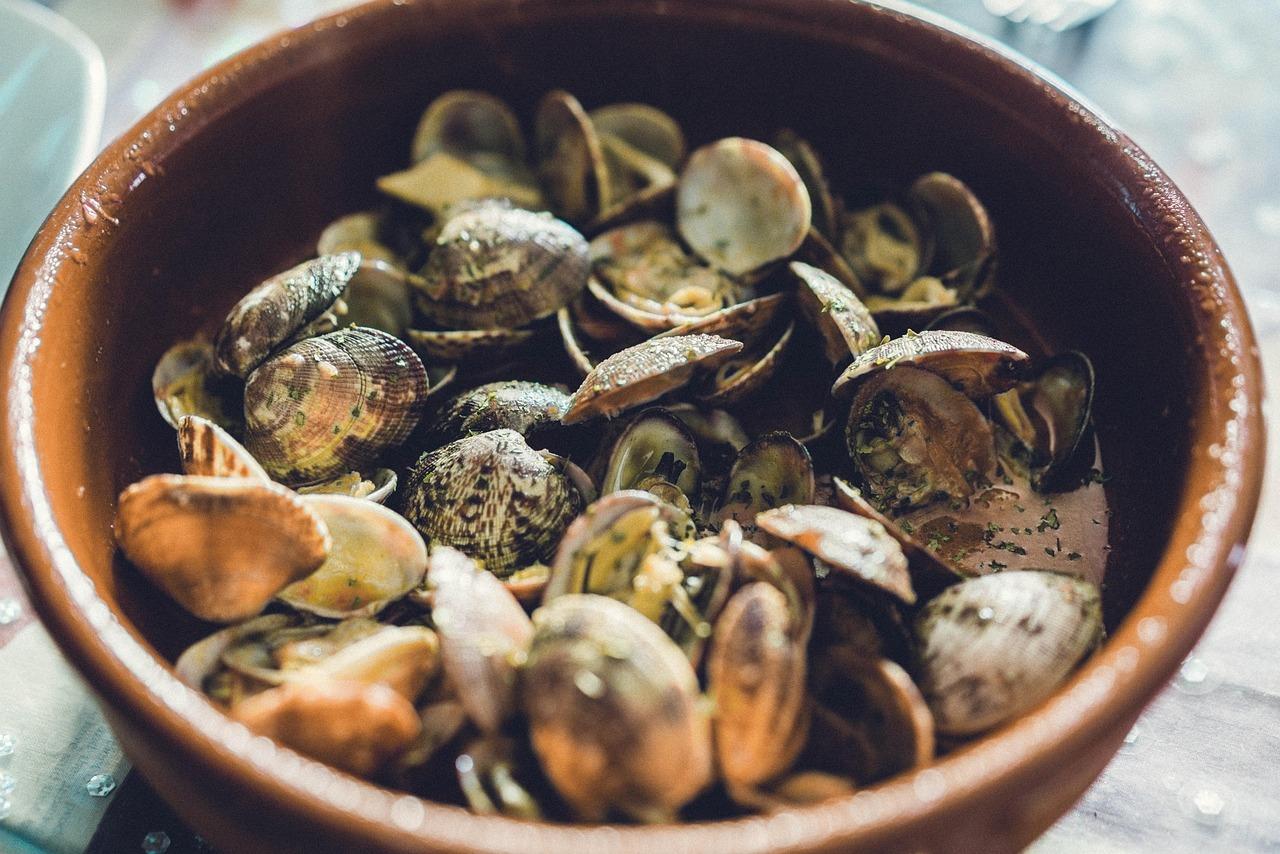
Almejas á mariñeira
Clams in garlic and white wine
Almejas á mariñeira: Galician clams in a garlic, paprika and white wine sauce

Carril, a fishing village on the Arousa estuary, is famous across Spain for its clams, and Galician bars serve them á mariñeira in small clay dishes with bread for the sauce. They are cooked with onion, garlic and a little paprika, and the sauce is lightly thickened with flour and loosened with white wine. This recipe contains alcohol (white wine); for an alcohol-free version, use fish stock with a squeeze of lemon. Throw away any clams with cracked shells, and any open ones that don't close when tapped, before cooking. A common mistake is overcooking: clams toughen once they open, so take them off the heat as soon as most are open. Chef's tip: soak the clams in salted water in the fridge for an hour so they spit out their sand.
- Total time
- 30 min
- Difficulty
- easy
- Serves
- 4
Ingredients
- 2 ¼ lb live clams
- 2 tbsp saltfor soaking
- 4 tbsp olive oil
- 1 onionfinely chopped
- 3 cloves garlicfinely chopped
- 1 small dried chilli (optional)
- 1 tsp plain flour
- ½ tsp sweet paprika
- 3 ½ tbsp water
- 2 tbsp chopped parsley
To serve
- 4 slices crusty bread (optional)
Shop this recipe on Amazon
Spices & pantry
Links open Amazon in a new tab. As an Amazon Associate, WhatToEat.Today earns from qualifying purchases.
Method
0/5 doneStep 1: Dissolve 2 tbsp salt in 1.5 litres of cold water, add the 2 ¼ lb live clams and soak in the fridge for 1 hour. Lift them out, rinse, and throw away any with cracked shells or any open ones that don't close when tapped.
5 minStep 3: Stir in 1 tsp plain flour and ½ tsp sweet paprika for 30 seconds, then pour in ½ cup dry white wine (or fish stock with a squeeze of lemon) and 3 ½ tbsp water. Bubble for 2 minutes, stirring, until the sauce thickens slightly and the alcohol smell has gone.
3 minStep 4: Add the clams, cover and cook over a medium-high heat for 3–4 minutes, shaking the pan, until they open. Throw away any that stay shut.
4 minStep 5: Sprinkle with 2 tbsp chopped parsley, shake once more and serve at once with bread.
1 min
Nutrition per serving
- Calories
- 210 kcal
- Protein
- 18 g
- Carbs
- 8 g
- Fat
- 11 g
- Fibre
- 1 g
Nutrition values are estimates.
KrazyBadal
Good to know
- How long does almejas á mariñeira take?
- About 30 minutes in total: 15 minutes to prepare and 15 minutes to cook.
- How many people does it serve?
- 4 as written. Change the servings above the ingredients and every amount scales to match.
- What can I use instead of onion?
- 2 shallots per onion.
- What can I use instead of garlic?
- ½ tsp garlic paste or ⅛ tsp garlic powder per clove.
Reviews
No reviews yet. Be the first to cook it.
Rate this recipe
Sign in to rate and review this recipe.
You might also like

Moreton Bay bugsSlipper lobster with garlic butter
Moreton Bay bugs are the flat, shovel-nosed slipper lobsters caught off the Queensland coast around Brisbane and the Sunshine Coast, and for Queenslanders they are a summer treat, split and grilled at the beach house. The tail meat is sweet and rich, somewhere between lobster and prawn. Buy them raw, frozen or fresh, from a fishmonger and ask them to halve them if you like. A common mistake is overcooking, which makes the meat rubbery; it is ready the moment it turns white. Chef's tip: grill flesh side down first to mark it, then turn and baste in the shell.
 Australian

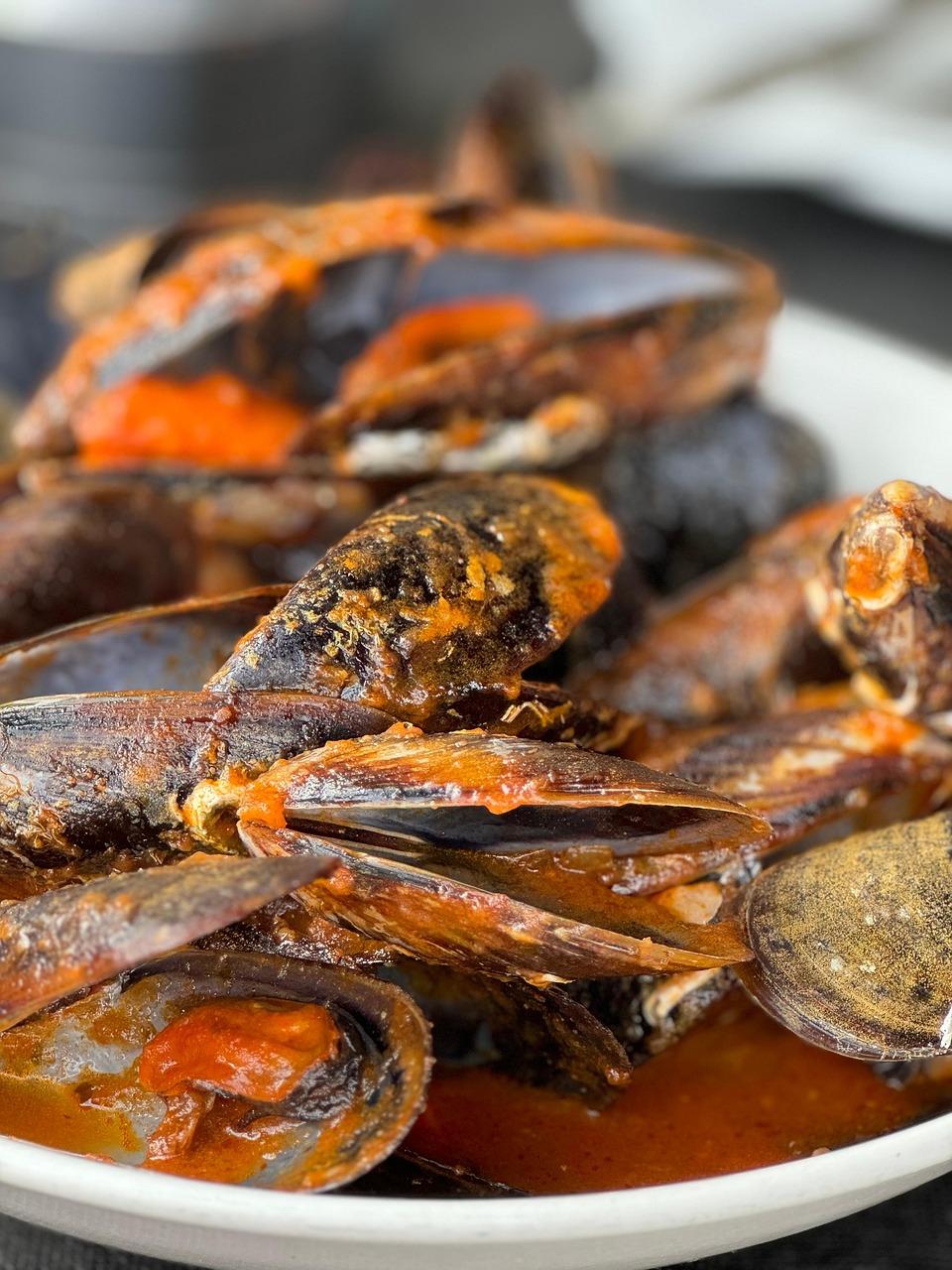
Midia saganakiMussels with tomato and feta
Thessaloniki is Greece's mussel capital, with farms in the Thermaic Gulf a few kilometres from the seafront ouzeries where this two-handled pan arrives, still bubbling, at the table. Mussels steam open in a quick sauce of peppers, tomato and chilli, and crumbled feta melts into the juices at the end. Bread is essential. The classic version adds a splash of ouzo; this one is alcohol-free, using a pinch of fennel seed for that aniseed note (add 2 tbsp ouzo with the tomatoes if you like). Common mistake: overcooking — take the pan off the heat as soon as the shells open. Chef's tip: buy mussels on the day and keep them in the fridge in a bowl covered with a damp cloth, never in water.
 Greek

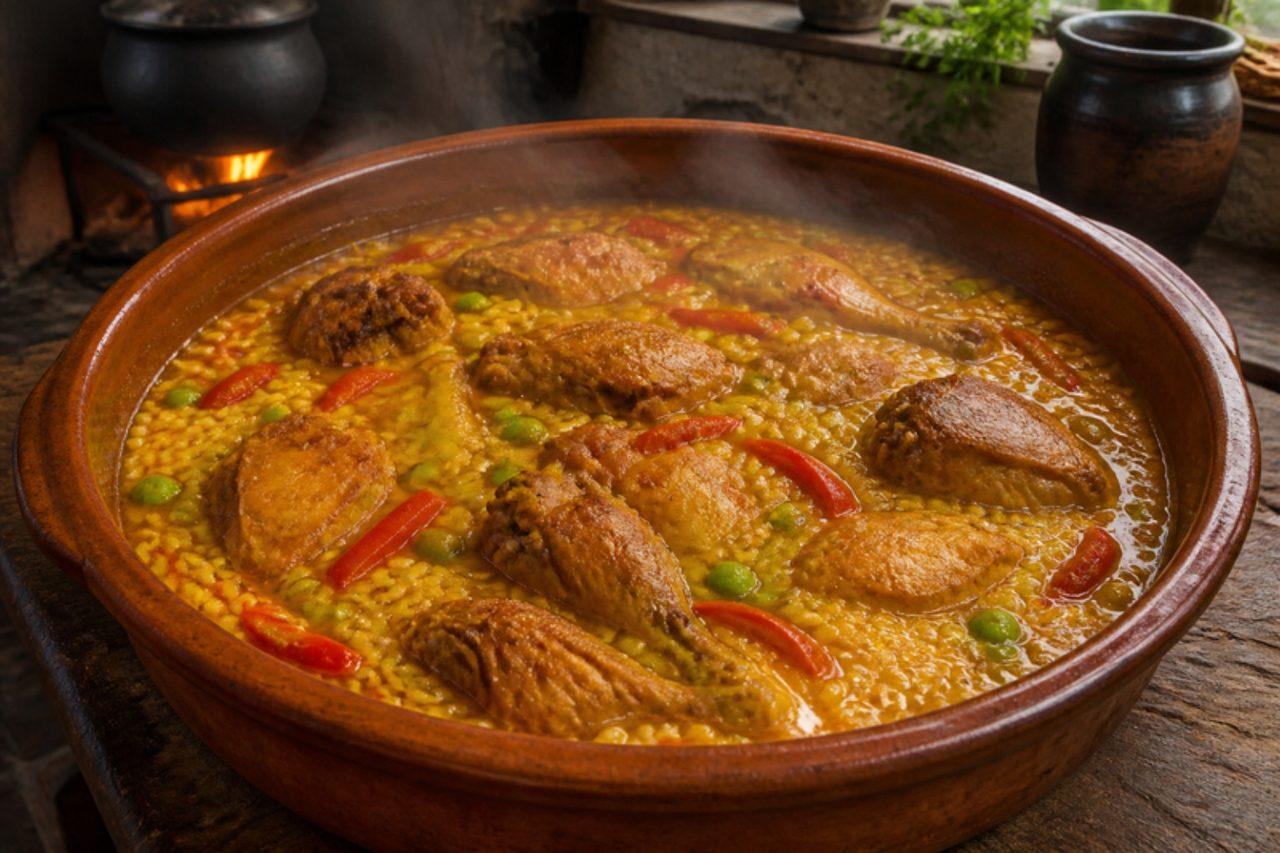
Arroz con pitu de caleyaSoupy rice with chicken
A pitu de caleya is a cockerel raised free in the lanes, or caleyas, of rural Asturias; its firm, flavourful meat needs long stewing, and families around Villaviciosa and Grado still cook it for feast days. The stew is often finished as a soupy rice, so the deep chicken juices go into every grain. Use the best free-range chicken you can find. The braise includes dry white wine; replace it with extra stock and a squeeze of lemon if you want it alcohol-free. Chef's tip: brown the chicken slowly and deeply; that colour is where the flavour of the whole pot comes from.