
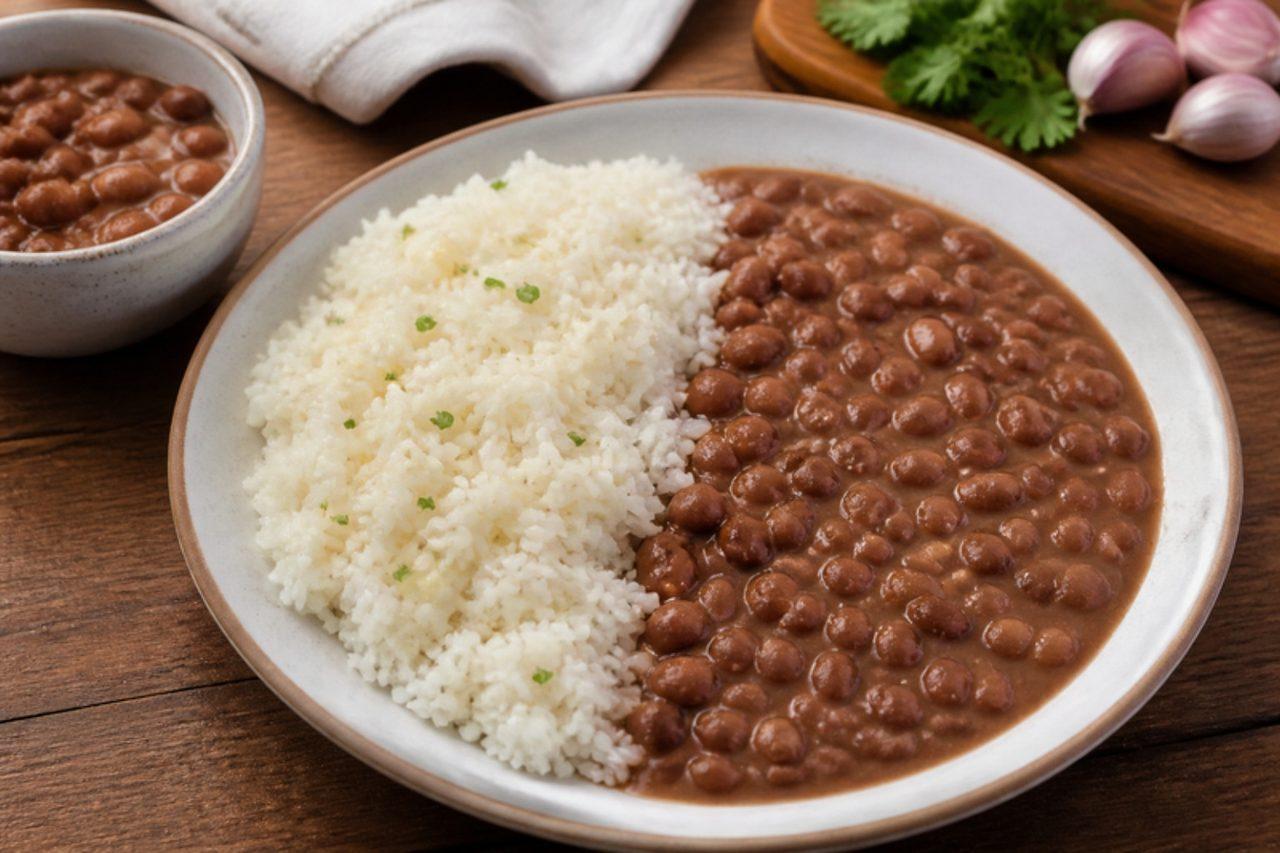
AI-generated image
Arroz e feijão
Rice and beans
Brazil's everyday rice and beans: fluffy garlic rice and creamy, savoury carioca beans (plus overnight soaking)



Arroz e feijão is the heart of the Brazilian table, eaten at lunch nearly every day from Porto Alegre to Manaus. Each half is simple but made with care: the rice is fried with garlic before simmering so the grains stay loose (soltinho), and the beans are finished with a refogado of onion and garlic that thickens their broth. In the South and Rio black beans are the norm; elsewhere it's the beige carioca bean. Chef's tip: when the beans are tender, fry the garlic and onion, add a ladle of beans and mash them in the pan, then stir it all back into the pot. This tempero is the step that makes Brazilian beans taste like home.
- Total time
- 90 min
- Difficulty
- easy
- Serves
- 6
Ingredients
For the beans
- 14 oz dried carioca (pinto) or black beanssoaked overnight
- 6 ¾ cups water
- 2 tbsp olive oil
- 1 onionfinely chopped
- 4 garlic clovescrushed
- 1 ½ tsp salt
For the rice
- 14 oz long-grain white rice
- 2 tbsp olive oil
- ½ onionfinely chopped
- 2 garlic clovescrushed
- 3 ¼ cups boiling water
- 1 tsp salt
Shop this recipe on Amazon
What you'll need
Fresh ingredients (1)
Links open Amazon in a new tab. As an Amazon Associate, WhatToEat.Today earns from qualifying purchases.
Method
0/7 doneStep 1: Drain the soaked 14 oz dried carioca (pinto) or black beans and put them in a large pot with the 6 ¾ cups water and 2 bay leaves. Bring to the boil, skim, then simmer half covered for 50–70 minutes, until a bean crushes easily against the roof of your mouth. (In a pressure cooker: 20–25 minutes after it comes to pressure.) Keep them covered with liquid as they cook.
60 minStep 2: While the beans cook, make the rice. Rinse the 14 oz long-grain white rice in a sieve until the water runs almost clear, then let it drain well.
Step 3: Heat the 2 tbsp olive oil in a heavy pan over a medium heat and fry the ½ onion for 2–3 minutes until soft. Add the 2 garlic cloves and the drained rice and stir for 2–3 minutes until the grains turn chalky-white and you hear a faint crackle. Frying seals the grains so they stay separate.
5 minStep 4: Pour in the 3 ¼ cups boiling water and add the 1 tsp salt; it will hiss. Bring back to the boil, then cover, turn to the lowest heat and cook for 15 minutes, until the water is gone and holes appear on the surface. Leave covered off the heat for 5 minutes, then fluff with a fork.
20 minStep 5: When the beans are soft, heat the 2 tbsp olive oil in a small frying pan over a medium heat and fry the 1 onion for 5 minutes until golden. Add the 4 garlic cloves for 1 minute until fragrant.
6 minStep 6: Add a ladle of beans with some broth to the frying pan and mash them roughly with a fork, sizzling, for 1 minute. Scrape the lot back into the bean pot, add the 1 ½ tsp salt and simmer 10 minutes more, uncovered, until the broth turns thick and creamy.
10 minStep 7: Serve the beans in bowls next to (or poured over) the rice. Both keep for 4 days in the fridge, and the beans freeze well; add a splash of water when reheating.
Nutrition per serving
- Calories
- 420 kcal
- Protein
- 18 g
- Carbs
- 80 g
- Fat
- 5 g
- Fibre
- 13 g
Nutrition values are estimates.
KrazyBadal
Good to know
- How long does arroz e feijão take?
- About 90 minutes in total: 15 minutes to prepare and 75 minutes to cook.
- How many people does it serve?
- 6 as written. Change the servings above the ingredients and every amount scales to match.
- Is it vegan?
- Yes. It has no meat, fish, dairy or eggs.
- Is it gluten free?
- Yes, as written. Check the labels on stock, sauces and spice mixes, which sometimes contain gluten.
- Can I make it ahead?
- Yes. It keeps well, so you can cook it earlier in the day or the day before and reheat it.
- What can I use instead of bay leaves?
- Leave it out, or a pinch of dried thyme (it's a background flavour).
- What can I use instead of onion?
- 2 shallots per onion.
Reviews
No reviews yet. Be the first to cook it.
Rate this recipe
Sign in to rate and review this recipe.
You might also like
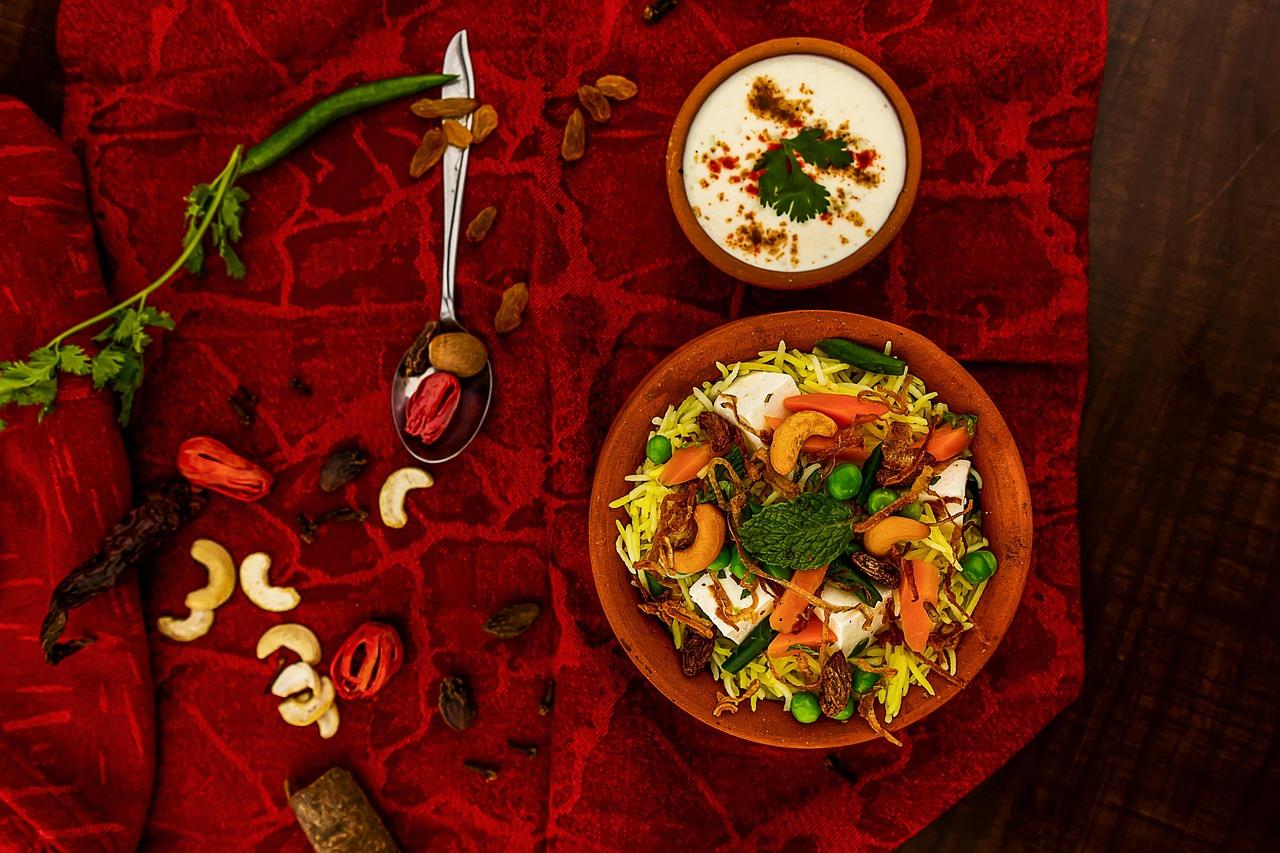
Paneer biryaniRice and moong dal in coconut milk
A mild, creamy biryani: rice and husked green gram roasted in ghee, then cooked in coconut milk with peas, carrots, potatoes, peanuts and cashews, and finished with soft fried paneer and a fresh coriander yogurt. Serve hot, garnished with more fried cashews and paneer.
 Indian

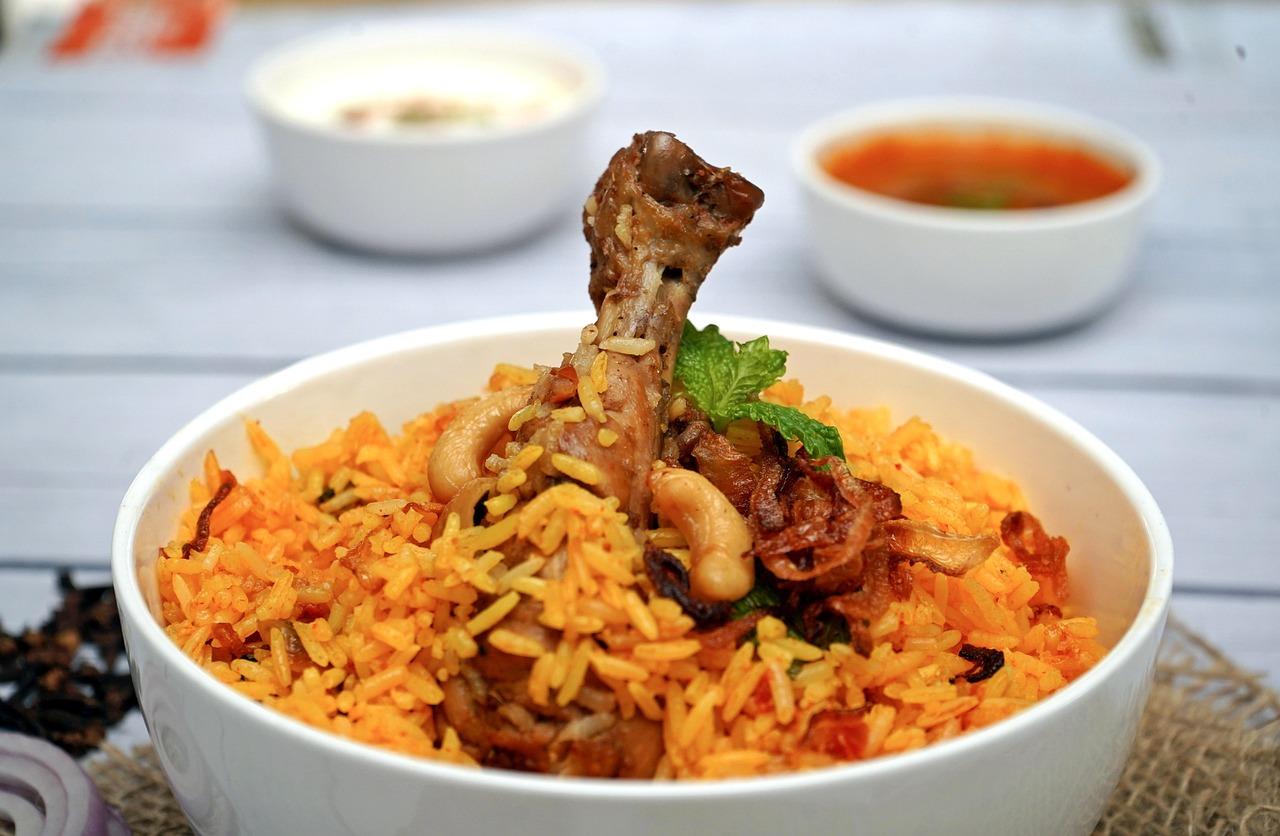
Hyderabadi chicken dum biryani
Hyderabad's biryani grew up in the kitchens of the Nizams, and the kacchi style is its proudest form: the chicken goes into the pot raw, in a thick yogurt, mint and fried-onion marinade, and cooks only in the steam trapped under part-cooked basmati. In the old city it is wedding and Eid food, ordered in huge copper deghs, and at home it's the Sunday showpiece, served with mirchi ka salan and a cooling raita. Because the meat cooks without being stirred, small bone-in thigh and drumstick pieces work best. Chef's tip: marinate overnight in the fridge — the yogurt tenderises the chicken and the flavours go right to the bone.

PingadoHot milk with coffee
Order 'um pingado' at the balcão of any São Paulo padaria at 7 in the morning and the attendant pours hot milk into a ridged glass tumbler (the copo americano) and 'drips' in a splash of strong coffee, hence the name. It is milkier and gentler than a média (half coffee, half milk), creamy and lightly sweet, usually drunk standing up with a pão na chapa, a toasted buttered roll. At home you need strong filter coffee and milk heated until steaming. Scalding the milk is the frequent mistake, as boiled milk tastes flat and forms a skin. Chef's tip: froth the hot milk for a few seconds with a whisk or by pouring it back and forth between two jugs before adding the coffee, as padaria machines do.