
AI-generated image
Baho
Steamed beef, plantain and cassava
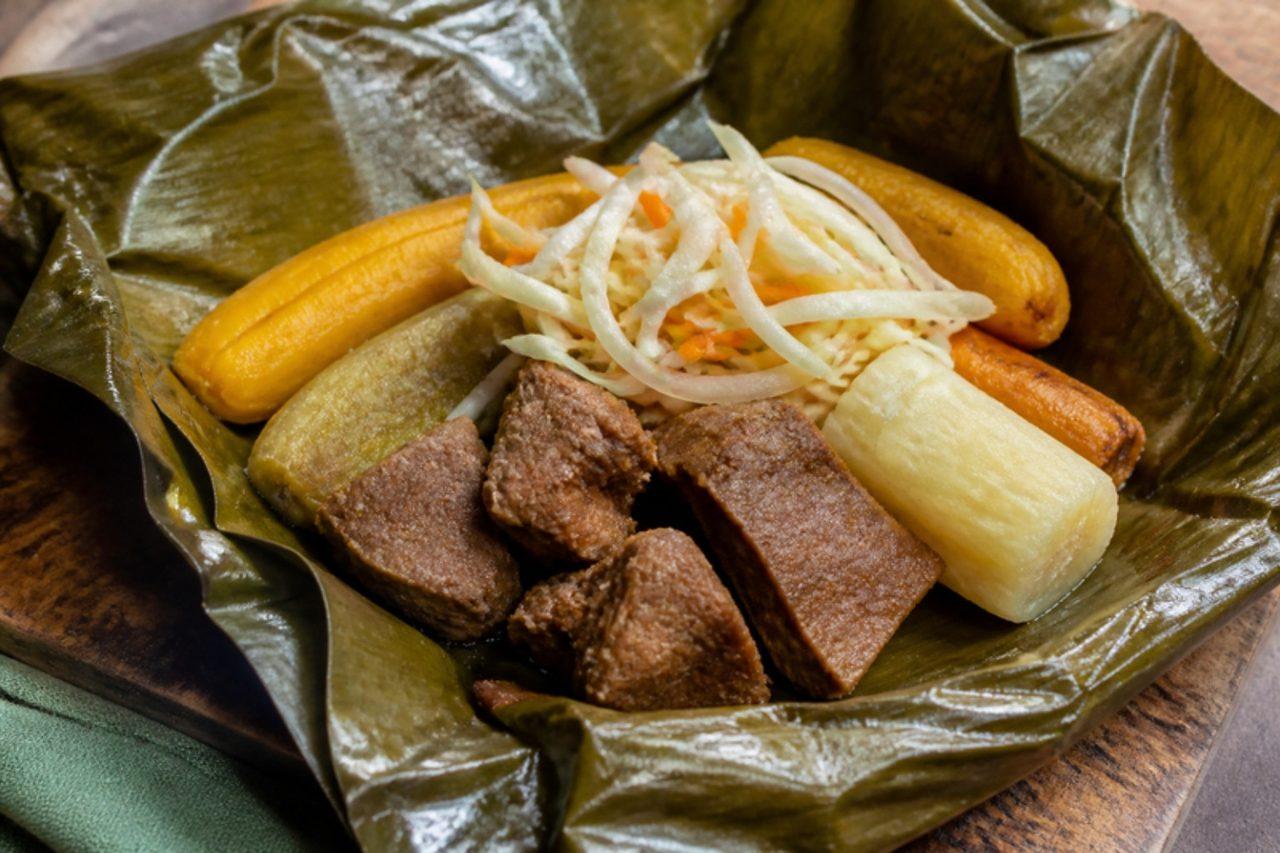
Baho (vaho): Nicaraguan beef, plantain and cassava steamed in banana leaves

Baho, also spelled vaho, is the dish Nicaraguan families plan a Sunday around, especially in Granada and Managua: beef marinated overnight in sour orange and garlic, then steamed for hours in a big pot lined with banana leaves on a bed of green plantain, ripe plantain and cassava. Everything comes out tender and fragrant with the leaves, and it is served with a crunchy, vinegary cabbage salad to cut through the richness. Marinate the beef in the fridge, never at room temperature. The mistake that ruins it is letting the pot boil dry, which scorches the leaves and the plantain at the bottom; top up the water every hour. Chef's tip: keep a few banana leaves back to tuck over the top, so the steam stays trapped inside the parcel.
- Total time
- 250 min
- Difficulty
- hard
- Serves
- 8
Ingredients
For the beef (start a day ahead)
- 2 ⅝ lb beef brisket or flankcut into 8 pieces
- 2 tsp salt
- 1 cup sour orange juiceor 170 ml orange juice plus 80 ml lime juice
- 6 cloves garliccrushed
- 2 onionssliced
- 1 green peppersliced
- 2 tomatoessliced
For the pot
- 16 oz banana leaves1 pack, thawed if frozen, rinsed
- 2 ¼ lb cassava (yuca)sweet cassava, peeled, cored, cut into large chunks
- 3 green plantainspeeled and halved
- 2 ripe plantainsunpeeled, halved
- 4 ¼ cups waterplus more to top up
For the cabbage salad
- 14 oz white cabbagefinely shredded
- 2 tomatoesdiced
- ¼ cup white vinegar
- ½ tsp salt
- 1 fresh red chilli (optional)finely chopped
Shop this recipe on Amazon
Spices & pantry
Fresh ingredients (10)
Links open Amazon in a new tab. As an Amazon Associate, WhatToEat.Today earns from qualifying purchases.
Method
0/8 doneStep 1: The day before, rub 2 ⅝ lb beef brisket or flank with 2 tsp salt, then mix with 1 cup sour orange juice, 6 cloves garlic, 2 onions, 1 green pepper and 2 tomatoes in a covered dish. Marinate in the fridge for 12–24 hours, turning once.
Step 2: Take a large, deep pot with a lid. Put a heatproof trivet or a few crumpled balls of foil in the bottom and pour in 4 ¼ cups water so it comes just under the top of the trivet.
Step 3: Line the pot with 16 oz banana leaves, shiny side up, letting them hang well over the sides. Keep 3 or 4 leaves back for the top.
Step 4: Lay 3 green plantains and 2 ¼ lb cassava (yuca) in the bottom, then 2 ripe plantains, then the beef with all its marinade and vegetables.
Step 5: Fold the overhanging leaves over, cover with the reserved leaves and put the lid on tightly. Bring to the boil over a high heat, then turn down to a steady medium-low simmer.
10 minStep 6: Steam for 3–3½ hours. Every hour, lift a corner and pour a little boiling water down the side of the pot, so there is always about 3 cm of water under the food. Listen for a gentle bubbling; silence or a burning smell means it is dry.
200 minStep 7: Meanwhile, toss 14 oz white cabbage, 2 tomatoes, ¼ cup white vinegar, ½ tsp salt and 1 fresh red chilli and chill until needed.
5 minStep 8: The baho is ready when the cassava is soft and creamy right through and the beef falls apart at the touch of a fork. Open the leaves at the table and serve with the cabbage salad.
Nutrition per serving
- Calories
- 610 kcal
- Protein
- 37 g
- Carbs
- 75 g
- Fat
- 15 g
- Fibre
- 7 g
Nutrition values are estimates.
KrazyBadal
Good to know
- How long does baho take?
- About 250 minutes in total: 40 minutes to prepare and 210 minutes to cook.
- How many people does it serve?
- 8 as written. Change the servings above the ingredients and every amount scales to match.
- Is it gluten free?
- Yes, as written. Check the labels on stock, sauces and spice mixes, which sometimes contain gluten.
- What can I use instead of sour orange juice?
- Mandarin or pineapple juice, same amount.
- What can I use instead of garlic?
- ½ tsp garlic paste or ⅛ tsp garlic powder per clove.
Reviews
No reviews yet. Be the first to cook it.
Rate this recipe
Sign in to rate and review this recipe.
You might also like

Pork souvlaki
This is a pork recipe. Walk through any Greek town after dark, from Athens to Thessaloniki, and the smell of souvlaki stands drifts down the street; cubes of pork shoulder grilled on thin skewers are the country's favourite cheap supper, eaten standing up or at a plastic-table taverna. At home you marinate the meat in lemon, olive oil, garlic and dried oregano, grill it hard and fast, and pile it on warm pitta with tzatziki, tomato and red onion. Chef's tip: cut the pork into even 2.5 cm cubes and leave a little fat on; lean loin dries out, shoulder stays juicy over high heat.
 Greek
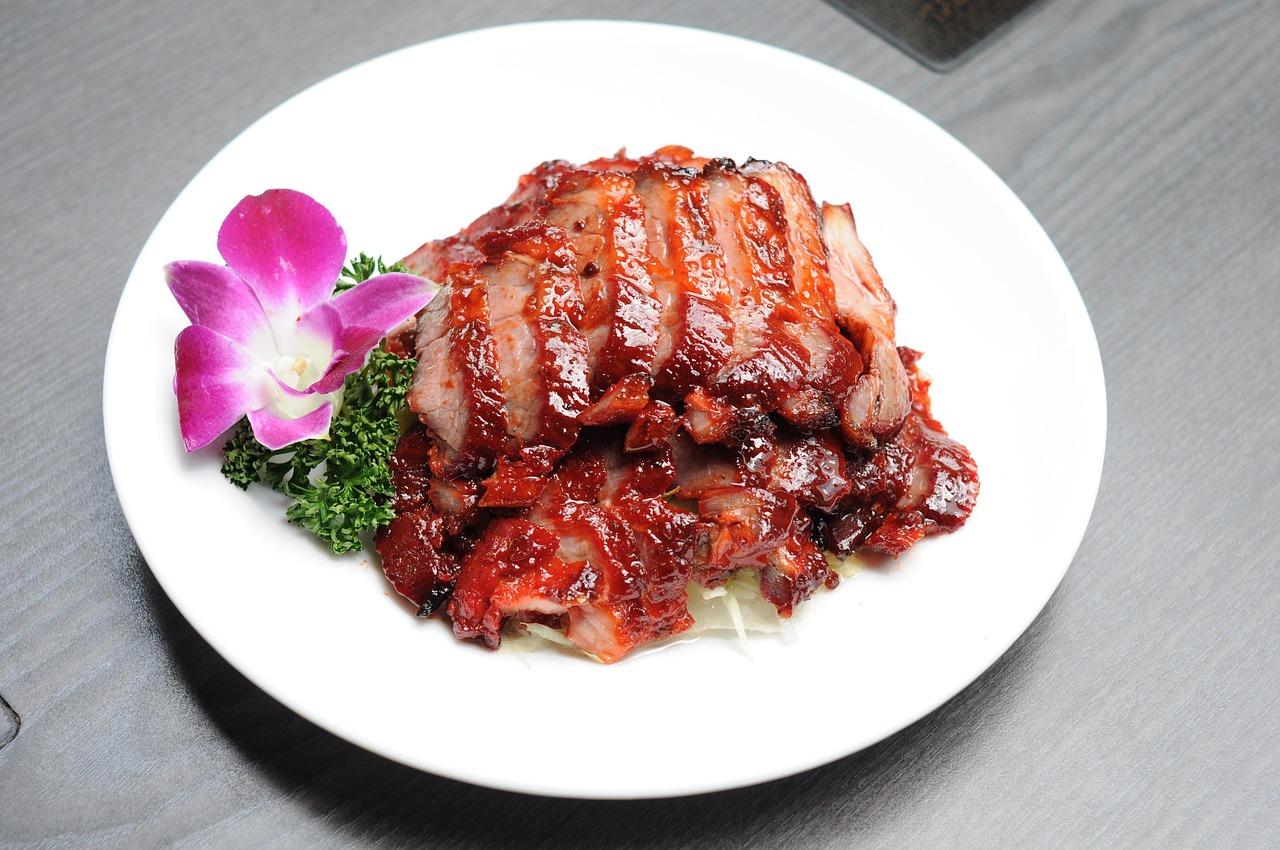
Char siuHoney roast pork
Hanging in long glossy strips in the windows of Guangzhou's siu mei shops, char siu is the roast pork Cantonese families pick up on the way home to put on rice, noodles or into steamed buns. The outside is lacquered, sweet and a little charred at the edges; the inside stays juicy, savoury and faintly scented with five-spice. Shoulder (pork butt) is the cut to use, because its marbling keeps the strips moist through a hot oven. Marinate it overnight in the fridge, roast it the next day and eat it warm with steamed rice and blanched greens, or cold in fried rice and noodle soups. Chef's tip: save the honey for the last ten minutes; brushed on at the start it burns black long before the pork is cooked.
 Chinese
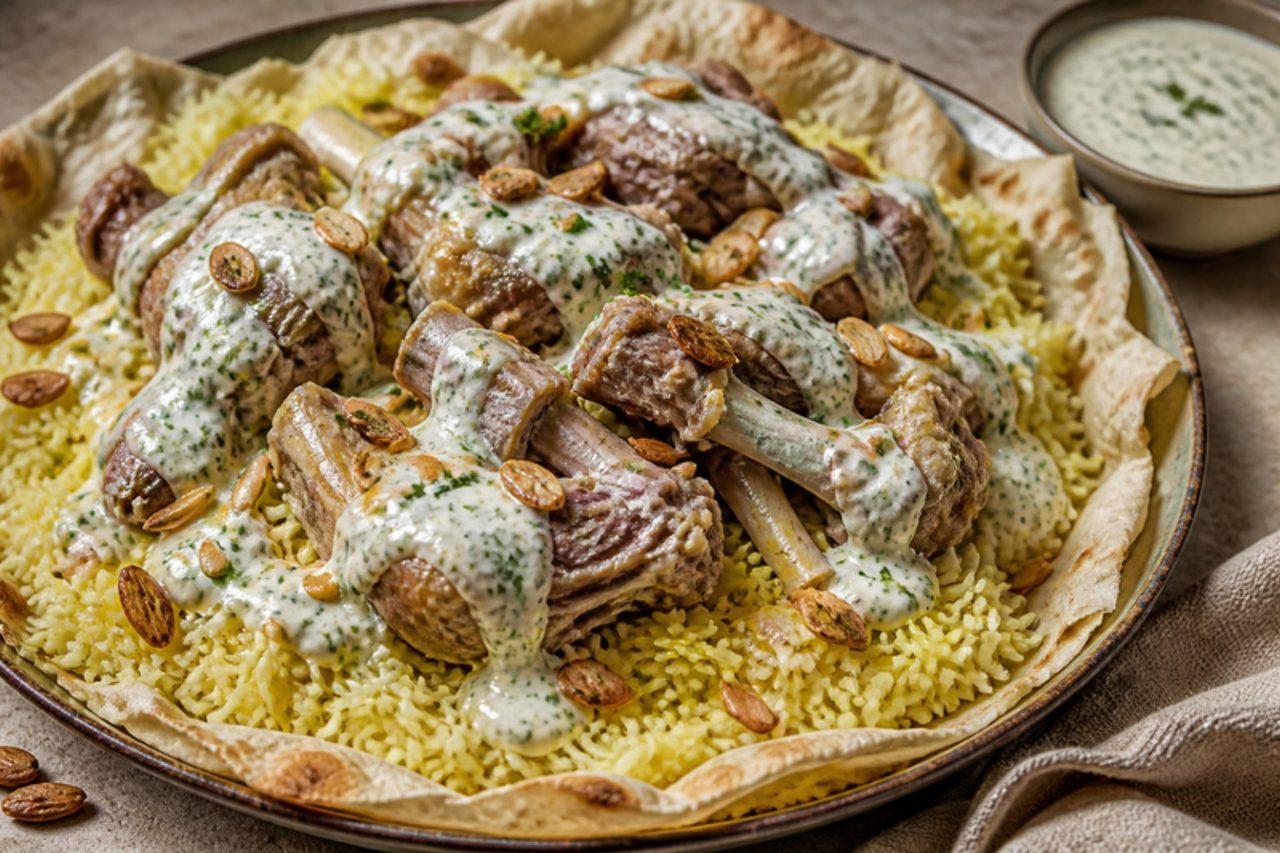
MansafLamb in yogurt sauce with rice
Mansaf is Jordan's national dish and the centrepiece of its weddings, Eid gatherings and big family days, set down on a huge round tray for everyone to eat from together. Bone-in lamb is simmered until tender in a sauce of jameed, the dried, salted goat's-milk yogurt of the Bedouin, then served on thin shrak bread and turmeric-tinted rice, scattered with almonds and pine nuts and drenched in more of the hot sauce. If you can't find jameed, a mix of thick yogurt and labneh gives a fair stand-in. Chef's tip: stir the yogurt sauce in one direction constantly as it heats, and never let it boil hard before the lamb goes in; that is what keeps it smooth.
 Lebanese