
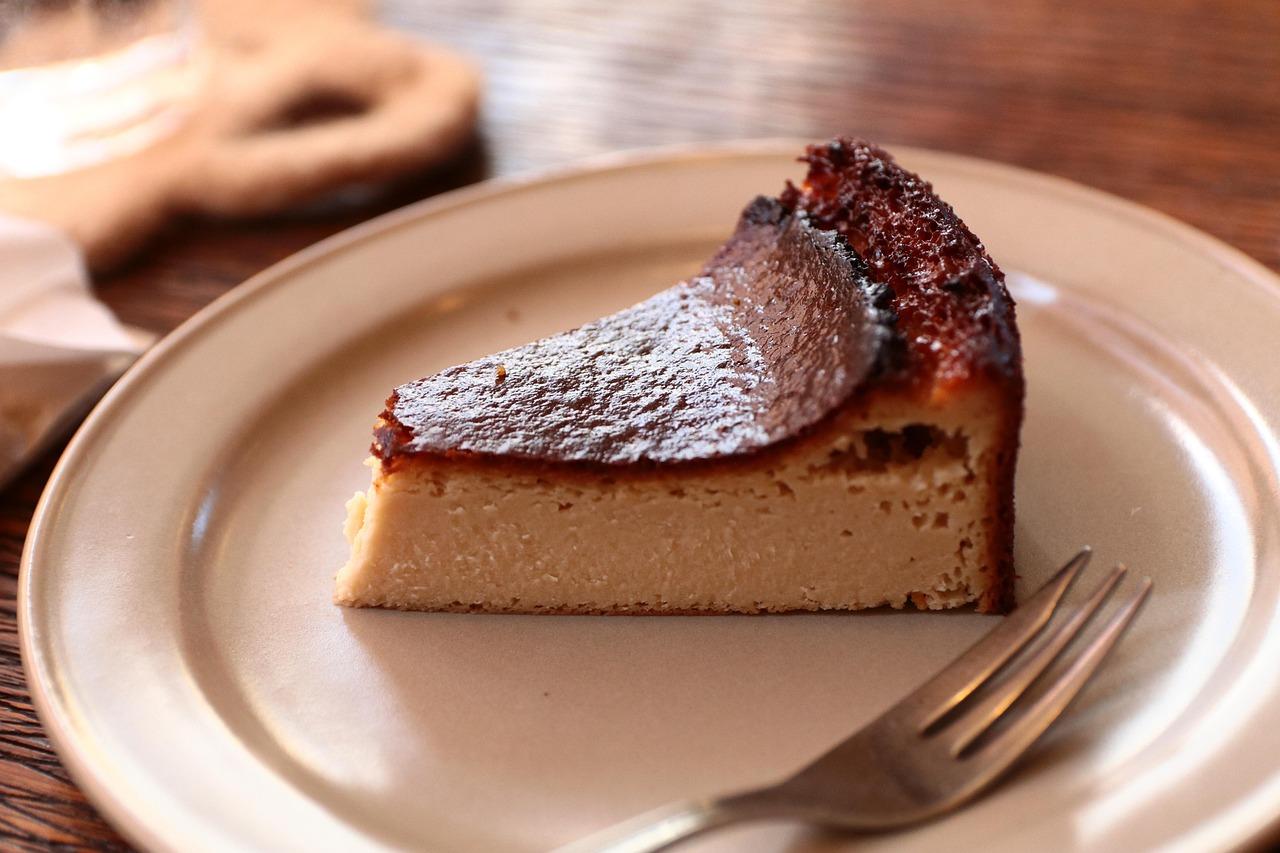
Basque burnt cheesecake
Tarta de queso de La Viña: crustless cheesecake with a scorched top and creamy centre


This crustless cheesecake was created in the early 1990s at La Viña, a pintxos bar in the old town of San Sebastián (Donostia) in the Basque Country, and is now famous around the world. It's baked very hot so the top caramelises almost black and the sides rise and crack, while the middle stays soft and creamy, almost runny. There's no base and no water bath, and the rough, rustic look is the point: it's lined with crumpled baking paper. La Viña uses a spoonful of wheat flour; cornflour does the same job and keeps it gluten free. Chef's tip: take it out of the oven while the centre still wobbles like a soft set custard; it firms up as it cools, and if it looks set in the oven, the middle will be dry instead of creamy.
- Total time
- 70 min
- Difficulty
- easy
- Serves
- 10
Ingredients
- 1 ⅔ lb full-fat cream cheeseat room temperature
- 9 oz caster sugar
- 5 eggslarge, at room temperature
- 1 ½ cups double cream
- 1 tbsp cornflour
- 1 pinch salt
- 1 tsp butterfor the tin
Shop this recipe on Amazon
What you'll need
Spices & pantry
Fresh ingredients (4)
Links open Amazon in a new tab. As an Amazon Associate, WhatToEat.Today earns from qualifying purchases.
Method
0/8 doneStep 1: Heat the oven to 425°F (400°F fan). Grease a 22–23 cm springform tin with 1 tsp butter. Crumple two large sheets of baking paper, flatten them out and press them into the tin, overlapping, so they stand 5 cm above the rim; the cheesecake rises a lot.
Step 2: Beat 1 ⅔ lb full-fat cream cheese with 9 oz caster sugar and 1 pinch salt for 2–3 minutes, with a wooden spoon or on low speed with a mixer, until completely smooth and the sugar has dissolved.
3 minStep 3: Add 5 eggs one at a time, mixing on low after each until just combined. Don't beat hard: too much air makes the cake puff up and then sink and crack in the middle.
Step 4: Pour in 1 ½ cups double cream and mix until smooth. Sift 1 tbsp cornflour over and mix in. The batter will be very runny, like a thick custard.
Step 5: Pour into the lined tin and tap it on the worktop to bring up any bubbles.
Step 6: Bake for 50–60 minutes, until the top is a deep, burnished brown, almost black in places, and puffed high. The centre should still jiggle like a just-set jelly when you shake the tin gently.
55 minStep 7: Leave to cool in the tin; it will sink, which is normal. Once cool, unmould, peel back the paper and serve at room temperature for a creamy, oozy centre, or chill for 4 hours for neater slices.
Step 8: Cut with a long, hot, dry knife, wiping it between slices.
Nutrition per serving
- Calories
- 450 kcal
- Protein
- 8 g
- Carbs
- 28 g
- Fat
- 34 g
- Fibre
- 0 g
Nutrition values are estimates.
KrazyBadal
Good to know
- How long does basque burnt cheesecake take?
- About 70 minutes in total: 15 minutes to prepare and 55 minutes to cook.
- How many people does it serve?
- 10 as written. Change the servings above the ingredients and every amount scales to match.
- Is it vegetarian?
- Yes. It has no meat or fish.
- Is it gluten free?
- Yes, as written. Check the labels on stock, sauces and spice mixes, which sometimes contain gluten.
- What can I use instead of full-fat cream cheese?
- Mascarpone, same amount.
- What can I use instead of caster sugar?
- Caster sugar, same amount.
Reviews
No reviews yet. Be the first to cook it.
Rate this recipe
Sign in to rate and review this recipe.
You might also like
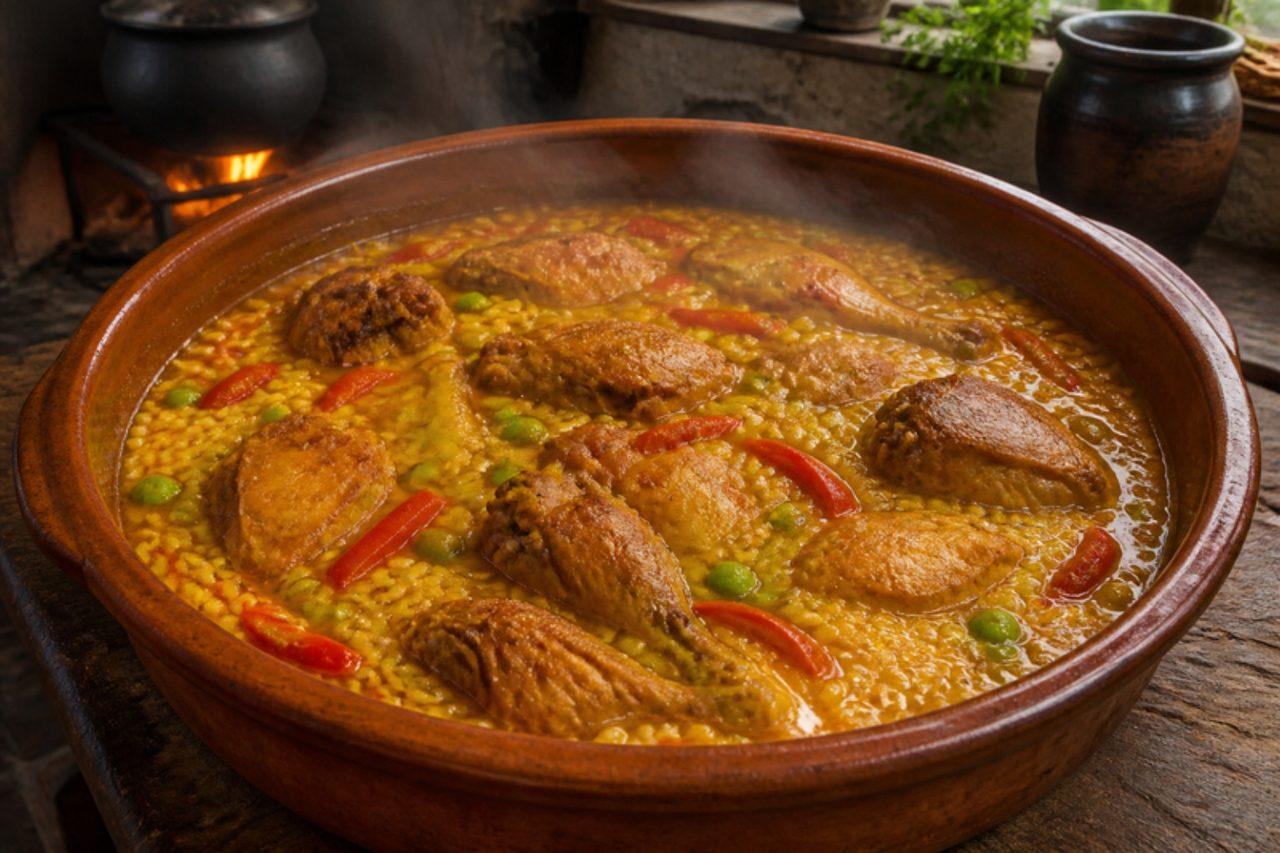
Arroz con pitu de caleyaSoupy rice with chicken
A pitu de caleya is a cockerel raised free in the lanes, or caleyas, of rural Asturias; its firm, flavourful meat needs long stewing, and families around Villaviciosa and Grado still cook it for feast days. The stew is often finished as a soupy rice, so the deep chicken juices go into every grain. Use the best free-range chicken you can find. The braise includes dry white wine; replace it with extra stock and a squeeze of lemon if you want it alcohol-free. Chef's tip: brown the chicken slowly and deeply; that colour is where the flavour of the whole pot comes from.
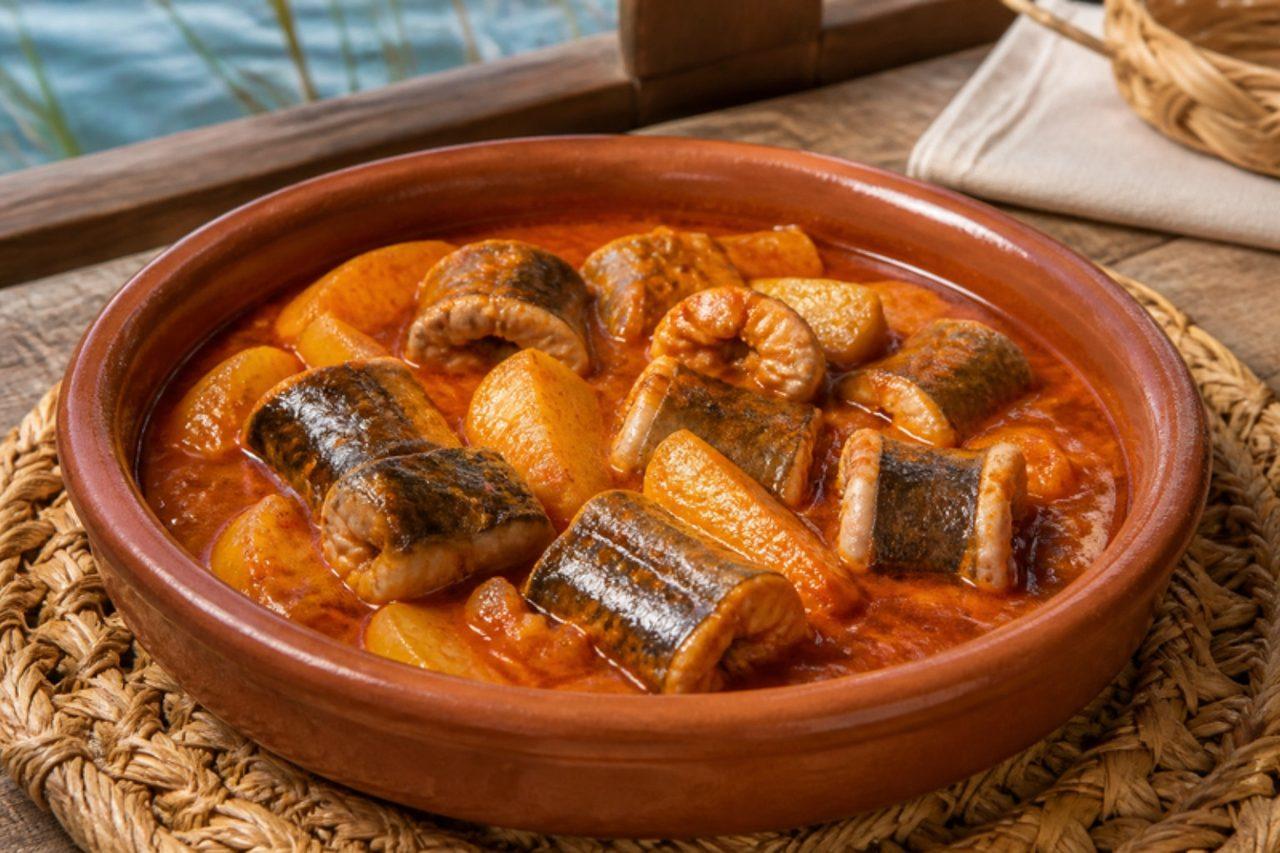
All i pebreEel and potato paprika stew
In El Palmar and the other villages around the Albufera lagoon south of Valencia, the restaurants that are famous for paella serve something older first: all i pebre, "garlic and pepper", a brick-red stew of lagoon eel and potatoes thickened with a pounded almond and fried-bread picada. It is rich, garlicky and gently hot, eaten with bread to mop up the sauce. Ask your fishmonger to skin and cut the eel, and handle it with gloves: raw eel blood is irritating, though harmless once cooked. If you can't find eel, monkfish or hake works well. A common mistake is letting the paprika burn; it turns bitter in seconds, so add it off the heat. Chef's tip: break the potatoes with a knife instead of cutting cleanly; the rough edges release starch and thicken the sauce.

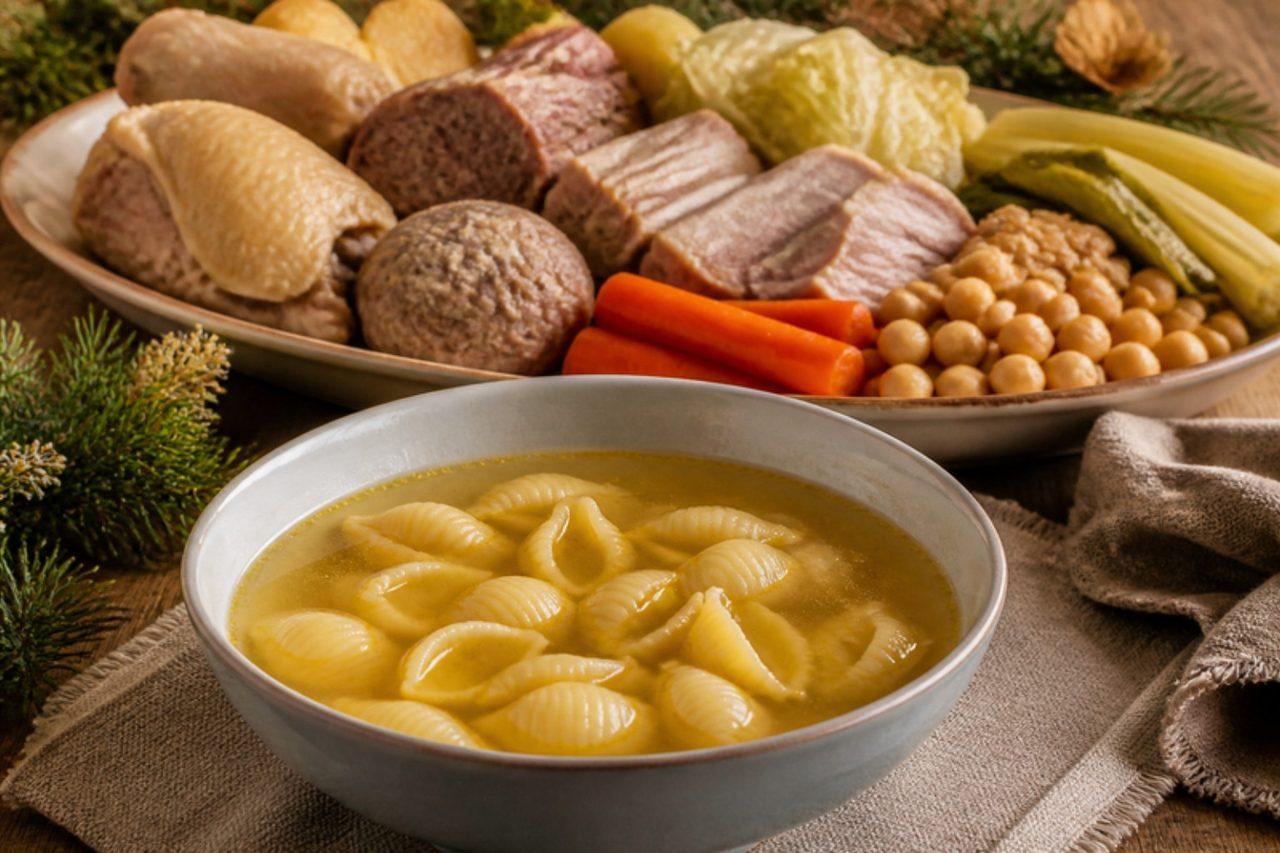
Escudella i carn d'ollaChristmas soup with giant pasta
This contains pork (pork belly and pork mince). On Christmas Day, Catalan families sit down to escudella i carn d'olla, served in two courses: first the broth with giant snail-shaped galets pasta, then the carn d'olla, a platter of the meats, chickpeas and vegetables that made it, including the pilota, a large herby meatball. The pot simmers for hours, and the leftovers become the next day's canelons. Chef's tip: start the meats in cold water and skim patiently as it comes to the boil; it is the only way to a clear, golden broth.