
AI-generated image
Bolani
Stuffed flatbread
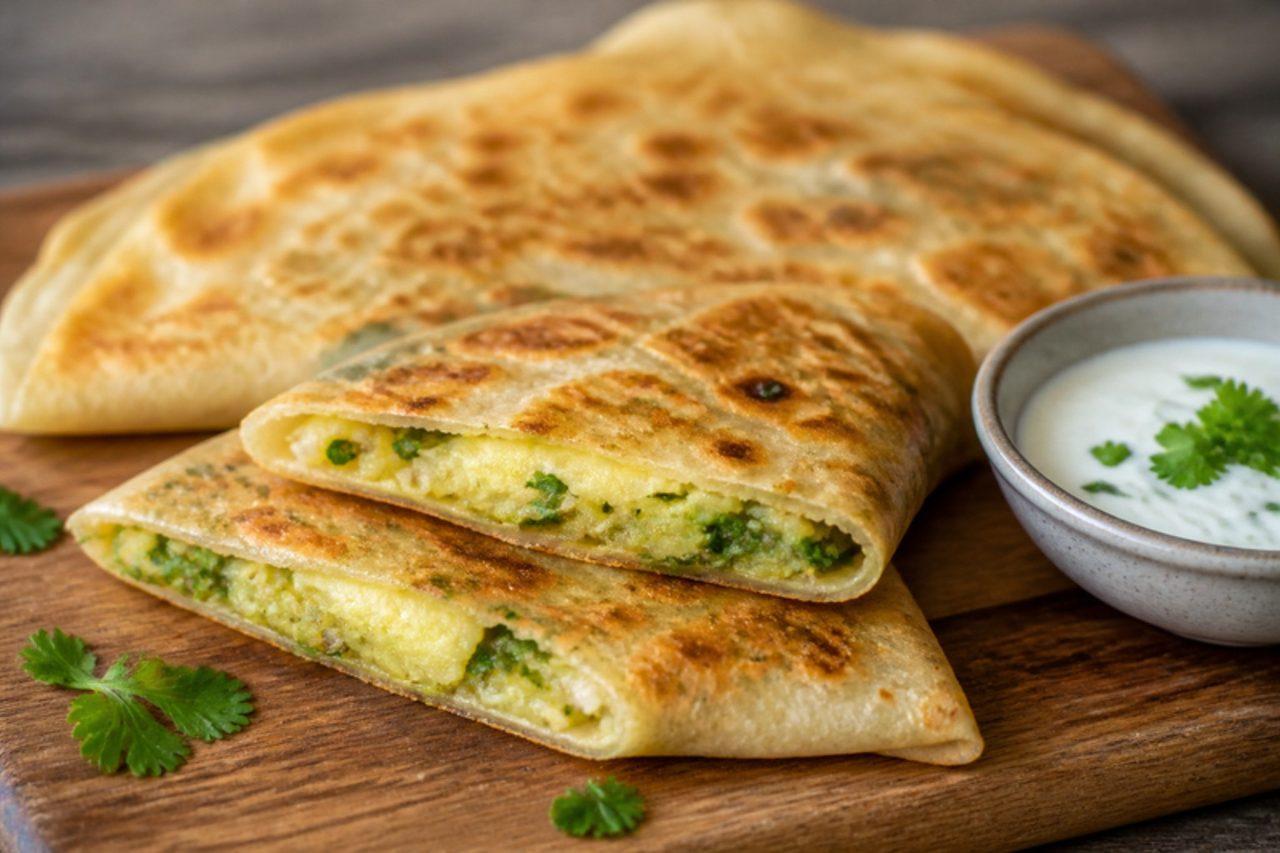
Bolani kachalu: Afghan stuffed flatbreads with spiced potato and spring onion


Bolani are thin, crisp half-moon flatbreads sold hot from griddles in Kabul's bazaars and made at home for Ramadan iftar, picnics and guests who drop in unannounced. The dough is rolled paper-thin, filled with mashed potato and spring onion (or with leeks or pumpkin), folded and fried in a little oil until blistered and golden. Cut them into wedges and serve with plain yoghurt or a green chutney. Chef's tip: spread the filling in a thin, even layer right to the edges; bolani should be flat and crackly, not puffy and doughy.
- Total time
- 65 min
- Difficulty
- medium
- Serves
- 6
Ingredients
For the dough
- 12 ½ oz plain flour
- 1 tsp salt
- 2 tbsp vegetable oil
- ¾ cup warm waterabout
For the filling
- 1 ⅓ lb potatoespeeled and quartered
- 6 spring onionsfinely chopped
- 1 handful fresh corianderchopped
- 1 green chillifinely chopped
- ½ tsp ground black pepper
- 1 tsp salt
For frying
- 6 tbsp vegetable oil
Shop this recipe on Amazon
Spices & pantry
Fresh ingredients (4)
Links open Amazon in a new tab. As an Amazon Associate, WhatToEat.Today earns from qualifying purchases.
Method
0/7 doneStep 1: Mix 12 ½ oz plain flour and 1 tsp salt, add 2 tbsp vegetable oil and enough ¾ cup warm water to make a soft but not sticky dough. Knead for 5 minutes until smooth, cover and rest for 30 minutes.
30 minStep 2: Boil 1 ⅓ lb potatoes in salted water for 15–18 minutes, until a knife slides through. Drain well and leave to steam dry for 5 minutes, then mash until smooth.
20 minStep 3: Mix the mash with 6 spring onions, 1 handful fresh coriander, 1 green chilli, ½ tsp ground black pepper and 1 tsp salt. Let it cool completely; warm filling makes the dough sticky and tear.
Step 4: Divide the dough into 6 balls. On a lightly floured surface, roll each into a thin round about 25 cm across, almost thin enough to see through.
Step 5: Spread a sixth of the filling over half of one round in a layer about 5 mm thick, leaving a 1 cm border. Fold the other half over and press the edges firmly to seal; crimp with a fork if you like. A common mistake is leaving air pockets; press them out towards the edge, or the bolani balloons and tears in the pan.
Step 6: Heat a large frying pan over a medium-high heat and add 1 tablespoon of the 6 tbsp vegetable oil. Fry one bolani for 2–3 minutes a side, pressing it flat with a spatula, until blistered and golden brown with darker spots. Repeat with the rest, adding oil each time.
18 minStep 7: Drain briefly on a rack (not paper, which makes them soggy), cut into wedges and serve hot.
Nutrition per serving
- Calories
- 350 kcal
- Protein
- 7 g
- Carbs
- 52 g
- Fat
- 13 g
- Fibre
- 4 g
Nutrition values are estimates.
KrazyBadal
Good to know
- How long does bolani take?
- About 65 minutes in total: 40 minutes to prepare and 25 minutes to cook.
- How many people does it serve?
- 6 as written. Change the servings above the ingredients and every amount scales to match.
- Is it vegan?
- Yes. It has no meat, fish, dairy or eggs.
- What can I use instead of plain flour?
- Self-raising flour, same amount (then leave out the baking powder).
- What can I use instead of potatoes?
- Sweet potato, same weight (sweeter, cooks a little faster).
Reviews
No reviews yet. Be the first to cook it.
Rate this recipe
Sign in to rate and review this recipe.
You might also like
SalufPuffy flatbread
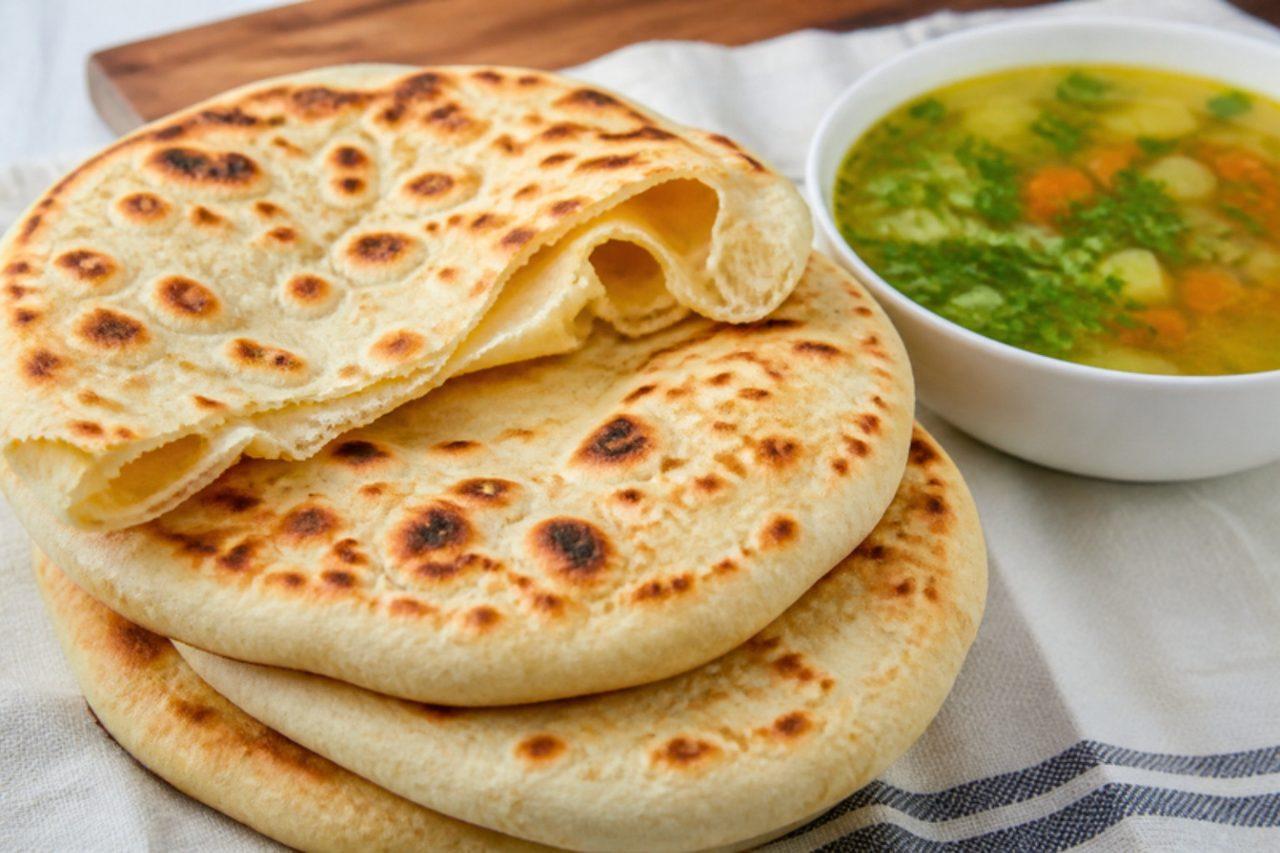
Saluf is the everyday bread of Yemenite Israelis, slapped onto a hot pan or taboon in Rosh HaAyin and Sha'arayim in Rehovot and eaten with marak temani, hilbe and zhug. It is soft and blistered, thicker than pita and with no pocket, made to tear and dunk. Home cooks often roll it too thin, which gives a cracker; it should be about 1 cm thick so it stays pillowy. Chef's tip: cook it under a lid on a very hot dry pan for the first minute, which traps steam and puffs it the way a taboon does.
 Israeli


ChipaCheese bread rings
In Paraguay you hear 'chipa, chipa!' called by vendors with big baskets on buses and street corners, and every family bakes it for Holy Week, when chipa is the food of Good Friday. Cassava starch, a little cornmeal, butter, eggs and a lot of hard cheese are kneaded into a dough scented with aniseed, shaped into rings or small rolls and baked in a hot oven, traditionally a domed clay tatakua. It's chewy, crisp outside and best warm with cocido (toasted yerba tea). Chef's tip: the dough should feel soft and slightly greasy; add milk a spoon at a time, as too much makes the chipa spread flat.
 Paraguayan

Matzah
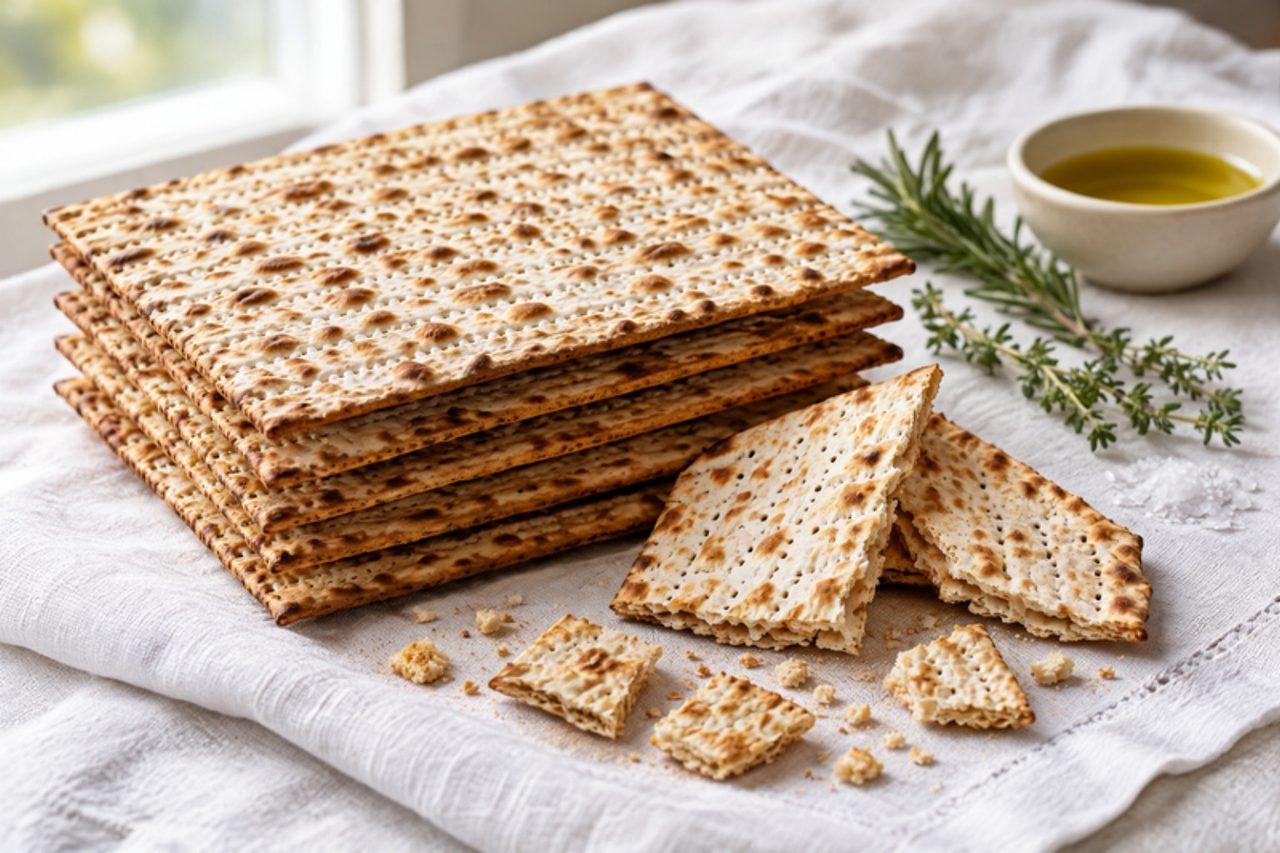
Matzah is the flat unleavened bread eaten at Passover, recalling the Israelites leaving Egypt in too much haste for their bread to rise, and in Israel and Jewish homes worldwide it is also eaten as a crisp everyday cracker with soups and dips. The dough is only flour and water; by tradition it is mixed, rolled and baked within 18 minutes so it cannot ferment. This home version follows that rhythm but is not certified for Passover use. There is no salt: about 0.0 g salt per sheet. The usual mistake is rolling too thick, which gives a tough, chewy bread; roll until you can almost see the counter through it. Chef's tip: prick the dough all over with a fork before baking so it stays flat and blisters evenly.