
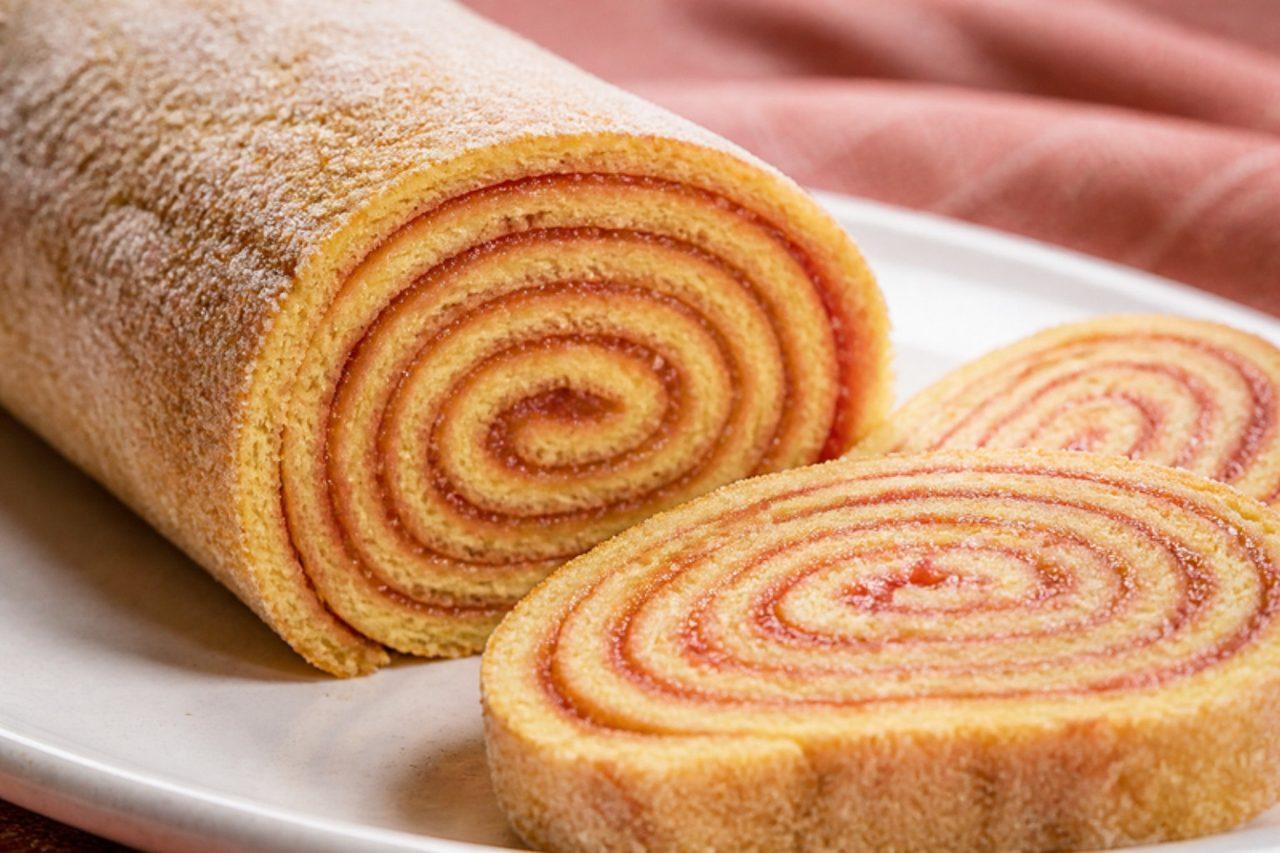
AI-generated image
Bolo de rolo
Guava paste roll cake
Bolo de rolo: Pernambuco's roll cake of paper-thin buttery sponge and guava paste in many tight layers
 Brazilian
Cut a slice of bolo de rolo and you see a tight spiral of a dozen hair-thin layers, alternating pale butter sponge and dark red guava. It is Pernambuco's proudest cake, protected as a cultural heritage of the state, sold in Recife's bakeries and airport shops in long boxes and served at birthdays and with coffee in the afternoon. The batter is rich with butter and eggs, spread so thinly it bakes in minutes; each sheet is brushed with melted guava paste and rolled around the last. It takes patience rather than skill. The classic slip is spreading the batter too thick, which gives a fat swiss roll instead of fine stripes; you should almost see the paper through it. Chef's tip: roll each layer while it is still hot from the oven, on a clean cloth dusted with sugar, because the thin sponge cracks as soon as it cools.
- Total time
- 85 min
- Difficulty
- hard
- Serves
- 12
Ingredients
For the sponge
- 9 oz unsalted buttervery soft, plus extra for the trays
- 9 oz caster sugar
- 6 eggsat room temperature
- 9 oz plain floursifted
- 1 pinch salt
For the filling
- 14 oz goiabada (guava paste)chopped; from Latin shops
- ½ cup water
To finish
- 3 tbsp caster sugarfor the cloth and top
Shop this recipe on Amazon
What you'll need
Spices & pantry
Fresh ingredients (2)
Links open Amazon in a new tab. As an Amazon Associate, WhatToEat.Today earns from qualifying purchases.
Method
0/10 doneStep 1: Heat the oven to 425°F (400°F fan). Line a 30 x 40 cm baking tray with baking paper and grease the paper with a little butter.
Step 2: Beat 9 oz unsalted butter and 9 oz caster sugar with an electric mixer for 5 minutes, until pale, fluffy and almost white.
5 minStep 3: Beat in 6 eggs one at a time, mixing well after each, until the batter is smooth and glossy.
Step 4: Fold in 9 oz plain flour and 1 pinch salt with a spatula until no streaks remain. The batter should be thick but spreadable.
Step 5: Melt 14 oz goiabada (guava paste) with ½ cup water in a small pan over a low heat for 5 minutes, stirring, until it is a smooth, thick jam that you can brush. Keep it warm.
5 minStep 6: Spread 4–5 heaped tablespoons of batter over the whole tray with an offset spatula, as thin as you can, about 1–2 mm. Bake for 4–5 minutes, until set and just pale gold at the edges.
5 minStep 7: Sprinkle a clean tea towel with some of 1 ½ tbsp caster sugar. Turn the hot sponge onto it, peel off the paper and brush thinly with guava. Roll it up tightly from a short side.
Step 8: Re-line and grease the tray, bake the next thin layer and turn it out onto the towel. Brush with guava, set the first roll at its edge and roll the new layer around it, keeping it tight.
Step 9: Repeat with the remaining batter, about 8–10 layers in all, each time rolling the growing log in the next sheet. Keep 2 tablespoons of guava for the top.
35 minStep 10: Brush the outside with the last of the guava, dust with the rest of 1 ½ tbsp caster sugar and wrap the roll in baking paper. Leave seam-side down to cool and firm for at least 2 hours before slicing thinly with a sharp knife.
Nutrition per serving
- Calories
- 440 kcal
- Protein
- 6 g
- Carbs
- 58 g
- Fat
- 21 g
- Fibre
- 1 g
Nutrition values are estimates.
KrazyBadal
Good to know
- How long does bolo de rolo take?
- About 85 minutes in total: 40 minutes to prepare and 45 minutes to cook.
- How many people does it serve?
- 12 as written. Change the servings above the ingredients and every amount scales to match.
- Is it vegetarian?
- Yes. It has no meat or fish.
- What can I use instead of unsalted butter?
- The same weight of ghee or coconut oil (for frying and most baking).
- What can I use instead of caster sugar?
- Caster sugar, same amount.
Reviews
No reviews yet. Be the first to cook it.
Rate this recipe
Sign in to rate and review this recipe.
You might also like
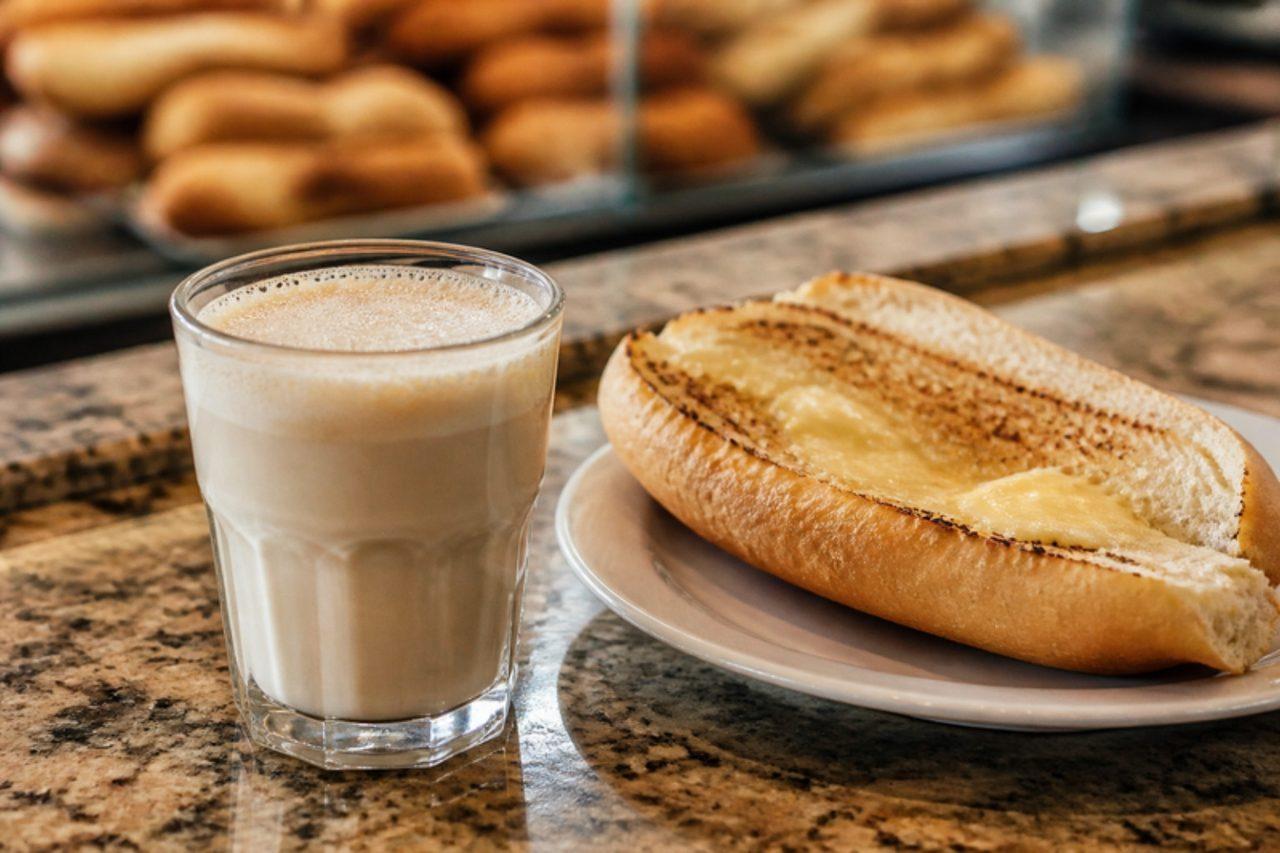
PingadoHot milk with coffee
Order 'um pingado' at the balcão of any São Paulo padaria at 7 in the morning and the attendant pours hot milk into a ridged glass tumbler (the copo americano) and 'drips' in a splash of strong coffee, hence the name. It is milkier and gentler than a média (half coffee, half milk), creamy and lightly sweet, usually drunk standing up with a pão na chapa, a toasted buttered roll. At home you need strong filter coffee and milk heated until steaming. Scalding the milk is the frequent mistake, as boiled milk tastes flat and forms a skin. Chef's tip: froth the hot milk for a few seconds with a whisk or by pouring it back and forth between two jugs before adding the coffee, as padaria machines do.

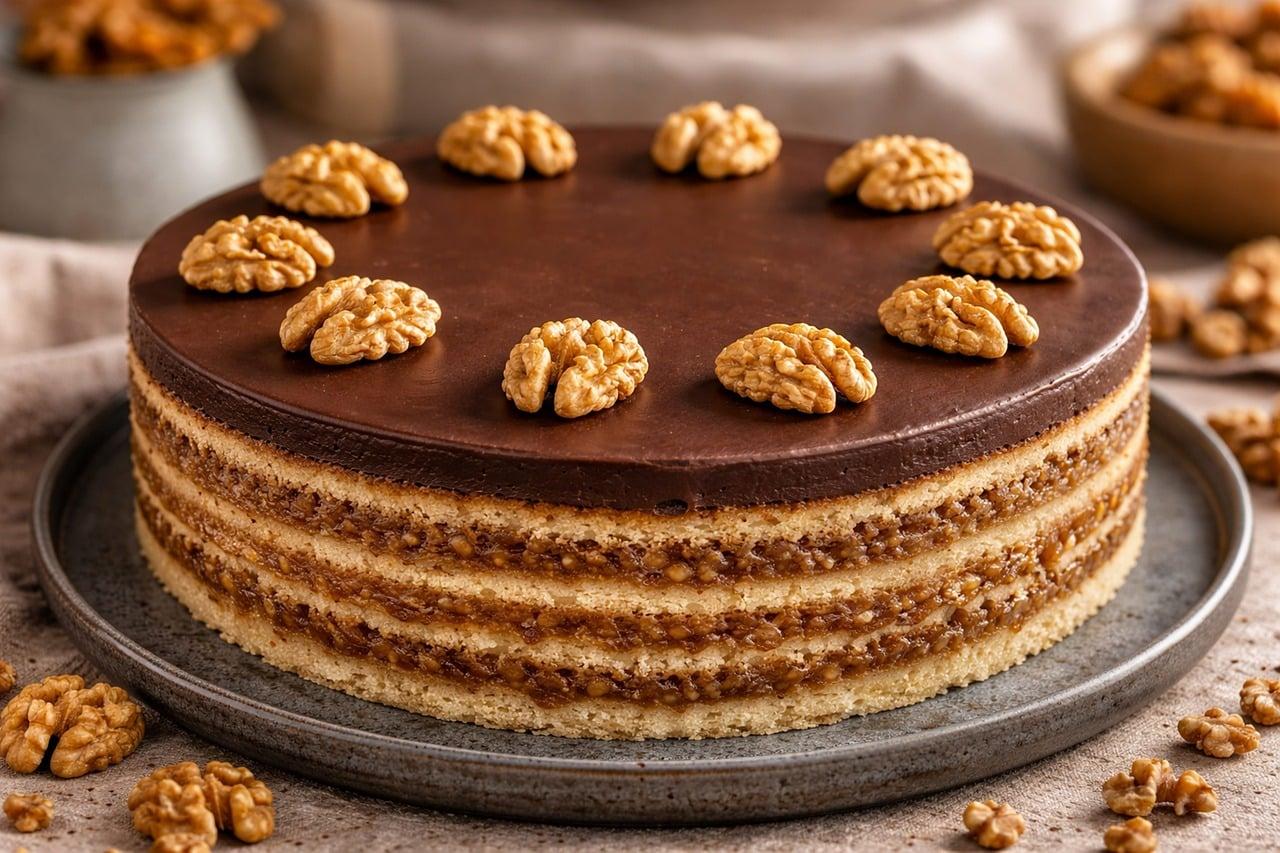
Reform tortaWalnut meringue chocolate cake
Belgrade pastry shops have sold reform torta since the early twentieth century, and it is still the cake Serbian families bring out for birthdays, weddings and the slava. Three thin layers of walnut meringue, crisp at the edge and chewy inside, are stacked with a dense chocolate butter cream made with egg yolks cooked over steam until thick. It is very rich, so cut thin slices and serve with strong coffee. The usual slip is beating the butter into a chocolate mixture that is still warm, which melts it and splits the cream; let it cool to room temperature first. Chef's tip: assemble the cake the day before; overnight in the fridge the meringue softens a little and the cake slices cleanly with a hot knife.
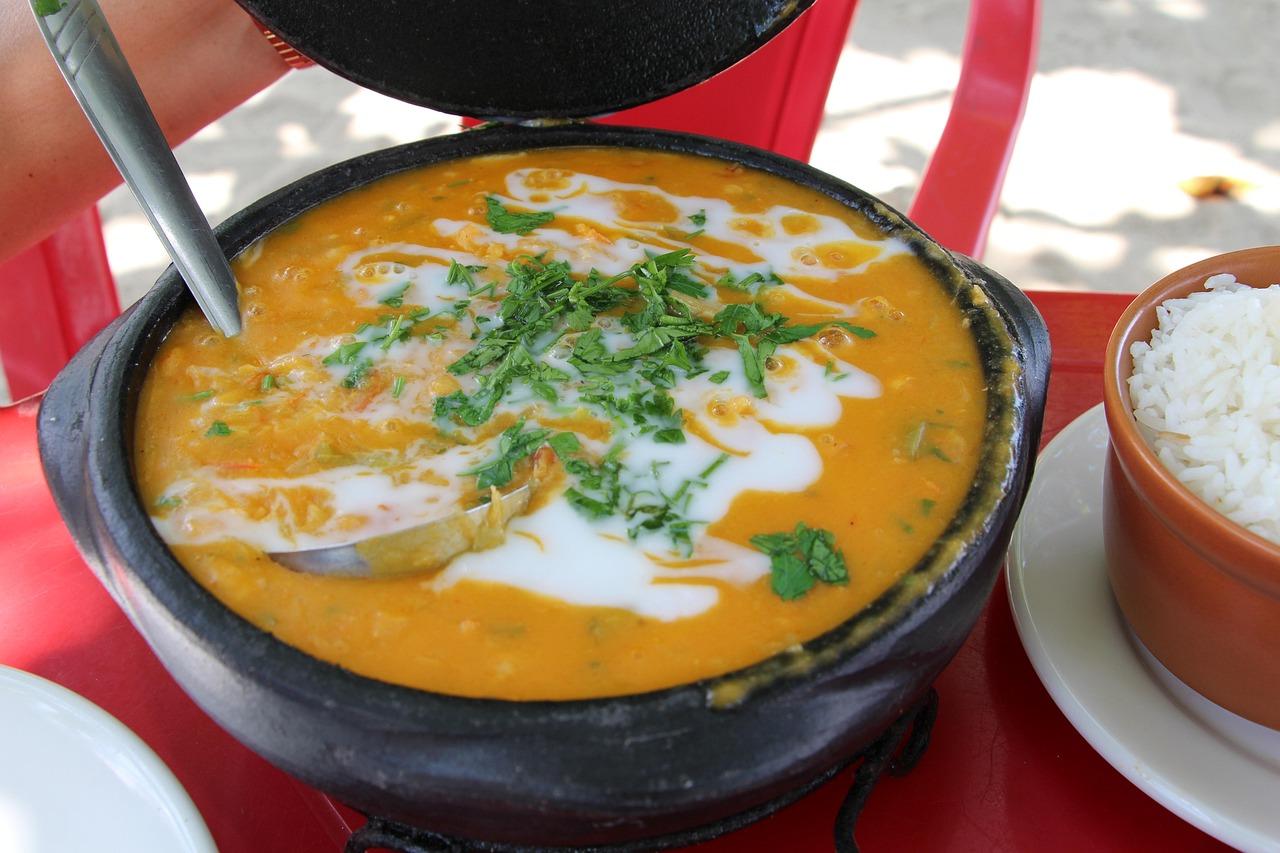
Bobó de camarãoPrawns in cassava and coconut purée
Velvety, coral-coloured and rich with coconut, bobó de camarão is what Bahian families put on the table when there is something to celebrate, and beach restaurants from Praia do Forte to Itacaré serve it in clay pots with white rice and farofa. Cassava is boiled until it falls apart, blended with coconut milk into a smooth cream, then folded into prawns cooked with onion, tomato, peppers and a slick of dendê oil. The result is somewhere between a stew and a thick sauce, sweet from the prawns and gently earthy from the cassava. A frequent mistake is boiling the prawns in the purée for too long, which leaves them tough and curled; they go in at the very end. Cassava must always be cooked right through, never eaten raw: cut out the woody core and boil it until a knife meets no resistance. Chef's tip: blend the cassava while it is still hot, with some of its cooking water; cold cassava turns gluey in the blender.