
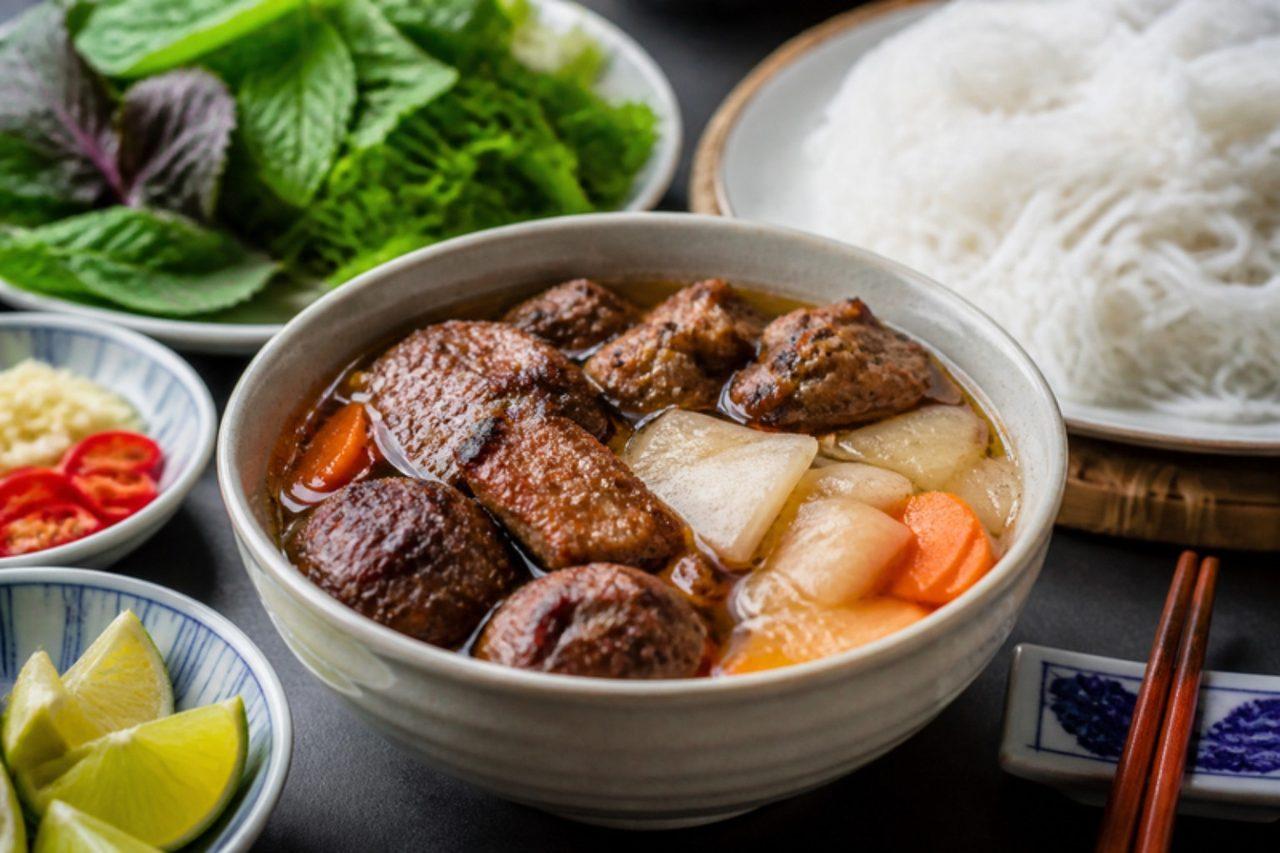
AI-generated image
Bun cha
Bún chả: Hanoi's charcoal-grilled pork patties and belly in sweet-sour fish sauce
Around 11 in the morning, the side streets of Hanoi's Old Quarter fill with smoke as cooks fan little charcoal braziers loaded with pork. Bun cha is the city's lunch: grilled patties and caramelised strips of pork belly served floating in a warm bowl of thin, sweet-sour fish sauce, with cold rice vermicelli and a basket of lettuce and herbs to dip in alongside. Each mouthful is a bit of noodle, a bit of meat and a leaf or two, all dunked together. A barbecue gives the real smoky edge, but a ridged grill pan works well indoors. Chef's tip: let the grilled meat sit in the warm sauce for a few minutes before eating, so the smoky fat seasons the sauce and the sauce soaks into the meat.
- Total time
- 50 min
- Difficulty
- medium
- Serves
- 4
Ingredients
For the pork
For the dipping sauce
To serve
Method
0/9 doneStep 1: Mix the 3 shallots, 4 cloves garlic, 3 tbsp fish sauce, 2 tbsp light brown sugar, 1 tbsp honey, 1 tsp black pepper and 1 tbsp vegetable oil in a bowl until the sugar dissolves. This is the marinade for both kinds of pork.
Step 2: Put the 14 oz pork mince in one bowl and the 14 oz skinless pork belly in another. Spoon half the marinade over each and mix well. Leave the belly to marinate for 20 minutes while you prepare everything else. Common mistake: using lean mince. Without enough fat the patties dry out on the grill and taste of very little.
20 minStep 3: For the sauce, warm the 2 cups water with the 4 tbsp caster sugar in a small pan until dissolved, then take off the heat. Stir in the 5 tbsp fish sauce, 3 tbsp rice vinegar, 2 tbsp lime juice, 2 cloves garlic and 1 red bird's eye chilli. Taste: it should be light, sweet, sour and salty all at once. Add the 1 carrot and 3 ½ oz kohlrabi or green papaya to soften slightly in the warm sauce.
5 minStep 4: Cook the 10 ½ oz dried rice vermicelli in boiling water following the packet, usually 4–5 minutes, until just soft. Rinse under cold water, drain very well and arrange in loose nests on a plate.
5 minStep 5: Wash and dry the 1 soft lettuce and 1 ⅜ oz mixed herbs (mint, perilla, coriander, Thai basil) and pile them in a basket or on a platter.
Step 6: With wet hands, shape the mince into 12 small, flattened patties about 1.5 cm thick.
Step 7: Heat a barbecue or ridged grill pan until very hot. Grill the belly slices for 3–4 minutes each side, until caramelised and charred at the edges and cooked through to 145°F/145 °F. Rest them on a plate for 3 minutes.
8 minStep 8: Grill the patties over a medium-high heat for 4–5 minutes each side, until well browned and cooked to 160°F/160 °F in the centre with no pink left. Turn them only once so they hold together.
10 minStep 9: Divide the warm sauce among four small bowls and add the patties and belly. Leave for 2–3 minutes, then serve with the noodles and herbs: pick up some noodles with chopsticks, dip them in the sauce and eat with the pork and a leaf or two.
Nutrition per serving
- Calories
- 720 kcal
- Protein
- 36 g
- Carbs
- 78 g
- Fat
- 29 g
- Fibre
- 3 g
Nutrition values are estimates.
KrazyBadal
Good to know
- How long does bun cha take?
- About 50 minutes in total: 25 minutes to prepare and 25 minutes to cook.
- How many people does it serve?
- 4 as written. Change the servings above the ingredients and every amount scales to match.
- What can I use instead of shallots?
- Half an onion per 2 shallots.
- What can I use instead of garlic?
- ½ tsp garlic paste or ⅛ tsp garlic powder per clove.
Reviews
No reviews yet. Be the first to cook it.
Rate this recipe
Sign in to rate and review this recipe.
You might also like

Caramelised clay-pot tofu and mushrooms
Kho is the slow braise of the Mekong Delta: food simmered in a little clay pot (nồi đất) with dark caramel and seasoning until the sauce is sticky and the flavours go deep. This vegetarian cousin of cá kho tộ (braised fish) uses golden tofu and meaty mushrooms in place of fish, cooked in coconut water, as cooks do in the south, and finished with plenty of black pepper. Serve it bubbling in its pot with steamed rice and a sour soup or plain boiled vegetables. Chef's tip: take the caramel (nước màu) to a deep mahogany, darker than you think, just before it smokes; pale caramel only tastes sweet, while dark caramel gives the bittersweet, smoky flavour of a real kho.

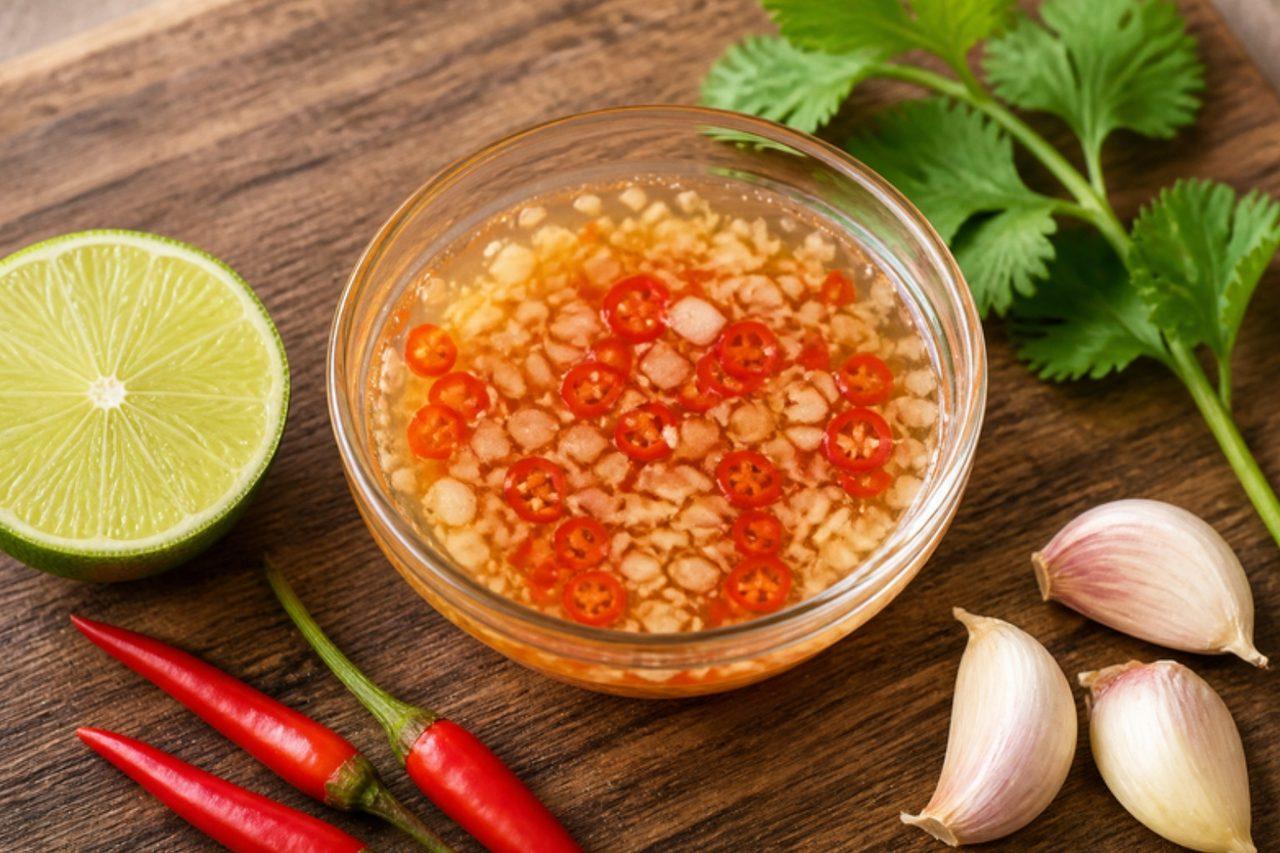
Vegan nuoc cham
Nước chấm is the dipping sauce that goes with almost everything in Vietnam: spring rolls, bánh xèo, noodle salads and broken rice. Buddhist vegetarian cooks, all over the country, make it without fish sauce, using light soy sauce and a little coconut water for the deep, rounded taste. It should be thin, clear and pale amber, with flecks of garlic and chilli floating on top. Chef's tip: dissolve the sugar in the warm water first, then add the lime and soy, and stir in the garlic and chilli last, pounded with a pinch of sugar, so they float on the surface instead of sinking.
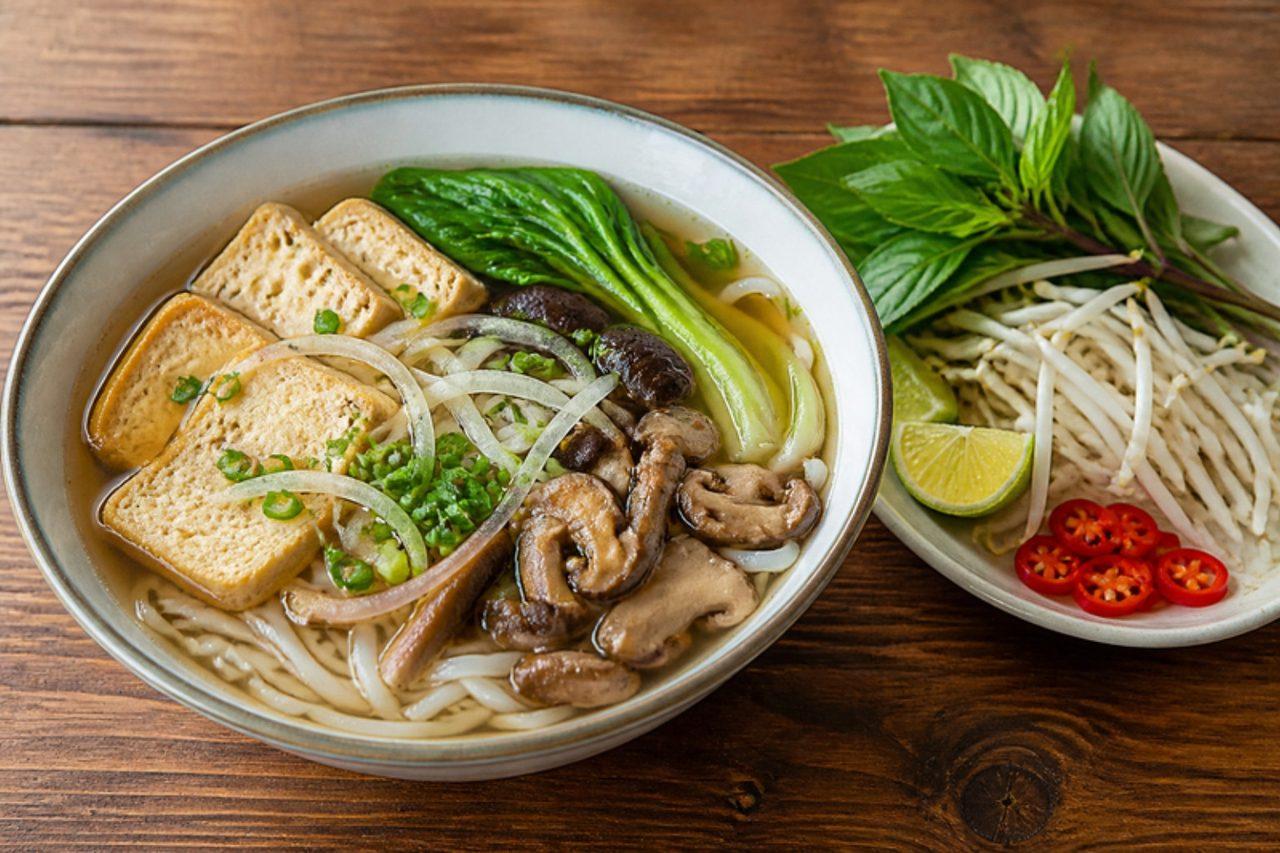
Vegetable pho
Pho began in the north, around Hanoi and Nam Định, and is now eaten all over Vietnam, often for breakfast. Phở chay is the Buddhist vegetarian version served in temple kitchens and chay restaurants: the deep, clear broth comes from charred onion and ginger, toasted star anise, cinnamon and cloves, simmered with daikon, carrot, sweetcorn and dried shiitake instead of beef bones. Silky flat rice noodles, golden tofu and mushrooms go in the bowl, and everyone adds their own bean sprouts, Thai basil, lime and chilli at the table. Chef's tip: char the onion and ginger until properly blackened in patches and toast the spices in a dry pan until they smell like warm Christmas cake; that smoky, perfumed base is what makes the broth taste like pho and not vegetable soup.
