
AI-generated image
Burong isda
Fermented fish and rice
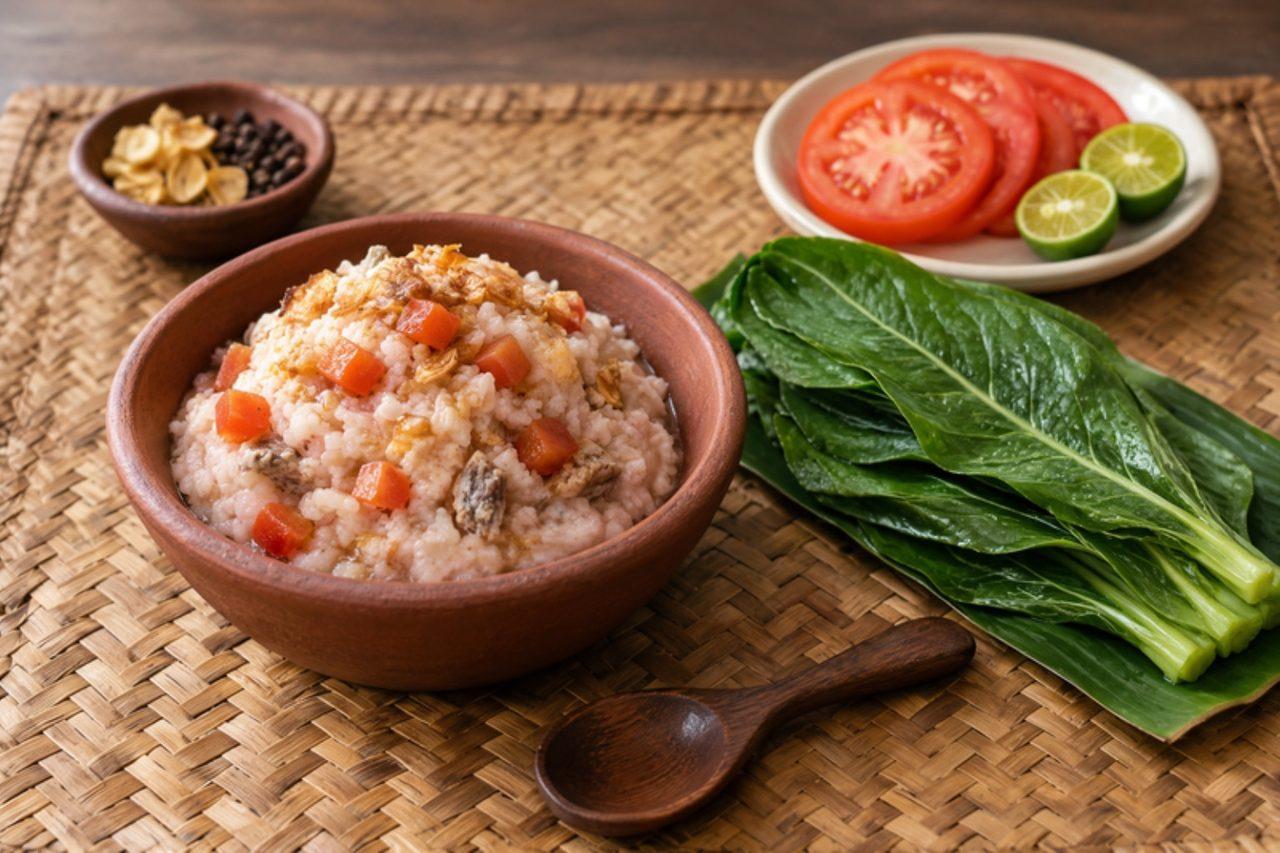
Burong isda: salted fish and rice left to sour into a soft, tangy paste, then sautéed with garlic and tomato and wrapped in mustard leaves


Burong isda is a Kapampangan treasure. In Pampanga, and in neighbouring Bulacan and Tarlac, families make buro in the rainy months when mudfish and tilapia are plentiful, and the sautéed paste is set out at home lunches with fried or grilled fish, steamed okra and eggplant, and blanched mustard leaves (mustasa) to wrap it in. Cooked rice and salted fish ferment together for about a week until the rice has melted into a soft, pinkish porridge and the fish bones soften. Sautéed with garlic, onion and tomato, it becomes creamy, sour, salty and deeply savoury, a little like a cheese spread. Because the fish ferments raw, two rules matter: cure it first in 20% salt, and always cook the buro until bubbling hot before eating; never eat it straight from the jar. Pregnant people, babies, older people and anyone with weak immunity should only eat it freshly cooked, or skip it. Common mistake: packing hot rice, which spoils the ferment; cool it fully. It is ready to cook when it smells pleasantly sour, like sourdough, and the rice is soft. Chef's tip: a teaspoon of angkak (red yeast rice) gives the traditional pink colour.
- Total time
- 75 min
- Difficulty
- medium
- Serves
- 10
Ingredients
For the buro
- 1 ⅛ lb tilapia or mudfish (dalag) fillets, skin onvery fresh, scaled and cut into 3 cm pieces
- 3 ½ oz coarse sea salt20% of the fish's weight
- 9 oz white ricecooks to about 600 g
- 2 cups water
- ⅔ oz fine sea saltabout 3% of the cooked rice
- 1 tsp angkak (red yeast rice), ground (optional)
To sauté
- 3 tbsp vegetable oil
- 6 garlic clovesminced
- 1 onionchopped
- 3 ripe tomatoeschopped
- ½ tsp ground black pepper
To serve
- 1 mustard greens (mustasa) (optional)a bunch of about 300 g
- 10 okra (optional)
Shop this recipe on Amazon
What you'll need
Spices & pantry
Fresh ingredients (3)
Links open Amazon in a new tab. As an Amazon Associate, WhatToEat.Today earns from qualifying purchases.
Method
0/12 doneStep 1: Sterilise a 1.5 litre glass jar and lid: wash in hot soapy water, rinse, then dry in a 250°F oven for 10 minutes. Cool fully.
Step 2: Toss 1 ⅛ lb tilapia or mudfish (dalag) fillets, skin on with 3 ½ oz coarse sea salt in a glass dish, cover and refrigerate for 24 hours. The fish firms up and sits in its own salty liquid.
5 minStep 3: Cook 9 oz white rice with 2 cups water over a low heat, covered, until soft and slightly sticky, 18 minutes. Spread it on a tray and cool completely to room temperature, about 1 hour.
18 minStep 4: Rinse the cured fish briefly under cold water, drain and pat dry. Pick out any large loose bones.
5 minStep 5: Mash the cool rice with ⅔ oz fine sea salt and 1 tsp angkak (red yeast rice), ground if using, then fold in the fish until evenly mixed.
5 minStep 6: Pack the mixture into the jar, pressing out air pockets with a clean spoon and leaving 3 cm of headspace. Cover the surface with baking paper and close the lid loosely.
5 minStep 7: Ferment at cool room temperature (20–77°F) for 5–7 days, opening the lid once a day to release gas. Normal: bubbles, a sour, sourdough-like smell, and rice softening into a pale porridge. Discard if you see fuzzy, black or pink mould or it smells putrid.
Step 8: When it smells pleasantly sour, move the jar to the fridge; uncooked buro keeps 3–4 weeks there. Always take it out with a clean, dry spoon.
Step 9: To cook, heat 3 tbsp vegetable oil in a wok over a medium heat and fry 6 garlic cloves until pale gold, 1 minute.
1 minStep 10: Add 1 onion and cook until soft, 3 minutes, then add 3 ripe tomatoes and cook until they collapse into a sauce, 5 minutes.
8 minStep 11: Stir in the buro (all or half) with ½ tsp ground black pepper and cook, stirring, until thick, bubbling hot all through and pale pink-gold, 10 minutes. The fish must be steaming hot; never serve it raw.
10 minStep 12: Blanch 1 mustard greens (mustasa) and 10 okra in boiling salted water for 1–2 minutes, if serving, and drain. Serve the warm buro with the greens to wrap it in. Cooked buro keeps 5 days in the fridge; reheat until bubbling.
2 min
Nutrition per serving
- Calories
- 190 kcal
- Protein
- 13 g
- Carbs
- 26 g
- Fat
- 5 g
- Fibre
- 1 g
Nutrition values are estimates.
KrazyBadal
Good to know
- How long does burong isda take?
- About 75 minutes in total: 40 minutes to prepare and 35 minutes to cook.
- How many people does it serve?
- 10 as written. Change the servings above the ingredients and every amount scales to match.
- Is it gluten free?
- Yes, as written. Check the labels on stock, sauces and spice mixes, which sometimes contain gluten.
- Can I make it ahead?
- Yes. It keeps well, so you can cook it earlier in the day or the day before and reheat it.
- What can I use instead of white rice?
- Any long-grain rice, same amount.
- What can I use instead of garlic cloves?
- ½ tsp garlic paste or ⅛ tsp garlic powder per clove.
Reviews
No reviews yet. Be the first to cook it.
Rate this recipe
Sign in to rate and review this recipe.
You might also like
Tiyula itumBlack beef soup
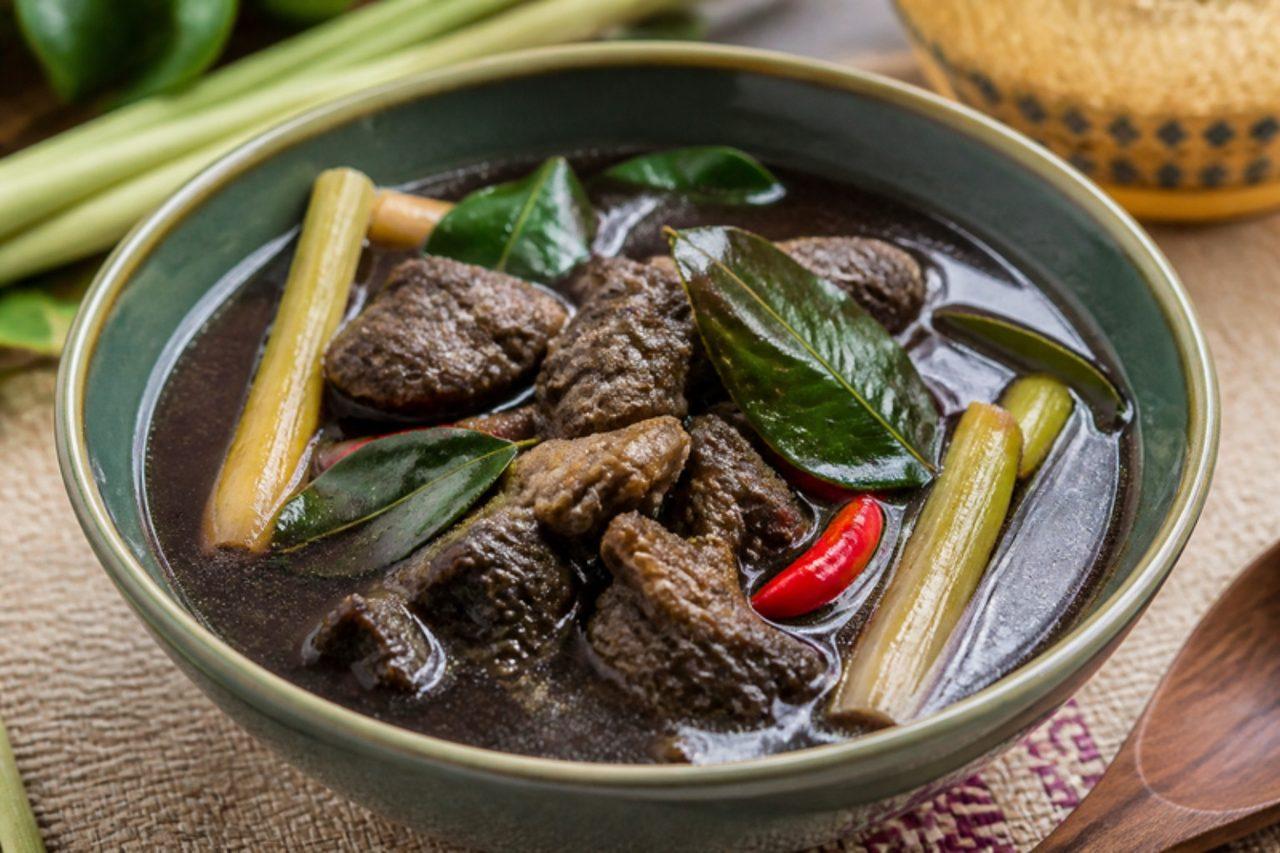
Tiyula itum, 'black soup', is the pride of the Tausug people of Sulu in the far south of the Philippines, cooked for weddings, Eid celebrations and when guests come home. Beef (it is a halal, pork-free dish) is simmered with ginger, lemongrass and turmeric, then darkened with pamapa itum, a paste of grated coconut toasted until almost black and pounded with spices. The broth looks dramatic but tastes smoky, earthy and gently peppery, with heat from chillies. Serve it with plain rice. Chef's tip: toast the coconut slowly, stirring all the time, until it is very dark brown but not ashy; burnt-to-ash coconut tastes bitter and ruins the soup.

Lumpiang sariwaFresh vegetable spring rolls
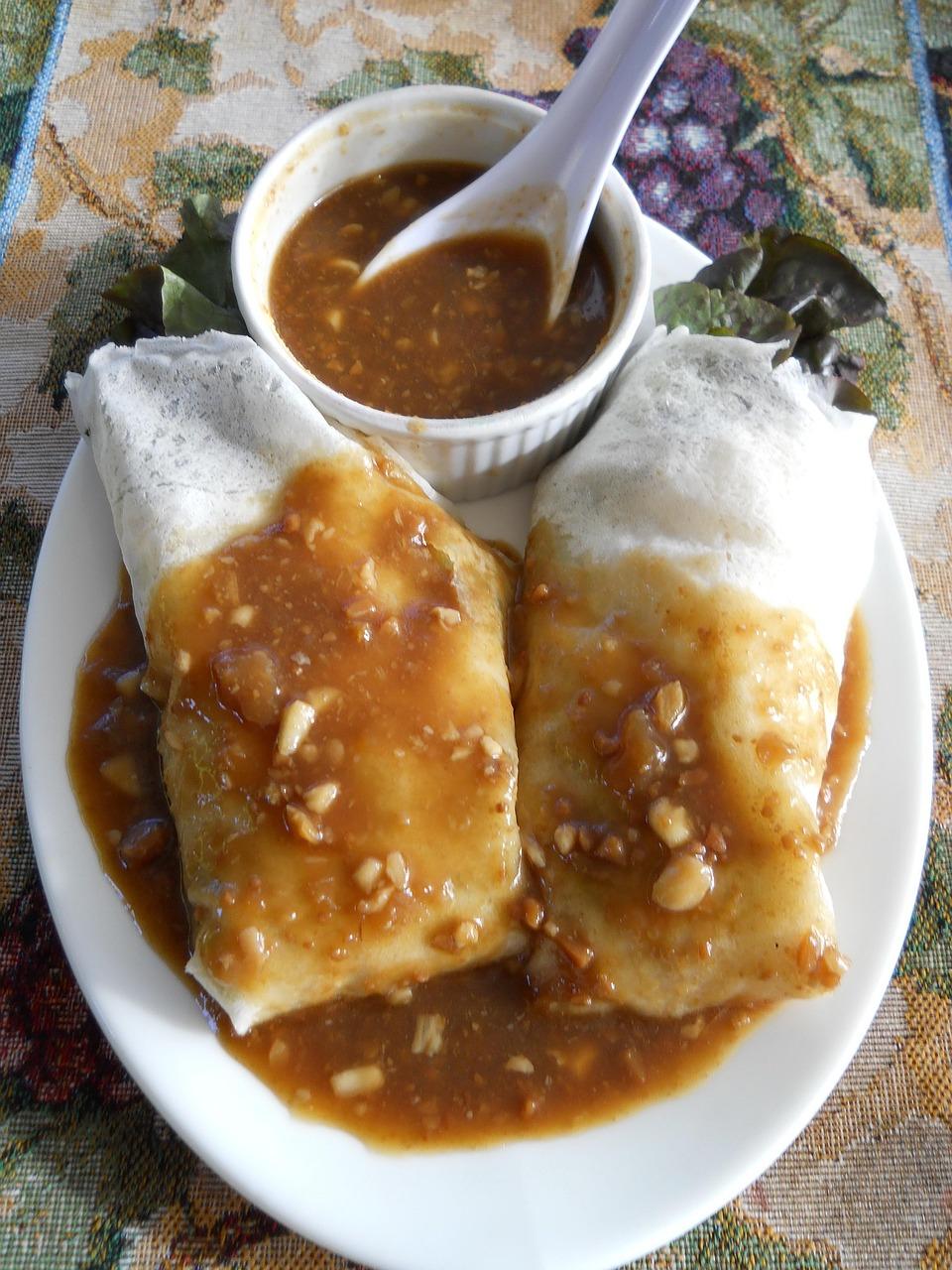
Lumpiang sariwa ('fresh lumpia') is the unfried cousin of the crisp Filipino spring roll, served at fiestas, family gatherings and as a substantial afternoon merienda around Manila and the Tagalog provinces. A thin, soft egg crepe is wrapped around a lettuce leaf and a warm sauté of sweet potato, jicama, carrot, green beans, cabbage and tofu, then covered in a glossy brown garlic sauce and a shower of crushed peanuts. In Negros the filling is heart of palm (ubod) instead. It is eaten with a knife and fork, or carefully by hand. Chef's tip: make the crepes thin enough that you can almost see light through them; thick ones turn rubbery and hide the filling.
Mint and onion chutney
Onions fried gently until soft and sweet, then blended with fresh mint, green chilli and lemon juice. It's a mellow, fresh-tasting chutney that is great with bhajias, samosas, kebabs and tikka, or spread in sandwiches.
 Indian
