
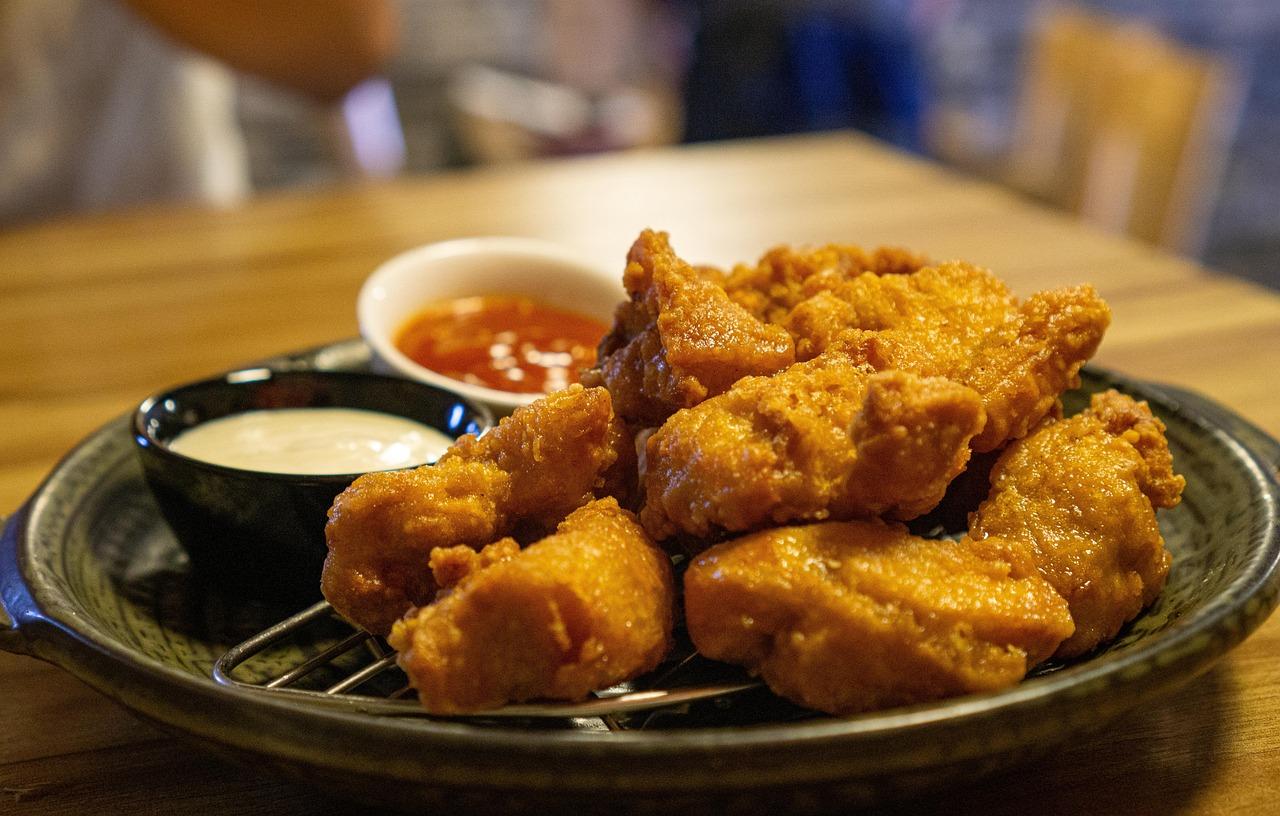
Chicken karaage
唐揚げ: crisp, juicy bite-size fried chicken in a light soy and ginger marinade

Nakatsu, a city in Oita prefecture on Kyushu, calls itself the capital of karaage and has dozens of takeaway shops selling it by weight. Across Japan, these bite-size nuggets fill school bento boxes, sit in the hot cabinet of every convenience store and arrive with a squeeze of lemon at izakaya bars. Boneless thigh soaks briefly in soy, ginger and garlic, then a dusting of potato starch fries into a thin, glassy crust. Frying twice keeps the meat juicy and the outside crisp for longer. Chef's tip: once you have tossed the chicken in starch, wait 5 minutes until the coating looks damp in patches, which is what gives that craggy, crunchy finish.
- Total time
- 40 min
- Difficulty
- easy
- Serves
- 4
Ingredients
For the marinade
- 2 tbsp soy sauce
- 1 tbsp sake
- 2 tsp fresh gingerfinely grated
- 1 clove garlicfinely grated
- 1 tsp toasted sesame oil
For frying
- 4 ¼ cups vegetable oil, for frying
To serve
- ½ lemoncut into wedges
- 3 ½ oz white cabbage (optional)very finely shredded
- 2 tbsp Japanese mayonnaise (optional)
Shop this recipe on Amazon
Fresh ingredients (5)
Links open Amazon in a new tab. As an Amazon Associate, WhatToEat.Today earns from qualifying purchases.
Method
0/7 doneStep 1: Cut 1 ⅓ lb boneless chicken thighs, skin on into 4 cm pieces, keeping the skin on each one.
Step 2: Mix 2 tbsp soy sauce, 1 tbsp sake, 2 tsp fresh ginger, 1 clove garlic and 1 tsp toasted sesame oil in a bowl, add the chicken and massage the marinade in. Leave for 15 minutes at room temperature, or up to 4 hours in the fridge. Sake contains alcohol; for an alcohol-free marinade, use 1 tbsp water instead.
15 minStep 3: Heat 4 ¼ cups vegetable oil, for frying in a deep, heavy pan to 325°F. Meanwhile drain the chicken, tip 2 ⅛ oz potato starch (katakuriko) or cornflour over it and toss until every piece is coated. Leave for 5 minutes, until the coating looks damp in places.
5 minStep 4: Fry a third of the chicken for 3½ minutes, until pale golden. Common mistake: crowding the pan. Too many pieces at once drop the oil temperature and the crust turns soft and oily. Lift onto a rack and fry the rest in two more batches.
11 minStep 5: Leave the chicken on the rack for 4 minutes. It keeps cooking gently in its own heat while the oil comes up to 375°F.
4 minStep 6: Fry everything again in batches for 1 minute, until deep golden and crackly. Check the largest piece: the centre should reach 165°F/165 °F and the juices run clear. Drain on the rack.
3 minStep 7: Pile onto plates with ½ lemon wedges, a heap of 3 ½ oz white cabbage and a dab of 2 tbsp Japanese mayonnaise for dipping. Eat hot.
Nutrition per serving
- Calories
- 480 kcal
- Protein
- 32 g
- Carbs
- 15 g
- Fat
- 32 g
- Fibre
- 1 g
Nutrition values are estimates.
KrazyBadal
Good to know
- How long does chicken karaage take?
- About 40 minutes in total: 25 minutes to prepare and 15 minutes to cook.
- How many people does it serve?
- 4 as written. Change the servings above the ingredients and every amount scales to match.
- What can I use instead of boneless chicken thighs, skin on?
- Chicken breast, same weight (cook a few minutes less so it stays juicy).
- What can I use instead of soy sauce?
- Tamari, same amount (gluten free).
Reviews
No reviews yet. Be the first to cook it.
Rate this recipe
Sign in to rate and review this recipe.
You might also like

Miso soup
Miso soup (味噌汁) is drunk every day in homes all over Japan, at breakfast as well as dinner, beside a bowl of rice. The base is dashi; this vegan version uses kombu and dried shiitake instead of bonito, which gives it a deep, rounded flavour. Silken tofu and wakame seaweed are the classic fillings. It takes ten minutes; just remember not to boil the miso. Chef's tip: add the miso at the very end and never let it boil. Boiling kills the miso's fresh, fermented aroma; Japanese cooks say the soup should only 'smile', with the surface barely trembling.


Yaki onigiriGrilled rice balls
Yaki onigiri (焼きおにぎり) are rice balls grilled until they form a crisp, toasty crust, then brushed with soy sauce glaze. They are eaten all over Japan, at izakaya, at barbecues and from the freezer section, as a snack or with miso soup. The inside stays soft and steamy while the outside crackles. Best eaten hot, straight from the pan. Chef's tip: let the shaped rice balls dry for 10 minutes before they go in the pan. A drier surface forms a better crust and won't stick, and the glaze goes on only at the end so it doesn't burn.
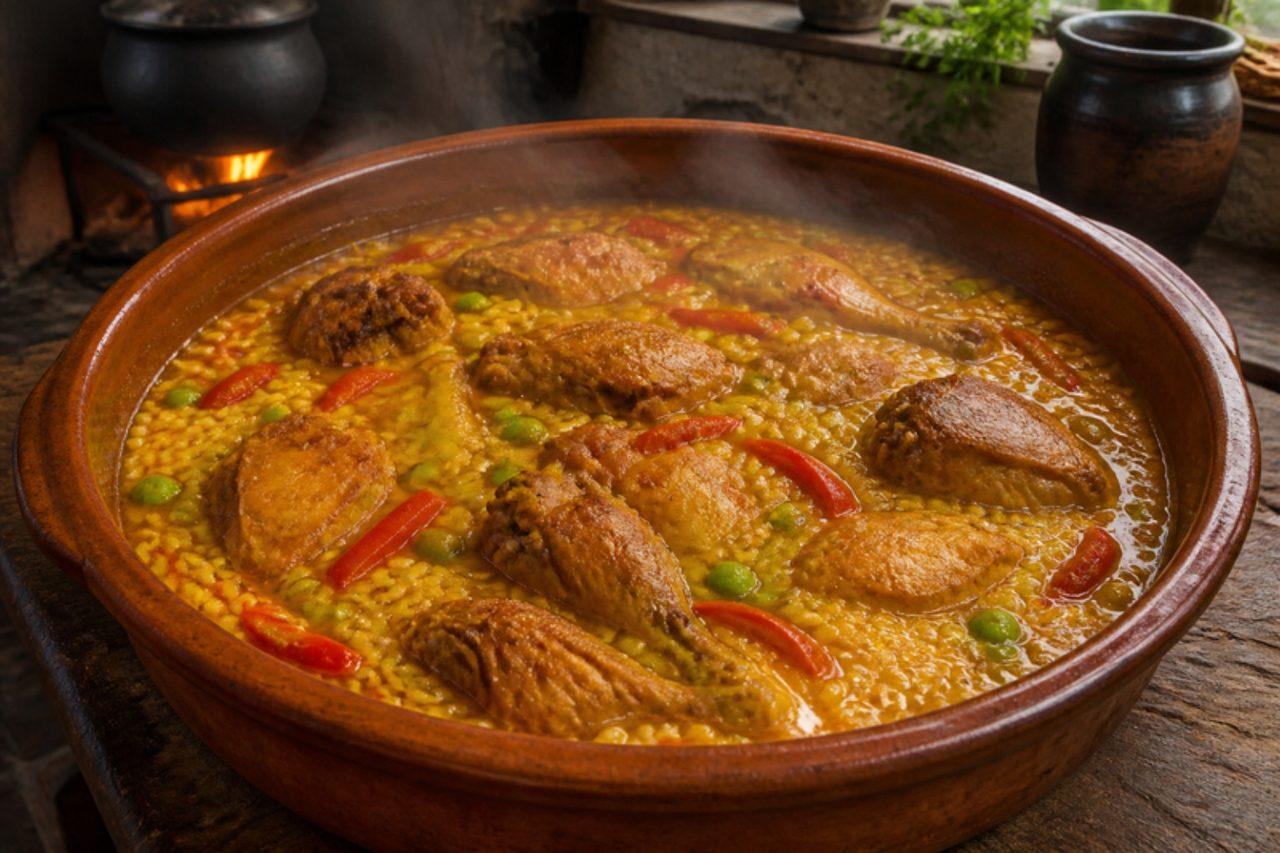
Arroz con pitu de caleyaSoupy rice with chicken
A pitu de caleya is a cockerel raised free in the lanes, or caleyas, of rural Asturias; its firm, flavourful meat needs long stewing, and families around Villaviciosa and Grado still cook it for feast days. The stew is often finished as a soupy rice, so the deep chicken juices go into every grain. Use the best free-range chicken you can find. The braise includes dry white wine; replace it with extra stock and a squeeze of lemon if you want it alcohol-free. Chef's tip: brown the chicken slowly and deeply; that colour is where the flavour of the whole pot comes from.
 Spanish