
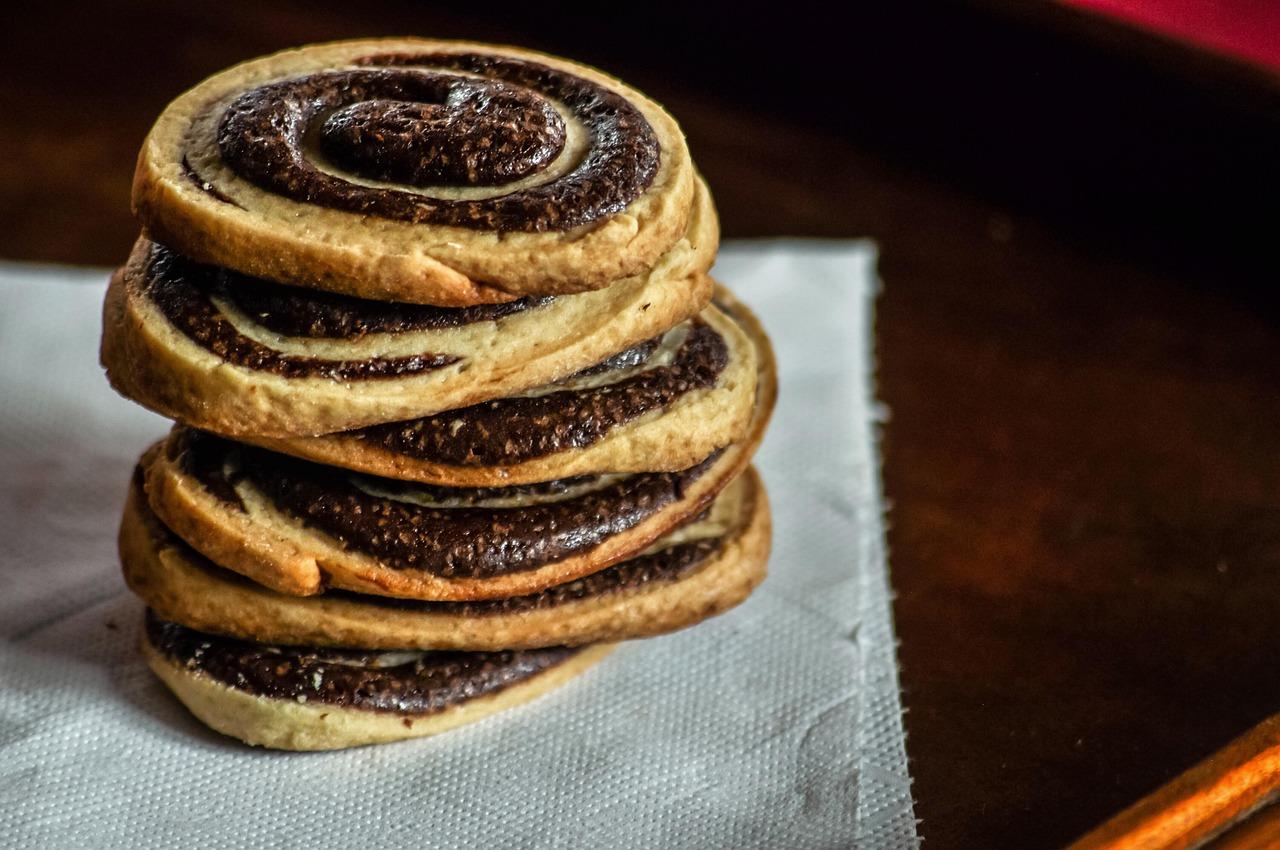
Coconut pinwheels
No-cook coconut fudge rolled into two-colour swirls


Coconut pinwheels are a pretty no-cook sweet: a soft dough of desiccated coconut, milk powder and icing sugar is split, half coloured, rolled together into a swirl and sliced. They're sweet, coconutty and great fun for children to help make. Makes about 60 slices, perfect for party platters.
- Total time
- 30 min
- Difficulty
- easy
- Serves
- 20
Ingredients
- 6 ½ oz icing sugar1½ cups
- 4 ½ oz milk powder1¼ cups
- 8 oz desiccated coconut2½ cups
- ¼ cup milkapproximately; as needed
- food colouringpink or red, a few drops
- 7 oz cooking chocolate (optional)melted, for the layered option
Shop this recipe on Amazon
What you'll need
Fresh ingredients (1)
Links open Amazon in a new tab. As an Amazon Associate, WhatToEat.Today earns from qualifying purchases.
Method
0/7 doneStep 1: Sieve 6 ½ oz icing sugar and 4 ½ oz milk powder into a bowl. Add 8 oz desiccated coconut and mix well.
Step 2: Add ¼ cup milk a little at a time and knead into a soft dough. Divide it into two equal parts.
Step 3: Leave one part white and knead a few drops of food colouring into the other.
Step 4: On cellophane or baking paper, roll out each portion into a rectangle 6 mm thick, both the same size.
Step 5: Place the coloured rectangle on top of the white one. Starting from one end, roll them up tightly into a log, using the paper to help. Wrap and refrigerate overnight.
480 minStep 6: Slice the log into 6 mm pinwheels. Keep in an airtight box in the fridge.
Step 7: Layered option: divide the dough into three, leave one white and colour the other two differently. Stack the three rectangles in a tray with the white one in the middle, refrigerate overnight, then coat with 7 oz cooking chocolate and cut into shapes when set.
Nutrition per serving
- Calories
- 150 kcal
- Protein
- 3 g
- Carbs
- 17 g
- Fat
- 8 g
- Fibre
- 2 g
Nutrition values are estimates.
KrazyBadal
Good to know
- How long does coconut pinwheels take?
- About 30 minutes in total.
- How many people does it serve?
- 20 as written. Change the servings above the ingredients and every amount scales to match.
- Is it vegetarian?
- Yes. It has no meat or fish.
- Is it gluten free?
- Yes, as written. Check the labels on stock, sauces and spice mixes, which sometimes contain gluten.
- Can I make it ahead?
- Yes. It keeps well, so you can cook it earlier in the day or the day before and reheat it.
- What can I use instead of icing sugar?
- Caster sugar, same amount.
- What can I use instead of milk?
- Oat, soy or almond milk, same amount (use unsweetened for savoury dishes).
Reviews
No reviews yet. Be the first to cook it.
Rate this recipe
Sign in to rate and review this recipe.
You might also like

Masala khakhra
Khakhra are thin chapaties roasted slowly on a griddle until they turn crisp, like a cracker. This masala version adds gram flour, fresh fenugreek, turmeric and chilli to the wheat dough. They are a light Gujarati breakfast or tea-time snack, and lovely with pickle, chutney or a smear of butter. You can also make them in a roti maker.


Sabudana khichdi
Sabudana khichdi is the dish that sees Maharashtra through every vrat (fast), from Navratri to Ekadashi, but it's so good that people eat it any day of the week. Soaked sago pearls are tossed in a pan with crushed roasted peanuts, cubes of potato, cumin and green chilli until each pearl turns glassy and separate, then finished with lemon and coriander. It's soft, chewy, nutty and gently hot. Fasting rules vary from family to family, so check yours; this version uses rock salt and no asafoetida, onion or garlic. Traditionally it's cooked in ghee; use ghee instead of oil if you aren't keeping it vegan. Chef's tip: soak the sago in just enough water to cover by the height of the pearls themselves, no more; too much water is the reason khichdi turns into one sticky lump.


Bagara baingan
Bagara baingan is a Hyderabadi wedding dish of small aubergines cooked whole in a dark, tangy gravy of roasted peanuts, sesame, dried coconut and tamarind. Unlike a Gujarati stuffed brinjal, the aubergines here are only quartered at the base and fried until silky, then left to soak up a thin-but-rich sauce that is finished with a tempering, the 'baghar' that gives the dish its name. It's sour, nutty and gently spiced, and is served with biryani, bagara rice or plain rice. Chef's tip: choose small, glossy purple aubergines that feel heavy for their size; soft, light ones are full of seeds and turn mushy before the gravy has a chance to cling.