
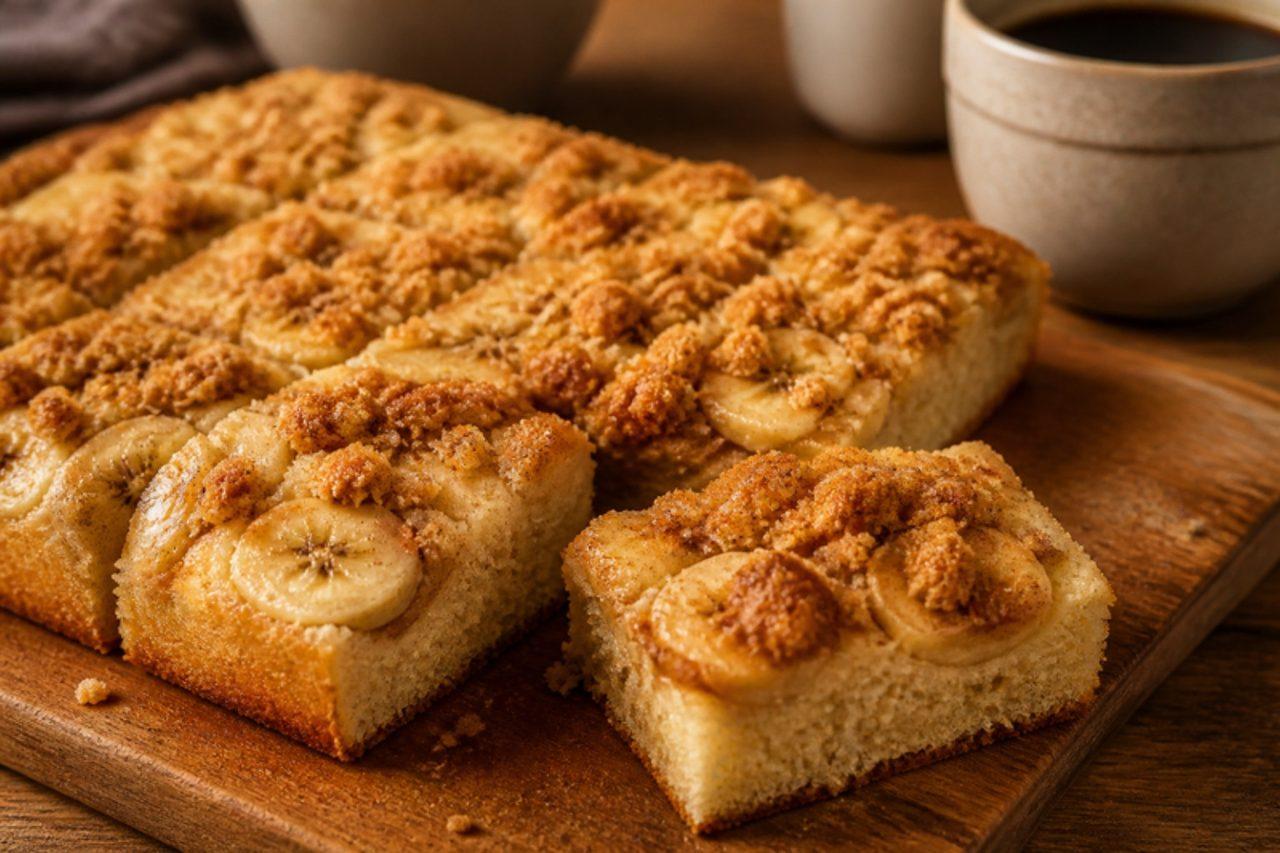
AI-generated image
Cuca
Cuca: German-Brazilian yeasted cake topped with banana and a buttery cinnamon crumble
 Brazilian
German settlers in Rio Grande do Sul and Santa Catarina brought the Streuselkuchen, and their descendants call it cuca: a soft, enriched yeast dough baked under a layer of fruit and a thick, buttery crumble called farofa. In Blumenau, Pomerode and the serra gaúcha it is sold in colonial bakeries and roadside cafés and served at the long afternoon café colonial with coffee, jams and cheeses. Banana with cinnamon is the classic, but grape, apple and guava versions are common. The usual misstep is letting the dough rise in a cold kitchen and then baking it anyway: it stays heavy and dense, so wait until it really has doubled. Chef's tip: rub the crumble together and chill it in the freezer while the dough rises, so it stays in big, crunchy clusters in the oven.
- Total time
- 120 min
- Difficulty
- medium
- Serves
- 12
Ingredients
For the dough
- ¾ cup whole milklukewarm
- 3 ½ oz sugar
- 1 ⅛ lb plain flour
- ½ tsp salt
- 2 eggs
- 2 ⅛ oz unsalted buttersoft, plus extra for the tin
For the topping
- 4 ripe bananassliced lengthways
- 1 tsp ground cinnamon
For the crumble
- 5 ½ oz plain flour
- 4 oz sugar
- 3 ½ oz cold unsalted butterdiced
- 1 tsp ground cinnamon
Shop this recipe on Amazon
What you'll need
Spices & pantry
Fresh ingredients (5)
Links open Amazon in a new tab. As an Amazon Associate, WhatToEat.Today earns from qualifying purchases.
Method
0/8 doneStep 1: Stir ¼ oz fast-action dried yeast and a spoonful of the 3 ½ oz sugar into ¾ cup whole milk and leave for 5 minutes, until foamy.
5 minStep 2: Mix 1 ⅛ lb plain flour, ½ tsp salt and the rest of the sugar in a large bowl. Add the milk mixture, 2 eggs and 2 ⅛ oz unsalted butter and knead for 8–10 minutes, until the dough is soft, smooth and elastic; it will be slightly sticky.
10 minStep 3: Cover and leave in a warm place for about 1 hour, until doubled in size.
Step 4: Rub together 5 ½ oz plain flour, 4 oz sugar, 3 ½ oz cold unsalted butter and 1 tsp ground cinnamon with your fingertips until it forms clumpy crumbs. Chill in the freezer.
Step 5: Butter a 25 x 35 cm baking tin. Press the risen dough evenly into it, cover and leave for 20 minutes, until puffy. Heat the oven to 350°F (325°F fan).
20 minStep 6: Lay 4 ripe bananas over the dough, sprinkle with 1 tsp ground cinnamon and scatter the cold crumble thickly over the top.
Step 7: Bake for 35–40 minutes, until the crumble is golden and a skewer pushed into the dough comes out clean.
38 minStep 8: Cool in the tin for 20 minutes, then cut into squares. Serve warm or at room temperature with coffee.
Nutrition per serving
- Calories
- 400 kcal
- Protein
- 7 g
- Carbs
- 64 g
- Fat
- 13 g
- Fibre
- 2 g
Nutrition values are estimates.
KrazyBadal
Good to know
- How long does cuca take?
- About 120 minutes in total: 80 minutes to prepare and 40 minutes to cook.
- How many people does it serve?
- 12 as written. Change the servings above the ingredients and every amount scales to match.
- Is it vegetarian?
- Yes. It has no meat or fish.
- What can I use instead of whole milk?
- Semi-skimmed milk with 1 tbsp cream per 240ml (1 cup).
- What can I use instead of fast-action dried yeast?
- Fresh yeast, three times the weight.
Reviews
No reviews yet. Be the first to cook it.
Rate this recipe
Sign in to rate and review this recipe.
You might also like
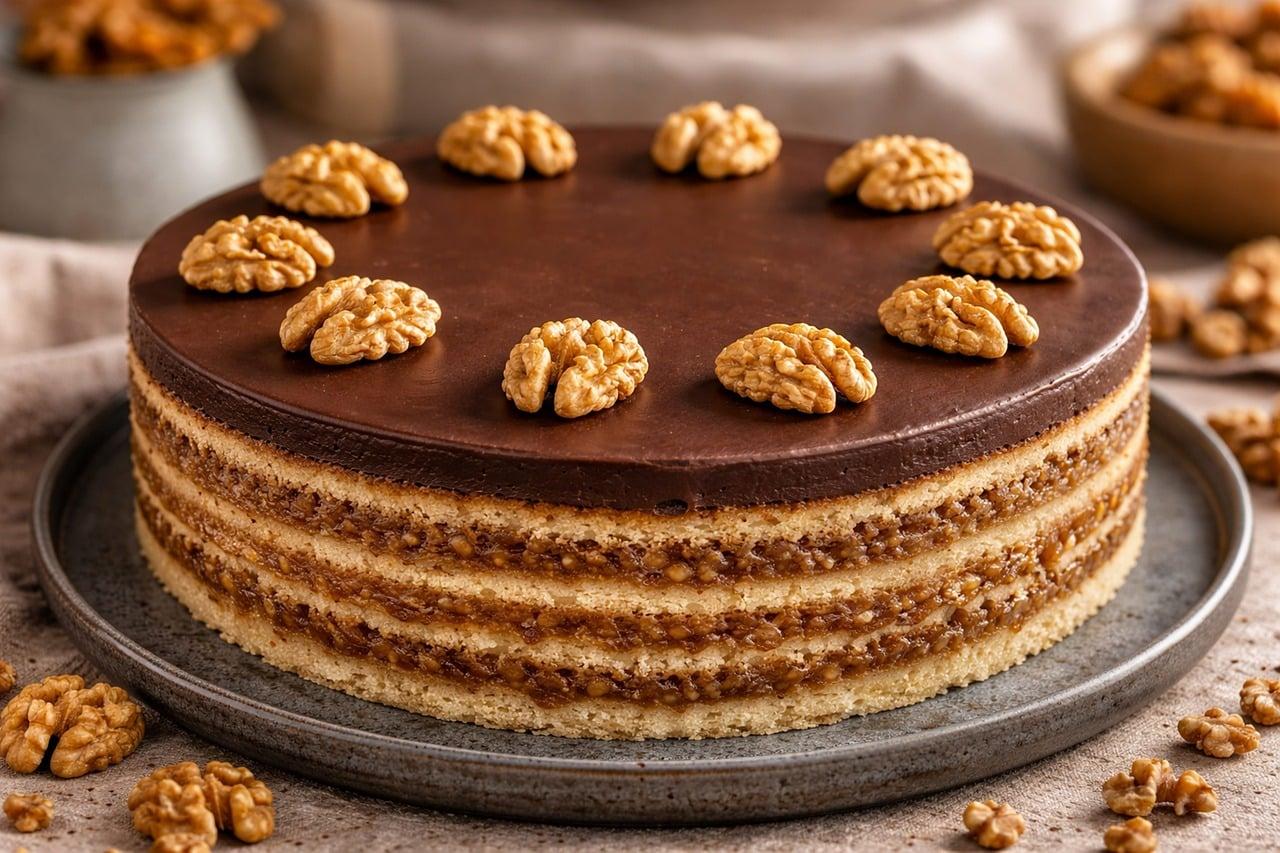
Reform torta
Belgrade pastry shops have sold reform torta since the early twentieth century, and it is still the cake Serbian families bring out for birthdays, weddings and the slava. Three thin layers of walnut meringue, crisp at the edge and chewy inside, are stacked with a dense chocolate butter cream made with egg yolks cooked over steam until thick. It is very rich, so cut thin slices and serve with strong coffee. The usual slip is beating the butter into a chocolate mixture that is still warm, which melts it and splits the cream; let it cool to room temperature first. Chef's tip: assemble the cake the day before; overnight in the fridge the meringue softens a little and the cake slices cleanly with a hot knife.
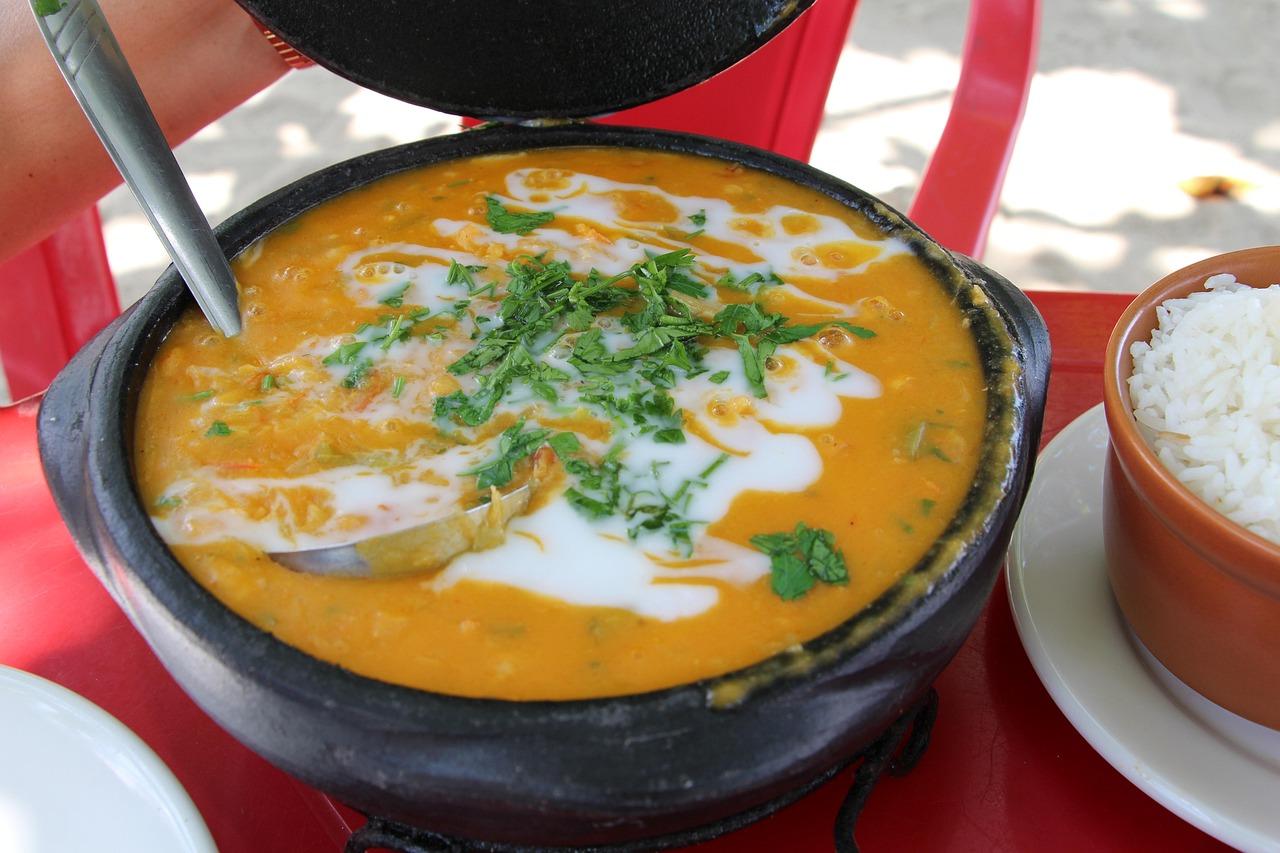
Bobó de camarão
Velvety, coral-coloured and rich with coconut, bobó de camarão is what Bahian families put on the table when there is something to celebrate, and beach restaurants from Praia do Forte to Itacaré serve it in clay pots with white rice and farofa. Cassava is boiled until it falls apart, blended with coconut milk into a smooth cream, then folded into prawns cooked with onion, tomato, peppers and a slick of dendê oil. The result is somewhere between a stew and a thick sauce, sweet from the prawns and gently earthy from the cassava. A frequent mistake is boiling the prawns in the purée for too long, which leaves them tough and curled; they go in at the very end. Cassava must always be cooked right through, never eaten raw: cut out the woody core and boil it until a knife meets no resistance. Chef's tip: blend the cassava while it is still hot, with some of its cooking water; cold cassava turns gluey in the blender.

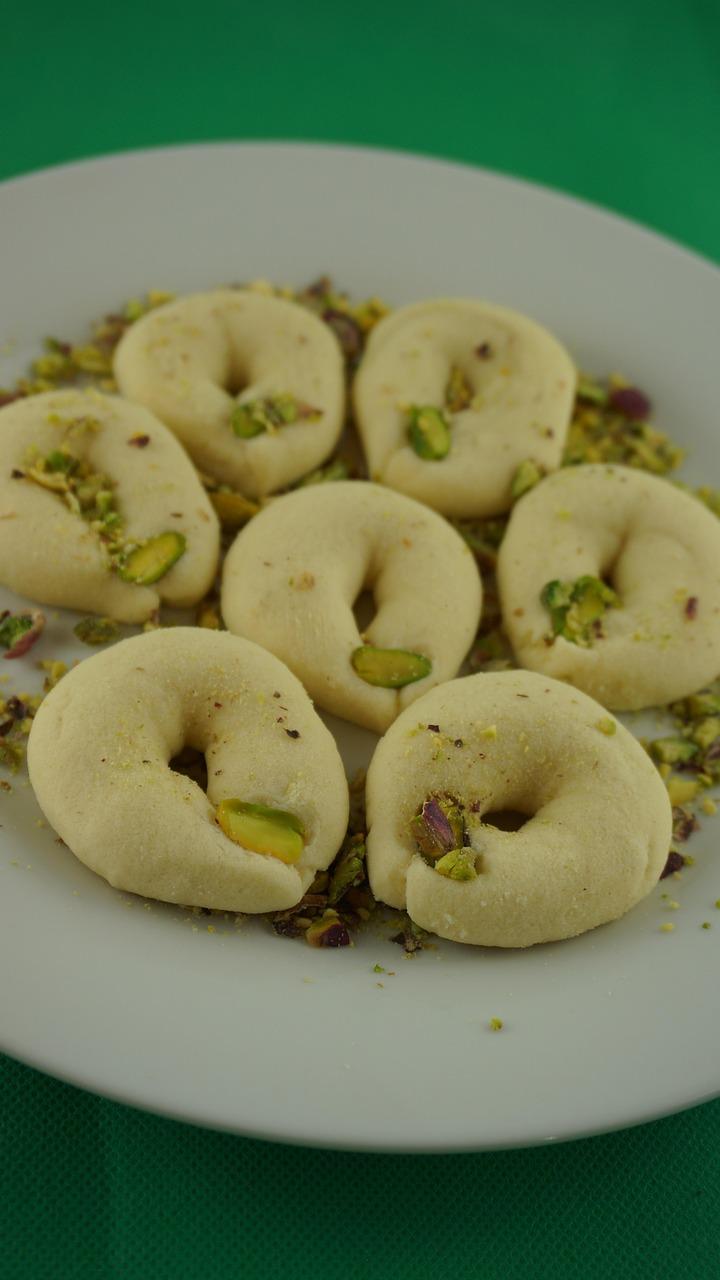
Ma'amoul
Ma'amoul are delicate shortbread-like pastries made for Eid and Easter across the Middle East. A soft, rose-scented butter dough is wrapped around a filling of dates, walnuts, almonds and pistachios cooked with cinnamon, marked with a fork, baked pale and dusted with icing sugar. Makes 35; they keep well in a tin.