
AI-generated image
Cuscuz paulista
Cornmeal with palm heart and sardines
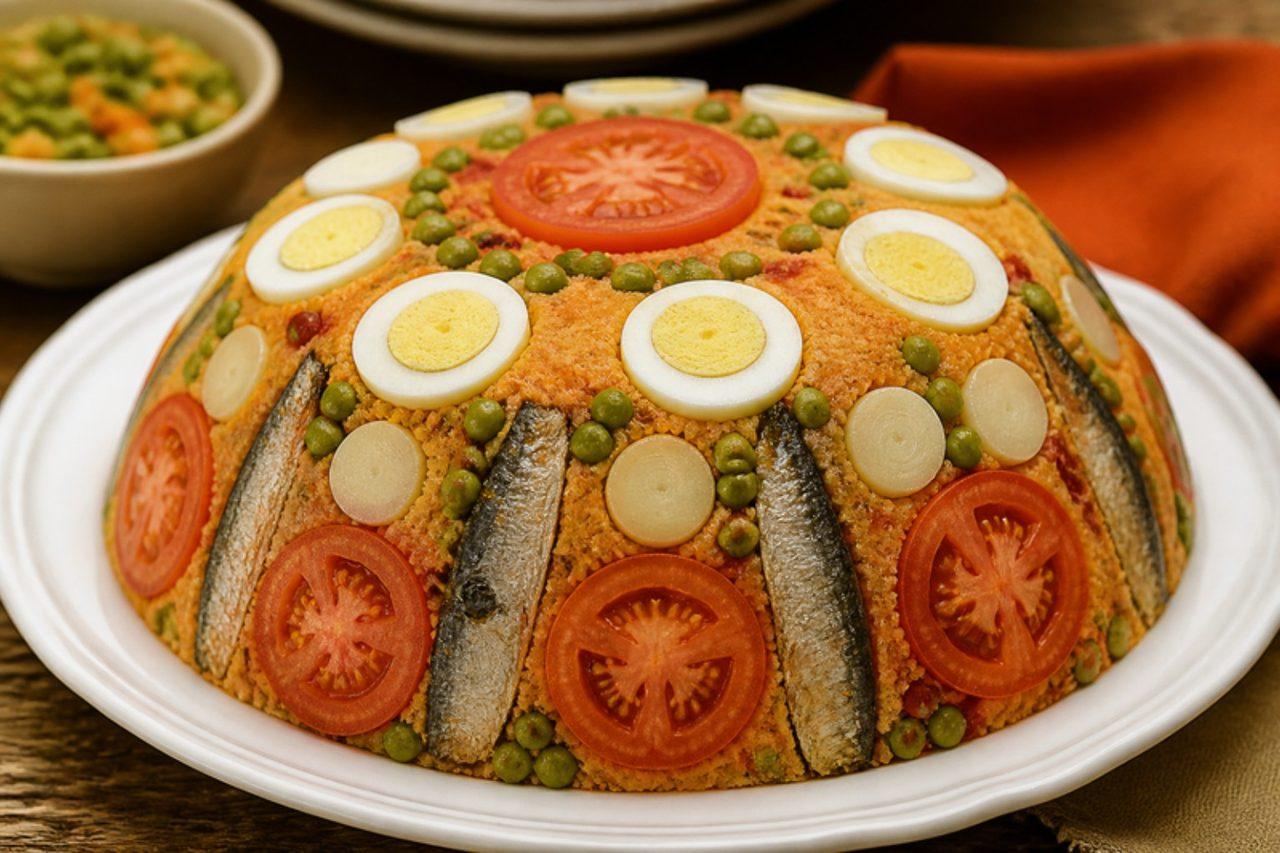
Cuscuz paulista: moulded cornmeal with tomato, peas, palm heart, eggs and sardines

Nothing like North African couscous, cuscuz paulista is a moulded cake of corn flakes cooked in a rich tomato sauce, packed into a ring mould decorated with sardines, sliced egg, tomato, palm hearts and peas, then turned out so the pattern shows. São Paulo bakeries and family lunches serve it cold or at room temperature, in slices, for birthdays, Easter and Sunday tables. It is moist, savoury and tangy, with bursts of olive and fish. It needs at least an hour to set in the fridge, so it is perfect to make the day before. The thing that most often goes wrong is a mixture that is too dry, which crumbles when turned out; it should look like soft, wet polenta before it goes into the mould. For a vegetarian version, skip the sardines and add extra palm hearts. Chef's tip: oil the mould generously and press the decoration against the sides firmly, so it sticks to the cuscuz and not the tin.
- Total time
- 55 min
- Difficulty
- medium
- Serves
- 8
Ingredients
For the decoration
- 3 eggsboiled for 10 minutes, peeled and sliced
- 1 tomatothinly sliced
- 9 oz sardines in olive oil2 tins, drained, oil kept
- 5 ½ oz peasfrozen and thawed, or tinned
- 7 oz palm heartsdrained and sliced into rounds
For the cuscuz
- ¼ cup olive oilplus extra for the mould
- 1 onionfinely chopped
- 3 cloves garliccrushed
- 3 tomatoeschopped
- 1 ¼ cups tomato passata
- 2 ⅞ oz green olivespitted and sliced
- 2 ½ cups vegetable stockhot
- 1 tsp salt
- 10 ½ oz flaked cornmeal (flocão)or coarse polenta
- 4 tbsp fresh parsleychopped
Shop this recipe on Amazon
Spices & pantry
Links open Amazon in a new tab. As an Amazon Associate, WhatToEat.Today earns from qualifying purchases.
Method
0/8 doneStep 1: Brush a 24 cm ring mould with olive oil. Press slices of 1 ½ eggs, 1 tomato, a few 2 ⅝ oz sardines in olive oil, some 1 ⅝ oz peas and 2 ⅛ oz palm hearts around the base and sides in a pattern.
Step 3: Add 3 tomatoes and cook for 5 minutes, then stir in 1 ¼ cups tomato passata and 2 ⅞ oz green olives and simmer for 5 minutes until slightly thickened.
10 minStep 4: Flake the rest of 6 oz sardines in olive oil into the sauce with their oil, add the rest of 3 ⅔ oz peas and 5 oz palm hearts, then pour in 2 ½ cups vegetable stock and add 1 tsp salt.
2 minStep 5: Lower the heat and sprinkle in 10 ½ oz flaked cornmeal (flocão) a little at a time, stirring all the time, until it forms a thick, wet mixture that comes away from the sides of the pan. Cook for 3 minutes more.
6 minStep 6: Stir in 4 tbsp fresh parsley and the rest of 1 ½ eggs, roughly chopped.
Step 7: Spoon the mixture into the mould and press it down firmly with the back of a spoon. Cool, then chill for at least 1 hour until set.
60 minStep 8: Run a knife round the edge, turn out onto a plate and serve in slices, cold or at room temperature.
Nutrition per serving
- Calories
- 330 kcal
- Protein
- 13 g
- Carbs
- 36 g
- Fat
- 15 g
- Fibre
- 5 g
Nutrition values are estimates.
KrazyBadal
Good to know
- How long does cuscuz paulista take?
- About 55 minutes in total: 30 minutes to prepare and 25 minutes to cook.
- How many people does it serve?
- 8 as written. Change the servings above the ingredients and every amount scales to match.
- Can I make it ahead?
- Yes. It keeps well, so you can cook it earlier in the day or the day before and reheat it.
- What can I use instead of eggs?
- 1 tbsp ground flaxseed + 3 tbsp water per egg, left for 5 minutes (baking only; vegan).
- What can I use instead of tomato?
- Tinned chopped tomatoes: a 400g tin for about 6 tomatoes (in cooked dishes, not salads).
Reviews
No reviews yet. Be the first to cook it.
Rate this recipe
Sign in to rate and review this recipe.
You might also like

PingadoHot milk with coffee
Order 'um pingado' at the balcão of any São Paulo padaria at 7 in the morning and the attendant pours hot milk into a ridged glass tumbler (the copo americano) and 'drips' in a splash of strong coffee, hence the name. It is milkier and gentler than a média (half coffee, half milk), creamy and lightly sweet, usually drunk standing up with a pão na chapa, a toasted buttered roll. At home you need strong filter coffee and milk heated until steaming. Scalding the milk is the frequent mistake, as boiled milk tastes flat and forms a skin. Chef's tip: froth the hot milk for a few seconds with a whisk or by pouring it back and forth between two jugs before adding the coffee, as padaria machines do.

Hyderabadi chicken dum biryani
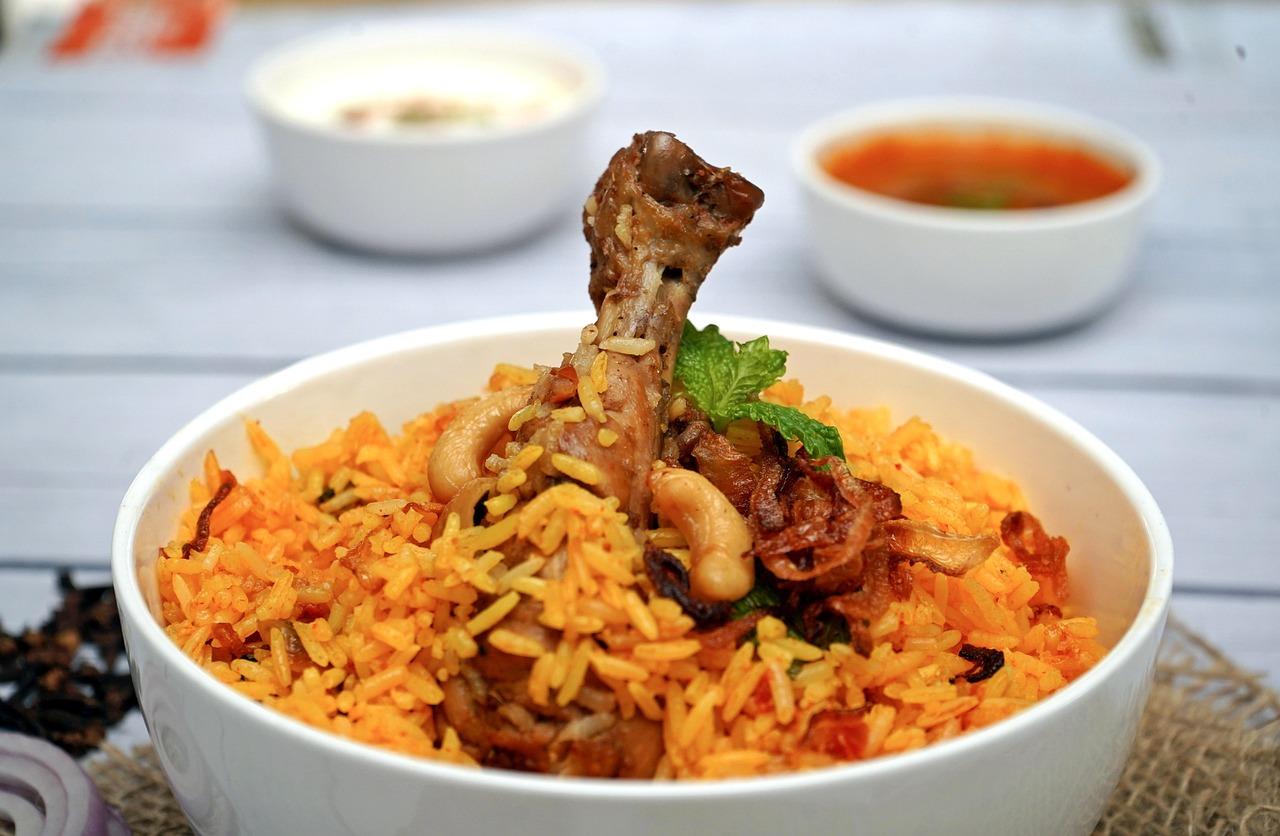
Hyderabad's biryani grew up in the kitchens of the Nizams, and the kacchi style is its proudest form: the chicken goes into the pot raw, in a thick yogurt, mint and fried-onion marinade, and cooks only in the steam trapped under part-cooked basmati. In the old city it is wedding and Eid food, ordered in huge copper deghs, and at home it's the Sunday showpiece, served with mirchi ka salan and a cooling raita. Because the meat cooks without being stirred, small bone-in thigh and drumstick pieces work best. Chef's tip: marinate overnight in the fridge — the yogurt tenderises the chicken and the flavours go right to the bone.
 Indian

Khao kluk kapiShrimp paste rice
Everything on this central Thai plate is arranged in little heaps around a mound of rice tossed with garlic and fermented shrimp paste: sticky caramelised pork (moo wan), threads of sour green mango, shallots, chillies, sliced long beans, crisp dried shrimp and ribbons of thin omelette. You mix a bit of each into every spoonful, so salty, sweet, sour and hot arrive together. It's a favourite at Bangkok's curry-and-rice shops and a clever way to use up yesterday's rice at home; lime wedges and cucumber cool it down. Chef's tip: use day-old jasmine rice straight from the fridge, because freshly cooked rice clumps and smears the shrimp paste instead of coating each grain.
 Thai