
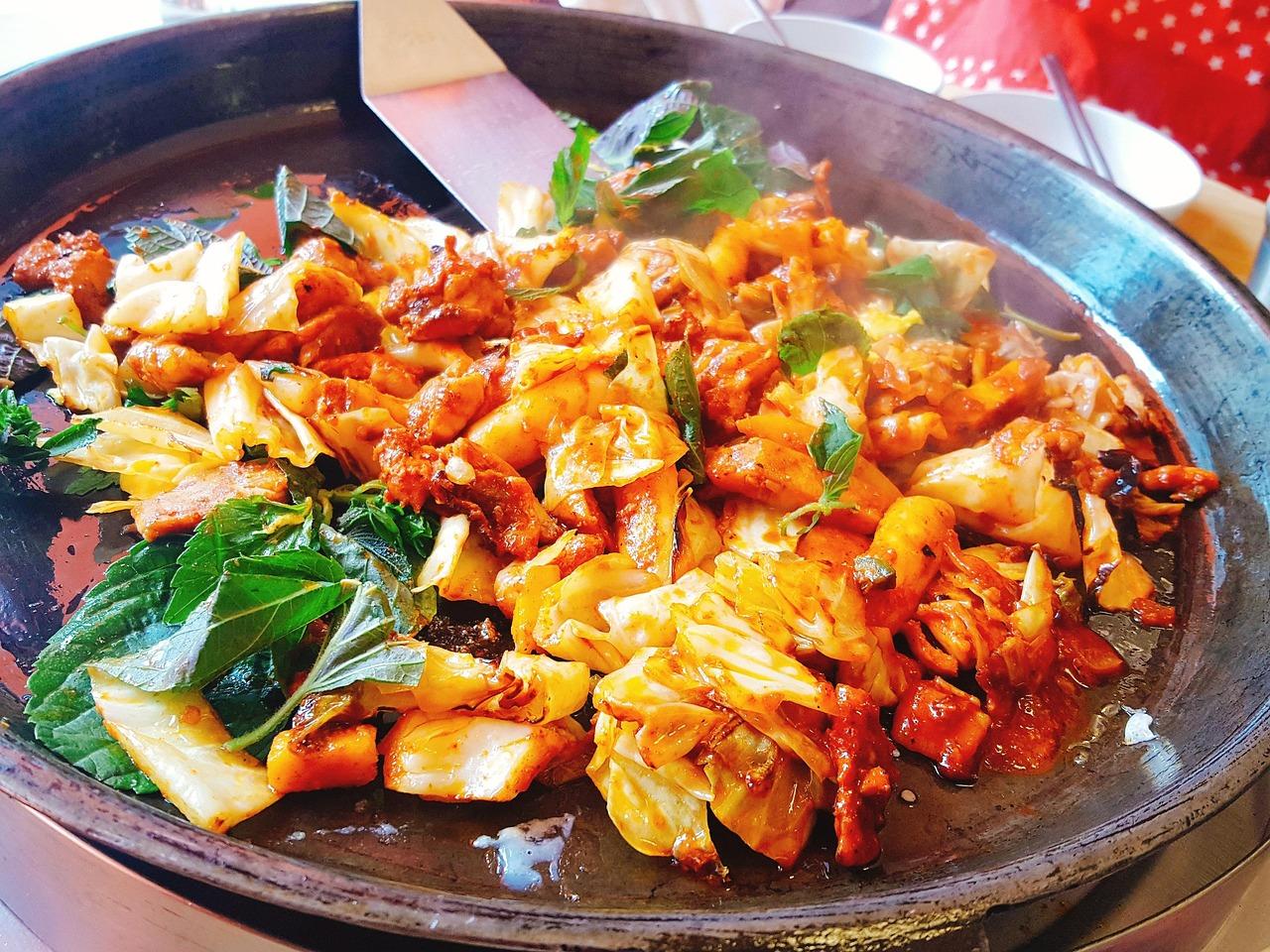
Dak galbi
Spicy stir-fried chicken
닭갈비: Chuncheon's spicy stir-fried chicken with cabbage, sweet potato and rice cakes


Chuncheon, a lakeside city in Gangwon province, is so proud of dak galbi that it has a whole lane of restaurants and a yearly festival for it. There, a waiter stir-fries the marinated chicken, cabbage, sweet potato and rice cakes on a huge round iron pan in the middle of your table. When the pan is nearly empty, rice is fried in the leftover sauce to finish the meal. This version is made in a large frying pan or wok at home. Chef's tip: a teaspoon of curry powder in the marinade is a Chuncheon trick; you won't taste curry, but the sauce tastes deeper.
- Total time
- 40 min
- Difficulty
- easy
- Serves
- 4
Ingredients
For the marinade
- 2 tbsp soy sauce
- 1 ½ tbsp sugar
- 4 cloves garliccrushed
- 1 tsp gingergrated
- 1 tsp mild curry powder
- ¼ tsp black pepper
For the pan
- 1 ½ lb boneless, skinless chicken thighscut into 4 cm pieces
- 2 tbsp vegetable oil
- 1 sweet potatoabout 200 g, halved and sliced 5 mm thick
- 10 ½ oz white cabbagecut into 4 cm pieces
- 1 onionsliced
- 7 oz Korean rice cakes (garae-tteok)sliced; soaked if hard
- ½ cup water
- 3 spring onionscut into 4 cm lengths
- 8 perilla leaves (optional)sliced
For the fried-rice finish (optional)
- 10 ½ oz cooked rice (optional)
- 2 tbsp roasted seaweed flakes (optional)
- 1 tsp toasted sesame oil (optional)
Shop this recipe on Amazon
What you'll need
Spices & pantry
Fresh ingredients (6)
Links open Amazon in a new tab. As an Amazon Associate, WhatToEat.Today earns from qualifying purchases.
Method
0/7 doneStep 1: Mix 3 tbsp gochujang (Korean chilli paste), 2 tbsp Korean chilli flakes (gochugaru), 2 tbsp soy sauce, 1 ½ tbsp sugar, 4 cloves garlic, 1 tsp ginger, 1 tsp mild curry powder and ¼ tsp black pepper in a bowl. Add 1 ½ lb boneless, skinless chicken thighs, stir to coat, and leave for 10 minutes while you cut the vegetables.
10 minStep 2: Heat 2 tbsp vegetable oil in a very large frying pan or wok over a medium-high heat. Spread 1 sweet potato over the base and cook for 3 minutes, turning once. Common mistake: cutting the sweet potato thick or adding it with the cabbage. It needs a head start and thin slices, or it is still hard when the chicken is done.
3 minStep 3: Add 10 ½ oz white cabbage and 1 onion, then spread the chicken and all its marinade on top.
1 minStep 4: Stir-fry for 8 minutes, scraping the base, until the cabbage starts to wilt and the chicken turns opaque. Add a splash of ½ cup water whenever the sauce starts to catch.
8 minStep 5: Add 7 oz Korean rice cakes (garae-tteok) and the rest of the water, and keep stir-frying for 7 minutes, until the rice cakes are soft and chewy, the sweet potato is tender and the chicken reaches 165°F/165 °F in the thickest piece with clear juices.
7 minStep 6: Toss in 3 spring onions and 8 perilla leaves for the last minute and serve straight from the pan.
1 minStep 7: To finish the Chuncheon way, leave a few spoons of sauce and some cabbage in the pan. Add 10 ½ oz cooked rice, 2 tbsp roasted seaweed flakes and 1 tsp toasted sesame oil, chop everything together with a spatula and press it flat over a medium heat for 3 minutes, until crisp on the bottom.
3 min
Nutrition per serving
- Calories
- 480 kcal
- Protein
- 38 g
- Carbs
- 50 g
- Fat
- 14 g
- Fibre
- 6 g
Nutrition values are estimates.
KrazyBadal
Good to know
- How long does dak galbi take?
- About 40 minutes in total: 15 minutes to prepare and 25 minutes to cook.
- How many people does it serve?
- 4 as written. Change the servings above the ingredients and every amount scales to match.
- Is it very spicy?
- It has some heat. Use less chilli for a milder version, or more if you like it hot.
- What can I use instead of soy sauce?
- Tamari, same amount (gluten free).
- What can I use instead of sugar?
- Caster sugar, same amount.
Reviews
No reviews yet. Be the first to cook it.
Rate this recipe
Sign in to rate and review this recipe.
You might also like
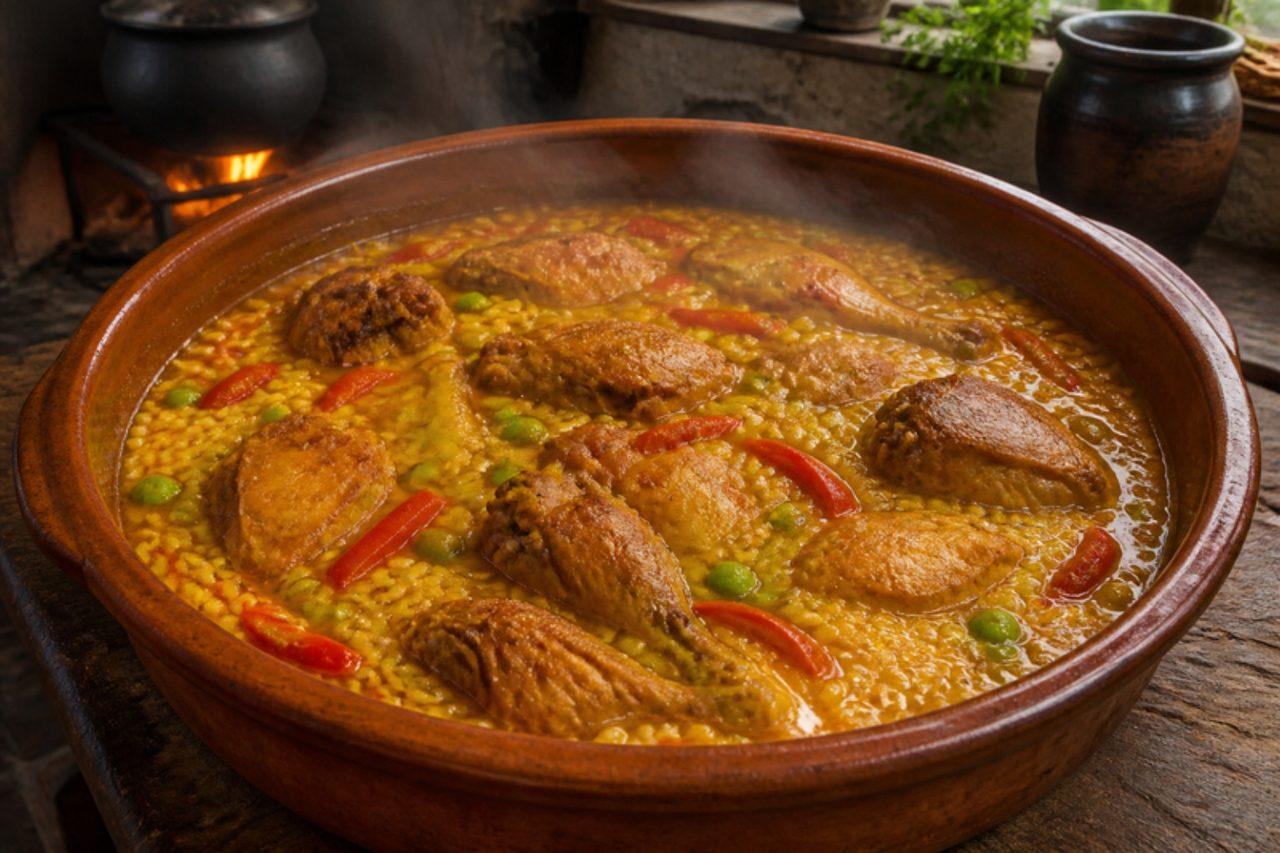
Arroz con pitu de caleyaSoupy rice with chicken
A pitu de caleya is a cockerel raised free in the lanes, or caleyas, of rural Asturias; its firm, flavourful meat needs long stewing, and families around Villaviciosa and Grado still cook it for feast days. The stew is often finished as a soupy rice, so the deep chicken juices go into every grain. Use the best free-range chicken you can find. The braise includes dry white wine; replace it with extra stock and a squeeze of lemon if you want it alcohol-free. Chef's tip: brown the chicken slowly and deeply; that colour is where the flavour of the whole pot comes from.
 Spanish
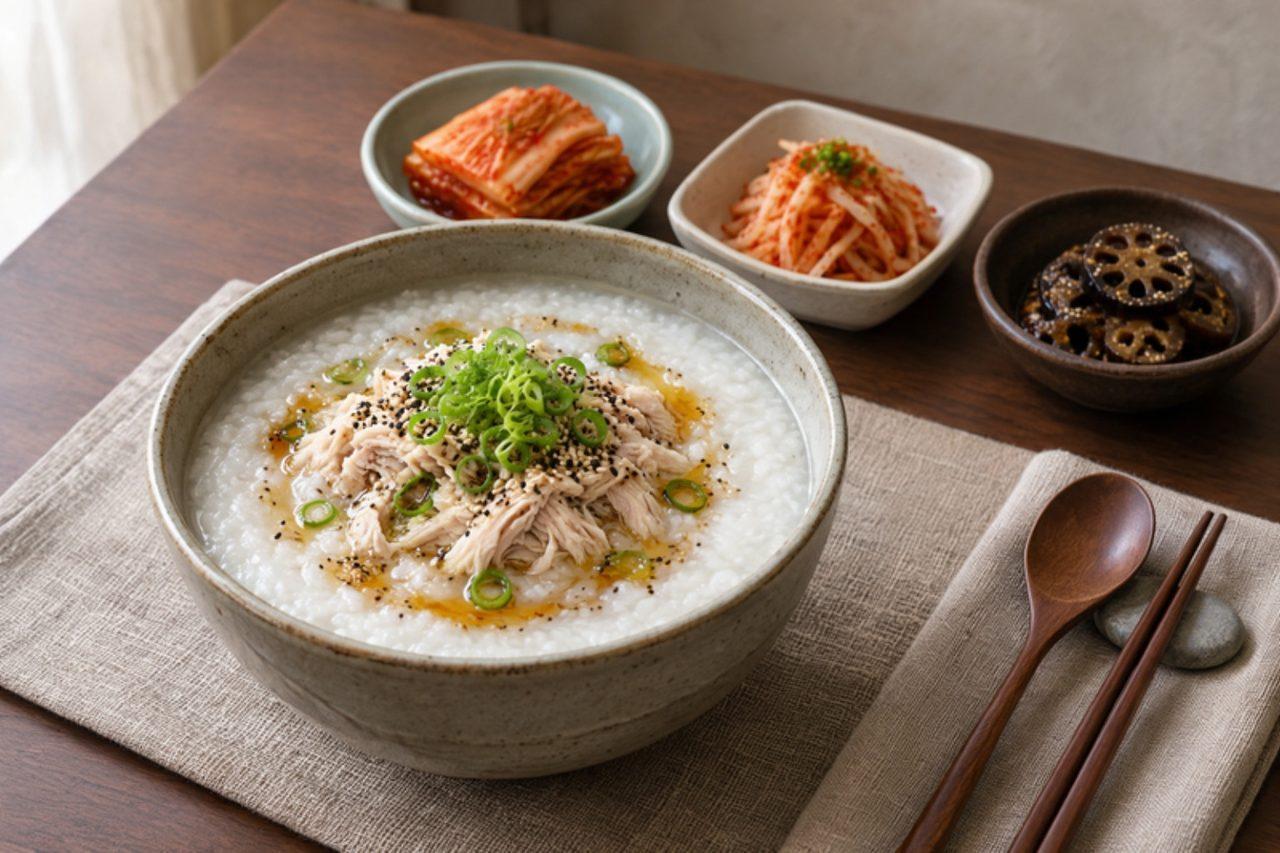
DakjukChicken and rice porridge
All over Korea, dakjuk is the bowl a mother makes on a cold morning or when someone is under the weather: chicken simmered with garlic and ginger, the meat pulled into shreds, and soaked rice cooked down in the broth until it turns into a soft, savoury porridge finished with sesame oil. It is eaten for breakfast or as a gentle lunch, with a little kimchi on the side. The usual mistake is boiling the chicken hard, which clouds the broth and toughens the meat; keep it at a lazy simmer. Chef's tip: fry the soaked rice in sesame oil for two minutes before the broth goes in, so the grains toast lightly and the porridge tastes nutty rather than flat.

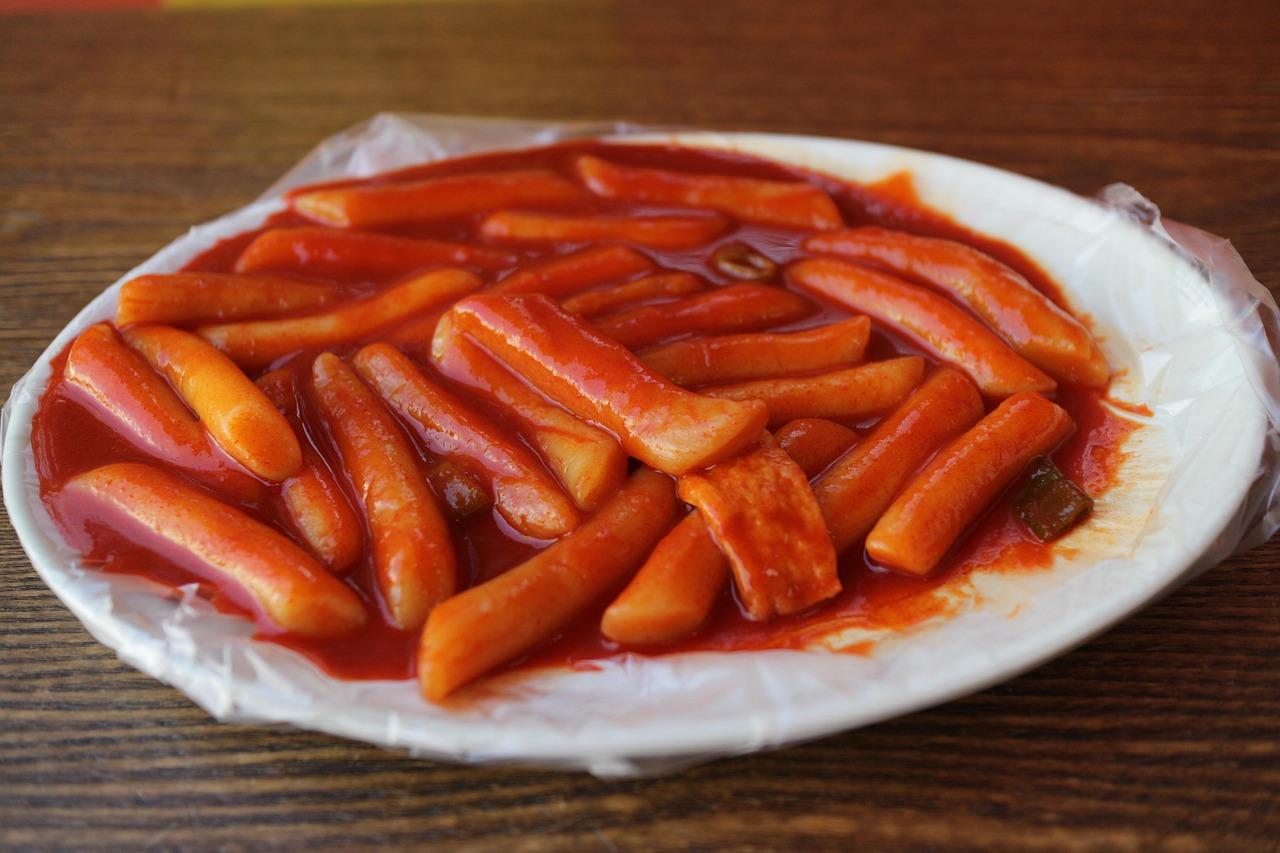
TteokbokkiRice cakes in spicy sauce
Tteokbokki (떡볶이) is Korea's best-loved street snack: chewy cylinders of rice cake simmered in a thick, glossy, sweet and spicy red sauce. It became a classic in Seoul, where it is sold from street stalls and snack bars in every neighbourhood. Street versions use anchovy stock and fish cakes; this vegan version uses a quick kelp and shiitake stock with cabbage and spring onions, and has all the same punch. Eat it hot, while the rice cakes are soft and stretchy. Chef's tip: keep stirring and scrape the bottom; the rice cakes release starch that thickens the sauce but also catches. The sauce is right when it clings to the spoon in a glossy coat.

