
AI-generated image
Dhodha
Milk, wheat and ghee fudge
ڈھوڈا (dhodha): Khushab's nutty milk, wheat and ghee fudge sold in thick slabs

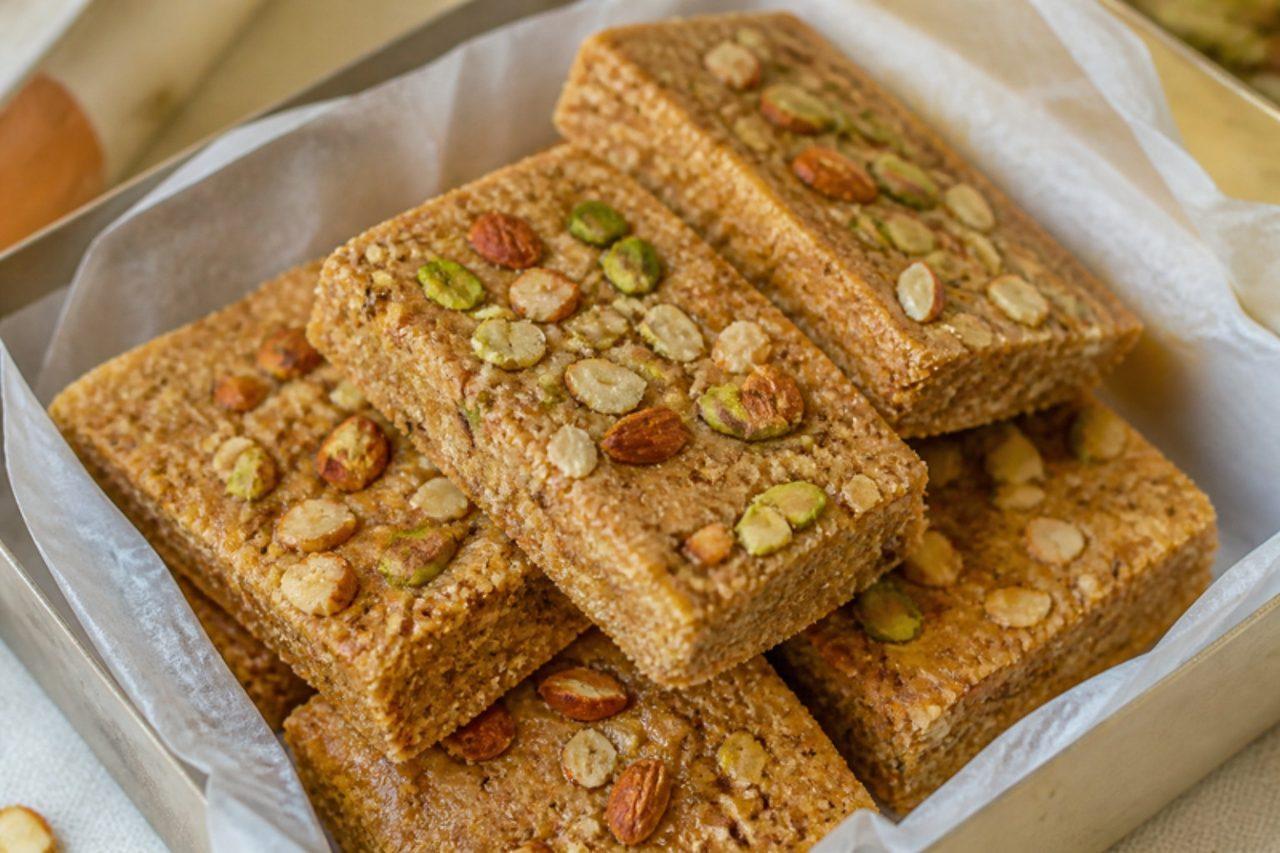
Every bus that stops in Khushab, on the road between Sargodha and the Salt Range, is met by boys carrying boxes of dhodha, the town's famous sweet and a standard gift for anyone visiting family in Punjab. It is lighter in colour and softer than habshi halwa, a moist, crumbly fudge of slowly reduced milk, a little wheat flour, ghee and sugar, packed with almonds, pistachios and walnuts and pressed into slabs about two fingers thick. The flavour is milky and nutty with a gentle caramel note, and it is sliced and eaten with tea, especially in the cold months. Where people slip up is under-reducing the milk, so the dhodha never firms and stays soft like a halwa. Chef's tip: keep stirring after you add the sugar until the mass leaves the sides of the pan cleanly and holds a ridge when you draw the spoon through it, then press it into the tin while still warm.
- Total time
- 180 min
- Difficulty
- hard
- Serves
- 16
Ingredients
For the dhodha
- 8 ¼ cups full-fat milk
- 2 tbsp plain yogurt
- 5 ½ oz ghee
- 9 oz sugar
- 1 tsp ground cardamom
Nuts
- 2 ⅞ oz almondschopped
- 1 ¾ oz pistachioschopped, plus extra for the top
- 1 ¾ oz walnutschopped
Shop this recipe on Amazon
What you'll need
Spices & pantry
Fresh ingredients (2)
Links open Amazon in a new tab. As an Amazon Associate, WhatToEat.Today earns from qualifying purchases.
Method
0/9 doneStep 1: Bring 8 ¼ cups full-fat milk to the boil in a wide, heavy karahi over a medium heat, stirring often.
20 minStep 2: Stir in 2 tbsp plain yogurt; the milk will curdle very slightly into soft grains.
2 minStep 3: Simmer briskly over a medium-low heat, stirring and scraping the base and sides every few minutes, for about 1 1/4 hours until the milk has reduced to a thick, grainy paste, a little looser than khoya.
80 minStep 4: In a separate pan, warm half of 2 ⅝ oz ghee over a low heat and fry 2 ⅛ oz wholewheat flour (or sprouted wheat flour) for 6–8 minutes, stirring, until it smells nutty and turns light brown.
8 minStep 5: Add the roasted flour to the reduced milk and stir for 5 minutes until evenly mixed.
5 minStep 7: Stir in 1 tsp ground cardamom, 2 ⅞ oz almonds, 1 ¾ oz pistachios and 1 ¾ oz walnuts and cook for 2–3 minutes more until the mass holds a ridge when you draw the spoon through.
3 minStep 8: Press firmly into a greased 20 cm square tin about 3 cm deep, smooth the top and press in a few more pistachios.
Step 9: Cool completely, at least 3 hours, then cut into slabs. Keep in an airtight tin in the fridge for up to 2 weeks.
Nutrition per serving
- Calories
- 380 kcal
- Protein
- 9 g
- Carbs
- 40 g
- Fat
- 21 g
- Fibre
- 2 g
Nutrition values are estimates.
KrazyBadal
Good to know
- How long does dhodha take?
- About 180 minutes in total: 20 minutes to prepare and 160 minutes to cook.
- How many people does it serve?
- 16 as written. Change the servings above the ingredients and every amount scales to match.
- Is it vegetarian?
- Yes. It has no meat or fish.
- Can I make it ahead?
- Yes. It keeps well, so you can cook it earlier in the day or the day before and reheat it.
- What can I use instead of full-fat milk?
- Oat, soy or almond milk, same amount (use unsweetened for savoury dishes).
- What can I use instead of plain yogurt?
- Sour cream or buttermilk, same amount.
Reviews
No reviews yet. Be the first to cook it.
Rate this recipe
Sign in to rate and review this recipe.
You might also like
KhurmiWheat and jaggery biscuits
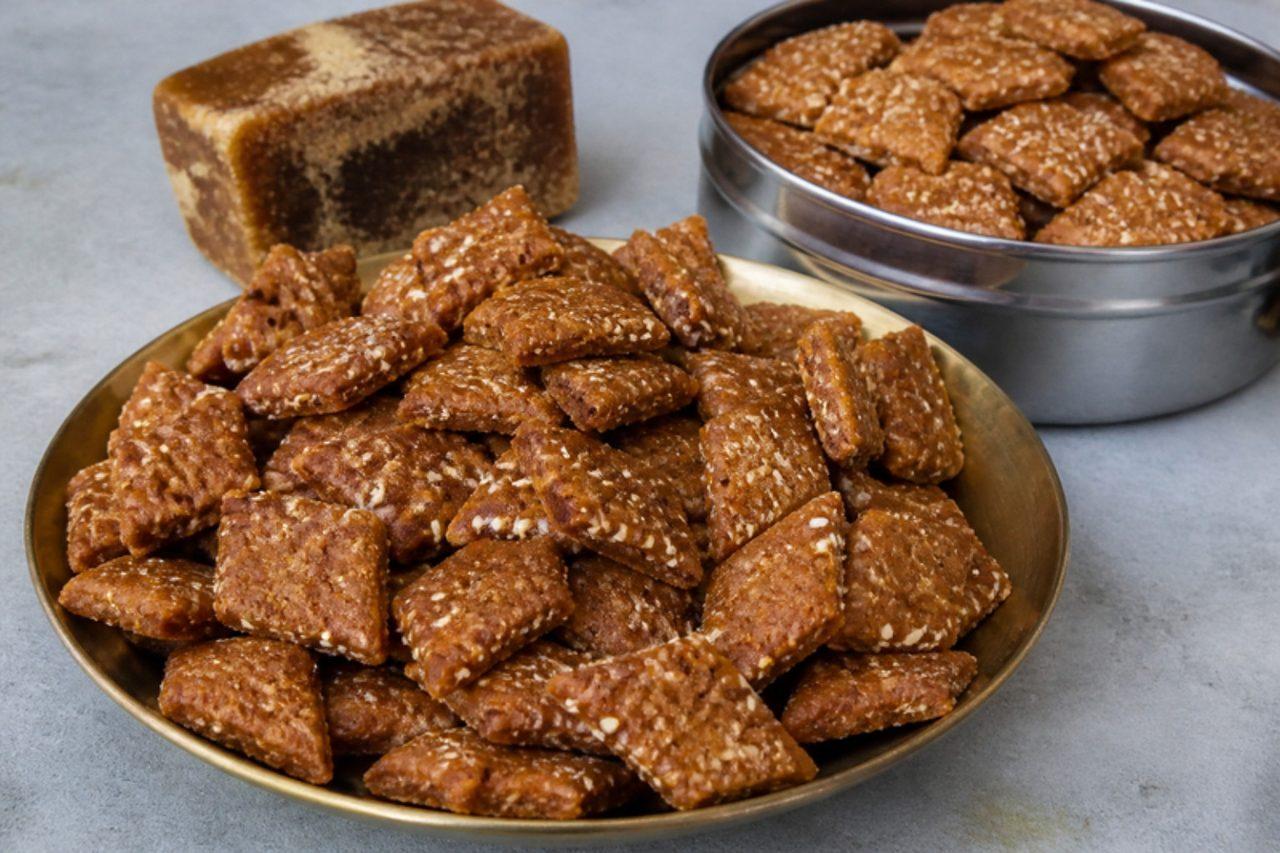
Khurmi are the sweet half of Chhattisgarh's Teeja-Pola festival snacks, made in big batches alongside the salty thethri. The dough is wheat flour and a little semolina bound with melted jaggery, studded with sesame and coconut, then cut into diamonds or pressed into small patterned shapes and fried until dark gold. They have a hard, crunchy bite and a deep caramel flavour, and they last for weeks in a steel dabba, ready for visitors and children back from school. Chef's tip: cool the jaggery water to lukewarm before kneading; hot jaggery makes a slack dough that spreads and soaks up oil.
 Indian

MuscatSemolina milk sweet
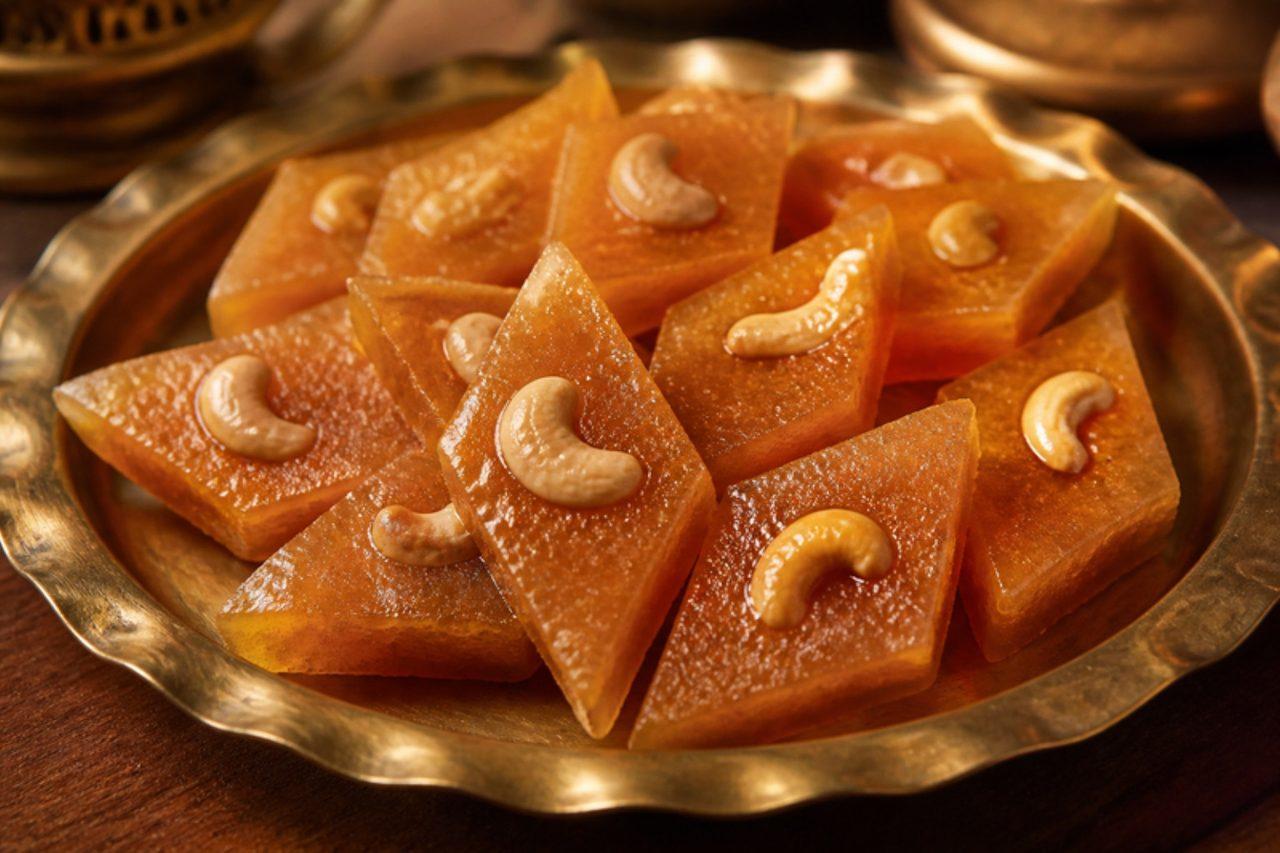
Walk past the Muslim sweet shops of Pettah in Colombo or the old trading streets of Beruwala before Eid and you will see trays of muscat, dense, jewel-like diamonds that are glossy with ghee and studded with cashews. The texture is the whole appeal: firm and chewy, almost like a soft Turkish delight, with a sweet, buttery, cardamom-scented flavour, and it is shared with neighbours at Eid, weddings and the Avurudu table. Traditional cooks extract the starch from wheat flour; this home version soaks and blends semolina, then strains it, which gives the same clear, bouncy set. Most failures come from adding the ghee too quickly, so it pools on top instead of being absorbed; pour it in a spoonful at a time and keep stirring. Chef's tip: the muscat is done when it rolls into a single glossy mass that leaves the pan clean and the ghee starts to seep back out at the edges.
 Sri Lankan
Daal mashWhite urad dal with ghee tarka
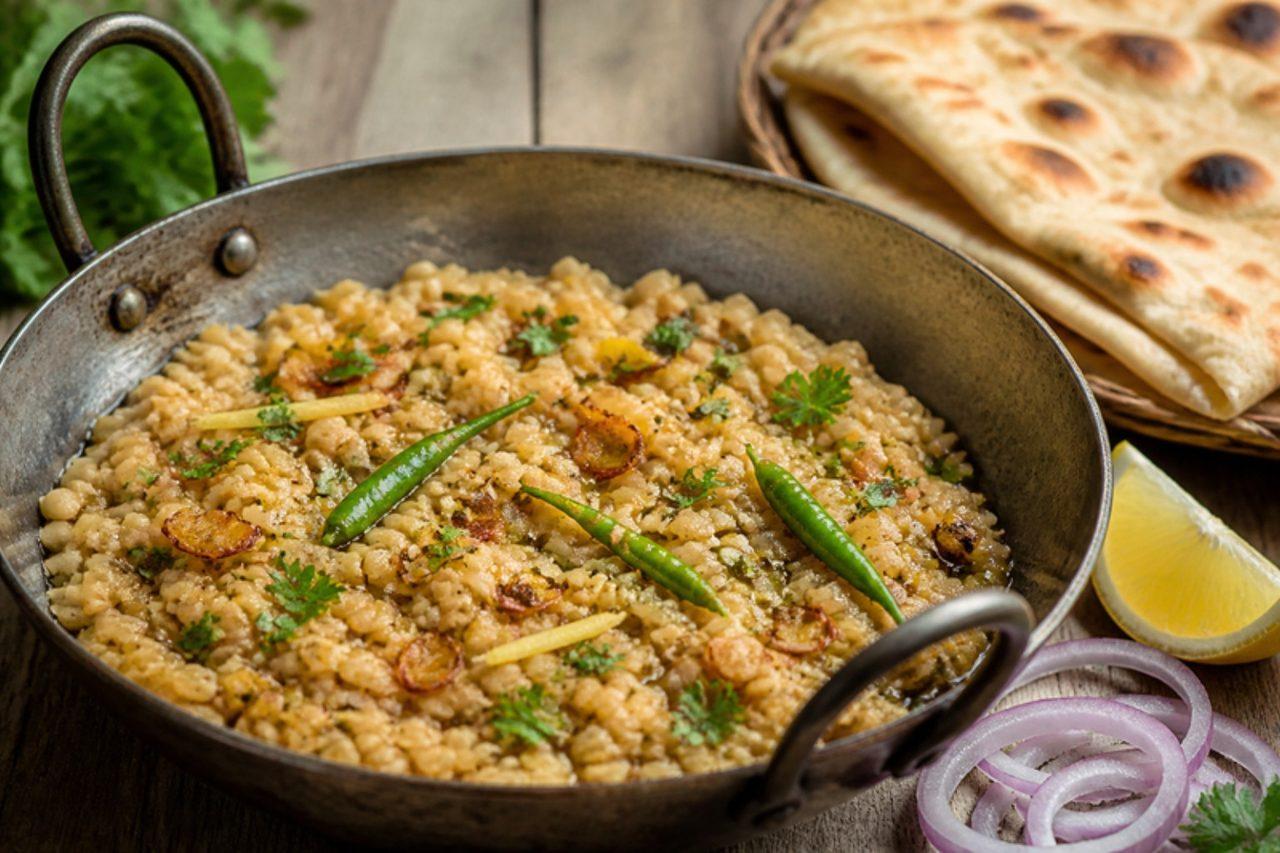
Walk into any dhaba on Lahore's Mall Road or in the lanes behind Anarkali after dark and daal mash is on the counter beside the tandoor, a pot of split white urad lentils cooked until each grain is soft but still separate, never a soup. It is eaten scooped up with hot tandoori roti, with a heap of raw onion rings and a squeeze of lemon, and it is rich enough to stand in for meat at a weeknight dinner. The flavour comes almost entirely from the last minute: a ladle of ghee crackling with garlic, ginger, green chilli and cumin poured over at the table. The usual mistake is adding too much water, which turns it to mush; it should cook in just enough to be absorbed. Chef's tip: soak the dal for 30 minutes and stir it as little as possible once it is in the pot, so the grains stay whole.
