

AI-generated image
Dizi
دیزی (dizi, or abgoosht): Persian lamb, chickpea and bean stew served as broth with bread, then pounded


Dizi, also called abgoosht, is Tehran's working lunch, served at old teahouses and bazaar canteens in individual stone pots, and cooked at home on cold Fridays. Lamb on the bone, chickpeas, white beans, potatoes, tomato and dried lime cook gently for hours. At the table you pour off the broth and soak torn sangak or lavash bread in it (tilit), then pound the meat, beans and potato into a coarse paste (goosht kubideh) to eat with herbs, raw onion and pickles. The usual mistake is adding the potatoes at the start: they collapse and cloud the broth. Slow-cooker: after the beans' hard boil, cook everything except the potatoes on low for 10 hours, adding them for the last 2. Chef's tip: pierce the dried limes so they flavour the broth without turning it bitter, and lift them out before pounding.
- Total time
- 245 min
- Difficulty
- medium
- Serves
- 4
Ingredients
- 5 ½ oz dried chickpeassoaked overnight
- 3 ½ oz dried white beanssoaked overnight
- 2 ¼ lb lamb neck or shoulder on the bonein large pieces
- 2 onionsquartered
- 1 tsp ground turmeric
- 8 ¼ cups water
- 2 dried limes (limoo omani)pierced with a knife
- 2 tomatoesquartered
- 2 tbsp tomato paste
- 3 potatoes (a soft, mealy variety)peeled, halved
- 1 ½ tsp salt
- ½ tsp black pepper
- ¼ tsp ground cinnamon
- 1 pinch saffron threads, ground and steeped in 2 tbsp hot water (optional)
Shop this recipe on Amazon
What you'll need
Spices & pantry
Fresh ingredients (4)
Links open Amazon in a new tab. As an Amazon Associate, WhatToEat.Today earns from qualifying purchases.
Method
0/6 doneStep 1: Drain the 5 ½ oz dried chickpeas and 3 ½ oz dried white beans, put them in the pot with fresh water and boil hard for 10 minutes; this makes the beans safe. Drain.
15 minStep 2: Return them to the pot with the 2 ¼ lb lamb neck or shoulder on the bone, 2 onions, 1 tsp ground turmeric and the 8 ¼ cups water. Bring to the boil and skim the foam for 5 minutes.
15 minStep 3: Add the 2 dried limes (limoo omani), cover and simmer gently for 2 hours.
120 minStep 4: Add the 2 tomatoes, 2 tbsp tomato paste, 3 potatoes (a soft, mealy variety), 1 ½ tsp salt, ½ tsp black pepper, ¼ tsp ground cinnamon and the 1 pinch saffron threads, ground and steeped in 2 tbsp hot water if using. Simmer for 1 hour more, until the chickpeas are creamy and the meat comes off the bone.
60 minStep 5: Pour off the broth into a jug. Remove the bones and the limes, then pound or mash the meat, potatoes, beans and chickpeas into a coarse paste with a pestle or masher.
10 minStep 6: Serve the hot broth with bread for soaking, and the pounded paste on a plate with fresh herbs, raw onion and pickles.
5 min
Nutrition per serving
- Calories
- 690 kcal
- Protein
- 52 g
- Carbs
- 52 g
- Fat
- 30 g
- Fibre
- 12 g
Nutrition values are estimates.
KrazyBadal
Good to know
- How long does dizi take?
- About 245 minutes in total: 20 minutes to prepare and 225 minutes to cook.
- How many people does it serve?
- 4 as written. Change the servings above the ingredients and every amount scales to match.
- Is it gluten free?
- Yes, as written. Check the labels on stock, sauces and spice mixes, which sometimes contain gluten.
- Can I make it ahead?
- Yes. It keeps well, so you can cook it earlier in the day or the day before and reheat it.
- What can I use instead of dried chickpeas?
- Cannellini or butter beans, same amount.
- What can I use instead of onions?
- 2 shallots per onion.
Reviews
No reviews yet. Be the first to cook it.
Rate this recipe
Sign in to rate and review this recipe.
You might also like

Pork souvlaki
This is a pork recipe. Walk through any Greek town after dark, from Athens to Thessaloniki, and the smell of souvlaki stands drifts down the street; cubes of pork shoulder grilled on thin skewers are the country's favourite cheap supper, eaten standing up or at a plastic-table taverna. At home you marinate the meat in lemon, olive oil, garlic and dried oregano, grill it hard and fast, and pile it on warm pitta with tzatziki, tomato and red onion. Chef's tip: cut the pork into even 2.5 cm cubes and leave a little fat on; lean loin dries out, shoulder stays juicy over high heat.
 Greek

Tteokgalbi
Tteokgalbi is rib meat chopped finely, pressed back into neat slabs and grilled, so it's soft enough to eat without struggling with a bone. Two places in South Jeolla claim it: Damyang, the bamboo county, where all-beef patties come with rice steamed in bamboo tubes, and Gwangju's Songjeong district, whose restaurant street near the railway station mixes beef with pork. This home version uses minced beef and pork, seasoned with soy, garlic and pear, then brushed with a soy and honey glaze as it cooks. Serve with rice, lettuce and a few banchan; leftovers are good cold in a lunchbox. Chef's tip: slap the mince against the bowl for a few minutes; it turns sticky and the patties hold together on the grill without any breadcrumbs.
 Korean
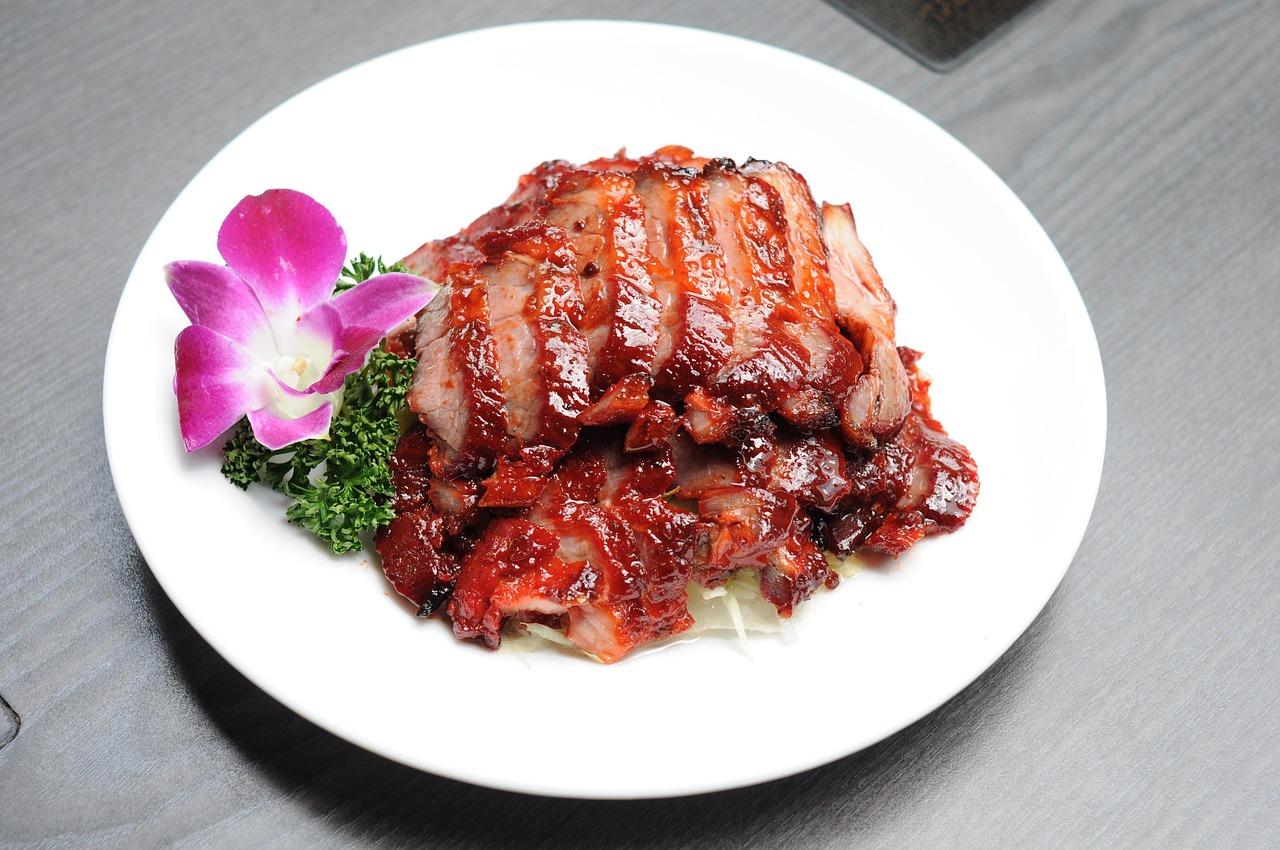
Char siu
Hanging in long glossy strips in the windows of Guangzhou's siu mei shops, char siu is the roast pork Cantonese families pick up on the way home to put on rice, noodles or into steamed buns. The outside is lacquered, sweet and a little charred at the edges; the inside stays juicy, savoury and faintly scented with five-spice. Shoulder (pork butt) is the cut to use, because its marbling keeps the strips moist through a hot oven. Marinate it overnight in the fridge, roast it the next day and eat it warm with steamed rice and blanched greens, or cold in fried rice and noodle soups. Chef's tip: save the honey for the last ten minutes; brushed on at the start it burns black long before the pork is cooked.
 Chinese