
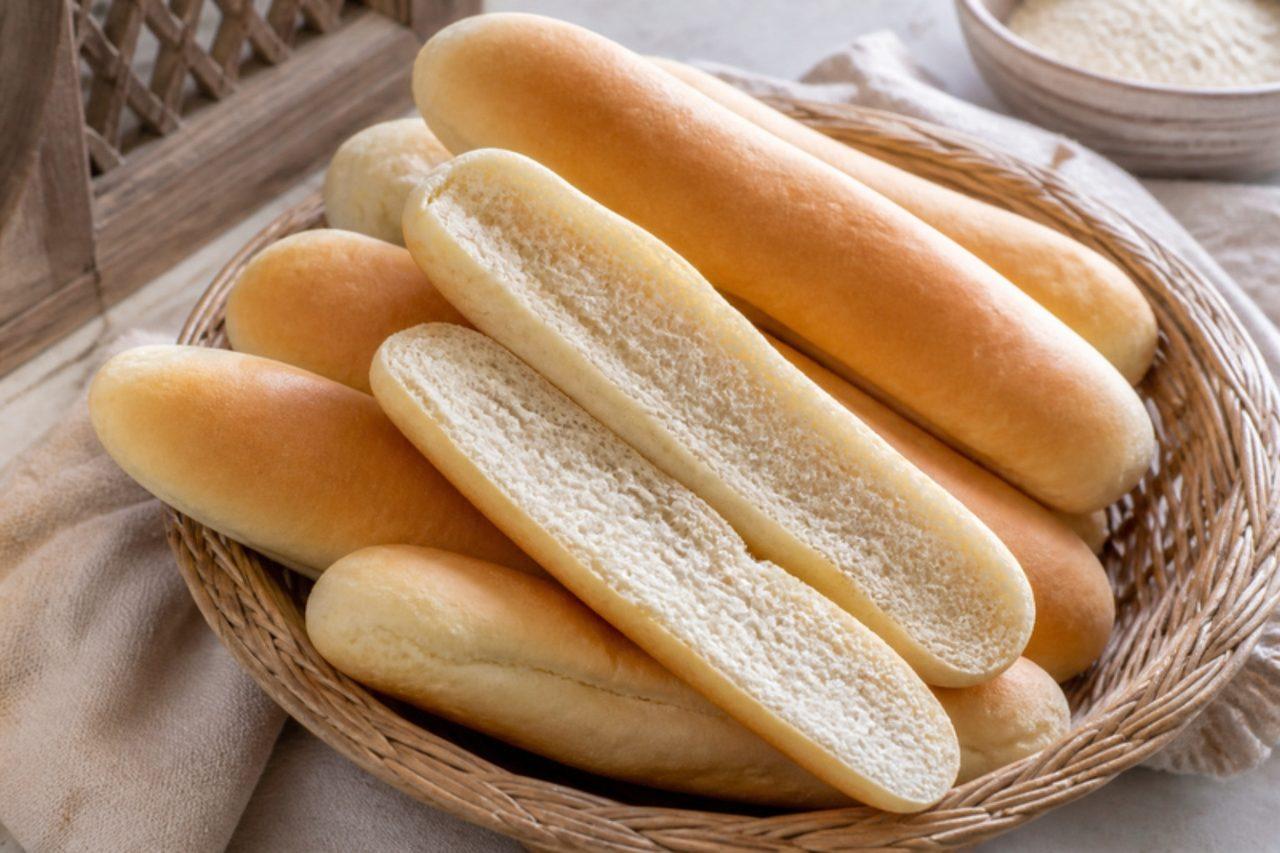
AI-generated image
Aish fino
Soft white finger rolls
Aish fino: soft, slightly sweet white finger rolls for Egyptian school sandwiches

Ask any Egyptian about school lunches and aish fino comes up: the long, soft white rolls that bakeries sell by the bagful each morning and parents split and fill for lunch boxes. The crumb is pillowy and slightly sweet, the crust thin and pale gold, perfect for white cheese, halawa, egg, falafel or a smear of molasses and tahini. Its name comes from the French pain fin. Allow about 1½ hours for rising. Overbaking is the classic mistake; take them out while still pale gold, otherwise the crust turns hard instead of soft. Chef's tip: cover the rolls with a clean tea towel as soon as they leave the oven so the steam keeps the crust tender.
- Total time
- 45 min
- Difficulty
- medium
- Serves
- 10
Ingredients
- 1 ⅛ lb strong white flour
- ¼ oz instant yeast
- 2 tbsp sugar
- 1 tsp salt
- ¾ cup lukewarm whole milk
- ¾ cup lukewarm water
- 1 ⅜ oz buttersoftened
- 2 tbsp milkfor brushing
Shop this recipe on Amazon
Spices & pantry
Fresh ingredients (3)
Links open Amazon in a new tab. As an Amazon Associate, WhatToEat.Today earns from qualifying purchases.
Method
0/7 doneStep 1: Mix 1 ⅛ lb strong white flour, ¼ oz instant yeast, 2 tbsp sugar and 1 tsp salt in a bowl. Add ¾ cup lukewarm whole milk and ¾ cup lukewarm water and mix into a rough dough.
Step 2: Knead until smooth, then work in 1 ⅜ oz butter and knead until the dough is silky and elastic and passes the windowpane test.
10 minStep 3: Cover and leave in a warm place until doubled, about 1 hour.
Step 4: Divide into 10 pieces. Flatten each into a rectangle, roll it up tightly from the long side and roll under your palms into a finger about 18 cm long.
Step 5: Set on lined trays, cover and rest until puffy, about 30 minutes. Heat the oven to 400°F (350°F fan).
Step 6: Make a shallow cut along the top of each roll, brush with 2 tbsp milk and bake until just pale golden and the bases sound hollow.
13 minStep 7: Cover with a tea towel straight away and cool under it.
Nutrition per serving
- Calories
- 260 kcal
- Protein
- 8 g
- Carbs
- 45 g
- Fat
- 5 g
- Fibre
- 2 g
Nutrition values are estimates.
KrazyBadal
Good to know
- How long does aish fino take?
- About 45 minutes in total: 30 minutes to prepare and 15 minutes to cook.
- How many people does it serve?
- 10 as written. Change the servings above the ingredients and every amount scales to match.
- Is it vegetarian?
- Yes. It has no meat or fish.
- What can I use instead of sugar?
- Caster sugar, same amount.
- What can I use instead of lukewarm whole milk?
- Semi-skimmed milk with 1 tbsp cream per 240ml (1 cup).
Reviews
No reviews yet. Be the first to cook it.
Rate this recipe
Sign in to rate and review this recipe.
You might also like
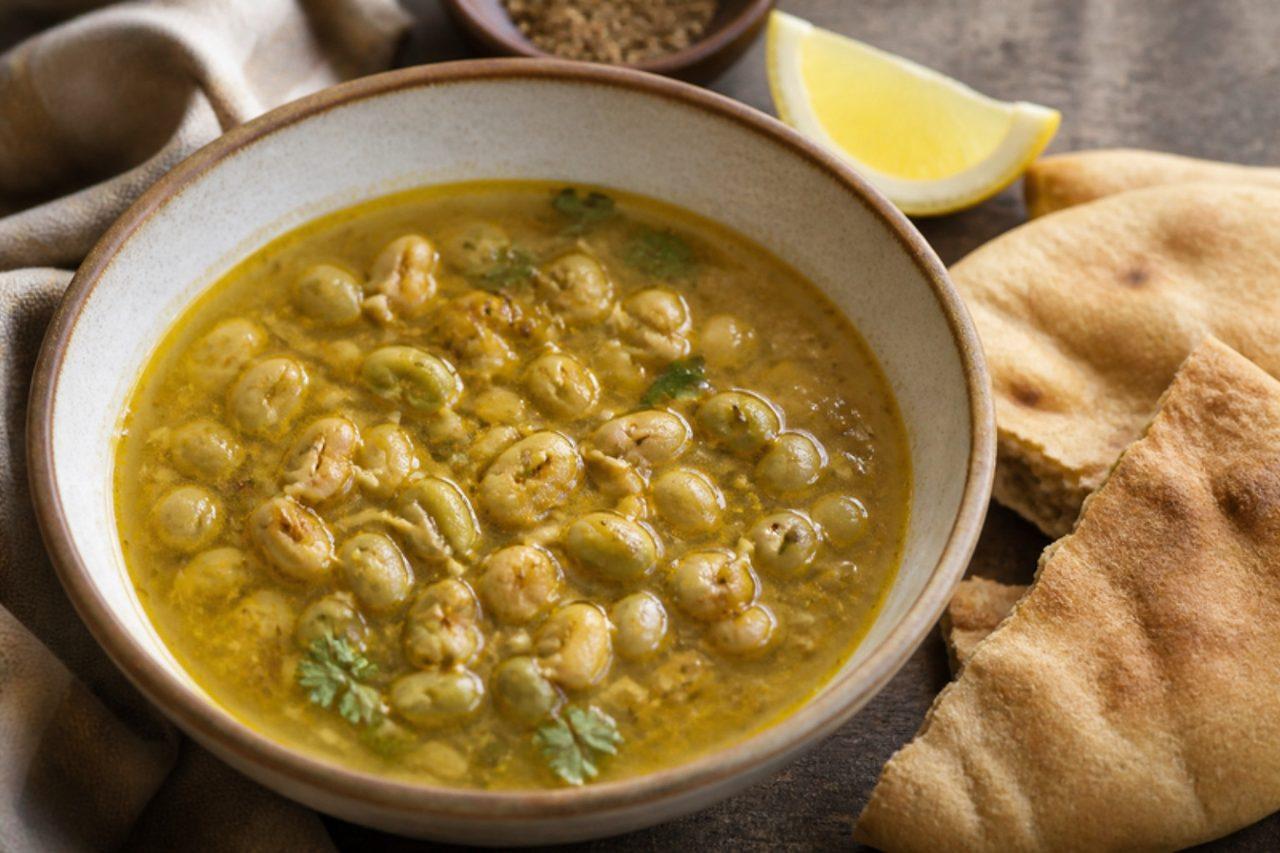
Ful nabitSprouted fava bean soup
Sprouted beans are ladled out with their cooking liquor in Cairo homes when the weather turns cold or someone is feeling run down, and Egyptians swear by the broth as a pick-me-up. The beans are soaked and left to sprout for a few days, then simmered with onion, garlic and cumin into a light, earthy soup that is sharpened at the table with plenty of lemon. You can eat the beans with a spoon or pop them from their skins. Allow 3 to 4 days for sprouting, although the hands-on work is only about 20 minutes. People with G6PD deficiency (favism) must not eat fava beans. Chef's tip: stop the sprouting when the shoots are about 1 cm long; longer sprouts taste grassy and bitter.



ChipaCheese bread rings
In Paraguay you hear 'chipa, chipa!' called by vendors with big baskets on buses and street corners, and every family bakes it for Holy Week, when chipa is the food of Good Friday. Cassava starch, a little cornmeal, butter, eggs and a lot of hard cheese are kneaded into a dough scented with aniseed, shaped into rings or small rolls and baked in a hot oven, traditionally a domed clay tatakua. It's chewy, crisp outside and best warm with cocido (toasted yerba tea). Chef's tip: the dough should feel soft and slightly greasy; add milk a spoon at a time, as too much makes the chipa spread flat.
 Paraguayan
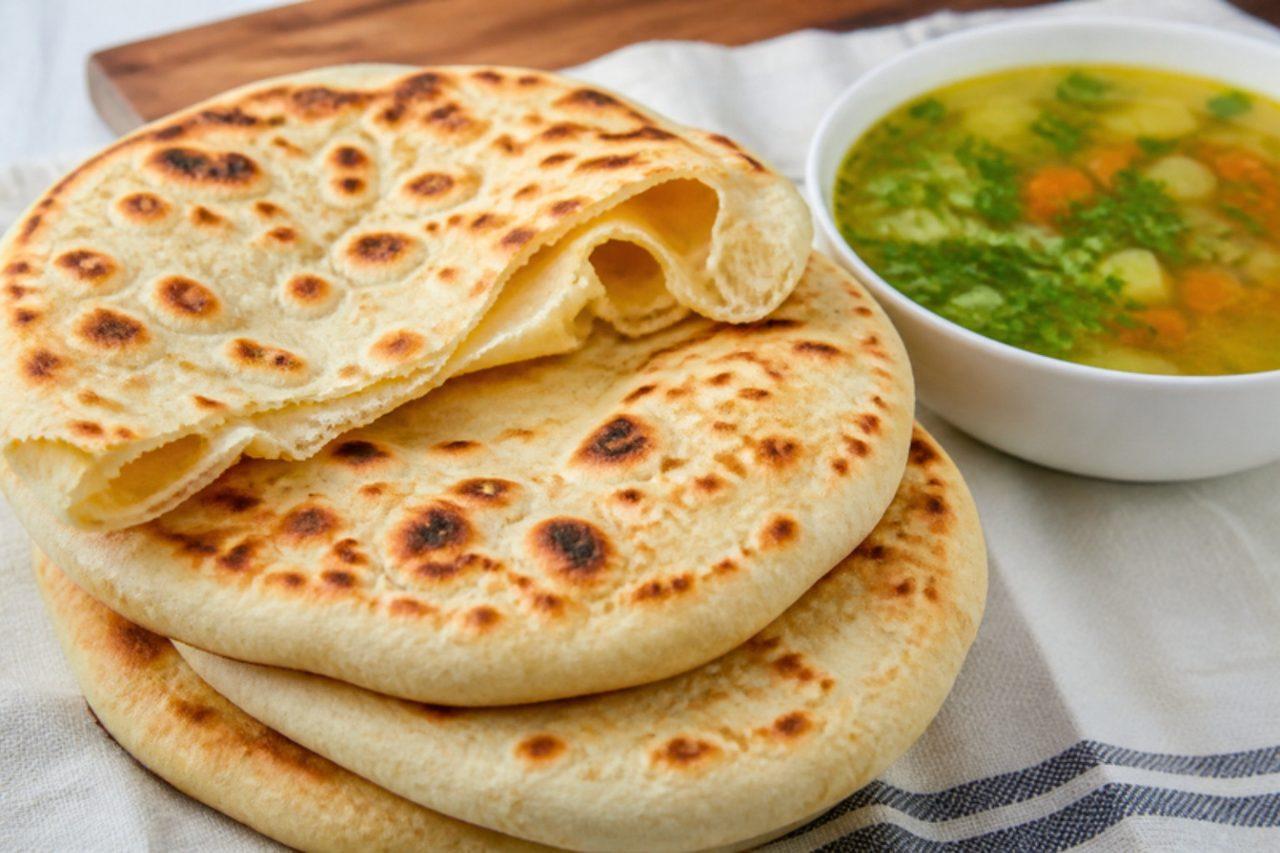
SalufPuffy flatbread
Saluf is the everyday bread of Yemenite Israelis, slapped onto a hot pan or taboon in Rosh HaAyin and Sha'arayim in Rehovot and eaten with marak temani, hilbe and zhug. It is soft and blistered, thicker than pita and with no pocket, made to tear and dunk. Home cooks often roll it too thin, which gives a cracker; it should be about 1 cm thick so it stays pillowy. Chef's tip: cook it under a lid on a very hot dry pan for the first minute, which traps steam and puffs it the way a taboon does.
 Israeli