
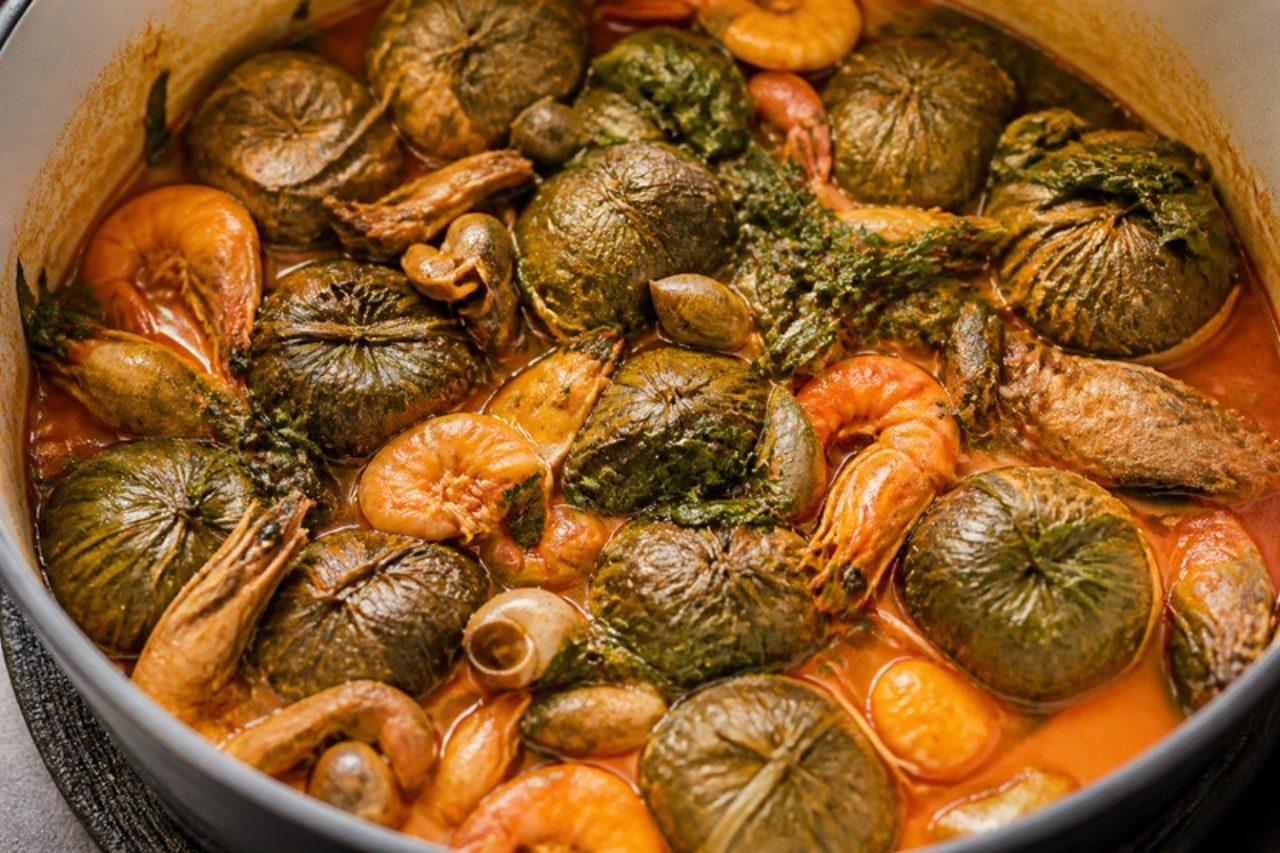
AI-generated image
Ekpang nkukwo
Grated cocoyam and plantain parcels
Ekpang Nkukwọ: grated cocoyam and plantain wrapped in leaves and simmered in a palm-oil seafood broth


Patience is the main ingredient of ekpang nkukwo, a festive dish of the Efik and Ibibio of Calabar and Akwa Ibom. Grated cocoyam and unripe plantain are rolled into little leaf parcels, stacked in a pot and cooked slowly in a broth of palm oil, periwinkles, prawns, smoked fish and pepper until the parcels set into soft, sliceable rolls in a thick, orange sauce. It is a meal in itself, often made for Christmas and family gatherings. Cocoyam leaves are traditional; large spinach or chard leaves work if you blanch them first. Raw cocoyam can itch the skin, so wear gloves to grate it, and cook the dish fully. Chef's tip: do not stir until the parcels have cooked for at least 25 minutes, or they will unroll and dissolve into the broth.
- Total time
- 120 min
- Difficulty
- hard
- Serves
- 6
Ingredients
For the parcels
- 1 ¾ lb cocoyampeeled; or taro
- 1 unripe plantainpeeled, about 250 g
- 40 cocoyam leavesor large spinach or chard leaves, stems removed
- 1 tsp salt
For the broth
- ¾ cup red palm oil
- 9 oz periwinkles, shelled or tail-cutbuy cleaned from a reputable fishmonger; frozen shelled ones are easiest
- 9 oz raw prawnspeeled and deveined
- 5 ½ oz smoked dried fishdeboned, rinsed
- 4 tbsp ground crayfish
- 3 scotch bonnet chilliespounded
- 1 onionfinely chopped
- 2 ½ cups water
To finish
- 3 ½ oz fluted pumpkin leaves (ugu) (optional)shredded; or spinach
Shop this recipe on Amazon
Spices & pantry
Fresh ingredients (4)
Links open Amazon in a new tab. As an Amazon Associate, WhatToEat.Today earns from qualifying purchases.
Method
0/9 doneStep 1: Wearing gloves, finely grate 1 ¾ lb cocoyam and 1 unripe plantain into a bowl and mix with 1 tsp salt into a soft paste.
20 minStep 2: Pour boiling water over 40 cocoyam leaves, leave for 30 seconds until pliable, then drain and pat dry.
3 minStep 3: Lay a leaf flat, spoon about 1 tablespoon of paste along one edge and roll it up into a tight finger, tucking in the sides. Repeat with the rest of the paste and leaves.
30 minStep 4: Rinse 9 oz periwinkles, shelled or tail-cut in several changes of water and throw away any with broken shells or an off smell.
5 minStep 5: Pour ¼ cup red palm oil into a wide, heavy pot, then stack the parcels in neat layers, scattering 9 oz periwinkles, shelled or tail-cut, 5 ½ oz smoked dried fish, 2 tbsp ground crayfish and 1 ½ scotch bonnet chillies between the layers.
5 minStep 6: Mix 2 ½ cups water with 1 onion, 2 stock cubes, the rest of 2 tbsp ground crayfish and 1 ½ scotch bonnet chillies. Pour it down the side of the pot so the parcels are almost covered, then drizzle over the rest of ¼ cup red palm oil.
2 minStep 7: Cover tightly and simmer over a low heat without stirring until the parcels feel firm when pressed and the broth has thickened. Shake the pot now and then to stop sticking.
40 minStep 8: Lay 9 oz raw prawns on top, cover and cook until they turn pink and opaque all the way through.
6 minStep 9: Scatter 3 ½ oz fluted pumpkin leaves (ugu) over, if using, and give the pot one gentle stir, just enough to coat everything in sauce. Simmer for 3 more minutes, until the leaves wilt, then serve.
3 min
Nutrition per serving
- Calories
- 520 kcal
- Protein
- 26 g
- Carbs
- 55 g
- Fat
- 24 g
- Fibre
- 7 g
Nutrition values are estimates.
KrazyBadal
Good to know
- How long does ekpang nkukwo take?
- About 120 minutes in total: 60 minutes to prepare and 60 minutes to cook.
- How many people does it serve?
- 6 as written. Change the servings above the ingredients and every amount scales to match.
- Is it gluten free?
- Yes, as written. Check the labels on stock, sauces and spice mixes, which sometimes contain gluten.
- What can I use instead of onion?
- 2 shallots per onion.
Reviews
No reviews yet. Be the first to cook it.
Rate this recipe
Sign in to rate and review this recipe.
You might also like

Moreton Bay bugsSlipper lobster with garlic butter
Moreton Bay bugs are the flat, shovel-nosed slipper lobsters caught off the Queensland coast around Brisbane and the Sunshine Coast, and for Queenslanders they are a summer treat, split and grilled at the beach house. The tail meat is sweet and rich, somewhere between lobster and prawn. Buy them raw, frozen or fresh, from a fishmonger and ask them to halve them if you like. A common mistake is overcooking, which makes the meat rubbery; it is ready the moment it turns white. Chef's tip: grill flesh side down first to mark it, then turn and baste in the shell.
 Australian

All i pebreEel and potato paprika stew
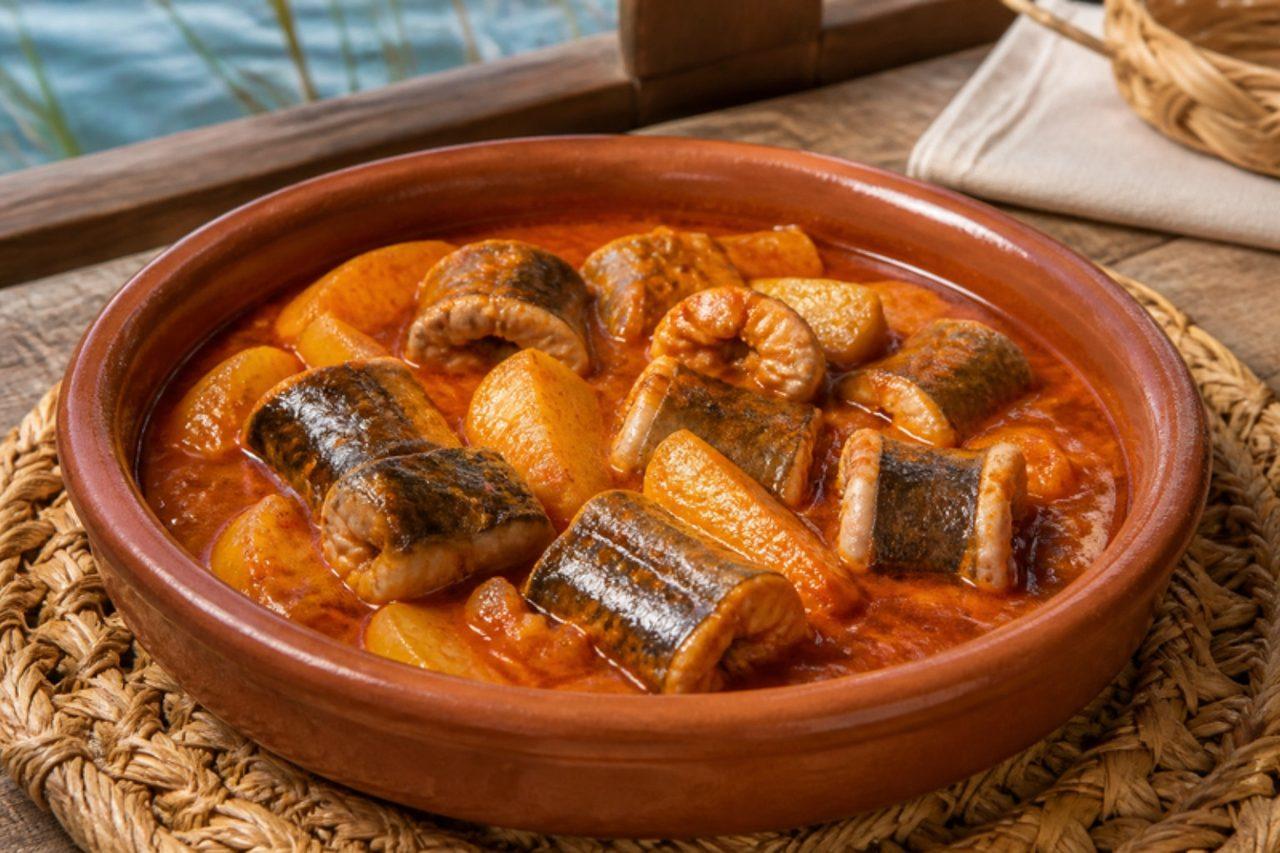
In El Palmar and the other villages around the Albufera lagoon south of Valencia, the restaurants that are famous for paella serve something older first: all i pebre, "garlic and pepper", a brick-red stew of lagoon eel and potatoes thickened with a pounded almond and fried-bread picada. It is rich, garlicky and gently hot, eaten with bread to mop up the sauce. Ask your fishmonger to skin and cut the eel, and handle it with gloves: raw eel blood is irritating, though harmless once cooked. If you can't find eel, monkfish or hake works well. A common mistake is letting the paprika burn; it turns bitter in seconds, so add it off the heat. Chef's tip: break the potatoes with a knife instead of cutting cleanly; the rough edges release starch and thicken the sauce.
 Spanish

Midia saganakiMussels with tomato and feta
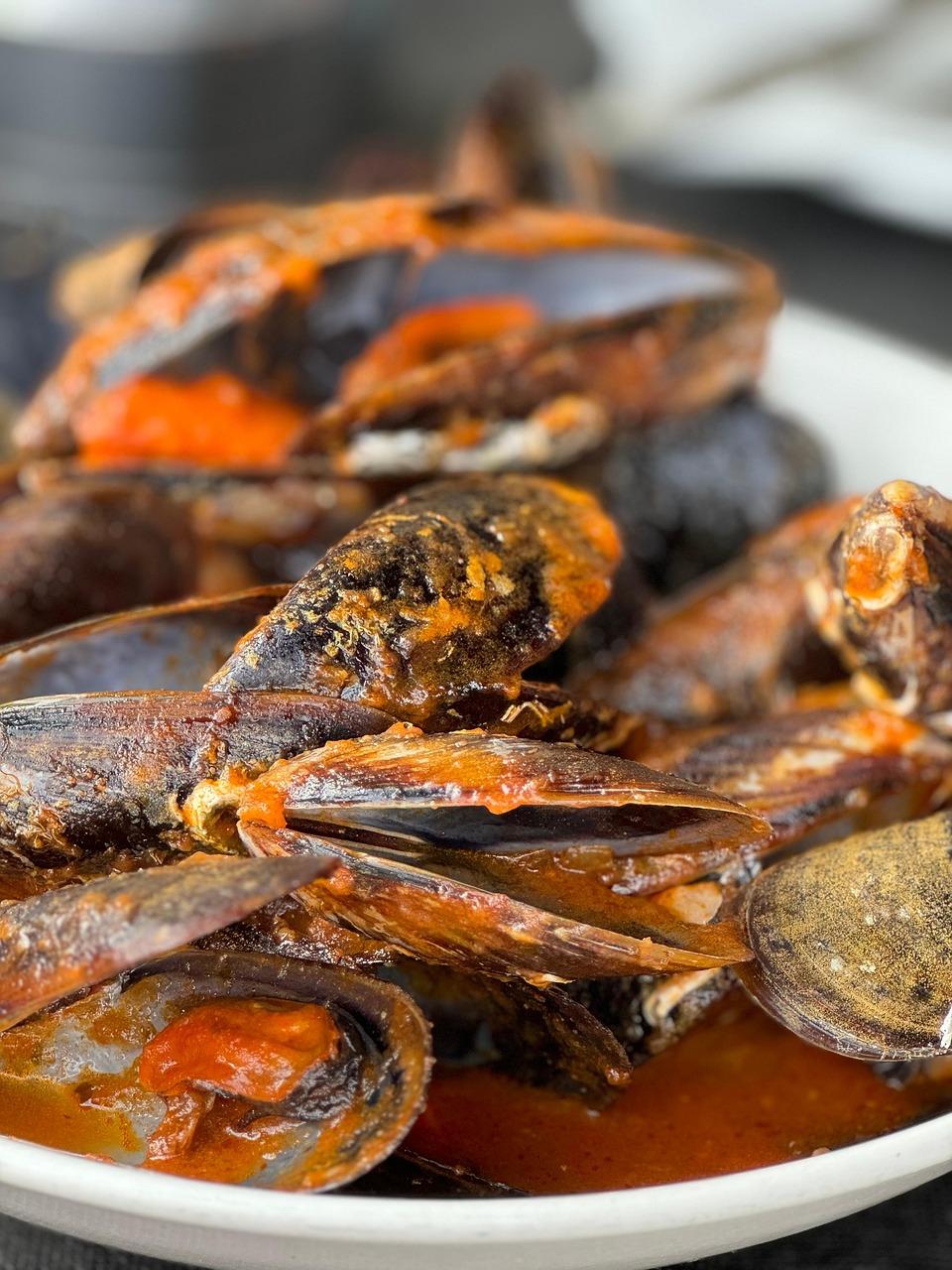
Thessaloniki is Greece's mussel capital, with farms in the Thermaic Gulf a few kilometres from the seafront ouzeries where this two-handled pan arrives, still bubbling, at the table. Mussels steam open in a quick sauce of peppers, tomato and chilli, and crumbled feta melts into the juices at the end. Bread is essential. The classic version adds a splash of ouzo; this one is alcohol-free, using a pinch of fennel seed for that aniseed note (add 2 tbsp ouzo with the tomatoes if you like). Common mistake: overcooking — take the pan off the heat as soon as the shells open. Chef's tip: buy mussels on the day and keep them in the fridge in a bowl covered with a damp cloth, never in water.
 Greek