
Khabeesa
Saffron toasted flour sweet
Khabeesa (خبيصة): Emirati and Qatari saffron toasted flour sweet
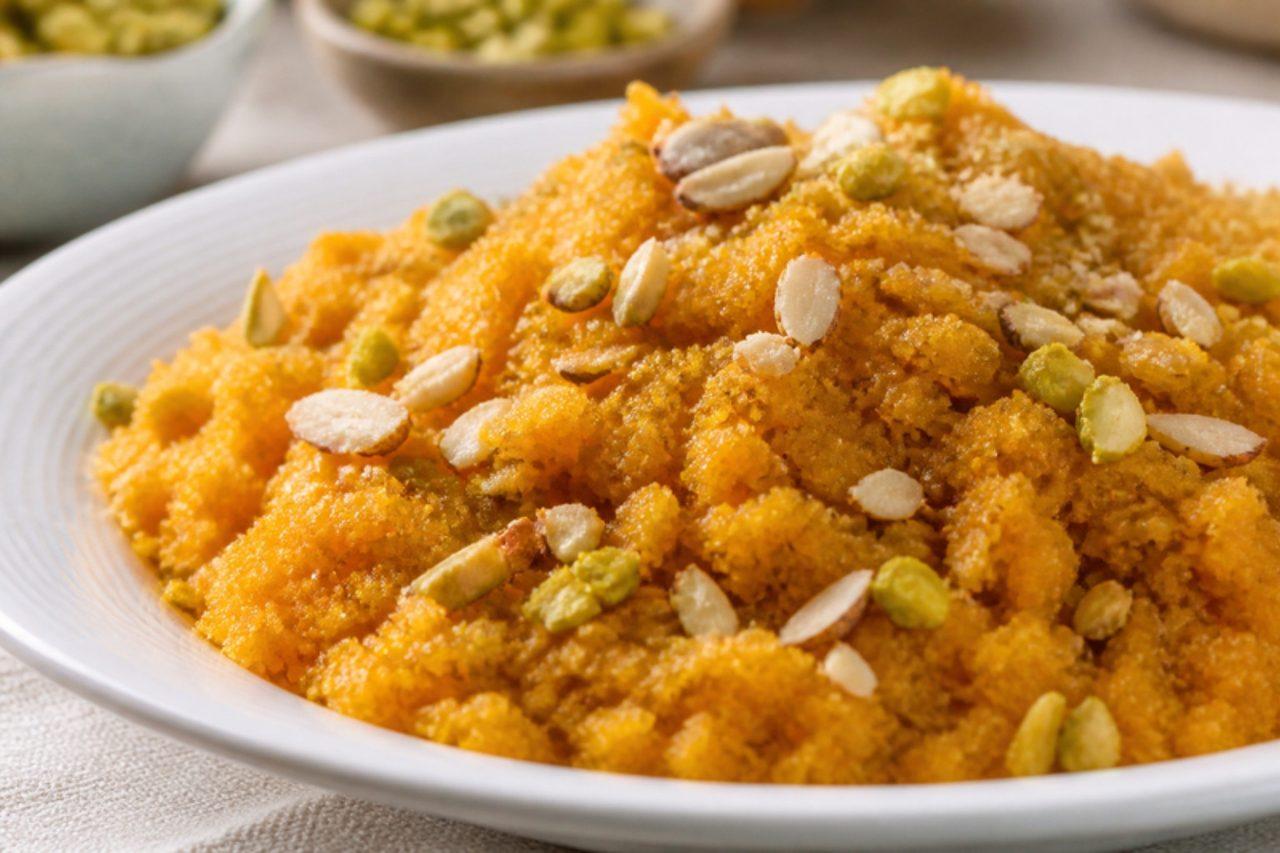
Khabeesa is made in Emirati and Qatari kitchens for Eid mornings, new babies and Ramadan nights: flour toasted until golden, then cooked with saffron syrup and ghee until it turns into fragrant, crumbly clusters, a bit like a soft, buttery halwa that breaks apart. It is served in a small bowl on the coffee tray, eaten with a spoon or the fingers, and its aroma of saffron, cardamom and rosewater fills the house. The mistake to avoid is pouring in the syrup all at once, which makes lumps that never break up. Chef's tip: keep pressing and turning the mixture against the pan once the ghee goes in; that is what forms the little golden crumbs.
- Prep
- 5 min
- Cook
- 25 min
- Difficulty
- Easy
- Serves
- 6
- Per serving
- 400 kcal
Ingredients
For the syrup
- 5 ½ oz sugar
- ¾ cup water
- ½ tsp saffron threads
- 1 tsp ground cardamom
- 1 tbsp rosewater
For the khabeesa
- 7 oz plain flour
- 3 ½ oz ghee
- 2 tbsp pistachios or almonds (optional)chopped, to decorate
Tick what you have; the rest goes in the basket.
Method
0/5 doneStep 1: Simmer 5 ½ oz sugar, ¾ cup water and ½ tsp saffron threads in a small pan for 5 minutes, until the sugar dissolves and the syrup is deep yellow. Stir in 1 tsp ground cardamom and 1 tbsp rosewater and keep warm.
5 minStep 2: Toast 7 oz plain flour in a wide, heavy pan over a medium-low heat, stirring constantly, for 10–12 minutes, until it is evenly golden brown and smells of biscuits.
12 minStep 3: Pour in the warm syrup a ladle at a time, stirring hard after each addition so it is absorbed before the next. Careful: it will steam and spit.
3 minStep 4: Add 3 ½ oz ghee and keep stirring and pressing for 4–5 minutes, until the mixture leaves the pan, turns glossy and breaks into soft, moist crumbs and small clusters.
5 minStep 5: Spoon into a serving dish, scatter with 2 tbsp pistachios or almonds if using, and serve warm or at room temperature.
KrazyBadal
Reviews
No reviews yet. Be the first to cook it.
Rate this recipe
Sign in to rate and review this recipe.
You might also like

Kartoshka cakeCocoa and cake crumb truffles
Soviet cafés and school canteens sold these knobbly brown 'potatoes' for a few kopecks, and they began as a thrifty way to use up sponge and biscuit trimmings at the bakery. Crumbs are bound with butter and sweetened condensed milk, flavoured with cocoa and vanilla, shaped into little potatoes, rolled in cocoa and finished with two dabs of pale butter cream for the sprouts. They are fudgy and dense like a brownie truffle, need no oven, and children love making them. Traditional bakers added a spoonful of rum, an optional extra for adult batches only; this version is alcohol-free with vanilla. The usual slip is coarse crumbs, which make the potatoes crack, so blitz them as fine as sand. Chef's tip: chill the shaped potatoes for at least 20 minutes so they hold their shape and slice cleanly.
 Russian
Khao niao mamuangMango sticky rice
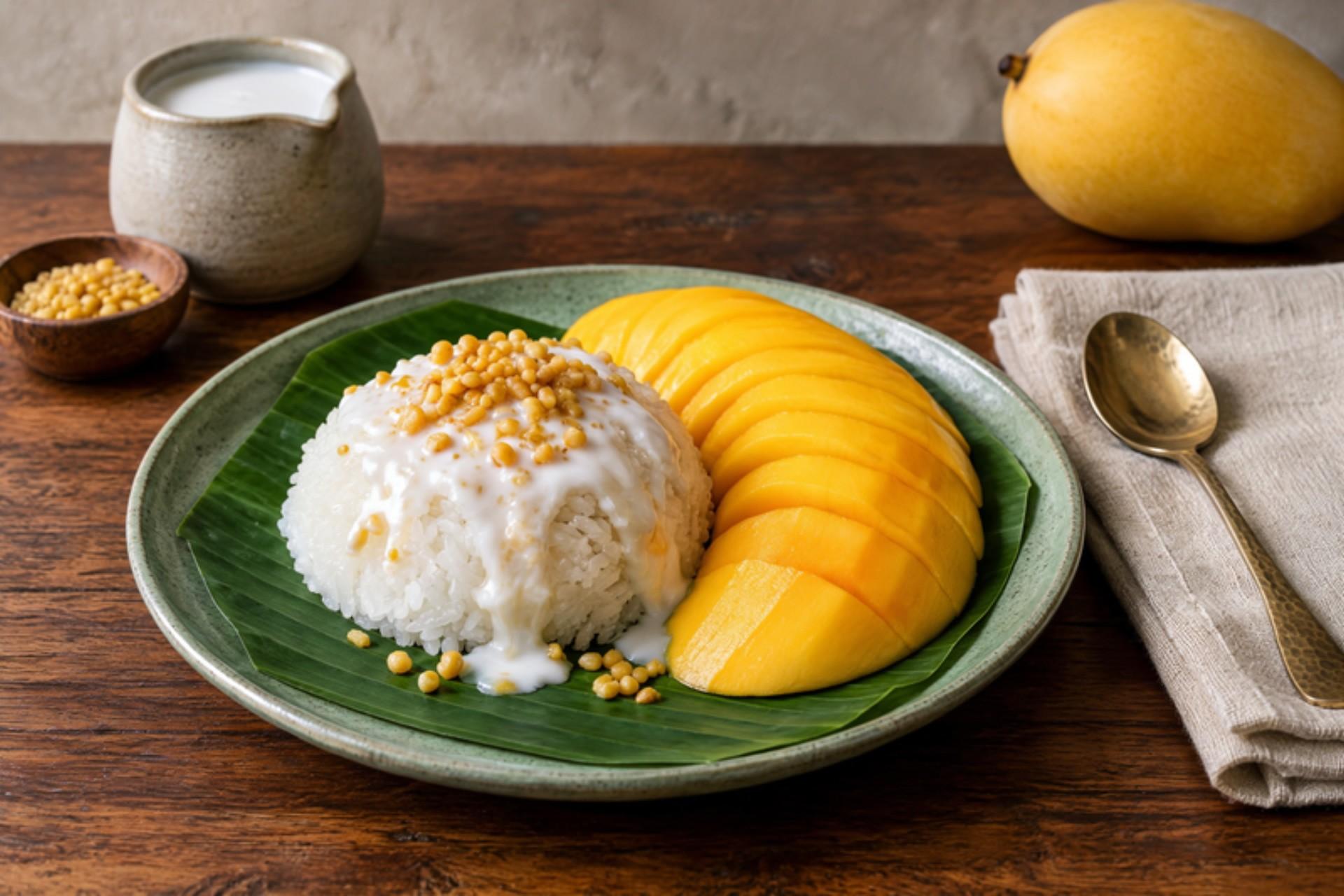
Khao niao mamuang is what Bangkok queues for in April and May, when nam dok mai and ok rong mangoes flood the markets at Pak Khlong Talat and street carts sell little foam boxes of it all afternoon. Steamed glutinous rice is soaked in warm, lightly salted sweet coconut milk until every grain turns glossy and plump, then served beside slices of ripe mango with a spoonful of thick salted coconut cream and a scatter of crisp yellow mung beans. The common mistake is boiling the rice like ordinary rice: glutinous rice must be soaked and then steamed, or it collapses into paste. Chef's tip: pour the coconut sauce over the rice while both are hot and cover the bowl for 15 minutes; hot rice drinks the sauce in, cold rice leaves it sitting on top.
 Thai


Undu walaluFried urad dal rings in treacle
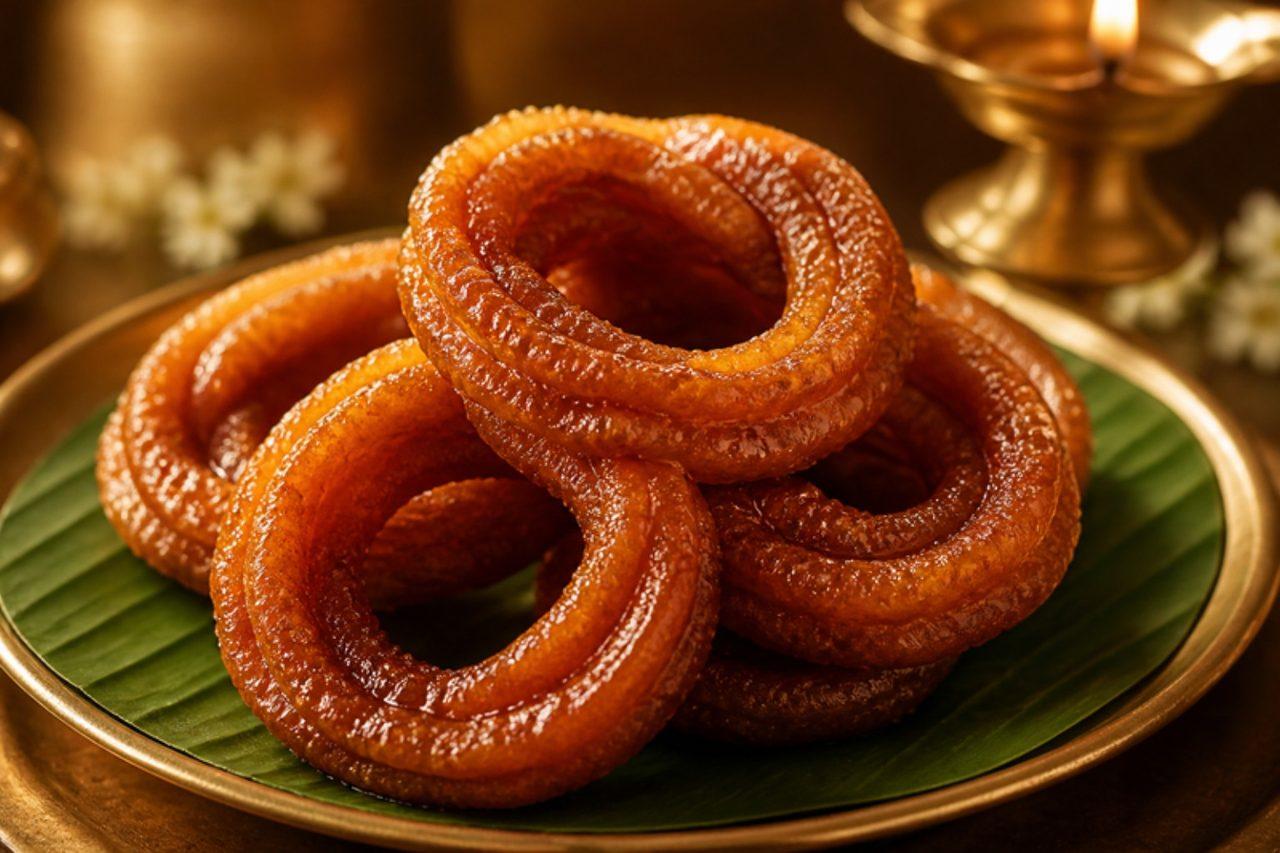
Walalu means bangles, and these dark, sticky rings of fried urad dal soaked in kithul treacle are a sweet that Sinhala families bring out for Avurudu and for special almsgivings, often made in large batches by an aunt known for her steady hand. A thick, fluffy paste of ground black gram is piped into loops and fried until crisp, then plunged straight into warm treacle, so the rings stay crunchy on the outside while drinking up the syrup. They taste a little like a darker, smokier jalebi, with a toffee finish from the palm treacle. Watery batter is what ruins them; it spreads into flat blobs, so grind the soaked dal with as little water as possible and beat it until light. This recipe uses no asafoetida, so it is naturally gluten free. Chef's tip: pipe the rings onto small squares of baking paper and lower them into the oil paper and all; the paper peels away in seconds.
 Sri Lankan