Skip to content

Recipes with saffron threads

52 recipes that use saffron threads, with photos, step-by-step instructions and cook times. The quickest, Arabic coffee, takes 15 minutes. It is most often cooked with onion, sugar and garlic.

Got a few things in the fridge? Search by everything you have

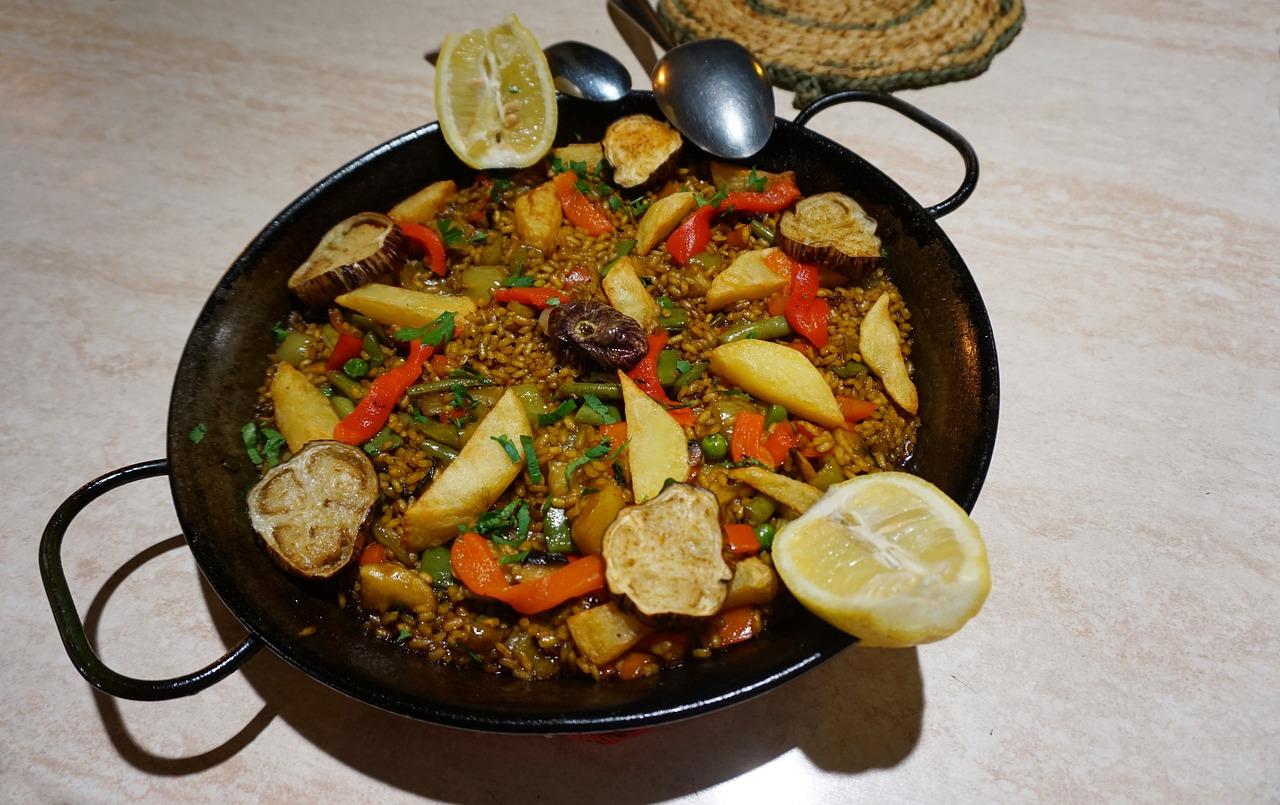
Paella de verduras

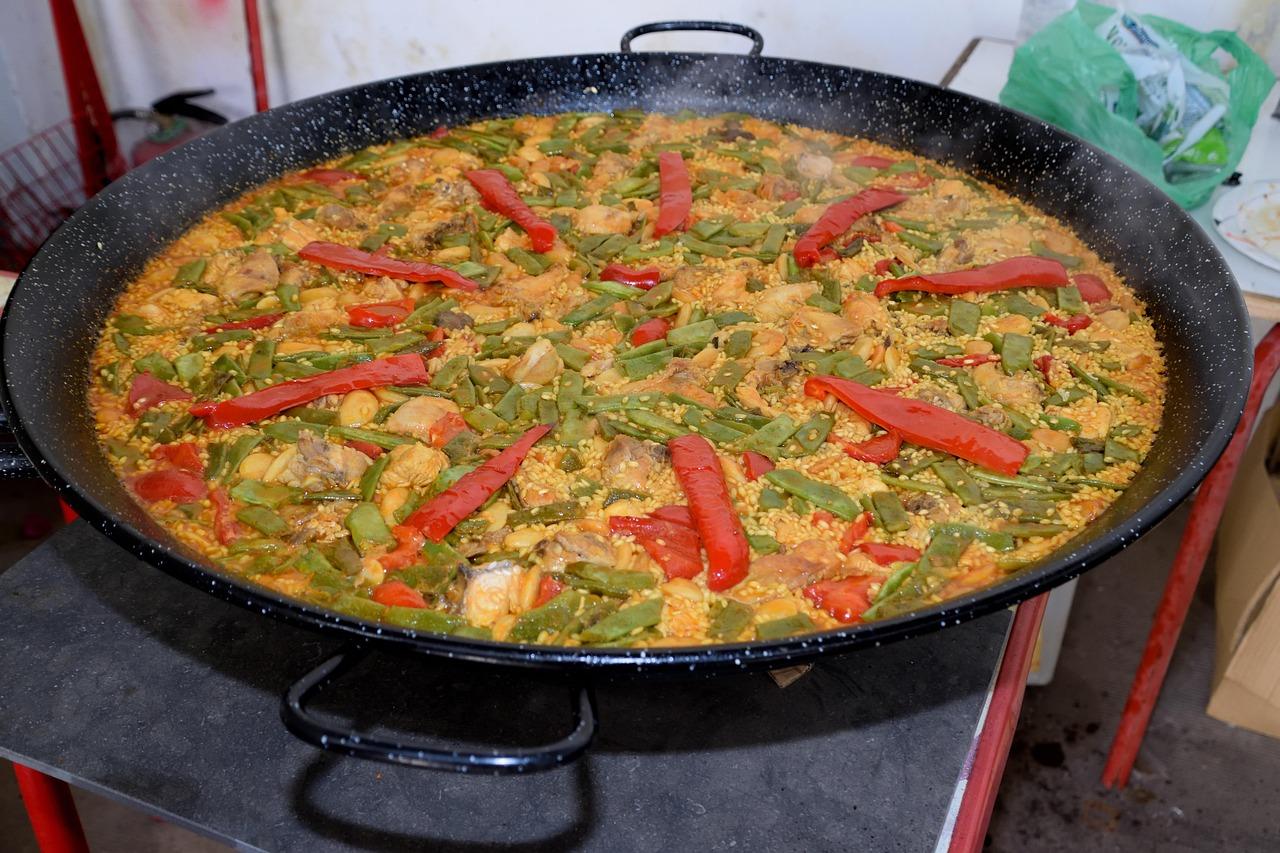
Paella comes from the rice fields around the Albufera lagoon south of Valencia, where it was cooked over orange-wood fires in a wide, shallow pan. Valencians are strict about it: short round rice, saffron, sweet pimentón, flat green beans (ferraúra) and big white garrofó beans, and never any stirring once the rice is in. This all-vegetable paella keeps those rules and adds artichokes and red pepper, as the market gardeners of the Huerta do in spring. It is cooked and served in the same pan, straight onto the table. Chef's tip: listen for the socarrat at the end. Turn up the heat for the last 1–2 minutes until the rice crackles and smells toasty; that caramelised crust on the bottom is the best part of any paella.

by KrazyBadal 0 views

Vegetable tagine (khodra)

Across Morocco, from village kitchens in the Atlas to family tables in Marrakech, a tagine of khodra (vegetables) is the everyday midweek pot, cooked on a low flame while bread bakes and set in the middle of the table for everyone to scoop up with khobz. The vegetables are stacked like a tent over a bed of onion and tomato, so they steam in their own juices rather than boil; the sauce left at the bottom is short, golden with saffron and turmeric and sharpened with preserved lemon and green olives. Serve it straight from the pot with warm bread and a bowl of carrot or tomato salad on the side. Chef's tip: lay the hardest vegetables (carrots, potatoes) closest to the heat at the bottom and the soft courgettes on top, or the courgettes collapse before the carrots are tender.

65 minCurriesVeganGluten free
by KrazyBadal 0 views

Seven-vegetable couscous (bidaoui)

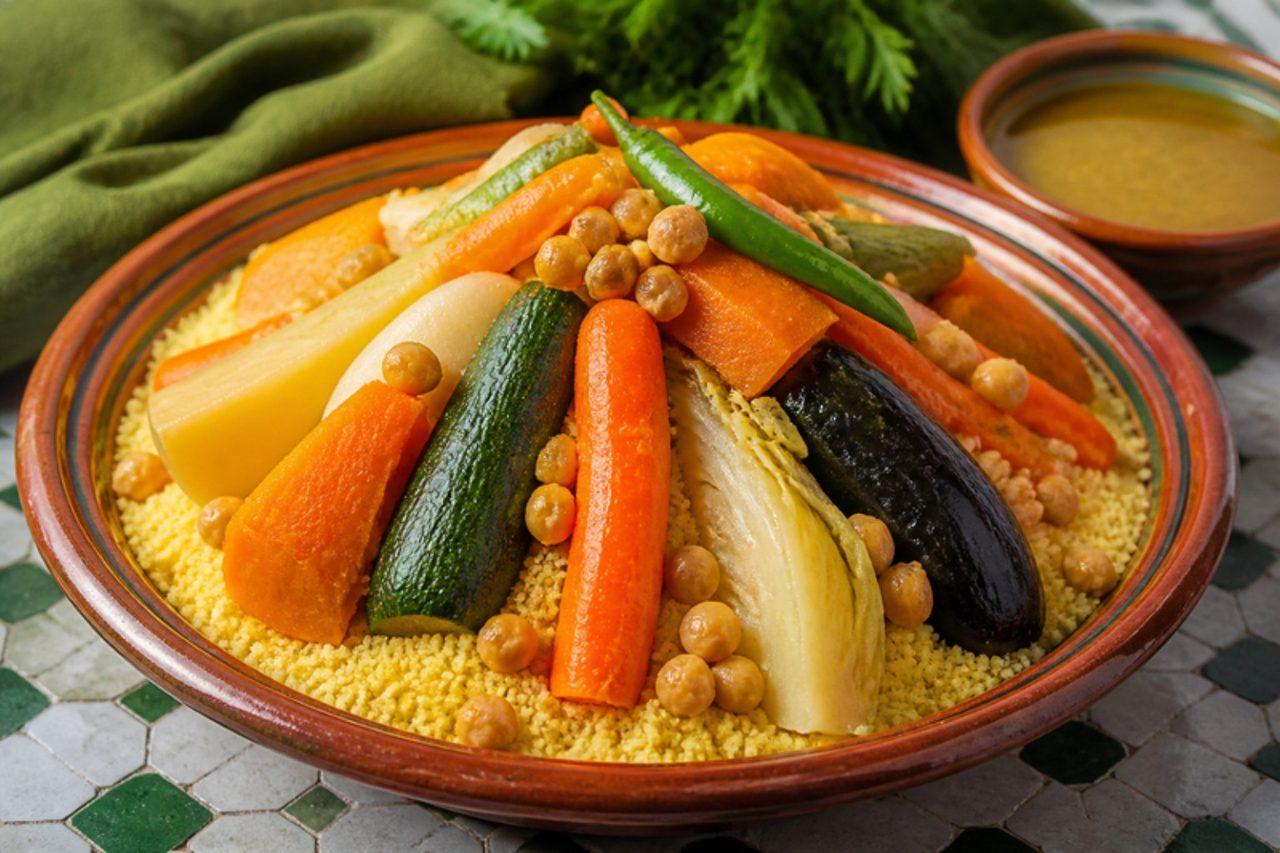
In Casablanca, Friday lunch after midday prayers means couscous bidaoui, the city's own version piled with seven vegetables, from pumpkin and turnip to cabbage and carrot. Families eat it from one great dish, each person working on their own corner of the mound, with extra broth ladled on as they go. The grains are steamed twice over the simmering broth so they swell into separate, fluffy beads that soak up the flavour without turning soggy. This vegetarian version builds the broth from onion, tomato, saffron and chickpeas, so it is rich enough without meat. Chef's tip: rub the couscous between your palms after each steaming to break up every clump; that is what makes it light.

by KrazyBadal 0 views

Couscous tfaya

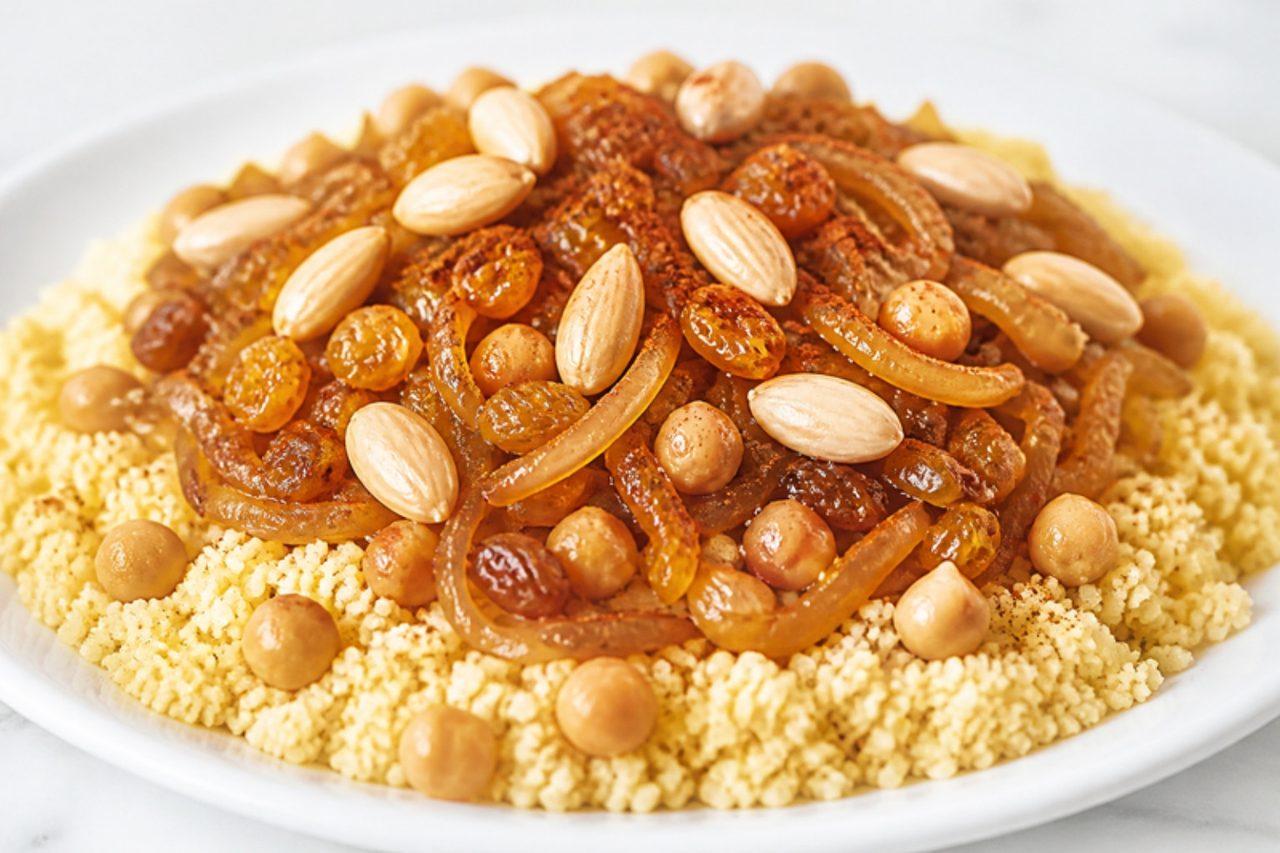
Tfaya is the sweet onion topping that turns a plain couscous into a celebration dish; in Fez and Rabat it is made for weddings, naming ceremonies and Eid, and families in Tétouan add it to Friday couscous too. Onions are cooked slowly with raisins, cinnamon, honey and a little saffron until they collapse into a sticky, mahogany jam, then piled over the couscous with chickpeas and fried almonds. Traditionally it crowns couscous with meat; here the chickpeas and almonds carry the dish, making it a sweet-savoury vegetarian main for a feast. Chef's tip: soak the raisins first, or they draw liquid from the onions and the tfaya catches before it caramelises.

by KrazyBadal 0 views

Chebakia

Chebakia are the dark, sticky, flower-shaped cookies that every Moroccan family associates with Ramadan; women in Fez, Meknes and Casablanca spend a whole day in the weeks before the holy month folding hundreds of them, and they are served at iftar with harira and dates. The dough is scented with anise, cinnamon, saffron and toasted sesame, cut into rectangles, folded into a rose, fried and dropped straight into hot, perfumed honey. They are crisp, chewy and very sweet. Chef's tip: work in small batches and keep the honey hot but not boiling; hot honey soaks in properly, while cool honey just coats the outside.

120 minDesserts
by KrazyBadal 0 views

Risotto alla milanese

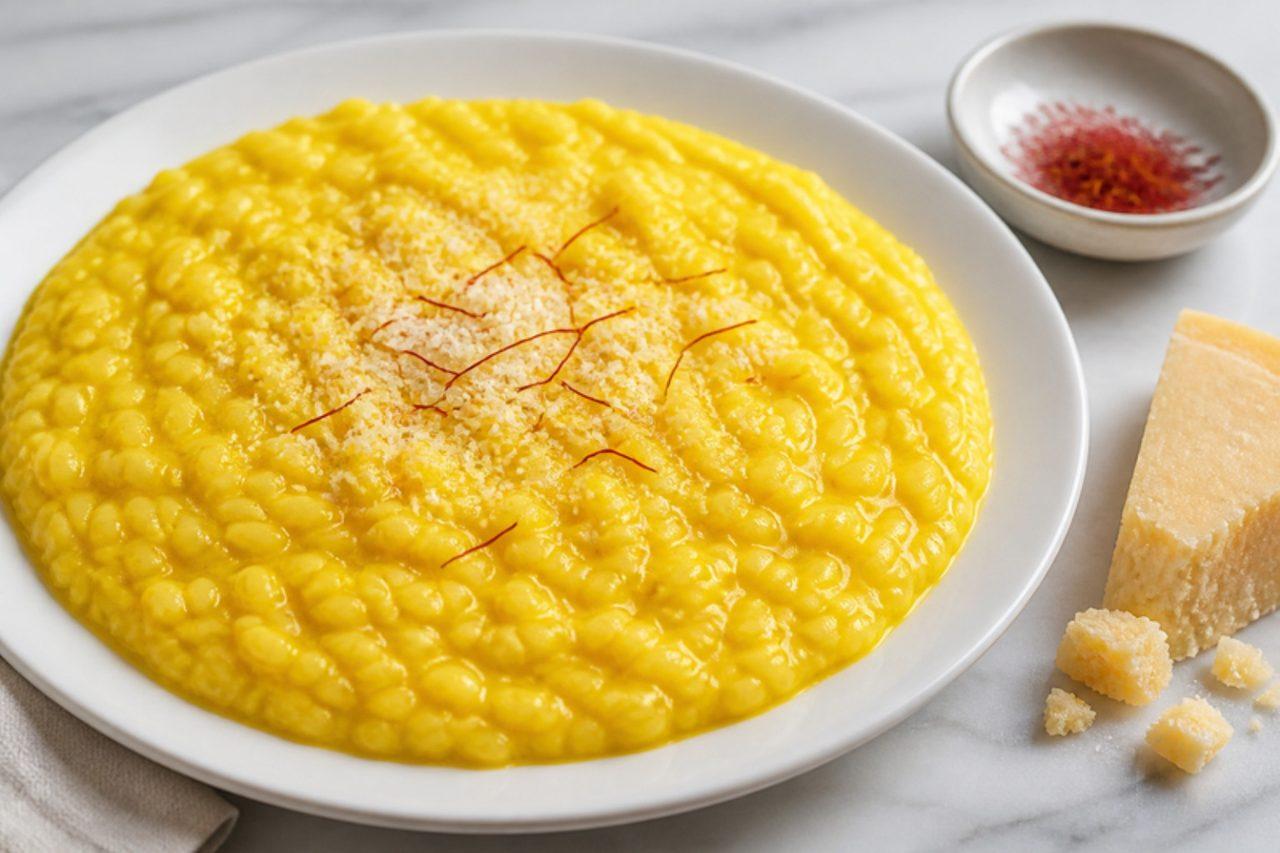
Risotto alla milanese is the saffron risotto of Milan, served on its own as a first course or beside ossobuco on Sunday tables, and a legend says it was first made in 1574 by a glass-painter's apprentice working on the Duomo who coloured rice with saffron. Milanese cooks use beef marrow and meat broth; here a well-flavoured vegetable stock keeps it vegetarian, with butter and hard cheese for richness. It should be all'onda: loose enough to ripple like a wave when you shake the plate. Chef's tip: keep the stock at a bare simmer beside the rice; cold stock stops the cooking and makes the grains chalky.

by KrazyBadal 0 views

Arancini with mushrooms and peas

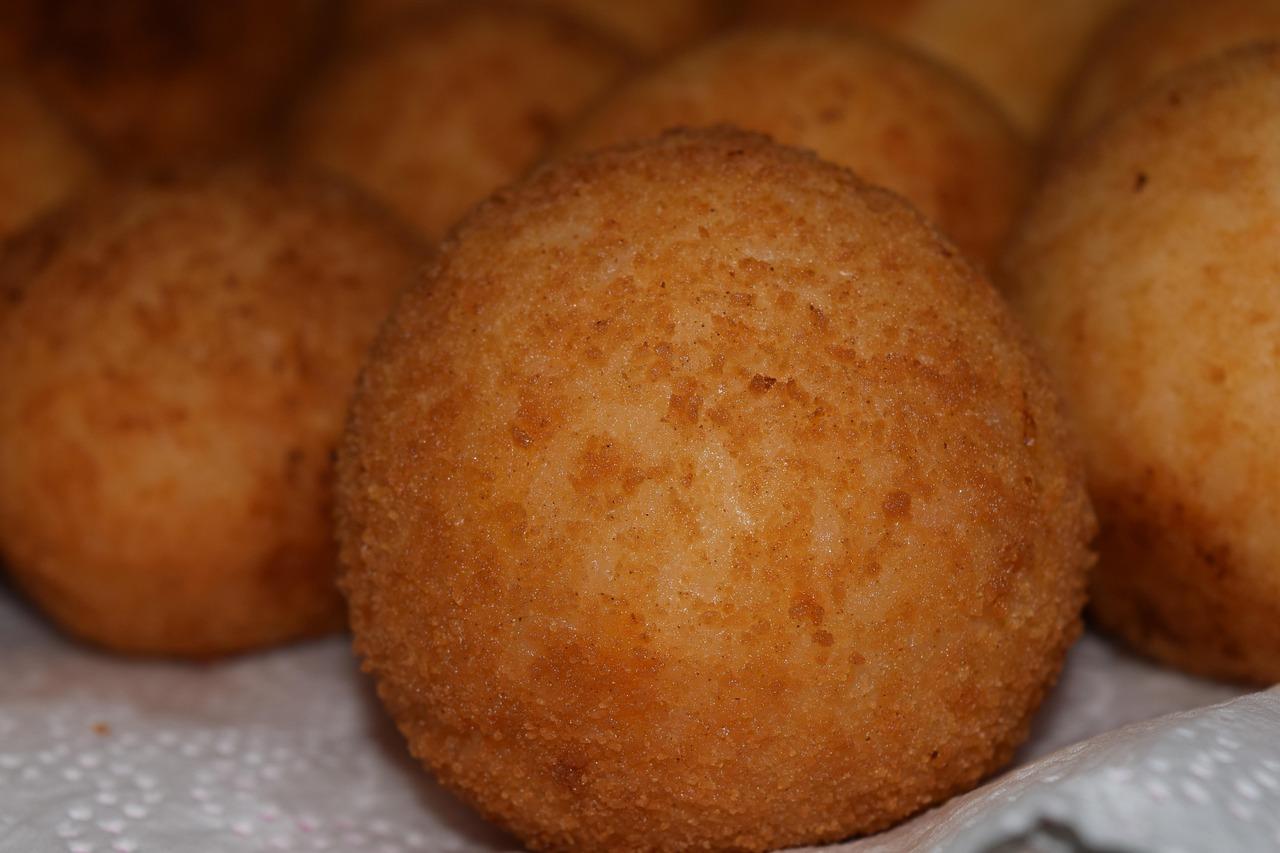
Arancini are the pride of Sicilian rosticcerie, eaten mid-morning or as a snack on the ferry across the Strait of Messina; in Palermo they are round and called arancine, in Catania they are cone-shaped. The rice is cooked with saffron, cooled, then wrapped around a filling and fried until the crust is crackling gold. The best-known filling is meat ragù; this vegetarian version uses a thick tomato ragù of mushrooms and peas with a cube of caciocavallo or mozzarella, which is also found in Sicilian bars. Chef's tip: let the filling cool completely and keep it thick; a wet filling seeps through the rice and makes the balls split.

by KrazyBadal 0 views

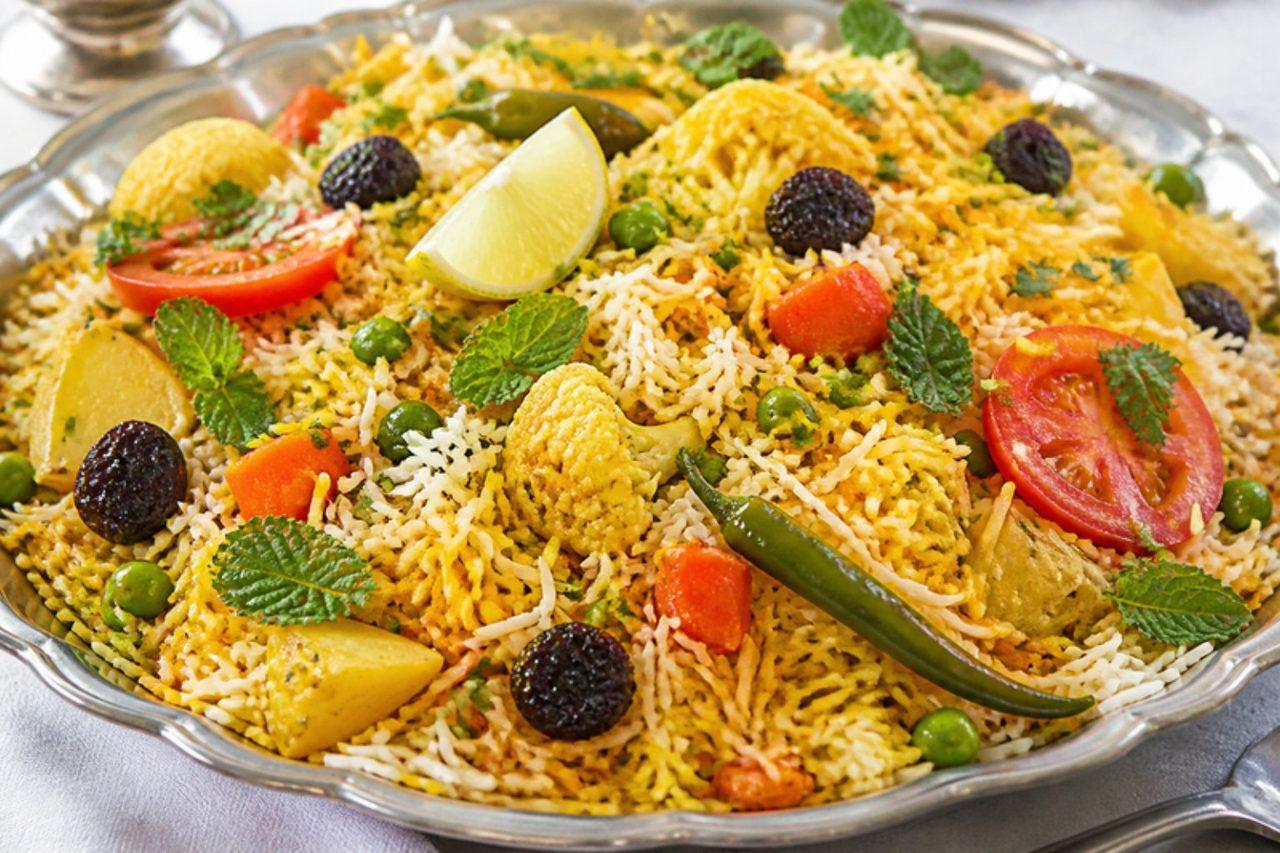
Vegetable Sindhi biryani

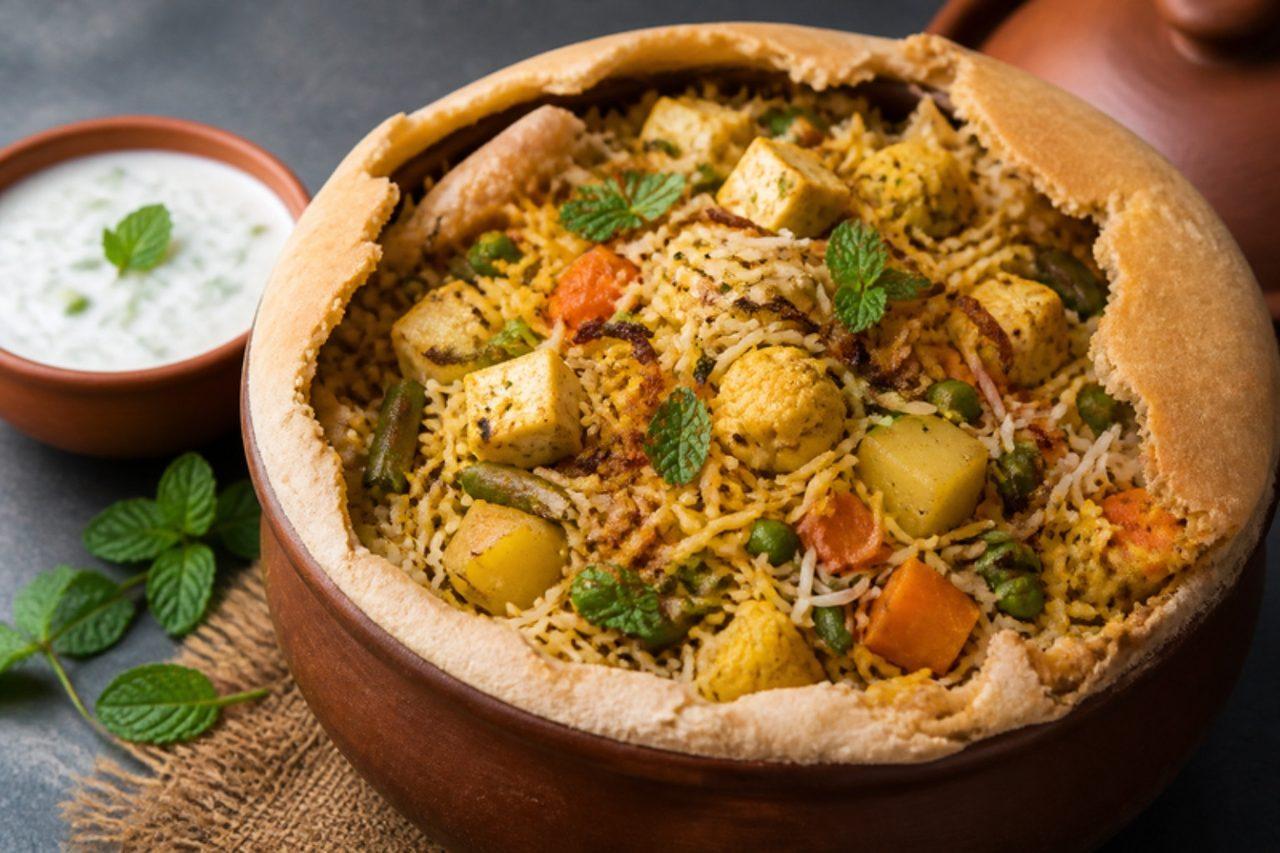
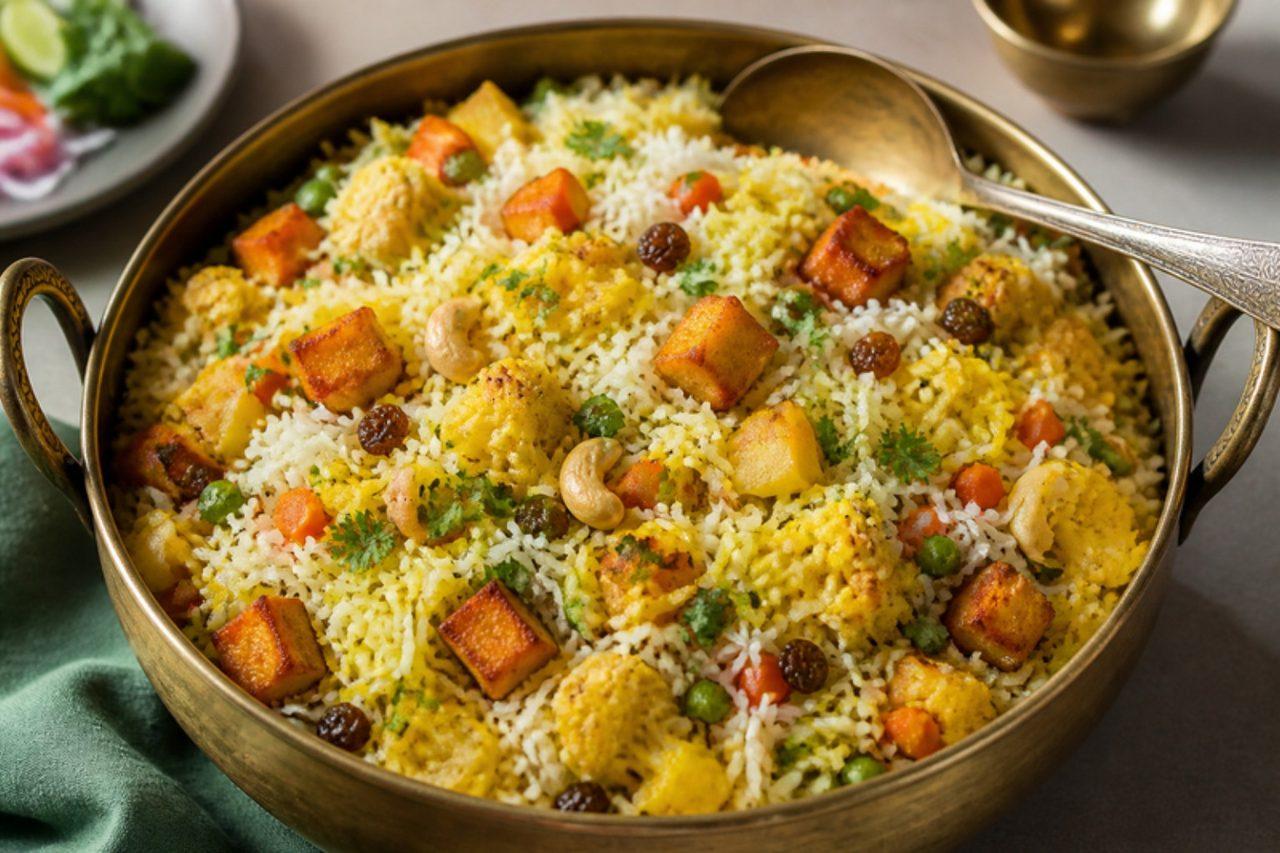
Sindhi biryani is the biryani of Karachi, Hyderabad and the rest of Sindh, and it is the one people order by the deg (a huge pot) for weddings, Eid lunches and every big family gathering. What makes it Sindhi is the tang and the heat: plenty of tomatoes, yogurt, whole green chillies and sour dried plums (aloo bukhara) in the masala, with chunks of potato that soak up all of it. This vegetable version keeps all of that and swaps the meat for potato, carrot, cauliflower and peas, layered with half-cooked basmati, fried onions, mint and saffron milk, then steamed shut. A common mistake is boiling the rice until soft before layering; take it out when a grain still has a firm white core, because it finishes in the steam. Chef's tip: fry the onions until deep brown but not black, and keep the oil they fried in; it carries their flavour into every layer.

by KrazyBadal 0 views

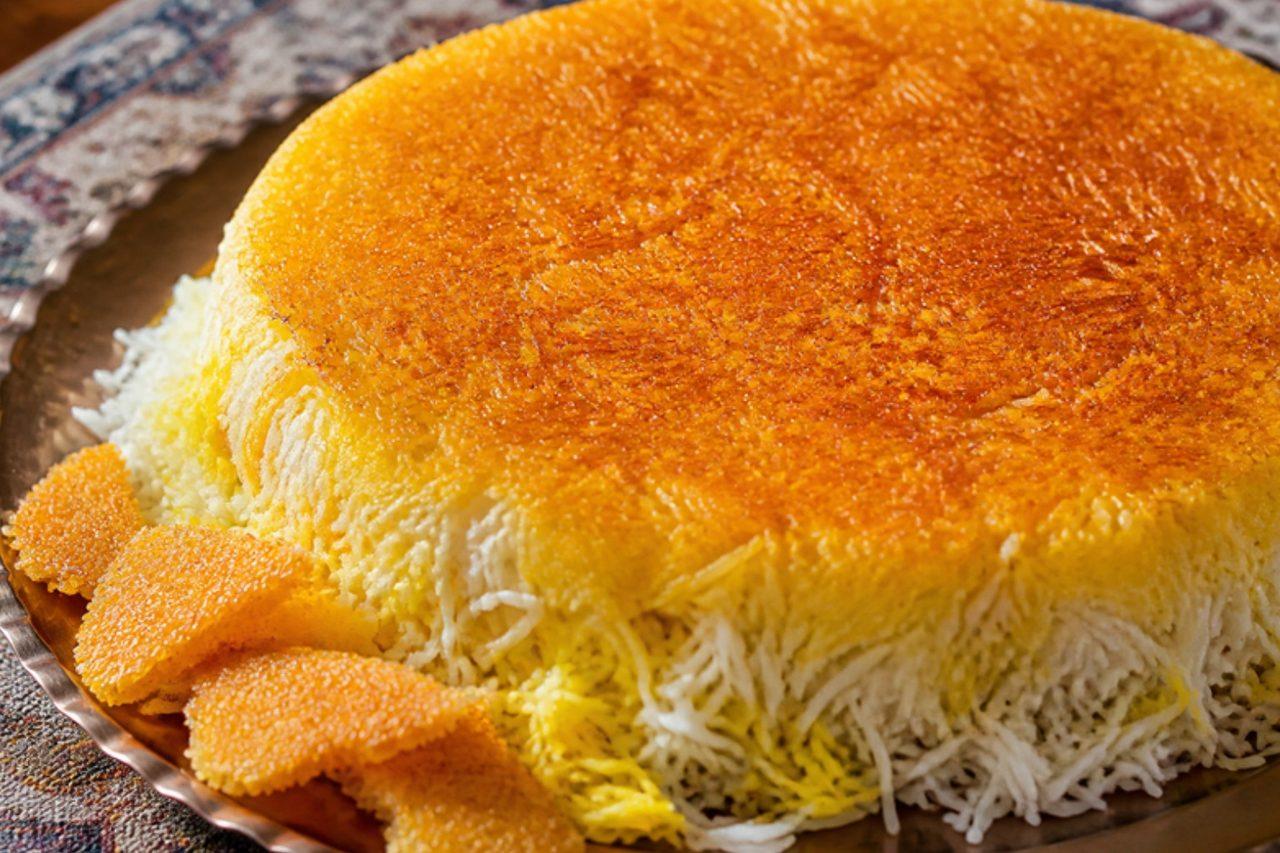
Chelow with tahdig

Chelow is the plain, fluffy steamed rice at the centre of almost every Iranian lunch table, and tahdig ('bottom of the pot') is the crisp golden crust that forms underneath it. In homes from Tehran to Isfahan the pot is turned out at the table and the shards of tahdig are fought over before anyone touches the stew. The method is the master one for all Persian polo dishes: long-grain rice is soaked, boiled briefly, then steamed slowly under a cloth-wrapped lid so every grain stays separate and long. This page gives a yogurt-and-saffron tahdig, with potato and flatbread versions in the steps. Serve it with ghormeh sabzi, a yogurt dip and fresh herbs. Chef's tip: turn the heat up for the first 10 minutes until you hear a steady sizzle, then right down; that early burst is what sets the crust.

by KrazyBadal 0 views

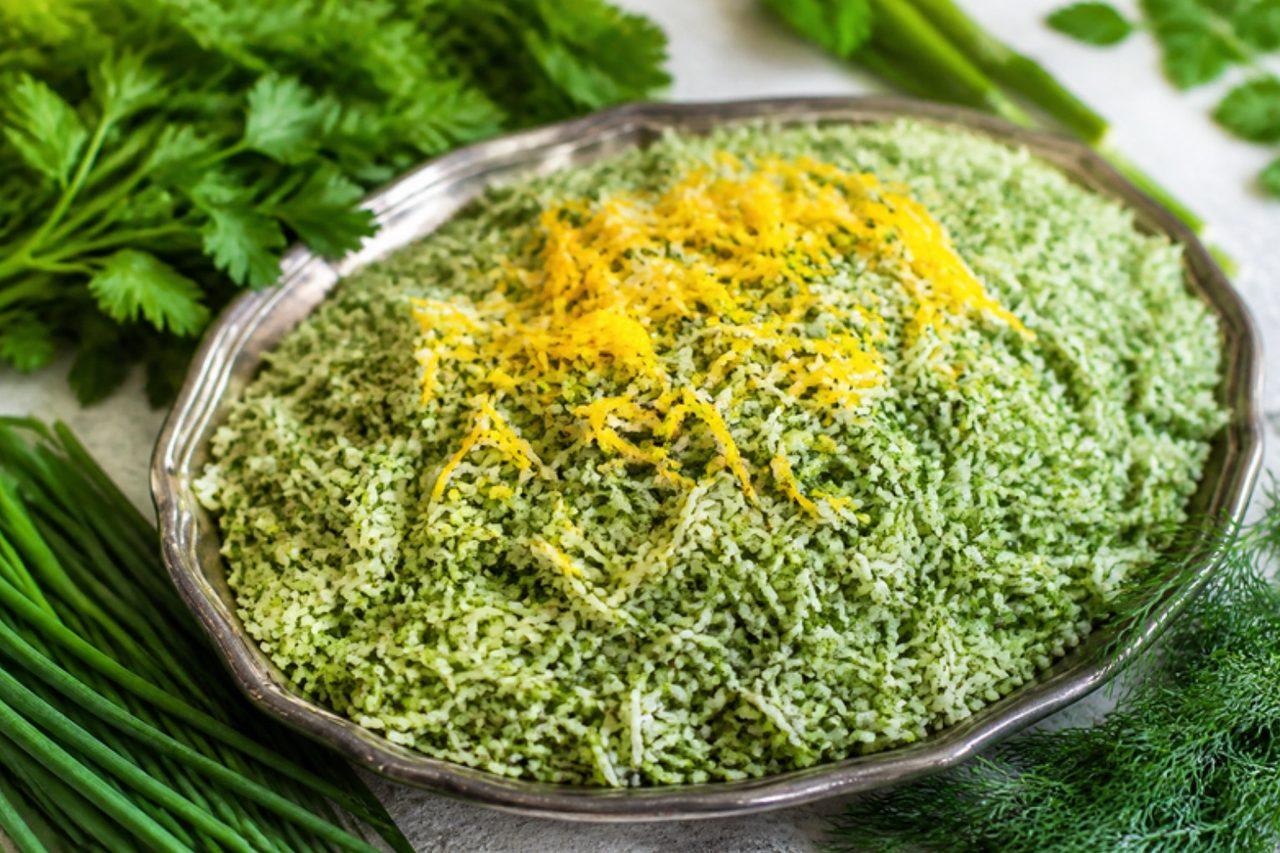
Sabzi polo

Sabzi polo is the rice of Nowruz, the Persian New Year on the spring equinox, when families across Iran sit down on the first evening to a mound of rice speckled green with dill, parsley, coriander and chives. Fresh green herbs stand for renewal, and the dish is traditionally paired with fish on the New Year table; a vegetarian house serves it with kuku sabzi, the herb omelette, fried eggs or a bowl of yogurt. The rice tastes bright and grassy, with a gentle garlic note and a golden lavash crust underneath. Chef's tip: chop the herbs the day before and spread them on a tray to dry slightly; damp herbs make the rice heavy and clumpy.

by KrazyBadal 0 views

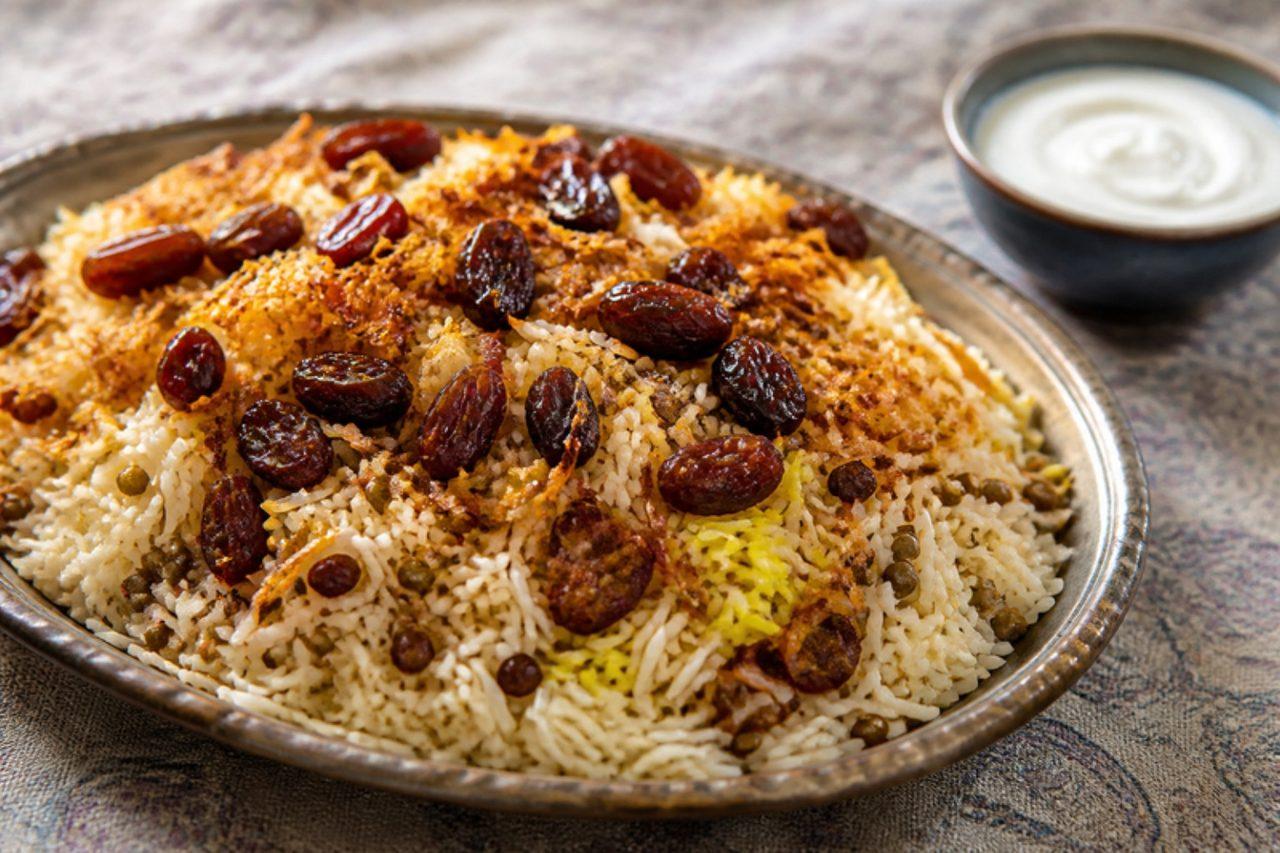
Adas polo

Adas polo is a homely Tehran weekday rice, also served at the Yalda winter-solstice gathering in December, when tables fill with dried fruit. Brown lentils and long-grain rice are layered and steamed together, then topped with dates and raisins warmed in butter with cinnamon, so every spoonful is savoury, earthy and lightly sweet. Unlike Levantine lentil-and-rice dishes, the rice keeps its long separate grains and gets a saffron crust underneath. Serve it with yogurt, a herb plate and salad shirazi for a complete meal. Chef's tip: cook the lentils separately until just tender but whole; they finish softening during the steam.

by KrazyBadal 0 views

Shirin polo

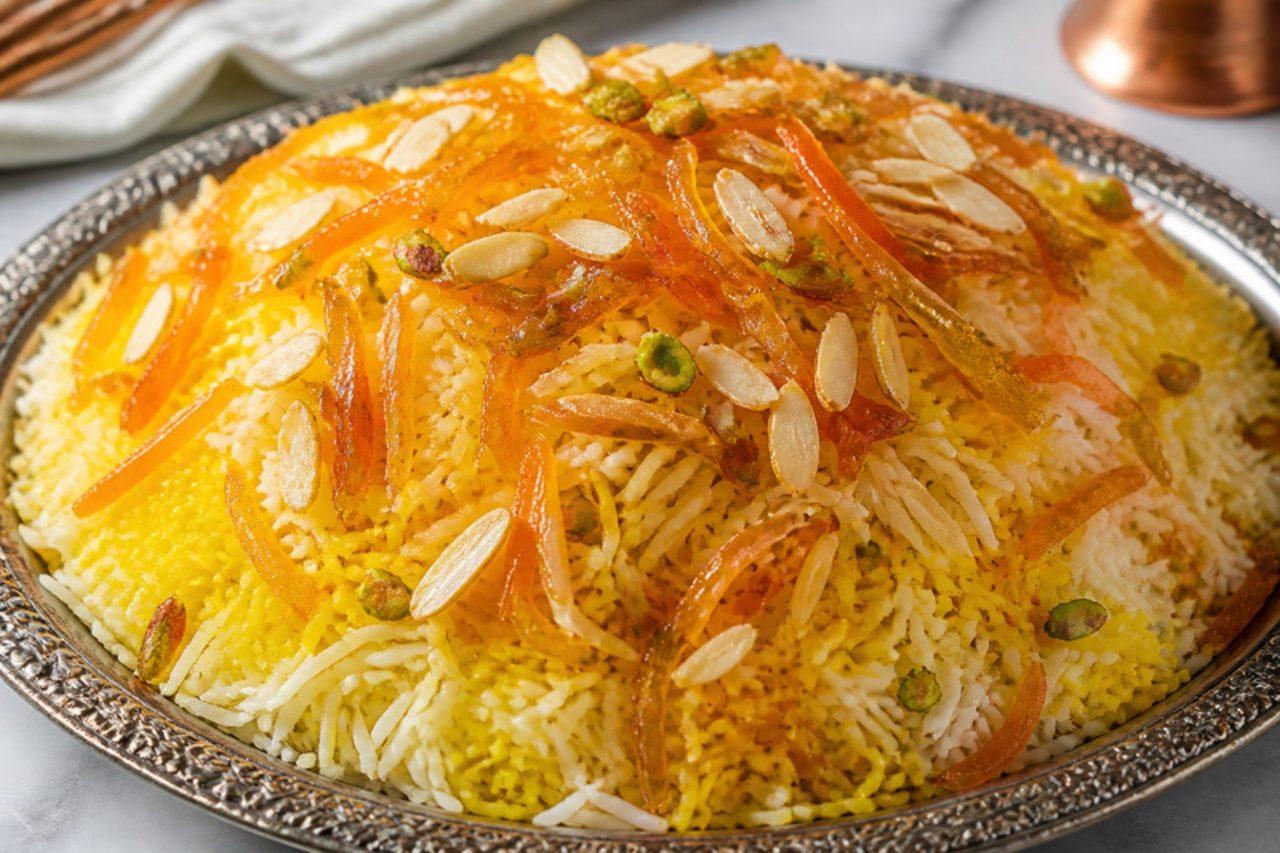
Shirin polo ('sweet rice') is the wedding rice of Iran, especially among Azerbaijani families in Tabriz, where a gleaming platter of it is carried out at the celebration feast to wish the couple a sweet life. Long grains of saffron rice are layered with candied orange peel, fine strips of carrot, slivered almonds and pistachios, all perfumed with cardamom and rosewater. It is fragrant and only gently sweet, with a citrus bitterness that keeps it from being cloying. Serve it as the centrepiece of a party with yogurt and a herb stew. Chef's tip: blanch the orange peel three times in fresh water; skip this and the whole platter tastes bitter.

by KrazyBadal 0 views

Baghali polo

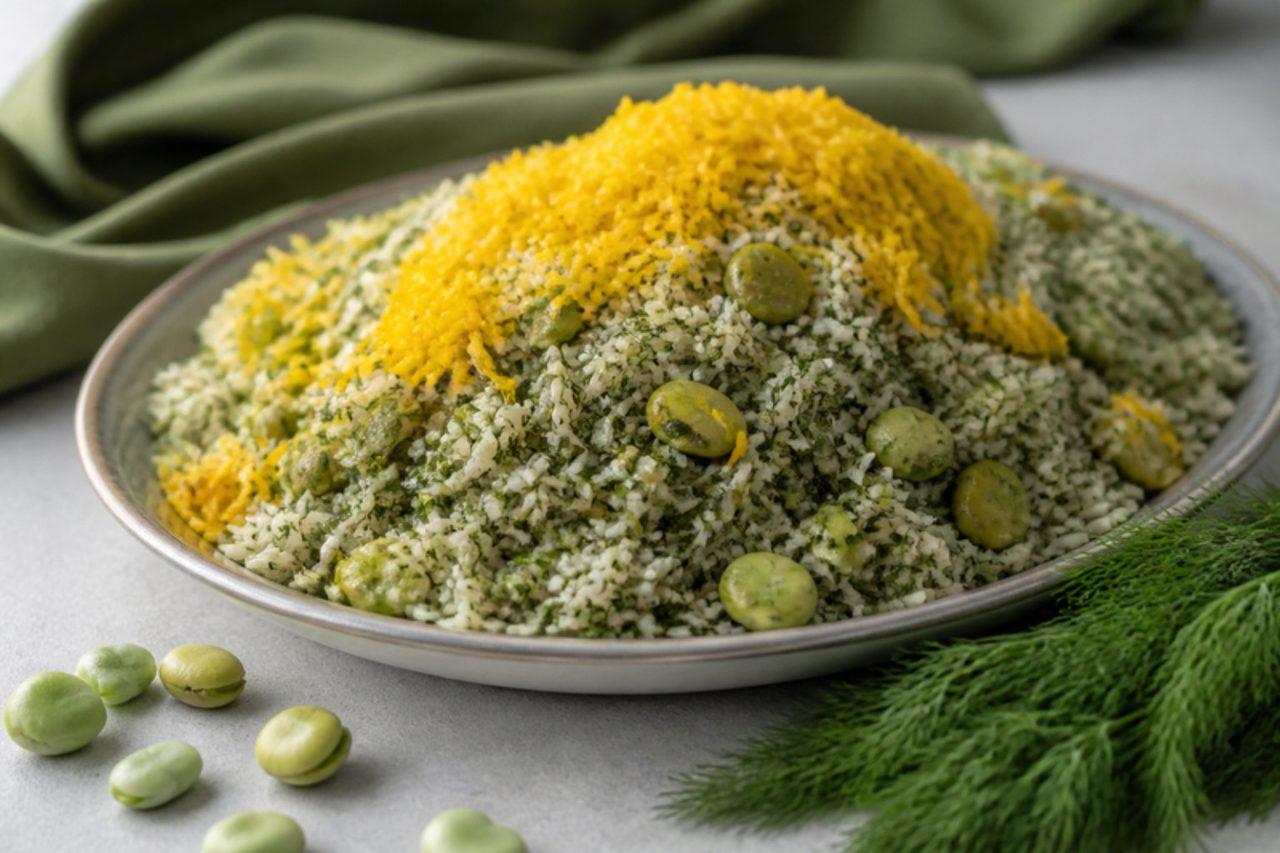
Baghali polo is the rice Iranians cook when fresh broad beans appear in the markets of Tehran and Shiraz in late spring, though frozen beans keep it on the table all year and it turns up at parties and weddings across the country. Bright green beans and plenty of dill are folded through steamed saffron rice, giving a soft, buttery, herb-heavy dish with sweet nuggets of bean in every mouthful. It is often served with lamb; at a vegetarian table pair it with a fried egg, mast-o khiar and a sharp salad. Chef's tip: peel the inner skins off the broad beans; the bright green centres are tender and sweet, the skins tough.

by KrazyBadal 0 views

Kashk-e bademjan

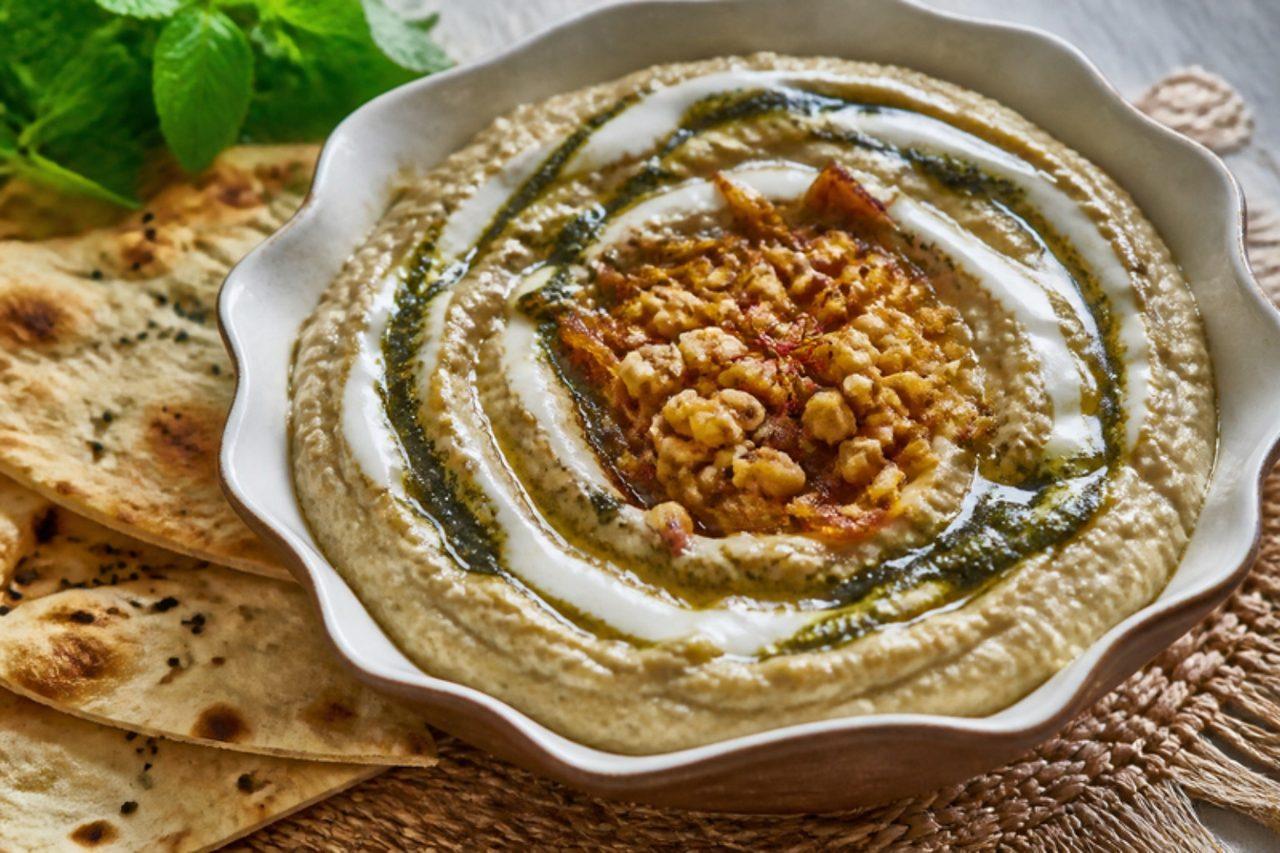
Kashk-e bademjan is the aubergine dip that greets you at the start of a meal in Tehran restaurants and at family gatherings all over Iran, swirled on a plate and decorated with fried onions, mint oil, walnuts and white ribbons of kashk. Fried aubergine is mashed with golden onions and garlic, then enriched with kashk, a tangy, salty fermented whey. Most kashk is made from soured yogurt without rennet, but some brands use cheese whey, so check the label if you avoid animal rennet; strained Greek yogurt beaten with a little sour cream and lemon is a good substitute. Serve it with warm flatbread. Chef's tip: fry the dried mint for a few seconds only, off the heat; it should smell sweet, not scorched.

by KrazyBadal 0 views

Sholeh zard

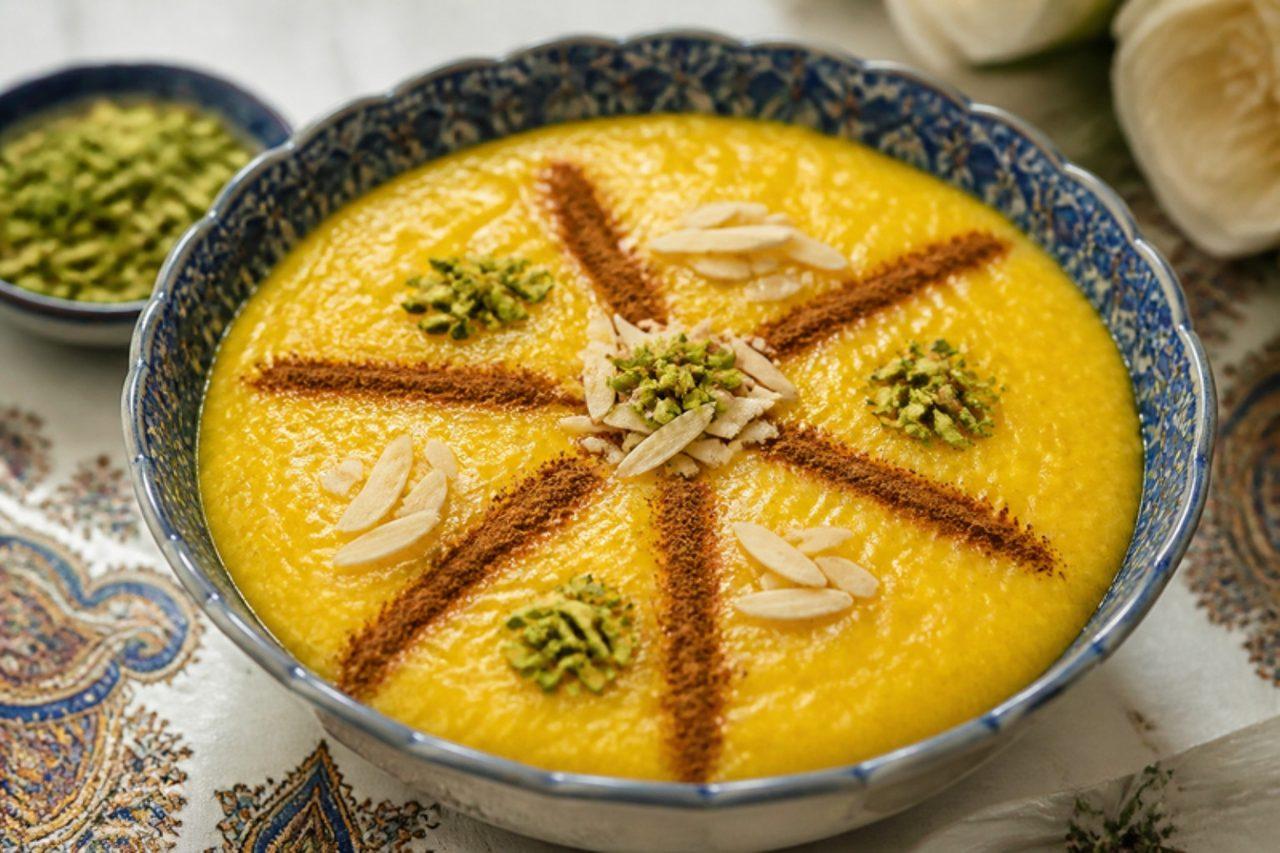
Sholeh zard is the bright yellow rice pudding that Iranians cook in huge pots as nazri, food given away to neighbours and strangers, especially during the month of Muharram and on religious feast days; neighbourhoods in Tehran and Mashhad fill with its smell of saffron and rose. Rice is simmered until it almost melts, then sweetened, coloured gold with saffron and perfumed with rosewater and cardamom. It sets softly as it cools and is decorated with cinnamon lines, almonds and pistachios. This version uses a little oil instead of butter, so it is vegan. Chef's tip: add the sugar only when the rice is completely soft; sugar added early stops the grains from breaking down.

75 minDessertsVeganGluten free
by KrazyBadal 0 views

Firni

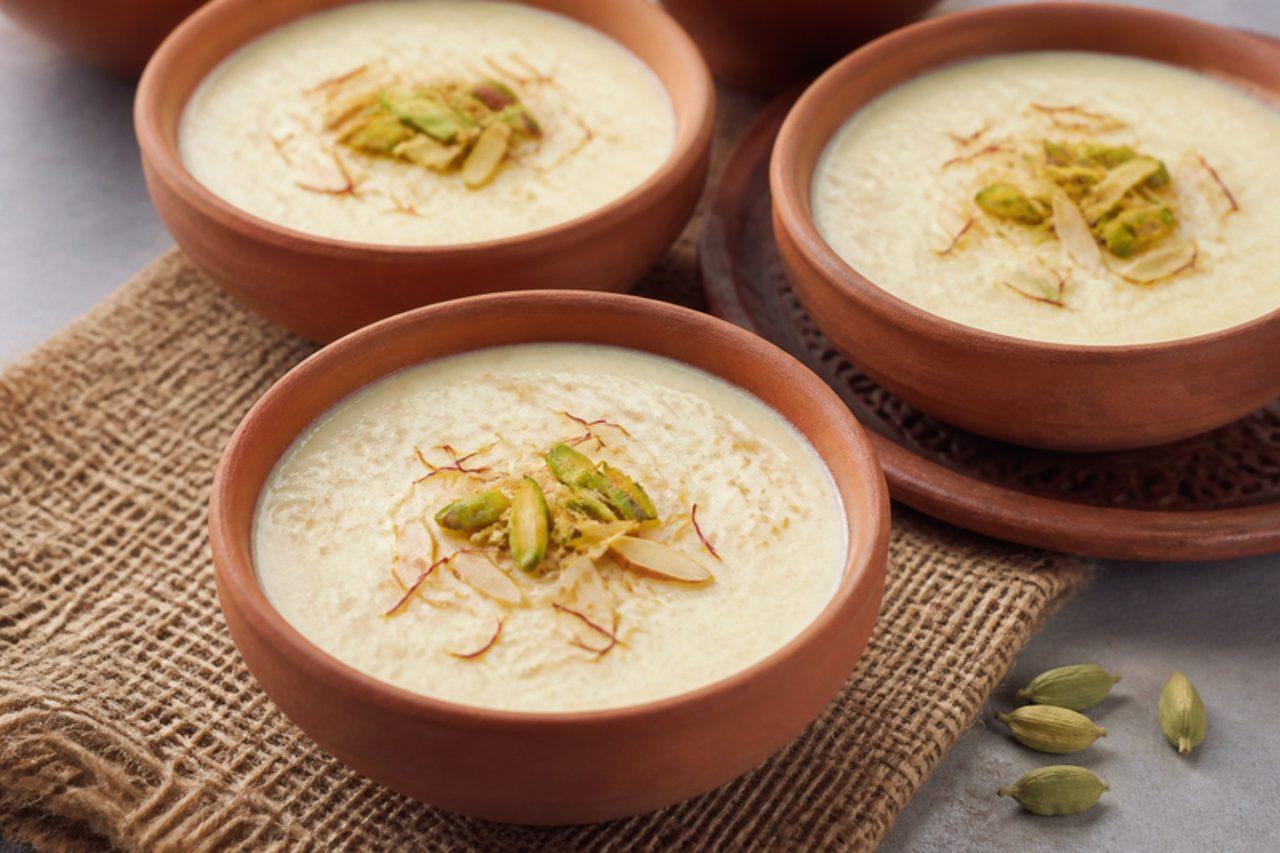
Firni is the dessert that turns up in little clay bowls on Eid tables across Bangladesh, especially after the evening meal on Eid-ul-Fitr. It is smoother and thicker than payesh: instead of whole rice grains, coarsely ground rice is simmered in milk until it sets into a silky pudding, scented with cardamom and rose water and scattered with pistachios and almonds. It is served chilled, so it's made a day ahead. Chef's tip: grind the soaked rice to a coarse semolina-like grit, not a fine powder; that slight texture is what makes firni feel rich.

by KrazyBadal 0 views

Jhangora ki kheer

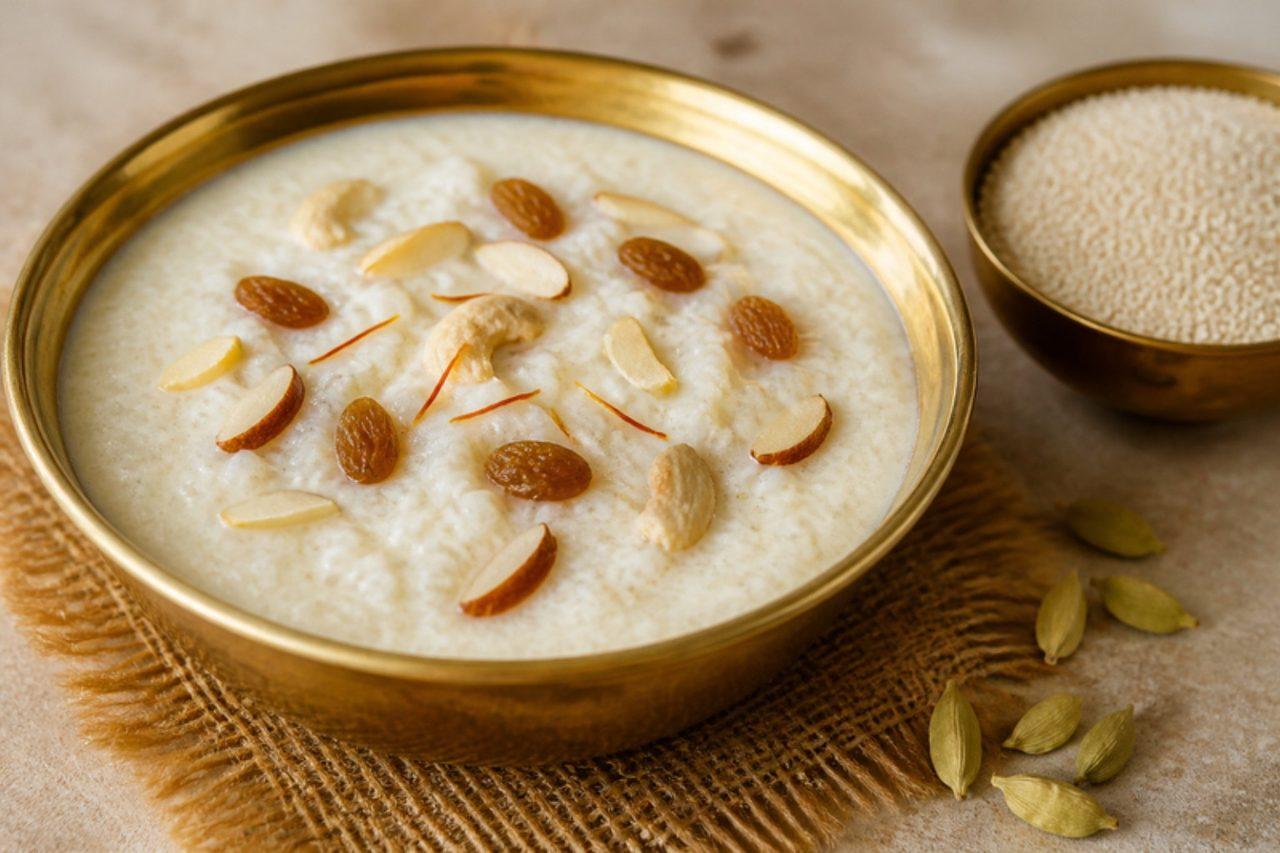
Jhangora is barnyard millet, a hardy grain that grows on the high fields of Garhwal and Kumaon, and this kheer is how most hill families turn it into something special. It cooks faster than rice kheer and ends up softer and silkier, with a light, nutty taste. Because millet isn't a cereal grain, it's eaten on Navratri and Ekadashi fasts, when you'll find bowls of it at temples and in homes from Rishikesh to Chamoli. It is just as good chilled the next day. Chef's tip: soak the millet for 20 minutes before cooking; it softens evenly and you won't be left with hard little grains in the pudding.

by KrazyBadal 0 views

Shahi tukda

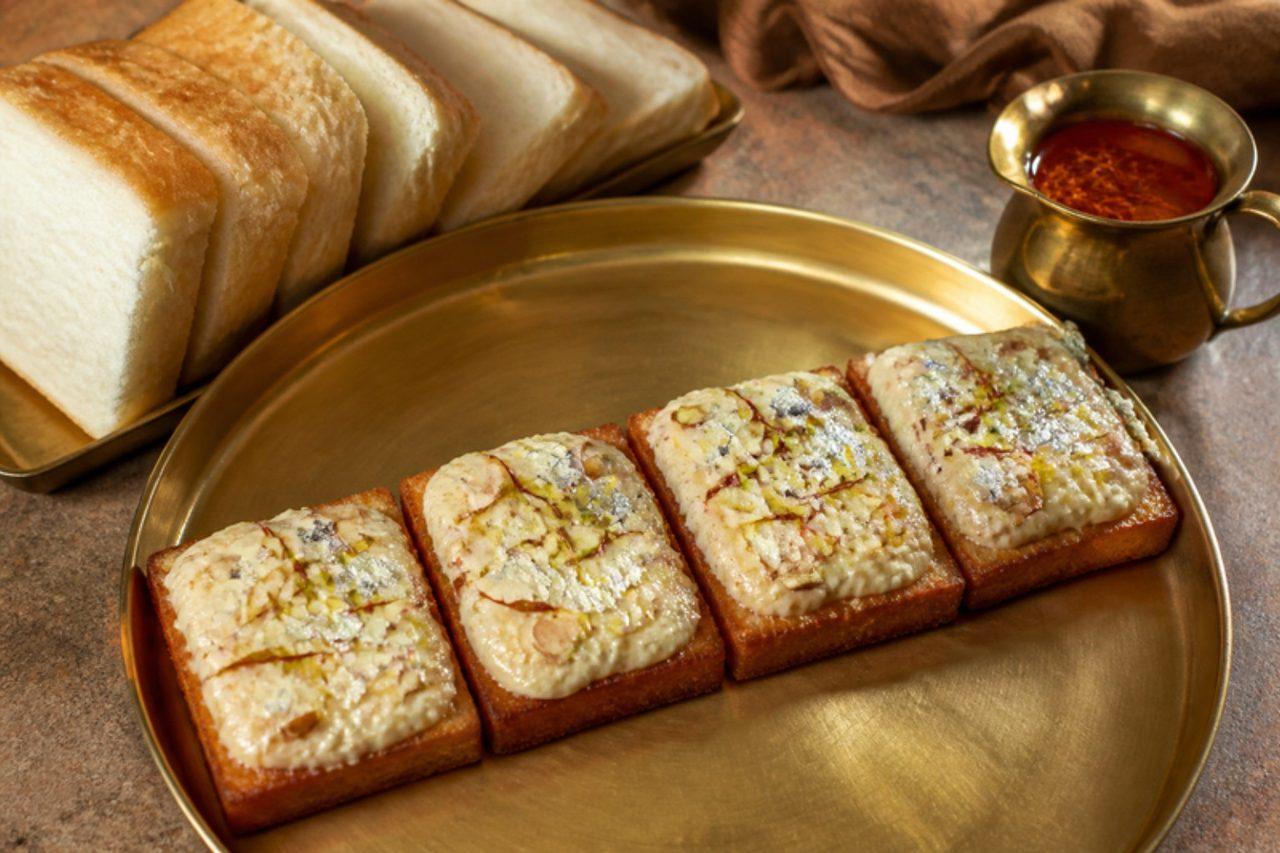
Shahi tukda, the 'royal piece', comes from the Mughal kitchens of Old Delhi, and you'll still find trays of it around Jama Masjid during Ramzan, eaten after the evening meal, and at Eid feasts. Thick slices of bread are fried in ghee until crisp and golden, dipped briefly in cardamom and saffron syrup, then covered with rabri, milk slowly reduced until thick and full of creamy flakes. The bread stays crisp at the edges and soft in the middle. It's rich, so small pieces go a long way. Chef's tip: start the rabri first and let it simmer while you fry the bread; it takes the longest and needs only an occasional stir.

by KrazyBadal 0 views

Daulat ki chaat

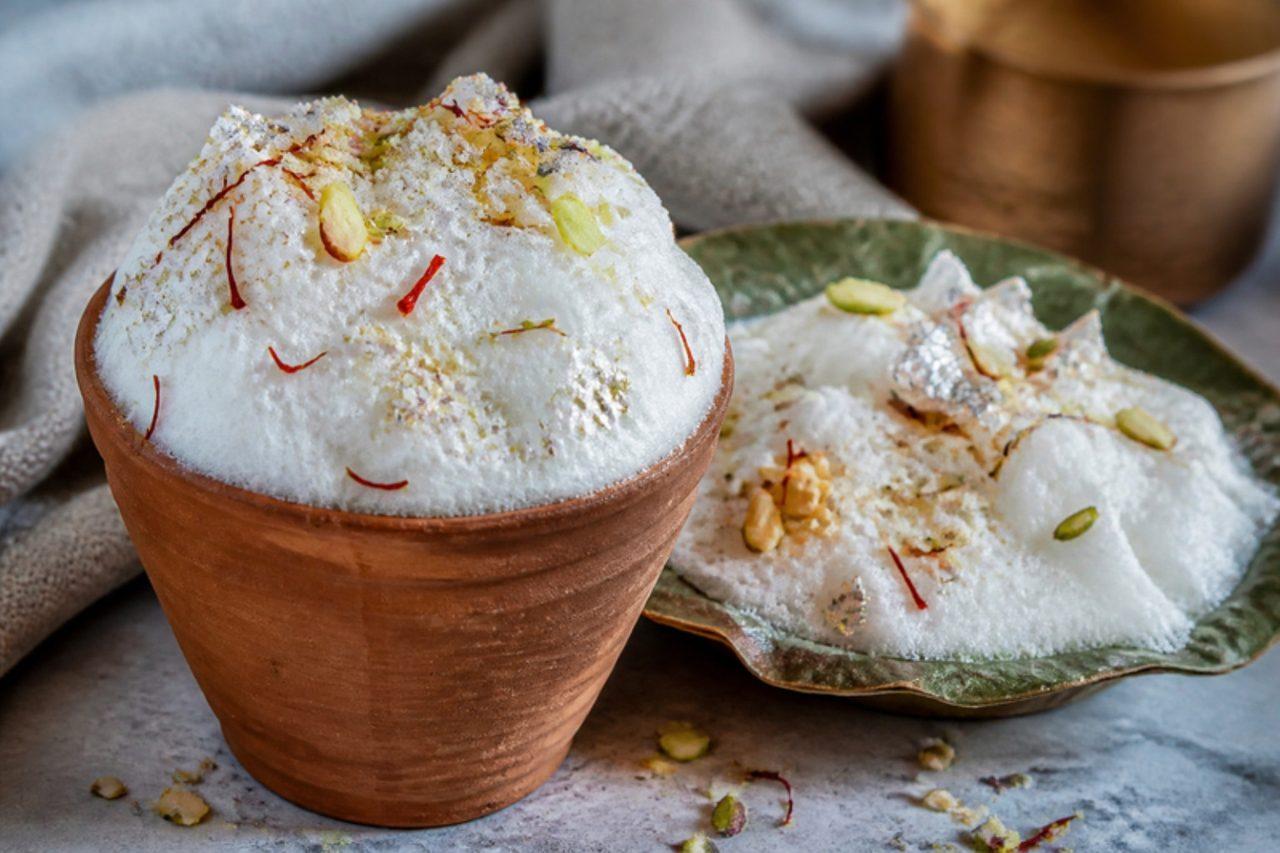
Daulat ki chaat appears in the lanes of Chandni Chowk only in the coldest months, from about November to February. Vendors whisk milk and cream through the night and leave it out under the winter dew, then skim off a foam so light it disappears on your tongue, topped with saffron, khoya, sugar and pistachios. It's sold before the sun gets high, because warmth destroys it. A home kitchen can't recreate a Delhi winter night, so this version uses very cold milk and cream whipped to a loose foam and layered with saffron. It comes close: airy, cool, faintly sweet. Chef's tip: chill everything, bowl and whisk included, for at least 4 hours; the colder the milk, the more stable the foam.

by KrazyBadal 0 views

Awadhi vegetable dum biryani

Lucknow's cooks built their reputation on restraint: the Awadhi biryani is perfumed rather than fiery, with no tomato, very little chilli and whole spices that whisper instead of shout. Vegetables are cooked in spiced yogurt, layered with long-grain rice that is only three-quarters done, then sealed under a dough lid so everything finishes in its own steam, a technique the city calls dum pukht. It is the dish for Eid gatherings, wedding buffets and long Sunday lunches across Uttar Pradesh, served with a cooling raita and a sliced onion salad. The common mistake is boiling the rice fully before layering; it then turns soft and sticky under the lid instead of separating into long, distinct grains. Chef's tip: lift a grain and press it between your fingers before draining; it should break into two or three firm pieces with a white core.

by KrazyBadal 0 views

Lucknowi sheermal

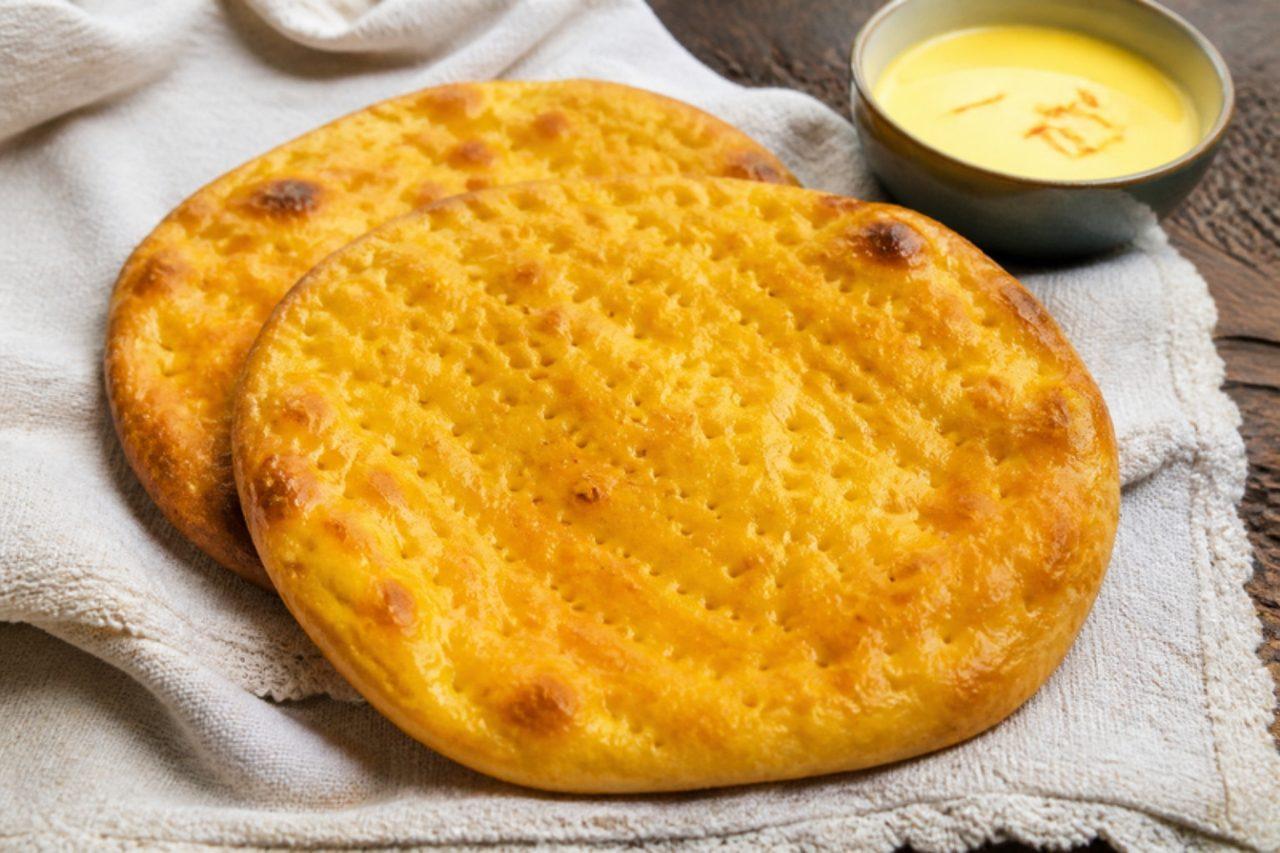
Sheermal is a soft flatbread made with milk and ghee instead of water, lightly sweet, and brushed with saffron milk so it bakes to a glossy amber colour. In Lucknow's old quarters like Chowk and Aminabad, bakers still make it in tandoors each morning, and families buy it for Eid, weddings and Ramadan iftar, eating it alongside rich kormas or simply with a cup of milky tea. It sits halfway between bread and pastry. The usual mistake is adding too much flour while kneading because the dough feels sticky; a dry dough gives a tough, crumbly sheermal. Chef's tip: oil your hands instead of flouring the surface, and let the rich dough rise until it is truly doubled.

by KrazyBadal 0 views

Ghevar

During the monsoon festival of Teej and through Raksha Bandhan, Jaipur's sweet shops stack golden, honeycomb discs of ghevar in their windows. The batter is little more than flour, chilled ghee and ice-cold water, poured into hot ghee in thin streams so it foams into a lacy round. It is then soaked in syrup and finished with rabri, sliced pistachios and a pinch of saffron. Married daughters traditionally receive it from their mothers' homes during Teej. The most common mistake is batter that is too warm or too thick; it fries into a heavy pancake instead of a web. Chef's tip: whisk the ghee with ice cubes until it is white and fluffy before adding flour, and keep the batter bowl in a tray of ice water while frying. A narrow, deep pan, or a metal ring set in a saucepan, gives the sides that help the batter build up.

by KrazyBadal 0 views

Mohan thaal

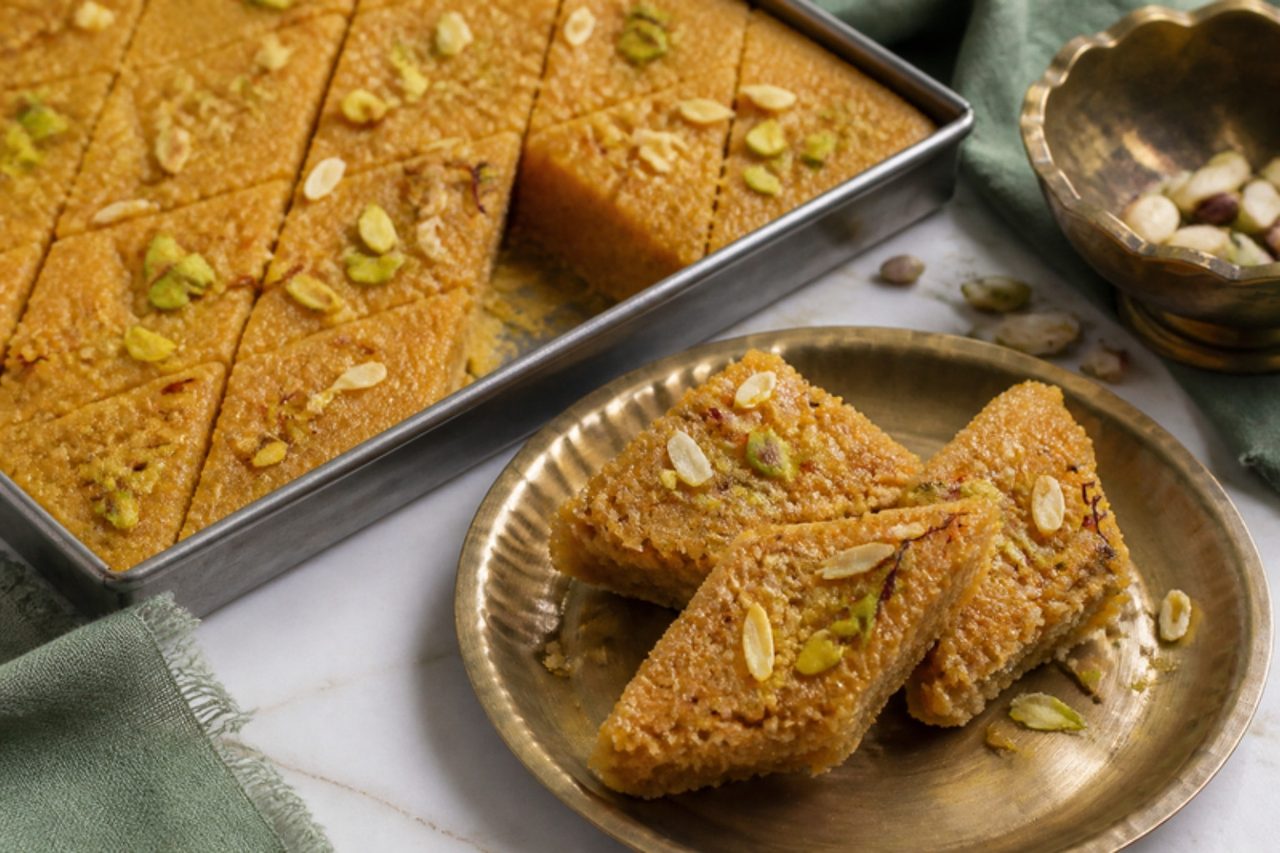
Mohan thaal, named after Krishna, is offered at temples on Janmashtami and fills sweet boxes at Diwali in both Rajasthan and Gujarat. It is coarse gram flour roasted in ghee until it turns golden and smells like roasted nuts, then set with cardamom syrup into a grainy, fudge-like slab and cut into diamonds. The texture comes from a step called dhabo: rubbing ghee and milk into the flour, then sieving it into tiny granules before roasting. The mistake most cooks make is cooking the syrup too long; the fudge sets rock-hard and crumbles when cut. Chef's tip: take the syrup off the heat at a firm one-and-a-half string stage, and stop stirring when the mixture pulls away from the pan's sides in one mass.

by KrazyBadal 0 views

Jodhpuri kabuli

Jodhpuri kabuli is a celebration rice from Marwar that has nothing to do with chickpeas; the name refers to its rich, layered style. Rice is stacked with vegetables simmered in spiced yogurt and milk, crisp fried bread cubes, cashews, raisins and saffron, then steamed under a lid so the bread absorbs the juices while the top stays crunchy. Jodhpur families cook it for weddings and festive lunches, and it is eaten on its own with raita or kadhi. A common mistake is layering the bread at the bottom, where it becomes soggy; it belongs in the middle and on top. Chef's tip: cook the rice only until it still has a firm bite, because it will finish cooking during the dum.

by KrazyBadal 0 views

Indori shikanji

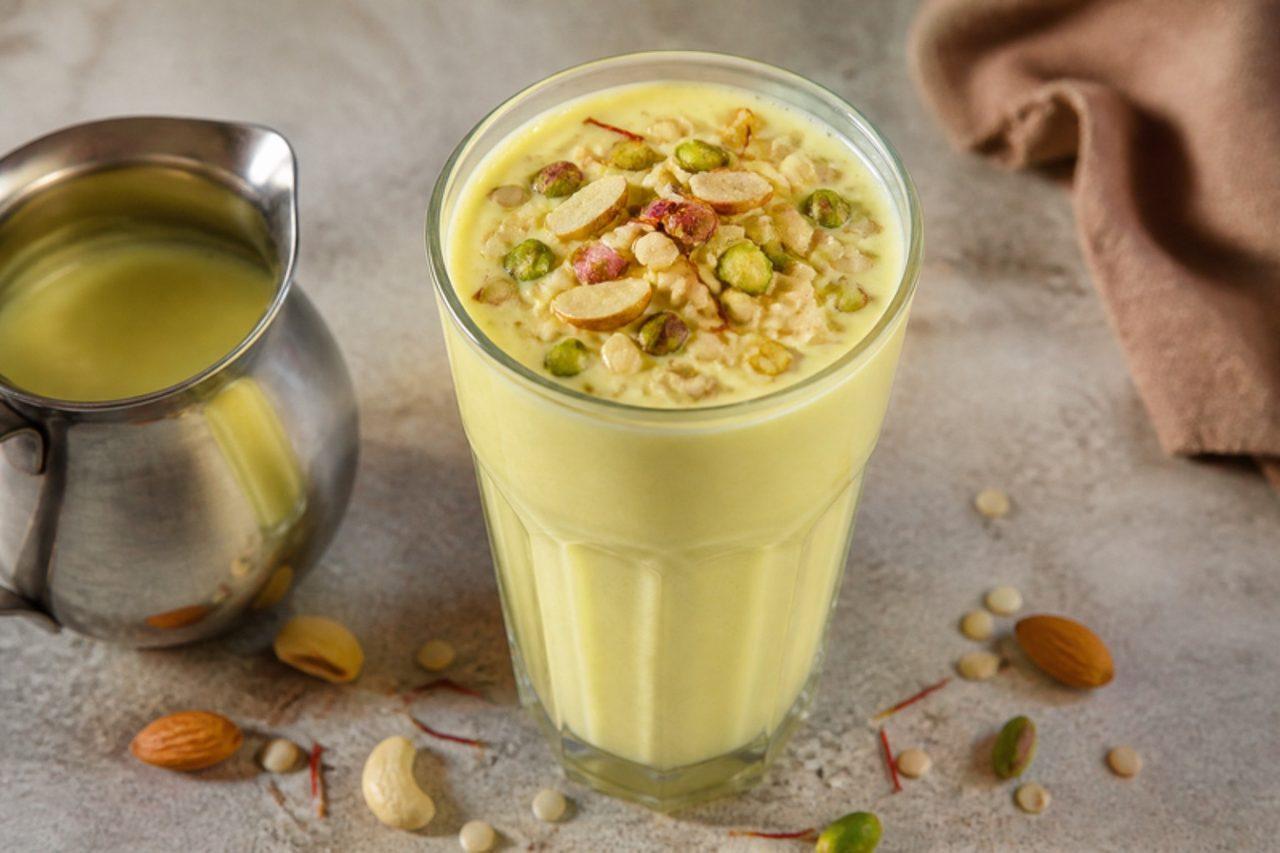
Anyone who orders shikanji in Indore expecting lemonade gets a surprise: here it is a spoonably thick drink of slow-reduced milk, saffron and cardamom, with a gentle tang from thick yogurt and plenty of chopped dry fruit. It is a late-night treat at Sarafa and Chhappan Dukan, poured from steel jugs into glasses after a round of savoury snacks. Think of it as somewhere between a lassi and a cold rabri. Chef's tip: the milk must be completely cold before the yogurt goes in, or the drink splits into grainy curds.

45 minDrinksGluten freeIndian
by KrazyBadal 0 views

Jaipuri malpua

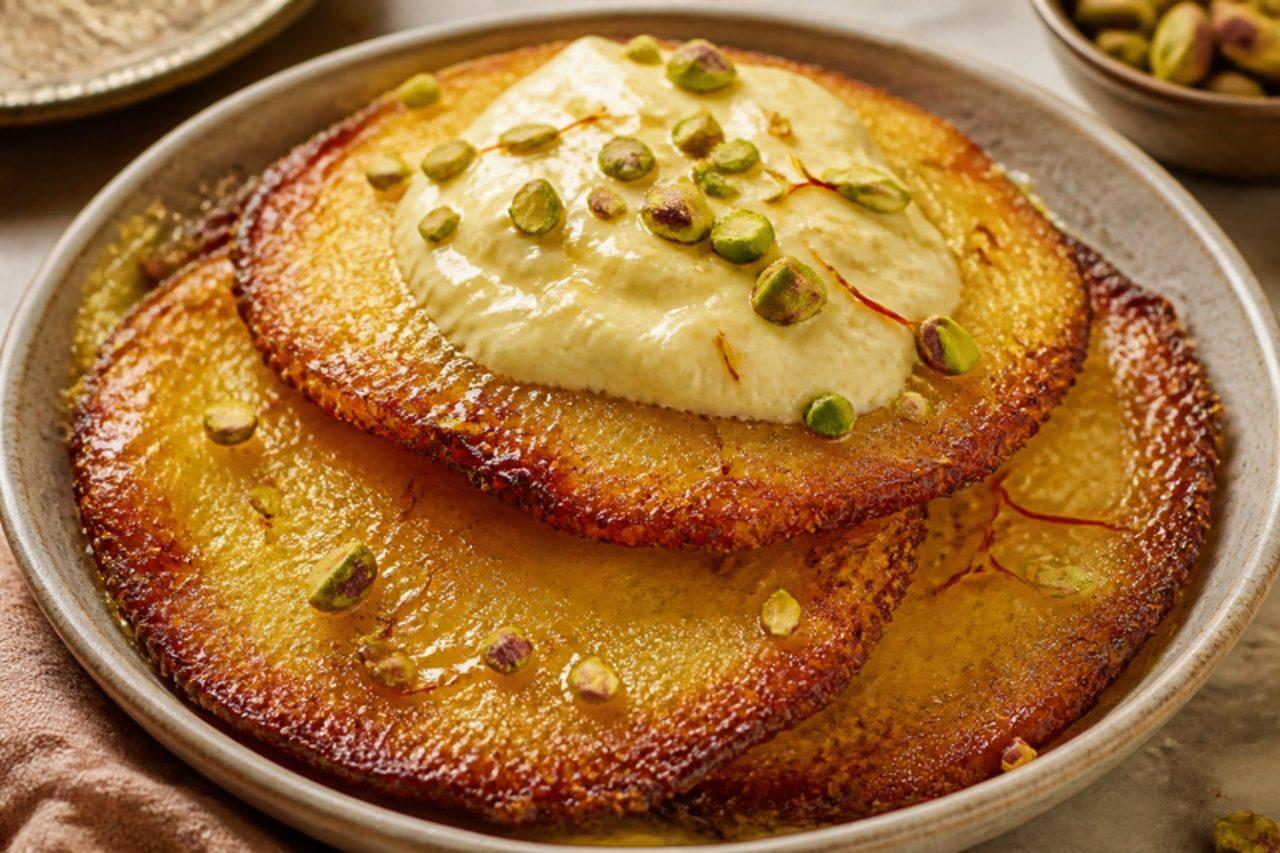
Jaipur's old-city sweet shops fry malpua in wide pans of ghee from winter through Holi and Teej, and serve them stacked in a bowl with thick rabri. The batter is made with milk, a little khoya and crushed fennel, so each pancake turns soft and spongy in the middle with crisp, lacy brown edges, then soaks up a saffron-cardamom syrup. Some families also make them as an offering on Holi morning. The usual mistake is skipping the rest: unrested batter spreads unevenly and stays flat and chewy. Chef's tip: pour the batter into the centre of the pan from close above so it spreads by itself; this is how the lacy edges form.

by KrazyBadal 0 views

Mawa bati

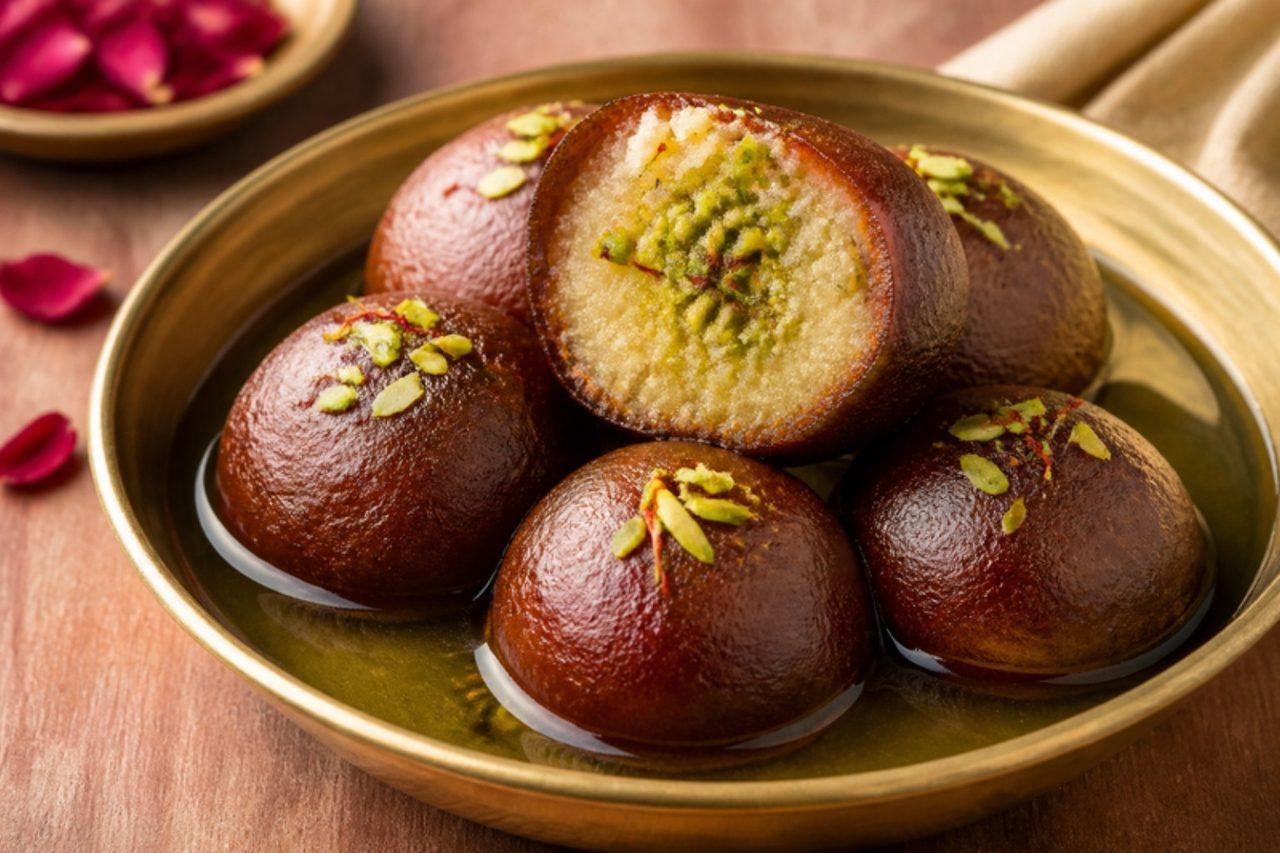
Ask a halwai in Ujjain, Indore or Ratlam for something festive and they will point to mawa bati: a fist-sized cousin of gulab jamun, made richer with more khoya, fried slowly to a near-mahogany shell and stuffed with nuts, saffron and cardamom. It turns up on wedding menus across Malwa and in sweet-shop boxes at Diwali, usually served warm with a spoonful of its own syrup. Cutting one open to find the green-gold filling is half the pleasure. Chef's tip: fry on a really gentle heat, with the oil barely shimmering; the bati should take a full 12–15 minutes to darken, which is how the middle cooks through.

by KrazyBadal 0 views

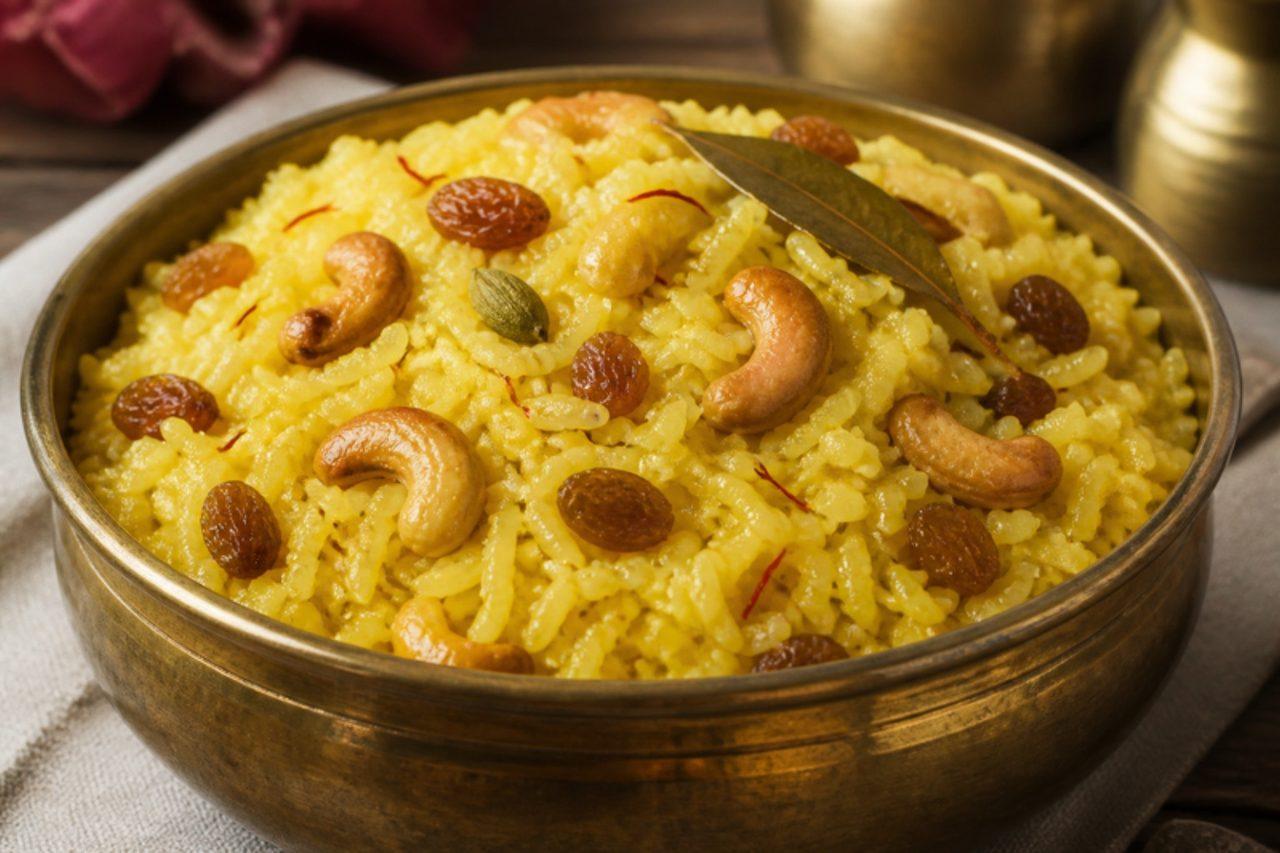
Basanti pulao

Basanti pulao, the 'spring-coloured' pulao, is cooked in Bengali homes for Poila Baisakh (the Bengali new year), weddings, Jamai Shashthi and pujas. It is made with gobindobhog, a short-grain, buttery-smelling rice from Bengal, cooked in ghee with whole spices, turmeric, sugar, cashews and raisins until each grain is glossy and separate. It is distinctly sweet, and is served with aloo dum, chhanar dalna or, in non-vegetarian homes, kosha mangsho. Chef's tip: wash the rice and spread it on a cloth for 30 minutes; dry grains fry in the ghee without breaking.

by KrazyBadal 0 views

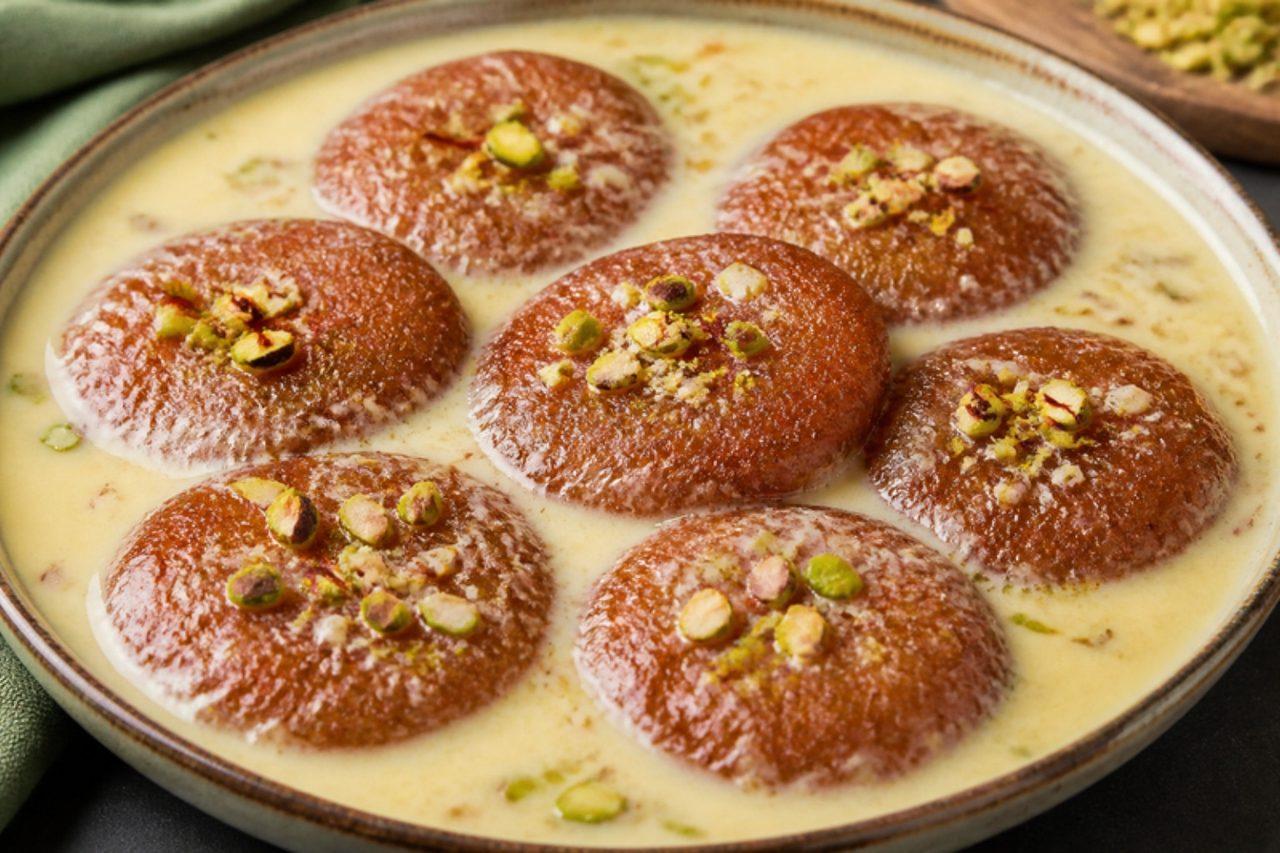
Rasabali

Rasabali comes from the Baladevjew temple in Kendrapara and is one of the 56 offerings of Puri's Jagannath temple. Flattened discs of chhena are deep-fried until reddish-brown, then soaked in milk that has been simmered down until thick and sweet with cardamom. Unlike rasmalai, whose discs are poached in syrup, rasabali's are fried, so they keep a chewy, slightly caramelised skin under the milk. It is eaten chilled at festivals and weddings in Odisha. Chef's tip: press a dimple into the centre of each disc before frying, so it fries evenly and holds more milk.

by KrazyBadal 0 views

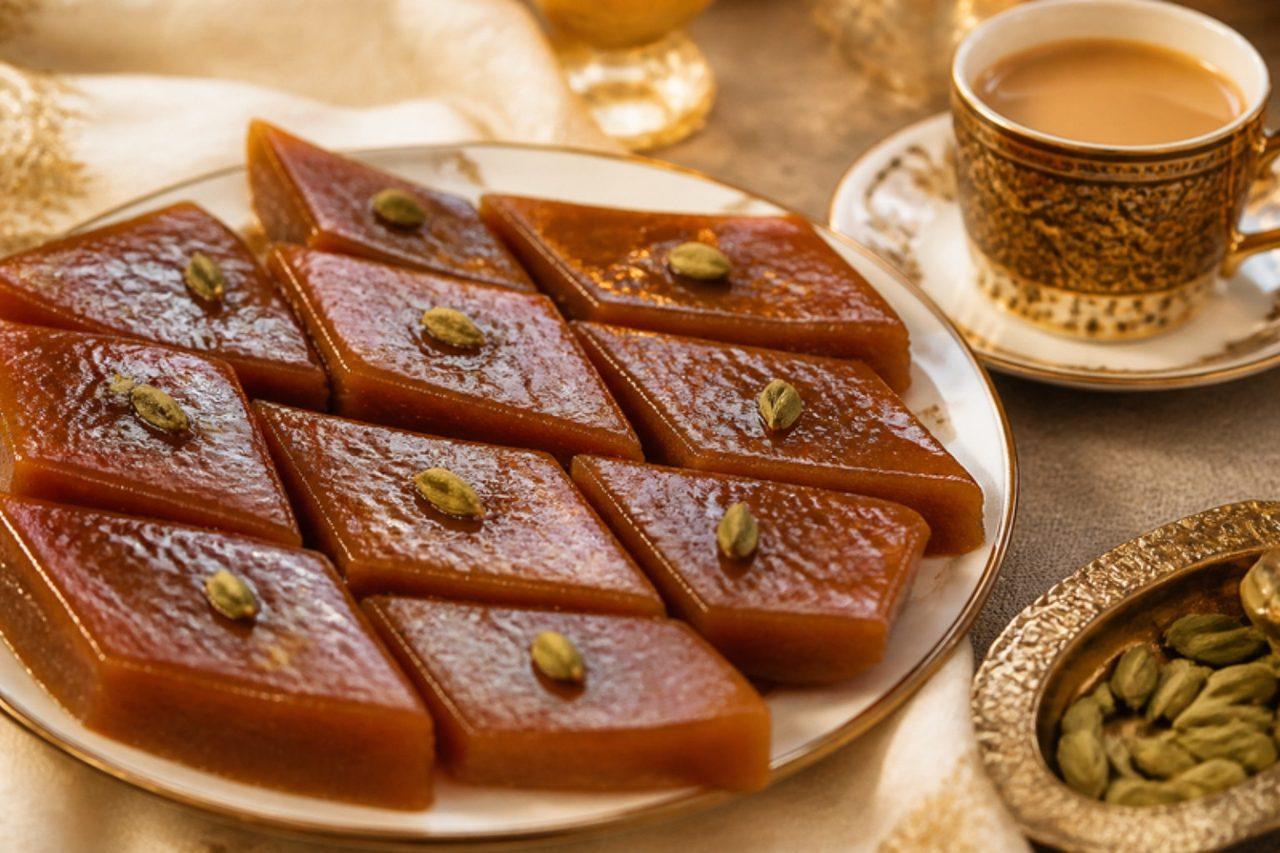
Xalwo

Xalwo is the sweet of Somali celebrations: weddings, Eid and the arrival of guests are all marked with a tray of this dark, glossy, chewy confection, cut into diamonds and served with coffee or spiced tea. Sugar is caramelised, then cooked slowly with cornflour and oil or ghee while the cook stirs without stopping until it pulls away from the pan. It is a cousin of Omani and Yemeni halwa. Chef's tip: stir constantly and keep going until the oil starts to separate and shine on the surface; stopped early, xalwo stays soft and does not set.

70 minDessertsGluten free
by KrazyBadal 0 views

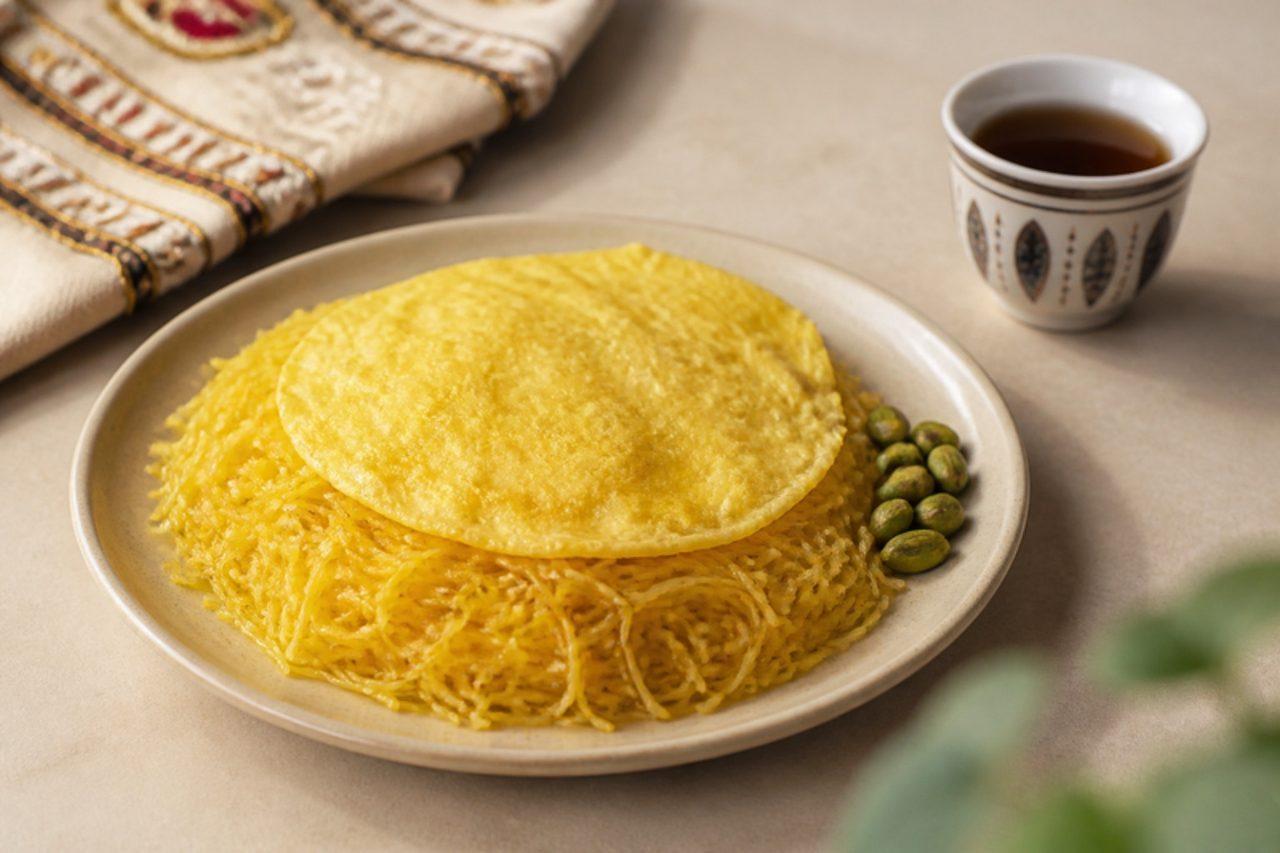
Balaleet

Sweet noodles for breakfast surprise visitors, but in the UAE and Qatar balaleet is the dish of Eid mornings and lazy weekend brunches. Fine vermicelli is toasted in butter, then steamed with sugar, saffron, cardamom and rose water until soft and glossy, and finally capped with a thin, salty-edged omelette. The contrast of sweet, fragrant noodles and savoury egg is the whole point, so serve them together in one wedge. Chef's tip: toast the vermicelli until it is the colour of a biscuit; pale noodles taste flat and floury.

by KrazyBadal 0 views

Luqaimat

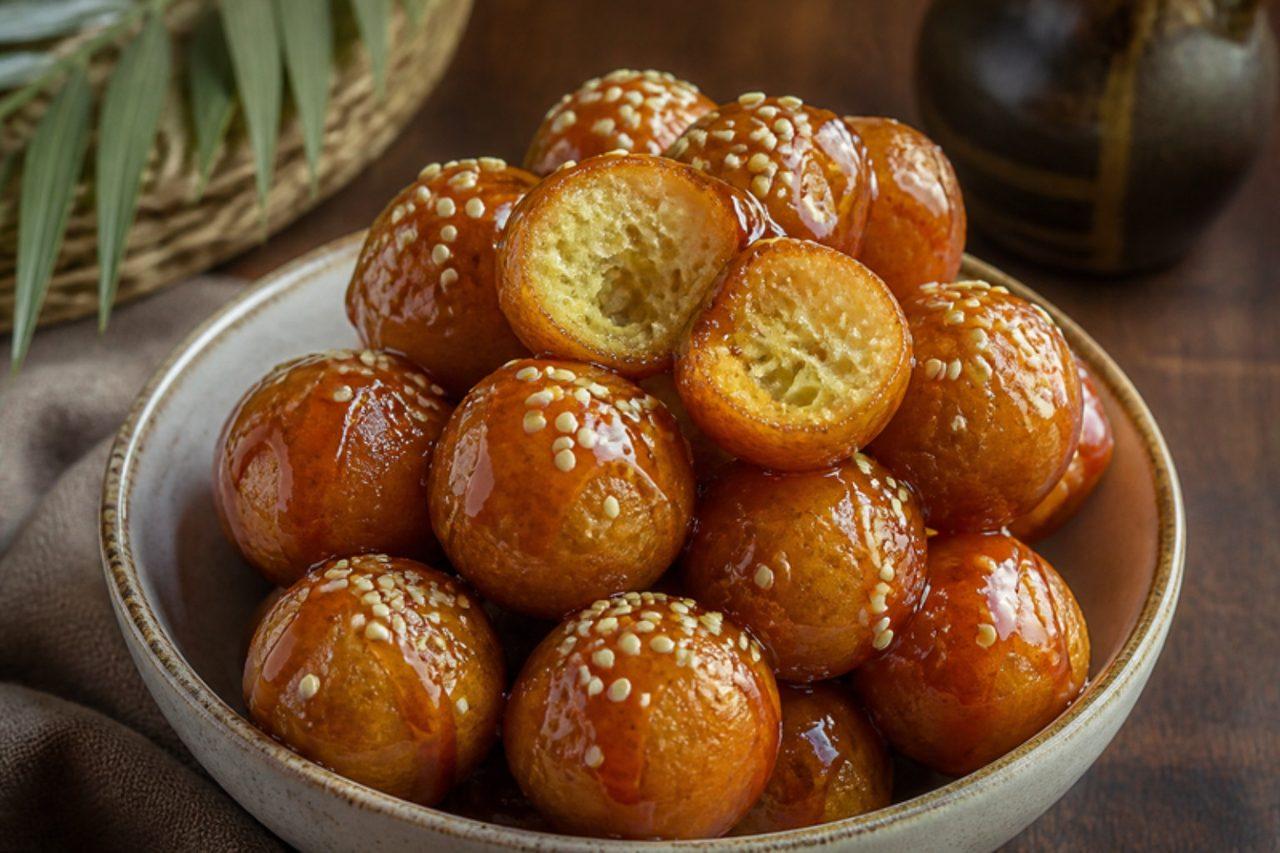
When the sun goes down during Ramadan in Dubai, Sharjah or Muscat, plates of luqaimat appear on iftar tables and in mosque courtyards. The little balls of yeasted batter, scented with saffron and cardamom, are fried until crisp and golden outside and soft as a cloud inside, then drizzled with dibs (date syrup) and scattered with sesame. Unlike syrup-soaked fritters, they are glazed only lightly, so they stay crunchy. Chef's tip: a teaspoon of oil on your thumb and a wet spoon stop the sticky batter clinging, so the balls drop round into the oil.

75 minDesserts
by KrazyBadal 0 views

Khanfaroosh

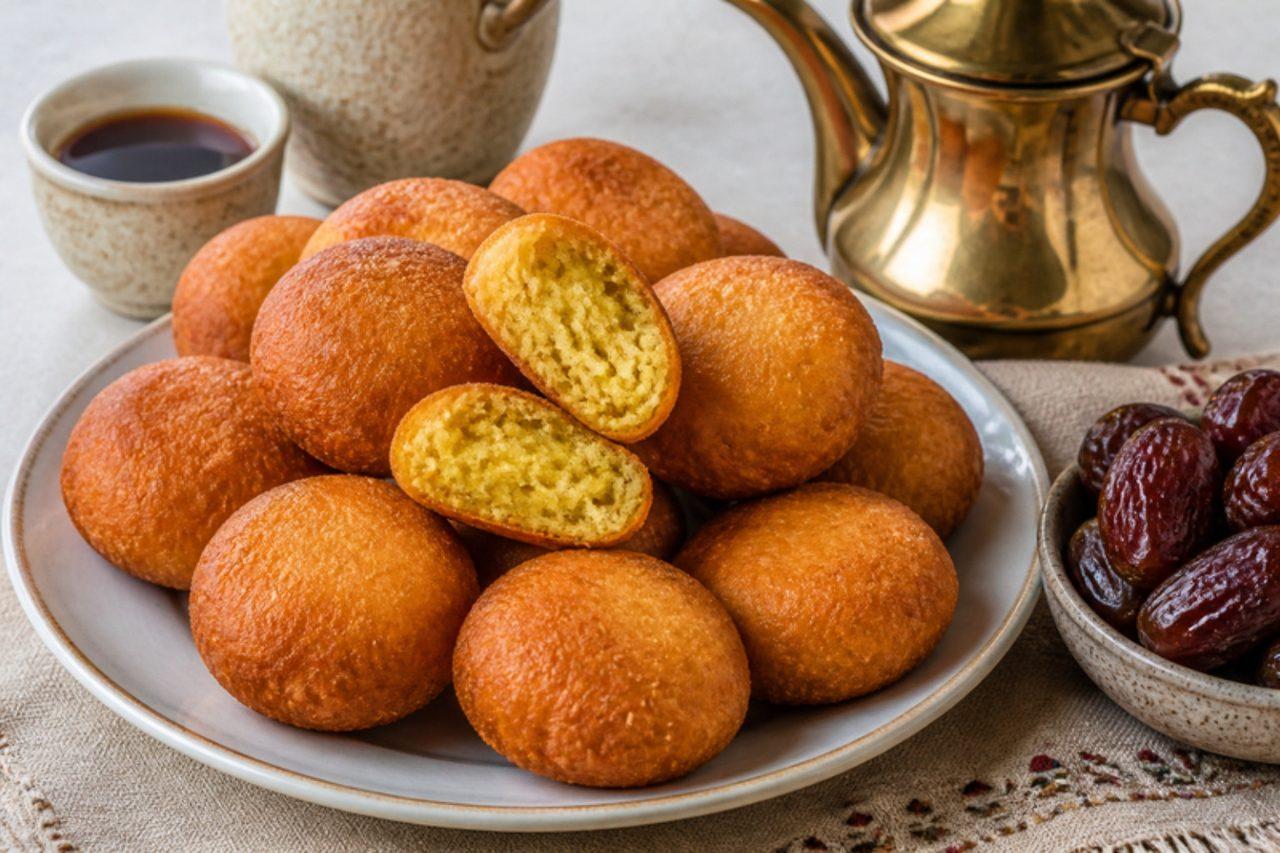
Khanfaroosh are an old Emirati sweet, made by grandmothers in Ras Al Khaimah and Fujairah and served with Arabic coffee when guests arrive, at weddings and during Eid. A rice-flour batter rich with eggs, saffron, cardamom and rose water is shallow-fried in small rounds that puff up, golden-brown with a lacy edge and a soft, spongy middle. They are less sweet than they look and best eaten warm from the pan. Chef's tip: let the batter rest for 30 minutes so the rice flour softens; unrested batter fries up gritty.

60 minDessertsGluten free
by KrazyBadal 0 views

Arabic coffee

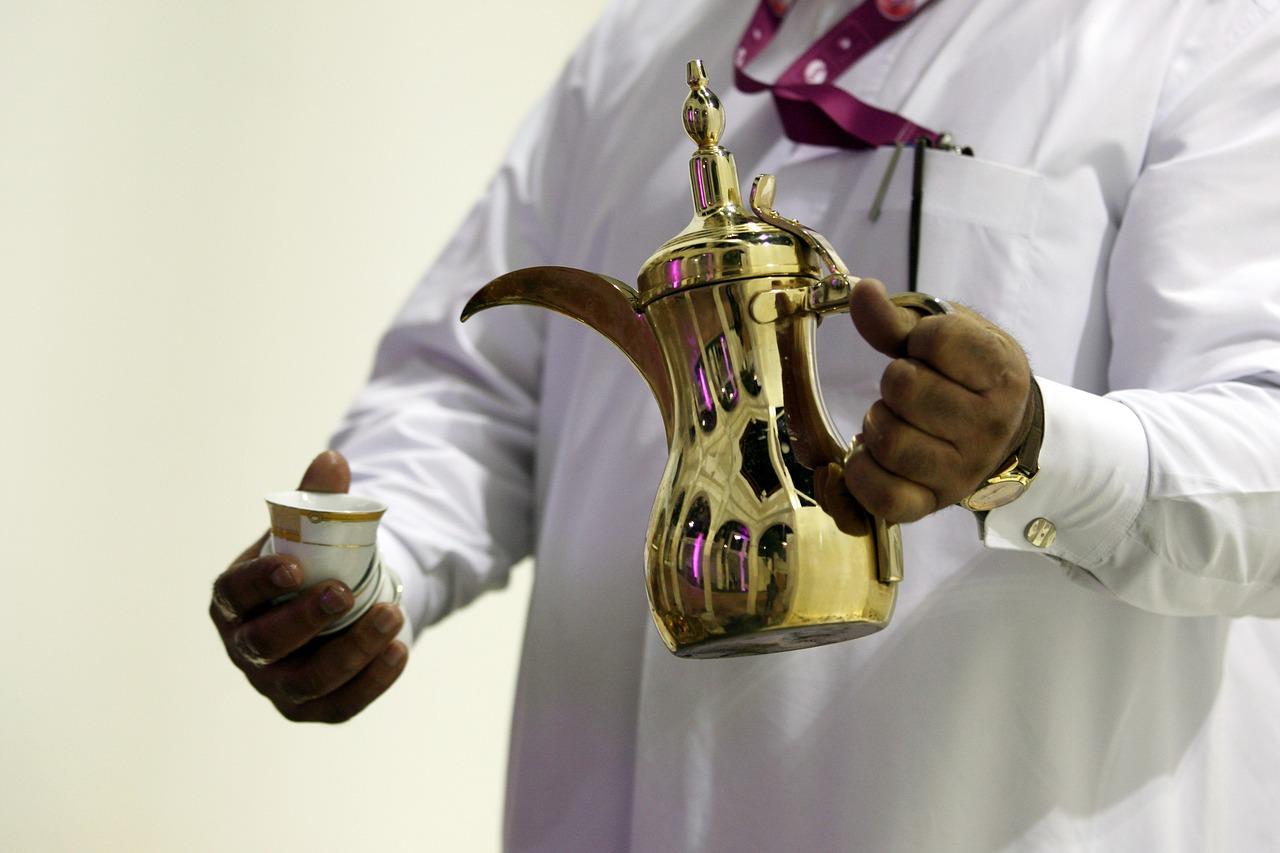
Pale, fragrant and nothing like espresso, qahwa is the coffee of Gulf hospitality: poured from a brass dallah into tiny handleless cups in majlis sitting rooms from Kuwait to Oman, always beside a bowl of dates. The beans are only lightly roasted, so the drink is golden-brown and herbal, dominated by cardamom with a little saffron and clove. Guests take a few sips at a time, and a small shake of the empty cup tells the host you've had enough. Chef's tip: grind the cardamom just before brewing; pre-ground cardamom has lost most of the perfume that makes qahwa.

15 minDrinksVeganGluten free
by KrazyBadal 0 views

Karak chai

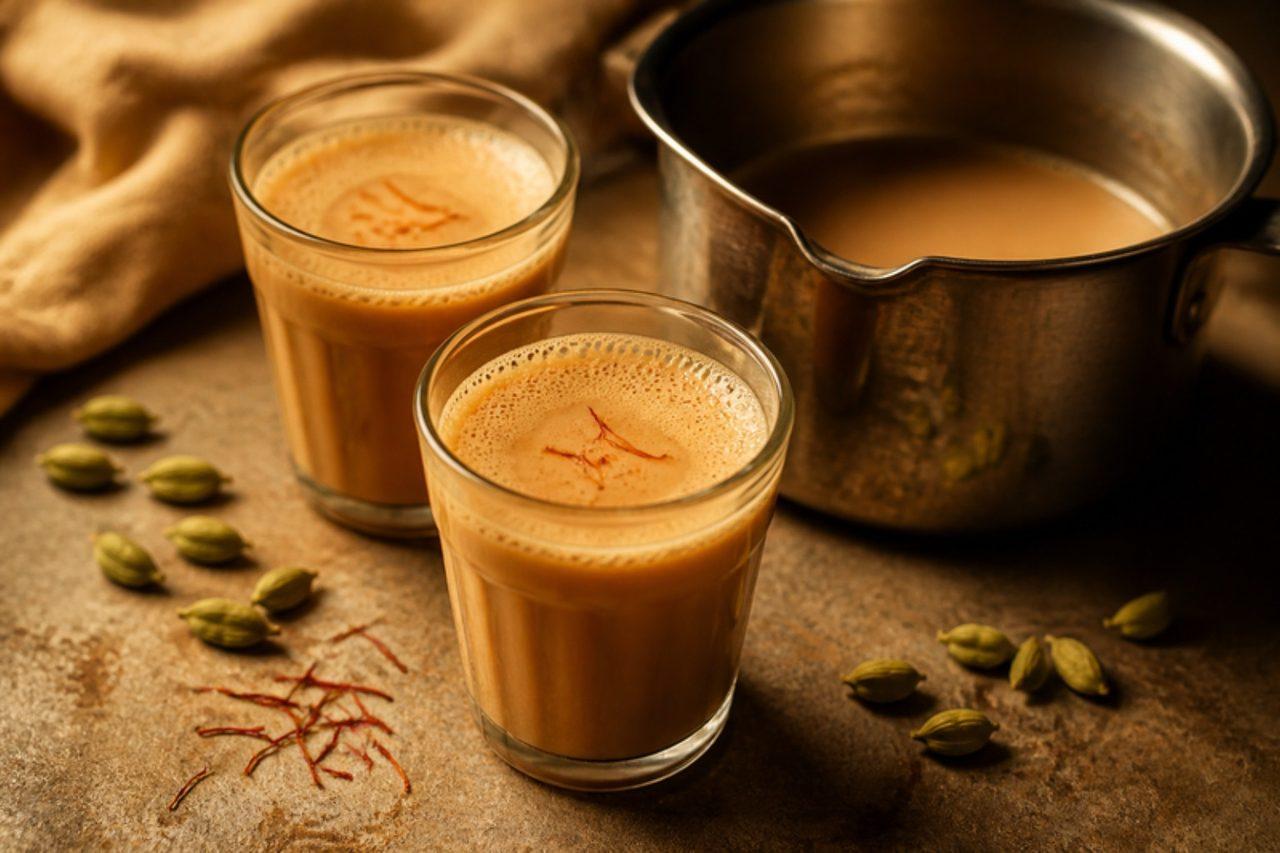
Every neighbourhood in Doha, Dubai and Kuwait City has a cafeteria with a hatch on the street, where karak is handed through car windows in paper cups at all hours. Brought to the Gulf by South Asian workers and now firmly local, it is black tea boiled hard with sugar and cardamom, then simmered again with evaporated milk until it is strong, sweet and the colour of toffee; a few strands of saffron mark the Gulf version. Chef's tip: pour the tea from a height between two pans a few times; the froth and slight cooling give the silky karak texture.

15 minDrinksGluten free
by KrazyBadal 0 views

Shah plov

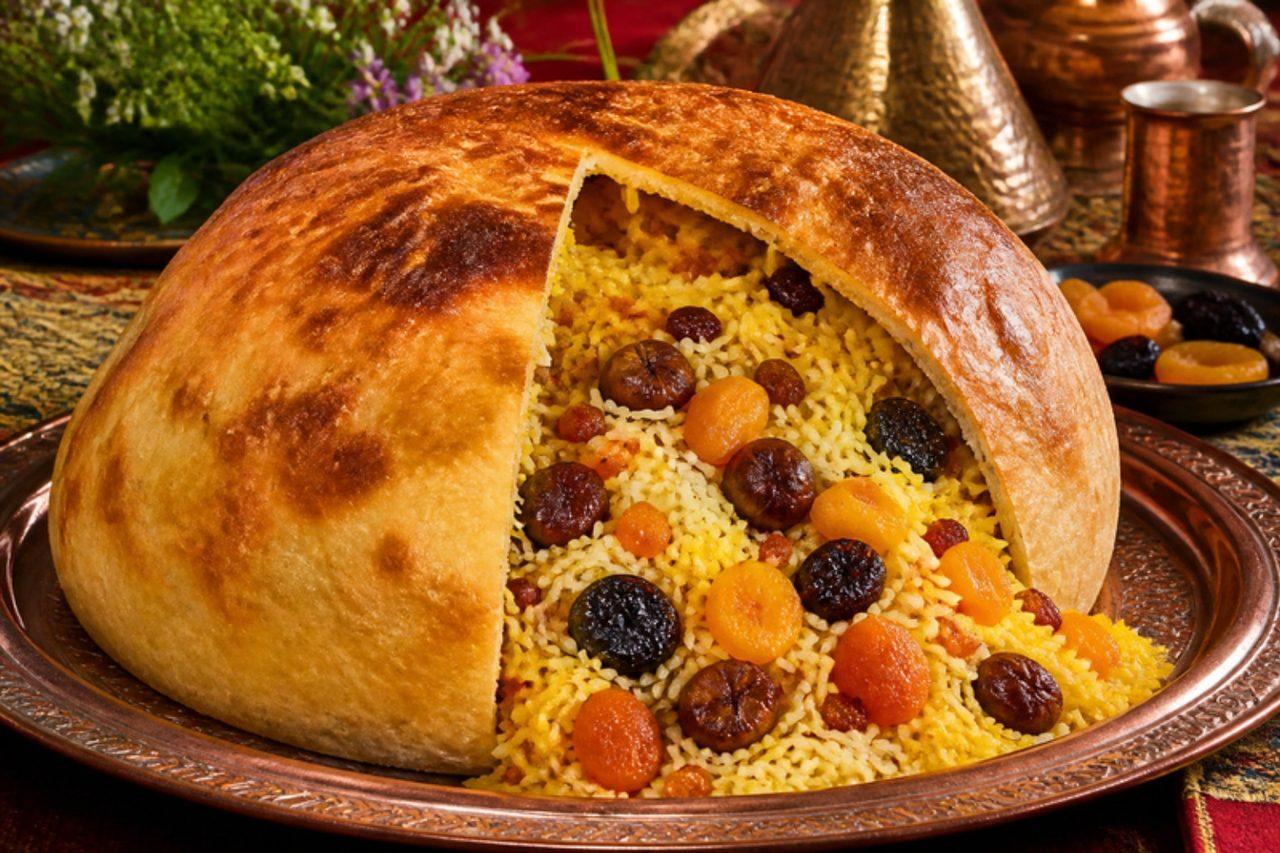
Shah plov, the "king's pilaf", is the showpiece of Azerbaijani weddings and Novruz feasts, especially in Baku, Shaki and Ganja. Saffron rice layered with butter-glazed apricots, raisins, prunes and chestnuts is packed into a pot lined with overlapping sheets of thin lavash, then baked until the bread forms a crisp golden dome. It is carried whole to the table, the top is cut like a crown, and everyone gets a crisp shard with their rice. The classic version also has lamb; this one keeps the fruit and nuts that already make it festive. Chef's tip: brush every lavash sheet generously with butter and overlap them by at least a third; thin spots tear when the plov is turned out.

by KrazyBadal 0 views

Paella valenciana

In the villages around Valencia, paella is a Sunday lunch dish, never a dinner one, cooked in the open air by whoever in the family has the steadiest hand and eaten straight from the pan with spoons. The Valencian original has no seafood, no chorizo and no peas: just chicken, rabbit, wide flat green beans (ferraura), big white garrofó beans, tomato, sweet pimentón, saffron and short round rice. If you can't get rabbit, use all chicken; it is still very good. This version is sized for a 38–40 cm paella pan on a large hob ring or a barbecue. Chef's tip: once the rice goes in, smooth it flat and then leave it alone; stirring releases starch and turns paella into risotto.

by KrazyBadal 0 views

Arroz al horno

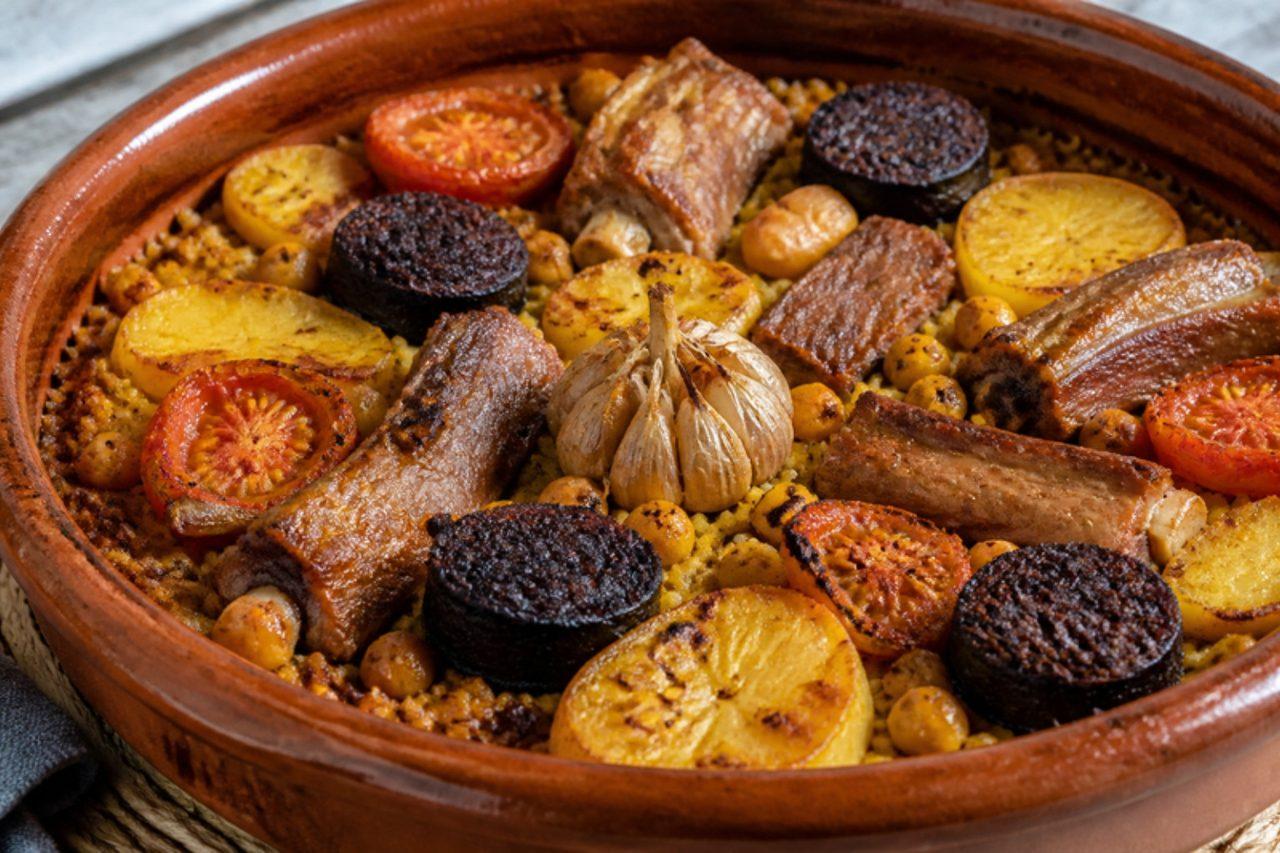
Arroz al horno (arròs al forn in Valencian) is the oven rice of Valencia and Xàtiva, traditionally made the day after a big pot of cocido, using its leftover chickpeas and broth. Families once carried the clay dish to the village baker's oven; today it is baked at home in a wide, shallow earthenware cazuela. Pork ribs, morcilla (Spanish onion blood sausage), slices of potato, chickpeas and a whole head of garlic sit on top of the rice, which bakes into a dry, tender layer full of flavour. Use any ovenproof dish about 30 cm across and 5 cm deep if you don't have a cazuela. Chef's tip: have the stock at a rolling boil when you pour it in, then get the dish into the hot oven within seconds; a lukewarm start leaves the rice chalky in the middle.

by KrazyBadal 0 views

Fabada asturiana

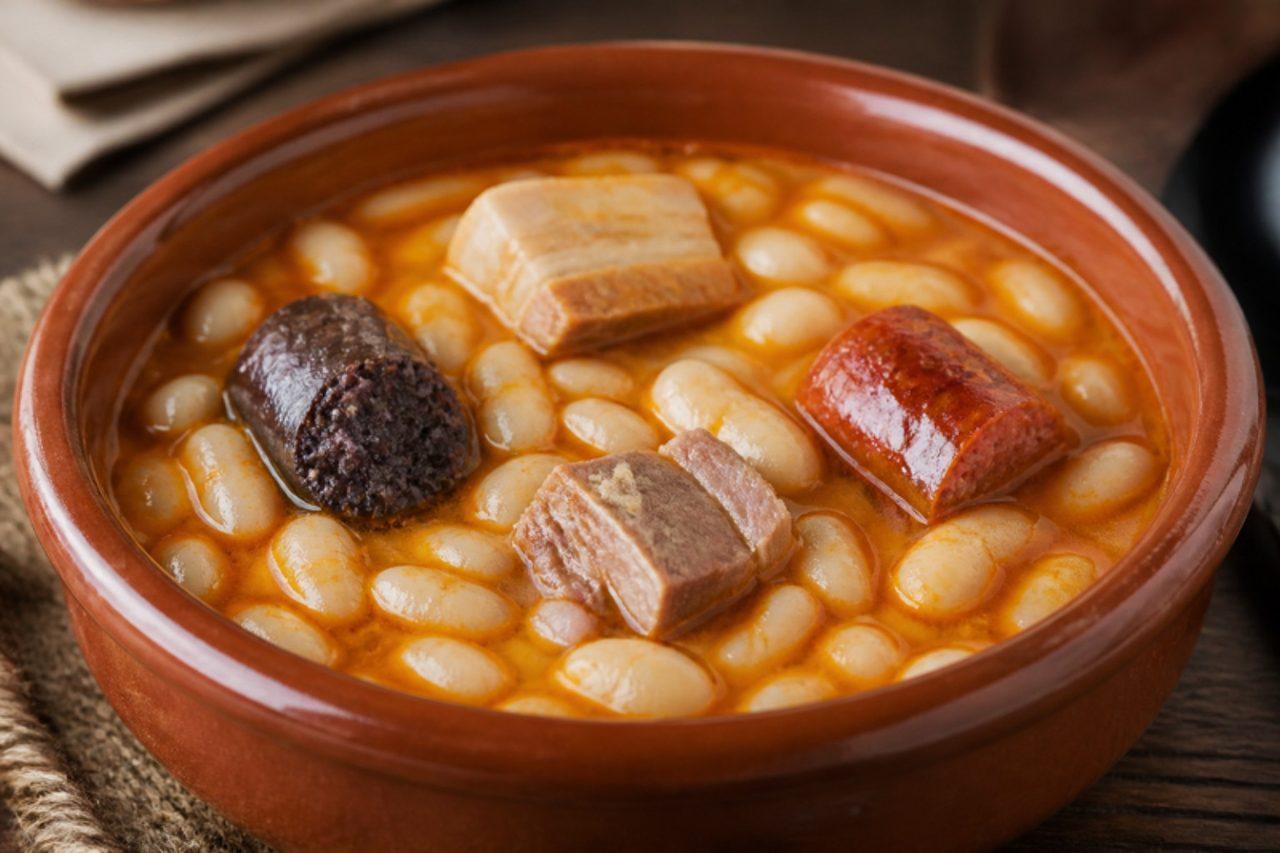
Fabada is the great midday stew of Asturias, on Spain's green, rainy north coast, eaten in winter at long lunches in village casas de comida and cider houses, usually followed by a quiet afternoon. Big, buttery fabes (Asturian white beans) cook slowly with the compango: smoked Asturian chorizo, morcilla, pork belly and lacón (cured pork shoulder). The beans should end up creamy inside and whole outside, in a thick, orange broth coloured by the chorizo. Large dried white beans such as judión or butter beans are the closest substitute if you can't find fabes. Chef's tip: make it the day before; it thickens and tastes better after a night in the fridge.

150 minMeat
by KrazyBadal 0 views

Rogan josh

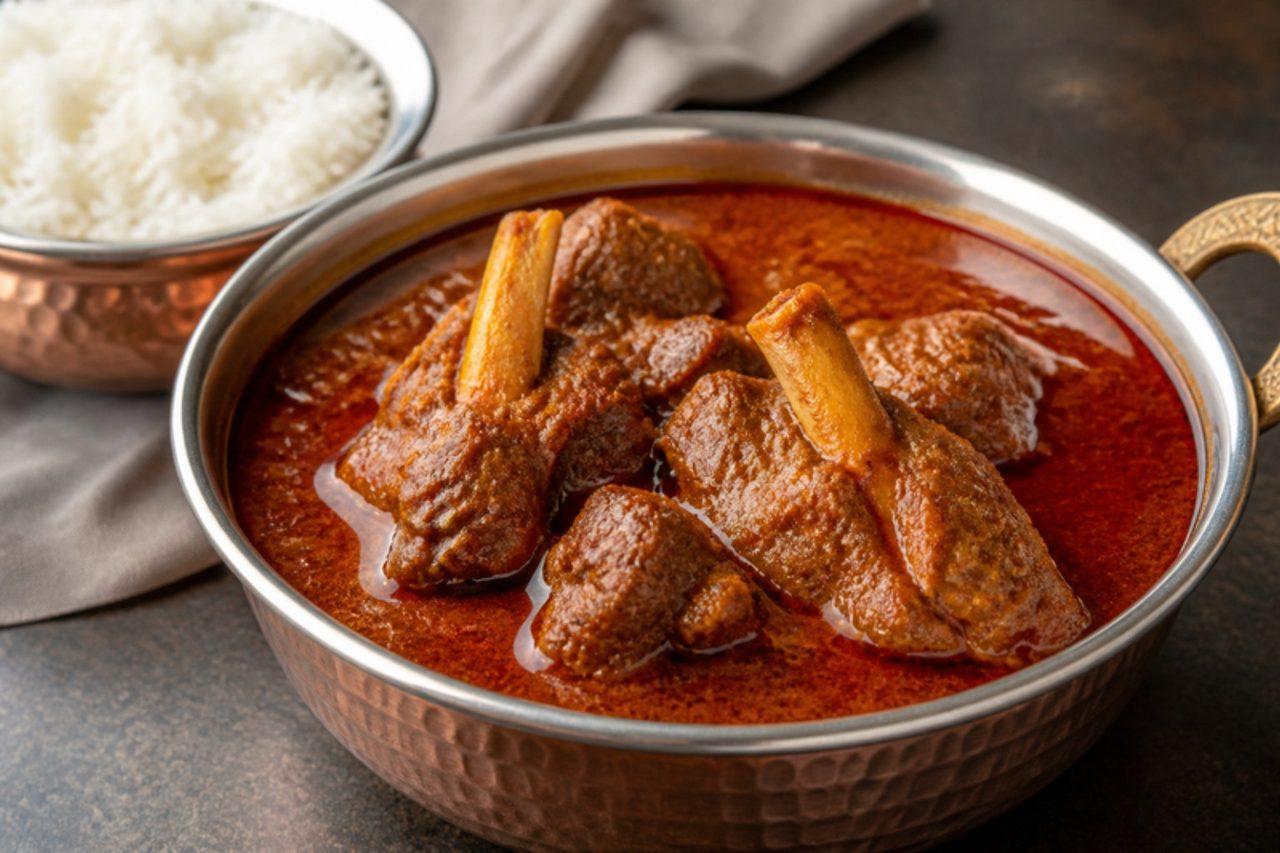
In the Kashmir Valley this deep-red lamb braise turns up at every wazwan, the multi-course wedding feast cooked by hereditary chefs, and on Sunday tables in Srinagar through the cold months. The Kashmiri Pandit version cooked here uses no onion, garlic or tomato: the colour comes from mild Kashmiri chillies, the warmth from ground fennel and dry ginger, and the body from yogurt cooked down until the fat rises red to the top (that red oil is the 'rogan'). Eat it with plain steamed rice, the Kashmiri way. Chef's tip: use bone-in shoulder or leg and give it time; the bones and slow simmer make the thick, glossy gravy, and boneless meat turns stringy before the sauce is ready.

120 minMeatGluten freeSpicyIndian
by KrazyBadal 0 views

Mughlai chicken korma

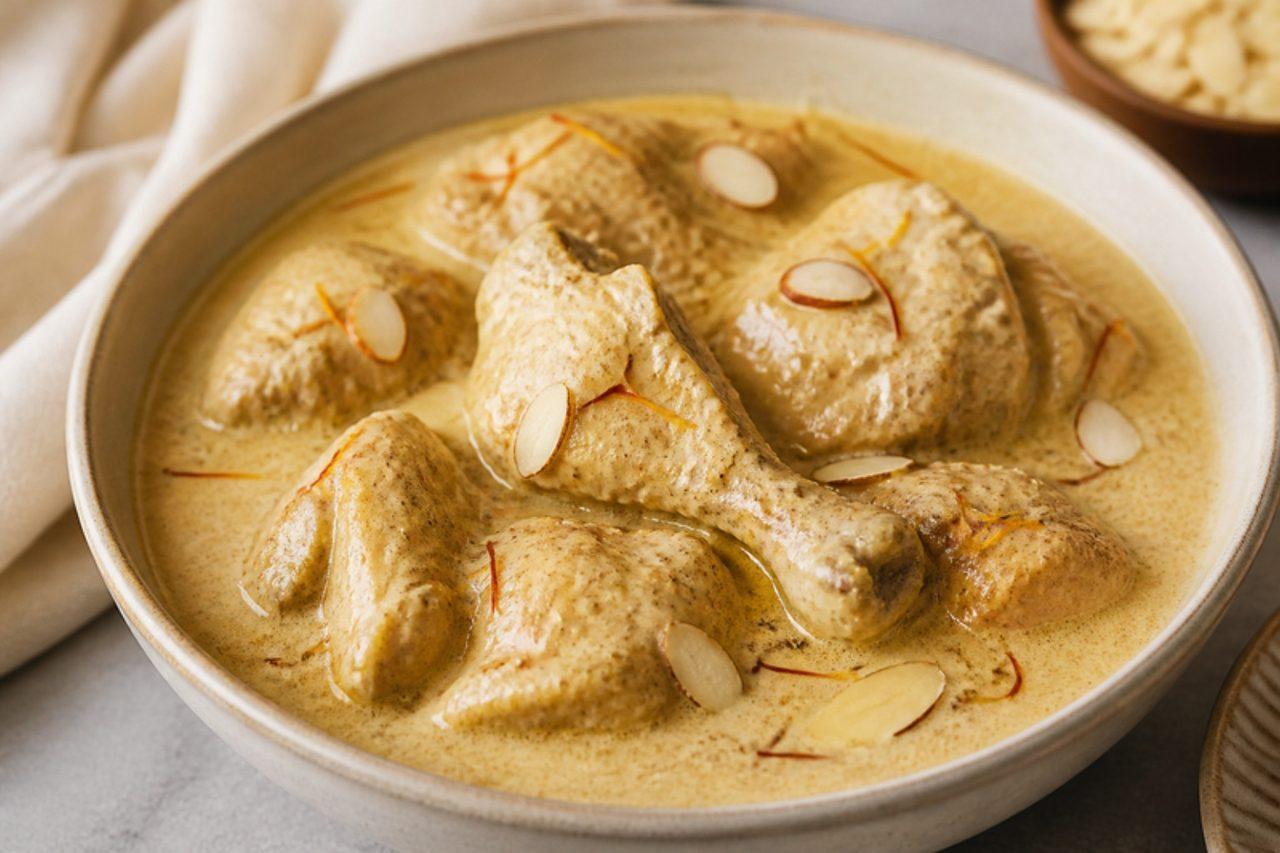
In the lanes around the Jama Masjid in Old Delhi, korma is cooked in huge copper degs for Eid and wedding feasts and sold from dawn with khamiri roti and sheermal. It descends from the Mughal court kitchens, where 'korma' meant meat braised slowly in yogurt and its own juices rather than in water. This one is not the mild, pale, coconut-sweet korma of British curry houses: it is golden-brown, fragrant with cardamom and mace, enriched with almond paste and fried onions, and medium-hot. Chef's tip: fry the onions slowly to an even golden-brown and grind them with the yogurt; the browned onion paste is both the colour and the backbone of the sauce.

80 minChickenGluten freeIndian
by KrazyBadal 0 views

Lucknowi galouti kebab

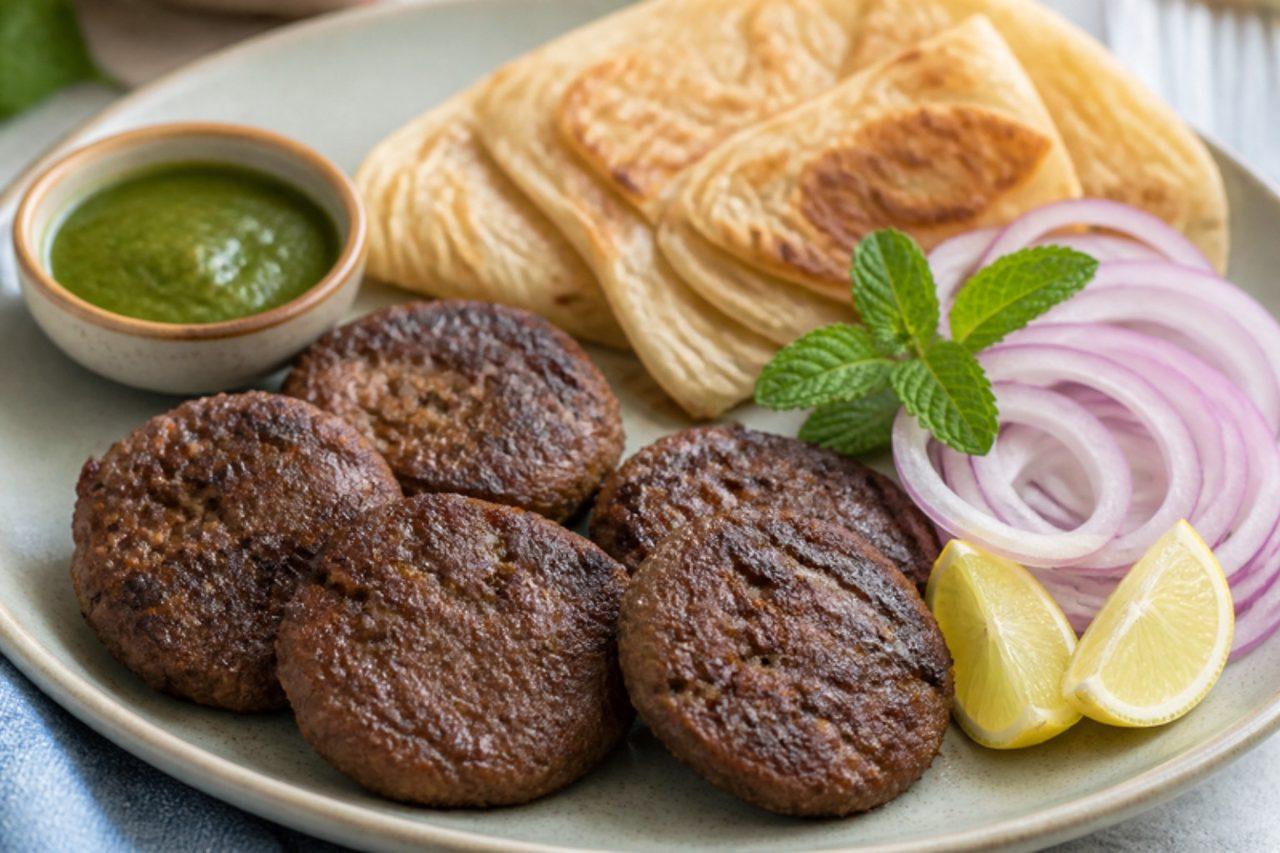
Lucknow's galouti kebab is said to have been created in the kitchens of the Nawabs of Awadh for a ruler who had lost his teeth, and 'galouti' means something that melts. The minced lamb is ground again until it's almost a paste, tenderised with raw papaya, scented with a dozen spices plus rose water and saffron, and fried gently on a flat griddle. In the old city around Aminabad they are sold all day on small, flaky ulte tawe ka paratha with sliced onion and mint chutney, and they are a must at Ramadan iftars. Chef's tip: chill the mixture well before shaping; the patties are meant to be fragile, and a cold mixture is the only way to get them into the pan in one piece.

125 minMeatGluten freeIndian
by KrazyBadal 0 views

Hyderabadi chicken dum biryani

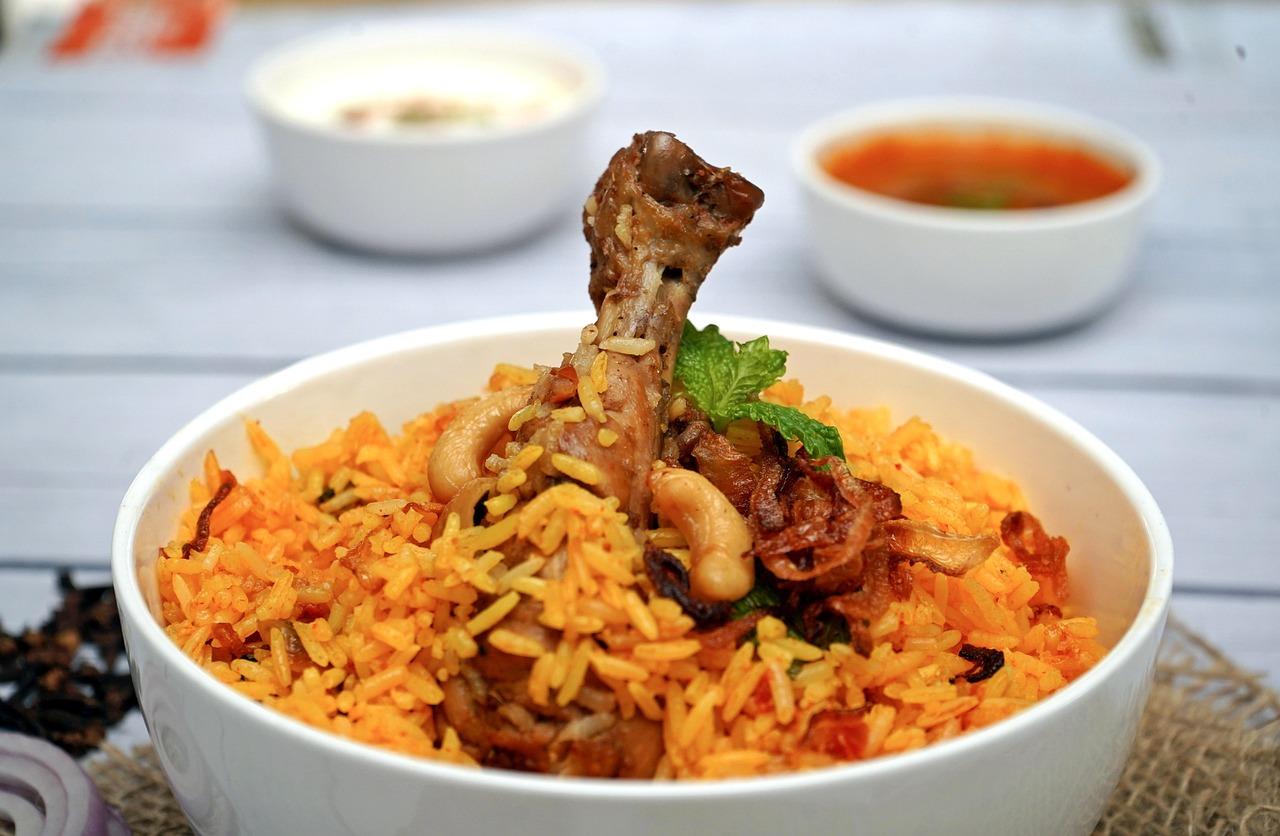
Hyderabad's biryani grew up in the kitchens of the Nizams, and the kacchi style is its proudest form: the chicken goes into the pot raw, in a thick yogurt, mint and fried-onion marinade, and cooks only in the steam trapped under part-cooked basmati. In the old city it is wedding and Eid food, ordered in huge copper deghs, and at home it's the Sunday showpiece, served with mirchi ka salan and a cooling raita. Because the meat cooks without being stirred, small bone-in thigh and drumstick pieces work best. Chef's tip: marinate overnight in the fridge — the yogurt tenderises the chicken and the flavours go right to the bone.

by KrazyBadal 0 views

Chicken tagine with preserved lemon & olives

Few dishes say Fez quite like djaj mqualli, the golden chicken that turns up at family lunches, weddings and Friday tables across the old medina. The chicken simmers slowly in its own juices with grated onion, ginger and saffron until the meat slips off the bone and the onions melt into a thick, glossy, yellow sauce. Salty-sour preserved lemon and bright green olives go in near the end, cutting through the richness. Mop it up with crusty bread, or spoon it over plain couscous for a weekday dinner. Chef's tip: grate the onion rather than chopping it; it dissolves completely and gives the sauce its body without any flour.

75 minChickenGluten free
by KrazyBadal 0 views

Lamb tagine with prunes

Served at weddings, Eid gatherings and big family dinners in Fez and Marrakech, tagine lham bel barkouk is the sweet-and-savoury centrepiece Moroccans bring out for guests. Lamb shoulder braises slowly with saffron, ginger and cinnamon until it falls apart in a buttery-soft sauce, then it is crowned with glossy honeyed prunes, fried almonds and toasted sesame. Each mouthful moves from warm spice to deep fruit sweetness. Put it in the middle of the table with bread for scooping, or with couscous. Chef's tip: cook the prunes in a little of the sauce in a separate pan; poached apart, they stay whole and shiny instead of dissolving into the meat.

150 minMeatGluten free
by KrazyBadal 0 views

Chicken pastilla

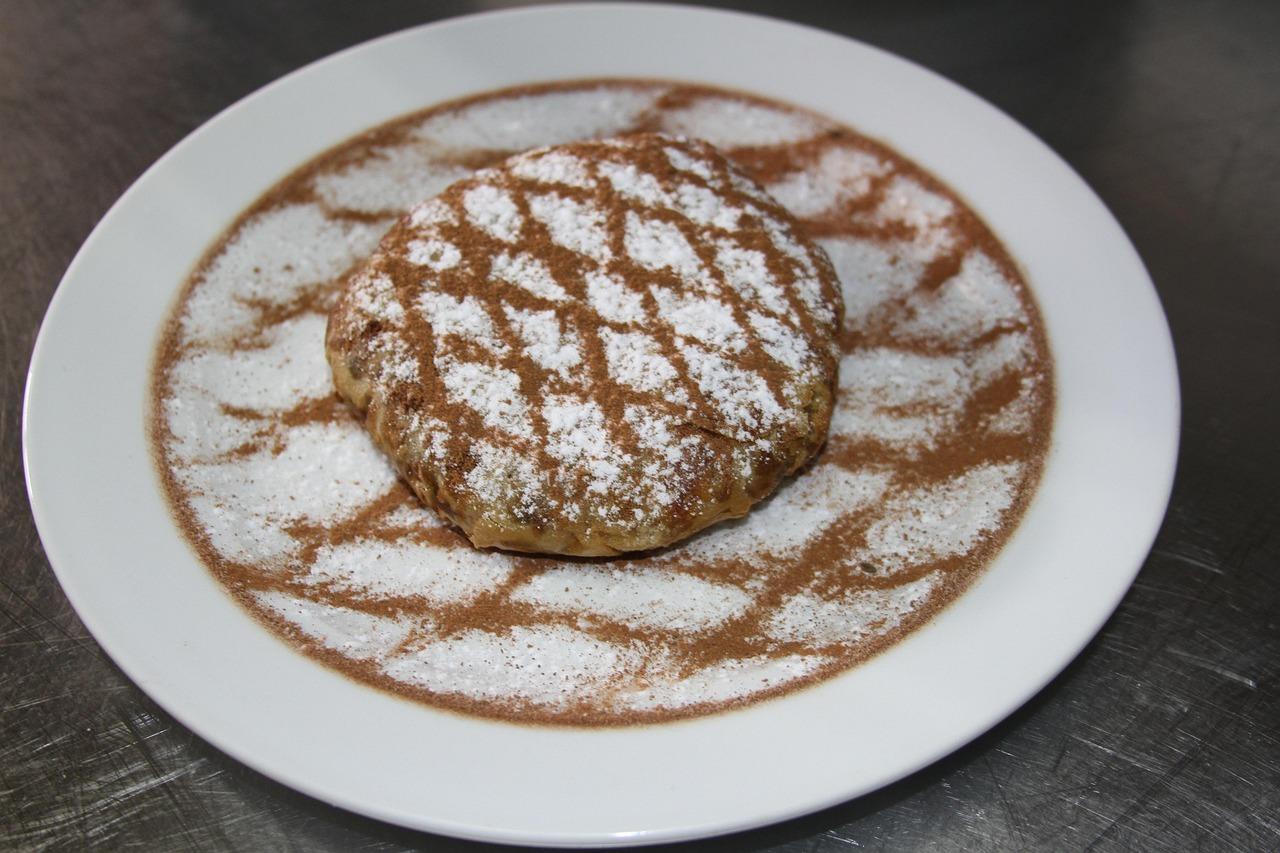
No Fassi wedding or engagement feast is complete without bastila, a showpiece pie brought out as the first course and broken open at the table. Under its crackling layers of buttered pastry sit three fillings: shredded chicken cooked with saffron, ginger and onion, soft lemony eggs set in the reduced cooking juices, and crunchy almonds ground with sugar and cinnamon. The top is dusted with icing sugar and a lattice of cinnamon, so every bite is sweet, savoury, crisp and tender at once. Serve it hot with nothing more than a green salad. Chef's tip: make the fillings a day ahead and chill them; cold fillings are easier to layer and keep the pastry crisp.

150 minChicken
by KrazyBadal 0 views

Joojeh kabab

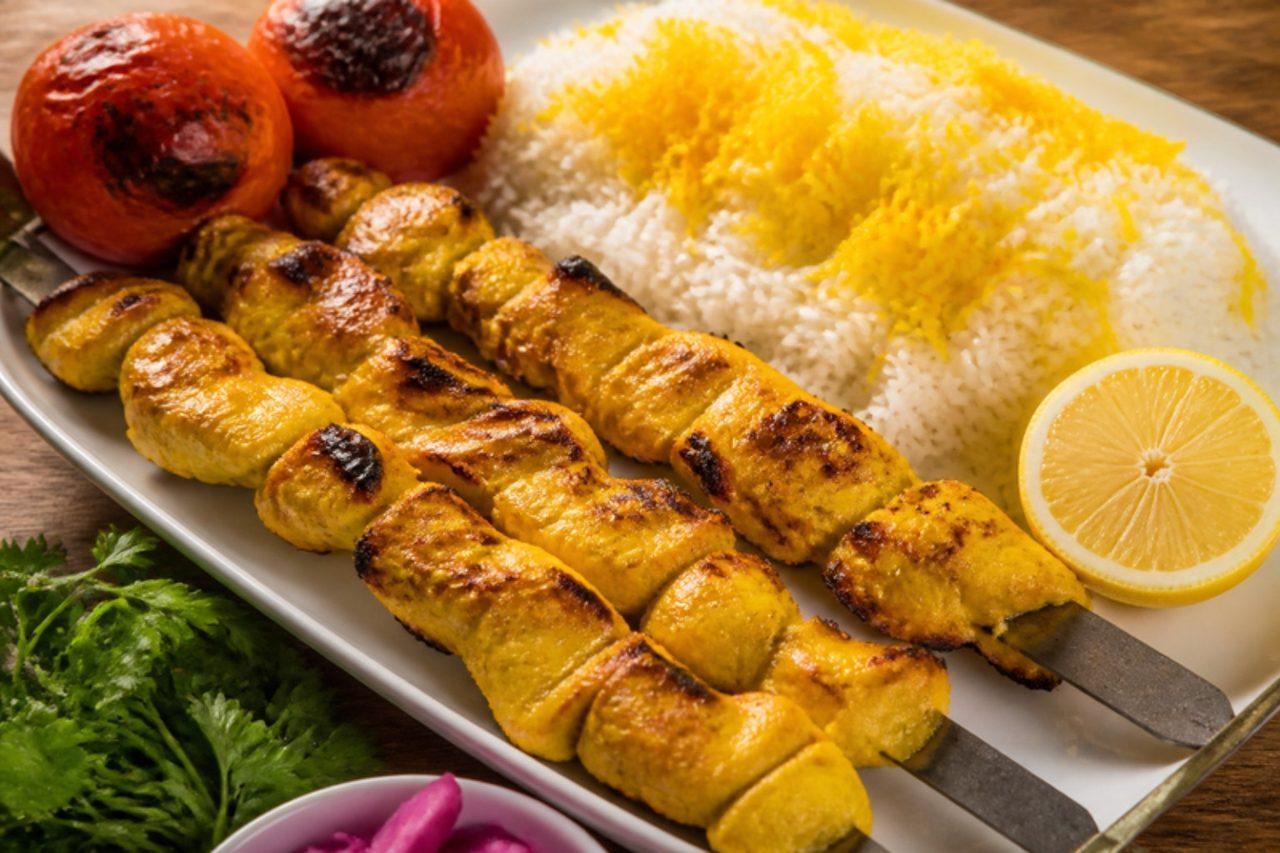
Joojeh kabab is what fills Tehran's parks on Sizdah Bedar, the thirteenth day of Nowruz, when families picnic outdoors and grills smoke under the plane trees; it is just as common on restaurant platters beside koobideh. Chunks of chicken soak overnight in yogurt, grated onion, lemon and bloomed saffron, then cook fast over high heat so the edges char while the middle stays juicy and golden-orange. Serve with buttery chelow rice, grilled tomatoes and a pinch of sumac. Chef's tip: grind the saffron threads with a pinch of sugar before steeping them in hot water; you get twice the colour from the same few threads.

40 minChickenGluten free
by KrazyBadal 0 views

Pasta con le sarde

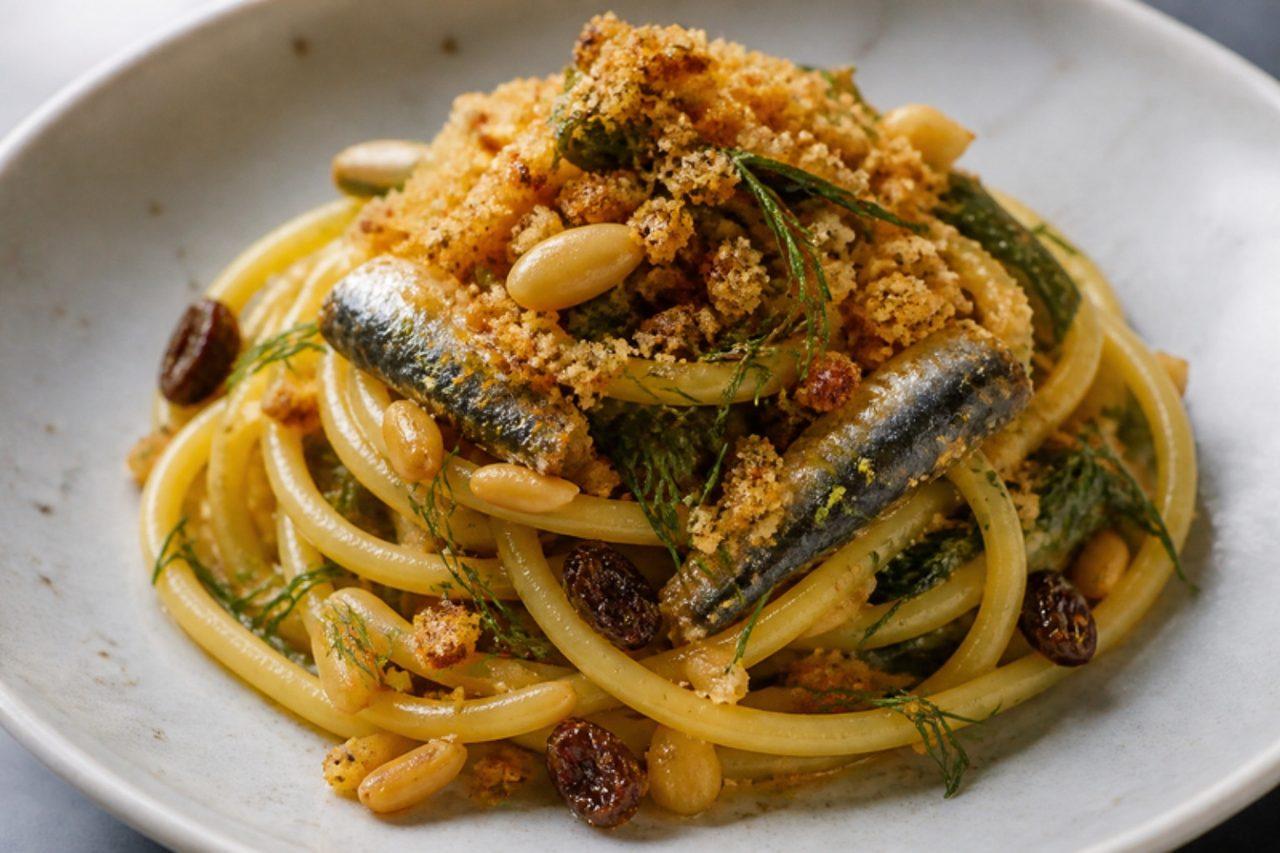
Sweet, salty and grassy all at once, Palermo's favourite pasta carries the island's history in one pan: Arab raisins, pine nuts and saffron meet fresh sardines and the wild fennel that grows on every Sicilian hillside in spring. It is cooked at home and in the city's old trattorie from March to the start of summer, and on 19 March for the feast of San Giuseppe. Instead of cheese, it is finished with olive oil toasted breadcrumbs, the crunchy 'muddica' that Sicilians call poor man's parmesan. Wild fennel is hard to find outside Italy; the fronds from two fennel bulbs plus a few fennel seeds come close. Serve it warm, or at room temperature as Palermitans often do. Chef's tip: blanch the fennel greens in the pasta pot first and cook the bucatini in that same green, aniseed-scented water, so the flavour runs right through the pasta.

by KrazyBadal 0 views
Bouillabaisse

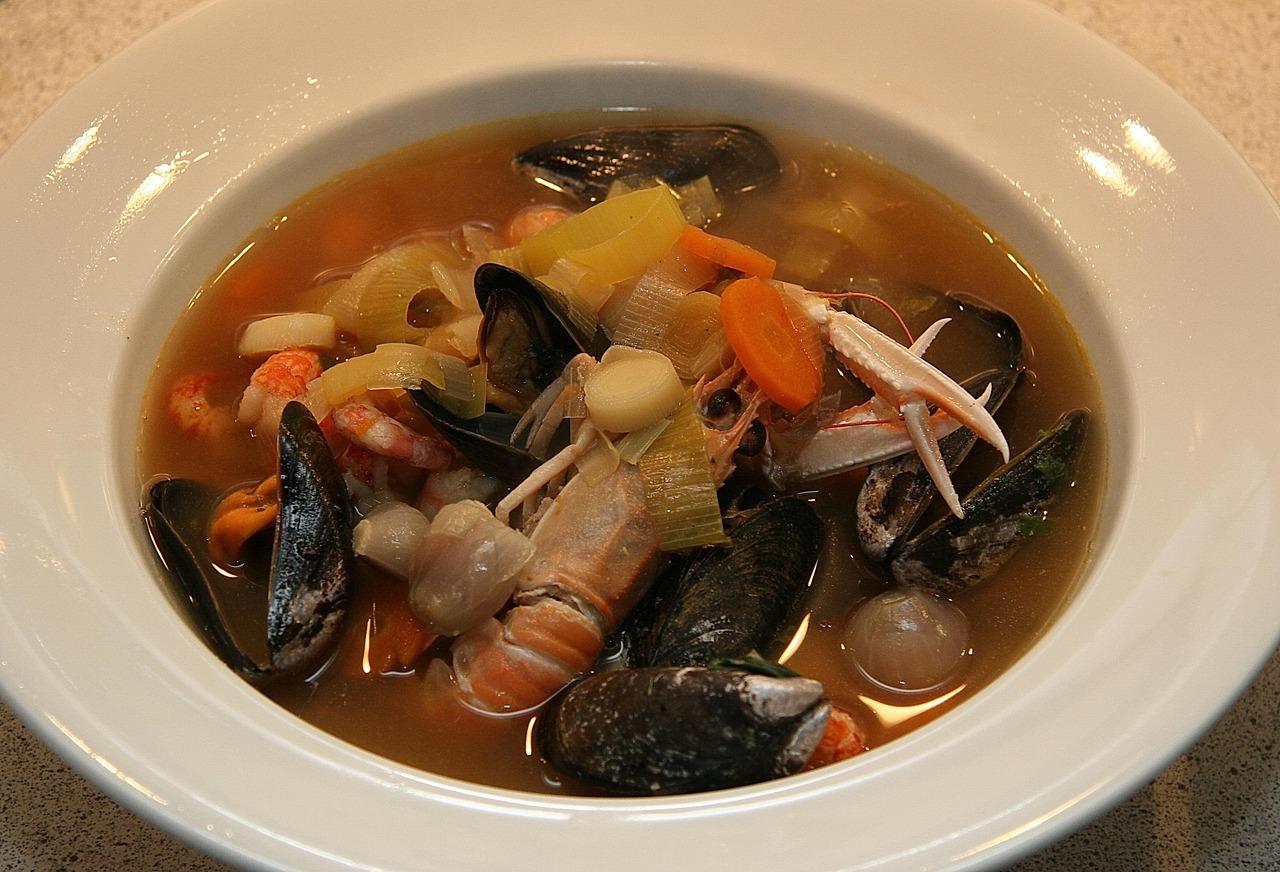
Bouillabaisse began as the fishermen's supper on the quays of Marseille's Vieux-Port, made from the bony rockfish nobody could sell, and today it is a long, slow Sunday lunch in Provence. A deep orange broth of fennel, tomato, orange peel and saffron is boiled hard so the olive oil emulsifies, then firm white fish and shellfish are poached in it at the last minute. In Marseille the broth is served first with garlicky rouille on toasted bread, then the fish on a platter. Chef's tip: add the fish in order of thickness, firmest first, so every piece finishes at the same moment.

110 minFishFrench
by KrazyBadal 0 views

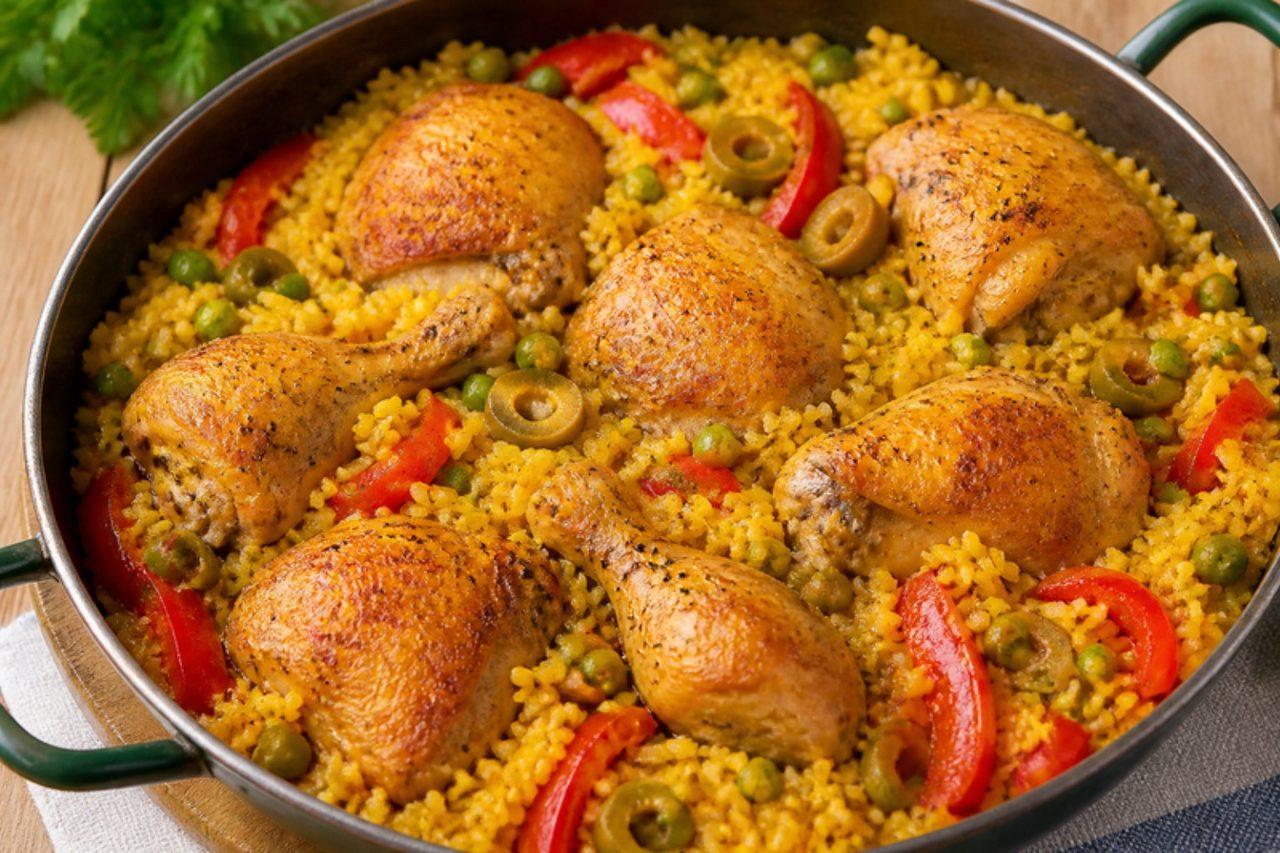
Arroz con pollo cubano

Cuban arroz con pollo is the one-pot Sunday lunch of the island, and every abuela in Santiago or Havana has her own way with it. Chicken pieces are browned, then the rice cooks right in the pot with sofrito, a pinch of saffron (or bijol, the annatto colouring most Cuban kitchens use) and stock until each grain is golden and moist, almost creamy. Peas and roasted red peppers go on top at the end. It is eaten with fried ripe plantain and a green salad. Many versions add a splash of beer to the pot; this one uses chicken stock only, so it is alcohol-free. The usual mistake is stirring the rice once it is covered, which breaks the grains and makes it gluey. Chef's tip: let the pot rest off the heat with the lid on for 10 minutes before serving, so the rice finishes softening in its own steam.

75 minChickenGluten free
by KrazyBadal 0 views

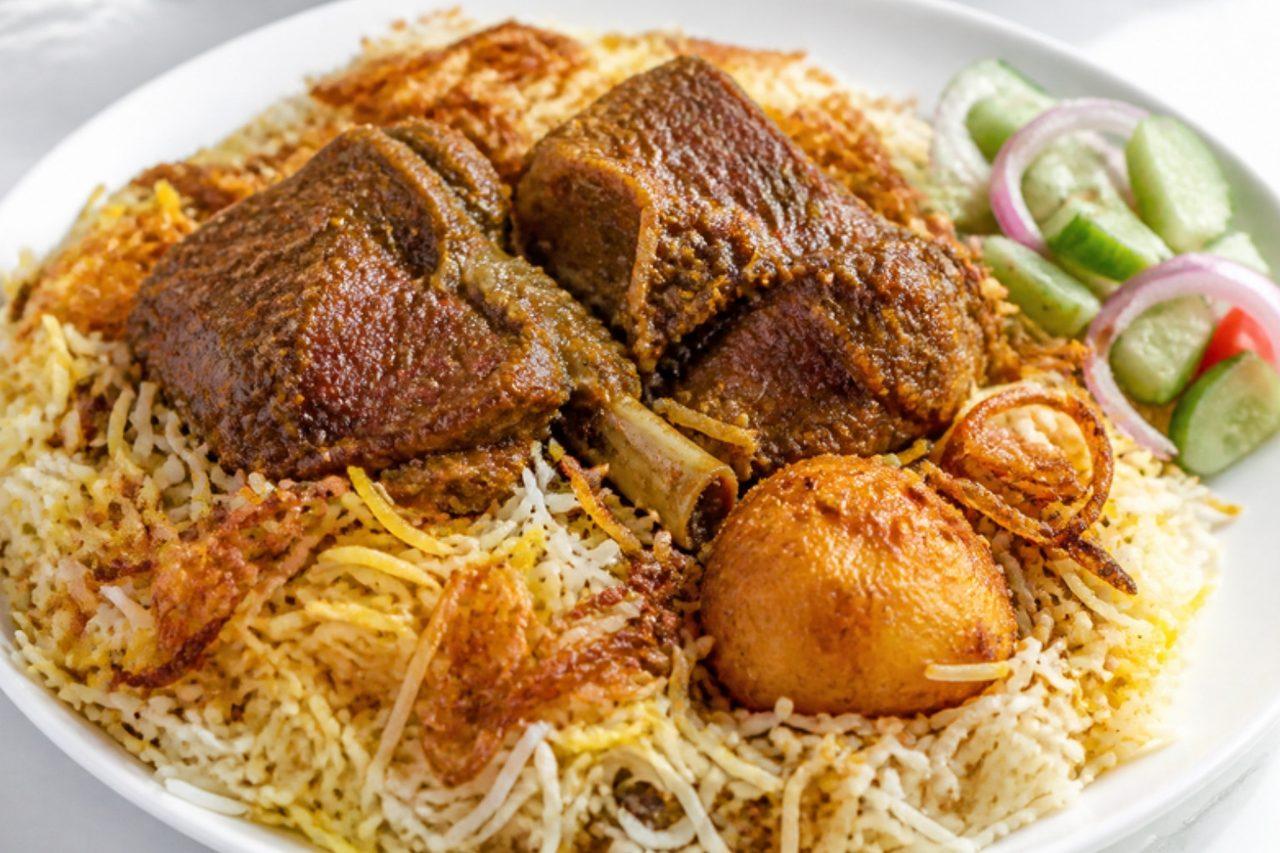
Kacchi biryani

Kacchi biryani is the wedding dish of Old Dhaka: at every Bangladeshi biye the huge copper pots come out, and the lanes around Nazira Bazar are famous for it. 'Kacchi' means raw: the mutton goes into the pot uncooked, marinated in yogurt and spices, under a layer of half-cooked aromatic rice and fried potatoes, and everything steams together for over an hour so the meat juices cook the rice. Serve it with borhani, the spiced yogurt drink, and a salad of sliced cucumber and onion. The common mistake is under-marinating or using lean meat cut too large; small pieces of shoulder with some fat, marinated overnight in the fridge, cook through in time. Chef's tip: seal the lid with a rope of dough; if no steam escapes, the meat at the bottom becomes tender without you ever opening the pot.

by KrazyBadal 0 views
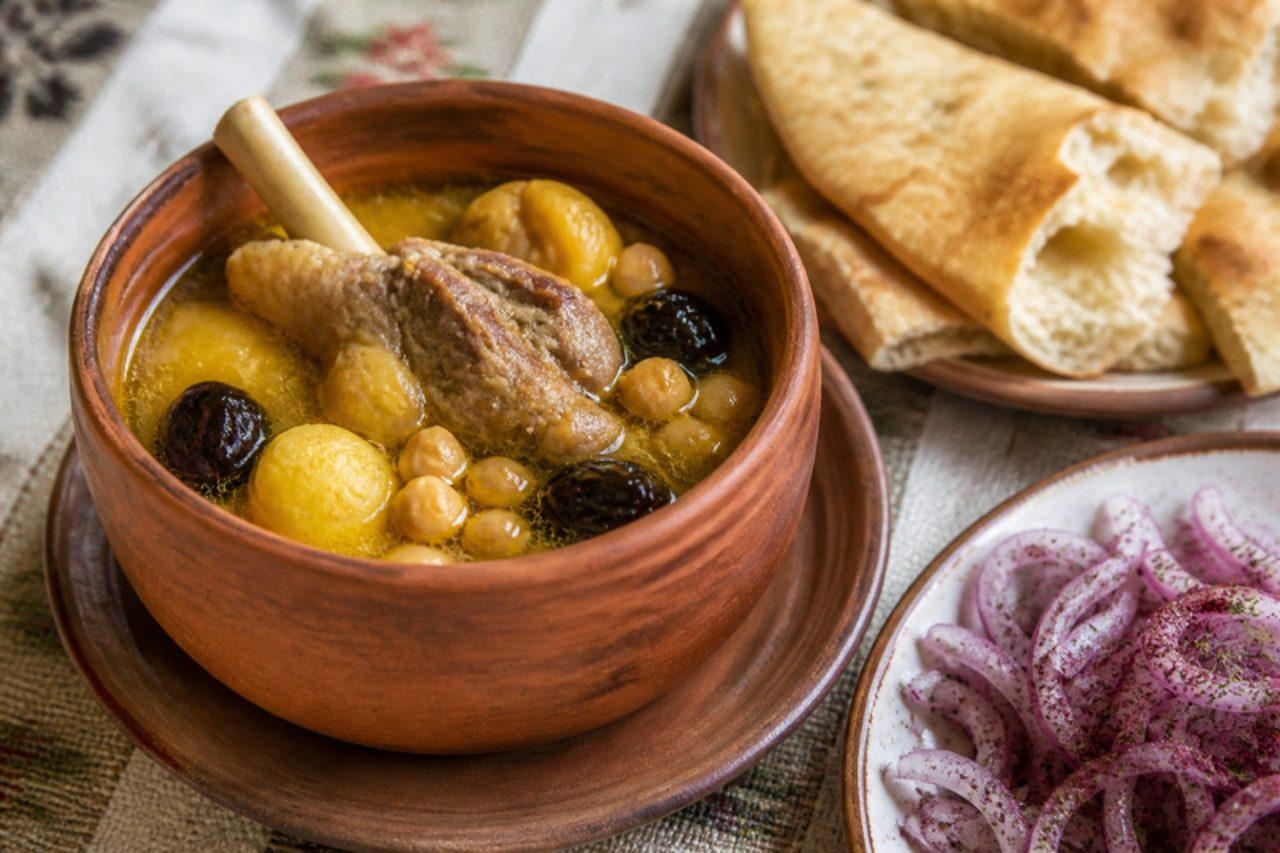
Shaki piti

Piti belongs to Shaki, the old silk-road town in the green foothills of northern Azerbaijan, where it is still cooked in individual clay pots and served in restaurants near the caravanserai. Each pot holds lamb on the bone, chickpeas, a chestnut or two, a little tail fat and saffron water. It is eaten in two stages: first you pour the broth over torn bread with sumac, then you mash the meat and chickpeas and eat that as a second course. Rushing it at a high heat is the error to avoid; the broth turns cloudy and the lamb tightens. Chef's tip: if you have no clay pots, a heavy casserole works, and you can ladle it into bowls to serve.

235 minSoups
by KrazyBadal 0 views
Goes well with saffron threads