
AI-generated image
Far breton
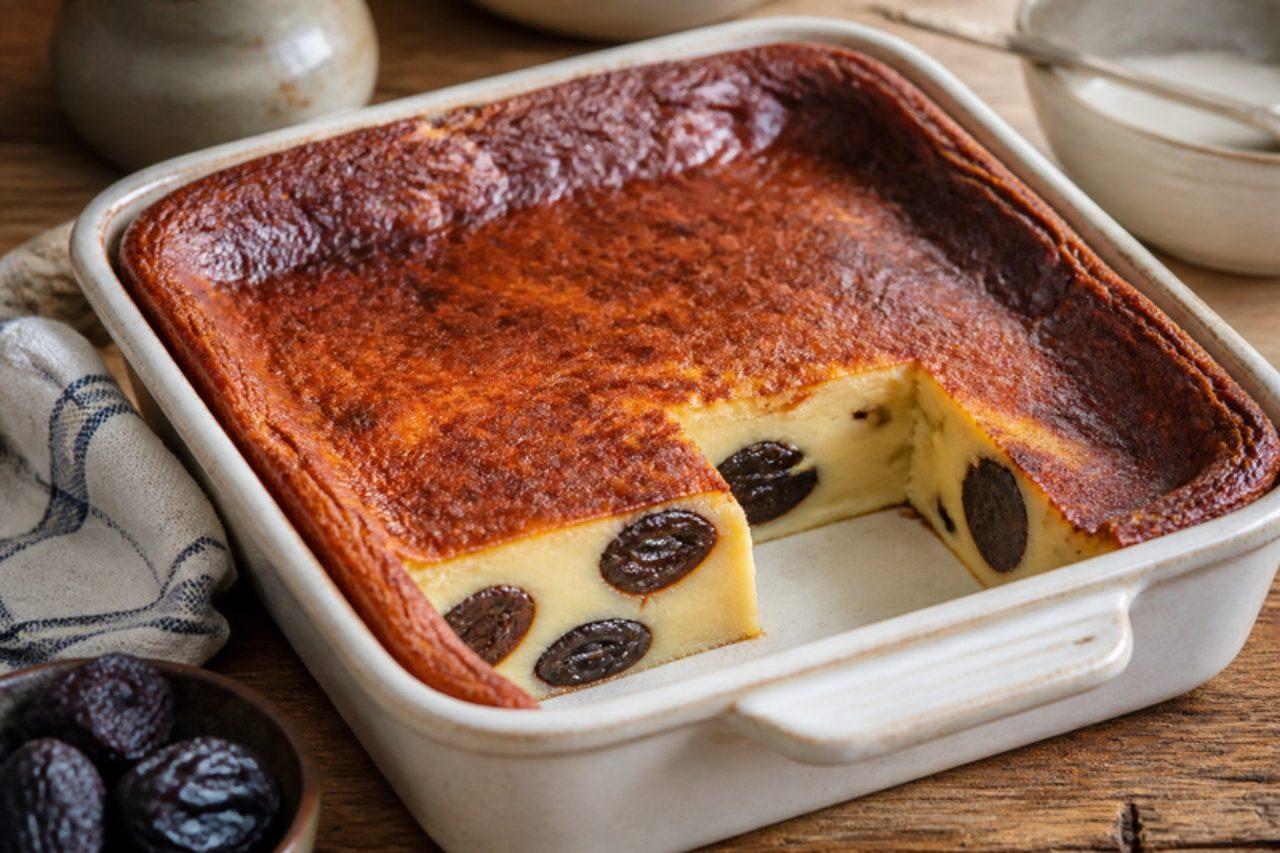
Far breton aux pruneaux, Brittany's dense prune custard cake

Far began as a savoury porridge in Breton farmhouses; today it is the sweet custard cake that every boulangerie from Quimper to Saint-Malo sells by the slice, dense and wobbly in the middle and browned on top, with prunes hidden inside. Bretons eat it at room temperature for goûter, at the end of a crêpe meal or packed for a day at the beach. Some cooks soak the prunes in rum; this recipe uses warm tea, which plumps them without alcohol, and a little rum can go in the batter if you want the traditional taste. Chef's tip: make the batter the night before and rest it in the fridge; the flour swells and the far bakes smoother and more custardy.
- Total time
- 65 min
- Difficulty
- easy
- Serves
- 8
Ingredients
Shop this recipe on Amazon
Fresh ingredients (3)
Links open Amazon in a new tab. As an Amazon Associate, WhatToEat.Today earns from qualifying purchases.
Method
0/7 doneStep 1: Pour ¾ cup hot black tea over 9 oz pitted prunes and leave to soak for 30 minutes, until plump. Drain well.
30 minStep 2: Mix 4 ½ oz plain flour, 4 oz caster sugar and 1 pinch salt in a large bowl. Make a well, add 4 eggs and whisk them into the flour to a thick, smooth paste.
Step 3: Whisk in 3 ¼ cups whole milk gradually, then 1 tsp vanilla extract and 1 ⅜ oz salted butter, until the batter is as thin as crêpe batter and lump-free. Rest it for at least 1 hour, or overnight in the fridge.
60 minStep 4: Heat the oven to 400°F (350°F fan). Butter a 24 cm ceramic dish or tin about 5 cm deep generously and scatter in the prunes.
Step 5: Whisk the batter again and pour it over the prunes. Bake for 15 minutes, then turn the oven down to 350°F (325°F fan) and bake 30–35 minutes more, until puffed, deep golden and the centre wobbles only slightly when you shake the dish.
50 minStep 6: Let it cool completely before cutting; it sinks and firms up as it cools. Common mistake: slicing it warm, when it is still runny in the middle and falls apart.
120 minStep 7: Cut into squares or wedges and serve at room temperature. Keeps for 3 days in the fridge.
Nutrition per serving
- Calories
- 290 kcal
- Protein
- 8 g
- Carbs
- 46 g
- Fat
- 8 g
- Fibre
- 2 g
Nutrition values are estimates.
KrazyBadal
Good to know
- How long does far breton take?
- About 65 minutes in total: 15 minutes to prepare and 50 minutes to cook.
- How many people does it serve?
- 8 as written. Change the servings above the ingredients and every amount scales to match.
- Is it vegetarian?
- Yes. It has no meat or fish.
- Can I make it ahead?
- Yes. It keeps well, so you can cook it earlier in the day or the day before and reheat it.
- What can I use instead of plain flour?
- Self-raising flour, same amount (then leave out the baking powder).
- What can I use instead of caster sugar?
- Caster sugar, same amount.
Reviews
No reviews yet. Be the first to cook it.
Rate this recipe
Sign in to rate and review this recipe.
You might also like
Baklava
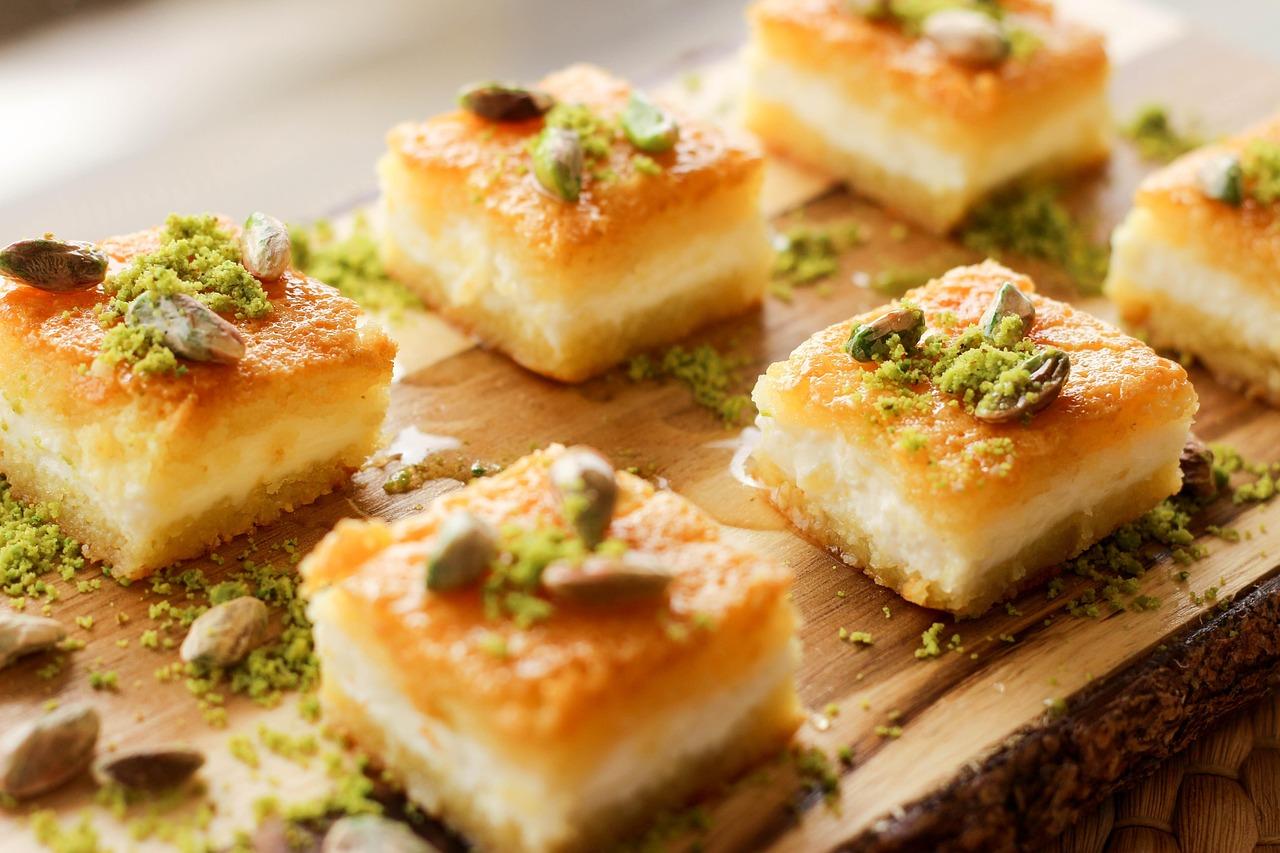
The famous layered pastry: crisp sheets of buttered fillo sandwich a filling of almonds, pistachios and cashews spiced with cinnamon, cardamom and saffron. After baking, the hot baklava is soaked in a syrup of sugar, honey, lemon, rose and cardamom and decorated with almond and pistachio flakes. Cut into 40 diamonds; serve with fresh cream or ice cream.
White sauce
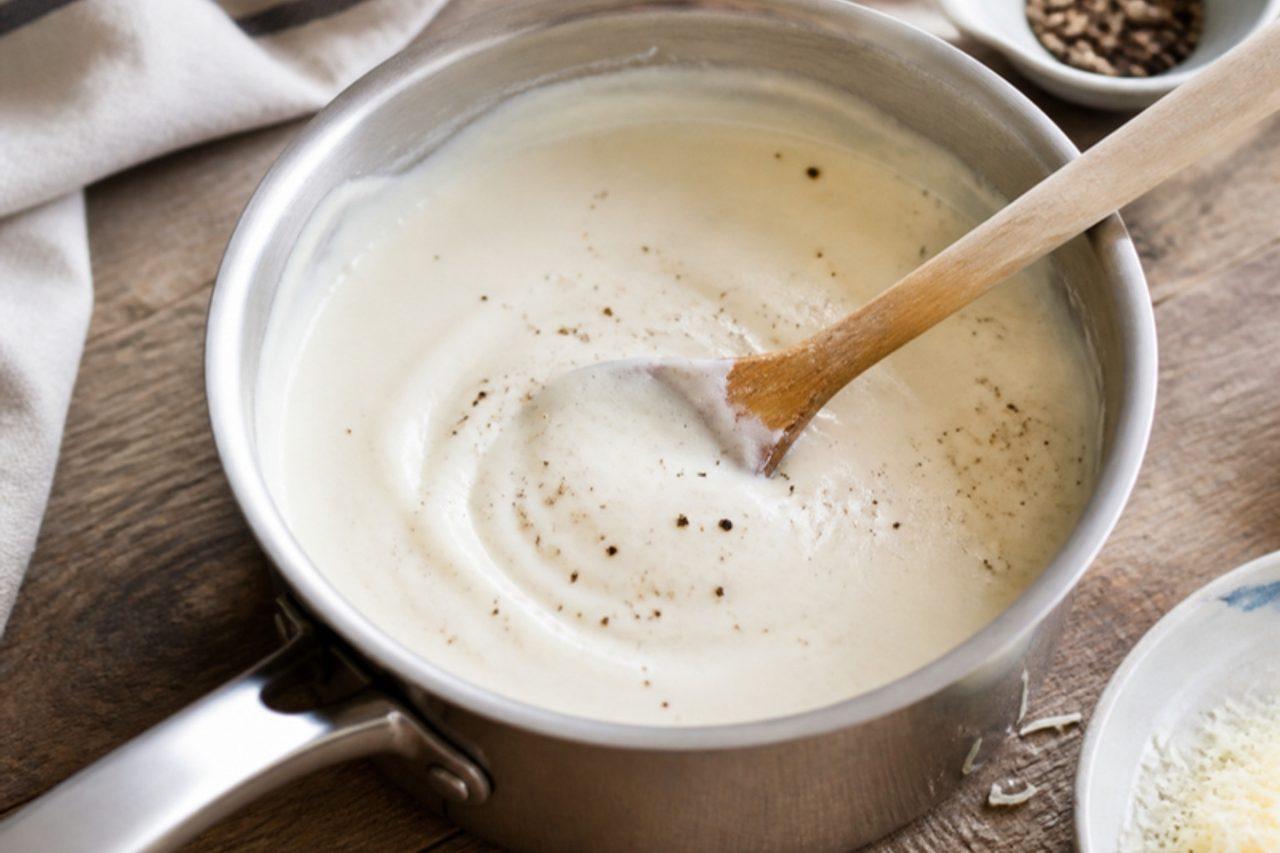
The classic white sauce behind pasta bakes, lasagne, baked vegetables and creamy soups. Butter and flour are cooked together first so the sauce tastes of nothing raw, then milk is whisked in until it turns thick, glossy and smooth. Use it straight away, or keep it covered in the fridge for up to 2 days.
Tarte au sucre lilloise
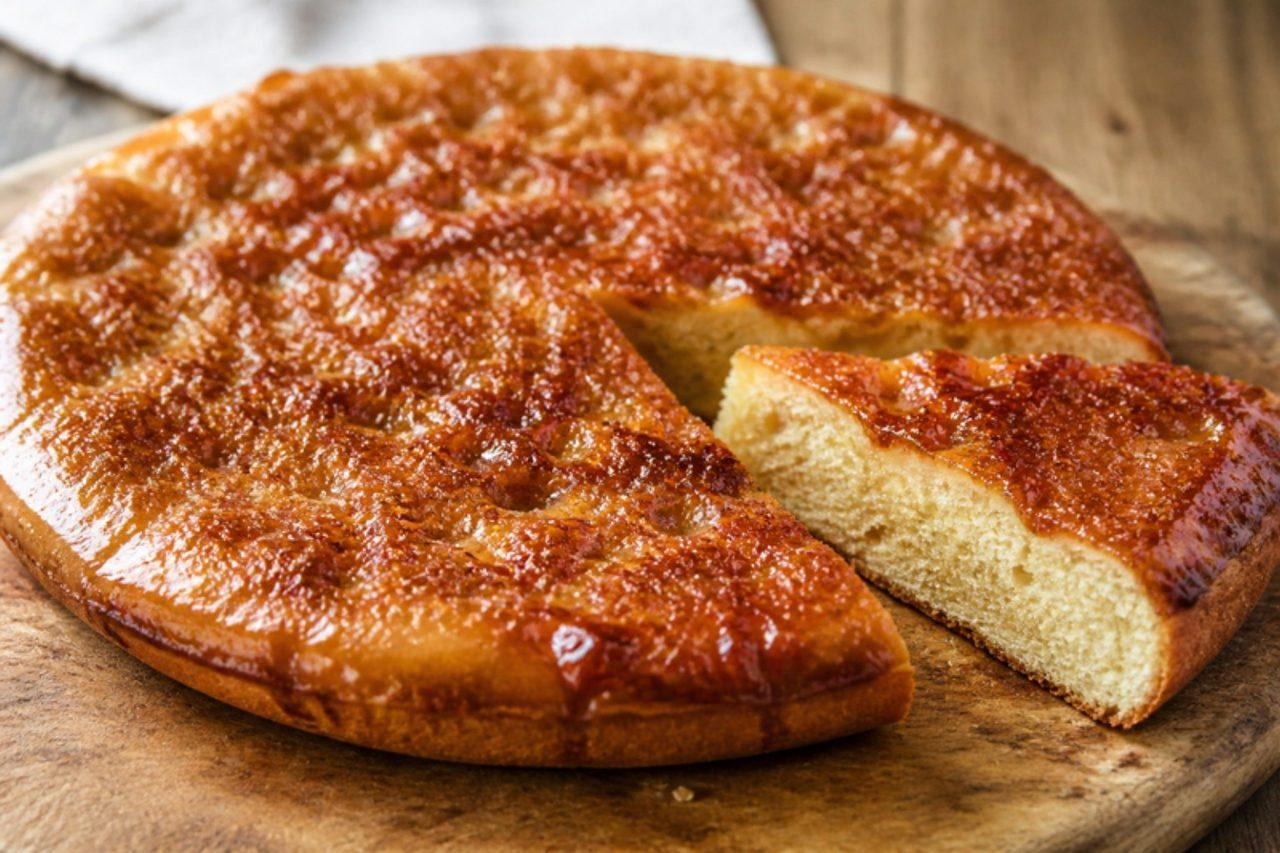
In Lille and across the Nord, a sugar tart is not pastry at all but a flat round of soft brioche dough, dimpled and covered with brown cassonade sugar, butter and a little egg and cream, which bakes into a sticky, caramelised top over a fluffy base. Families buy it from the boulangerie for Sunday breakfast and goûter, or bake one when guests come for coffee. The Nord's own beet sugar, vergeoise, gives it a deep, almost molasses flavour; soft dark brown sugar is the closest swap. Chef's tip: press deep dimples into the risen dough with your fingertips before adding the topping; the sugar and cream collect in them and bake into little pools of caramel.