
AI-generated image
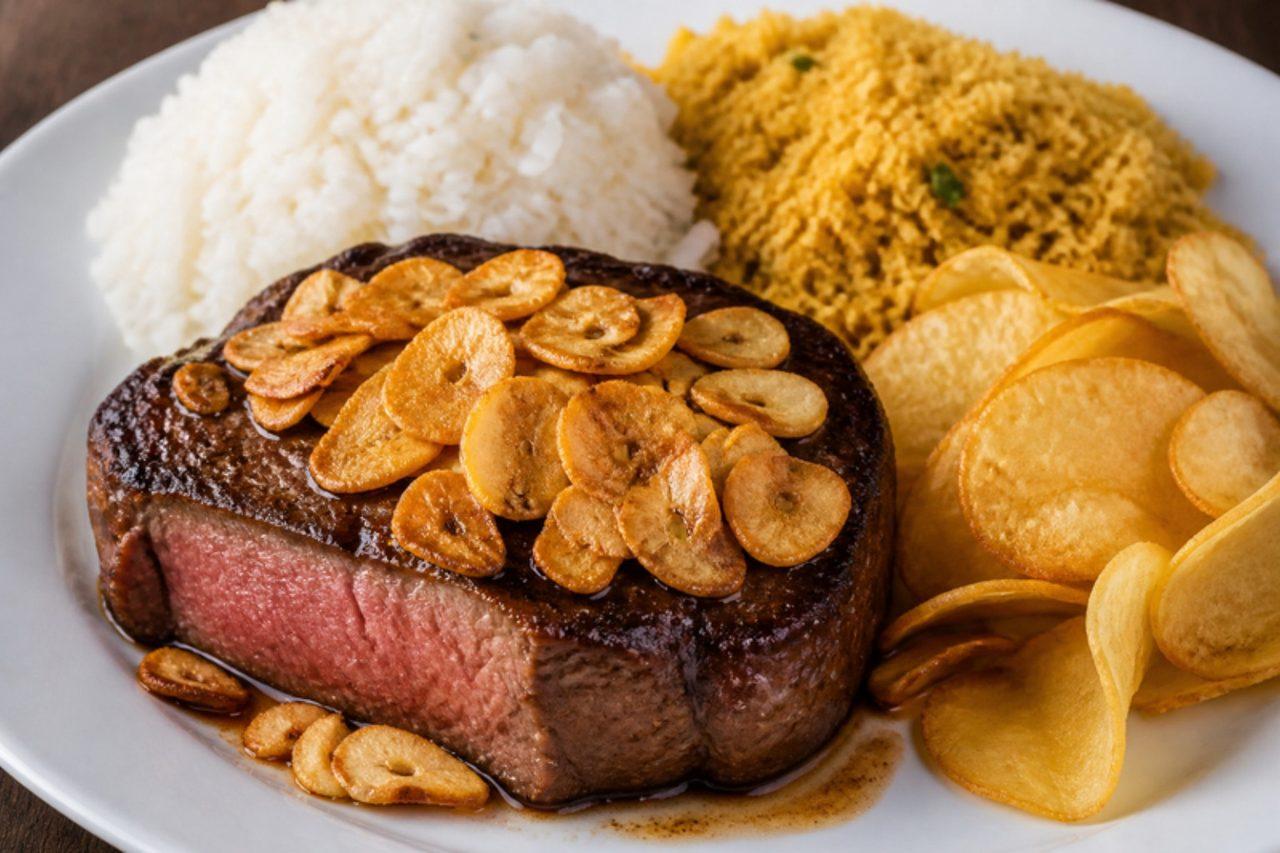
Filé à Oswaldo Aranha
Beef fillet with fried garlic
Filé à Oswaldo Aranha: thick beef fillet under heaps of fried garlic, with rice, farofa and potato straws

 Brazilian
Rio de Janeiro's old-school restaurants, the ones with white-jacketed waiters in Flamengo and Centro, have served this plate since the 1930s, named after the statesman who supposedly ordered it every day. It is simple and generous: a thick fillet steak, seared hard and buried under a pile of golden fried garlic, with white rice, buttery farofa and a heap of crisp potato straws. The garlic is sweet and nutty, the steak juicy, and the farofa soaks up the juices. Cook the steak to your liking; whole beef steaks are safe pink in the middle, but take them further if you prefer. The biggest mistake is frying the garlic too hot, which turns it bitter in seconds; it should go slowly from pale to light gold. Chef's tip: take the garlic out of the oil when it is only just golden, as it keeps darkening on the paper.
- Total time
- 45 min
- Difficulty
- easy
- Serves
- 4
Ingredients
For the steak
- 4 beef fillet steaksabout 200 g each, 4 cm thick, at room temperature
- 1 tsp salt
- ½ tsp ground black pepper
- 2 heads garlicabout 20 cloves, thinly sliced
- ½ cup vegetable oil
- ⅔ oz butter
For the sides
- 10 ½ oz long-grain white ricerinsed
- 2 ½ cups boiling water
- 1 tsp salt
- 5 ½ oz farinha de mandiocatoasted cassava flour
- 1 ⅜ oz butter
- ½ onionfinely chopped
- 3 ½ oz potato straws (batata palha)shop-bought, or 2 potatoes cut in fine matchsticks and deep-fried
To finish
- 2 tbsp fresh parsley (optional)chopped
Shop this recipe on Amazon
Fresh ingredients (6)
Links open Amazon in a new tab. As an Amazon Associate, WhatToEat.Today earns from qualifying purchases.
Method
0/6 doneStep 1: Put 10 ½ oz long-grain white rice in a pan with 2 ½ cups boiling water and 1 tsp salt, cover and cook on a low heat for 15 minutes until the water is absorbed. Leave covered.
15 minStep 2: Melt 1 ⅜ oz butter in a frying pan over a medium heat, soften ½ onion for 4 minutes, then add 5 ½ oz farinha de mandioca and toast for 4–5 minutes, stirring, until golden and sandy. Tip into a bowl.
9 minStep 3: Heat ½ cup vegetable oil in a small pan over a medium-low heat, add 2 heads garlic and fry for 5–7 minutes, stirring, until evenly light gold. Lift onto kitchen paper with a slotted spoon and keep the garlic oil.
7 minStep 4: Season 4 beef fillet steaks with 1 tsp salt and ½ tsp ground black pepper. Heat 2 tbsp of the garlic oil in a heavy frying pan over a high heat until smoking.
Step 5: Sear the steaks for 3–4 minutes a side for medium-rare, or longer to your liking, adding ⅔ oz butter in the last minute and spooning it over. Rest for 5 minutes.
8 minStep 6: Serve each steak heaped with fried garlic, with rice, farofa and 3 ½ oz potato straws (batata palha) on the side and 2 tbsp fresh parsley scattered over.
Nutrition per serving
- Calories
- 840 kcal
- Protein
- 52 g
- Carbs
- 86 g
- Fat
- 32 g
- Fibre
- 4 g
Nutrition values are estimates.
KrazyBadal
Good to know
- How long does filé à Oswaldo Aranha take?
- About 45 minutes in total: 15 minutes to prepare and 30 minutes to cook.
- How many people does it serve?
- 4 as written. Change the servings above the ingredients and every amount scales to match.
- Is it gluten free?
- Yes, as written. Check the labels on stock, sauces and spice mixes, which sometimes contain gluten.
- What can I use instead of ground black pepper?
- Black peppercorns, freshly ground, same amount.
- What can I use instead of garlic?
- ½ tsp garlic paste or ⅛ tsp garlic powder per clove.
Reviews
No reviews yet. Be the first to cook it.
Rate this recipe
Sign in to rate and review this recipe.
You might also like

Pork souvlaki
This is a pork recipe. Walk through any Greek town after dark, from Athens to Thessaloniki, and the smell of souvlaki stands drifts down the street; cubes of pork shoulder grilled on thin skewers are the country's favourite cheap supper, eaten standing up or at a plastic-table taverna. At home you marinate the meat in lemon, olive oil, garlic and dried oregano, grill it hard and fast, and pile it on warm pitta with tzatziki, tomato and red onion. Chef's tip: cut the pork into even 2.5 cm cubes and leave a little fat on; lean loin dries out, shoulder stays juicy over high heat.
 Greek

PingadoHot milk with coffee
Order 'um pingado' at the balcão of any São Paulo padaria at 7 in the morning and the attendant pours hot milk into a ridged glass tumbler (the copo americano) and 'drips' in a splash of strong coffee, hence the name. It is milkier and gentler than a média (half coffee, half milk), creamy and lightly sweet, usually drunk standing up with a pão na chapa, a toasted buttered roll. At home you need strong filter coffee and milk heated until steaming. Scalding the milk is the frequent mistake, as boiled milk tastes flat and forms a skin. Chef's tip: froth the hot milk for a few seconds with a whisk or by pouring it back and forth between two jugs before adding the coffee, as padaria machines do.

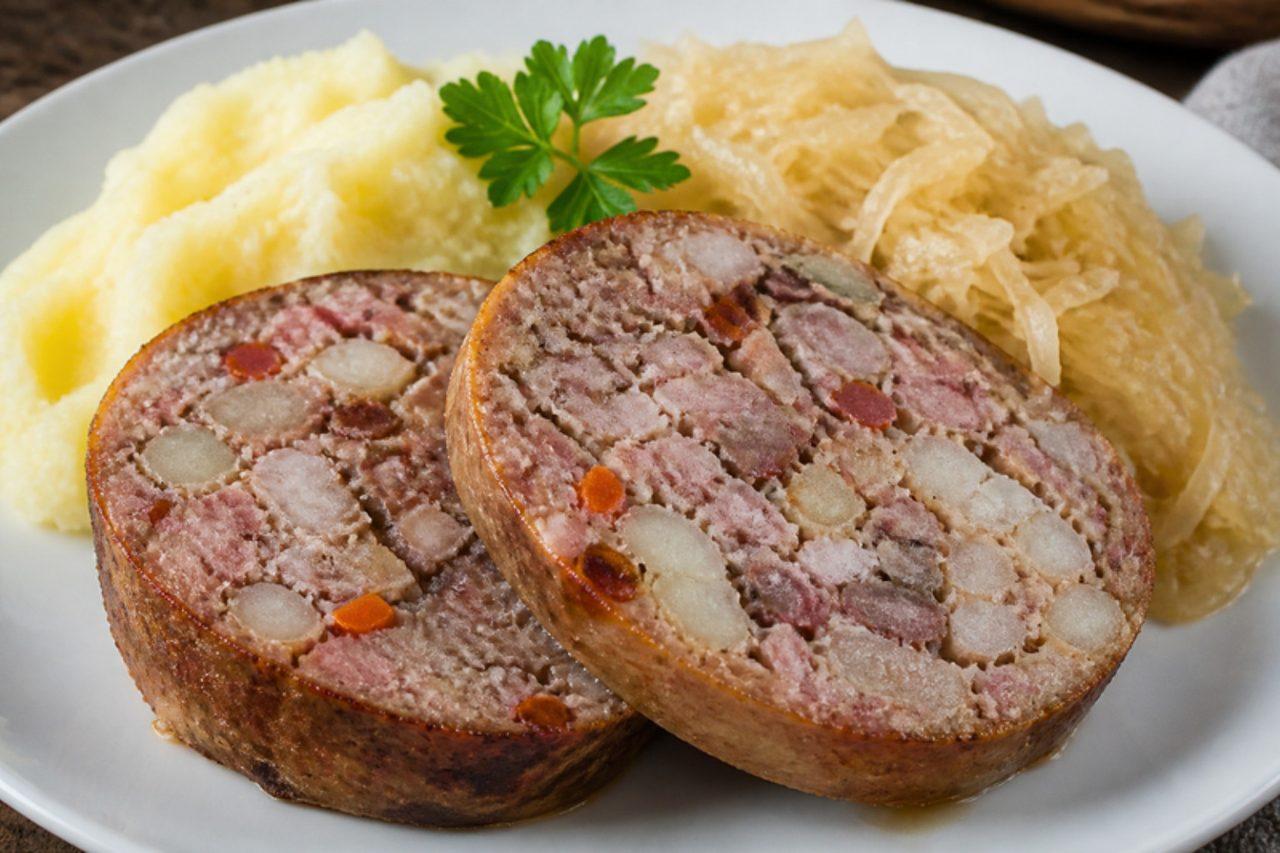
Pfälzer SaumagenStuffed pig's stomach
Saumagen is the pride of the Palatinate, served at wine-village festivals and family dinners from the Haardt hills to Ludwigshafen. A cleaned pig's stomach is stuffed with diced pork shoulder, pork sausage meat, potato and carrot seasoned with marjoram and nutmeg, poached slowly, then sliced thick and fried until crusty. The stomach works only as a casing and is ordered from a butcher; if you can't get one, bake the same filling in a covered terrine in a water bath. Serve with sauerkraut and mashed potato. Chef's tip: fill the stomach only three-quarters full, or it bursts as the potatoes swell.
 German