
AI-generated image
Gamja ongsimi
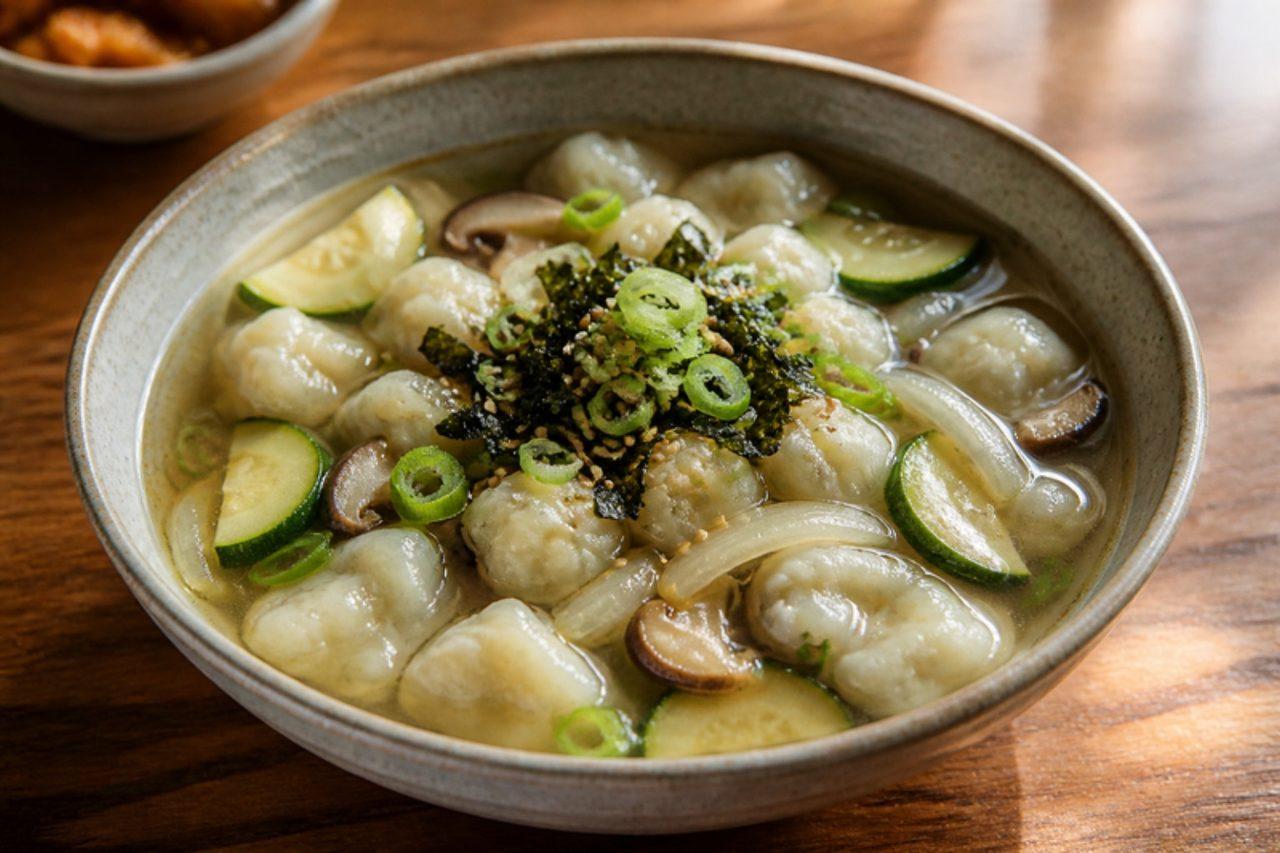
감자옹심이 · Gangneung potato dumplings in a clear kelp and mushroom broth


Ongsimi (옹심이) means 'little bird egg' in the Gangwon dialect, and it describes the small, chewy dumplings that Gangneung cooks make from grated potato and its own starch. Gangwon's mountains grow more potatoes than rice, and ongsimi restaurants around Gangneung still serve the dumplings in plain anchovy or kelp broth with courgette, sometimes with knife-cut noodles added. This version uses kelp and shiitake, so it is vegan and gluten free if you season with tamari. The dumplings are translucent, slippery and springy, nothing like gnocchi. Chef's tip: let the potato water stand until the white starch settles at the bottom, then add every bit of that starch back to the grated potato; it is what makes the dumplings chewy.
- Total time
- 55 min
- Difficulty
- medium
- Serves
- 3
Ingredients
For the dumplings
For the broth
To serve
Method
0/8 doneStep 1: Put 5 ¾ cups water, 1 piece dried kelp (dasima), 4 dried shiitake mushrooms and ½ onion in a pot and simmer over a medium heat for 15 minutes. Remove the kelp and onion; slice the shiitake and return them.
15 minStep 2: Meanwhile, finely grate 1 ¾ lb potatoes on the smallest holes of a box grater (or blitz them in a blender) into a bowl. Tip into a muslin or clean tea towel set over another bowl and squeeze hard to get out as much liquid as you can.
Step 3: Leave the squeezed liquid to stand for 10 minutes. Carefully pour off the brown water, leaving the thick white starch at the bottom.
10 minStep 4: Mix that starch back into the squeezed potato with ½ tsp salt. Squeeze a little in your fist: it should hold together. If it falls apart, work in 2 tbsp potato starch.
Step 5: Roll into balls the size of a hazelnut and flatten each slightly with your thumb.
Step 6: Season the broth with 2 cloves garlic, 1 tbsp tamari or Korean soup soy sauce and ½ tsp salt and bring it to a steady boil. Drop in the dumplings and stir gently once so they don't stick to the bottom. Cook for 4–5 minutes, until they float and turn from white to translucent and grey-gold.
5 minStep 7: Add ½ courgette and cook for 2 minutes more until it is just tender.
2 minStep 8: Ladle into bowls and top with 1 spring onion, 1 sheet roasted seaweed (gim) and 1 tsp toasted sesame seeds. Eat straight away. A common mistake is grating the potatoes too long before cooking: they turn brown and the dumplings look grey, so cook within 20 minutes of grating.
Nutrition per serving
- Calories
- 250 kcal
- Protein
- 6 g
- Carbs
- 52 g
- Fat
- 1 g
- Fibre
- 5 g
Nutrition values are estimates.
KrazyBadal
Good to know
- How long does gamja ongsimi take?
- About 55 minutes in total: 35 minutes to prepare and 20 minutes to cook.
- How many people does it serve?
- 3 as written. Change the servings above the ingredients and every amount scales to match.
- Is it vegan?
- Yes. It has no meat, fish, dairy or eggs.
- Is it gluten free?
- Yes, as written. Check the labels on stock, sauces and spice mixes, which sometimes contain gluten.
- What can I use instead of potatoes?
- Sweet potato, same weight (sweeter, cooks a little faster).
- What can I use instead of dried shiitake mushrooms?
- Aubergine, diced, same weight.
Reviews
No reviews yet. Be the first to cook it.
Rate this recipe
Sign in to rate and review this recipe.
You might also like

Soto Banjar
Along the rivers of Banjarmasin in South Kalimantan, breakfast often means soto Banjar eaten at a wooden riverside warung, sometimes after a dawn trip to the floating market. Unlike the turmeric sotos of Java, this broth is pale and clear, perfumed with the sweet spices that traders brought up the river centuries ago: cinnamon, cloves, star anise, cardamom and nutmeg. Shredded chicken, glass noodles, carrot and a boiled egg go into the bowl with rice cakes, and lime and a little chilli sharpen it at the table. Chef's tip: toast the whole spices in the pan for a minute before the paste goes in; it brings out their sweetness without the dusty edge of ground spice.


Tteokbokki
Tteokbokki (떡볶이) is Korea's best-loved street snack: chewy cylinders of rice cake simmered in a thick, glossy, sweet and spicy red sauce. It became a classic in Seoul, where it is sold from street stalls and snack bars in every neighbourhood. Street versions use anchovy stock and fish cakes; this vegan version uses a quick kelp and shiitake stock with cabbage and spring onions, and has all the same punch. Eat it hot, while the rice cakes are soft and stretchy. Chef's tip: keep stirring and scrape the bottom; the rice cakes release starch that thickens the sauce but also catches. The sauce is right when it clings to the spoon in a glossy coat.



Miso soup
Miso soup (味噌汁) is drunk every day in homes all over Japan, at breakfast as well as dinner, beside a bowl of rice. The base is dashi; this vegan version uses kombu and dried shiitake instead of bonito, which gives it a deep, rounded flavour. Silken tofu and wakame seaweed are the classic fillings. It takes ten minutes; just remember not to boil the miso. Chef's tip: add the miso at the very end and never let it boil. Boiling kills the miso's fresh, fermented aroma; Japanese cooks say the soup should only 'smile', with the surface barely trembling.