
AI-generated image
Ganmodoki
Tofu and vegetable fritters
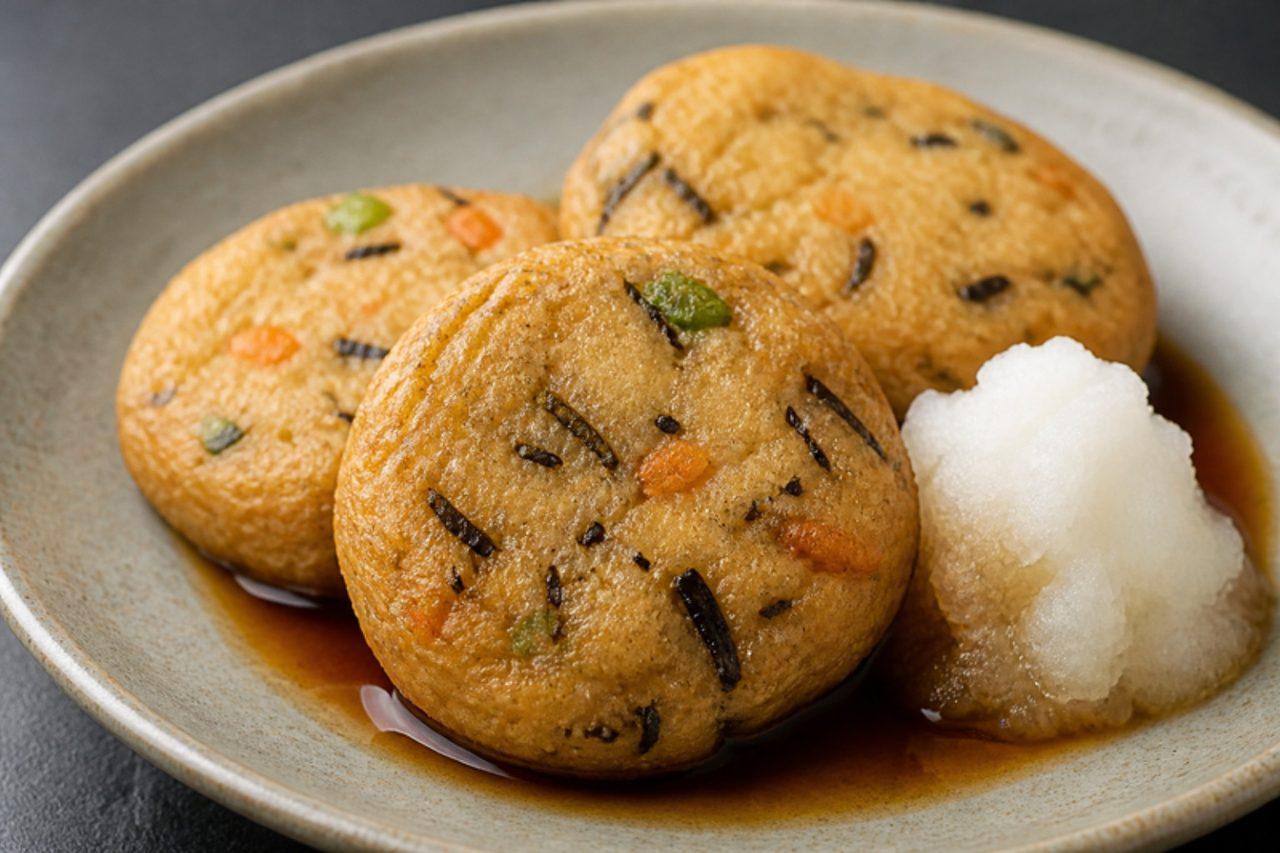
Ganmodoki (がんもどき): fried tofu fritters with vegetables, hijiki and sesame


The name means 'mock goose', a hint that these fritters were invented by Buddhist monks who wanted something rich and satisfying without meat; in Kyoto they are called hiryōzu. Firm tofu is pressed, mashed with grated yam, carrot, hijiki and sesame, then fried into golden discs that are crisp outside and soft and springy within. Eat them hot with ginger and soy, or simmer them in oden or sweet dashi on cold days. The common mistake is not pressing the tofu enough; wet tofu makes fritters that split and spit in the oil. Chef's tip: a little grated Japanese mountain yam (nagaimo) binds the mix without egg and makes it fluffier; potato starch alone gives a denser fritter.
- Total time
- 45 min
- Difficulty
- medium
- Serves
- 4
Ingredients
- 14 oz firm tofu
- ⅛ oz dried hijiki seaweed
- 1 oz carrotcut into very fine 2 cm matchsticks
- 1 oz shelled edamame
- 1 ⅜ oz nagaimo (Japanese mountain yam)peeled and finely grated; or 1 extra tbsp starch
- 1 tbsp potato starch
- 1 tbsp toasted black sesame seeds
- ½ tsp salt
- 2 cups vegetable oilfor deep-frying
To serve
- ⅓ oz fresh gingergrated
- 2 tbsp soy sauce
Shop this recipe on Amazon
What you'll need
Spices & pantry
Links open Amazon in a new tab. As an Amazon Associate, WhatToEat.Today earns from qualifying purchases.
Method
0/6 doneStep 1: Wrap 14 oz firm tofu in a clean tea towel, put a plate and a heavy tin on top and press for 30 minutes, until it has lost about a quarter of its weight. Soak ⅛ oz dried hijiki seaweed in water for 15 minutes at the same time, then rinse and drain.
Step 2: Crumble the tofu into a bowl and mash with a fork or press through a sieve until smooth.
Step 3: Add the hijiki, 1 oz carrot, 1 oz shelled edamame, 1 ⅜ oz nagaimo (Japanese mountain yam), 1 tbsp potato starch, 1 tbsp toasted black sesame seeds and ½ tsp salt and knead with your hand for a minute until it holds together like a soft dough.
Step 4: With oiled hands, shape into 8 patties about 6 cm wide and 1.5 cm thick.
Step 5: Heat 2 cups vegetable oil in a deep pan to 325°F. Fry the patties 4 at a time for 5–6 minutes, turning once, until they puff slightly and are an even deep gold. Starting cooler than usual lets the centre heat through before the outside browns.
12 minStep 6: Drain on kitchen paper. Serve hot with ⅓ oz fresh ginger and 2 tbsp soy sauce, or simmer them later in dashi.
Nutrition per serving
- Calories
- 230 kcal
- Protein
- 15 g
- Carbs
- 8 g
- Fat
- 17 g
- Fibre
- 3 g
Nutrition values are estimates.
KrazyBadal
Good to know
- How long does ganmodoki take?
- About 45 minutes in total: 30 minutes to prepare and 15 minutes to cook.
- How many people does it serve?
- 4 as written. Change the servings above the ingredients and every amount scales to match.
- Is it vegan?
- Yes. It has no meat, fish, dairy or eggs.
- What can I use instead of carrot?
- Parsnip or sweet potato, same weight.
- What can I use instead of toasted black sesame seeds?
- Poppy seeds or finely chopped pumpkin seeds, same amount.
Reviews
No reviews yet. Be the first to cook it.
Rate this recipe
Sign in to rate and review this recipe.
You might also like

SakarpadaSweet fried dough diamonds
Sakarpada (shakarpara) are little sweet diamonds of a rich dough made with ghee, milk and sugar, fried until golden and crunchy. They are a Diwali favourite with tea, and the cubes go into bhusu too. They keep for weeks in an air-tight tin.
 Indian

Yaki onigiriGrilled rice balls
Yaki onigiri (焼きおにぎり) are rice balls grilled until they form a crisp, toasty crust, then brushed with soy sauce glaze. They are eaten all over Japan, at izakaya, at barbecues and from the freezer section, as a snack or with miso soup. The inside stays soft and steamy while the outside crackles. Best eaten hot, straight from the pan. Chef's tip: let the shaped rice balls dry for 10 minutes before they go in the pan. A drier surface forms a better crust and won't stick, and the glaze goes on only at the end so it doesn't burn.


Miso soup
Miso soup (味噌汁) is drunk every day in homes all over Japan, at breakfast as well as dinner, beside a bowl of rice. The base is dashi; this vegan version uses kombu and dried shiitake instead of bonito, which gives it a deep, rounded flavour. Silken tofu and wakame seaweed are the classic fillings. It takes ten minutes; just remember not to boil the miso. Chef's tip: add the miso at the very end and never let it boil. Boiling kills the miso's fresh, fermented aroma; Japanese cooks say the soup should only 'smile', with the surface barely trembling.