
AI-generated image
Doodhpak
Rice milk pudding
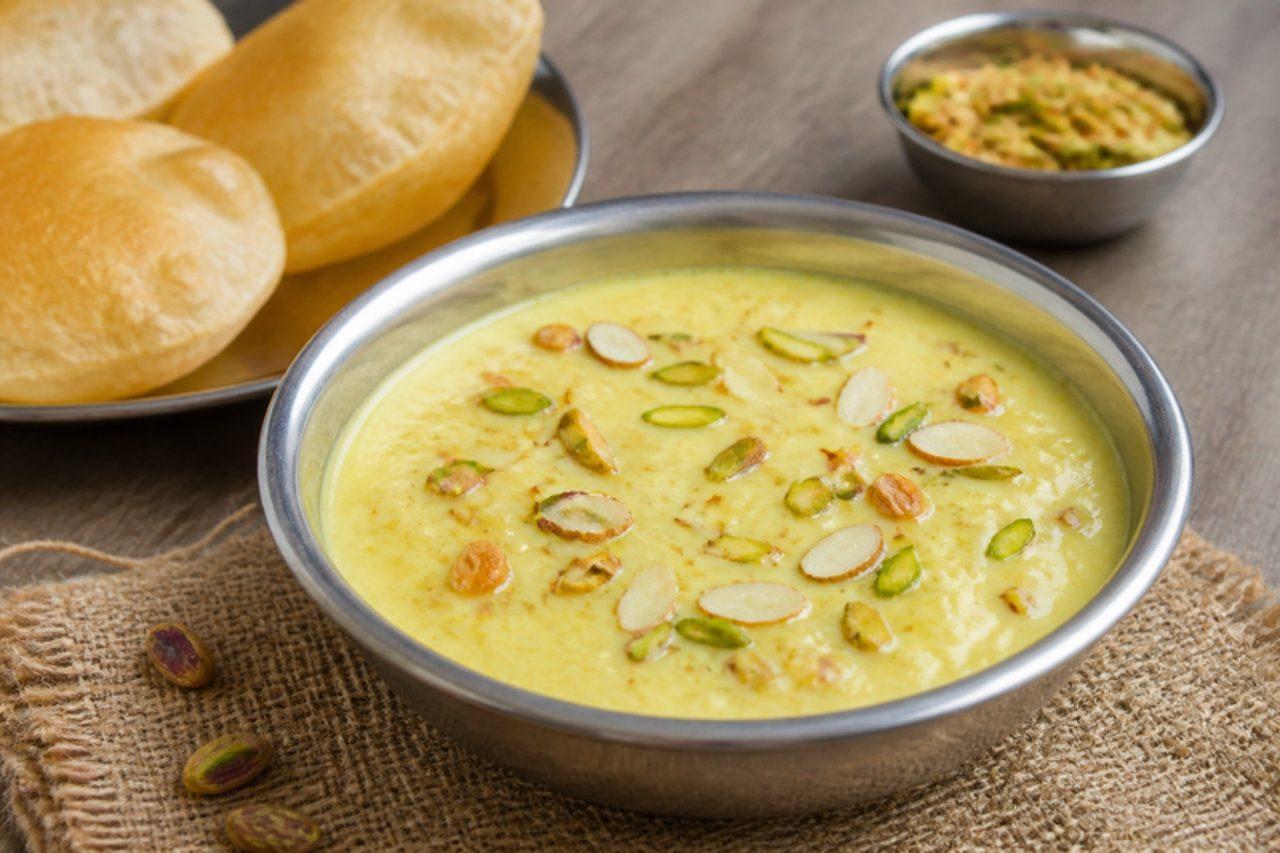
દૂધપાક: a little rice slowly simmered in reduced milk with saffron, cardamom, nutmeg and charoli, for puris at a Gujarati jamanvar


Doodhpak and puri is the classic pairing of a Gujarati jamanvar (feast), served at weddings, at Sharad Purnima and, in many families, cooked for pitru paksha (shraddh) to remember the ancestors. Unlike a thick kheer, doodhpak is pourable and silky: a small amount of rice cooks in milk that has been reduced by about a third, so each grain is soft but still whole, and the milk turns creamy and faintly golden from saffron. Charoli (chironji, small almond-like seeds), slivered almonds and pistachios give it bite, and cardamom with a little nutmeg (jaiphal) is the true Gujarati flavour. It thickens a lot as it cools, so take it off the heat while it still looks thin. Serve warm in winter or chilled in summer, with hot puris, dal-bhaat and a dry shaak. Common mistake: adding sugar before the rice is fully soft; the sugar stops the grains cooking and they stay chalky. Chef's tip: rub the soaked rice with a teaspoon of ghee before it goes in, so the grains stay separate and do not form lumps on the base.
- Total time
- 75 min
- Difficulty
- medium
- Serves
- 6
Ingredients
For the doodhpak
- 1 ⅜ oz short-grain rice (such as kolam or ambemohar)washed and soaked for 30 minutes
- 1 tsp ghee
- 6 ¼ cups full-fat milk
- 4 oz sugar
- ¼ tsp saffron strandssoaked in 1 tbsp warm milk
- ½ tsp ground green cardamom
- 1 pinch freshly grated nutmeg
- 1 tbsp charoli (chironji seeds)
- 12 almondsblanched and slivered
To garnish
- 1 tbsp pistachios (optional)slivered
Shop this recipe on Amazon
Fresh ingredients (1)
Links open Amazon in a new tab. As an Amazon Associate, WhatToEat.Today earns from qualifying purchases.
Method
0/7 doneStep 1: Drain the soaked 1 ⅜ oz short-grain rice (such as kolam or ambemohar) well and rub it with 1 tsp ghee so every grain is coated.
2 minStep 2: Pour 6 ¼ cups full-fat milk into a wide, heavy pan rinsed with cold water (this helps stop scorching). Bring to the boil over a medium heat, stirring often.
10 minStep 3: Lower the heat and simmer for 15–20 minutes, stirring and scraping the base and sides every few minutes and stirring the cream back in, until the milk has reduced by about a quarter.
20 minStep 4: Add the rice and simmer on a low heat for 25–30 minutes, stirring often, until a grain crushes completely between your fingers and the milk has reduced to about 1 litre and coats the back of a spoon thinly.
30 minStep 5: Stir in 4 oz sugar; the doodhpak will thin slightly. Simmer for 3 minutes until dissolved. Common mistake: adding the sugar earlier, which stops the rice softening.
3 minStep 6: Add ¼ tsp saffron strands with its milk, ½ tsp ground green cardamom, 1 pinch freshly grated nutmeg, 1 tbsp charoli (chironji seeds) and 12 almonds and simmer for 2 more minutes. Take off the heat while it still looks pourable; it thickens as it cools.
2 minStep 7: Serve warm or chilled, scattered with 1 tbsp pistachios. If it thickens too much in the fridge, stir in a splash of cold milk.
Nutrition per serving
- Calories
- 330 kcal
- Protein
- 11 g
- Carbs
- 40 g
- Fat
- 15 g
- Fibre
- 1 g
Nutrition values are estimates.
KrazyBadal
Good to know
- How long does doodhpak take?
- About 75 minutes in total: 10 minutes to prepare and 65 minutes to cook.
- How many people does it serve?
- 6 as written. Change the servings above the ingredients and every amount scales to match.
- Is it vegetarian?
- Yes. It has no meat or fish.
- Is it gluten free?
- Yes, as written. Check the labels on stock, sauces and spice mixes, which sometimes contain gluten.
- What can I use instead of short-grain rice (such as kolam or ambemohar)?
- Any long-grain rice, same amount.
- What can I use instead of ghee?
- Butter, same amount (keep the heat a little lower, butter burns sooner).
Reviews
No reviews yet. Be the first to cook it.
Rate this recipe
Sign in to rate and review this recipe.
You might also like

SakarpadaSweet fried dough diamonds
Sakarpada (shakarpara) are little sweet diamonds of a rich dough made with ghee, milk and sugar, fried until golden and crunchy. They are a Diwali favourite with tea, and the cubes go into bhusu too. They keep for weeks in an air-tight tin.
Paneer biryaniRice and moong dal in coconut milk
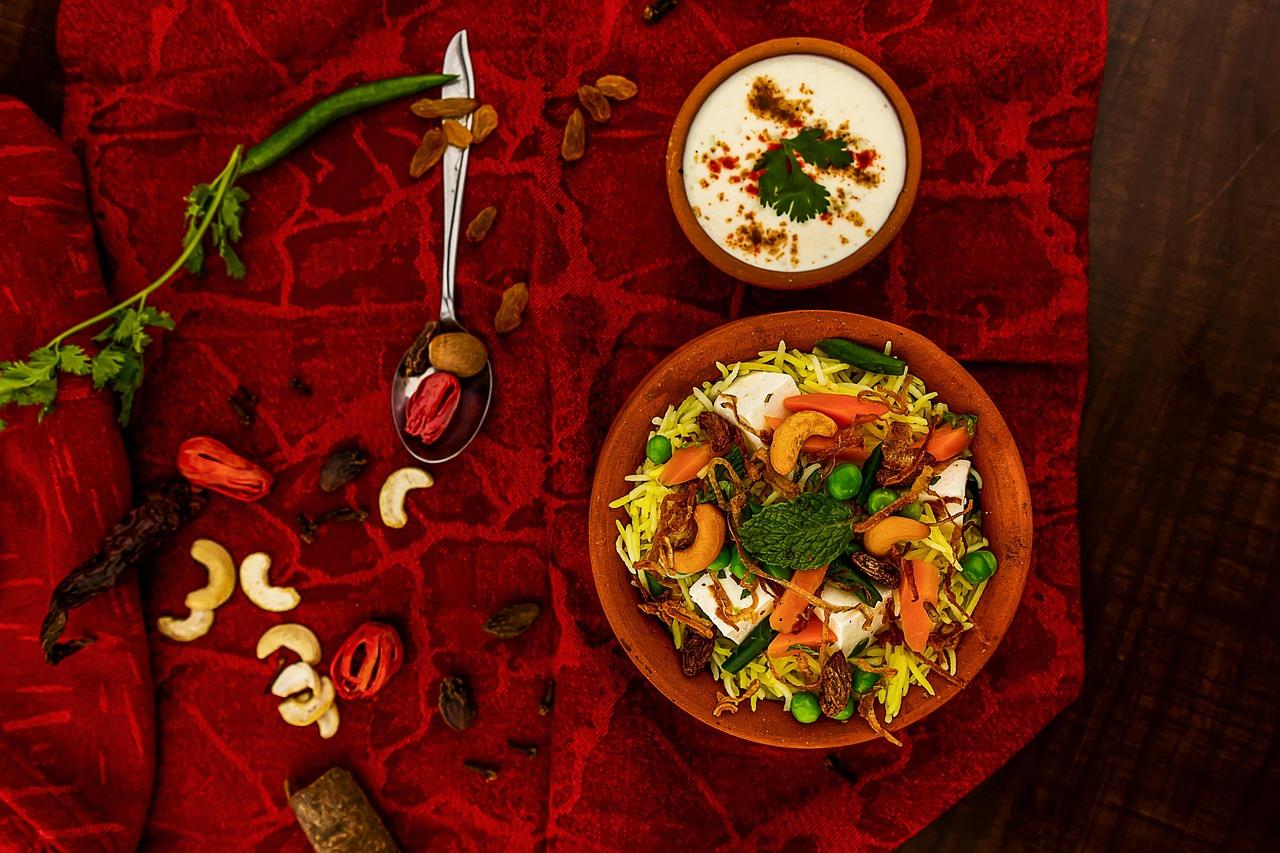
A mild, creamy biryani: rice and husked green gram roasted in ghee, then cooked in coconut milk with peas, carrots, potatoes, peanuts and cashews, and finished with soft fried paneer and a fresh coriander yogurt. Serve hot, garnished with more fried cashews and paneer.


Sabudana khichdiSago with peanuts and potato
Sabudana khichdi is the dish that sees Maharashtra through every vrat (fast), from Navratri to Ekadashi, but it's so good that people eat it any day of the week. Soaked sago pearls are tossed in a pan with crushed roasted peanuts, cubes of potato, cumin and green chilli until each pearl turns glassy and separate, then finished with lemon and coriander. It's soft, chewy, nutty and gently hot. Fasting rules vary from family to family, so check yours; this version uses rock salt and no asafoetida, onion or garlic. Traditionally it's cooked in ghee; use ghee instead of oil if you aren't keeping it vegan. Chef's tip: soak the sago in just enough water to cover by the height of the pearls themselves, no more; too much water is the reason khichdi turns into one sticky lump.
