
AI-generated image
Gul poli
Jaggery-stuffed flatbread
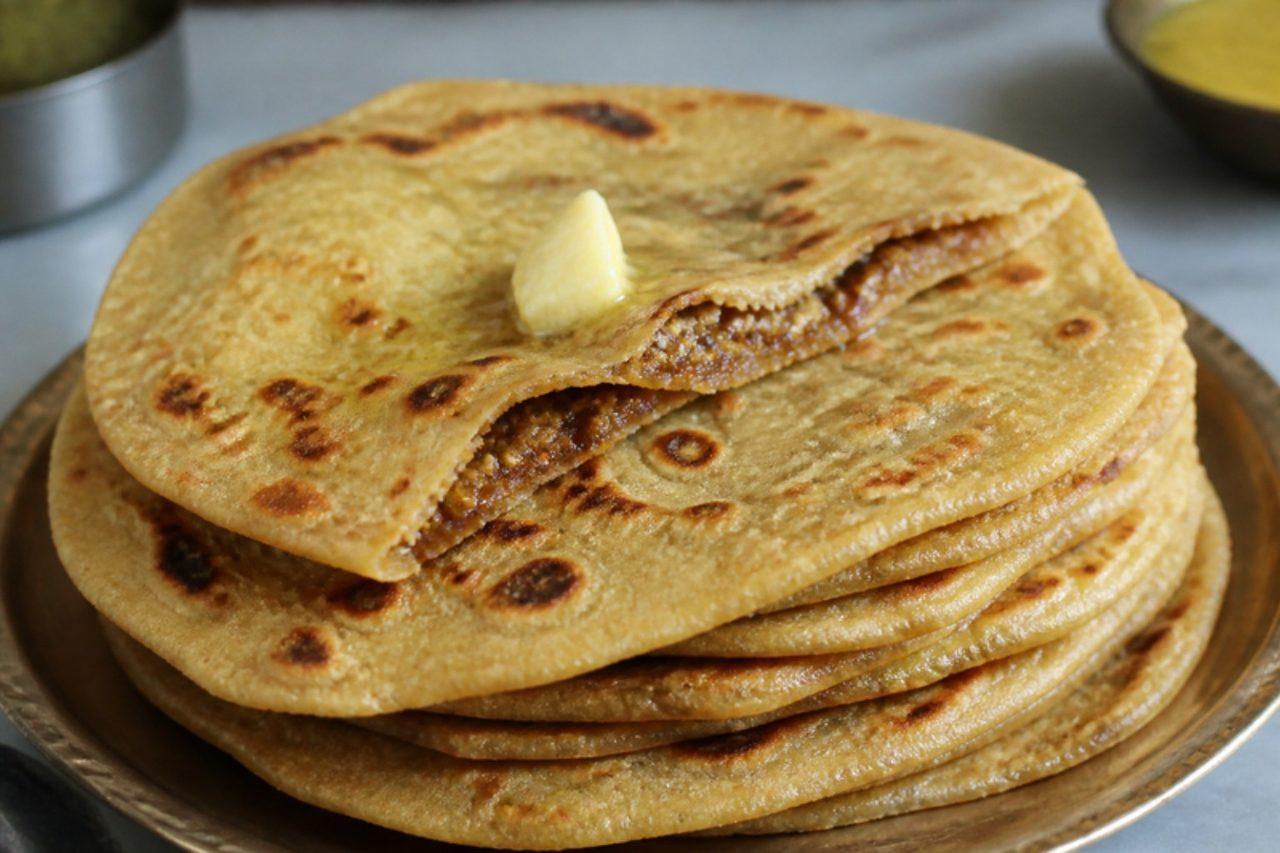
गूळ पोळी: thin, crisp-edged Sankranti flatbread stuffed with jaggery, roasted sesame and gram flour

Puran poli belongs to Holi and Gudi Padwa, but Makar Sankranti in Maharashtra is the day of gul poli. The filling here is not chana dal at all: it is grated jaggery mixed with roasted sesame, roasted gram flour, poppy seeds and dry coconut, which melts inside the dough as the poli cooks and then sets slightly as it cools. A good one is thin, with crisp brown spots, and does not leak. It keeps for a week, so many Pune households make a stack on Bhogi and eat them through the festival, warm with a spoon of ghee or cold with milk. The mistake most beginners make is using sticky, wet jaggery, which melts into a puddle and bursts the poli; choose dry, crumbly jaggery and grate it fine. Chef's tip: roll on a sheet of plastic or rice flour and cook on a low to medium heat; jaggery burns fast and leaks if the tawa is too hot.
- Total time
- 65 min
- Difficulty
- medium
- Serves
- 10
Ingredients
For the dough
- 5 ½ oz whole wheat flour (atta)
- 1 ¾ oz plain flour (maida)
- 1 pinch salt
- 2 tbsp hot oil
- ½ cup waterroughly
For the filling
- 1 ⅜ oz gram flour (besan)
- 1 tbsp oil
- 1 ¾ oz white sesame seeds
- ⅞ oz dry coconut (khobra)grated
- 9 oz dry jaggeryfinely grated
- ½ tsp ground green cardamom
- ¼ tsp grated nutmeg
For rolling and cooking
- 3 tbsp rice flour for dusting
- 4 tbsp ghee, to serve (optional)
Shop this recipe on Amazon
What you'll need
Spices & pantry
Links open Amazon in a new tab. As an Amazon Associate, WhatToEat.Today earns from qualifying purchases.
Method
0/8 doneStep 1: Mix 5 ½ oz whole wheat flour (atta), 1 ¾ oz plain flour (maida) and 1 pinch salt, pour over 2 tbsp hot oil and rub it in. Knead with ½ cup water to a soft, pliable dough, a little softer than chapati dough. Cover and rest for 30 minutes.
8 minStep 2: Roast 1 ⅜ oz gram flour (besan) in 1 tbsp oil over a low heat, stirring, for 5–6 minutes until golden and nutty. Cool.
6 minStep 3: Dry-roast 1 ¾ oz white sesame seeds until it crackles, then 1 tbsp white poppy seeds (khus khus) and ⅞ oz dry coconut (khobra) for a minute each. Cool and grind them together to a coarse powder.
6 minStep 4: Mix 9 oz dry jaggery, the roasted besan, the sesame powder, ½ tsp ground green cardamom and ¼ tsp grated nutmeg with your fingers until it holds in a clump when pressed. Common mistake: wet jaggery; if the filling feels sticky, add another spoon of roasted besan.
4 minStep 5: Divide dough and filling into 10 portions each. Flatten a dough ball into a cup, fill with one portion of filling, gather the edges and seal well.
10 minStep 6: Dust with 3 tbsp rice flour for dusting and roll gently into a thin 16–18 cm round, keeping the pressure even so the filling does not break through.
10 minStep 7: Cook on a tawa over a low-medium heat for 1–2 minutes a side until brown spots appear and the edges are crisp. Do not press hard. Repeat with the rest.
20 minStep 8: Cool on a rack so they stay crisp. Serve with 4 tbsp ghee, to serve. They keep in a tin for 6–7 days.
Nutrition per serving
- Calories
- 290 kcal
- Protein
- 6 g
- Carbs
- 46 g
- Fat
- 10 g
- Fibre
- 3 g
Nutrition values are estimates.
KrazyBadal
Good to know
- How long does gul poli take?
- About 65 minutes in total: 35 minutes to prepare and 30 minutes to cook.
- How many people does it serve?
- 10 as written. Change the servings above the ingredients and every amount scales to match.
- Is it vegetarian?
- Yes. It has no meat or fish.
- Can I make it ahead?
- Yes. It keeps well, so you can cook it earlier in the day or the day before and reheat it.
- What can I use instead of plain flour (maida)?
- Self-raising flour, same amount (then leave out the baking powder).
- What can I use instead of white sesame seeds?
- Poppy seeds or finely chopped pumpkin seeds, same amount.
Reviews
No reviews yet. Be the first to cook it.
Rate this recipe
Sign in to rate and review this recipe.
You might also like
Paneer biryaniRice and moong dal in coconut milk
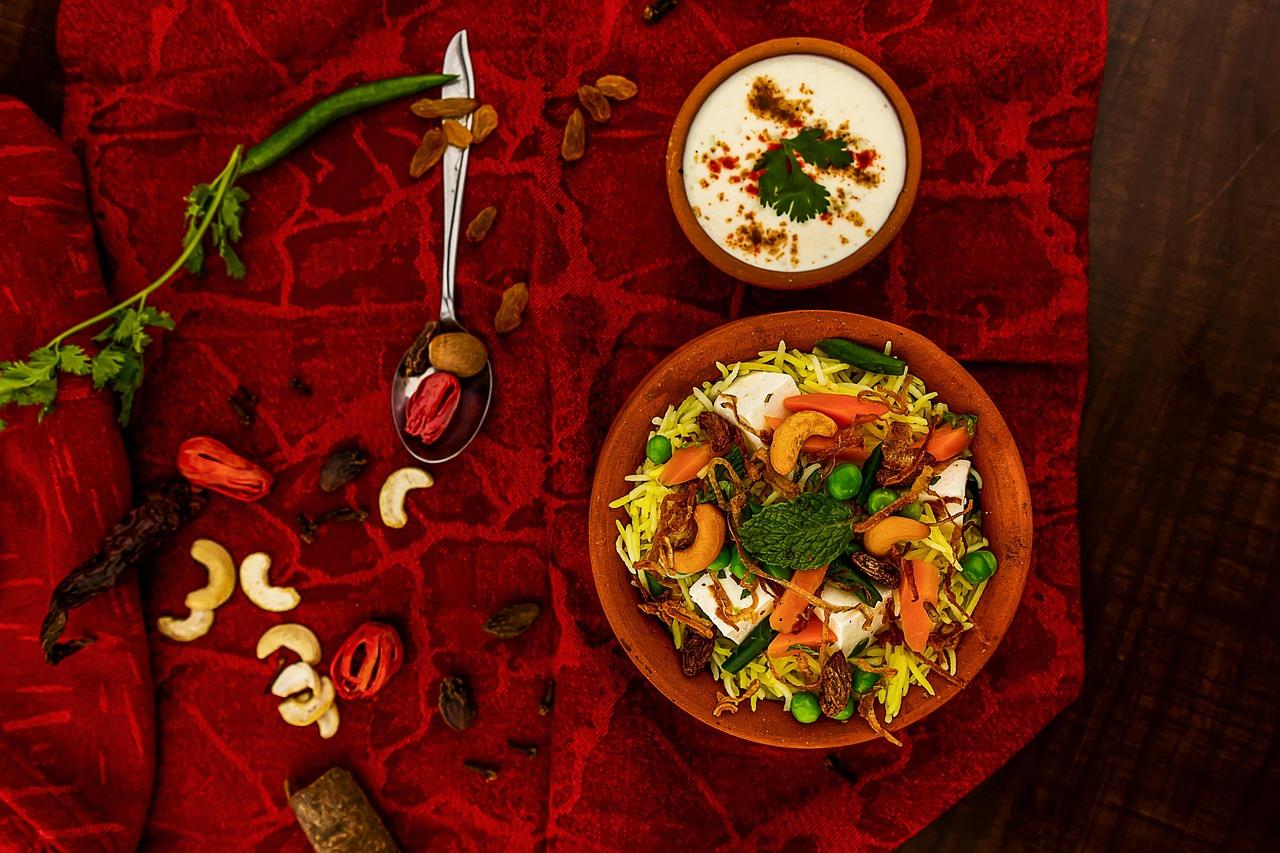
A mild, creamy biryani: rice and husked green gram roasted in ghee, then cooked in coconut milk with peas, carrots, potatoes, peanuts and cashews, and finished with soft fried paneer and a fresh coriander yogurt. Serve hot, garnished with more fried cashews and paneer.


Sabudana khichdiSago with peanuts and potato
Sabudana khichdi is the dish that sees Maharashtra through every vrat (fast), from Navratri to Ekadashi, but it's so good that people eat it any day of the week. Soaked sago pearls are tossed in a pan with crushed roasted peanuts, cubes of potato, cumin and green chilli until each pearl turns glassy and separate, then finished with lemon and coriander. It's soft, chewy, nutty and gently hot. Fasting rules vary from family to family, so check yours; this version uses rock salt and no asafoetida, onion or garlic. Traditionally it's cooked in ghee; use ghee instead of oil if you aren't keeping it vegan. Chef's tip: soak the sago in just enough water to cover by the height of the pearls themselves, no more; too much water is the reason khichdi turns into one sticky lump.


Bagara bainganBaby aubergines in peanut sesame sauce
Bagara baingan is a Hyderabadi wedding dish of small aubergines cooked whole in a dark, tangy gravy of roasted peanuts, sesame, dried coconut and tamarind. Unlike a Gujarati stuffed brinjal, the aubergines here are only quartered at the base and fried until silky, then left to soak up a thin-but-rich sauce that is finished with a tempering, the 'baghar' that gives the dish its name. It's sour, nutty and gently spiced, and is served with biryani, bagara rice or plain rice. Chef's tip: choose small, glossy purple aubergines that feel heavy for their size; soft, light ones are full of seeds and turn mushy before the gravy has a chance to cling.
Perfect for:Sankranti, Lohri & Pongal